
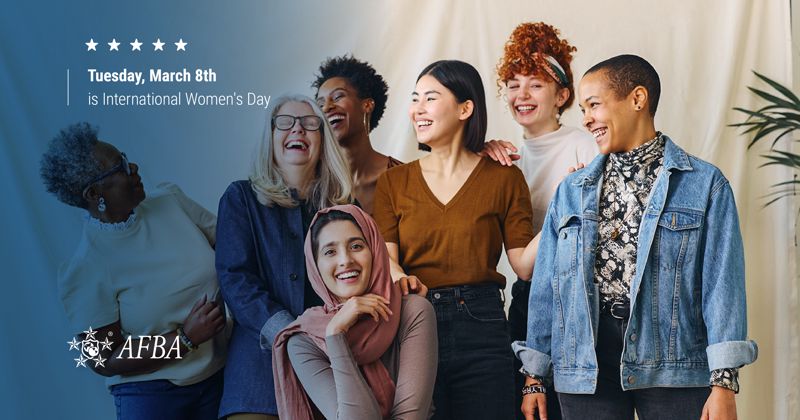
March is International Women’s Month and March 8th is the specific day devoted annually to remembering the impact and importance of gender equality. The day has been celebrated in America since 1975 when its recognition was encouraged by the United Nations. Let’s take the time to learn a little more about how it came to exist and honor some inspiring American women.
The roots of International Women’s Day
While the U.S.A. did not celebrate the holiday until the ’70s, international recognition began much earlier than that. The first noted Day of the Woman was around 1910 when Clara Zetkin suggested that a day be set aside internationally at a meeting of the International Congress of Working Women. The meeting, which was in Copenhagen, eventually brought the day to become celebrated in Austria, Denmark, Germany and Switzerland the next year.
The significance of March 8th is also important. This was the first day of a historical strike led by women, in hopes to secure the right to vote in Russia in 1917. The strike ultimately led to the Russian Tsar being overthrown and women being given the right to vote in Russia.
 The appearance of U.S. Department of Defense (DoD) visual information does not imply or constitute DoD endorsement.
American women to recognize this year
This year, the 2022 International Women’s Day campaign theme is Break the Bias. According to the campaign website, “Whether deliberate or unconscious, the bias makes it difficult for women to move ahead. Knowing that bias exists isn’t enough, action is needed to level the playing field.” Here are some women in the American Government who have broken the bias and cleared the path for many other women to find success:
Maxine Waters
Congresswoman Maxine Waters was elected in November 2018 and is serving her 15th term in the House of Representatives in the 43rd Congressional District of California. She received 70% of the vote and her constituency continues to rely on her to represent them and their needs. She represents the diverse population of South Los Angeles. She was the first woman and first African American Chair of the House Financial Services Committee. Congresswoman Waters has a long history of shaping public policy and breaking down social barriers.
Liz Cheney
Congresswoman Liz Cheney represents Wyoming in the U.S. House of Representatives. She is the only member of congress to do so and has been in office since 2016. According to her website, “Cheney sits on the House Armed Services Committee and also serves as the Vice-Chair for the House Select Committee to Investigate the January 6th Attack on the United States Capitol.” Aside from her current role of leadership, she served at the State Department as a Deputy Assistant Secretary of State and Principal Deputy Assistant Secretary of State for the Middle East. She was also a lawyer and speaks with authority as a Fox News Analyst.
Sonia Sotomayor
Now a U.S. Supreme Court Associate Justice, Sonia Sotomayor graduated in 1976 from Princeton with the University’s highest academic honor and continued to earn a degree from Yale Law School. Sotomayor served as Assistant District Attorney in the New York County District Attorney’s Office from 1979–1984. She was first nominated in 2009 and has served since. In 2019, she was inducted into the National Women’s Hall of Fame.
These are only a few of the inspiring women who serve us through our government. Take the time this March 8th to consider the massive strength of those brave women who took a stand and fought for equality and those who continue the tradition today.
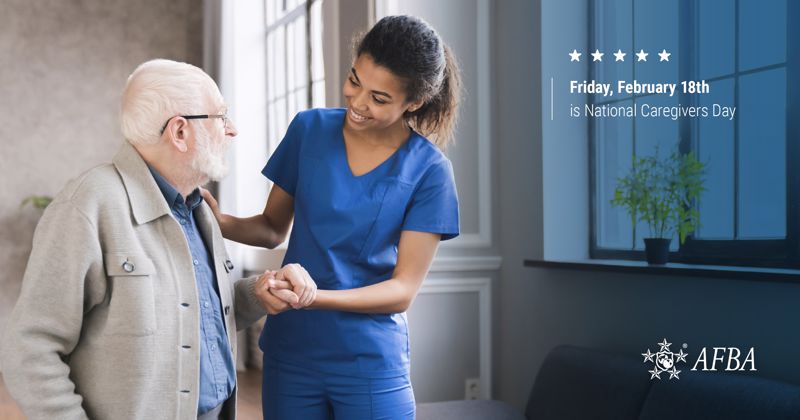
February 18 is National Caregivers Day, and we are taking this opportunity to spotlight the caregivers who serve those who serve America. The day of recognition occurs every year on the third Friday in February. Caregivers are unsung heroes, working to support individuals and families in their times of need.
Caregivers for disabled veterans
It is not uncommon for those who have served in war or other capacities to have service-related injuries and disabilities. In a survey published by Statista Research, they found that there are more than 1.5 million veterans who have a 70% or higher service-connected disability rating. This means that at least a few of those individuals need a caregiver in some capacity.
Unpaid caregivers
A caregiver can be anyone, paid or otherwise, who helps someone who is elderly, sick or disabled do everyday things. They can be family members, friends or a professional. This individual should be the one who helps the person in need by supporting their health, personal needs and safety. From bathing and dressing to grocery shopping, the caregiver is there every step of the way. A study conducted by AARP found that one of every five family caregivers is unpaid.
The U.S. Department of Veterans Affairs has a program for comprehensive assistance for family caregivers because these people often set aside their personal lives in order to care for the veteran who needs them. Here are some of the requirements someone must have to qualify for the program:
- Be a spouse or family member of the veteran.
- Live full time with the veteran or is willing to do so.
The program offers the caregiver a monthly payment, health care benefits, training, mental health counseling and other assistance.
Caring for an active duty military member
Those who have retired from their service are not the only ones who need assistance. Active-duty servicemen and women need help sometimes too. Physical wounds and accidents happen, and it is not uncommon for a caregiver to provide some help while they heal. The same is true for those who have suffered from PTSD as a result of their service. This mental ailment can be incredibly disruptive to everyday life. Here are some examples of caregiver tasks according to the Army Public Health Center:
- Assist a Service member with day-to-day tasks.
- Provide a Service member with emotional support.
- Advocate for treatments for a Service member.
- Oversee legal or financial responsibilities for a Service member.
- Coordinate care and schedules.
If you identify with any of the above experiences, you are probably a caregiver whether you know it or not.
Showing recognition
The day of recognition was first established by the Providers Association for Home Health & Hospice Agencies in 2015, first occurring in 2016. It is a great opportunity to thank the person in your life who you know dedicates their life to care. These people often put others' needs before their own.
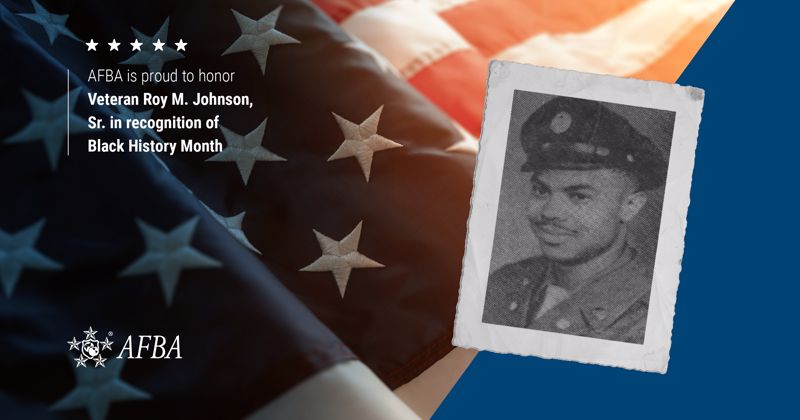
February is Black History Month and, while it is important to take note of history all year round, we're using this opportunity to share and honor Black veteran stories. This month, we're highlighting the inspiring story of Black American war veteran Roy M. Johnson, Sr. who fought bravely as a medic in the Korean War, Black Americans faced inequalities on the front lines and at home when they returned from war, despite their contributions to the country.
A story of bravery
Roy Johnson was born in 1922 in Lincolnton, GA. Just over 20 years later, he was drafted into the war in Europe where he served until it ended. His story is one of bravery, perseverance and service to the United States of America.
By 1950, Sergeant Roy Johnson was a medic in the US Army. Like most active military members of the time, there came an opportunity for him to volunteer for a dangerous mission, where he would risk his life further to protect his country and his deep-held beliefs. Sergeant Roy accepted the mission and was sent to the frontlines of the Taejon area in Korea. There, his task was to get the wounded soldiers from the frontline and bring them back to the first aid station.
The backroads of the countryside were notoriously confusing and difficult to navigate, and Sergeant Johnson's journey to the Taejon area was no exception. At a crossroads, his path intersected that of several enemy tanks that had somehow broken through American lines. He came under unexpected enemy fire, especially because his vehicle was marked with the Red Cross symbol. His traveling companion was killed in the onslaught and Sergeant Johnson's hand became badly wounded (later it would be completely amputated).
Sergeant Johnson fell off the vehicle and while laying on the ground, was subsequently shot three times in the back. An hour after this conflict, when the enemy was gone, he climbed onto another medical vehicle and drove himself to find his comrades. Badly wounded, he lost consciousness immediately.
Not yet completely safe, the field hospital where he was taken to be cared for fell under enemy machine gunfire. Escaping the enemy once again before the hospital was taken by the North Koreans, Sergeant Johnson was sent first to Japan and then to Walter Reed Medical Center. Not only is this the hospital where his hand was amputated — it's where he met Sergeant Alfonzo Spencer (the father of current AFBA President, General Larry Spencer). The two would become deep friends for the rest of their lives.
Before being discharged from the army in 1958, Sergeant spent another eight years at Bethesda Naval Hospital where he was an Occupational Therapy Technician who trained other war amputees on how to use their new prosthetics effectively. Along with his honorable memory of service, Sergeant Johnson lives in Maryland today with his children.
To learn more about this inspiring Korean War Veteran, check out our YouTube channel.
Aside from all the active branches of the United States Armed Forces, there are reserve components of the armed forces. February 19th is the coast guard reserve's anniversary, so we're tipping our hats to all Armed Forces reserves, collectively called the National Guard and Reserve. Title 10 of the United States Code, a document that outlines the role of armed forces in the United States, reveals the purpose of reserve components.
The purpose of the reserves
According to the document, "the purpose of each reserve component is to provide trained units and qualified persons available for active duty in the armed forces, in time of war or national emergency, and at such other times as the national security may require, to fill the needs of the armed forces whenever, during and after the period needed to procure and train additional units and qualified persons to achieve the planned mobilization, more units and persons are needed than are in the regular components."
Basically, the reserves are a resource for active duty armed forces to use whenever there is a national emergency that requires additional support. They usually perform a minimum of 39 days of military duty per year in order to be prepared for when they're needed. Here's a list of the regular reserves in the U.S.:
- Army Reserve.
- Navy Reserve.
- Marine Corps Reserve.
- Air Force Reserve.
- Coast Guard Reserve.
Joining the reserves
Joining the military reserves could be a better option for some than participating in the active-duty military. Not only are you still able to work to protect your country, but you are also able to do so in a more manageable way, which may suit some people better. This is because members can keep their civilian jobs and continue their education. The standards to join the reserves are still rigorous and draw reliable, qualified individuals. While there are some minor differences in each branch's reserves, the basic requirements are the same and the same state benefits are offered.
Eligibility status
According to MilitaryOneSource, here are the basic standards that must be met to qualify for the reserves:
- Be a U.S. citizen or resident alien.
- Generally, be between the ages of 17 and 42.
- Make it through the armed forces physical exam.
- Pass the Armed Services Vocational Aptitude Battery test.
- Meet the minimum Armed Services Vocational Aptitude Battery (ASVAB) eligibility standard.
Before meeting these requirements, anyone interested in joining the reserves must contact a recruiter, who would be happy to help them get started. A good place to begin your journey is the recruiting website of your desired branch:
- Army National Guard.
- Army Reserve.
- Navy Reserve.
- Marine Corps Reserve.
- Air National Guard.
- Air Force Reserve.
- Coast Guard Reserve.
Despite the fact that being in the reserves is less of a time commitment than active duty, there are still important obligations that you'll need to fulfill. These include things like initial training, a monthly drill, annual training, possible activation and commitment time.
These obligations come with many different benefits for those who choose to devote a portion of their time to their country. For example, reserve members get part-time pay that depends on their level of commitment and service, as well as health care coverage from TRICARE Reserve Select.
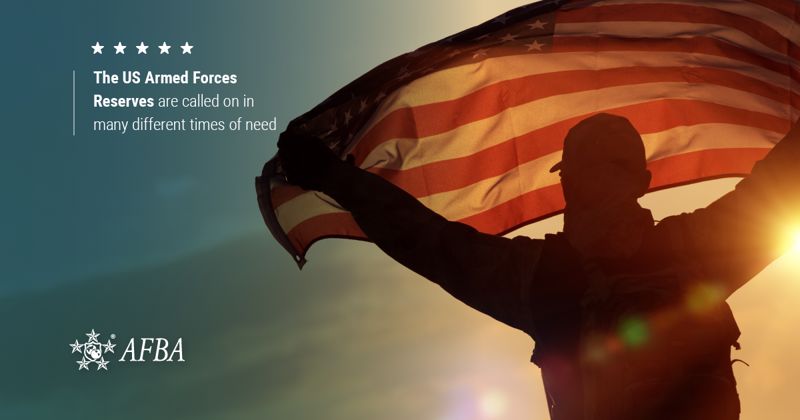
The United States Armed Forces Reserves are an important part of the military, and the country has called on them in many different times of need.
Accessibility of healthcare and COVID-19 prevention tools has been a serious topic of conversation the past two years, amidst the coronavirus and its many strains. The Biden administration launched its at-home COVID-19 test kit and its website on January 19th. Here is what you need to know about how to get the at-home tests and the accompanying N95 masks.
U.S. government offers free at-home testing
This new government effort will provide up to four at-home COVID tests per family. According to the White House press release that was given on January 14, "Public health experts and the Centers for Disease Control and Prevention recommend that Americans use at-home tests if they begin to have symptoms, at least five days after coming in close contact with someone who has COVID-19, or are gathering indoors with a group of people who are at risk of severe disease or unvaccinated."
The accessibility of this program offers Americans a way to easily mitigate their own risk as well as the risk they might pose to their family and community. According to the CDC, a robust and responsive testing infrastructure is a very important component in stopping the spread of COVID-19. The rollout of free tests is a step in the right direction.
How to get your tests
In order to provide four free tests to every American household, the Biden Administration purchased "one billion at-home, rapid COVID-19 tests." Because these tests have already been procured, they have partnered with the United States Postal Service (USPS) to package and deliver tests to those who order them.
To order your tests simply go to the covidtest.gov site that is devoted to distributing them. It is important to note that the tests take 7-12 days to ship Because of this, it's recommended to order the four free kits before you may need them so that you are prepared with resources already at home versus running around to find at-home testing options once sick or exposed. If you or someone in your household needs a test as soon as possible, check out this state-based resource.
Getting your free N95 masks
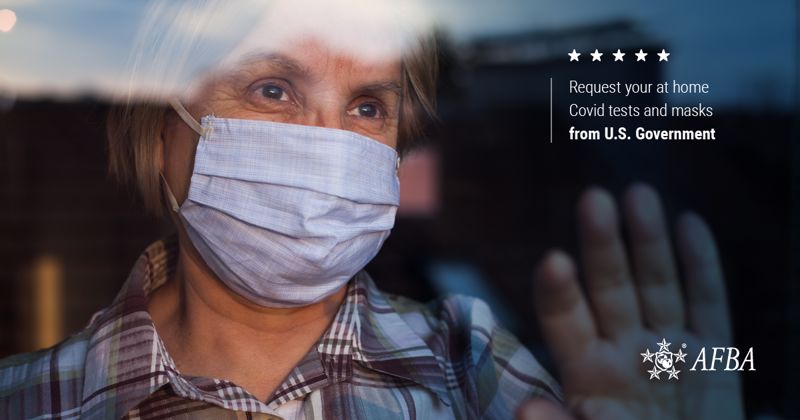
Not only is the government offering free tests, they are also providing N95 masks to those who request them. The White House announced that the masks will come from the government's Strategic National Stockpile, which has more than 750 million masks available.
The masks are available for pickup at community health centers that have partnered with the federal government's COVID-19 vaccination campaign. The program begins January 24, and is thought to be fully rolled out at the beginning of February, according to the Wall Street Journal. This project is not fully-fledged yet, but the first murmurings are promising.
The new free at-home COVID-19 testing and masks are an exciting opportunity to help fight the pandemic. Check out the government website to get started today!
With so much of our everyday lives being completed online, your personal information could be vulnerable if you don't know how to protect it from would-be cybercriminals. From online banking to payments and shopping, there are thousands of ways for a potential data breach to happen. Here are some of the best tips to up your data security for the new year.

1. Don't save your payment information online
It is likely that if you buy things online, there is probably a website that you frequent because the shop has products that you know and like. Because of this, there is usually the option to save your debit or credit card for easier checkout. Sounds convenient and easy, right? While that may be true, going with an autocomplete option may not always be the safest. Even if you are shopping online from a reputable company, be aware that big retailers are not immune to hackers.
Cyber attacks are becoming more frequent and as security software innovates, online criminals adjust accordingly. Popular e-commerce hosts like Shopify and Magento have high-level security in place to protect their user's data, but accidents still happen. The best way to protect yourself from becoming a victim of an online criminal attack is to manually enter your card information every time.
2. Use a virtual private network
A good way to protect yourself is to use a virtual private network or VPN. This is especially true if you spend any amount of time using public wifi networks when transferring important personal data. This is because public internet connections are not as secure as your personal network. Hackers can easily spy on other people who are using the connection to purchase products online. A VPN makes sure that your data and personal information is secure, regardless of where you are, digitally. According to the service Surfshark, 31% of internet users protect themselves using a VPN.
Without a VPN, you leave yourself vulnerable to attacks. If you access your online bank account, input card information or do other personal activities using a public or shared internet connection, consider spending the small monthly fee to protect your personal data. If you are a frequent traveler, this extra layer of protection is well worth it.
3. Avoid phishing scams
Watch out for convincing phishing scams, which are far more intelligent than they used to be. A common method is through email or through a bogus internet ad. Before clicking anything or giving out any of your personal data, think twice. Ask yourself if it is coming from a reputable website or retailer and why they want this information. Another trick is to hover over the sender field so you can see the entire email address. Many spoof senders will have a combination of unique characters vs a qualified business name.
Remember, the majority of companies sending emails will not likely request financial information or include forms for sensitive information without you having previously requested it, or without the assistance of a secure document sharing program. If a random request like this hits your inbox, it's likely bogus! And if you aren't sure, it never hurts to give the customer service phone number a quick call to verify. Companies are often grateful to be made aware of scams and can keep track of specifics scams if a high number of users report similar experiences.
4. Change passwords frequently
We all have that one trusty password that we use for everything because it is so easy to remember. However, it is important to change your passwords every so often, especially for important things like your bank account, credit card or any other personal information on the web. According to electric.ai, you should change your passwords every 3 months. This will reduce the possibility that a cybercriminal will be able to hack into your data. It is important to make sure that you do not have the same password for more than one account. This adds another layer of protection to safeguard your personal information.
February 4th is the official creation day for the United Service Organizations (USO). The USO has been a fixture in military life for over 80 years. Let's dive into the history of the USO and how it impacts the modern military. According to their website, "Since 1941, the USO has been the nation's leading organization to serve the men and women in the U.S. military, and their families, throughout their time in uniform. From the moment they join, through their assignments and deployments, and as they transition back to their communities, the USO is always by their side."
An organization with a history
The organization was founded in 1941 and is private and not-for-profit. It also works with the Department of Defense (DOD). The organization was first formed in WWll to boost the morale of the troops and to encourage American citizen involvement in the war effort. President Franklin D. Roosevelt's goal was to foster more support for the men fighting overseas, which was much needed at the time. In fact, several preexisting organizations and associations were combined to create the USO. They were:
- The Salvation Army.
- The Young Men's Christian Association.
- The Young Women's Christian Association.
- The National Catholic Community Services.
- The National Travelers Aid Association.
- The National Jewish Welfare Board.
Most notably, the USO provided live entertainment to the troops and their families, which included comedians, actors and musicians. In addition, they also created social facilities for those in need, which they still actively do. Though they were disbanded between the end of WWll and the beginning of the Korean War, the USO was revived for the latter war and continued through the entirety of the Korean War, the Vietnam War, Lebanese peacekeeping, Gulf War, Afghanistan and the Iraq war.
The USO today
Today, USO still provides important resources to those who are members of the military community. They have over 200 locations in 14 countries and 27 US states. The USO has over 250 centers that "extend to countries on every continent, operated by thousands of staff and volunteers whose goals are to match our service members' vigilance and provide best-in-class service to those who sacrifice so much for America," according to their website.
Services provided
The USO is a service that is provided to troops both while they are deployed and after deployment. They are also available for military families. Here is a short list of just some of the services offered:
- Operation Phone Home: The project offers military members internet connections and potential phones. 2.8 million minutes of free talk time and 760,000 wifi sessions were logged by service members connecting with their families in 2019.
- USO Care Package Program: You or someone you know can send a care package to the troops overseas.
- Entertainment: USO has provided more than 8.1 million center celebrity visits across the world.
- Transitioning Service Members and Military Spouses: The organization offers support and services to those who are transitioning to a new point in their service.
The USO has been around for over 80 years to provide different kinds of support to the military as a private, non-government entity. On February 4th, 2022 consider donating in celebration of the organization's birthday.
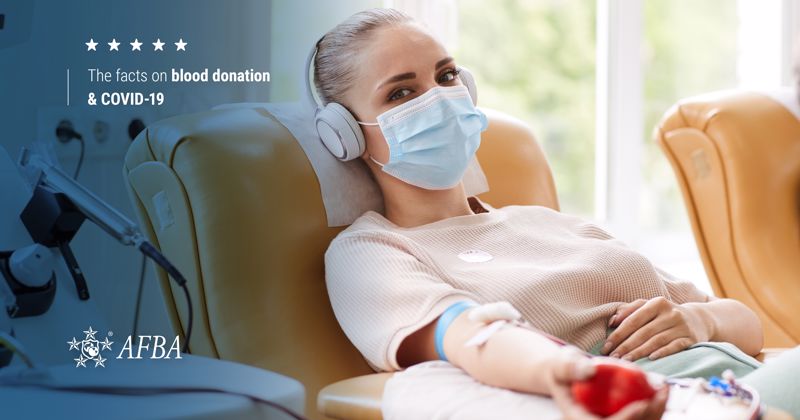
Donating blood is a way to give back to your community that can make a massive difference in someone's life. According to the New York Times, U.S. blood banks are experiencing their biggest shortage in a decade. This is partially due to the fact that there are many misconceptions around donating blood in the midst of the COVID-19 pandemic. Today, we will address some of the biggest myths surrounding the topic.
Donating blood is still possible
Many people might think that donating blood is not even possible because of the restrictions around hospitals. While there is some truth to this, there are still ways to give. There are different organizations that offer available locations where you can schedule an appointment to donate. Here are some examples:
- Red Cross: The Red Cross has a website where you can enter your zip code and find a blood drive near you.
- Association for the Advancement of Blood & Biotherapies: This link will help you find a permanent location near where you live.
Passing the requirements is simple
Some people are nervous to donate because they are unsure if they qualify to do so. Here are the qualifications for whole blood donations according to Red Cross:
- Be at least 17 years old.
- Weigh at least 110 lbs.
- Not be on the following medications according to blood assurance.org
- Accutane.
- Antibiotics *Donors who are taking antibiotics are eligible to donate 24 hours after their last dose.
- Antiplatelet Medications.
- Blood thinners (such as Coumadin, Heparin, Lovenox, Warfarin).
- Bovine insulin.
- Hepatitis B Immune Globulin.
- Human-derived growth hormones.
- Find the full list on blood assurance.org.
Please note that all people who have taken a licensed vaccine, for COVID-19 or otherwise, are able to donate blood. The American Red Cross says that there is no deferral time for the COVID-19 vaccine manufactured by AstraZeneca, Janssen/J&J, Moderna, Novavax, or Pfizer.
Those who have had the virus can donate
A major myth that we want to bust today is that those who have had the virus can't donate their blood. This is absolutely not true. The FDA recommends that "individuals diagnosed with COVID-19 or who are suspected of having COVID-19, and who had symptomatic disease, refrain from donating blood for at least 10 days after complete resolution of symptoms."
This means that, even if you have had the virus, you are still eligible to donate blood to those who may need it as long as the donation happens at least 10 days after the symptoms have gone away. COVID-19 can not be transferred through a blood transfusion according to the FDA. Their website reported, on January 11, 2022, that "there have been no reported cases of transfusion-transmitted coronavirus, including SARS-CoV-2, worldwide."
Taking precautionary measures is important
While there are important precautionary measures to take in order to prevent COVID-19, blood donation is still necessary and possible. Here are some of the most important things that the Stanford
Donation Center is doing to maintain a safe blood donation environment, for example:
- Appointments are necessary.
- Equipment is sterilized, and most is single-use only.
- Hand sanitizers are placed throughout donation sites.
- Increased spacing between donors.
- Team members wear face masks while interacting with donors during the entire donation process.
- Team members at collection sites are fully vaccinated against COVID-19.
Because blood donations had previously relied heavily on mobile drives on college campuses and high schools, the pandemic has severely impacted donation levels. Find a location near you and learn more about donating today.
Association to celebrate its notable legacy in 2022 as it looks ahead to a bright future
ALEXANDRIA, VA – The Armed Forces Benefit Association (AFBA) announced today its plan to mark its 75th anniversary by celebrating its notable legacy as it looks to the future to continue fulfilling its noble and patriotic mission.
“Protecting those who go in harm’s way has always been our mission. AFBA has paid death claims to the families of members who have served in every military conflict since the Korean War. We are proud of our 75-year legacy serving those who serve this great nation,” said General Ed Eberhart, USAF (Ret.), Chair of AFBA.
General Larry Spencer, USAF (Ret.) President of AFBA added, “While celebrating our legacy, we are also positioning AFBA for the future with optimism and determination. This year, we will be rebranding and launching a new website to better connect with our members and our markets. We plan to raise our profile through sales promotions and advertising campaigns, and towards the latter part of the year, we will host a series of events to honor the past and embark into the next 75 years.”
Formed with the support of the General of the Army, Dwight D. Eisenhower, in the basement of the Pentagon on February 1, 1947, AFBA initially provided $10,000 worth of life insurance to active-duty Army and Air Force officers serving overseas. At the time, they could not purchase life insurance that would pay a death benefit if they were killed in combat. Over the years, we have adapted, grown, and changed so we could continue to fulfill our mission – to serve those who serve, defend, and protect this great nation. Today, we are proud to serve active duty servicemembers, National Guard members, first responders, and government employees, providing greater financial security to our members’ loved ones in the event of their death.
From humble beginnings, today, we are one of the oldest and largest associations of our kind with more than 535,000 members. We have paid almost $2 billion in member benefits, served more than a million members, and helped countless families achieve financial security in time of need. Financially sound and strategically positioned, we look forward to a future serving new generations of AFBA members.
About Armed Forces Benefit Association
With the support of the General of the Army, Dwight D. Eisenhower, the Armed Forces Benefit Association (AFBA) was established in 1947 in the basement of the Pentagon to ease the strain on military members and their families who, at the time, could not purchase life insurance that would pay a death benefit if the member was killed in combat. Today, headquartered in Alexandria, VA, AFBA continues to honor its mission, in war and peace, promoting the welfare of its members by providing survivor and other benefits to those who serve, defend, and protect this great nation, including members of the uniformed services, first responders, government employees, and their families. AFBA has more than 535,000 members with $40 billion of death benefits in force and has paid almost $2 billion of death benefits since inception. AFBA death benefits are primarily underwritten by its affiliate, 5Star Life Insurance Company (a Lincoln, Nebraska domiciled company).
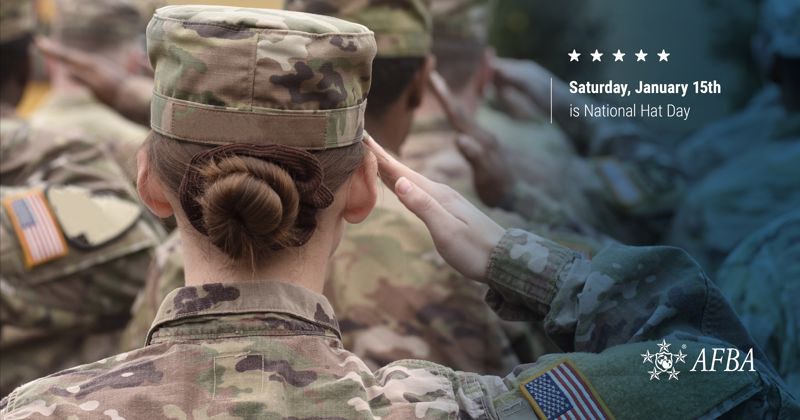
January 15 is National Hat Day, and no one knows the importance of a good hat more than members of the military and first responders. Unlike a run-of-the-mill baseball hat, military hats and those worn by first responders command a certain reverence and value. Just like the rest of a uniform, headgear can let the world know important facts like rank, status or military branch. Let's celebrate National Hat Day by taking a closer look at the history and meaning behind the many unique hats worn by these groups.
Military hats
Many civilians may not know that military members refer to their hats as "covers." In the Army, members wear different berets that have a specific meaning. This tradition dates back to World War ll for the United States, though militaries across the world have been using berets to signify status for centuries. In the U.S. the color of the hat is very meaningful for those in any branch of the military. Here are some examples of different hats and their significance:
- Black berets: This headgear is used in the fancy dress uniform of army members.
- Brown berets: In 2018, the army created a unique hat for members of the Security Force Assistance Command.
- Green berets: Perhaps one of the most well-known styles of berets, green is worn by army members who are special forces soldiers.
In addition to the berets, the army has many other hats, each with its own meaning. Generals have their own caps, depending on rank. These designs have changed over time to reflect the dress of the era. The army is a simple example, but every branch of the military has its own important hats for every rank or service provided.
There are different military uniforms for different occasions. The recognizable Navy cap has different insignias on the visor to signify rank. Captains and commanders have "dark blue cloth, embroidered with two rows of gold oak leaves and acorns." On the other hand, Lieutenant Commanders and lower ranks have a plain visor. There are even different pins that are positioned on the cap depending on rank and occasion.
Military traditions
The U.S. military has its own uniform designers who strive to make uniforms that are practical, modern and effective. Regardless of rank or year, each branch has its own age-old traditions and requirements of its members. For example, when dressed in a formal uniform hat, a member must wear it outside, remove and carry it inside and keep it off in any military aircraft. In addition, service members are not allowed to salute while their hats are off. If a member is attending a funeral in their dress uniform, they must keep their cover the entire time as a sign of respect, whereas a civilian would likely take their hat off.
First responder hats
For firefighters, hats are more than just an accessory. Their helmets are created to protect them from potentially dangerous situations like falling beams, rafters and other debris. In addition, these helmets are usually also equipped with a visor, eye protection, and a light for maximum functionality.
The police force also has a long history of different hats and helmets, but the modern first responder wears different headgear depending on the occasion and rank. Most of the time, police officers wear baseball hats or other casual headgear (depending on location and force) instead of the typical custodian helmet that is worn by officers in the UK.
With its many different customs and traditions, military and first responder headgear are more than just a stylish accessory to the rest of the uniform.