
In its never-ending mission to improve cybersecurity best practices, the U.S. Department of Defense (DOD) published an interim rule in September 2020 on its Cybersecurity Maturity Model Certification (CMMC). The CMMC rule creates a framework for the DOD to more effectively assess the cybersecurity implementation of government defense contractors. The CMMC will also enhance the protection of unclassified information within the DOD supply chain.
Because of these new requirements, prime contractors and subcontractors need to become third-party certified by Nov. 30, 2020, if they wish to continue doing business with the DOD.
"[An] estimated 7,500 companies will be certified in 2021," said Katie Arrington, chief information security officer in the Office of the Undersecretary of Defense for Acquisition and Sustainment. "That doesn't seem like a lot but if you think about the interconnectivity of the [defense industrial base] it's a certification that's good for all DOD contracts for three years."
While the full roll-out of CMMC will take place over the course of five years, contractors need to start moving forward with getting certified quickly.
Breaking down CMMC best practices
The CMMC interim rule falls under the Defense Federal Acquisition Regulation Supplement (DFARS) clause 252.204-7012, Safeguarding Covered Defense Information and Cyber Incident Reporting. The clause requires contractors and subcontractors to implement the 110 security controls set forth in National Institute of Standards and Technology (NIST) Special Publication (SP) 800-171 on "any information system that processes, stores or transmits Controlled Unclassified Information."
The new rule creates a new NIST SP 800-171 Assessment requirement for DOD procurement contracts awarded after Nov. 30 that exceed $10,000. The NIST Framework is segmented into five buckets, or functions: identify, protect, detect, respond and recover.
Even following a successful assessment, certification and authentication process, contractors must keep reviewing and logging activities for rapid detection. Maintaining compliance will involve continuous system monitoring and regularly upgrading necessary safeguards to protect against malicious IPs, coordinated cyberattacks and common web exploits.
Depending on the type of work being contracted, organizations will need to meet varying levels of security requirements, listed as Levels 1 through 5. Level 1 is the least stringent while Level 5 is the most strict:
- Level 1: Performed. This is where documentation of practices begins.
- Level 2: Documented. With documentation in place for all levels, draft a policy that covers all activities.
- Level 3: Managed. A plan exists to cover all activities, which is maintained and resourced.
- Level 4: Reviewed. Activities are reviewed and measured for effectiveness, with the results of the review shared with higher level management.
- Level 5: Optimized. Following the review and measurement, a standardized document approach is implemented across all applicable organizational units.
In each level, all practices must be documented, including those that fall under lower levels.
For this certification, DOD defines "activities" as the organization's mission, goals, project plans, resourcing strategy, training needs and the involvement of relevant stakeholders. The practice progression lists Level 1 companies as having basic cyber hygiene, Level 2 with intermediate cyber hygiene, Level 3 with good cyber hygiene, Level 4 as proactive and Level 5 as advanced and progressive with their cybersecurity practices.
For those federal contractors looking to maintain their government defense contracts, it would be wise to invest in visibility, protection and rapid detection technologies. Contractors and subcontractors can review the associated Federal Register page to find out additional information about this new interim rule, such as expected cost impact.
Around the world on Nov. 25, first responders, humanitarian aid groups and activists come together in recognition of the International Day for the Elimination of Violence Against Women. An important part of this observance is raising awareness about actions that perpetuate violence against women and girls. One of these is human trafficking.
First responders play a vital role in identifying, protecting and supporting human trafficking victims. Let's examine what first responders can do to help stop human trafficking.
Who are the victims?
Due to the illegality of human trafficking, it's difficult to get an accurate number of the number of victims impacted, although experts estimate that between 18,000 and 20,000 people are trafficked into the U.S. each year.
While human trafficking can impact anyone, regardless of age, race, gender identity, sex, ethnicity, nationality, immigration status or socioeconomic class, women are the most common victims. The United Nations Office on Drugs and Crime (UNODC) reported that 71% of human trafficking victims are women and girls, while around 33% are children.

Identifying the signs and alerting authorities
People working on the front lines, such as law enforcement officers, emergency medical technicians (EMTs) or hospital staff, are in a unique position to be able to identify these instances and report them to the proper authorities.
For example, the Department of Homeland Security created the Blue Campaign, an initiative that aims to foster collaboration between first responders and non-government and government entities.
The Blue Campaign noted that, since human trafficking often hides in plain sight, it's important to know how to recognize the signs of a potential victim. While many people might associate trafficking with the sex trade, victims are also forced to work in private residences, on farms, in the hospitality industry and in the health and beauty services industry.
Some red flags to watch for include, but are not limited to:
- Work conditions: A victim of human trafficking may be experiencing verbal or physical abuse from a boss, working excessively with minimum or no pay or living where they work. They might also be forced into illegal work, such as fraudulent activities or commercial sex acts against their will.
- Behavior: A victim may act fearful, agitated, nervous or anxious around a particular person. They might defer answers to this person, or let the other person speak for them.
- Physical state: In addition, a human trafficking victim might show signs of physical or sexual abuse, such as bruises, cuts and other injuries they may not explain. They might also appear malnourished, sleep deprived, lacking medical care or living without essential personal possessions.
Conversely, some signs of a potential trafficking offender include, but are not limited to:
- Restrictions: A trafficker might place severe restrictions and limitations on the actions, movements and personal time of the person they have trafficked. For instance, they might prevent this individual from seeing family or friends, disallow access to a telephone or social media or stopping them from going to their regular work or school.
- Threats: A human trafficking offender might make threatening statements to a victim or constantly keep the victim under a watchful eye.
- Unsafe housing: A trafficker might house their victims in unsafe and unsanitary conditions. This also includes housing a large group of people in one place with poor conditions and limited space.
No single one of these examples represents definitive proof of human trafficking, but these are often common indicators that it is happening. If one of these signs does show up during an ambulance ride, hospital visit or emergency response call, it's important that first responders take a moment to ask follow-up questions and survey the situation more carefully.
If, after more scrutiny, you suspect someone is a victim or a perpetrator of human trafficking, contact the National Human Trafficking Hotline to connect with services and support or to make a report.
A career of service that resonates with our core markets
ALEXANDRIA, Va – The Armed Forces Benefit Association (AFBA) and its affiliate, 5Star Life Insurance Company, announced today the appointment of Major General Augustus L. “Leon” Collins, USA (Ret.) to the 5Star Life Board of Directors, effective December 1, 2020.
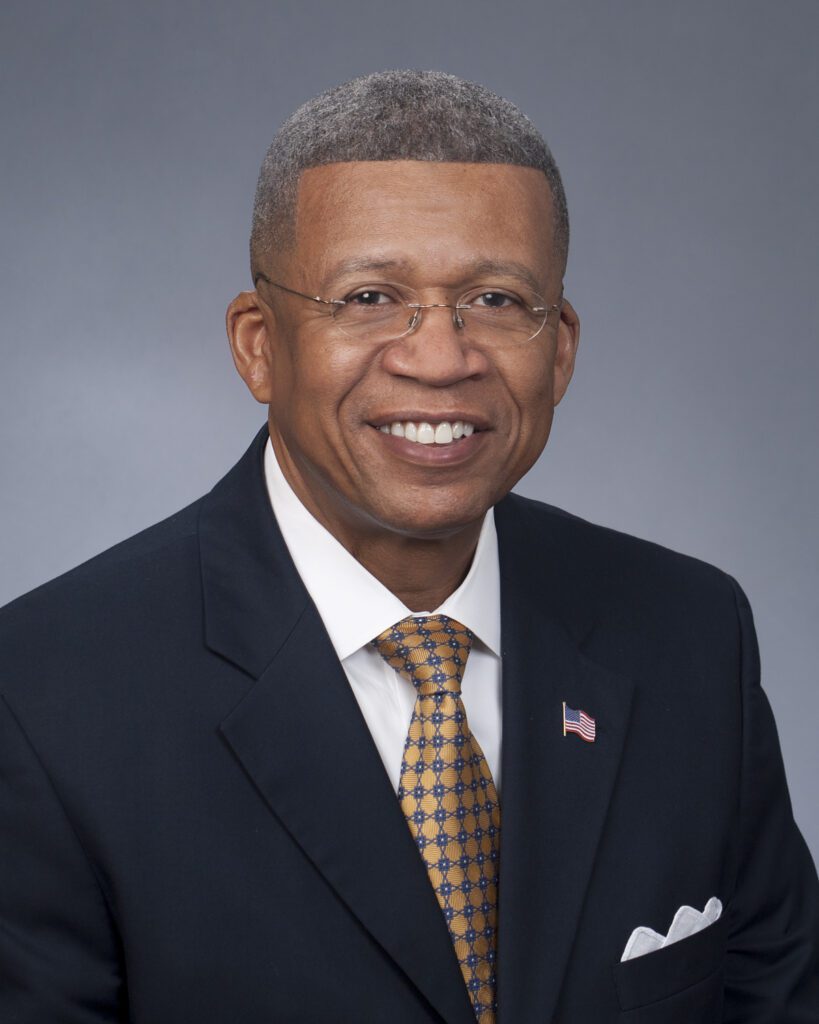
“It is our pleasure to welcome Leon Collins to the 5Star Life Board of Directors. His proven leadership and decades of service to this great nation make him an outstanding addition to our Board”, said General Ed Eberhart, USAF (Ret.), Chair of AFBA and 5Star Life.
General Larry O. Spencer, USAF (Ret.) President of AFBA and 5Star Life, added, “The service and protection we provide for our military members, first responders, and civilians who serve our country will be enhanced with General Collins as a member of the Board.”
General Collins retired after more than 30 years of military service as the Adjutant General of the Mississippi National Guard in 2016. His Army career included command of the 155th Brigade Combat Team, a force of more than 4,500 servicemembers in The Iraqi Theater of Operations. Collins currently serves as the Chief Executive Officer of MICACT, Inc, a job training, development, and management company in Jackson, MS.
About Armed Forces Benefit Association
With the support of the General of the Army, Dwight D. Eisenhower, the Armed Forces Benefit Association (AFBA) was established in 1947 in the basement of the Pentagon to ease the strain on military members and their families who, at the time, could not purchase life insurance that would pay a death benefit if the member was killed in combat. Today, headquartered in Alexandria, VA, AFBA continues to honor its mission, in war and peace, promoting the welfare of its members providing death benefits and other benefits to those who serve this great nation, including members of the uniformed services, first responders, government employees, and their families. AFBA has over 650,000 members with $40 billion of death benefits in force and has paid nearly $2 billion of death benefits since inception. AFBA death benefits are underwritten by its affiliate, 5Star Life Insurance Company (a Lincoln, Nebraska domiciled company).
About 5Star Life
5Star Life Insurance Company (5Star Life) is the primary underwriter of the Armed Forces Benefit Association (AFBA) member policies. In addition, it extends the enterprise’s mission to civilians serving our country in the workplace. As a growing provider of group and worksite voluntary products, 5Star Life serves a diverse clientele as an insurance provider to individuals and organizations and as a trusted advisor to brokers. Headquartered in Alexandria, VA, 5Star Life is currently licensed in 49 states, the District of Columbia, Puerto Rico, the U.S. Virgin Islands, Guam, and American Samoa.
The U.S. Armed Forces continue to push technological innovation while boosting inclusion for all of its brave servicemembers. One recent example of this is how women jet fighter pilots may have a better-fitting and safer G-force suit available in the near future.
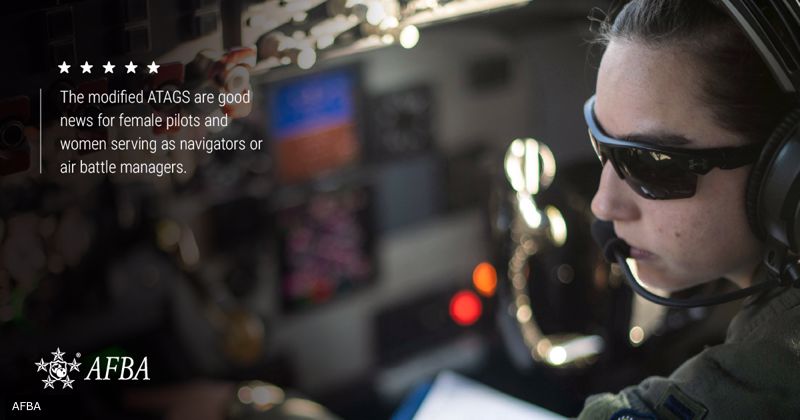
The Air Force announced the testing of a modified version of the Advanced Technology Anti-Gravity Suit (ATAGS) by five female fighter pilots in late October 2020. This is good news for the more than 800 female pilots and approximately 580 women serving as navigators or air battle managers.
Design problems with the current ATAGS
ATAGS, sometimes referred to as G-suits or anti-G suits, are worn by fighter pilots to protect them from the extremely high G-force exerted on their bodies during flights. Without these protections in place, pilots would be susceptible to losing consciousness or suffering hypoxia (a lack of oxygen to tissue cells) during maneuvers in fighter aircrafts.
One such protection includes an inflatable bladder that pushes blood toward the wearer's torso and exerts pressure on their lungs. This prevents a pilot from blacking out from the acceleration that can cause blood to pool in the bottom half of the body.
Up until now, pilots used a version of the ATAGS that was designed in 2001 and used body specs taken from pilots in the 1960s. This means the suits were designed primarily for male bodies. Further, due to the nature of the suits' protections, they are not easy to adjust for a better fit, let alone adjust to a completely different body type. This means shorter pilots with smaller frames don't receive the full protections from the current design of the suits, such as proper performance of the waist bladder.
How the suits were redesigned
The new ATAGS design stems from the joint effort between the Air Force Life Cycle Management Center (AFLCMC) and AFWERX, a U.S. Air Force program that fosters a culture of innovation within the service, according to a U.S. Air Force news release.
The redesign addressed two key areas. The first modification includes wider lacing panels at the waist, thigh and calf. This will allow for more adjustments to accommodate a greater variety of body proportions. The second big change is that the suit now comes with a darted waist. This tailored waist design does not interfere with the inflatable waist bladder but allows for a better fit.
"In the past, some pilots with a shorter torso have had issues with ATAGS that were too large riding up and causing bruising on the rib cages, while pilots who are hard-to-fit may have had one size that fits through the legs, but need a smaller size in the waist," said Charles Cruze, an AFLCMC Human Systems Division engineer. "Now, the waist can be darted up to 3.75 inches, allowing for a more custom and accurate fit, preventing both of those issues."
Results of the new design's tests
After testing and evaluating the new suits with five pilots and one aircrew member, the results came back with overwhelming praise for the redesign.
Capt. Brittany Trimble, an F-16 Fighting Falcon instructor pilot, relayed her positive experience testing the modified ATAGS in the announcement. "I definitely noticed improvement with the new updates and the darted waist in particular," said Trimble.
Following this positive review, the 46th Test Squadron will next draft a test report on its findings. While the modified flight suit is not yet approved, the current acquisition strategy could put the updated ATAGS into use within 12 to 24 months.
This is a great step forward for the Air Force, and just one of many new improvements for ensuring the safety of its female service members.
Small businesses are the backbone of the American economy, and veteran-owned and -operated businesses make up a sizable chunk of these companies. There are 2.52 million businesses in the U.S. that are majority-owned by veterans, according to the Small Business Administration (SBA). Of these, 442,485 veteran-owned businesses have employees and 2.08 million are run by self-employed veterans without other staff.
In recognition of the service and sacrifices these veterans made for the country, the government offers their companies a variety of benefits. Small businesses owned and operated by veterans have many options for accessing support through agencies like the U.S. Department of Veterans Affair (VA) and the SBA.
Does the company qualify as a Veteran-Owned Small Business (VOSB)?
To receive VOSB benefits, a company must meet certain requirements as defined by the VA. Among these requirements, the veteran must own 51% or more of the small business and hold the highest officer position with full control over its daily management, decision-making and strategic policy. In addition, if the veteran isn't the highest-paid person in the company, they must provide a written statement explaining why a lower salary helps the company.
Service-disabled veteran-owned small businesses (SDVOSB) also qualify for benefits. The company must follow the same criteria as a VOSB, with the veteran having a VA-issued disability letter confirming a service-connected disability rating between 0 and 100%, or a disability determination from the Department of Defense (DOD).
VA Benefits
One of the main incentives for VOSBs and SDVOSBs is the ability to do business with the VA. The VA sets aside a sizable portion of its contracts for these types of businesses. Federal law provides unique authority for the VA to offer VOSBs and SDVOSBs set-aside and sole-source contracts. This means the only businesses that can bid on these contracts are those owned by veterans who qualify for the program.
The VA provides priority access to federal and state government contracts as well as better access to capital and tax relief. The administration also provides support in finding VA procurement, contract awards and acquisition awards. In addition, the VA offers resources, education and training to help veteran owners learn more about doing business with the agency.
SBA Benefits
The SBA also offers a wide range of benefits, opportunities and services for VOSBs and SDVOSBs. The administration set up the Office of Veterans Business Development (OVBC), which is exclusively dedicated to promoting veteran entrepreneurship. The OVBC has several initiatives to accomplish this goal.
Much like the VA, the SBA also gives procuring agencies the authority to set aside contracts exclusively for competition amongst SDVOSBs.
The Boots to Business and Boots to Business Reboot programs offer education, training and guidance for applicable business ownership fundamentals. The Women Veteran Entrepreneurship Training Program (WVETP) provides training for women who are veterans, service members and spouses of service members and veterans. Both of these programs are useful for those owners just getting started, and for established owners looking to gain new business insights.
The Veteran Federal Procurement Entrepreneurship Training Program (VFPETP) is a veteran-focused program that specifically addresses federal procurement. With government contracting already providing great business avenues for veterans, becoming trained and certified to go this route can help grow a VOSB.
The SBA also offers the Veterans Advantage 7(a) loan, one of the administration's most popular programs. This type of business loan comes with reduced fees for veterans who qualify.
These are just some of the many benefits and incentives offered for veteran-owned small businesses. Many other agencies and departments also make VOSBs and SDVOSBs a priority for contracting and acquisitions.
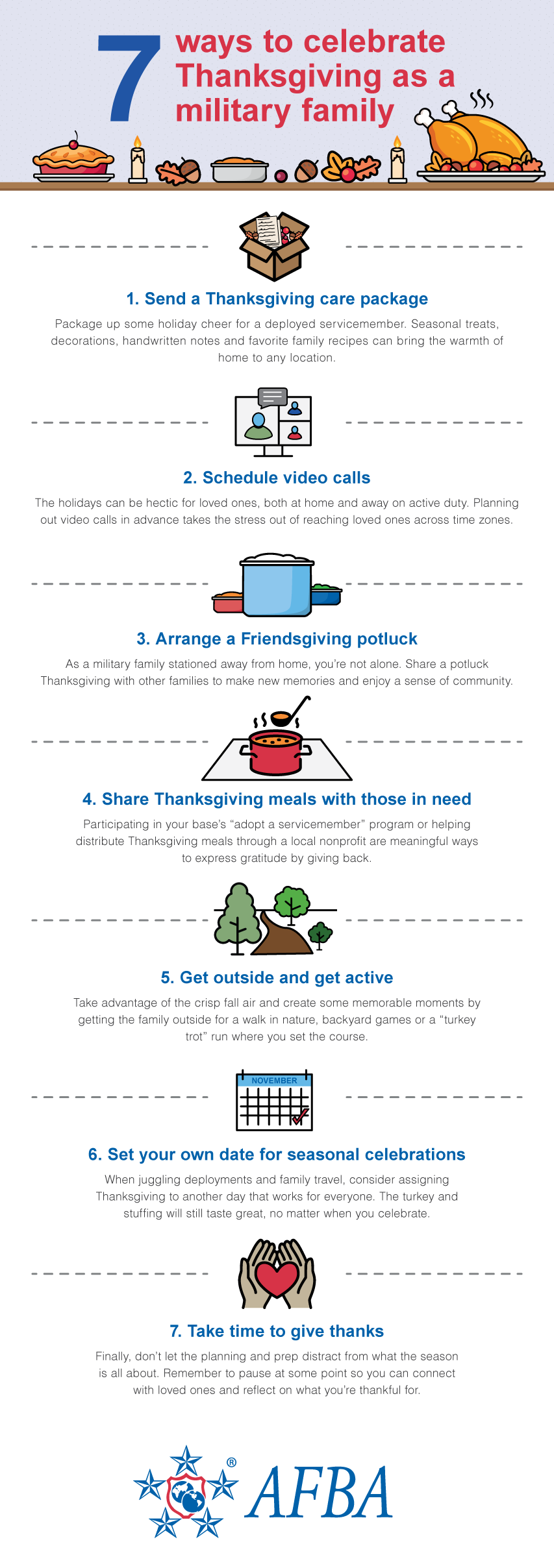
Happy Thanksgiving! Check out our tips for enjoying the holiday with your military family.
7 Ways to Celebrate Thanksgiving as a Military Family
IN THIS ISSUE
President’s Message
Board of Directors Changes
New Online Claim Form
Military Family Appreciation Month
Honoring First Responders Day
Safeguard Your Digital Presence
Winter Safety Tips
Member Benefit Highlights
Click here to read our Fall Newsletter.
There's no denying this year has been one of uncertainty and slowdowns across countless industries. Although opportunities have dried up in some areas, other sectors remain stable and profitable. One such sector is federal contracting. Many enterprises whose commercial markets have suffered this year have leaned more heavily into their contract work for the government.
After taking stock of what the contracting market offers and which businesses are positioned for success, consider the four straightforward steps you'll need to follow to successfully enter this profitable and rewarding market.
The current state of federal contracting
The 2020 Bloomberg Government report revealed that contractor spending is up from last year, with a whopping $597 billion in federal government spending in fiscal 2019, a 6% increase from 2018's $561 billion. This follows four consecutive years of growth since the $442 billion allocated in fiscal 2015, and sets a record high for spending.
Federal contracting provides a viable route for growing your business no matter the size, as the government leans on many different types of service providers beyond leading defense contractors. In fact, the government aims to award at least 23% of federal contracts to small businesses. This includes businesses in:
- Research and development.
- Sustainment supplies and equipment.
- Electronic and communication equipment.
- Clothing and textiles.
- Supplies and equipment.
- Office management.
- Facilities and construction.
- Information technology (IT).
- And many more.
If your business could fill one of these needs, here are the four steps to take to become a federal contractor:
1. Research
The government has strict guidelines, regulations and laws that apply to federal contracts and the businesses that receive them. These vary by industry and sector. Take some time to research and learn about the responsibilities of federal contractors provided by the Small Business Administration (SBA). Any errors or missteps can create costly legal problems.
It's also a good idea to know the six-digit North American Industry Classification System (NAICS) code that applies to your business. This is necessary to compete for federal contracts.
2. Register
Obtaining a federal contract requires registration in a few areas. Much like knowing your industry's NAICS code, you'll also need to register for a Data Universal Numbering System (DUNS) code to apply for federal contracts.
Once you're ready to take the next step, you'll have to register and create an account on the government's System for Award Management (SAM). This is the official site for registering your business with the government. It's also where you'll upload and store important information for your business, such as certifications and licenses.
3. Plan
It's important that you create an internal business plan that directly addresses your external contract proposal. This plan should include your marketing plan for the contract, staffing and employment details, certifications, specialization, experience and other pertinent information that relates to your industry.
You will also need to calculate and include a comprehensive cost analysis and profit-margin outline for the services or products the government will be contracting from your business.
4. Bid
After conducting all the prerequisite research, registration and planning, you can move into the bidding phase. The government's SAM site offers a search option where you can look up procurement notices and bidding opportunities from federal contracting offices. You can search by keyword, soliticiation ID or a particular agency's name.
Once you find a solicitation that fits your business, carefully review all the contracting documentation. If you have any questions, be sure to reach out and ask so that you're fully aware of what the opportunity requires and entails.
Based on this information, follow the solicitation instructions for filling out and submitting all the requested forms, and for providing all the technical, past performance and pricing information in the appropriate manner.
Be prepared to negotiate with the government for the most optimal offer. In many instances, you'll be competing against other industry peers for these contracts, so you'll need to ensure your prices and offerings are the best possible that you can provide.

With this year's tumultuous employment landscape and renewed emphasis on keeping communities strong, many people are looking for ways to step up and help out or are considering a new career. A promising opportunity to accomplish this could be employment as a first responder.
Recent data from the U.S. Bureau of Labor Statistics (BLS) shows that the number of first responder jobs is expected to grow significantly over the next decade. Collectively, analysts are forecasting roughly 77,900 new career opportunities for this sector, which includes firefighters, police officers, emergency medical technicians (EMTs) and paramedics.
Although local municipal budgets fluctuate with the times — which can impact the bottom line for these sectors — a career as a first responder remains a stable and in-demand job option. There will always be a need for those willing to bravely face emergencies and disasters.
Let's break down how the individual sectors are likely to fare by examining the BLS data with a bit more granularity.
Job outlook for EMTs and paramedics
Analysts forecast the number of EMT and paramedic jobs will grow by 17,000 across the U.S. between 2019 and 2029.
With 265,200 jobs as of 2019, this represents a 6% increase over the next decade. Although this might not seem like a big increase, this is faster than the 4% average growth rate across all occupations.
Emergencies like car crashes and natural disasters that require the skills of EMTs and paramedics aren't going to disappear any time soon. Simply put, these jobs are nearly indispensable.

To become an EMT or paramedic requires completion of a post-secondary educational program after high school. While this generally refers to college or university programs, it also covers trade schools and community colleges. Aspiring EMTs and paramedics must then obtain a state license, with the requirements varying from state to state.
Job outlook for firefighters
For firefighters, over the next decade the BLS expects that 20,300 jobs will be added to the current total, which was 335,500 in 2019. Like EMTs and paramedics, this would also account for a jump of 6%, which is faster than the national average.
Those interested in pursuing a career as a firefighter should understand how to go about doing so. While qualifications may vary from one jurisdiction to another, typically individuals need a high school diploma and emergency medical training. Once those requirements are met, the next step is to attend a fire academy to receive proper training and then successfully pass a written and physical test. In many locations, firefighters must also have EMT certification.
Job outlook for police officers
BLS data indicates that police and detective careers are also expected to increase substantially. The next decade should see 40,600 new police and detective jobs to add onto the 813,500 jobs in existence as of 2019. This would represent growth of 5%, which is slightly faster than average.
Continued need for public safety will drive this positive employment change in the coming decade; however, demand will vary by location.
To become a police officer, applicants typically need a high school diploma, although some jurisdictions require a college degree. Applicants must graduate from the local police academy and have on-the-job training before entering the police force.
As we can see, the occupational outlook for first responders remains positive and full of opportunities. Whether you're fresh out of high school or looking for a mid-career change, there will be significant demand for EMTs and paramedics, firefighters and police officers in the coming decade.