
Day of the Deployed is a relatively recent military observance, but it is no less meaningful to the men and women who serve on active duty, or the community members that honor their efforts on Oct. 26 each year.
Read on to learn about what the Day of the Deployed observance recognizes, how it came to be and how to support military servicemembers and their families at this time and throughout the year.
Origins of Day of the Deployed
The proposal to create a day recognizing the sacrifices and valor of servicemembers on deployment came from Shelle Michaels Aberle of Solider’s Angels, a nonprofit organization offering support to members of the military community.
In 2006, Aberle pitched the idea to then-governer of North Dakota John Hoeven, after being inspired by her cousin, LTC David Hosna, who was serving in Iraq at the time. North Dakota chose to recognize Day of the Deployed on Oct. 26 — Hosna’s birthday — and many other states quickly followed suit with their own state observances.
Several years later, when Hoeven became a U.S. Senator, he put forth a resolution to enact a nationwide Day of the Deployed. In 2011, this measure passed unanimously in the Senate.
Paying tribute to 200,000 deployed servicemembers
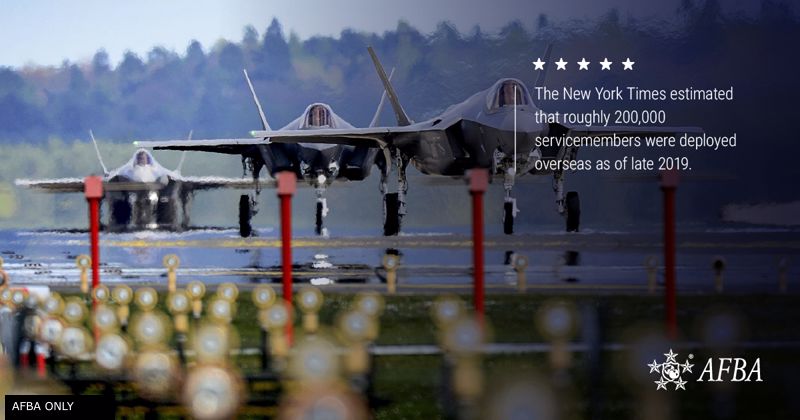
According to the Department of Defense, the U.S. armed forces have a presence across all seven continents, with some 4,800 defense sites across 160 countries. The New York Times estimated that roughly 200,000 servicemembers were deployed overseas as of late 2019.
When the national observance was adopted, Aberle described the state and federal recognition as “an honorable way to extend appreciation to the deployed service members and their families. Day of the Deployed is recognition for their hard work, dedication and commitment to the United States of America. This day is all about them.”
 “The appearance of U.S. Department of Defense (DoD) visual information does not imply or constitute DoD endorsement.”
“Our U.S. service men and women currently deployed, along with their loved ones, make untold sacrifices as they serve our nation,” Hoeven remarked on the occasion. “A national Day of the Deployed pays tribute to their commitment to our country and their work to protect our freedoms. We want to ensure that our military members and their loved ones know of our appreciation and support before, during and after their service.”
Ways to raise awareness and offer support
Around the U.S. and across the globe, members and supporters of the military community can find countless morale-boosting ways to mark the occasion. Here are just a few ideas for Day of the Deployed:
- Send handwritten notes or care packages to deployed servicemembers in your life or through a nonprofit organization.
- Make a charitable donation to an organization that supports members of the armed services.
- Bring awareness to the observance and the experiences of deployed members of the armed focus and their families using the hashtag #DayoftheDeployed on social media.
- Display a yellow ribbon in support of the troops serving away from home.
- Spend time socializing with a military family — or offer support in the form of babysitting, running errands or delivering a homemade meal.
You can support a deployed servicemember in your life, or connect with a nonprofit organization to reach out to other military members. And don’t forget that your efforts need not be limited to the official Day of the Deployed.
“Even a small act of gratitude goes a long way,” Nicole Motsek of the EOD Warrior Foundation noted in an interview with U.S. Veterans Magazine. “Any time of the year is a great time to show gratitude for the deployed, but this day serves as a great reminder.”

An extensive project of digitizing Vietnam deck logs reached completion in late September 2020. The effort was an interagency project between the Department of Veterans Affairs (VA) and the National Archives and Records Administration (NARA). Improved access to the data held within these records should speed up the processing of Blue Water Navy (BWN) veterans’ disability claims.
Digitized deck logs to quickly substantiate disability claims
According to Archivist of the United States David S. Ferriero, “Through this scanning project, VA contractors digitized declassified Navy and Coast Guard deck logs from 1956-1978 in NARA’s holdings.”
Scanned records included those of the hospital ship USS Sanctuary, which Ferriero served aboard during his time in the Navy. “As a veteran from this era, I recognize the unprecedented value this provides to veterans making these logs easily accessible online,” he said.
These deck logs — also called captain’s logs and ship logs — contain manually recorded details outlining the day-to-day activities of a given vessel or Navy unit. This information is regularly used when processing VA disability benefits claims as it provides evidence of exposure to chemicals used for tactical purposes during the conflict in Vietnam.
As established by the 2019 Blue Water Navy Veterans Act, Navy service members who served less than 12 nautical miles out from Vietnamese and Cambodian waters are assumed to have been exposed to Agent Orange. This carcinogenic herbicide is connected with more than a dozen known illnesses and conditions, including Parkinson’s disease, diabetes, ischemic heart disease and seven types of cancers.
 “The appearance of U.S. Department of Defense (DoD) visual information does not imply or constitute DoD endorsement.”
Prior to the BWN Veterans Act, service members stationed offshore did not receive the same presumptive disability benefits as their peers who served inland. Now, BWN veterans can no longer be denied these benefits, which can amount to several thousand dollars per month, depending on the individual’s specific condition and health care needs. The completion of this yearlong digitization project means it will be easier to access proof of a veteran’s service and award the necessary disability coverage.
Access to BWN veteran benefits no longer a burden
According to VA Secretary Robert Wilkie, thousands of claims have already been processed this year, using deck log data as it became available. Military Times reported that approximately $641 million has already been issued to 22,524 affected Vietnam veterans.
“The team at NARA recognizes the importance of this effort making it easier for BWN Veterans to receive the benefits they’ve earned without burdening them with paperwork,” Wilkie said in the press announcement.
The total VA payout amount is expected to reach around $5.5 billion over a 10-year timeframe, according to the American Legion. This substantial sum was apparently a topic of concern while the proposal was under consideration.
However, as Ralph Bozella, chairman of The American Legion’s National Veteran Affairs and Rehabilitation Commission, noted: “The cost of caring for veterans after a wartime experience should never be a deterrent to what a veteran earns in benefits.”
It is predicted that some 90,000 BWN veterans may be eligible for these delayed benefits. Veterans, surviving spouses and dependents are urged to file claims as soon as they can. The VA recommends contacting approved Veterans Service Organizations for support in filing a claim.
Defense News publishes an annual list of the top 100 defense contractors. But the 2020 Defense News Top 100 does more than just identify leading players in the industry. With some careful analysis, it can offer a snapshot of the current state of defense contracting and hints at what the future might hold. Let’s take a look at which companies top the list, and what trends and takeaways federal contracting companies of all sizes should be aware of.
1. Stagnation among the top 5 spots
A glance at the six leading names in the 2020 Defense News Top 100 would look remarkably similar to past years’ reports. Lockheed Martin has held the No. 1 spot since 2003 — and the company has been the top U.S. contractor by sales for 40 years running.
The same four enterprises have similarly occupied the second to fifth places for several years as well. This year, they rank in order as Boeing, General Dynamics, Northrop Grumman and Raytheon. Typically in 1 of the top 6 spots, BAE systems has fallen to No. 7 this year.
Most major changes in ranking come as a result of mergers, acquisitions and divestitures. For instance, Raytheon Technologies Corporation — a result of the April 2020 merger between Raytheon Company and United Technologies Corporation — was listed for the first time as a signal entity in this year’s list.
 “The appearance of U.S. Department of Defense (DoD) visual information does not imply or constitute DoD endorsement.”
2. Growing influence of Chinese enterprises
Eight Chinese companies have taken spots in the 2020 Defense News Top 100 — and the outlet predicts more Chinese contractors will lead the global defense market in the next several years.
“Because these enterprises are state-owned and often part of large, diversified enterprises, the data for annual sales is difficult to obtain,” Defense News author Byron Callan noted in a 2019 assessment, explaining the omission of Chinese companies in the past.
However, the relatively recent inclusion of Chinese companies paints a different picture compared to previous reports. And they aren’t trailing behind U.S. and European entities; they’re clustered at the top of the list. All eight contractors occupy places in the top 24, meaning that China’s state-owned enterprises make up one-third of the top quarter of the list.
Also, it is important to note that the data reflects the activities of an active, international market. Companies are listed by country of origin, but it is not specified what percentage of sales came from their home country, the U.S. or another foreign nation.
3. Stability in spite of the coronavirus pandemic
According to Defense News authors Doug Berenson and Chris Higgins, “Although the defense sector has faced pandemic-related business disruptions, it remains a safe haven, with most defense-oriented firms reporting only modest impact on revenues and profits.”
Most companies that make the list each year follow one of three business models. They either primarily serve the government and defense sectors, serve both defense and commercial clients or operate as industrial conglomerates serving markets far and wide. Enterprises whose commercial markets have been severely impacted by COVID-19 — such as aviation leaders like Boeing — have leaned heavily on the defense market over the past year, according to Berenson and Higgins.
4. Some industry leaders may yet be missing
The ranking methodology is largely dependent on sales data provided by the companies in question. As a result, several influential companies are missing from the 2020 list.
Examples Callan noted in his 2020 Defense News Top 100 analysis include several major players in the U.S. such as SpaceX and BWX Technologies, as well as large defense contractors based in Japan, Spain, Russia, Poland, Australia and India.
Despite the fact that these enterprises remain off the list, at least for the time being, industry analysts still emphasize the importance of keeping an eye on their significant — and, in the case of SpaceX, highly disruptive — contributions to defense contracting.
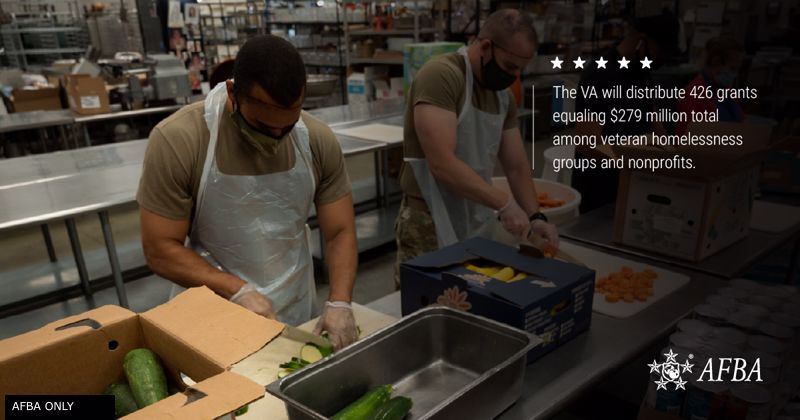
The U.S. Department of Veterans Affairs (VA) recently announced it will award a significant number of grants to community organizations that provide assistance and aid to veterans experiencing homelessness. The VA will distribute 426 grants equaling $279 million total among various groups and nonprofits.
Expansion of the VA's Grant and Per Diem program
This initiative is part of ongoing efforts, including the Grant and Per Diem (GPD) program, to prevent veteran homelessness and help veterans exit homelessness.
According to the VA, the GPD program's mission is "to promote the development and provision of supportive housing and/or supportive services with the goal of helping homeless veterans achieve residential stability, increase their skill levels and/or income, and obtain greater self-determination."
Service centers and supportive housing programs are eligible for GPD funding. Grants are issued to help organizations acquire, build or renovate facilities that will be used for transitional housing. Additionally, per diem subsidies are awarded to help cover the housing and operational costs for centers that provide supportive housing and other services to veterans experiencing homelessness. Grant recipients are typically first in line to receive per diem funding, although other groups can apply.
"The GPD program is one component of VA's multifaceted continuum of services and resources to help veterans exit homelessness," VA Secretary Robert Wilkie said in the announcement. "No veteran should ever have to worry whether they will have stable housing, and these grants put us one step closer to ensuring all veterans are living in a safe and supportive environment."
Grant types designed to support veterans' various needs
Beginning Oct. 1, 2020, the VA will start awarding three types of grants to eligible community organizations. The majority of the newly announced funds — roughly $221 million — will be directed toward "per diem only grants," which will subsidize 12,138 beds and 18 service centers to cover the costs of lodging and care.
An additional $2.4 million will be provided through "special needs grants" aimed at supporting veterans experiencing homelessness who have additional care needs related to chronic mental illnesses, childcare or women's health.
Finally, $55.3 million worth of "transition in place grants" will be awarded to community agencies that help veterans exit homelessness and achieve housing stability and independence. According to the VA, veterans participating in transitional housing programs benefit from support services and housing with the goal of taking ownership of their housing agreements.
Veteran homelessness rates in decline
As of January 2019, the U.S. Department of Housing and Urban Development (HUD) determined that 37,085 veterans were living in unsheltered locations, emergency shelters or transitional housing programs. At that time, states with the largest population of veterans experiencing homelessness were California, Florida and Texas.
However, the number of homeless veterans has dropped by 43.3% since 2011, as a result of interventions like the GPD program. Additionally, as of September 2019, three states (Virginia, Delaware and Connecticut) and 78 communities around the U.S. had eliminated veteran homelessness.
"Our nation's veterans have sacrificed so much for our country and now it's our duty to make certain they have a home to call their own," HUD Secretary Ben Carson noted in a 2019 news release. "We've made great progress in our efforts to end veteran homelessness, but we still have a lot of work to do to ensure our heroes have access to affordable housing."
Since 2017, California has experienced a succession of wildfires that caused historic levels of destruction. At the start of this year, U.S. firefighters were helping battle the Australian bushfires for the first time in a decade. Presently, teams are diligently working to suppress wildfires raging up and down the West Coast, from Washington and Oregon to California.
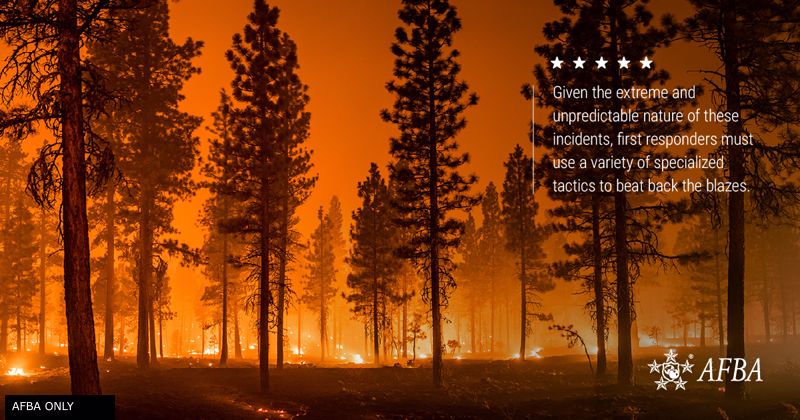
Given the extreme and unpredictable nature of these incidents, first responders must use a variety of specialized tactics to beat back the blazes. Understanding what happens on the fireground and how skilled firefighters manage and suppress these outbreaks year after year is an important way to recognize their efforts and honor their sacrifices.
Establishing control lines to manage the spread of wildfires
Firefighters strategically create and use boundaries to keep wildfires in containment. These can be natural boundaries, such as rivers, or engineered ones where teams manipulate the landscape to remove any potential fire fuel sources and limit its spread.
Creating a true fire line involves stripping the land down to the soil, but teams often create preliminary scratch lines when they need to work quickly. They'll also establish temporary wet lines by applying water or fire-retarding chemicals to the ground. Explosives are also used to quickly taking down flammable trees and brush.
Suppressing flames and embers to keep wildfires in check
When faced with a sizeable wildfire, firefighting teams have to make tactical decisions about how, when and where they will work to extinguish the flames. They will work on the fireground and conduct aerial attacks to keep the fire under control.
Often, the first step will be hotspotting. This involves assessing the overall behavior of the fire and suppressing specific points that pose the highest threat of spreading quickly or causing damage. Teams will also knock down or reduce the heat and flames in particularly active parts of the fire's outer edge using water, soil and fire-retarding chemicals.
Once areas have been contained, firefighters will still work diligently to ensure that the control line remains intact. A mop-up is when embers and burning materials near the control line are removed or extinguished. Cold trailing is a technique where firefighters inspect the "dead" fire edge for any signs of heat. They'll often feel around with their hands to locate and dig out any embers or hot spots.
Using strategic, controlled fires to support containment efforts
It might be surprising to learn that firefighters actually light small fires as a way to manage larger blazes. For instance, teams might conduct a burn out within a new control line to use up the available fuel and bolster the effectiveness of the created boundary. Similarly, firefighters will create backfires downwind of a major fire to change its direction. These advanced techniques require a great deal of experience and careful attention the wildfire's movements.
Initiating prescribed fires to promote healthy ecosystems and reduce risk
Wildfires are a force of nature, and they play a role in keeping ecosystems healthy. A significant amount of scientific research goes into understanding that role and how it can be accomplished in a contained manner that doesn't endanger human lives. The U.S. Forest Services explains that strategic prescribed fires throughout the year help maintain the right balance and reduce the risk of unwanted, uncontrolled outbreaks.
After a major wildfire is successfully extinguished, the work continues with Burned Area Emergency Response efforts. Teams of soil scientists, vegetation specialists, hydrologists, engineers and other experts will evaluate a scorched area. Their assessment will help determine how to stabilize and rehabilitate the environment so it remains safe for the plants, animals and people that inhabit the region.

Engaged couples have a lot to plan and prepare. Wedding day logistics can be even more complicated when one partner has a demanding career with the military or an emergency response agency.
But the day you tie the knot is just that — one day. Afterward, other important life planning matters like financial management will require the same level of organization and attention to detail in order to keep you on solid ground for years to come.
When it comes to managing your finances after getting married, you'll have three options to consider, each with its own pros and cons.

1. Combining all finances
In a marriage, two become one. For some newlyweds, two (or more) bank accounts are united as well. Given the pace at which bills are paid, groceries are purchased and savings are bolstered, there are quite a few advantages to operating the household budget from joint accounts. Combining finances creates greater transparency and easier access to funds for both parties, helping facilitate better communication and budget tracking.
As paychecks and financial obligations fluctuate, couples who follow this approach don't need to make dramatic shifts in how they divide up their income or responsibilities. Plus, with two pairs of eyes actively monitoring an account, budgeting mistakes are less likely to happen. Couples who are on the same page can also grow together while jointly working toward important financial goals.
The downside is that this total transparency can create a perceived loss of financial independence, and it doesn't always allow for differing opinions and spending habits. It can cause resentment or even prompt secrecy.
A recent poll found 44% of people in a partnership were either harboring a secret account, dealing with hidden debt or covering up spending habits their significant others would disapprove of. However, 57% of people believe financial infidelity to be as bad as, or worse than, unfaithfulness.
2. Keeping everything separate
Many partners agree to keep accounts and individual financial matters to themselves. This helps each person maintain a desired level of financial independence. If both parties communicate frequently to reconcile accounts and accomplish shared goals, a separate system can work well.
However, this approach doesn't remove the emotional aspect of money management from a committed relationship. Keeping separate accounts and responsibilities can create a sense of imbalance. For instance, if one partner pays most of the bills while the other spends a little too freely, credit card bills and emotions can run high.
Also, dividing the household's budget and obligations in two can complicate even the simplest transactions. Everything from buying groceries and gifts to financing a vacation can create stress if spouses don't have a solid plan in place. In an emergency, accessing the other partner's personal accounts can be a complicated process.
3. Taking a hybrid approach
Given the pros and cons of both of these financial management strategies, many couples choose a blended model. This might involve keeping personal accounts for discretionary spending but combining most income into a joint account to cover household expenses. Each partner could also contribute to their own personal savings in addition to a shared savings account.
The best approach to managing finances after getting married is one that you can agree on together. Whichever strategy you choose, honesty and good communication will help make your money management more successful. Ultimately, having someone by your side when working toward individual and shared financial goals is something to love and cherish.
Not sure where to start? Download AFBA's 2020 Financial Planning Guide for our best-in-class collection of resources — from budgeting worksheets to military benefits information — designed to help you more easily establish and achieve your financial goals.
September is National Suicide Prevention Month — a time for mental health organizations, advocates, suicide survivors and allies in the community to unite, share resources and raise awareness about suicide prevention.
Supported by the Suicide Prevention Lifeline and other groups, the theme for 2020 is #BeThe1To, which outlines simple actions each person can take to help save lives. Keeping with this year’s message, consider these ways to take a small step and make a big difference:
 “The appearance of U.S. Department of Defense (DoD) visual information does not imply or constitute DoD endorsement.”
1. Be the one to ask
Studies have shown that talking about suicide with someone who is at risk may actually reduce suicidal thoughts and can even encourage them to seek help.
Directly asking “Are you thinking about suicide?” or “Are you thinking about killing yourself?” in a nonjudgmental way can let someone know you’re there to have an open conversation. Once you’ve initiated a dialogue, be a good listener as the person describes the emotional pain they’re experiencing. Pay close attention to what they say about their reasons for living and help them focus on those factors.
The National Suicide Prevention Lifeline advises against interjecting with your opinions about why you think they should stay alive or promising to keep someone’s suicidal intentions a secret.
2. Be the one to keep them safe
During your conversation, make an effort to learn about the severity of the person’s suicidality. Remaining unbiased and nonjudgmental, gather information about whether they have made any plans or attempts on their life prior to speaking with you. It’s also important to find out whether they have a general idea or specific plan for how the would try to commit suicide, and what this entails with regard to timing and access to their intended method.
With this understanding, you can find ways to put time and distance between the at-risk person and their plan and limit access to lethal methods. Research has shown that suicidal individuals are not likely to choose an alternative method if their original plan becomes unfeasible.
3. Be the one to be there
When people experiencing suicidal thoughts lack a sense of belonging and feel isolated from and even burdensome to those around them, they become even more at risk. Theorists have determined that being there for someone who is considering suicide can offer a critical sense of connectedness which acts as a protective buffer.
Being there for someone can mean spending time with them in person or on the phone and following through when you say you will.
4. Be the one to help them connect
In addition to showing your support, you can also help people in your life build out a safety net by connecting with resources and support services. Organizations offering confidential 24-hour hotlines and online chat services include:
- Veterans Crisis Line: Call 1-800-273-8255 and press 1.
- Suicide Prevention Lifeline: Call 1-800-273-8255.
Suicide is a national public health crisis, especially among the military and veteran communities. But stepping in to help prevent it does not require specialized training. Understanding the warning signs and showing support and compassion saves lives.
The majority of firefighters serving in the U.S. battle the blazes on a volunteer basis, according to the National Fire Protection Association. As of 2018, some 745,000 volunteer firefighters made up 67% of the field.
This line of work poses an unusual level of risk compared to other volunteering opportunities, with an average of 5,330 non-fatal injuries impacting volunteers on the fireground each year. Despite the dangers, what attracts people to these roles? Let’s explore some of the top benefits of being a volunteer firefighter.
 “The appearance of U.S. Department of Defense (DoD) visual information does not imply or constitute DoD endorsement.”
Giving back to the community
People who volunteer in any capacity often choose to do so as a way to serve their community and make a meaningful difference.
“The fabric of our nation is strengthened by the service of its volunteers,” CEO of the Corporation for National and Community Service, Barbara Stewart, explained in a press release announcing record-high volunteering numbers. “Each and every day, ordinary Americans are stepping up to support their fellow citizens to help with needs both great and small because they understand the power service has to change communities and lives for the better.”
In that regard, volunteer firefighting offers a unique chance to step in where help is needed most, and impact lives by keep community members, homes and businesses safe.
Feeling a sense of accomplishment
Working as a volunteer firefighter offers a tangible sense of achievement, pride and accomplishment. Not only does this happen through serving others in a volunteer capacity, but volunteers can also take pride in working as part of a team, developing new skills, protecting lives and property and successfully diffusing emergency situations.
Gaining skills and real-world experience
Volunteer roles have a special attraction for aspiring career firefighters. When it comes time to apply for full-time jobs, employers often favor applicants who have hands-on experience working on the fireground. The technical skills and specialized training gained from a volunteer position will certainly help prepare emerging professionals for a career in firefighting.
However, critical soft skills in areas like communication and collaboration can be transferrable skills in any career context. Professional development training programs available through these types of roles can help volunteers bolster their leadership and incident response skills as well.
Connecting with like-minded people
Someone seeking a volunteer firefighter position will be welcomed by a community of passionate, like-minded individuals when they join a local department. This can be an exciting way to make lifelong friends and enjoy camaraderie and fellowship while also growing one’s professional network.
Volunteering on a flexible schedule
Volunteer firefighters aren’t on call around the clock or every day of the year. Instead, they have the opportunity to choose how much time they dedicate to serving with the department. This means they can balance other personal and professional commitments while still having many opportunities to participate in the rewarding work of a firefighter.
Receiving some form of compensation
Just because it’s volunteer work doesn’t mean it’s devoid of any compensation. In fact, the National Volunteer Fire Council notes that fire departments offer tangible benefits to acknowledge the time and money volunteer firefighters spend serving their communities. While each department offers a different set of benefits, possible forms of compensation include:
- Reimbursements for gas or meals.
- Payment for time spent on a call.
- Subsidized insurance.
- Scholarships or tuition assistance.
- Lodging for students.
- Retailer discounts.
- Tax deductions.
- Awards.
- Seasonal bonuses.
- Uniforms and other accessories.
Anyone interested in getting involved and reaping the benefits of being a volunteer firefighter can contact their local fire department to learn more about available opportunities.
When preparing to transition from military service to civilian life, service members have a lot of factors to weigh when deciding what the next chapter will look like. This includes everything from what type of career to pursue to what sort of lifestyle to embrace. Many of these considerations revolve around one important question: where to live after military retirement.
Here are a few tips for choosing the best city or region to live in after completing your service in the military.
 “The appearance of U.S. Department of Defense (DoD) visual information does not imply or constitute DoD endorsement.”
Establish career goals
One of the most important considerations in deciding your next step will be your career prospects. Spend some time assessing how your skills and experiences can translate into the civilian workforce, and consider what sort of roles or industries interest you. If you have specific ideas, look for cities with an abundance of job openings in those areas. If you’re not sure, living in proximity to a large metro area with a diverse range of opportunities may be a smart choice.
Consider educational opportunities
Academic goals can help inform your options for where to live after military retirement, as you’ll most likely want to settle down near a school of choice. You might be considering bolstering your education with an advanced degree or professional certification program after concluding your military service. Or, someone in your immediate family, such as a spouse or child, might be exploring colleges and universities. You may also want to find a new home within a good school district for younger children.
Identify your ideal lifestyle
Major changes like military retirement allow you to redefine your lifestyle. Consider your values and what you’re looking for in the next chapter. It might be that you want to find somewhere that allows you to explore your favorite outdoor hobbies — or you may choose somewhere with an affordable cost of living so you can have a bigger travel budget. There may be a certain climate or community atmosphere you’re looking for, or a specific type of housing. It might also be important for you to reside near a military installation for easier access to benefits and health care facilities. Either way, these personal preferences should play a part in your decision-making process.
Think about family
For many service members, the question of where to live after military retirement is a conversation shared with other family members. Military spouses and children often have input on where they might like to set down roots. You may also want to consider how close you’d like to be to extended family members. Moving back to your hometown or choosing a new city to call your own both have their advantages.
Take advantage of available resources
It might seem like you have an endless list of choices for where to live after military retirement. To help make the search and decision-making process easier, utilize the resources available to you. There are plenty of resources online to help you visualize what life might be like in different parts of the country. You can also explore the VA’s Transition Assistance Program (TAP) and connect with military installations in your current and future locations to learn more about relocation support.