
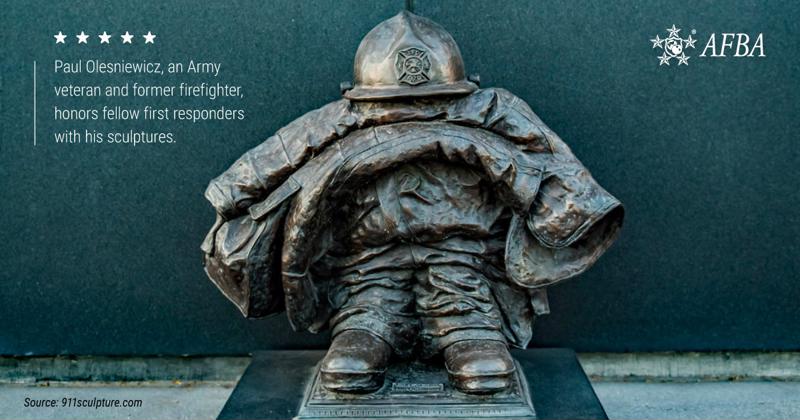
Paul Olesniewicz, an Arizona-based sculpture designer, veteran and former firefighter, has created over 40 memorials honoring first responders and the military.
The sculptor's early career as a servicemember and first responder
Olesniewicz completed his service with the United States Army in 1972. He then returned to his home state of Arizona and began a firefighting career spanning three decades.
"There is an old saying that time flies when you're having fun," Olesniewicz said in an interview with the Professional Firefighters of Arizona Magazine. "Well, I must have had the time of my life, for my 32 years in the fire service seemed to have passed in the blink of an eye — an eye with crows, feet that is,"
Olesniewicz began with the United States Forest Service in Flagstaff, then spent a few years at the William Air Force Base in Mesa as a civilian firefighter where he worked in structural firefighting and crash and rescue. The majority of his fire service career was spent with the Tucson Fire Department.
911 Sculptures unites a passion for firefighting and fine arts
Six years after leaving Army service — and in the midst of his firefighting career, Olesniewicz earned a Bachelor of Fine Arts in sculpture at Northern Arizona University.
It was not until 1994 that he founded his own creative business, 911 Sculptures. Olesniewicz and his team design and create statues honoring first responders including firefighters, EMTs and police officers, as well as members of the military, including those who have made the ultimate sacrifice.
As Olesniewicz says on the business's website, "My goal is to convey the dedication and pride exhibited by firefighters throughout the history of the fire service. I feel extremely fortunate to be able to combine my firefighting experience with my love of art and sculpture."
His work is on display at memorial sites, museums, fire departments and private residences. In 2007, he retired from his firefighting career and began running 911 Sculptures on a full-time basis.
The creative process behind each custom project
To create one of his lifelike statues, Olesniewicz starts with a steel armature and builds out the form using clay. This enables him to achieve an impressive level of detail in the figures' uniforms and expressive faces.
He then takes the full-sized clay sculpture off to a foundry where ceramic molds are created. Molten bronze is carefully poured into the molds. Once cool, the metal pieces are sand-blasted, assembled and welded together. Finally, Olesniewicz applies a patina and protective coat of wax.
Once complete, pieces created by 911 Sculptures are ready to weather the elements and stand as reminders of the daily sacrifices first responders and military members make in service to their community and country.
Olesniewicz works with departments of all sizes across the nation to create custom projects of all scales. One special example is the Tucson Fallen Firefighters Memorial, completed in 2009. This features five life-sized bronze sculptures, including one firefighter wearing full turn-out gear, holding his helmet over his heart. This figure faces a memorial wall engraved with the names of those who lost their lives in the line of duty.
"I like to believe my firefighting background gives me a unique perspective on how important firefighter commemorative and memorial sites are to their communities, departments and their loved ones," Olesniewicz said. "I find it very rewarding to help in my small way to honor our hard-working and brave brothers and sisters. It is the best of both worlds."
Visit the interactive map on the 911 Sculptures website to find Olesniewicz's work at a public site near you.

General Ralph E. “Ed” Eberhart, USAF (Ret.) to remain as Chair
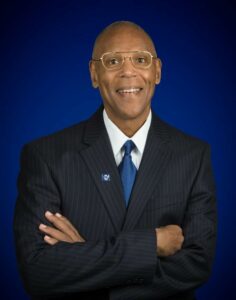 ALEXANDRIA, VA – The Armed Forces Benefit Association (AFBA) Board of Directors has named General Larry O. Spencer, USAF (Ret.) as its new President (effective March 9, 2020) and member of the Board (effective February 26, 2020). Also, AFBA’s affiliate 5Star Life Insurance Company (5Star Life) Board of Directors has appointed General Spencer as a member of its board (effective February 26, 2020). Current AFBA Chair and President General Ralph E. “Ed” Eberhart, USAF (Ret.), will remain the chair of the 650,000 member-strong association. He will also remain Chair of 5Star Life.
“It has been an honor to serve our country’s military service members, first responders, and customers of 5Star Life over the past 15 years as President of this association,” said General Ed Eberhart, Chair and outgoing President of AFBA. “We are pleased to welcome General Spencer as our new President and are confident that, with our board’s continuing dedicated leadership, he will direct AFBA operations with purpose and resolve as we continue to fulfill our mission – to serve those who serve this great nation”.
General Spencer spent more than 40 years in the Air Force, beginning his career in the enlisted ranks and rising to become a four-star general. General Spencer’s last assignment was as the Vice Chief of Staff of the US Air Force where he assisted the Chief of Staff in organizing, training and equipping 690,000 active-duty, Guard, Reserve and civilian forces. After retiring from the Air Force in 2015, General Spencer served as President of the Air Force Association until 2019. General Spencer received his Bachelor of Science Degree in industrial engineering technology from Southern Illinois University at Carbondale and has two Master of Science degrees. He currently serves on the boards of Whirlpool Corporation, Triumph Group, Inc., and Haynes International, Inc.
“I am pleased to join AFBA and look forward to working with the leadership team to proudly serve our service members, first responders, and their families,” said General Spencer. “The Association has a tremendous legacy and I am humbled by the honor of being named President and the opportunity to advance its mission.”
General James L. Jones, USMC (Ret.), AFBA’s lead independent director, stated, “With exceptional leadership and vision, General Eberhart has been instrumental in making AFBA what it is today. He has led the organization in a strategic growth plan that has revitalized our relevance and mission to those who go in harm’s way on behalf of our country. We thank him for his countless contributions as President and all he has done for our members, field representatives, and employees. As Chair, his vision will continue to guide our efforts to protect future generations of service members and first responders. We know that General Spencer’s experience and leadership will further those efforts, and we look forward to working with him.”
About Armed Forces Benefit Association
With the support of the General of the Army, Dwight D. Eisenhower, the Armed Forces Benefit Association (AFBA) was established in 1947 in the basement of the Pentagon to ease the strain on military members and their families who, at the time, could not purchase life insurance that would pay a death benefit if the member was killed in combat. Today, headquartered in Alexandria, VA, AFBA continues to honor its mission, in war and peace, promoting the welfare of its members providing death benefits and other benefits to those who serve this great nation, including members of the uniformed services, first responders, government employees, and their families. AFBA has 650,000 members with $40 billion of death benefits in force and has paid nearly $2 billion of death benefits since inception. AFBA death benefits are underwritten by its affiliate, 5Star Life Insurance Company (a Lincoln, Nebraska domiciled company).
Within the federal contracting landscape, the grass looks greener inside the fences this year. Here are some of the top trends and predictions that government contractors should be aware of in 2020.
The upward trend in federal contract spending continues
According to Bloomberg, federal contract spending experienced steady growth from 2014-2018.
Data from the government's Spending Explorer site confirms this trend. In FY 2017, Department of Defense (DOD) spending comprised 50.4% of all federal spending on contractual services and supplies, or $399 billion. This grew in FY 2018 to 53% ($442.2 billion) and again in FY 2019 to 55.7% ($484.5 billion).
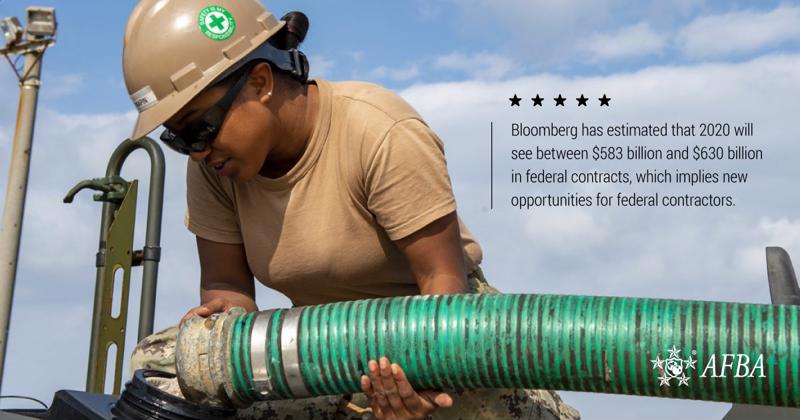
Bloomberg has estimated that FY 2020 will see between $583 billion and $630 billion in federal contracts. This uptick implies new opportunities for federal contractors, especially those situated to serve the DOD, at the start of the new decade.
Major DOD contracts focus on enterprise-level IT solutions
Federal News Network estimates that there will be 3,000 defense contract opportunities in 2020, the largest of which relate to IT solutions:
- The DOD has already issued a request for information relating to an estimated $10 billion contract for commercial-off-the-shelf IT hardware for the U.S. Army.
- The Defense Information Systems Agency (DISA) has issued an RFP for wide area network capability, worth up to $1 billion.
Others up for recompete include:
- The Navy's $1 billion Multifunctional Information Distribution System (MIDS) Joint Tactical Radio System contract.
- DISA's Pacific $2.4 billion contract for telecommunications infrastructure transmissions.
- The Army's $500 million contract for logistics and engineering support for the information management system, Medical Communications for Combat Casualty Care (MC4).
In general, the emphasis will be on IT modernization, data analytics, cloud computing and enhanced cybersecurity. Although these massive IT contracts are likely to be awarded to enterprise-level organizations, niche providers and small businesses will have opportunities of their own.
Small business gain market share through teaming and set-asides
In 2020, contractor team arrangements (CTAs) — are expected to grow in popularity among contractors of all sizes — but particularly among small businesses. By combining resources and bidding together, they are better situated to take on significant contracts. The ongoing federal push toward securing Best-in-Class (BIC) solutions suggests a teaming uptick this year.
As MeriTalk explains, "Teaming helps contractors gain access to work, minimize risk, increase knowledge and offer a more competitive price point. Small businesses view teaming as the most effective way to thrive in the competitive federal market. "
Smaller companies will also continue to compete for the government's small business set-aside contracts in 2020. The HUBZone program has made allocating more contract dollars to businesses operating in underutilized areas a priority, with the goal of awarding at least 3% to HUBZone-certified contractors.
Spending priorities across the rest of the decade remain uncertain
While recent years exhibited clear federal priorities — particularly the significant boost in defense spending — the November 2020 election makes it impossible to confidently predict what's ahead in the coming years. As a safeguard, federal contractors should situate themselves to win and hold onto the opportunities 2020 presents.
After all, as the Baltimore Business Journal advises, "contractors can't predict every change in the political weather, [but] they can still carry an umbrella."
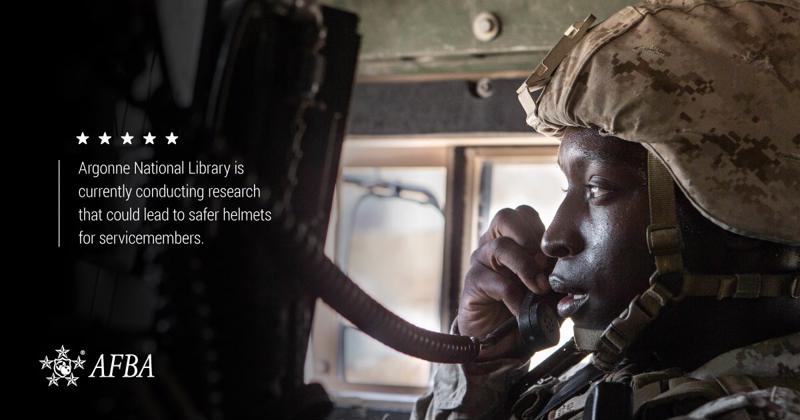
The most detailed study of the human skull is currently underway at Argonne National Laboratory in Illinois. The ongoing scientific research, which began in June 2019, may lead to the development of safer ballistic helmets for U.S. armed forces.
In partnership with the Army Research Laboratory (ARL), the helmet safety research project is being led by a research group based at the Advanced Photon Source (APS), a U.S. Department of Energy Office of Science User Facility at Argonne.
High-powered X-rays make new skull insights possible
The sensitive, highly powered beams available at APS are central to better understanding the microstructure of the human skull.
"By putting these [X-ray beams] on the bone, we can then see things about the bone in the skull that we couldn't with other techniques," beamline scientist and group leader Jonathan Almer, Ph.D., said in a National Defense Magazine interview. "That allows us to do things with time and space scales that you couldn't do with laboratory X-rays."
More specifically, APS' X-ray analysis is helping researchers understand the directionality of the skull bones' crystalline collagen structure. With this information, they can better understand what happens to these microscopic components following a blunt force impact. Knowing precisely how the energy disperses and how it modifies the bones themselves can enable helmet designers to develop more effective protections.
Researchers strive for more accurate models of bone behavior
The researchers have been working with cadavers and preserved skull samples that were fractured in previous ARL studies. These samples exhibit the effects of a bullet as well as a helmet on the skull.
"Bullet to helmet to skin to skull to brain," ARL team lead Karin Rafaels explained in an Argonne press announcement. "We have to get the models right all the way through — for our Army mission and for our understanding of bone in general."
The models in question are computer models used to inform helmet design. The bones in the skull are constructed differently from load-bearing bones like the femur, which tend to fracture in predictable ways. And yet, it is these bone behavioral models that helmet design has relied upon. The researchers are eager to develop new, more accurate models representative of the skull itself based on their X-ray imaging experiments.
This level of detail has already proven to be enlightening. "Even in quick reconstructions of the data, we could already see differences between the structures of the femur compared to the skull," Rafaels added.
Implications for military helmet design
According to Rafaels, with the assistance of APS' powerful imaging technology, the researchers "can see if there are preferable loading pathways, or ways to distribute or direct the force of the impact, so that we can design our helmets to take advantage of the skull's crystal structure."
Popular Mechanics compared the skull's collagen structure and likely behavior to that of woodgrain and gemstones: These materials will split easily along the grain but are more resilient when approached across the grain. The helmet of the future may be able to distribute the energy of an impact in a way that takes advantage of these characteristics.
As Almer noted, "By better understanding the mechanics of the skull, we can then design helmets that would generally be better" for use in the U.S. military, which requires hundreds of thousands of helmets to keep its servicemembers safe. The ideal product is a stronger but more lightweight helmet that can be reliably and economically mass-produced.
This study's findings may also be helpful to the sporting world, Almer added, where enhanced sports helmet safety also remains an important yet elusive objective.
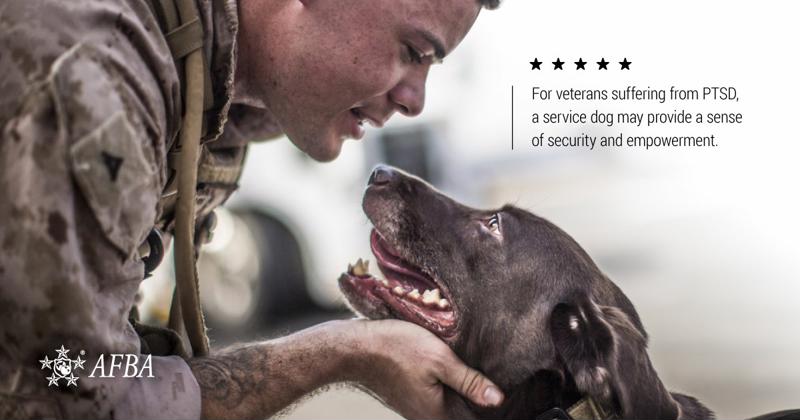
According to a Pew Research Center study into the lives of post-9/11 military veterans, 36% suffer from post-traumatic stress. For some, a service dog may provide a sense of security and empowerment. Unfortunately, accessing such resources has proven to be a challenge.
While there are channels through which veterans can get paired up with service dogs, there are still certain limitations. Additionally, there's an ongoing conversation about proposed legislation that could subsidize service dogs for veterans with PTSD.
VA support stalls while clinical research continues
While the VA subsidizes service dogs for vets diagnosed with physical disabilities, the department has cited a lack of clinical proof as its reason for withholding support for psychiatric service dogs for veterans with PTSD. The VA has dedicated $16 million to studying this subject since 2011. Findings from the VA study — titled "Can Service Dogs Improve Activity and Quality of Life in Veterans With PTSD?" — are slated for release later in 2020.
In the meantime, a growing body of evidence suggests that there are definite benefits. During a 2018 Purdue University study, members of the College of Veterinary Medicine compared the cortisol production patterns of veterans with service dogs to those on the waitlist without a canine companion.
According to researcher Kerri Rodriguez, the team observed patterns "closer to the cortisol profile expected in healthy adults without PTSD. Having a service dog was also associated with less anger, less anxiety, and better sleep."
As Suzy Wilburn of the nonprofit Southeastern Guide Dogs told Military Times, "The dogs are never going to be a cure for [PTSD], they're simply going to be a tool to help [veterans] in their recovery with it."
Service dog advocates in Congress have proposed a new piece of VA legislation known as Puppies Assisting Wounded Service Members, or the PAWS Act. This would create a grant program through which diagnosed veterans could receive $25,000 from the VA to adopt a service dog. However, progress has stalled since 2016.
Nonprofits offer service dogs for veterans with PTSD
Those interested in finding service dogs for veterans with PTSD should connect with accredited nonprofits that are members of the following organizations:
- The International Guide Dog Federation.
- Assistance Dogs International.
- The Association of Service Dog Providers for Military Veterans.
The process of adopting a service dog can take years, with many approved vets assigned to waiting lists. It can be expensive, too; the VA estimates that training and follow-up support for just one dog and its recipient cost $25,000.
It can also change a veteran's family dynamic, so support is essential. In an interview with Military Times, Mike Drafts of K9s for Warriors advised that "this is a lifestyle change like no other, […] it's almost like you're adding a third person to a relationship."
The application process typically includes:
- Submitting formal application documents.
- Sharing a medical history and diagnosis.
- Consenting to a criminal background check.
- Providing personal references.
- Completing a series of interviews.
- Attending training courses.
However, not all those who apply to these programs qualify. Nonprofit personnel look for veterans who are actively receiving mental health treatment and who don't have any history of violence that would jeopardize the dog.
They also work with vets to understand their goals in working with a service dog. For instance, some veterans look for assistance in coping with daily activities and outings while others need support for nightmares and panic attacks at home.
Access to psychiatric service dog support is more limited than it may be in the future. However, veterans can always access the Veterans Crisis Line by dialing 1-800-273-8255 and pressing 1, texting 838255 or initiating a live chat conversation with a VA responder.

For the first time in 10 years, U.S. firefighters and fire managers have been mobilized to help Australian first responders battle devastating bushfires. While the American firefighters going to Australia arrived to a warm welcome, the stakes remain high.
Bushfires have blazed across Australia since late 2019
After the hottest, driest year on record, the relentless bushfires have taken a staggering toll on the Australian continent. Since September 2019, at least 27 lives have been taken and at least 2,000 homes have been destroyed.
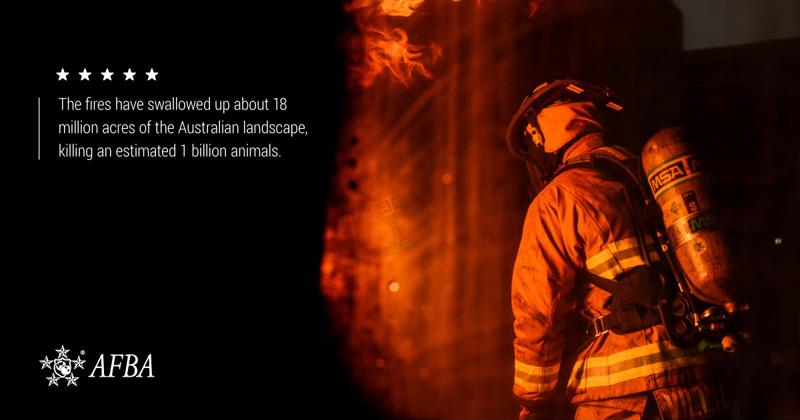
The fires have swallowed up about 18 million acres of the Australian landscape, killing an estimated 1 billion animals and eradicating countless native plants and wildlife habitats, according to NPR. A second surge of flames has even tormented some already scorched towns.
Due to the smoke pollution, residents far from the flames are subject to inhaling the smoke equivalent of 19 cigarettes a day. This has put a strain on emergency health facilities and is likely to cause significant physical and mental health consequences including acute lung and heart conditions as well as post-traumatic stress, The Washington Post reported.
The Australian-American partnership
The Australian Fire and Emergency Service Authorities Council requested assistance in November 2019. As of Jan. 13, 2020, around 160 U.S. fire professionals have since been involved in helping suppress the fires throughout Victoria and New South Wales.
These efforts signal an act of reciprocity. In 2018, 138 firefighters came to the U.S. from Down Under to spend a month getting California's historic wildfires under control. The 2019-2020 mobilization efforts have been coordinated by the Idaho-based National Interagency Fire Center (NIFC). Although the agency hasn't sent American firefighters to Australia since 2010, the relationship has been ongoing for 15 years, CNN reported.
According to the NIFC, additional teams will depart around Jan. 16, 2020 in response to another request. This calls for "Type I Incident Management Teams (IMTs) who specialize in managing wildland fire incidents, and other qualified personnel, such as aircraft managers, firefighting crews and chainsaw operators."
From the California wildfires to the bush
Many of those mobilized in Australia hail from California. The Golden State's fearless first responders possess not only endurance but also the experience necessary to combat complex bushfires. Despite the state and the country being across the globe, both share a similar dry climate with similar vegetation.
Eucalyptus trees in both locations are particularly hazardous; their large leaves can act like fireballs, coming loose and blowing for miles in high winds. (This species was actually brought to California by the Aussies who took part in the Gold Rush of the 1850s.)
Rober Garcia, chief of the Angeles National Forest (ANF), vouched for the expertise of the organization's select 20-person unit, which is scheduled for up to 45 days Down Under.
"They work on engine crews, hot-shot crews, aviation helicopters crews, and they often work in remote places, independently with little support," Garcia told CNN. "They are used to traveling, breaking up into small squads, [and] doing initial attack — meaning attacking fires early before they become a large fire."
Firefighters received a warm welcome in Sydney
Shane Fitzsimmons, the commissioner of the New South Wales Rural Fire Service, tweeted a video (now with over 9.1 million views) documenting the American firefighters' arrival at Sydney International Airport.
According to Fitzsimmons, onlookers "gave a spontaneous and lengthy round of applause, reflecting the gratitude and admiration we all have for their generosity."
Following a single jet lag recovery day, the American first responders underwent operational and safety briefings before joining Australian fire authorities and firefighters out in the bush. While the teams have been hand-selected, many participants volunteered for this assignment.
Jonathan Merager, an American fire prevention technician with 18 years of firefighting experience, was quick to volunteer for the assignment when the opportunity arose.
"Our Australian sisters and brothers have helped us over the years," Merager told the Los Angeles Times. "It seemed natural to reciprocate that assistance."
The state of mental health for first responders is a dire one. In a 2019 article published on the Journal of Emergency Medical Services (JEMS) website, researchers deemed the issue a national crisis, citing the suicide epidemic among firefighters and emergency medical professionals.
Mental health crisis among first responders
Between 2014 and 2017, more first responders died by suicide than by job-related fatalities. The Los Angeles Times reported that at least 115 EMS workers and firefighters took their lives in 2017. According to data from the Centers for Disease Control and Prevention (CDC) cited by JEMS, first responders are at 10-times greater risk of suicidal thoughts or attempts than members of the general public.
In addition to the suicide risk, countless first responders are struggling with a lack of sleep, behavioral disorders and substance abuse as a direct result of the daily traumas they face on the job. The trauma of bearing witness to harrowing incidents of death and loss, and of being unable to save lives in devastating circumstances, undoubtedly takes a toll.
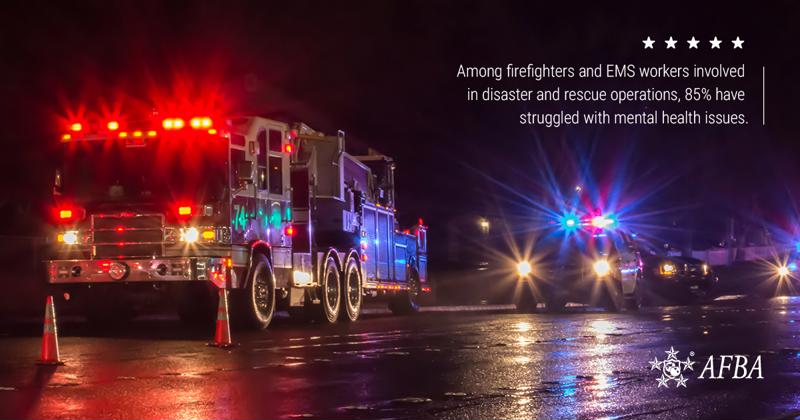
Among firefighters and EMS workers involved in disaster and rescue operations, 85% have struggled with mental health issues and 75% have experienced some symptoms of psychological trauma, according to the National Council for Behavioral Health. And yet, because the mental and emotional scars are often invisible, those suffering are not encouraged to seek help.
Stigmatization and resource limitations in rural communities
Rural areas, in particular, have seen a notable lack of utilization of mental health services, largely due to the stigma surrounding mental and emotional wellness.
"[T]he stigmatization alone has created a boundary between the first responders and the need for mental healthcare," firefighter and clinical psychologist Asa Don Brown, Ph.D., wrote in Psychology Today.
A recent study revealed that nearly half of first responders fear employer retribution for addressing their mental health needs and seeking professional counseling. As such, they deny themselves from accessing services that could make a difference.
Although the U.S. has seen growing mental health awareness in recent years, "awareness does not necessarily translate to action," JEMS authors noted.
Additionally, rural communities face a severe lack of mental health resources. According to the U.S. Health Resources and Services Administration, rural communities comprised over half of the Mental Health Professional Shortage Areas in 2018. Specialist caregivers are quite literally few and far between, making appointments prohibitive due to high costs and lengthy transit times.
A path forward
For rural first responders struggling with mental health, the two main barriers are the lack of mental health resources and the lack of awareness about those resources that are available. As such, mental health professionals and first responder advocates urge rural caregivers and first responder communities to take action.
They recommend that employers pinpoint the barriers preventing emergency workers from accessing the care that they need, and work to eliminate those barriers and bridge the gaps. Because many emergency workers don't know how to begin to seek help, this could involve proactive education initiatives.
Simultaneously, rural communities and employers should work to increase and improve the mental health services available. To make up for the lack of mental health care providers within rural regions, telehealth services can also be adopted. Once again, prioritizing education and giving those in need access to such services is key.
Furthermore, when raising awareness and changing the perception of mental health for first responders, it's important to relay this message: Seeking help is not a sign of weakness but a sign of incredible strength.
One in five veterans living today served on active duty following the 9/11 attacks. New data from the Pew Research Center demonstrates how their experiences differ from earlier generations of armed servicemembers.
"The American Veteran Experience and the Post-9/11 Generation" summarizes the results of a 2019 Pew survey. Respondents included nearly 800 veterans whose military service was completed before the attacks on Sept. 11, 2001 and nearly 500 vets who began serving afterward.
Among the key findings is the fact that younger veterans struggle more during the transition from active duty to civilian life.
The transition from active duty to civilian life
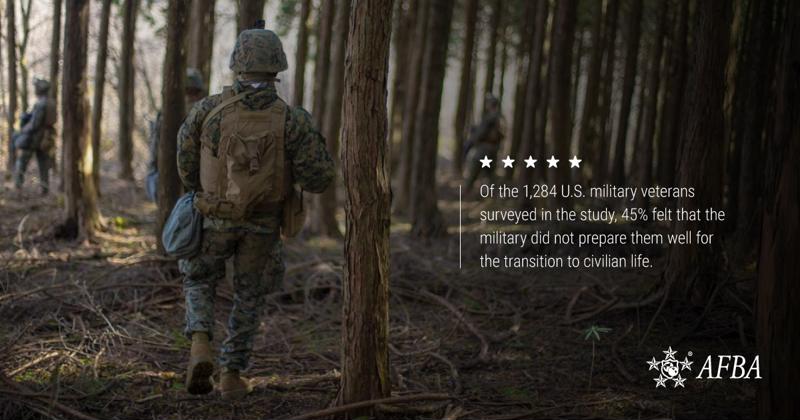
Of the 1,284 U.S. military veterans surveyed in the study, 45% felt that the military did not prepare them well for the transition to civilian life.
However, nearly half of post-9/11 veterans reported that the transition to civilian life was challenging, with 16% describing it as very difficult and a third describing it as somewhat difficult.
This stands in contrast to the relatively smooth transition experienced by pre-9/11 veterans: 78% considered the transition somewhat or very easy. Only 4% described it as being very difficult.
Civilian work-life challenges
In the first months and years following reentry into civilian life, veterans struggled with:
- Paying bills.
- Finding employment.
- Obtaining medical care.
- Alcohol or substance abuse.
- Emotional distance from friends and family.
- A lack of structure in civilian life.
The study found that about two in five post-9/11 veterans believed they were overqualified for their first post-military civilian job, although the majority stayed for at least one year. However, more than two-thirds reported that their deployment had a positive financial impact compared to the majority of pre-9/11 vets who felt it had no impact.
The older generation was more likely to feel pride in their service and optimism about their future, while the younger generation was more likely to find government assistance levels inadequate.
Mental and emotional health consequences
The post-9/11 generation was more likely to have experienced emotionally distressing or traumatic experiences and post-traumatic stress as a result of deployment.
The Pew study concluded that post-9/11 combat veterans, in particular, were the most likely to have experienced emotional trauma and were, therefore, more likely to struggle generally. The research revealed that 57% of all combat veterans had witnessed someone they served alongside be killed or seriously injured.
Because twice as many veterans saw combat in the post-9/11 era, twice as many came away with the emotional scars of those experiences. Of post-9/11 veterans, 42% reported that their service had negative mental health consequences, compared to only 17% of pre-9/11 veterans who felt similarly.
However, the post-9/11 generation was more likely to seek out help for emotional issues (35% compared to just 10% of pre-9/11 veterans).
Higher likelihood of serving in a combat zone
The difference between the experiences cited by both generations, according to Pew researchers, was the greater likelihood of serving in a combat zone. Post-9/11 veterans were far more likely to have experienced at least one deployment and were twice as likely to be combat veterans.
Over three-quarters of post-9/11 vets were deployed at least once, with 10% having been deployed eight or more times. Additionally, about half of post-9/11 vets experienced combat; less than a quarter of pre-9/11 vets did.
And yet, despite experiencing a more difficult transition from active duty to civilian life, roughly four in five post-9/11 veterans said that they would still encourage a young person to enlist.
The complete results of the study are available on the Pew Research Center's website.
During the holiday season, families around the U.S. remember loved ones serving on active duty as well as those who have made the ultimate sacrifice. National Wreaths Across America Day gives communities around the nation the opportunity to gather in fellowship in remembrance of our fallen heroes.
Wreaths Across America
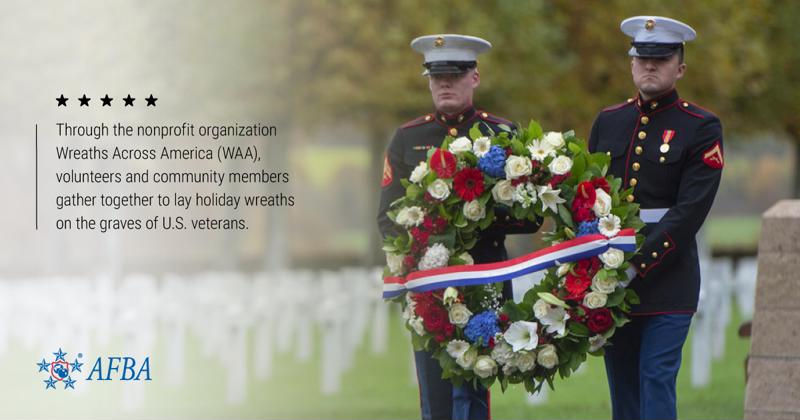
Through the nonprofit organization Wreaths Across America (WAA), volunteers and community members gather together to lay holiday wreaths on the graves of U.S. veterans. This nationwide event is part of WAA's mission to remember fallen veterans, honor those who serve in the armed forces and teach the next generation about the value and price of freedom.
The commemorative day has taken place on the second or third Saturday of December since 1992. Following a week-long escort down the East Coast, National Wreaths Across America Day is being recognized on Dec. 14, 2019 this year.
The escort, which began in Maine on Dec. 7, will pass through Massachusetts, Connecticut, New Jersey, Delaware, Maryland and Washington D.C. before concluding at Arlington National Cemetery in Virginia on Dec. 14. Led by Mona Gunn, the national president of American Gold Star Mothers, the escort will host ceremonies and dinners at local schools, civic spaces and religious institutions along the way, as well as at war memorials in the nation's capital.
As wreaths are laid in Arlington, concurrent ceremonies will occur at more than 1,600 locations throughout all 50 states and overseas. Nearly 1.8 million wreaths were placed on veterans' headstones in 2018. The organization anticipates a similar impact this year.
'Everyone plays a part'
The theme for the 2019 Wreaths Across America Day is "Everyone plays a part." This theme was chosen by Miles Worcester, the 10-year-old grandson of the organization's founder, who observed that "those serving in the military are doing their part, but it is our part as Americans to remember and honor them, and that's what Wreaths Across America does."
As such, there are many ways to participate in National Wreaths Across America Day. Beyond attending an event along the escort route, members of the public may also attend wreath-laying ceremonies at cemeteries throughout the U.S. During these ceremonies, volunteers place wreaths on the markers of our fallen heroes, speaking each veteran's name to remember and honor their legacy of service and sacrifice.
WAA relies on volunteers to place wreaths, coordinate ceremonies at new locations, lead fundraising efforts, offer corporate sponsorship and donate trucking services to transport the wreaths. Individuals may also sponsor one or more wreaths or a specific cemetery. Those interested in becoming location coordinators, wreath-layers or sponsors can express interest through a volunteer form on Wreaths Across America's website.
Remembrance Trees
In Columbia Falls, Maine, balsam tree boughs are harvested to make the wreaths that grace veterans' graves. Through WAA's free Remembrance Tree Program, the nonprofit produces customized dog tags for families to display on a specific evergreen. These Remembrance Trees become living memorials honoring those who are no longer with us.
Karen Worcester, Miles' grandmother and WAA's Executive Director, has explained that this is a more permanent way to uphold the organization's mission.
"This endless forest is a truly visual representation of our unwavering commitment to our mission to Remember, Honor and Teach and to recognize our veterans and families this year and for many years to come," Worcester said.
McKinley’s career of service speaks to the enterprise’s key markets
ALEXANDRIA, VA – The Armed Forces Benefit Association (AFBA) and its affiliate, 5Star Life Insurance Company, announced today the appointment of Gen. Craig R. McKinley, USAF (Ret.) to the 5Star Life board of directors, effective December 1, 2019.
“We are pleased to welcome Craig McKinley to the 5Star Life board of directors. His commitment to our country’s military servicemembers and first responders is unparalleled, and he will help guide our efforts to serve all those who serve this great nation,” said General Ed Eberhart, USAF (Ret.), Chairman and President of AFBA and Chairman of 5Star Life.
Mark Singleton, President of 5Star Life, added, “We never lose sight of our goal – to ensure we remain relevant as an organization, so we can serve and protect future generations of servicemembers, first responders, and civilians serving our country. With General McKinley on the board, that focus will continue.”
McKinley retired as a four-star general in 2012 after a long and honorable 38-year career in the Air Force. His last assignment was as the Chief of the National Guard Bureau, where he also served as a member of the Joint Chiefs of Staff. In this capacity, he was a military adviser to the President, the Secretary of Defense, the National Security Council and was the Department of Defense’s official channel of communication to the Governors and to State Adjutants General on all matters pertaining to the National Guard. After his distinguished military career, McKinley served for more than two years as President of the Air Force Association, and later went on to serve for a two-year term as President and CEO of the National Defense Industrial Association (NDIA). On July 1, 2017 he was appointed, and still serves, as National Chair of Employer Support of the Guard and Reserve. He lives in Arlington, Virginia, with his wife Cheryl.
“I am pleased to join the 5Star Life Board of Directors and look forward to working with the leadership team to proudly serve our servicemembers, first responders, civilians, and their families,” said General McKinley.
About Armed Forces Benefit Association
With the support of the General of the Army, Dwight D. Eisenhower, the Armed Forces Benefit Association (AFBA) was established in 1947 in the basement of the Pentagon to ease the strain on military members and their families who, at the time, could not purchase life insurance that would pay a death benefit if the member was killed in combat. Today, headquartered in Alexandria, VA, AFBA continues to honor its mission, in war and peace, promoting the welfare of its members providing death benefits and other benefits to those who serve this great nation, including members of the uniformed services, first responders, government employees, and their families. AFBA has 650,000 members with $40 billion of death benefits in force and has paid nearly $2 billion of death benefits since inception. AFBA death benefits are underwritten by its affiliate, 5Star Life Insurance Company (a Lincoln, Nebraska domiciled company).
About 5Star Life
5Star Life Insurance Company (5Star Life) is the primary underwriter of the Armed Forces Benefit Association (AFBA) member policies. In addition, it extends the enterprise’s mission to civilians serving our country in the workplace. As a growing provider of group and worksite voluntary products, 5Star Life serves a diverse clientele as an insurance provider to individuals and organizations and as a trusted advisor to brokers. Headquartered in Alexandria, VA, 5Star Life is currently licensed in 49 states, the District of Columbia, Puerto Rico, the U.S. Virgin Islands, Guam, and American Samoa.