
The Navy is taking a comprehensive approach to recruit and retain servicemembers during a time when the U.S. economy is doing exceptionally well. Unemployment is the lowest it's been in 18 years, which should be good news for recruiting efforts. In truth, however, this means the Navy faces stiff competition from other military branches and the private sector. What's more, interest in joining the military usually drops as the economy improves. Not only are qualified individuals choosing jobs, but parents push students to go to college rather than enlist.
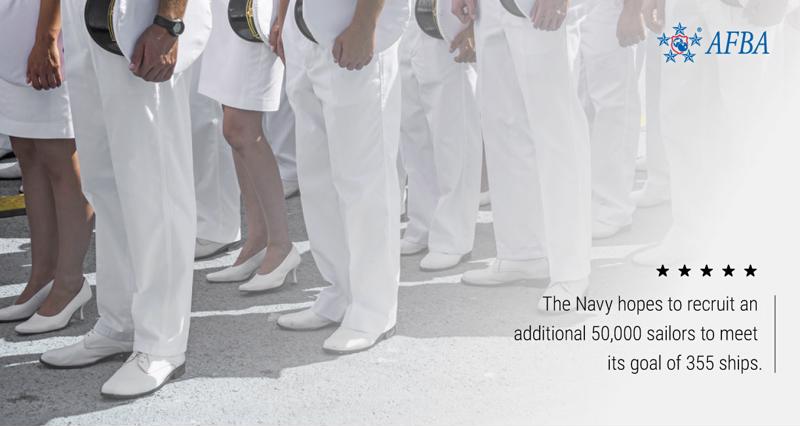
Finally, more than 70 percent of Americans of prime recruiting age can't serve due to obesity, criminal records or a lack of high school diploma or GED. Combined, these circumstances spell trouble for the Navy. The military branch is about 11,000 sailors short of what it needs to man its current fleet, and it will need about 50,000 more to meet its goal of 355 fully crewed ships.
According to an article from Military.com, Navy Secretary Richard Spencer expressed his concerns over the state of the branch's recruitment efforts during the Naval War College's annual two-day Current Strategy Forum.
"As the economy improves, we compete," said Spencer, per the article. "The game is now in our court to do the best we can to have the tools that we need to recruit, train and retain the best that our country has to offer."
Strategies to boost Navy recruitment efforts
President Donald Trump requested $686.1 billion for the military in his budget proposal for next year. The Navy should get a portion of that, and many funds will likely go toward recruiting.
The Navy also announced a new program that would allow sailors who leave to rapidly reenlist in a few years. Further, as the U.S. Naval Institute reported, the military branch increased the pace of its sea-going apprentice program: the long-running Professional Apprenticeship Career Track (PACT). Now, new sailors sign a three-year contract instead of a four-year enlistment. This gives them an idea of the various Navy jobs available and puts them on the path to a career sooner. This strategy boosts retention and encourages sailors to reenlist.
The goal of this change to PACT is to better match the wishes of new sailors with the needs of the military, according to Navy Branch Head for Enlisted Plans and Policy, Capt. Mery-Angela Katson. New sailors will take jobs at sea and work alongside other, trained servicemembers in one of three basic career paths: surface warfare, engineering or aviation.
"It's a way to give sailors the ability to look at jobs in these tracks and then give them a specific skills training pipeline to become rated sailors and continue on in that path through advancement and a career in the Navy," Katson said to USNI News.
Finally, the Navy is revising its typical recruitment strategies. According to Military.com, it's considering hiring private-sector professionals who are in the middle of their careers. Per Secretary Spencer, this strategy would help the military find and recruit top talent in a competitive market.
Additionally, per an NPR broadcast, the military branch is creating ads aimed at centennials, who are described as members of the first generation born with access to the internet. These ads are an attempt to dispel the notion that the military is the last hope for young people with nowhere else to go.
Combined, these strategies should increase the number of new sailors recruited into the Navy and improve retention numbers. Hopefully, the Navy will have no trouble meeting its manpower goals over the next few years.

On May 3, 2018, a volcanic event known as the 2018 lower Puna eruption occurred on Kilauea volcano's East Rift Zone on Hawaii's Big Island. Earthquakes caused cracks in the roads, leading to lava foundations up to 300 feet high and destroyed homes in the Leilani Estates subdivision. Nearly 2000 residents were forced to evacuate, and the Puna Geothermal Venture, which provides electricity for a significant part of the island, was forced to shut down and later damaged. This event is part of the larger, long-term Kilauea eruption that began Jan. 3, 1983.
As part of the efforts to minimize the volcano's damage and destruction, first responders from around the nation made their way to Hawaii. A CBS News affiliate from Greensboro, North Carolina, covered a story about a group of local first responders leaving for the island at the end of May. Ten of the state's fire service officials and emergency managers made their way to an emergency operations center in Hilo, Hawaii. There, they assisted an incident management team and the Hawaii County Civil Defense agency for 14 days before returning home.
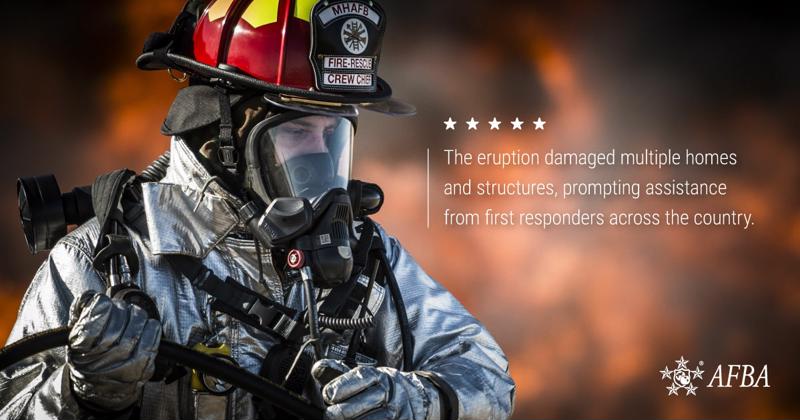
Another group of responders came from Oregon and southwest Washington, per an NBC News affiliate. They're assisting local authorities by erecting disaster relief shelters and providing food, water and mental health services. One, a former Southern California firefighter and current Red Cross volunteer, noted how the unpredictability of the volcano makes operations difficult.
"It's slow and it's unpredictable," said volunteer Jerry Hall to the news station. "Tornadoes and hurricanes…you pretty much know what to expect as it happens. This is ongoing and the lava is changing directions all the time and changing areas. So, it's a lot of uncertainty for the people who live here."
Hall's statements were echoed by Cowlitz 2 Battalion Chief Joe Tone of Washington state.
"A few days in, I realized the severity as far as danger to myself and the other guys because (the lava) is so unpredictable," Tone said to The Daily News Online.
He went on to explain how, even though the fissures are all erupting on a single line, it's difficult to predict exactly where the next one will occur. But aside from trying to predict where the next event will happen, rescue workers must also assist the people who live in existing danger areas. Tone recalled seeing 20 homes in a single neighborhood destroyed. Some were overcome by flowing lava, others fell into the opening fissures and more caught fire from flying sparks.
Unfortunately, the lava isn't the only hazard of the ongoing eruptions. Thousands of people's lives were jeopardized by the toxic gases released by the volcano. So, in addition to physically rescuing trapped civilians, setting up shelters and transporting people to safety, first responders such as Tone also needed to monitor the island's air quality and chart where the gasses might spread next. Given the volcano's unpredictability and the natural movements of wind, this couldn't have been an easy task.
Tone and other first responders also worked to remove hazardous chemicals from the nearby geothermal plant, preventing a possible explosion that had a potential blast radius of half a mile. Thanks to their efforts, such risk was eliminated.
The damage from Kilauea
According to Reuters, this volcanic eruption is the most destructive since that of Mount St. Helens in 1980, with over nine square miles of the Big Island covered in lava. Estimates on the number of destroyed homes range from 455 to 600; regardless of the actual number, it is the greatest quantity of homes destroyed by the volcano in such a short time.
Richard Overton celebrated his 112th birthday on May 11, 2018. This in itself is remarkable, but Overton is more than one of the oldest men in the world. He's also America's oldest living veteran.
The birthday celebration started a month earlier, after Overton spoke with Austin businessman Robert F. Smith. The centenarian mentioned that he wanted to see the recently opened National Museum of African American History and Culture in Washington, D.C. Smith, who had donated approximately $20 million to the museum, flew Overton to visit on a private jet. There, Overton was greeted by former secretary of state Colin Powell and treated to a private tour.
A life of experience
Many people never fly privately in their lifetimes, let alone get to avoid the crowds at a Smithsonian museum. Yet, Overton's done a lot more in life than most. He's visited the White House several times and met numerous people of influence, including comedian Steve Harvey and former president Barack Obama.
The secret to his age? Overton credits his love of cigars, whiskey, coffee, fried catfish and butter pecan ice cream. He also refuses to think about death.
"I don't think about [dying]," he said on the TODAY Show in 2014, according to an NBC News article. "You can't do anything about that. It's going to come, whether you want it or not. I just think about living."
Overton celebrated his 112th birthday proper with a block party. The event wasn't unusual; he lives on a street in East Austin, Texas, named after him, and people often visit after hearing his story. The frequent guests don't seem to bother him.
Buying it in the 1940s for $4,500, Overton's lived in his home for more than 70 years. Per USA Today, his home underwent several repairs provided by Austin Energy, Home Depot and Meals on Wheels to make his home more accessible, adding heat and air conditioning, fixing the plumbing and wiring, and bringing the house up to code.
As for his daily life, Overton's various family members help him often. Additionally, thanks to online fundraising, he's able to live independently with round-the-clock health care. Overton is surprisingly mobile for a man in his second century of life. Per the NBC article, he was still driving and tending to his lawn at age 109. His veteran's benefits would allow him to stay in an assisted-living facility, but Volma Overton, his 70-year-old cousin and caregiver, thinks the experience would be bad for him.
"His front porch is his everything," Ms. Overton told the Washington Post. "It's his throne. He's outlived almost everybody in his family."

A family legacy
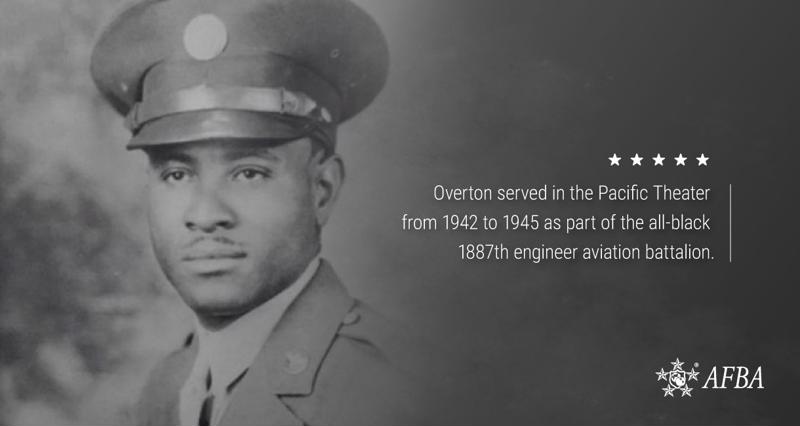
Overton's grandfather was a slave in Tennessee. After receiving his freedom, he moved to Texas to set roots. Overton himself was born May 11, 1906 in Bastrop County, Texas. He forwent college to join the U.S. Army at Fort Sam Houston, Texas. He served in the Pacific Theater from 1942 to 1945 as part of the all-black 1887th engineer aviation battalion. As part of his service, Overton was stationed in Palau, Guam, Iwo Jima and Okinawa.
Overton retired in 1945 as a corporal technician fifth grade. He received the Expert Rifle Marksmanship Badge, a Meritorious Unit Commendation and the American Campaign Medal, among other distinctions.
Yet it wasn't until 2013 that Overton gained a bit of fame. Two East Austin filmmakers, Matt Cooper and Rocky Conly, began filming a documentary about his day-to-day life. Overton quickly became a nationwide sensation, and he plans to keep living with the same jovial attitude.
Minnesota legislators recently passed a bill that greatly benefits first responders. As a local Fox News affiliate reported, first responders such as police, firefighters, paramedics and corrections officers are no longer required to prove what events caused their employment-related post-traumatic stress disorder in order to receive worker's compensation.
This bill can do much to help first responders get the care they need. Consider the story of Brian Cristofono, a firefighter who suffered from job-related nightmares and panic attacks. According to an NBC station from Minneapolis, Cristofono became irritable, started drinking and his marriage ultimately fell apart. The firefighter also saw three coworkers succumb to suicidal thoughts and thought about taking his own life.
Luckily, Cristofono was able to get help – a psychologist diagnosed him with PTSD and drafted a list of events believed to have caused the condition. Creating this list couldn't have been easy, as PTSD symptoms can manifest months or years after the trigger event occurred. Cristofono used his diagnosis to apply for worker's comp, but his claim was denied.
"There was no physical injury associated with any of those calls," Cristofono told the news station, relaying the response he received from the city. "So it could not be PTSD."
The burden of proof is now shifted thanks to this bill, and PTSD is now an assumed side effect of being a first responder. This news comes just in time for National PTSD Awareness Month.
PTSD among first responders and veterans
The Mayo Clinic defines PTSD as a mental health condition resulting from experiencing or witnessing a terrifying event. The disorder is difficult to cope with, especially if it's left untreated. Symptoms include nightmares, uncontrollable thoughts, flashbacks and severe anxiety.
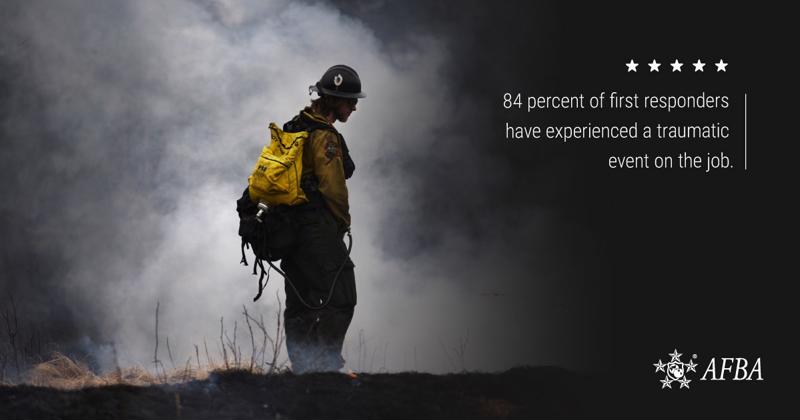
Some occupations are more prone to possible PTSD than others – particularly military and first responder roles. A 2017 survey from the University of Phoenix found 84 percent of police officers, firefighters, EMTs, paramedics and nurses have suffered symptoms related to mental health issues. Furthermore, 84 percent have experienced a traumatic event on the job, but only 34 percent were diagnosed with a mental health disorder. This isn't to say that traumatic experiences only affect a small percentage; it's more likely that people have PTSD but aren't diagnosed.
Why might this be true? Unfortunately, there remains a pervasive stigma against mental health services, especially among first responders. Seventy-four percent of survey respondents said they have therapy, counseling and similar opportunities available, but only 39 percent actively sought them out. Reasons for avoiding such services included fears that supervisors would treat them differently, that coworkers would perceive them as weak and that they'd be passed over for promotions.
Such stigmas are, in part, why Congress named June 27 PTSD Awareness Day back in 2010. What's more, the Senate designated all of June as PTSD Awareness Month just four years later in 2014.
The goal of these measures, according to the Department of Veterans Affairs, is to promote awareness of PTSD and its effective treatments. The VA provides many helpful aids to assist veterans and their families in understanding PTSD and seeking help, and first responders may benefit from these resources as well.
One booklet, titled "Understanding PTSD and PTSD Treatment," helps you define PTSD, lists possible PTSD-causing traumatic events, describes various symptoms and answers common questions about treatment. Another tool, the PTSD Treatment Decision Aid, helps you make the best choices for your life and health when addressing your condition.
If you suspect yourself or someone you love suffers from PTSD, talk to your doctor or a mental health professional. If you don't yet have a counselor, look for one who specializes in PTSD. Reach out to loved ones, and call the National Suicide Prevention Lifeline (1-800-273-8255) if you're having suicidal thoughts.
Now that your time in the military has come to an end, you may be concerned about your next steps. Civilian life seems daunting, but it doesn’t have to be. With a solid strategy and the support of family and friends, you can feel just as fulfilled as you did during your service.
Here’s what to do when your time in the military has come to an end and you’re ready to create a civilian life that you love:
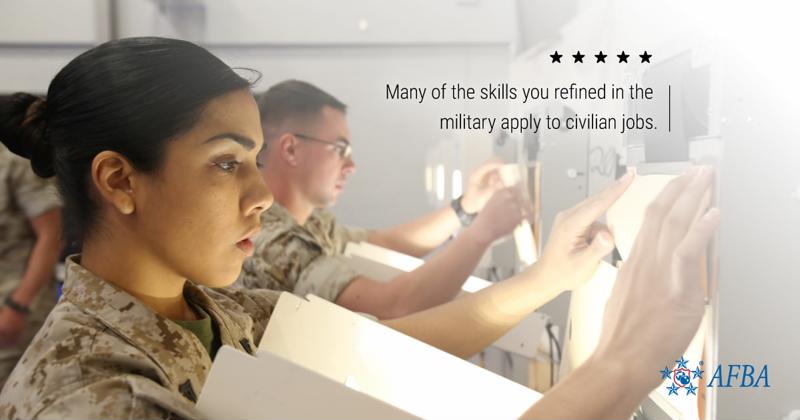 The knowledge you’ve gained through your military experience can be directly applied to civilian responsibilities.
Know your value
Now that you’re not in the Armed Forces, you may feel like you have no skills that apply to the civilian job market. That idea couldn’t be further from the truth. The military, in fact, gave you qualities that are impossible to acquire in any other format. You learned soft skills like teamwork and communication as well as specific knowledge related to technology, machine maintenance and medical care.
Consider how your military experience translates to the modern job market. Doing so helps you find an appropriate employer and make the transition easier. Make a list of all your skills and research what jobs apply to them. If, for example, you served in a leadership position in the military, you could be a great fit for management or corporate training.
Remember that jobs are not careers
A career is your passion, while a job is a stepping stone. Jobs give you financial stability while you search for (or develop the skills for) your dream career.
You may have to work whatever jobs you can find after retiring from the military, and they may make you feel discouraged, apathetic or even depressed about your situation. Don’t let this discouragement consume you. Your first post-military job doesn’t have to be your career, and you can use the experience you get to help you find a better position.
Review your finances
Check all of your bank accounts and credit statements to see how much money you have and how much you need. At minimum, you should have a checking account with money already deposited, a savings or emergency account with a year’s worth of expenses, and a retirement account. If you don’t have any of these, don’t panic, but create them as soon as you can.
Also, look over your debts and start taking measures to pay off all that you owe. There are several debt relief programs specifically for servicemembers and veterans, including:
- The Servicemember Civil Relief Act, which regulates interest rates for credit cards, auto loans and other financial services.
- The Military Lending Act, which keeps interest rates for credit products from exceeding 36 percent.
- The Veterans Housing Benefit Program, which offers veterans home loans with low interest rates.
You can also use a credit counseling service to help you manage your debt and boost your credit, allowing you to make major purchases like cars and homes.
Know your health insurance options
A medical crisis can strike anyone at any time, making health insurance a necessity. Luckily, you’re eligible for TRICARE between your military retirement and before getting a new job. The Continued Health Care Benefit program is another temporary coverage option, but you’ll need to find your own health care eventually. Look into possible VA benefits, and try to find a job with employer-provided insurance options.
Connect with your family and build a network
Having personal freedom may feel odd after years of taking and giving commands. It’s not uncommon for veterans to feel depressed after the rigid structure of the military, which is why a support network of peers and loved ones is so essential. Make connections with other veterans, open up to your family, and consult a therapist if you need to.
You may suffer some growing pains when transitioning to life after the military, but you’ll come through with the right plan.
To learn more about preparing for retirement, download our 2018 Financial Planning Guide.
Various branches of the military have seen numerous aviation crashes – some of which have been fatal – over the past few years. These accidents represent a disturbing trend that servicemembers and Congress are anxiously trying to solve.
Just this past May, a Lockheed WC-130H transport aircraft crashed shortly after departing the Savannah Air National Guard Base, killing all nine members of the Puerto Rico Air National Guard on board. In March, two Navy aviators died after their FA-18 fighter jet crashed near Key West, Florida, CNN reported. So far this fiscal year, 12 accidents (consisting of 11 crashes and one incident on the ground) have claimed the lives of 35 servicemembers, tying the start of 2018 with 2016's total number of aviator deaths.
Unfortunately, these issues have lingered for years, and some connect them to the 2013 congressional budget cuts, per Military Times.
"We are reaping the benefits – or the tragedies – that we got into back in sequestration," said retired Air Force General Herbert Carlisle, according to the publication.
According to data Military Times obtained through multiple Freedom of Information requests, the number of aviation accidents increased by nearly 40 percent since 2013. Since 2011, more than 7,500 incidents ranging from Class A through Class C have occurred.

Various departments taking action to address crashes
Despite the data, the Department of Defense has clarified that these incidents shouldn't be considered a crisis. Yet, many military branches are investigating the cause of these accidents, although they echo the DoD's statement. For example, General Ellen Pawlikowski, head of the Air Force Materiel Command, recently sent a memo telling its safety organizations to review all aircrafts by the middle of July, according to Air Force Times.
"Take another look at that data from a different angle and see if there is anything that we are missing in there that would help us to predict what might be the next mishap," she said to reporters, according to the publication. "I think how the Air Force has approached this is not to panic. We don't consider it a crisis, but we have elevated [interest] in making sure that we aren't missing anything and that we really do empower the airmen to make sure that safety is always first."
Pawlikowski also objected to the idea that the crashes are directly related to the 2013 budget cuts. She said that instead of operating an aircraft in need of maintenance – a difficult task when money is tight – the Air Force would simply ground the plane to protect servicemembers.
Additionally, Air Force Chief of Staff Gen. Dave Goldfein ordered all flying and maintenance wings to participate in a one-day safety stand down, according to a separate Military Times article. Active-duty units had a deadline of May 21 to conduct their review, while Guard and Reserve have until June 25.
That said, Congress might soon push the military to do more in its investigation over the coming years. Democratic Rep. Adam Smith of Washington, ranking member of the House Armed Services Committee, introduced legislation early May that would create an independent panel tasked with examining the string of crashes. Titled the National Commission on Military Aviation Safety, the panel would consist of eight people who would look into the possible causes of these incidents and, if necessary, recommend any modifications to training, maintenance, safety or other policies. Their first report would be due Feb. 1, 2020. Panelists would be appointed by the president and certain members of Congress.
In response to another U.S. shooting, this time on the campus of a major tech company, Silicon Valley banded together to support the first responders of San Bruno, California.
On April 3, 2018, a shooting occurred at the YouTube headquarters in San Bruno. The suspect entered through a parking garage and opened fire on an outdoor patio with a semi-automatic pistol. Three people were wounded, one critically, before the suspect turned the gun on herself.
The female shooter was Nasim Najafi Aghdam, a YouTuber who was unhappy with the company's policies and procedures. According to her videos and website, Aghdam claimed YouTube demonetized her videos and prevented her from getting views.
YouTube's response was quick, with CEO Susan Wojcicki immediately releasing a statement on Twitter.
"There are no words to describe how horrible it was to have an active shooter @YouTube today," she wrote. "Our deepest gratitude to law enforcement & first responders for their rapid response. Our hearts go out to all those injured & impacted today. We will come together to heal as a family."

Responding with more than words
But, words on Twitter wasn't the end of it; these companies are putting their money where their mouths are. According to the Silicon Valley Business Journal, Google and YouTube employees donated money to San Bruno first responder training efforts. In fact, although Google encouraged its employees to take some days off to recover from the incident, more than 800 of the company's employees from across the globe donated $90,000 within the first two days. Google also matched its employee donations with a $100,000 grant to the San Bruno Community Foundation.
Collectively, the two tech companies donated more than $280,000 to San Bruno police and fire departments. Indeed, it was the skills of these first responders that kept the building safe.
Police arrived within minutes of the first 911 calls, per the Silicon Valley Business Journal. They evacuated the building and searched the premises. An estimated 300 first responders came to the scene. The San Bruno officers received assistance from departments from Daly City, South San Francisco, San Mateo, Redwood City, Burlingame and the county sheriff's office.
"We are grateful to our police and fire departments for their swift and thoughtful response in the face of tragedy in San Bruno, and to Google.org and the entire Google and YouTube community for partnering with the foundation to strengthen first responder prevention and preparedness efforts in our community," said Nancy Kraus, president of the San Bruno Community Foundation, in a press release. "The Google/YouTube donations will support programs that help ensure that San Bruno's first responders will be ready and prepared to act in future public safety incidents."
With this donation, the city's officers will be able to continue their exemplary responses to disastrous events.

When people hear the words “Memorial Day,” they often think of sales and three-day weekends. While the holiday is a nice way to welcome warmer weather, it’s important not to forget the day’s history and meaning.
Memorial Day was first celebrated after the end of the Civil War, which concluded May 5, 1868. It was started by an organization of Union veterans known as the Grand Army of the Republic. Maj. Gen. John A. Logan, the head of this organization, declared what was then known as Decoration Day would be observed May 30. Celebrations involved laying flowers on the graves of dead soldiers.
There are two possible reasons for the choice of date. The U.S. Department of Veterans Affairs suggested that May 30 was a day when flowers were likely blooming across the nation, so everyone could participate. Meanwhile, the History Channel noted that May 30 is one of the rare spring days that wasn’t the anniversary of a major Civil War battle.
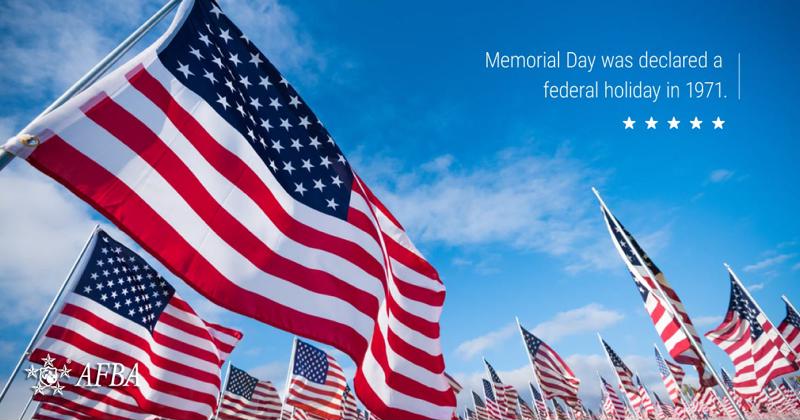 Memorial Day is celebrated on the last Monday in May.
Recognizing fallen soldiers before Memorial Day
Regardless of the true reason, it’s likely that Maj. Gen. Logan got the idea for such a holiday from other groups. One of the first such commemorations was organized by recently freed slaves as a way of thanking Union soldiers.
Near the end of the war, thousands of captured Union servicemembers were transferred to camps in Charleston, South Carolina. Conditions at one of the camps were so bad that over 250 prisoners died from disease or exposure, and their bodies were simply buried in a mass grave. After the confederate surrender on May 1, 1865, over 1,000 former slaves, accompanied by a few white Charlestonians and regiments of the U.S. Colored Troops, gathered in the camp to consecrate a new, proper burial for the soldiers.
Another commemorative service was sponsored by a Mississippi women’s group. On April 25, 1866, these women visited cemeteries in Columbus to decorate the graves of both Confederate and Union soldiers who died during the battle at Shiloh.
With so many separate memorials occurring across the nation, it’s difficult to determine which city is the true birthplace of Memorial Day. Many claimed the title, but President Lyndon Johnson and Congress ultimately decided that Waterloo, New York was the official place of origin in 1966.
Memorial Day was finally expanded to commemorate all soldiers after World War I. Congress declared it a federal holiday in 1971, transitioning the date to the last Monday in May and unofficially launching the tradition of the three-day weekend.
Memorial Day in 2018
Today, many people use Memorial Day to celebrate the unofficial start of summer. Pools open, barbecues are fired up, and people everywhere take road trips. AAA expects over 41.5 million Americans will travel for this year’s holiday, with the busiest days being May 24 and 25.
The holiday is also incredibly commercial. A quick online search reveals page after page of sales advertisements. While sales are great for the economy, people shouldn’t forget the true reason for the holiday.
The real symbolism of Memorial Day is much deeper than a discount. It commemorates all of the fallen soldiers who fought for this country.

Chairman − President’s Message

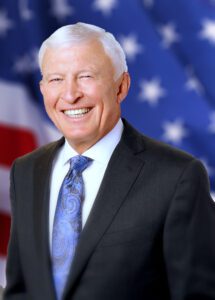
We never lose sight of our mission and its importance was underscored as we responded to the recent C-130 crash in which nine Puerto Rican National Guard members lost their lives. See the summary of our response to this tragedy in the article below. Memorial Day also reminds us of our important mission as we honor all the men and women who have made the ultimate sacrifice in service to our country. We hope this day of remembrance is a meaningful and safe one for you and your families.
In 1947, we began our mission to provide survivor benefits to the families of active duty officers stationed overseas. Our founders likely never imagined that, more than 70 years later, AFBA would have grown into what we believe is the most relevant, dynamic, and growth-oriented association of its kind. Today, your association is more than 640,000 members strong — up over 150,000 from last year! Member eligibility extends to military personnel of all ranks of the active duty component, National Guard, and Reserves. Those who have worn the cloth in the past and have separated or retired are eligible as well. We are also very proud to include First Responders in our ranks as their dedicated service on the home front supports our national security. The response of this community to AFBA’s mission has fueled a great deal of membership growth in recent years, and we are grateful for their participation. DoD contractors and federal employees who serve this great nation every day complete our membership eligibility list. Spouses and dependents of all these groups are eligible for membership. All survivor benefits are underwritten by our wholly-owned affiliate, 5Star Life Insurance Company.
Your association’s significant membership growth in 2017 can be attributed to very positive results from our ongoing operations and the transfer of a large block of members to AFBA from American Equity Life. Fourteen new National Guard state associations and 83 firefighter groups became part of the AFBA family on 1 January. We shared information about this initiative with you last fall and additional details are found in this newsletter.
Board of Directors
AFBA’s Board of Directors continues to guide us with vision and dedication, and our ability to serve you would not be possible without their leadership. Please review the list of candidates this year and complete your ballot. We appreciate your participation in the governance of your association by casting your vote.
Member Safety
We want you and your loved ones to stay safe and secure – physically and online. I recommend the articles on Summer Safety and Cyber Security to you as tools to help you protect yourself and your family. The adage that an ounce of prevention is worth a pound of cure still holds true today, whether it’s regarding swimming safety or how you manage your passwords.
Financial Planning Guide 2018
Managing your finances and planning for the future is an essential part of your family’s welfare. This year’s Financial Planning Guide is like previous editions – packed with useful information on every aspect of your financial well-being. It has the distinction of being the final year in which we will print hard copies of the guide. As in recent years, a link to the guide is posted on our website for your easy access. Going fully digital next year will allow us to provide the guide to more current and prospective members, as well as include subject tabs, helpful search functions, and more advanced electronic dissemination to ensure that you continue to benefit from this vital information.
AFBA Spotlights on Black History, Women’s History and Month of the Military Child
We are proud of all those who serve and, in addition to our regular posts, blogs and messages about our member communities at large, we also enjoy bringing you information from time to time that highlights the contributions of specific groups.
Service to You
Thank you for your patience as we grew this past year. We are aware that in some instances, the wait times you experienced on the phone were too long, and we apologize. We are fully engaged in expanding our self-service capabilities in addition to making sure we have staff available when you need us. We always welcome your calls. We also realize that you have busy schedules and may not be able to phone in during office hours. Many members prefer using self-service options and the member portal on our website is an excellent way for you to access those options at any time of day or night – when it’s convenient for you.
Member Benefits
Over the years, the portfolio of benefits available to AFBA members has grown along with our membership. Read about the benefits available to you as a valued AFBA member
When I graduated from the Air Force Academy 50 years ago this month as a newly minted Second Lieutenant, I could not have envisioned the full flight path of my career and that it would include serving this fine organization. It is one of the best assignments I have had, and I am honored to be your association’s Chairman and President.

Ralph E. “Ed” Eberhart
General, USAF (Ret.)
Chairman − President
- Vote for your Board of Directors
- Annual Members Meeting
- Endorsement — Redomestication of Statutory Office
- We stand with the Puerto Rico National Guard
- AFBA Welcomes New National Guard State Associations and Local Firefighter Groups
- We are excited to welcome WINGA into the AFBA / 5Star Life family
- Personal Cyber Security Tips
- Summer Safety Tips
- AFBA Video and Newsroom
- Follow Us On Social Media
- Go Green!
- Financial Planning & Benefits Guide
- AFBA Scholarship
- Long Term Care
- Auto Insurance
- Emergency Travel Assistance
- Life Line Screening
- TRICARE
Vote for Your Board of Directors
 Vote for Your Board of Directors
You may view the bios of all Board members by clicking here. We are grateful for their leadership and oversight and encourage all members to vote online. Simply login to the Member Portal and click the Vote button. We will announce the results at the annual members meeting.
Annual Member Meeting
You are invited to attend AFBA’s Annual Members Meeting. Join us on Thursday, the 28th of June, at 10:00 AM for light refreshments, a short presentation and Q & A on the state of AFBA. The meeting will be held in the AFBA Building, 909 N. Washington Street, Alexandria, VA 22314. To attend, call the RSVP hotline at 1-800-776-2322 ext. 2009 or email [email protected].
Endorsement — Redomestication of Statutory Office
Effective December 18, 2017, 5Star Life Insurance Company’s statutory office was relocated to Lincoln, Nebraska. Our home office remains in Alexandria, Virginia with satellite offices in Staunton, Virginia and Lincoln, Nebraska. Please store the enclosed (except in New York) Endorsement with your policy and/or certificate of life insurance underwritten by 5Star Life Insurance Company. NO FURTHER ACTION IS REQUIRED.
We stand with the Puerto Rico National Guard
 We stand with the Puerto Rico National Guard
AFBA was deeply saddened by the tragic loss of nine Puerto Rico National Guard members last month in the C-130 crash in Georgia. These Guard members served our country with valor, honor, and dedication, and our thoughts and prayers go out to all the families and members of the Puerto Rico National Guard.
All nine were AFBA members and their beneficiaries received a basic SSLI emergency death benefit within 24 hours. In addition, three of the nine had our Better Alternative coverage. In the hustle and bustle of our daily work, moments like this remind us of why we were founded — to serve those who serve this great nation.
AFBA Welcomes New National Guard State Associations and Local Firefighter Groups
 AFBA Welcomes New National Guard State Associations and Local Firefighter Groups
In July 2017, American Equity Life (AEL) let AFBA senior management know that it had made the strategic decision to exit the group life insurance market and focus its resources on its primary annuity market. American Equity was a well-respected carrier in the National Guard market for many years, acting as a pioneer with the State Sponsored Life Insurance (SSLI) program. At the time of this decision, John Matovina, Chief Executive Officer of American Equity said “We are excited to work with AFBA. With its long-standing commitment to service members and first responders, we are confident AFBA is the ideal partner as we transition our group life insurance business.”
The actual transfer of business took place on 1 January of this year. A total of 14 Guard state associations and 83 local firefighter groups, representing more than 105,000 members and their dependents joined the AFBA family at that time. General Eberhart, USAF (Ret.), Chairman and President of AFBA stated that “For more than 70 years, AFBA has been committed to serving those who serve this great nation. Our focus is on providing life insurance products and services tailored for service members and first responders. American Equity was the pathfinder in serving the Citizen Soldiers and Airmen of our nation, and we are honored to work with their National Guard and firefighter customers to provide these benefits.”
We are excited to welcome WINGA into the AFBA / 5Star Life family
We are pleased to share with you that the Board of Directors of the Wisconsin National Guard Association (WINGA) voted to move the State Sponsored Life Insurance Program to AFBA / 5Star Life effective January 1, 2019. WINGA has created a successful stand-alone program with nearly 6,000 insureds.
We are committed to a successful partnership helping to improve the existing program and, over time, providing increased protection and value to WINGA members and families. Our goal will be to make the transition as seamless as possible for the WINGA members.
We are proud that WINGA recognized our joint commitment to serving and promoting the welfare of their members. As the leading provider in the National Guard market, the addition of WINGA increases the roster of state and territory associations served by AFBA/5Star Life to 53 out of 54 total associations.
Personal Cyber Security Tips
Over the last couple of years, we have provided articles and videos on cyber security to help our members stay safe online.
Even with all the reports in the news on security breaches in many companies, the top 3 passwords still used are 123456, 12345 and “password.” While there are no guarantees that malicious actors won’t get your information, the following tips will decrease the probability of getting your personal information hacked. So, let’s do some password maintenance!

1. Have Complicated, Unique, Difficult-To-Crack Passwords
Hate changing your passwords for your social media, online banking, Amazon.com and other online accounts? We all do.
A good solution to create strong passwords (and track them at the same time) is to sign up for a password storage tool. Some are free while some have a nominal fee.
All you need to do, once you have such a tool, is to create one very complex password and remember it. Then you can let the tool auto-generate all your other long and tricky passwords, which you won’t need to remember.
2. Never Reuse a Password
Don’t use the same password or slightly modify it to use it on multiple accounts. Make each password unique, with a mix of upper and lower-case letters, numbers, special characters – at least ten characters, ideally more.
3. Update Your Passwords Regularly
Change your passwords periodically (at least every 6-12 months).
4. Prevent “Dictionary Attacks”
Don’t use dictionary words, your pet’s name, your college or any other words that have an obvious correlation to you as a person.
5. Don’t Store Passwords in Your Browser
It seems convenient, but hackers feel the same way. Browser attacks are very common. The most common browser attack is the Malicious URL. This is where the website you are going to contains an exploit that can compromise your system and collect those stored passwords. Also, never write down passwords or share them with others.
6. Never Leave any Level of Entry Unprotected
Have (unique) passwords on your firewall, your WiFi network, your computer, your phone, your tablet, etc.

Summer Safety Tips
Summer is here, and we want you to stay safe during these hot months! Always keep safety in mind whether you’re traveling, spending time outdoors, or spending a low-key weekend at home. Below are some tips from webmd.com and the National Safety Council. Read through them to ensure you have the knowledge needed to protect yourself and your loved ones from injuries so you can continue to stay healthy, happy, and active. Have a great summer!
1. Make Yourself Unattractive
To insects, that is. Scented soaps, perfumes, and hairsprays can attract mosquitoes and other biting bugs. Use bug spray with DEET (not for infants under two months old.)
2. Use the 20-Minute Rule
Drink water at least every 20 minutes to prevent heat stress and heat stroke. If you’re going to be outside for more than an hour or exercising strenuously, you should add a sports drink to replenish electrolytes.
3. Play It Safe
Inspect playground equipment for rotten wood or plastic with sharp edges. Make sure the slides and other surfaces are cool enough to be comfortable.
4. Leave Fireworks to the Experts
More fires are reported on July 4 than any other day of the year. The National Safety Council advises everyone to stay away from all consumer fireworks and to only enjoy fireworks at a public display conducted by professionals.
5. Swimming Safety
Don’t go in the water unless you know how to swim. Never swim alone. Never drink alcohol when swimming.
6. Boating Safety
Life jackets are essential to safe boating. In addition, the Coast Guard recommends all boat operators take a safety course to learn the rules of the waterway.
AFBA Video and Newsroom
Last year we launched a new video featuring AFBA Chairman and President, General Eberhart, and 5Star Life’s CEO and President, Mark Singleton, covering our history and markets. Click below to watch it.
We also debuted our redesigned Newsroom at newsroom.afba.com. Here you will find articles on timely topics that relate to each of our markets.
Follow Us On Social Media
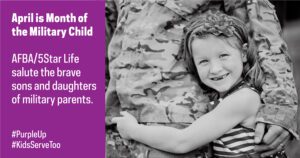
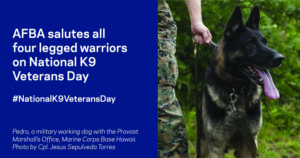
Do you follow AFBA on Facebook and Twitter? If not, you’re missing out on interesting articles, videos, and infographics on a variety of topics. We focus on matters relevant to our members, particularly, veterans and first responders, but there are also general-interest posts on resume writing and life insurance education.
Friend us, connect with us, follow us!


Go Green!
 Paperless Billing Benefits
Using the online services of AFBA’s website for paperless bill viewing and electronic bill payment not only has environmental benefits, it will also save you money on postage and provides round the clock access to your billing status. To sign up, log in to your account at afba.com and update your profile or call us at 1-800-776-2322.
Financial Planning & Benefits Guide
 One of our more popular member benefits is our annual Financial Planning Guide (FPG) covering important financial topics for all stages of life. This valuable resource includes information on:
- Basic Principles of Financial Planning
- Military Pay, Allowances, and Retirement Benefits
- Social Security and Medicare
- Veterans and Survivor Benefits
- Federal Civilian Employee Benefits
Please Note: Starting next year, we will no longer print the FPG and instead offer an enhanced digital version. It will have all the updated, valuable information you have come to expect in an easy-to-navigate format.
You can download the guide (in PDF form) or request to have a copy mailed to you by clicking here.
Member Benefits and Services
Charles C. Blanton AFBA Family Survivor College Scholarship
Members can ensure the future well-being of their families in the event of an untimely death with our Survivor Scholarship. It provides up to $10,000 per family, per year for a maximum benefit of $40,000 for undergraduate tuition and fees. The surviving spouse or children of members killed in combat, as a result of an act of terrorism, or First Responders at the scene of an incident are eligible. (Not available in Virginia.)

Is Your Financial Plan Compromised? Long Term Care Insurance Could Help
The need for extended care can compromise a comfortable retirement as such care is not covered by Medicare, TRICARE, or your medical insurance.
Having a strategy in place to help pay for this care can help ensure access to the type and quality of care you need and deserve.
There are new insurance options that guarantee your rate, provide a death benefit if you do not need care, and can even provide lifetime benefits.
The AFBA Long Term Care Insurance Program can help you understand if one of these new options are right for you.
Call 1-855-581-6647 or visit www.getltci.com/afba for more information.
Special Discounts for AFBA Members from GEICO
Save even more on insurance from GEICO!
- Savings for multi-car policies, good student, safety features, and more.
- 24/7 support, online or by phone, for claims bill paying, policy changes, and more.
- Great policy rates for renters, motorcycles, and much more.
- Storage protection plans with reduced premiums.
- More than 75 years of service to the military.
Get a free quote: https://www.geico.com/mil/afba or call 1-800- 368-2734.
Some discounts, coverages, payment plans and features are not available in all states or all GEICO companies. GEICO contracts with various membership entities and other organizations, but these entities do not underwrite the offered insurance products. Discount amount varies in some states. One group discount applicable per policy. Coverage is individual. In New York a premium reduction may be available. GEICO may not be involved in a formal relationship with each organization; however, you still may qualify for a special discount based on your membership, employment or affiliation with those organizations. GEICO is a registered service mark of Government Employees Insurance Company, Washington, D.C. 20076; a Berkshire Hathaway Inc. subsidiary. © 2018 GEICO
Emergency Assistance Plus Provides a Crucial Safety Net
 Any time you have an accident or sudden illness while traveling away from home, Emergency Assistance Plus (EA+), made available through AFBA, provides a crucial safety net that helps pay for emergency medical transportation expenses your health or travel insurance generally will NOT cover. With more than 20 assistance benefits, EA+ steps in to provide Medical Evacuation, Medical Assistance, Travel Assistance, and Assistance for Companions.
Read the testimonial below from a member to see EA+ in action:
“My wife Laura and I flew to Branson, Missouri to enjoy some world-class music. Our trip was cut short when Laura became ill and needed medical assistance. Unfamiliar with the area, I called EA+ and they helped me locate a hospital nearby where Laura received care for the next two days. Because of my wife’s condition, I knew we wouldn’t be able to continue our trip. EA+ made arrangements to fly us back home to Idaho. EA+ even upgraded Laura’s seat due to her condition and insisted I join her to monitor her medical state. We cannot express our thanks and appreciation for all that was done to make such a frightening situation, tolerable, calming and comforting.”
-Greg J.
For more information, visit www.emergencyassistanceplus.com/afba or call toll free 1-855-352-3032.

Discounted, Convenient Health Screenings Offered to AFBA Members
As an AFBA member, you can receive a discount off of a package of four important preventive health screenings through our partnership with Life Line Screening. It is proactive and smart to take care of your cardiovascular health and stay healthy and active. AFBA and Life Line Screening have partnered since 2010.
Life Line Screening data shows that seventy percent of people aged fifty-five and older have at least two risk factors for cardiovascular disease and may not even know it.
By special arrangement, you can get four screenings for only $129:
- Carotid Artery/Stroke
- Abdominal Aorta
- Atrial Fibrillation (irregular heartbeat)
- Peripheral Arterial Disease
Other screenings are available as well at an additional cost, including”
- HDL and LDL Cholesterol levels
- Diabetes risk
- Bone density as a risk for possible osteoporosis
- Kidney and thyroid function, and more
The package of four screenings is discounted for our members, so take advantage of this important preventive health program today. If other screenings are recommended for you based on your age and risk factors, consultants will work with you to create a package that is right for you.
Call 1-866-895-3365 or visit www.lifelinescreening.com/afba.
AFBA TRICARE Supplement Insurance Plan: A Better Option
Here are some important facts about a TRICARE Supplement plan to help you make an informed decision about your healthcare.
FACT 1: More options. TRICARE Supplement is available to TRICARE-eligible beneficiaries who are entitled to retired, retainer or equivalent pay and who are under 65 or are ineligible for Medicare.
FACT 2: Costs are more predictable. With TRICARE Supplement, you pay an additional premium and annual deductible. In exchange, TRICARE Supplement covers your other out-of-pocket expenses. If you have come close to reaching your out-of-pocket limit with TRICARE Select, you can save money with a supplement and better anticipate your recurring costs.
FACT 3: Covers your family. TRICARE Supplement is a great option for retired military personnel, but it’s also a great option for their spouses and children.
Family members can maintain coverage even after the primary military person has aged into Medicare and is no longer eligible for TRICARE Supplement.
FACT 4: Help you keep your doctor. With TRICARE Select only, you would pay more for visits to non-network providers. With TRICARE Supplement, your out-of-pocket costs are covered, and there’s no distinction between network and non-network providers.
FACT 5: Pre-existing conditions are covered after six months. For the first six months of coverage, treatment for pre-existing conditions will not be covered. However, once the seventh month of coverage begins, this limitation expires and pre-existing conditions are covered from this point on.
Learn more! Call 1-800-638-2610 or visit www.afba-tricare.com.
National Maritime Day, which falls on May 22 each year, was officially declared to commemorate the first successful passage of a steamship from the U.S. to England. Yet, the holiday incorporates so much more than that in these modern times. It celebrates the sacrifices that merchant marines made during World War II and the benefits that American ports bring to the economy.
The U.S.S. Savannah: The first steamship to cross the Atlantic
On May 22, 1819, a steamship left from its home port in Savannah, GA, headed to Liverpool, England. The ship reached its destination in 29 days and four hours, according to the Maritime Administration, part of the U.S. Department of Transportation. Although the ship's sails did the majority of the work, the steam engine had no failures, and the successful voyage launched a new era of U.S. technological leadership and showed the world the power of steam.
Congress declared May 22 National Maritime Day via a joint resolution passed May 20, 1933.
" … the President is authorized and requested annually to issue a proclamation calling upon the people of the United States to observe such National Maritime Day by displaying the flag at their homes or other suitable places and Government officials to display the flag on all Government buildings on May 22 of each year," the resolution read in part.
President Donald Trump upheld this request in 2017, asking for U.S. citizens to fly the flag and for boats to dress ship. It's likely he will do the same this year.

Merchant marines during World War II
U.S. shipyards and merchant marines were integral to the Allies' World War II victory. They were the first to enter the war, as their ships were captured or sunk before the U.S. officially entered the conflict. They were also the last to return, using their ships to bring servicemembers home.
Merchant ships were the only way the U.S. Armed Forces could fight in Europe, as they were needed to carry supplies ranging from food to tanks. As such, these marines sailed across the three major oceans and the Arctic Circle. They carried nearly 270 billion tons of cargo during the war, averaging a delivery rate of 17 million pounds an hour in 1945.
For all their valor, merchant marines also sacrificed much during the war. Nearly one in 30 didn't return home, and the marines suffered the highest casualty rate of all U.S. military branches. Over 6,000 sailors and more than 700 ships were lost in the war.
Unfortunately, the survivors weren't given veterans benefits at the time, nor were the dead recognized for their service. For years, merchant marines were excluded from all celebrations commemorating the Armed Forces. Finally, the group won some veterans' rights and privileges after a long court battle that ended January 19, 1988. They gained additional rights 10 years later during a congressional ceremony recognizing Persian Gulf War veterans. Merchant marines were also commemorated at various national monuments, including the U.S. Navy Memorial and the World War II Memorial, both in Washington, D.C. The flags at the latter display the seals of the five services of the military: the Army, the Navy, the Marine Corps, the Coast Guard, the Army Air Corps and the Merchant Marines.
Celebrating National Maritime Day
The holiday is celebrated in many ways across the nation. As Maritime Executive noted, May 22 is not just a time to think of the history of the merchant marines but also to recognize how the nation's ports bring jobs and economic development.
"America's seaports support 23.1 million jobs, annually generate more than $321 billion in federal, state and local taxes, account for over a quarter of the U.S. economy and handle more than 2.2 billion metric tons of international and domestic cargo," said Kurt Nagle, president and CEO of the American Association of Port Authorities, to the publication. "From these statistics alone, it's clear that ports play a vital role in supporting our national economy, jobs, tax resources and their communities."
This year, Americans can acknowledge this day of remembrance by flying the flag, attending local events and learning more about the history of maritime merchants during World War II.