
Founded in 1919, The American Legion celebrated its 98th birthday this year. During the nearly 100 years since its founding, The American Legion has not only made it their mission to ensure the well being of veterans, it's also made significant contributions to American society as a whole. With more than 2.4 million members at 14,000 worldwide posts, The American Legion is one of the most influential nonprofit groups in the U.S.
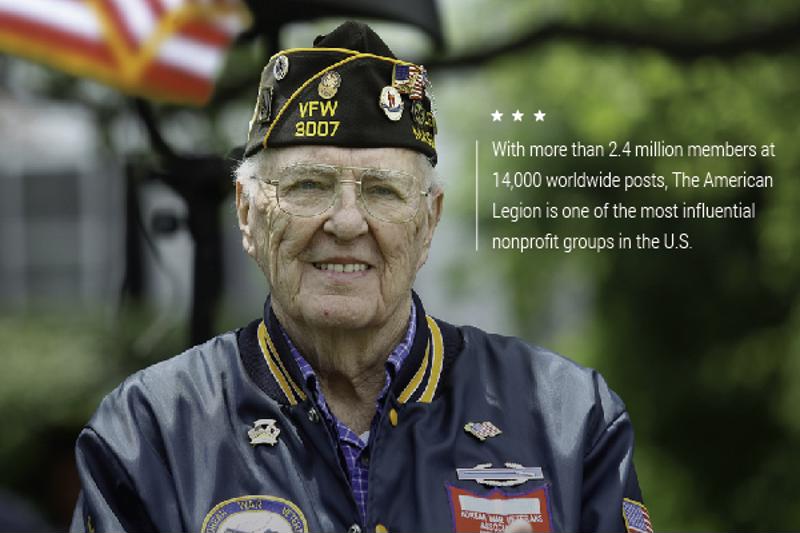
The history of The American Legion
In the aftermath of World War I, Colonel Ernest Lester Jones, a member of the First Army Air Service overseas, had the idea of creating a veterans group to commemorate the comradeship and sacrifices made by those who fought in the Great War, according to the National Oceanic and Atmospheric Administration. After convening a meeting of 375 veterans at the Cosmos Club in Washington D.C. on March 7, 1919, Col. Jones and the representatives decided not to form a permanent organization since so many soldiers were still deployed overseas. However, the caucus did organize the first unit and elect officers at this meeting.
Eight days later on March 15, another group of officers and members of the American Expeditionary Force met in Paris and formally adopted the name "The American Legion" for this fledgling veterans group.
Two months later, another caucus was held in St. Louis, Missouri, where the assembled individuals adopted the group's now world-famous preamble and constitution. Shortly after this caucus, the members unanimously elected Col. Jones as the first department commander of The American Legion.
Congress chartered The American Legion in September of that year, and the First Legion convention convened in Minneapolis that November.
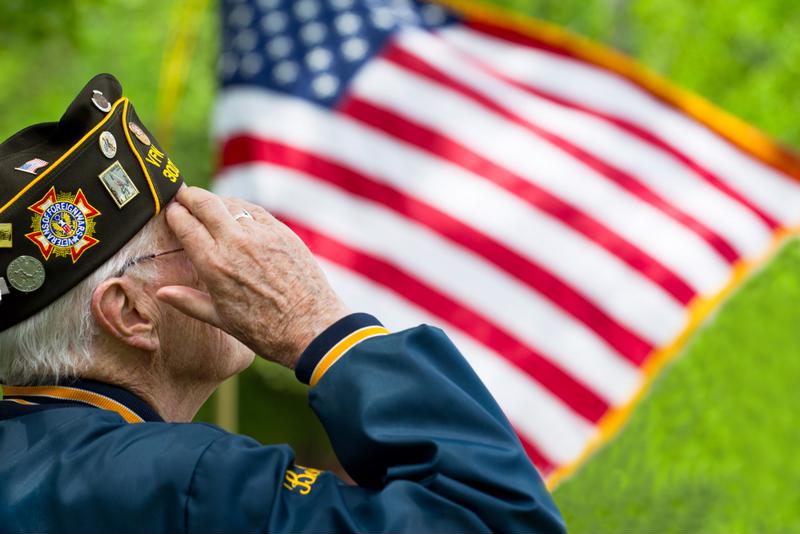
Major accomplishments for veterans benefits
In the ensuing 98 years, The American Legion has made significant accomplishments for veterans in a variety of ways.
Only two years into their existence, the Legion was instrumental in the creation of the U.S. Veterans Bureau, which continues to this day as the Veterans Administration, a crucial department that helps meet the medical needs of veterans after their active duty service finishes.
In 1943, Harry W. Colmery, a former National Commander of The American Legion, began drafting the "GI Bill of Rights." A year later President Franklin D. Roosevelt signed the Serviceman's Readjustment Act, otherwise known as the GI Bill, which incorporated much of Colmery's draft.
Continuing its noble tradition today
Over the past 98 years, The American Legion has made a major impact in helping veterans receive funding for medical, disability, educational and other benefits. In addition, the group has also been influential in producing many important programs for children and youths.
More than 1,700 Boy Scout units, comprised of around 64,000 youths, owe their chartering agency to The American Legion. The American Legion Baseball program has about 82,000 youths involved each year, and more than 50 percent of players in Major League Baseball have graduated from the program. In 1946, the group presented a $50,000 grant to the American Heart Association, which was at that time a small, struggling organization. The funds allowed the Association to grow and to become a leader in the study, prevention and treatment of rheumatic heart disease.
In its ongoing effort to improve the mental and physical well being of veterans, The American Legion recently passed a resolution calling on Congress to "reclassify [cannabis] in a category that, at a minimum will recognize [it] as a drug with potential medical value" for veterans. The resolution stems from the potential for cannabis to help in the treatment of post-traumatic stress disorder and traumatic brain injury, two conditions that remain major problems for veterans.
With its centennial anniversary around the corner, The American Legion remains a positive force in advocating for veterans benefits and other social endeavors.
On Wed. Jan. 11, President-elect Donald Trump announced Dr. David Shulkin, undersecretary of health for the Department of Veterans Affairs, as his pick to assume the top leadership role at the agency, The New York Times reported. The physician currently leads the Veterans Health Administration, which serves an estimated 8.76 million former service members each year at 1,700 sites across the country. The Senate must confirm Shulkin before he can take over as VA secretary.
The choice was a pleasant surprise to veterans groups, as many had expected Trump to select an outside candidate to lead a top-down transformation of the department.
“The Trump campaign made a big deal of what a sucking chest wound the VA was,” Phillip Carter, an Iraq War veteran and director of the Military, Veterans and Society Program at the Center for a New American Security, told the newspaper. “Then they realized how hard it would be to turn around, and decided they needed to continue with the reforms that are already taking effect.”
A physician takes the helm
Shulkin, a board-certified internist, held numerous leadership positions in the private health care sector and founded a physician ratings service before joining the VA in June 2015. President Barack Obama was responsible for his appointment, according to NPR. For all his medical expertise, Shulkin is not a veteran and, if confirmed, will be the first secretary of veterans affairs without military experience. So far, key service member organizations have expressed support for the physician despite his strictly civilian resume, The Washington Post reported.
“The VFW is proud to support the nomination of Dr. David Shulkin as the next secretary of veterans affairs, and we are most appreciative of his willingness to continue serving veterans and making the VA better,” Brian Duffy, the national commander for The Veterans for Foreign Wars, said in a statement to the newspaper.
While Shulkin lacks the armed services background of past VA administrators, many believe he comes equipped with a deep knowledge of the department and the demonstrable skills needed to oversee a vast network of services. In fact, in his current position, he leads the largest integrated health care system in the country. Overall, those familiar with the day-to-day operations say Shulkin will be able to transfer into his new role seamlessly with little lag time, allowing the VA to continue with internal improvement efforts started during the Obama administration.
“Someone new coming in could take a year just to understand the issues,” Nancy Schlichting, former chief executive for the Henry Ford Health System, explained in an interview with The Times. “Someone like David Shulkin really provides continuity that can get reforms moving forward.”
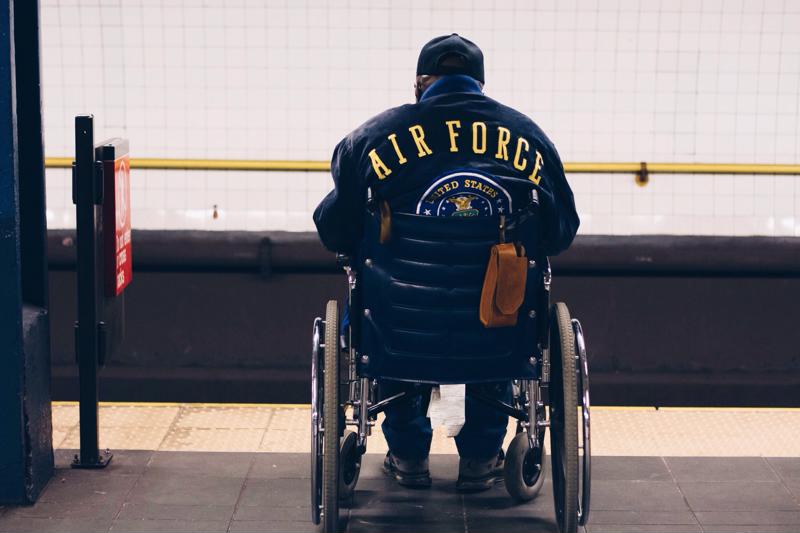 Shulkin hopes to reform the VA and forge partnerships with private health care and service providers.
Challenges ahead
Even with recent improvements, further changes are needed to improve the inner-workings of the VA and provide better services to the veterans it serves. Shulkin has some experience in this area, as he was directly involved with improving the Veterans Choice Program, an initiative designed to connect former service members with private physicians. The program suffered from internal flaws from the outset, leaving many veterans waiting months for care. Shulkin and his colleagues stepped in to address the problems last year.
In an interview with NPR soon after interceding to correct the floundering initiative, Shulkin laid out what many now believe will serve as his modus operandi as VA secretary.
“This is a different VA. We’ve brought in people from the outside who have private sector experience. And what we’re saying is that we have to do business differently,” Shulkin explained.
If confirmed, the physician must address a number of large-scale issues impacting the VA and ex-military personnel across the country, including personnel shortages, large volumes of backlogged disability claims and growing opiate addiction and suicide rates. For his part, Shulkin plans to take the issues head on and introduce sweeping reforms that could greatly improve both the department and the former service members it serves.
Soon after announcing Shulkin’s appointment during a press conference Jan. 11, President-elect Trump issued a statement praising the VA official.
“I have no doubt Dr. Shulkin will be able to lead the turnaround our Department of Veterans Affairs needs,” Trump said. “His sole mandate will be to serve our veterans and restore the level of care we owe to our brave men and women in the military.”
The Senate is expected to hold a confirmation hearing for Shulkin in the near future, Politico reported.
Veterans in southeast New York struggling with post-traumatic stress disorder and other psychological wounds of war now have a new therapeutic resource, according to the Times-Herald Record. Squirrelwood Equine Sanctuary in Montgomery recently debuted a recovery program that helps these former service members regain control over their lives and connect with other veterans dealing with deployment-related problems through horses.
Social worker Christine Bruckner started the service, which teaches participants how to care for and handle the animals. This introduces a steady routine into their lives, allowing them some semblance of self-possession. Plus, the wide open spaces of the 92-acre property allow veterans to peacefully evaluate their issues and form bonds with fellow attendees.
“It opens up a whole conversation about those changes – and how, often, they really want to get back to that pre-deployment self, but they can’t, and how do they bridge that gap in finding a new normal,” Bruckner explained to the news source. “There are a lot of complex things that they’re coming back with that can be healed much more effectively if they’re talking about these things with other guys who have been through that.”
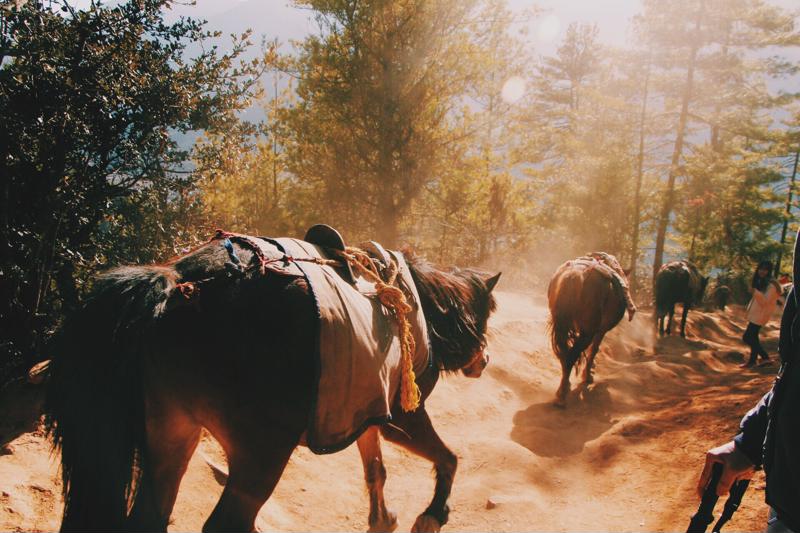 Equestrian therapy can help veterans combat PTSD and other deployment-related psychological conditions.
An equestrian solution
Equestrian therapy emerged during the 1990s with the help of Army veteran and cowboy Greg Kersten. In 1997, the Nebraska native developed a formalized training program based on the technique and founded the Equine Assisted Growth and Learning Association, an international nonprofit that equips social workers and therapists with the skills they need to successfully host such therapy sessions. Kersten believes veterans, through military training, are conditioned to function in groups or, as he calls them, “herds.” In his estimation, former service members must work to build new herds after re-entering the civilian world. Equestrian therapy helps veterans realize they need help from others and catalyzes the search for a new support system that not only includes family members and friends but also fellow ex-military personnel.
“Even though (veterans have) come back home to a supposedly familiar herd – their family, their friends – they’re being treated differently by the herd … The returning veteran feels less safe even with his family than he did with the other soldiers,” he told the Times-Herald Record.
In the years since Kersten popularized the method, a host of psychological professionals and service organizations have come to support it and its core tenets. In fact, the Department of Veterans Affairs now recommends equine-assisted therapy as a treatment for PTSD. Consequently, such initiatives have popped up at ranches around the country.
The Squirrelwood approach
The program at Squirrelwood established exercises associated with equestrian therapy, including an introductory assignment in which veterans choose horses with personalities that mirror their own. However, it does offer an added wrinkle: All of the horses involved were rescued from untoward owners.
“During an introductory session, veterans choose horses with personalities that mirror their own.”
“It’s really a unique and remarkable place,” Ed Kangas, one of the many donors who helped fund the equestrian program at Squirrelwood, told the Times-Herald Record. “It’s really very, very special. It’s a way to help those animals, but it’s also a way to help people who have been damaged and abused by war.”
Kangas and his wife Cathy donated $100,000 to Squirrelwood last month, Patch reported. Former Nebraska Sen. Bob Kerrey, who served as a Navy SEAL and earned the Medal of Honor prior to entering public service, helped the couple fundraise the sum through a charity event.
Currently, four veterans are enrolled in the program, which is comprised of 12 separate sessions spread out over three months. Total fees amount to $3,000.
Ultimately, Bruckner hopes expansion is on the horizon, as veterans and their supporters embrace equestrian therapy and its healing, herd-building potential.
On Thursday Jan. 5, 32 disabled veterans sped through the streets of Miami during the 12th-Annual Soldier Ride, according to the Miami Herald. The Wounded Warrior Project hosts the four-day event, which allows former service members to explore a large swath of Southern Florida via bicycle. Along the way, participants break at scheduled stops, including the Miami zoological park Jungle Island and the Truman Little White House, a vacation home located in Key West that regularly hosted President Harry S. Truman.
"This program forces us to push our limits, to get ourselves out there," Kevin Matos, an Army National Guard veteran participating in the event, told the newspaper. "We suffer from social anxieties and it is really uplifting to be able to undergo this struggle with people who are like us."
Get rolling again
The first Soldier Ride took place in 2004 and included a single rider, Amagansett, New York, bartender Chris Carney. With encouragement from friends and family, Carney set out to raise money for veterans by completing a 4,000-mile, coast-to-coast bike ride. The New York native successfully raised more than $1 million for the Wounded Warrior Project. One year later, two veterans – retired Army Staff Sergeant Heath Calhoun and Army Reserve Staff Sergeant Ryan Kelly, both of whom suffered catastrophic lower-leg injuries during Operation Iraqi Freedom – joined Carney on a 4,200-mile ride from Long Island to San Diego. The event not only inspired a feature-length documentary but also led the Wounded Warrior Project to establish an annual bike outing based on the trek.
Now, cities across the country host these events, many of which draw immense crowds and important attendees. President Barack Obama has attended every Washington, D.C., Soldier Ride since he took office in 2009. In April of last year, he kicked off the journey with prepared remarks and one piercing ring from an air horn, according to the White House.
"You represent what's best about our nation, and I hope all of the American people along the route will come out and show their support for these heroes, not just today but every single day," he told the 65 participants.
Cycling through South Florida
While the Miami event lacked a presidential appearance, many locals came out to cheer on the riders, several of whom rode custom-made bicycles designed for physically disabled veterans. Most of the rigs were constructed days prior to the Thursday kickoff, local news station WSVN reported. Workers from the Wounded Warriors Project and volunteers assembled the bikes, some of which featured hand-powered gears for cyclers with missing limbs. Those participating in the race voiced their appreciation for the bikes, which were ready to go just in time for the start.
"Yeah, I didn't have to do any adjustments, which is actually kind of amazing," Air Force veteran and Soldier Ride participant Kyle Cook told the news station.
The veterans involved with the event wait in anticipation throughout the year, as the four-day sojourn gives them the unique opportunity to stretch their muscles, see the sights, connect with fellow service members and bolster their self-confidence in the face of immense challenges, NBC Miami reported.
"When you go through severe trauma you need to be reminded that you have the ability to do whatever you want, no matter what your injury is, whether it's physical or mental you can overcome anything," Air Force veteran Sebastiana Lopez-Arelano told NBC Miami.
With solid funding and a strong reputation among former service members, Soldier Rides will continue to bring veterans and their supporters together for the foreseeable future in Miami and cities throughout the U.S.
Michigan legislators have passed new legislation that will fund two new veterans care facilities in Detroit and Grand Rapids, according to MLive. Sen. Dave Hildenbrand, a Republican, sponsored Senate Bill 1100, the centerpiece of the four-part legislative package giving state officials the authority and capital they need to construct the sites.
"Our veterans have served our nation valiantly and deserve the best possible care," Hildenbrand told the publication. "This legislation will modernize the way our veterans homes operate and transform them into facilities that can quickly and easily adapt to the ever-changing nature of long-term care services."
The senator's legislation allows for the creation of an autonomous regulatory body within Michigan's Department of Military and Veterans Affairs (DMVA), one local ABC affiliate reported. This work group will have the authority to allocate funding, purchase property and enforce local, state and federal compliance standards. On Jan. 11, Gov. Rick Snyder signed SB 1100 and its three counterparts into law.

New facilities coming to Michigan
Building new facilities in Detroit and Grand Rapids will be the first task for the freshly formed body. Each site will cover roughly 132,000 square feet and include 120 beds, residential units and expansive common spaces. Construction is scheduled to begin in June 2018 and end in August 2019. Together, the buildings carry a total price tag of $108 million, including almost $66 million in federal funding. State officials must apply for the latter before work can begin in earnest.
An answer to statewide concerns
In recent years, the DMVA has faced criticism for its treatment of Michigan veterans. In February of last year, state auditors discovered that employees at the Grand Rapids Home, a clinic for ailing former service members, failed to follow up on allegations of abuse and neglect and issue prescriptions in a timely fashion. Additionally, the facility suffered from crippling staffing shortages that went unaddressed.
Jeff Barnes, director of the Michigan Veterans Affairs Agency, a subdivision of the DMVA responsible for coordinating benefits for former service members, resigned in the wake of the audit, the Detroit Free Press reported. In the months following Barnes' departure, Michigan legislators developed an exhaustive strategy to improve veterans facilities and services statewide. This strategy includes the provisions in SB 1100 and other overarching reforms.
Hildenbrand and his colleagues in the Michigan legislature hope to meet the April deadline for federal funding and start improvements as soon as possible.
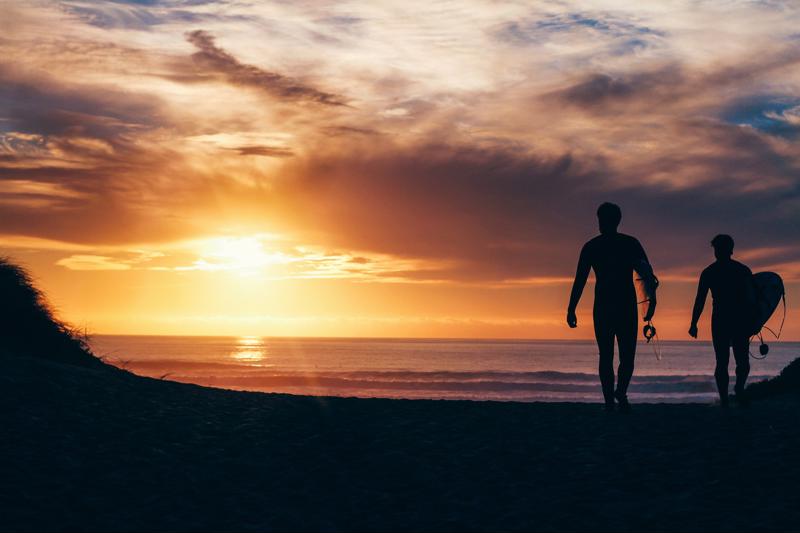
Organizations across the country deploy service animals to aid veterans struggling with the physical and psychological wounds of war. However, one Escondido, California-based group has separated itself from the pack by offering ocean-based therapy sessions featuring a surfing canine, according to Today. The organization, called Waves of Empowerment, pairs former service members with human instructors who not only teach them how to ride the waves but also work to rebuild their self-confidence and offer strategies for coping with problems stemming from post-traumatic stress disorder and other conditions. Additionally, most participants interact with a special service animal named Ricochet who lends essential support as they navigate new emotional and physical territory.
Making waves
Retired Staff Sgt. Randall Dexter returned from his second and final tour in Iraq in 2012. Upon arrival, he was assigned to the Naval Medical Center in San Diego, where he was treated for a traumatic brain injury. An improvised explosive device had rocked Dexter's Army unit, leaving him unsteady. While in treatment, doctors diagnosed the veteran with PTSD, further shaking his battle-worn psyche.
"It was all brutal," Dexter told Today. "I was contemplating suicide and was a hot mess."
After a year of prescription-based treatment failed to move things forward, Dexter reached out to a nonprofit that connected veterans with service dogs. Soon after, he met his canine match: Ricochet. The results were almost immediate.
"The minute Ricochet came up to me, my wife – who's also my caregiver – noticed a big change in me," the former Army officer explained. "Ricochet has this amazing softness in her eyes. It was definitely a turning point when I met her."
However, Dexter soon found out she had much more to offer than most service animals.
A buoyant beginning
Judy Fridono enrolled Ricochet in service dog training soon after she was born in January 2008. However, the golden retriever showed little interest in the instruction and instead spent sessions chasing wildlife. Even though Ricochet ultimately earned her service animal certification, Fridono was reluctant to deploy her, as her rambunctious behavior could present problems for most patients. Still, the animal found work with a San Diego-based organization called Paws'itive Teams. Ricochet also started learning how to surf and, at 15 months, competed in the Purina Incredible Dog Challenge, earning third place.
Her performance in the event, along with a viral video that showed her riding along with a quadriplegic surfer named Patrick Ivison, caught the attention of news outlets across the country. By the time Dexter met Ricochet in 2013, she had worked with more than 50 veterans and raised tens of thousands of dollars for health organizations across the country through surfing events. Earlier this month, the dog surpassed the $500,000 mark, The San Diego Tribune reported.
Today, she continues to help disabled Americans across the country through Waves of Empowerment, which grew out of her connection with Dexter.
"She gave me freedom and gave me my life back," the Army veteran told Today.
The program now staffs trained therapeutic surfers who help former service members and others overcome their problems out on the open ocean, just as Ricochet did when she partnered with the retired sergeant four years ago.
In recent years, large numbers of veterans have returned home and enrolled in college to broaden their civilian skill sets and hopefully begin a fulfilling career during their life after service. As of today, more than a million former service members have taken advantage of their educational benefits, according to statistics from the Department of Veterans Affairs. This number is expected to increase by 20 percent in the years to come. Despite these encouraging enrollment numbers, many veterans have struggled with the transition from the battlefield to the lecture hall, Military Times reported.
“To come on campus in your mid-20s after having served, having nothing in common with your peers, it tends to generate feelings of separation,” retired Army Lt. Col. John Bechtol told the publication. “There’s often just this sense of loneliness, a feeling of being disconnected from their classmates.”
Institutions across the country are well aware of this problem but most find it difficult to pinpoint a solution. Luckily, these schools now have a workable blueprint off of which they can base on-campus veteran service programs.
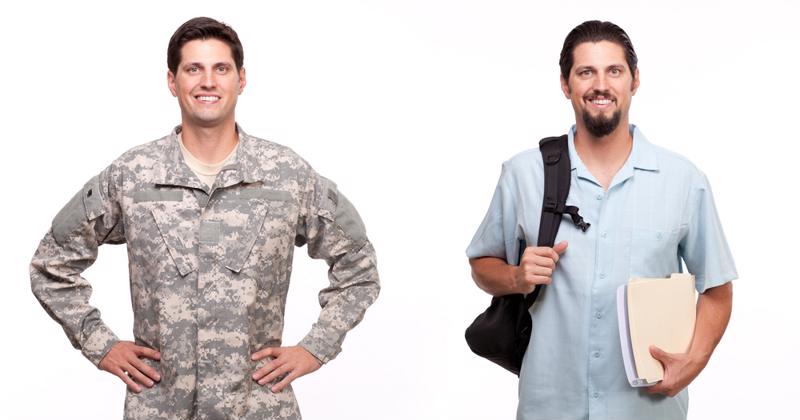 Colleges are helping veterans transition from the battlefield to the lecture hall.
New England school steps up
Northeastern University in Boston is home to approximately 600 student veterans, according to the college’s Center for the Advancement of Veterans and Service Members (CAVS). Why do so many discharged military personnel flock to the university? Northeastern has cultivated an effective financial and social support system, WBUR reported. The process started back in 2012 when school administrators invested $2 million in the VA’s Yellow Ribbon Program, a federal educational initiative that lowers tuition costs and fees for veterans enrolled in degree-granting institutions. In the years since, Northeastern has participated in the program and contributes an estimated $25,000 in financial aid to its 150 undergraduate veterans.
Marine Corps veteran Max Spahn was able to graduate last year free of debt, which he attributes to the school’s robust financial incentives.
“Zero costs to me out of pocket is the biggest thing,” he explained. “And I’m still going to be able to graduate without a dime coming out of my pocket, because of Northeastern.”
In addition to its aid packages, the college offers a comforting social atmosphere for former service personnel. For starters, CAVS, established in 2015, helps veterans navigate campus and connect with staff and students who have also served in the armed forces. Andy McCarty, director for the organization, takes a hands-on approach, guiding war-weary young men and women as they move on from their military days.
“They think that because the military gave them a job, a very specific job, their military occupation skill, that that’s somehow a vocation, and the job that they have to hold for the rest of their lives,” McCarty, an Air Force veteran, told WBUR.
Other on-campus organizations, such as the Student Veterans Association, provide extra support. Together, these fixtures combine to form a unique educational experience for the former service members who attend Northeastern, 82 percent of whom go on to graduate.
“Northeastern offers a comforting social atmosphere for former service personnel.”
Northeastern moves forward
This month, the university once again added to its veteran services portfolio, opening an on-campus Veterans for Foreign Wars (VFW) post, the second of its kind. Spahn has signed on to command the post, which has no physical location as of yet. Still, the new VFW post will allow former service members at Northeastern to engage with the veteran community at large and provide yet another point of connection for the men and women who have served. The post will cater to younger veterans who want to get out and explore rather than stay indoors and reminisce.
“They do more of the social gatherings, and it’s not necessarily at a VFW post all the time,” Brian Martin, state commander for the Massachusetts VFW, told WBUR. “They’re looking for the camaraderie, but in different settings. They have running teams. They do the Tough Mudder races, things like that. That’s how they join together. They go out together, and they compete in things.”
Overall, Northeastern’s commitment to student veterans stands as shining example for colleges searching for ways to connect with the military population and provide an ideal academic and social environment for former service members hoping to build a life post-discharge.
Honoring and publicly acknowledging veterans who served decades ago also lets those individuals know they and their contributions to the country are not forgotten. This process may prove especially important for veterans who served in the Vietnam War, due to that conflict's controversial reception at the time and mixed legacy since. Now that decades have passed since the war, those who served are growing older – but it's not too late to ensure they are celebrated and remembered by the government and public.
"The process is meant to ensure the public has access to photos of every American veteran of the Vietnam War."
Online project gets 50,000th photo
One of the most memorable and dynamic veterans memorials, the Vietnam Veterans Memorial in Washington, D.C., is celebrating its 35th anniversary. The memorial fund that maintains the installation recently announced that its online companion program, the Wall of Faces, has collected its 50,000th image. The process is meant to ensure the public has access to photos of every American veteran of the Vietnam War, as another way to ensure their service and sacrifices are not forgotten. The Wall of Faces has been collecting pictures since 2009.
Former Secretary of Defense Chuck Hagel, who is heading up the 35th-anniversary commemoration for the memorial, urged members of the public to come forward with pictures of Vietnam veterans who are not yet represented in the Wall of Faces. He expressed hope that the collection could be completed by the end of 2017, and explained that it's especially important to collect the images of those who died during the war, to make sure their memory lives on.
Veterans groups around the country have been active in finding pictures for the Wall of Faces. The Vietnam Veterans Memorial Fund announced that the 50,000th picture for the virtual wall came from VVA Chapter 1036, based in Florida. That chapter has been actively seeking out photos over the past year. The milestone photo is of local Bobby Joe Quinn of Morristown, Tennessee.
Pinning ceremony honors vets
While lasting archives such as the Wall of Faces and the physical memorial in Washington, D.C., help the world remember the Vietnam War, there is also value in events that directly reach out to the veterans themselves. This is where pinning ceremonies come in, with individuals across the country thanked for their service in person and receiving a commemorative pin. The Daily Commercial in Lake County, Wisconsin, reported on one such gathering. At AMVETS Post 2006 in Leesburg, Wisconsin, approximately 180 vets received the pins, which are being given as a 50-year remembrance of the war.
The news provider noted that the pinning campaign is being carried out following President Barack Obama's 2012 presidential proclamation authorizing honors for every living veteran who served from Nov. 1, 1955, to May 15, 1975. At the Leesburg ceremony, speakers included Mayor Bob Bone, who thanked veterans for their efforts, and retired Army Command Sgt. Major Jimmie W. Spencer, who stated that the troubles that characterized the Vietnam War era must never be allowed to return.
Although many of them were ignored or vilified in their own time, Vietnam veterans have recently been able to find public support from various local and national programs. The aforementioned are just two examples of this phenomenon.
The opportunity frequently arises to honor veterans from conflicts that took place decades ago. While at first glance it may seem strange to bestow honors on individuals who served 50 years ago or more, these thank-yous remain relevant and appreciated. Service members who have taken risks and made sacrifices for the sake of their country still merit attention and praise for their actions all these years later, especially if the honors given are those that, for whatever reason, were skipped over at the time.
Programs to award veterans can take many forms, some based on which branch of the military individuals belonged to or the conflict in which they participated, others predicated on where the recipients dwell now.
Honoring the OSS
During World War II, the Office of Strategic Services was a vital piece of the intelligence network of the Allies' war effort. Now, 60 years later, those who served in the OSS will receive recognition for their activities. According to Military Times, a bill to award the Congressional Gold Medal to OSS veterans has now been signed by President Barack Obama, after spending the year passing through both chambers of Congress. The passage of the measure is the culmination of a long campaign to receive particular recognition for the role played by America's World War II spy corps.
The source noted that the bill received support from the OSS Society, a group based in Virginia, along with surviving veterans of the service. The OSS, set up by Gen. William Donovan, carried out daring operations behind enemy lines during the war. OSS officers were responsible for coordinating resistance efforts in Axis-held territories and gathering intelligence in both the European and Asian theaters of war.
Vets receiving care get honors
While the aforementioned act hands out recognition based on veterans' military roles, other programs are being organized by locality. Nevada Fox affiliate KRXI recently highlighted such a program in Nevada. In a series of services across the state, Governor Brian Sandoval has been bestowing honors on veterans who are living in care facilities across the state. The program, Veterans In Care, has thus far identified and offered recognition to more than 500 veterans.
The news source explained that the program's most recent ceremony was held at Five Star Premier care home in Reno. Among the several dozen veterans to receive recognition from the state government was Margaret Allen. At 107 years of age, Allen is one of the oldest living U.S. vets. At the event, the retired service members were given certificates of appreciation from the state and pins to commemorate their service.
It's never too late
As the veterans who served in World War II and the Korean War age, it's important to acknowledge their contributions. Ceremonies conferring honors are good ways to remind these vets that their communities remember all they've given and thank them. Putting such recognition off presents problems, as eventually, it will be too late. Treating yesterday's military personnel well also sets a good precedent, implying that once today's service members have retired and grown older, the country will remember and honor them as well.
Responding to emergencies as a police officer, firefighter or EMT is one of the most dangerous and demanding job descriptions in existence, no matter what season it is. However, in winter, the brave men and women who serve in these roles deserve an extra salute for their commitment to keeping their communities safe. Winter weather can be the cause of innumerable different types of accidents, and it's up to first responders to deal with bad conditions when carrying out rescue operations. It's worth taking a moment to pay tribute to the dedication that carries public safety personnel through the months from December to March.
"On top of other seasonal dangers, the cold itself can cause serious harm."
New risks open up
When the temperatures drop, snow and ice can become hazards on roads, leading to the potential for car crashes and making it harder for emergency vehicles to respond. Furthermore, heating elements can pose a fire risk if people aren't careful. On top of these seasonal dangers, the cold itself can cause serious harm.
Fox 28 in Spokane, Washington, recently explained that local first responders are worried about individuals falling victim to hypothermia when temperatures drop. Spokane Valley Fire Department Health Services Manager Mike Lopez told the news provider that when conditions become extreme, hypothermia can develop in as little as 15 minutes. When merely being outside is a risk, first responders must step up to educate the public and take action to protect the vulnerable.
Lopez added that the elderly are especially at risk of developing hypothermia. The homeless are also in danger, as not having anywhere warm to shelter can put someone at immediate risk of serious harm or even death. First responders in Spokane and around the country will be looking out for people who need help. Lopez told Fox 28 that individuals out in the cold should look out for one another, watching for confusion, lack of coordination and other warning signs that hypothermia is a possibility.
Working through the holidays
Another prominent element of first responders' work in winter is the need for them to remain on duty when others take time off for the holidays. Fox 7 in Austin, Texas, described the weekend duties local emergency personnel faced, while many individuals in other lines of work took Monday off to celebrate a belated New Year's Day. Rescuers had to help several injured individuals in harsh weather conditions, with fog and rain getting in the way. The news provider added that five years ago, first responders in the region faced an especially tough New Year, dealing with three different fire emergencies.
With their nonstop dedication to keeping their communities safe, first responders deserve unfailing respect at all times, but especially during the holidays. Those in other lines of work can enjoy their festive days off because these brave individuals are vigilant about their duties, and equipped with the training and experience to carry out rescue operations, even when the conditions become harsh. Everything from icy roads to the reduced visibility of short daylight hours may make emergency responders' jobs harder, making it even more impressive when they safeguard the lives of their neighbors.