
Taking care of a wounded veteran is one of the most important services a nonprofit or government agency can render, but these organizations aren't there with patients 24/7. In the end, a great deal of care is provided by caregivers, often spouses or other family members of the injured service members. Taking a moment to recognize the people who care for injured vets is important, as these contributions are too vital to go unnoticed.
Partners learn to help
Wisconsin Public Radio recently spotlighted Barbara McNally, author of a guide that gives knowledge and support to the spouses of wounded vets. McNally explained that witnessing a veteran's tragic suicide galvanized her to write the book. She explained that returning from active duty with a serious wound can be a surprising trauma, one that both the injured parties and those closest to them feel unable to handle or cope with. By giving out common-sense information, she hopes to help improve these situations.
Military spouses can have a huge positive impact on their wounded partners, and McNally wants to be sure they meet this potential. She recounted the story of a vet afflicted with severe depression. The vet's wife introduced him to a fly fishing program meant for military members. Husband and wife participated together, and he managed to reconnect with the world, via an activity he loved, and communication with other vets in the program. By knowing him well enough, the vet's wife put him on a track back to normalcy.
"A young couple coping with a severe wound may be blindsided by the strain."
In addition to having a lack of experience dealing with mental or physical injuries, many veterans' caregivers are very young. McNally noted that there are 5 million caregivers helping veterans in the country today, and 20 percent of them are under 30. A young couple coping with a severe wound may be blindsided by the strain, but with the right mindset and some knowledge, they can persevere.
Treating vet caregivers
Some organizations aimed at helping vets make a point of acknowledging the vital role caregivers play in helping injured warriors re-integrate with the civilian world. Events planned to salute the troops or give out free services can increase their scope to caregivers. WHNT pointed out one such program in Huntsville, Alabama, in which the Salon Professional Academy gave out free beauty care to women who are either veterans or caregivers. The salon closed to the public and served 16 caretakers and two vets, giving makeovers ahead of the Marine Corps Ball.
Marine veteran Lori Martin explained to WHNT that the beauty care proved to be a helpful bonding experience for the vets and wives. Considering the vital role caregivers play in helping wounded vets – and the amount of effort it can take to step into that time-consuming position, it's heartening to see caretakers honored alongside veterans in promotions, giveaways and other events dedicated to saluting the military. While there are many great programs that provide assistance for wounded vets, spouses and other family members are still the backbone of the support system upon their return from service.
When it comes to ensuring regulations, laws and policies at both state and federal levels adequately support veterans, it helps to have more military representation throughout agencies. While anyone can help vets programs along, the experience that comes from serving is unique, and this is a useful perspective to tap into. Today, veterans of the post-9/11 conflicts in the Middle East are re-entering the workforce at home in great numbers, giving public sector agencies a talented pool of potential young employees to draw from. The views of people who have spent the past few years as service members can help guide the conversation around veteran-friendly policymaking.
Congressional staff numbers still low
Lawmakers themselves aren't the only ones setting the agenda in Congress. According to Military Times, Capitol staff working group HillVets wants more veterans to find work as policy team members, helping senators and representatives decide on courses of action. As of now, less than 1 percent of policy staffers are veterans.
Including roles beyond policymaking, there are over 3,000 employees in total serving members of Congress at any time but at the moment, only 3 percent are veterans. This is a marked contrast with elected officials – the source explained that at least 102 veterans will serve in elected office next year. That includes 27 individuals who served in Iraq or Afghanistan.
"More representation could ensure that veteran-specific legislation is always a high priority."
HillVets wants members of Congress to get their views on veterans issues directly from people with firsthand experience. That's why the group has encouraged each senator and representative to have at least one veteran on staff in a policy capacity. More representation could ensure that veteran-specific legislation is always a high priority and, when such laws do pass, they accurately reflect the actual needs of today's ex-military members.
The surprising part of low veteran employment numbers among congressional staff is that other businesses have made much steadier progress in stepping up veteran hiring. HillVets told Military Times that companies and communities at large have expressed praise for the veterans they have hired. Having someone with military experience on staff brings a new perspective and set of skills, and that could be just what Congress needs.
Congress is an outlier
Some of the groups that have been hiring veterans at a fast pace are right in the federal government, according to The Washington Post. The source explained that vet hiring has stayed steady for the past five years, with approximately 45 percent of new permanent roles going to individuals with military experience. With young people coming home from Iraq and Afghanistan, there's no shortage of talented potential hires.
The news source specified that hiring rates differ widely between agencies. The 45 percent average doesn't tell the whole story, as some agencies are bringing in significantly more vets than that while others lag behind. In a promising development, disabled veterans seem to be receiving plenty of roles. Seven percent of federal full-time jobs went to disabled veterans in the 2015 fiscal year, making up 43 percent of veterans hired, according to The Washington Post. While institutions such as Congress have been slow to add vets to their teams, the overall pattern remains strong.
Veterans are not always adequately recognized for their efforts on behalf of the country. It's always heartening when groups, individuals and government agencies correct these oversights, giving vets the honors and remembrance they deserve. It's especially important to keep elderly veterans in mind as their service careers fade into the history books. Though it's been over 70 years since the last shot was fired in World War II, communities around the country are keeping veterans of the conflict in their thoughts, engaging in positive civic gestures.
Belated medals handed out in Iowa
There are still many vets in this country who are owed honors, commendations or medals they haven't received. In Iowa, two men who served in the Navy during World War II recently received their awards after decades. According to KMA News, Dean Kester and Harold Walter both earned the Navy Good Conduct Medal, the World War II Victory Medal and the American Campaign Medal. Walter also earned the Discharge Button and Honorable Service Lapel Pin, while Kester was owed the American Defense Service Medal and the Asiatic Pacific Campaign Medal.
The source noted that the two veterans received their belated honors at a ceremony in Lenox, Iowa, hosted by Senator Joni Ernst. The lawmaker told the news provider that other vets in the state who may have outstanding honors should contact her office to receive their awards, no matter how long ago they earned them. The ceremony for Kester and Walter was the first of several scheduled to commemorate Veterans Day in Iowa.
Numerous circumstances could have caused veterans to come home without all the medals and other honors they qualified for. Ernst told KMA that the chaos inherent to wartime can lead to these ceremonies falling by the wayside. Now that these service members are home, they can finally receive the medals they've earned, whether it has been seven or 70 years since they were discharged.
Local history remembered
The huge number of men and women who enlisted in the armed forces during World War II means the conflict had a seismic impact on towns and cities throughout the country. Remembering this impact is another way to keep the people who fought in World War II in mind, even all these years later. Illinois news source the Daily Herald recently spotlighted Cynthia Christ Nelson's scrapbook of clippings that chronicled the town of Elgin's involvement in the war. Nelson plans to donate her collection to the Elgin History Museum, so the public can share in the memories.
Contained in the scrapbook are stories of heroism and sacrifice, with members of the community sometimes enlisting directly out of high school or taking groups of friends with them into the service. In stories that served as a precursor to the recent surge in female enlistment, many women from Elgin served in World War II, joining the ranks of nurses or the Women Accepted for Volunteer Emergency Service (WAVES). Having a deep reservoir of contemporary news reports about one region's role in helping win World War II puts a local spin and a human face on the conflict. This is valuable perspective more than 70 years later.
Between 11 and 20 percent of the service members who participated in Operations Enduring Freedom and Iraqi Freedom suffer from post-traumatic stress disorder, according to the National Center for PTSD. These troubled service members cope with the disorder in a variety of ways. Some immerse themselves in the creative process or take their minds off painful memories by engaging in vigorous exercise. Others turn to four-legged companions for comfort.
In the months and years since service members started returning from conflicts in the Middle East, pet therapy organizations have sprung up across the country, helping combat veterans connect with service animals that offer support during the occasionally turbulent moments that can arise in life after service.
K9s For Warriors is one of these groups, Parade reported. Shari Duval founded the Ponte Vedra, Florida-based organization in March 2011 after learning that her son, a contract bomb dog handler for the Department of Defense, suffered from PTSD – the result of two tours in Iraq.
In the years since, K9s For Warriors has provided approximately 263 service dogs to veterans in need, including former Air Force officer LaWanna Viers. She, like many of her fellow service members, returned home from Iraq with PTSD. After months of anxiety and insomnia, Viers reached out to K9s For Warriors and was presented with a female bulldog-boxer mix named Corey. The effect was immediate.
"The day that I got [Corey], I felt this sense of calm come over me," Viers recalled in an interview with Parade. "When I saw her eyes, I knew everything was going to be OK."
Now, the 25-year Air Force veteran can enjoy carefree moments with her husband and children and navigate large crowds and tense situations, knowing Corey is prepared to act should she show signs of anxiety.
"She can tell when I am anxious or having a panic attack. She'll pull me to a quiet place and then block me from people," Viers explained.
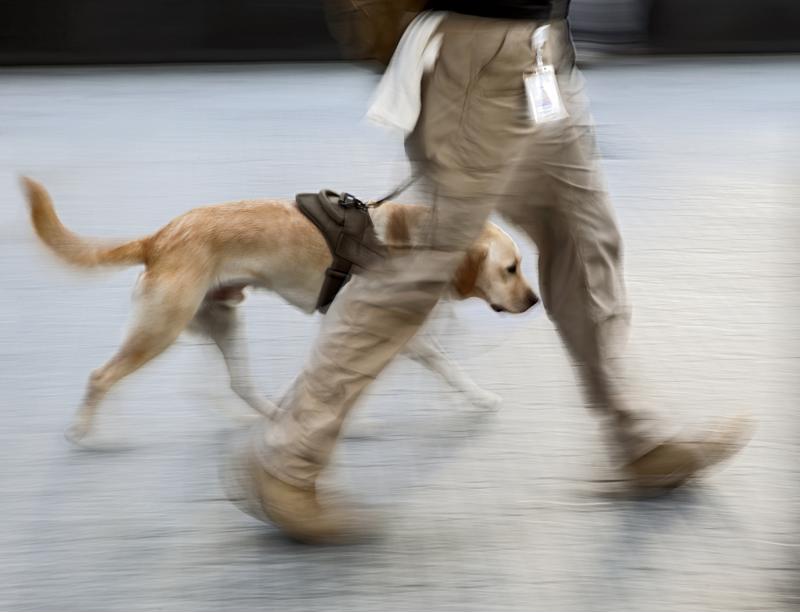
Of course, canines like Corey aren't naturally equipped to shepherd their owners away from despair. These animals undergo extensive training and learn to pinpoint the emotional and physical cues that signal anxiety in humans. The trainers at K9s For Warriors work with veterans and their service animals for months to help cultivate deep bonds between them.
The organization hosts five participants at time, leading them and their assigned dogs through 120 hours of tailored training. Approximately 90 percent of the veterans who graduate the program return regularly to recertify their animals and brush up on new handling techniques.
At K9s For Warriors, most of the assigned canines are rescues. In fact, the group has saved more than 300 dogs since its launch in 2011.
Despite the obvious benefits of service dogs, most therapists believe they do little to treat individuals with PTSD, The New York Times reported. Most advise sufferers to continue therapy even after obtaining these animals.
Still, the Veterans Administration recommends them, especially for former service members who may need physical assistance. And, as long as veterans like Viers continue to see results, it will likely continue to do so.
Some service members who go missing during overseas conflicts are never heard from again, so there's a bittersweet sense of closure when the remains of a previously unidentified military member can be returned home for a proper burial.
Resting place discovered
According to The Washington Post, a painstaking process of searching and inquiry led an Army recovery team to a grave site in North Korea in 2005. The burial place contained the body of an American soldier, who was identified as Wayne Minard after DNA testing based on results from two of his sisters. Minard went missing in 1950 and now his body will return to Kansas for a proper burial after 65 years.
The source explained that the burial site yielded more remains, with two other soldiers who served alongside Minard interred there, as well as 30 other individuals. The encounter that led to Minard's capture was fought on November 25, 1950, but he never officially appeared on a prisoner of war list. His death was confirmed by repatriated prisoners in 1951.
Now, family back home will finally get to give Wayne Minard a burial with full military honors in his hometown. These family members had assumed they would never know for sure where he was buried, according to The Washington Post. Some of those who will attend the funeral, such as great-nephew Bruce Stubbs, never had the chance to know him while he was alive.
"There are still 7,784 Americans unaccounted for from the Korean War alone."
Efforts to bring the remains of military members from past conflicts home for burial are painstaking and difficult, and the amount of work ahead is daunting. According to the news source, there are still 7,784 Americans unaccounted for from the Korean War alone. Having no records of what became of these individuals can take a toll back home. Stubbs noted that family members close to Minard thought about him throughout their lives.
Wake attracts vets of all eras
In another instance of an identification after decades, the body of Roy C. Fink was laid to rest in Amherst, New York. The Buffalo News reported that veterans of other conflicts turned out for the service. Despite never knowing Fink when he lived, they were drawn by a sense of kinship and the hope that he is merely one of many previously missing or unidentified war dead who will someday be identified and offered a proper burial. Like Minard, Fink was identified by DNA tests of relatives, in this case his nephew Paul DeFrain. Fink's remains were found at the site of the Battle of Chosin Reservoir, fought in 1950.
DeFrain explained to the source that it was touching to interact with the 65 people who attended the wake. Family members got the chance to say goodbye properly to someone many of them never had the chance to know when he was alive, and the vets who attended were able to share a moment of connection. Vietnam veteran Patrick B. Kavanagh gave DeFrain a patch and hat from the division Fink served in to strengthen the bond between nephew and uncle. Hopefully, many more such ceremonies will be possible as the missing are identified and laid to rest with proper honors.
The transition to the civilian workforce is a pivotal moment for veterans, and ensuring that this journey is as smooth as possible will take effort from all parties involved. Bridging the gap between the very unique experiences that come with being in the military and the different set of challenges facing the civilian workforce is critical to ensuring communication between vets and employers. The state of that bond is important, and in cases where it's less than ironclad, improvement is needed.
Hiring managers voice opinions
Military Times reported that, according to a recent poll circulated by Hiring Our Heroes, hiring managers expressed the opinion that veterans are likely to bring important skills to the workforce. Managers asked about recruiting priorities listed military service at No. 3, with 77 percent stating that abilities learned in the military are important in civilian offices. This is good news, as esteem among hiring managers will help veterans get a foot in the door at great companies on returning from active duty. However, the survey results also noted that some businesses are unsure how to help vets transition to their new roles.
"Two-way communication between business and military communities is needed."
One of the major problems facing hiring managers today is a lack of knowledge. Without knowing more about the military, they may be ill-equipped to give veterans an ideal environment to transition into. According to Military Times, the Hiring Our Heroes data found over half of surveyed professionals don't have a deep understanding of military structure. This means they're sometimes unaware of what level or role a military member should enter at. Veterans themselves may not know what they are going into. Two-way communication between business and military communities is needed.
Some negativity experienced by vets in civilian workplaces may be persisting because company leaders aren't aware it's there. The source reported that less than one-fourth of surveyed hiring managers say they work at organizations that contain bias against veterans. Among veterans asked, however, almost half said they had experienced such an issue. This lack of agreement on a fundamental fact shows the need for better exchange of ideas from both public and private sector entities.
States stepping up programs
Getting more veterans hired for good jobs in the private sector is a priority at national and state levels, and some formalized programs have emerged to help make this a reality. According to Virginia Business, the Virginia Values Veterans (V3) initiative in Virginia recently reached its goal – 20,000 veterans have joined certified businesses since 2012. The list of employers working with the program totals over 700, and they had until January 2018 to reach the hiring mark according to the original plan.
As state and federal agencies across the country step up their efforts to work with the business community on a close level, there is room for communication between all involved parties to improve. If hiring managers and veterans can get on the same page, there is ample potential for service members to find fulfilling new careers soon after returning from active duty. Creating a military-to-business pipeline that works is a goal everyone can agree on.
An estimated 949 homeless veterans live in the state of Massachusetts, according to the Department of Housing and Urban Development. The New England Center and Home For Veterans in Boston currently serves more than a third of these individuals, offering them food and sleeping quarters.
Peace Foxx, Mark Helberg and Ken Smith founded the nonprofit in 1989 to serve local Vietnam veterans. In the years since, the organization has grown considerably. Now, it offers everything from service member training programs to formalized behavioral health services. NECHV also maintains 59 permanent apartments for veterans transitioning from life on the street into normal living situations. The center includes a women's dormitory as well.
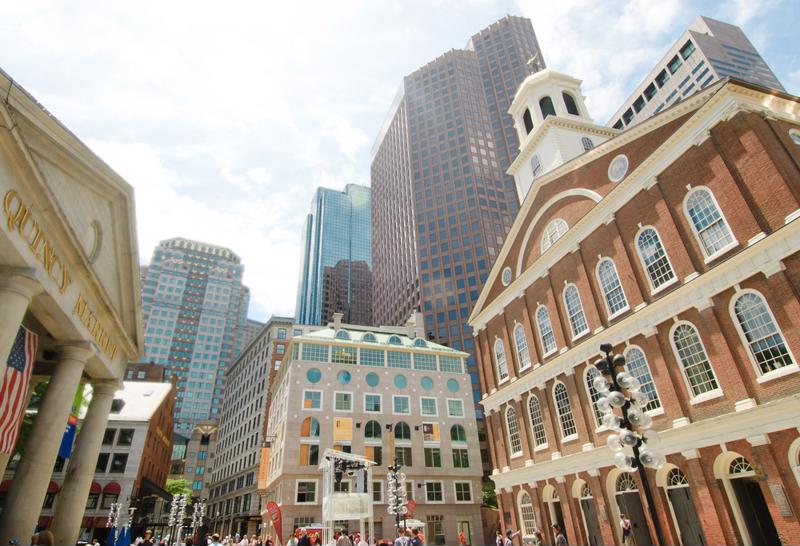
However, the organization will soon offer new accommodations as part of a $31 million renovation, The Boston Globe reported. In May 2015, crews broke ground on the project, which is expected to yield 200 transitional housing units and 38 additional permanent apartments. NECHV headquarters, located at 17 Court Street in the center of downtown Boston, is also undergoing renovations.
The center initiated the overhaul to accommodate the changing demographics of the local veteran population, which now includes more women.
"The veteran population in our city is very diverse, and we need to be able to provide tailored and individualized services to them," Andy McCawley, a Navy veteran and the president of NECHV, told the newspaper. "We have seen an increase, and we want to provide the best and most effective opportunities for our female veterans."
The renovation is expected to be completed by the end of the year. McCawley believes the improvements will allow the center to serve at least 1,500 more former service members.
Boston Mayor Marty Walsh is a key supporter of the project, as it folds into a city-wide veterans housing initiative he started soon after taking office in 2014.
"Sustainable, independent living requires support at every level. And that's what this center is going to do for more veterans than ever before, every step of the way," Walsh told The Globe.
As NECHV upgrades its capabilities, veteran homelessness in Massachusetts continues to decline, according to WBUR. In 2015, the state was home to 1,133 homeless veterans, 1,001 of whom lived in shelters. Only 32 were classified as unsheltered. This year, the total has fallen below 1,000. In March, the city of Lynn became the first Massachusetts municipality to end veteran homelessness, one local CBS affiliate reported. These numbers will continue to fall as specialized housing programs for former service members mature.
Even after every veteran in the state has found a home, McCawley believes his organization will still be able to offer unique and ultimately essential services to ex military personnel living in New England, WBZ reported.
"The goal of the center is to be a human resource, so the veterans can get connected, stay connected, and be successful," he explained. "So as we reach the … end of veteran homelessness, doesn't mean the need for human services will go away. We want to be a resource for Veterans in the community for essentially generations in the future, and we will have a brand new building in a great location to do that."
There are many ways for first responders to interact with their communities, and they're worth pursuing. It's always heartening to see a strong bond between a town or city and the brave professionals who put their lives on the line to keep people safe. Sometimes, these bonding exercises involve learning, and the emergency responders can be either the learners or the teachers.
In some cases, they'll acquire new skills that help them engage with those around them, and in other cases, they'll share their accumulated knowledge. Both types of programs are worth investigating for community leaders and department chiefs.
South Carolina: Learning sign language
A recent report from WACH revealed employees of the Irmo, South Carolina, are learning American sign language to ensure that they'll be able to better serve deaf and hearing-impaired members of the community. The importance of communication can't be understated. Program director Dave Bitters noted that teaching sign language to emergency responders may help avoid a repeat from a tragic incident earlier this year. A deaf man in North Carolina died when he was shot by police officers – his family has suggested that inability to communicate played a role in what happened.
"Contact between departments and the people they serve is always critical."
The training has taken hold with several different departments throughout the state. Police officers in Lexington and Rock Hill, as well as Lexington County Sheriff's deputies have taken sign classes. Contact between departments and the people they serve is always critical. Without the aid of sign language, hearing deficiencies can be a huge impediment to communication.
Even when situations are more mundane, mutual understanding between civilians and first responders is at a premium. In emergency circumstances, the value of easy contact becomes extreme. This is one case where gaining knowledge beyond their basic job descriptions will help police officers, firefighters and paramedics better serve their departments.
Washington: Outreach in schools
Of course, first responders can improve their bonds with their communities by teaching as well as learning. The Highline Times recently zoomed in on interactions between police and fire personnel and students in Port of Seattle, Washington. The officers and firefighters treated kids from local high schools to demonstrations of equipment, as well as a chance to see police dogs in action. The first responders also spoke at length with the students, describing what it takes to join the force.
The departments intend to hire aggressively over the next few years as the Port of Seattle community grows. This means the bonds established in school outreach programs may encourage more high schoolers to become interns and potentially join the force. This pipeline of new talent may dry up in communities where the bond and trust between first responders and young residents isn't strong, which adds importance to the idea of running such programs.
With their years of experience in a unique and exciting field, emergency services employees are well qualified to speak engagingly to young people, and this could be a great way to establish a deeper connection to the community. Whether learning new skills or acting as the teachers, education may be key to improving first responders' role in towns across the country.
On Election Day, voters in five states will decide whether to legalize marijuana, The New York Times reported. Arizona, California, Maine, Massachusetts and Nevada have decriminalization measures on the ballot. If these initiatives pass, the total number of states that permit marijuana use will rise to nine.
This may prove helpful to the veterans in these areas who suffer from post-traumatic stress disorder, as marijuana is a viable treatment for the symptoms that accompany this condition, according to the Department of Veterans Affairs. However, many physicians and government administrators have been slow to accept the treatment. Veterans groups are pushing the issue in an effort to open up treatment options for former service members with PTSD.
In September, the American Legion took up the cause, urging Congress to remove marijuana from the list of illegal substances outlined in the Controlled Substances Act, The Washington Post reported. The organization, which includes more than 2.2 million military veterans, chose to move forward with the request during its annual convention in August.
Members of the American Legion believe that the decriminalization of marijuana will allow researchers to more thoroughly study the substance and unlock its therapeutic powers for use in more impactful PTSD treatments.
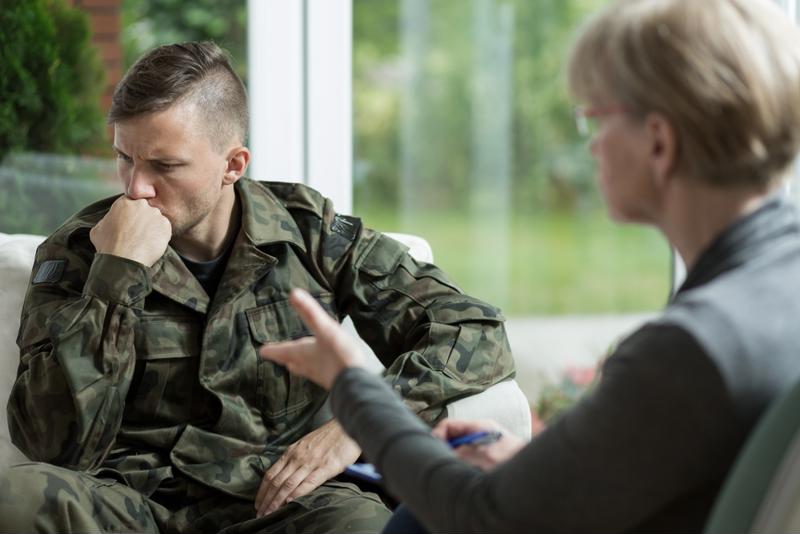
Some in the medical field have already made headway in this area. In fact, the Food and Drug Administration recently approved the first trial to test marijuana as a treatment for PTSD symptoms. Investigators from the University of Colorado, Johns Hopkins University and the Scottsdale Research Institute have begun recruiting veterans for the trial, which will last two years, Stars and Stripes reported.
"By working with chronic treatment-resistant veterans, we address a national emergency and limit variability at the potential expense of generalizability," Rebecca Matthews, a researcher at the Multidisciplinary Association for Psychedelic Studies in Santa Cruz, California and the lead investigator for the trial, told the publication. "Further research will be needed to determine if these results will apply to other groups of PTSD sufferers."
Another investigator on the research team addressed members of the American Legion Affairs and Rehabilitation Commission during the organization's conference in August, according to a press release. Dr. Sue Sisley, a clinician at the Scottsdale Research Institute and former VA psychiatrist, explained to those assembled that prescription drugs and other conventional remedies are simply not enough for some former service members.
"Veterans are exhausted and feel like guinea pigs; they're getting desperate," she explained.
However, one of the primary roadblocks in the way of the legitimization of marijuana as a treatment for PTSD and other conditions is the lack of regulation, as ingredients vary between supplies. Advocates argue that simply decriminalizing the drug will quash this issue. Federal and state agencies would be able to step in and control dosages and ingredients just as they do with prescription drugs. Indeed, states that have legalized cannabis require sellers to label their products with detailed descriptions that indicate how much tetrahydrocannabinol – the chemical that produces the high associated with the substance – they contain, The Washington Post reported.
Of course, there are other dangers as well. Marijuana has been known to cause harm to individuals with specific neurological chemistries.
Veterans who served in Operations Enduring Freedom and Iraqi Freedom by and large support the decriminalization of cannabis, according to research from Iraq and Afghanistan Veterans of America. An estimated 68 percent of these service members believe states should pass laws legalizing marijuana.
Those living in California, Maine and Massachusetts may soon get their wish – experts predict that the legalization initiatives up for vote in these states will pass.
With Veterans Day right around the corner, city officials across the country are putting the final touches on celebrations to honor American service members. Of course, this happens every year during the days leading up to November 11. Literally thousands of events take place on this hallowed holiday, whose roots can be traced back to World War I. In 1918 on the eleventh hour of the eleventh day of the eleventh month, Germany and Austria-Hungary agreed to a cease-fire with the Allied nations of the United States, Great Britain, France and Russia, according to the Department of Veterans Affairs. This marked the unofficial end of the Great War, which would formally conclude with the signing of the Treaty of Versailles eight months later.
Soon after, President Woodrow Wilson declared November 11 Armistice Day in honor of the historic truce. In 1954, President Dwight D. Eisenhower renamed the occasion Veterans Day in an effort to make it applicable to service members who participated in other armed conflicts outside of World War I. Fourteen years later, Congress moved the holiday to the fourth Monday in October. However, this change left many Americans unhappy. After more than a decade of complaints, President Gerald R. Ford in 1975 signed into law new legislation that declared November 11 Veterans Day once again.
Every year on this day, citizens flood the streets to express gratitude and support for veterans, and demonstrate their passion for the country they call home. This November 11 will be no different, as most cities have planned exciting festivities to celebrate their local service members.
New York
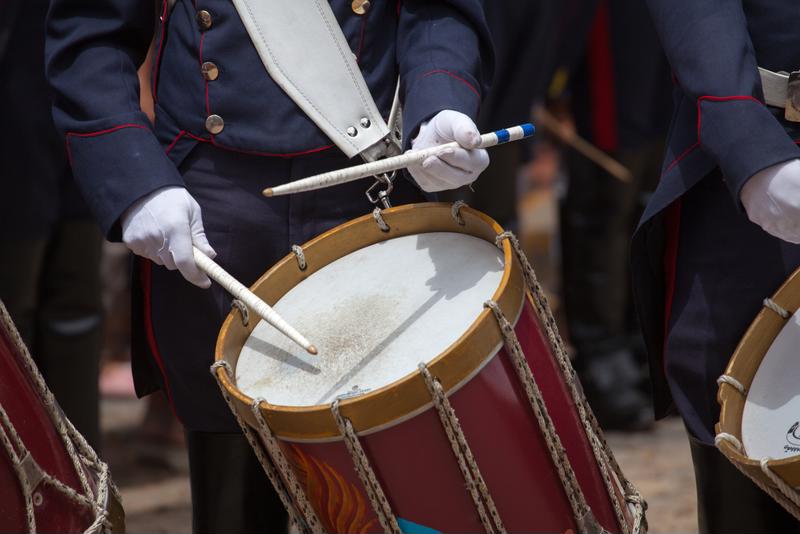
Since the 1970s, New York City has hosted America's Parade, the single largest Veterans Day celebration in the country. Though the event got off to a shaky start and struggled to gain traction throughout the 1980s and 1990s, it has become a staple in recent years, Business Insider reported. Now, hundreds of thousands of New Yorkers line the streets to look on as veterans and allies march along the parade route, which winds through Midtown Manhattan.
This year, America's Parade will once again take place. Retired Army Colonel Stephanie Dawson, who now serves as the chief operating officer of the Port Authority of New York and New Jersey, will helm the procession, along with local Iraq War veterans Joseph Duggan Jr. and Nelson Vergara, both of whom were also first responders during the 9/11 attacks.
Los Angeles
For the first time ever, the city of Los Angeles will host its own version of America's Parade, according to the American Legion. Officials from the Los Angeles County Department of Military and Veterans Affairs collaborated with United War Veterans Council, the organization behind the original celebration in New York, and the American Legion to put on this event.
"This parade will honor veterans from all wars and all eras, creating a sea to shining sea of Veterans Day parades throughout our great country," Stephanie Stone, chief deputy of the Los Angeles County VA, explained.
Paraders will depart from West Los Angeles VA Medical Center and continue on a one-mile route through the campus.
Seattle
Veterans in Auburn, Washington, a southern suburb of Seattle, are expected to participate in the annual Veterans Day Parade and Observance, the Seattle Times reported. Despite its modest trappings, this mile-long parade is actually one of the largest Veterans Day celebrations in the country, regularly drawing crowds numbering in the thousands. This year, the event will include more than 200 units and end with a veterans fair and showcase.