
In the aftermath of Hurricane Matthew, the Category 5 storm that last month wrought havoc across the Western Atlantic, a number of disaster relief organizations mobilized to assist those affected. Along with the American Red Cross and others, one battle-tested veterans group has also entered the fray, CNBC reported.
Last week, members of Team Rubicon, an international nonprofit dedicated to helping in times of crisis, deployed rapid response personnel to Haiti to assist with on-the-ground rebuilding efforts. Those familiar with the growing organization know this isn't its first encounter with disaster or the impoverished nation of Haiti. In fact, the country was the impetus for the establishment of Team Rubicon.

In January 2010, Marine veteran and Team Rubicon CEO Jake Woods watched as a massive 7.0 magnitude earthquake rocked Haiti. Woods sprung into action almost immediately, penning a Facebook post expressing his intention to travel to the island to help, CNN reported. He bookended his message with challenge to fellow service members: "Who's in?"
His friend William McNulty, also a Marine veteran, answered the call, along with more than 60 other volunteers. Within weeks of the disaster, Wood, McNulty and a team of discharged military personnel were in Haiti constructing hospital tents and transporting injured residents to nearby hospitals.
"We realized we were more effective than many organizations that were down there with us," Wood told the news organization. "We also realized that most organizations weren't engaging vets on their own. So we said, 'Let's try to improve this.'"
After returning from Haiti, Wood, an aspiring business student, went to work legitimizing the organization, sourcing more volunteers and looking for new missions. Team Rubicon personnel soon found work in Burma, Chile, Pakistan and South Sudan, The New York Times reported. The nonprofit also lent a hand after tornadoes devastated Joplin, Missouri in 2011 and Hurricane Sandy invaded New Jersey and New York a year later.
Now, Team Rubicon boasts over 40,000 volunteers and operates an international division based in the U.K. Approximately 80 percent of its members are veterans, most of whom benefit personally from the work. The organization has proved vital for former military personnel searching for a renewed sense of purpose in life after service.
"We're giving them a reason to come together … and that community lasts long after the mission," Wood explained in an interview with CNN. "Right now, Team Rubicon is focused on how we can … get them involved in as many ways as possible."
In the coming years, Team Rubicon will work to add new members to its ranks and offer more domestic disaster relief services. The organization is looking to raise $10 million by the end of 2016, most of which will go toward meeting these goals.
Wood expects Team Rubicon volunteers to pour into Haiti over the next week and assist anywhere they are needed.
The Wisconsin Department of Veterans Affairs has introduced a new program to address rising suicide rates among former military personnel, the Associated Press reported. With the measure – called the Zero Veteran Suicide Initiative – state officials hope to equip the families and friends of discharged service members with the education and resources they need to help loved ones deal with combat-related psychological problems.
WDVA Secretary John Scocos announced the program October 14 at the WDVA Mental Health Summit and Veterans Stakeholders Symposium in Milwaukee, according to a news release.
"Experts in the field believe suicide is a disease that is preventable," Scocos explained. "It makes sense to step up suicide prevention efforts for veterans, in particular. This includes training non-medical people to recognize signs of suicide, how to persuade veterans to seek help and then where to refer a veteran for assistance."
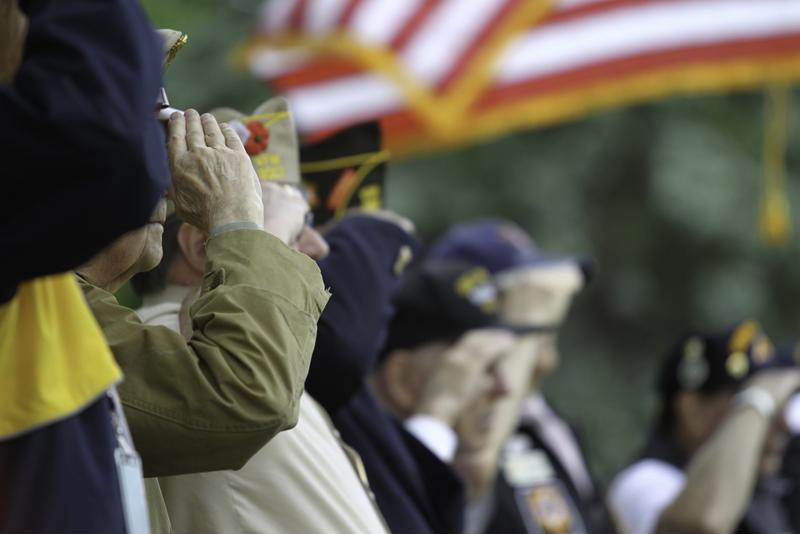
Veteran suicide rates have risen drastically over the past 15 years, The New York Times reported. Since 2001, the suicide rate for former service members with access to VA resources has risen by 8.8 percent, according to recent research from the Department of Veterans Affairs. Over the same span, the suicide rate for those without access to the VA has increased by more than 32 percent. In total, veterans account for roughly 18 percent of all reported suicides in the U.S.
The VA compiled this data, released in July, using records for over 55 million veterans.
The agency and affiliated state organizations have attempted to address the issue by introducing new treatments for post-traumatic stress disorder and the other psychological disorders that often lead former service members to take their own lives. While some of these new techniques are effective, many veterans – especially those who served in particularly intense combat zones – have turned to family, friends and fellow military personnel for support.
The Zero Veteran Suicide Initiative builds off this strategy, offering participants the opportunity to learn therapeutic skills that are useful in moments in crisis. The WDVA provides this training through the QPR Institute, an independent training organization that promotes a suicide prevention technique called Question, Persuade and Refer. With this approach, an individual party to a veteran in crisis can offer immediate, impactful assistance.
However, QPR is not a counseling or long-term treatment technique. The institute advises those administering QPR to contact medical professionals soon after offering help.
Currently, about 413,000 veterans live in Wisconsin. Unfortunately, this group accounts for 17 percent of all suicides in the state. Scocos and his colleagues at the WDVA believe the Zero Veteran Suicide Initiative will help reduce this number.
"Veterans who have served our country deserve the best of care, including counseling or treatment for those who are considering ending their own lives," He concluded at the event in Milwaukee. "This initiative will help us to train individuals to identify veterans who may be contemplating suicide. Our goal is to completely prevent the terrible tragedy that is suicide."
Sens. Gary Peters, D-M.I., and John Thune, R-S.C., have introduced new legislation meant to improve the Veterans Crisis Hotline, according to a news release. The bill – officially called the No Veterans Crisis Line Call Should Go Unanswered Act – would require the Department of Veterans Affairs to develop a strategy to improve its 24-hour hotline and staff enough personnel to ensure that every veteran who uses the service can speak with a trained human operator.
"Our veterans put their lives on the line in service to our country, and they should never have a call for help go unanswered," Peters said in the release. "When an estimated 22 veterans commit suicide every day, the Veterans Crisis Line can be a critical, lifesaving tool for veterans in crisis. I'm proud to cosponsor this bipartisan legislation that will help ensure the Veterans Crisis Line has the staff and resources to assist every veteran who reaches out for support."
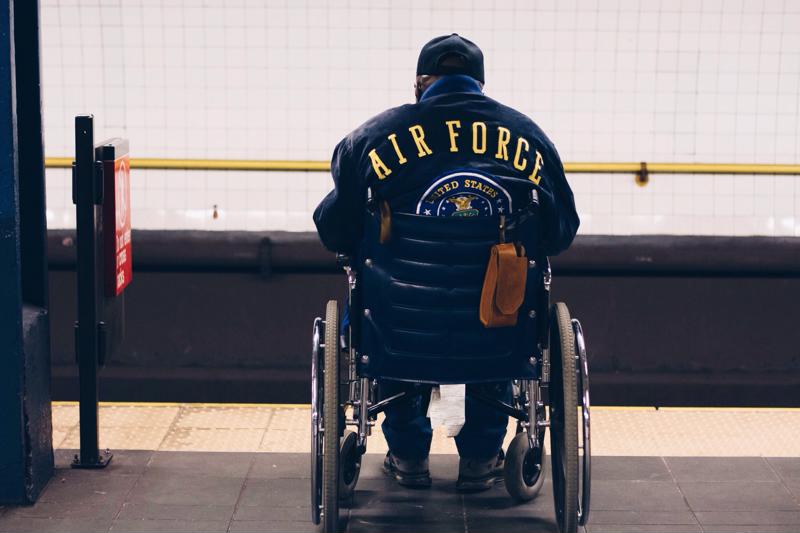
The VA launched the Veterans Crisis Hotline in 2007. In the years since, more than 2.5 million former service members have called, instant messaged or texted the staffers who work the line. However, the service has recently come under fire from watchdog and veterans groups.
Last year, investigators from the VA Office of Inspector General Office of Healthcare Inspections discovered that calls made to the hotline went to voicemail, Military Times reported. Further inquiries revealed that officials managing the hotline were outsourcing its activities to untrained contractors during peak times, resulting in inadequate service. At least 24 veterans were directly impacted.
In February, the OIG offered a number of recommendations for improving the hotline, including:
- Hiring more staff to handle higher call volumes.
- Instituting more effective call-tracking processes.
- Establishing quality assurance programs for contractors.
Officials agreed to implement these changes by September 30. The VA also rearranged its organizational hierarchy to fit the hotline under its Member Services division, which manages interactions between veterans and agency programs, and named Gregory Hughes director.
Ultimately, these changes achieved little. By May, contractors were still handling more than 35 percent of calls. And major internal issues had boiled over, with some staff simply neglecting their posts.
"We have some truly outstanding staff here who are very committed to their positions. These staff are routinely handling 15 to 20 calls daily and the quality of their calls [is] excellent," Hughes wrote in an email. "We have other staff that are taking 1-5 calls a day and this cannot continue … what we have seen is that there are staff who spend very little time on the phone or engaged in assigned productive activity."
Hughes resigned his post in June.
With this latest legislation, Peters and Thune hope to tackle the problems plaguing the Veterans Crisis Hotline in a meaningful way. However, even if the bill ultimately passes, an uphill battle lies ahead. Call volumes continue to increase every year, requiring more financial resources and staff. Today, the hotline receives 50 times the number of calls it did in 2007, the Associated Press reported.
Last month, President Obama signed into law legislation giving the Department of Veterans Affairs permission to cover in vitro fertilization treatments and the cost of adoption for former service members with combat-related fertility issues, The Washington Post reported.
"Our goal is to restore, to the greatest extent possible, the physical and mental capabilities of veterans with service-connected injuries. The provision of assisted reproductive technologies would do that," Walinda West, spokesperson for the VA, said in a statement to the newspaper. "It is important that we fully understand the needs of our veteran population, and fully incorporate the major scientific advances available today that can allow them to live a full life."
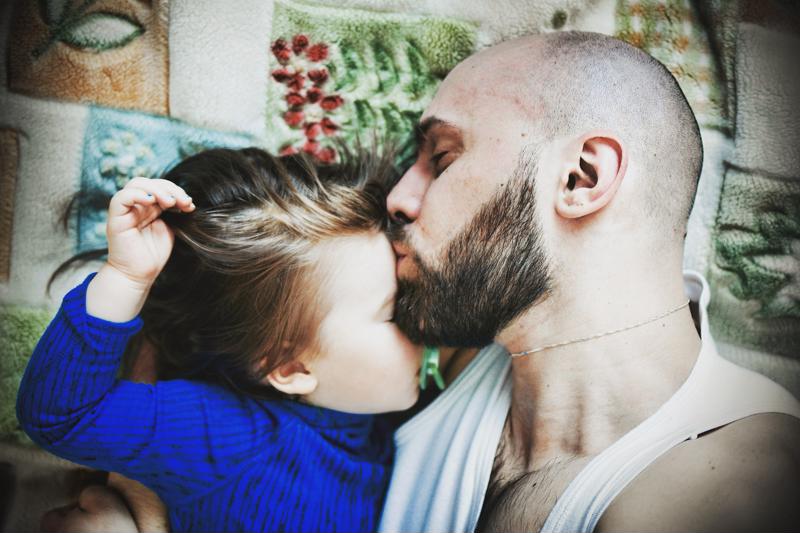
The Veterans Health Care Act, passed in 1992, prohibited the agency from covering IVF treatments, according to NPR. Proponents of the ban argued these procedures often involved the destruction of viable human embryos and therefore should not be paid for with federal funds.
In the years since, veterans with fertility issues have been forced to foot the bill for their own IVF procedures, which cost as much as $12,000 per cycle. Additionally, military families usually pay for multiple cycles, as most women must undergo several treatments before fertilization takes place, The Wall Street Journal reported.
Clinics offer discounts but, for most former service members, this simply isn't enough, leading many to give up on dreams of having children.
Army veteran Matt Keil and his wife Tracy nearly joined this group. In 2007, Keil was wounded in Iraq. A round from a sniper traveled through the his right shoulder and nicked his spine, leaving him paralyzed from the neck down. One year later, the couple decided they wanted to have children and needed IVF treatments to make it happen. They soon discovered that the VA could not cover the procedure.
"This is a direct result of a combat injury," Tracy Keil explained in an interview with NPR. "Don't tell me that his service wasn't good enough for us to have a chance at a family. Because we've already lost so much. I just want to have a family with the man that I love and please don't make this any worse than it already has to be."
Eventually, a local VFW branch located near their home in Parker, Colorado stepped in and helped raise money needed to cover the procedure. In November 2010, the couple welcomed twins.
Unfortunately, many veterans of the wars in Afghanistan and Iraq aren't so lucky. As of February 2016, an estimated 1,400 service members have returned home with injuries to their reproductive organs. An even larger number have come home with severe spinal injuries like Keil's. The Veterans Health Care Act essentially prevents many of these veterans from starting families.
The new law will hopefully give service members suffering from fertility issues the opportunity to have children. However, there are still roadblocks ahead. Though both houses of Congress passed the bill, it did not receive permanent funding. Additionally, the legislation does not actually repeal the Veterans Health Care Act. It only provides the VA with a workaround that allows it to earmark existing funds for IVF treatments and adoption services.
Proponents must still find long-term funding and ultimately remove the ban.
Getting outdoors and becoming active is a great way to seek out health and happiness. In a world that has become fast-paced and highly connected, the calm of the woods can feel almost surreal. This disconnect between average life and the serenity of nature may explain why outdoors activities have the potential to have a deep and lasting positive impact on veterans.
Vets coming home from active duty have to be aware of their health and wellness. The unique stresses of military service can create a dangerous environment, and there is a potential risk of becoming too isolated from everyday civilian life. The great outdoors can be a balancing influence in some cases.
Bonding on the Appalachian Trail
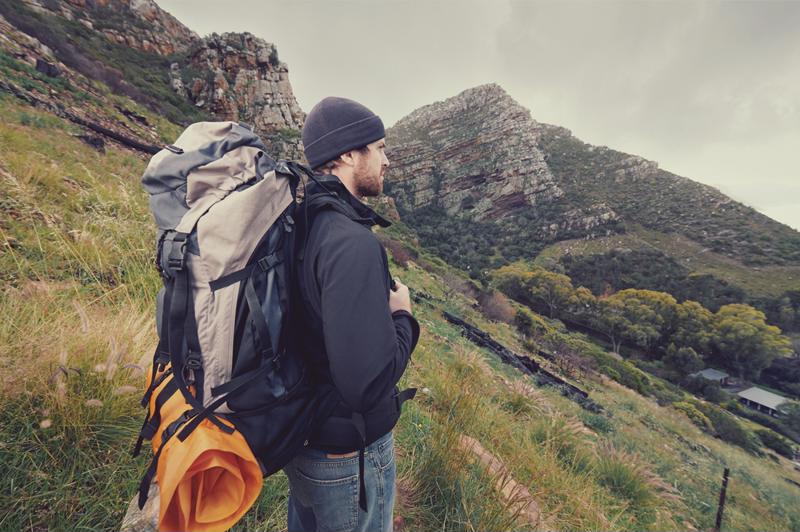
A recent NPR feature followed Sean Gobin, a veteran of the Marine Corps who organizes veterans' trips into the wilderness. His nonprofit group is called Warrior Expeditions. Gobin knows the positive effects of fresh air and hard travel well, as he walked the entire length of the Appalachian Trail when he returned from combat duty. The hike stretched over 2,100 miles and helped Gobin reconnect with his civilian mindset after three deployments.
To get a sampling of the emotional impact a good hike can have on a veteran re-engaging with everyday life, NPR spoke with several members of a trip up Maine's Mount Katahdin. Cody Yates, who spent 20 years serving in both the Army and the Marine Corps, explained that there is a need to ease the transition back into the civilian world, as experiences from time in the military – including losing friends in the line of duty – tend to linger in the mind long after they've occurred.
It's possible to lose some of the heaviness associated with such bad memories, according to another of the hikers, former Air National Guard member Diana Brown. She told NPR that though it's impossible to fix things that happened in the past, it is necessary to set them down and leave them behind. Outdoor exertion is one of the types of activity that can have such an effect. A long walk on the Appalachian Trail can make an encouraging contribution to the process.
Groups around the nation
There is an impressive group of veterans organizations promoting the healing power of nature around the country. The Standard Examiner focused on another. In Woods Cross, Utah, Iraq veteran Josh Hansen created Continue Mission after a medical retirement from the Army brought on by brain injuries. After feeling the healing power of nature, he began the organization, which now serves nearly 150 other veterans. In total, 1,500 have worked with the group since its founding.
Hansen stated that the name of the group is inspired by seeing civilian life as the next stage of the mission for the members of the program. By getting active in nature, they are taking the next steps in their respective lives. According to the Standard Examiner, Continue Mission offers all sorts of activities outdoors, from hikes to canoe journeys to skiing. In all cases, wellness is the long-term goal.
Starting a small company is one of the signature elements of today's economy. It's a way to be independent and bold, and bring a new idea into the world. Veterans who are responsible for their own businesses are transferring the discipline, composure and sometimes the skills they acquired in the military to making their customers happy, and it's always heartening to see them successfully set down roots in the small business world. Highlighting and supporting these companies is a great way to get the word out and encourage more service members to follow in entrepreneurial footsteps when they return to civilian life.
National Veterans Small Business Week approaches
While there's never a wrong time to support a local veteran, it's also great to set aside a week to focus on former military personnel who started their own companies. That's what the U.S. Small Business Administration does every year for National Veterans Small Business Week. This year, the event stretches from Oct. 31 through Nov. 4, and will celebrate the significant contributions vets have made to the local business world as a whole.
Barbara Carson of the SBA's Office of Veterans Business Development explained veterans own nearly 1 in every 10 small companies in the country. Entrepreneurs who have served in the military have made significant contributions to the national economy. The SBA puts the number at $1.2 trillion in sales annually.
National Veterans Small Business Week is not just an awareness initiative. There are many related programs across the country during the five-day period. Webinars will be accessible by current and prospective company owners nationwide, and further get-togethers will take place regionally. These will instruct participants in everything from capital access to business development. Entrepreneurs will also learn how to procure assistance from federal programs, ensuring that potential advantages don't fall by the wayside.

Stories of the business owners
Inc. recently gathered some specific anecdotes about the struggle and triumph that come with starting a company after returning from the military. The news provider focused on veterans who served in post-9/11 conflicts. There are plenty of these individuals in the entrepreneurial world, totaling approximately 162,000.
Some of the interview subjects described challenges in getting started. However, the toughness that comes with military service helps these founders succeed. Software company leader Blake Hall told the news provider that as a combat veteran, he knows the value of life and what it takes to be happy. That clarity has helped him get through the lonely early days of launching a new concept.
Sometimes, being a veteran leads an individual down a particular path in the business world. Accounting firm founder Tabatha Turman focuses on federal contracts, hiring employees who have security clearances and employing either vets or military spouses as nearly half of her workforce. She told the news provider that being the boss of a company gives her the freedom to take the time to recover from the tension that can linger years after military service, and she extends this understanding to the members of her team who have had similar experiences.
There are few roles more demanding than a first responder. The police officers, firefighters and paramedics on the front lines of disasters and everyday emergencies end up facing down complex and dangerous situations on a regular basis, all to keep their communities safe. It can be easy to take these facts for granted at times, which is why it's so heartening when towns find fun ways to thank first responders for their service.
"These events can rebuild connections between departments and civilians."
In sharp contrast to the intense demands of an emergency responder's job responsibilities, neighborhood gatherings and parties are laid-back affairs where residents can meet the people who safeguard their lives. By taking the pressure off, these events can rebuild connections between departments and civilians and just act as good-natured fun for all involved. Below are a few examples of this formula in action.
Games in Virginia
Hampton Roads, Virginia, boasts a unique event for its local first responders: an athletic competition called the Hero Games. Local news station WTKR explained that the contest stretches over three days and consists of eight different challenges. The games are designed for local firefighters, police officers and paramedics, as well as their families and retired department members. The public can also come by to compete, mingle and get to know the heroes who serve the community.
The event doubles as a charity drive. Vigilant Watch, which collects money to help local first responders, is raising funds from the games. WTKR reported that this is the first year for the competition, which could quickly become a way to bond the community together through the power of sport.
"These are the men and women who take care of us so we wanted to take care of them," the Hampton Roads Sports Commission's Lauren Bland told the news provider. "We wanted to put together a week long event for them to build morale have fun and have some competitive flare with their men and women in uniform."
Annual party in many communities
Towns and cities around the nation held more traditional gatherings Oct. 5, for National Night Out. The Eagle, a Texas newspaper, spotlighted a few of the related parties from its region, with emergency responders in towns such as Wixon Valley and College Station meeting with the public in a relaxed environment where they could enjoy an outdoor dinner and good company. Each department adds its own twist to the night, with paramedics showing off a medevac helicopter and firefighters letting kids see real fire engines up close.
The news provider added that college students on campus at Texas A&M also got into the spirit. A chat between police and pupils, as well as a meet-and-greet with the K9 unit's friendly dog, set the tone for the gathering. Creating a connection between communities and their first responders is a great step to take, whether the area in question is a university, a rural town or a crowded city. Positive relations between the groups help morale and let emergency personnel know their efforts are appreciated when they put their lives on the line.
There is a checklist of things every veteran must accomplish when returning from active duty. Making a smooth transition may mean settling into a new job or seeking a degree, as well as finding somewhere to live and dealing with the psychological adjustment between military service and everyday life.
"A generation of young veterans is returning from combat to everyday life."
Every vet's experience is different, but there are enough common elements that organizations can create programs that will help many others. These are needed now more than ever, as the post-9/11 conflicts in Iraq and Afghanistan, as well as ongoing anti-terror operations around the world, have brought about a generation of young veterans returning from combat to everyday life. A few communities have taken especially strong steps to meet their needs.
Helping vets help themselves and others
A unique example of re-integration into civilian life recently opened in Missoula, Montana, according to local radio station MTPR. At RIVER, the Rural Institute for Veterans Education and Research, trainees who recently left the military gain new skills which can, in turn, help others. For instance, veterans can use GI Bill funds to sign up for classes that will teach them how to provide services such as recreational therapy or pain management.
The news provider explained that RIVER is intended to go well beyond the scope of basic care patients may receive from other services. The program teaches its students to try new methods to combat common problems, which can, in turn, help fellow military members who have returned home with more serious problems.
"[W]e're learning how to go outside the scope of just what's typically presented by the Veterans Administration, you know – 'Oh you've got some pain – here's some meds.' Well, if that's not working, where do you go? That's what we're learning here," Afghanistan veteran Justin Groff explained to MTPR.
Ed Lesofski, executive director of the program, noted that the students who take classes at RIVER aren't just gaining the experience to help others – they're simultaneously receiving help returning to their civilian communities. He told MTPR part of the program is based on acclimating to everyday roles, echoing the training service members received when they joined the military.
"Classes can assist vets in reconnecting with spouses who have not experienced military life."
Instilling a new mindset
Young vets just returning from conflict may initially have trouble speaking about the experience, even with those closest to them. The wellness elements of RIVER's programs try to bridge this gap, according to NBC Montana. Groff spoke with this news provider as well, explaining that classes can help counter negative feelings and assist vets in reconnecting with spouses and other family members who have not experienced military life and have a different frame of reference.
NBC Montana noted that 300 vets are enrolled in the programs at RIVER now, either re-acclimating, learning to provide care for others or both. Despite its relatively light population density, the state of Montana is home to approximately 1,000 veterans. Having a resource center available to act as a venue for education and adjustment will surely help many of these individuals find satisfying and comfortable lives now that they are done with their tours of duty.
It's important for veterans' voices to be heard by their elected representatives, whether at the local, state or federal level. When legislative bodies don't act in accordance with what returning military personnel need, the day-to-day effects can be disappointing and harmful for vets and their families. This means it's especially important to spotlight those who go to bat for service members and introduce legislation that will help them. On issues ranging from education to housing, health care and beyond, there is work to be done. Below are two recent efforts to create positive change, one at a state level and one on a national scale.
New York: Property tax exemption
There are a few things legislators can do to thank veterans for their service, including introducing tax relief. State legislators in New York have taken this approach, according to the Staten Island Advance. Members of several levels of state government touted a new property tax exemption for New York City vets. Giving veterans one fewer expense to worry about should ease the burden of homeownership and help former military members set up their lives.
State Senator Andrew Lanza and Assemblyman Michael Cusick are also behind a new bill meant to accompany a previous law enabling school tax relief that was ambiguous in how it covered New York City residents, due to the fact that there is no school board for the City of New York. The politicians explained that their quest to introduce these new rules is based on giving back to people who have sacrificed for their country. It's only fair, they explained to the news provider, to recognize service where possible.
"While I believe that our original legislation covered the City of New York, Senator Lanza and I authored this bill to make it crystal clear that the City Council has the authority to offer this exemption" said Cusick, according to the Staten Island Advance.
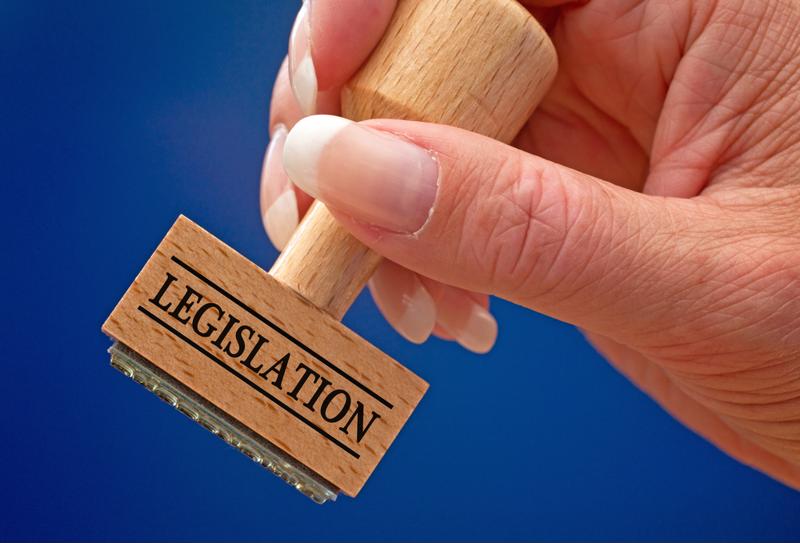
Congress: Relief sought for ITT Tech students
Meanwhile, on Capitol Hill, the fight is on to provide relief for veterans left with no recourse when for-profit college ITT Tech ceased operations. The school was aggressive about signing up veterans for its programs, and now that it has shuttered, it may be difficult for pupils attending on GI Bill benefits to recoup their loans, according to the Cleveland Plain Dealer. An effort is now underway to ensure that VA-funded loans are forgiven, though it's become hard to gain agreement in the Senate as to how that should happen.
Currently, Ohio's Sen. Sherrod Brown is leading the effort to get loan forgiveness for the ITT Tech students, though his attempts to form consensus have been stymied by those worried that the VA's other programs will suffer if funds are allocated to the payments. While an agreement is currently lacking, the news provider noted that all groups involved say that they want to ensure the ITT Tech pupils aren't left paying off loans for education they didn't receive. The Plain Dealer pointed out that there is hope of movement on the issue in the near future – Congress tends not to let veterans' issues languish.
There's more than one way to re-integrate into civilian life after a tour of duty, and military personnel don't have to go through this process on their own. Joining a group or class can be a great decision, whether the goal is simply to make new friends and connections or to counter the intense stresses that can go with military service.
Between nonprofits, state and federal government agencies and private undertakings, veterans will be able to find programs that suit their particular interests, whatever those may be. Art, sports, music and any hobby imaginable can become a relaxing bonding experience for service members. Below are two recent examples.
Referees in training
The Los Angeles Times pointed to a very unique group for veterans interested in football – Battlefields to Ballfields, founded by former NFL head official Mike Pereira, who currently contributes to Fox Sports broadcasts. Pereira explained that by joining a sports officiating team, former military members can gain a sense of camaraderie and belonging to a unit, something that they may find themselves missing when they return from a tour of duty.
The organization has ambitious goals for its new referees. The news provider explained that Pereira hopes the refs rising through his program will one day officiate high-level college games, or make it all the way to the NFL. With the need for referees to enforce rules at all levels of play, there is an obvious outlet for members to use their new knowledge.
There is a natural match between officiating sports and the skills veterans pick up in the military. Referees have to respond confidently to high-speed action, and potentially take the jeers of a hostile crowd. The mental toughness and focus built in the armed forces mean that veterans are set up to succeed on the playing field. Battlefields to Ballfields helps them make it to higher levels of expertise with grants for equipment, uniforms, training and insurance.

Rock music heals wounds
Some hobby-based organizations for veterans are aimed specifically at those who were wounded while serving – they use their programs as alternative forms of therapy. Houston Press recently spotlighted one such group, Rock 4 Recovery. This project, spearheaded by Iraq veteran Paul De La Cerda, runs a rehearsal space where vets can come and play music and connect with one another. Performing music can be a therapeutic experience, and the value of having a shared space to meet up is also considerable.
Beyond that, the group also reaches out to famous rock bands to help local veterans with free concert tickets. Sometimes, the stars go even further, offering full-on VIP experiences in recognition of the important service military members provide. The news provider noted that De La Cerda's efforts to bring music to the veteran community also include shows from his own group, Vetted, specifically for military audiences. The many arms of his program all aim to create safe and creative spaces for vets, using music as the connective thread.
No matter what the unifying concept is, any hobby, sport or type of art can become a bonding experience for military personnel as they navigate their return to civilian life.