
There are few days in U.S. history more consequential or somber than September 11, 2001. Every year since the deadly attacks that took nearly 3,000 lives, Americans have paused on September 11 to remember those who died, and to dedicate themselves to serving their communities.
In December 2001, Congress designated September 11 as Patriot Day, and in 2009, as part of the Serve America Act, the day also became a National Day of Service and Remembrance. By attending a memorial service, sharing your personal memories and experiences or by giving back to your local community this Patriot Day, you can ensure that the indefatigable spirit of the victims lives on.
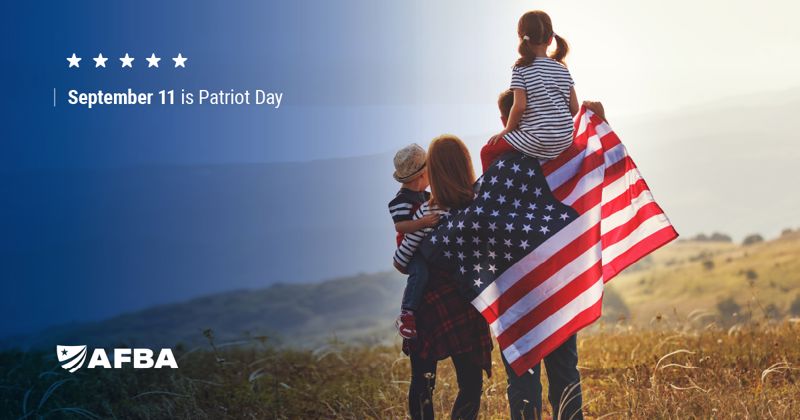
What Happens Every Patriot Day?
In keeping with its solemn tone, Patriot Day is a time of contemplation and service. In the official White House announcement proclaiming last year's Patriot Day, President Joe Biden described some of the ways the government would be commemorating the anniversary.
All flags flown by government branches, agencies and departments fly at half-staff on September 11. A moment of silence is observed at 8:46 a.m. eastern time, acknowledging the time when the first World Trade Center tower was struck.
There is also an annual observance ceremony carried out by the National Park Service at the Flight 93 National Memorial. This quiet location in southern Pennsylvania is the place where that flight crashed on September 11 when heroic passengers and crew prevented it from becoming part of the attacks.
The public service organization AmeriCorps also designates September 11 as one of its two annual National Days of Service, alongside Martin Luther King, Jr. Day. The group encourages individuals to pledge to serve their neighbors and offers web resources that connect people with opportunities to help out near them.
Beyond these nationwide and local commemorations, each person can go into their community and perform acts of service on their own to ensure they are showing a resolute, civic-minded spirit on this tragic anniversary. This is an opportunity to put good into the world as part of mourning and remembrance.
What Are Some Ways to Observe Patriot Day?
At first, it can be difficult to know how to mark a somber day like September 11. However, there are numerous ways to remember the tragedy and honor the sacrifices of those who died that day through giving back to your community.
Perhaps the most fundamental part of observing the National Day of Service and Remembrance is simply showing love and kindness to the people in your life, friends, family and strangers alike. This attitude is a good foundation for acts of service, and a way to show that you honor the sacrifices of those who gave their lives.
In a more concrete sense, you can also take part in volunteer projects. The National Park Service recommends getting out to serve, and runs its own events, some in conjunction with groups such as The Mission Continues, a nonprofit community impact group that helps veterans acclimate to lives at home following after they've served.
You can also share memories and reminiscences to ensure the sacrifices of those who perished on September 11, 2001, as well as the first responders who gave so much of themselves to provide assistance on that day, lives on. One of the legacies of September 11 is that everyday people can find heroism within themselves, and honoring that is part of Patriot Day.
We at AFBA hope you'll join us in honoring those who gave their lives September 11, 2001, and those who committed brave acts of service that day, on Patriot Day 2023 and beyond.
When it comes to appreciating the full sweep of military history, sometimes doing research from home isn't enough. Rather, you may feel the need to have real, tangible experiences. Fortunately, there are plenty of officially sanctioned and well-organized historical tours that can guide you through the stories and sacrifices of brave fighting men and women who came before.
Because the history of U.S. military engagement is spread around the world and spans centuries, any list of tours will be incomplete by its very nature. We've assembled four fascinating places to start when you're seeking to book an in-person experience for this year and beyond. We've limited ourselves to sites within the continental U.S. and attempted to capture a wide breadth of time periods and areas of interest.
With that in mind, here are some places where you can immerse yourself in military history:

The USS Midway Museum, San Diego, CA
The USS Midway Museum is a floating attraction consisting of a real World War II-era aircraft carrier. Docked on Harbor Drive in San Diego, the ship contains authentic aircraft, along with a variety of exhibits and a multimedia theater. This is one of the most well-known military history sites in the country, winning a 2023 TripAdvisor Best of the Best award.
Tour details: A self-guided audio tour is available for the ship alongside the cost of a ticket — $31 for adults, $21 for veterans or kids ages 6-12. If you're traveling with a group, however, you can arrange for a one-hour docent tour, which is $550 for groups of up to 9 and $55 per person for groups of 10-60. To get a feel for the ship ahead of time, you can take a virtual tour from home.
Gettysburg National Military Park, Gettysburg, PA
Perhaps the most iconic battlefield associated with the Civil War, Gettysburg is a location steeped in history. The actual field is vast, but it centers around a world-class visitor center and museum. From there, you can trek out to see the places where events unfolded over the course of the bloody battle.
Tour details: There are multiple ways to tour the battlefield at Gettysburg. The Battlefield Tour takes 2.5 hours and costs $38 for adults, $23 for kids ages 6-12. There are also package deals with museum admission. Tours typically take place in buses, but there are also options for personal car tours and even bike tours run by a private company.
Oscar-01 Tour, Whiteman Air Force Base, MO
The Oscar-01 Missile Launch Control Facility is a much more esoteric location to tour, but one that paints a truly distinct portrait of a unique time in military history. This was the sole operational missile command site located on an active U.S. military base during the Cold War, and it served in that capacity from 1964-1993.
Tour details: Groups of up to eight people can book a tour of the missile facility on Mondays through Fridays. To explore the site, the group members already need to be approved for access to Whiteman Air Force Base.
Fort Drum History Tours, Fort Drum, NY
The U.S. military has been active in this area near the Canadian border since the War of 1812. While the present-day Fort Drum dates back to 1974, the site has lived many lives. It served as a training barracks from the early 1800s on, and was also a prisoner of war camp during World War II. Today, it hosts the 10th Mountain Division (LI), a prominent and frequently deployed light infantry division.
Tour details: Free history tours set off by bus by prior appointment from Monday through Friday, with guides providing historical information. Because the tours take place on an active military base, tour rosters need approval beforehand. The base is also home to a museum of Fort Drum and 10th Mountain Division history.
We hope you have a wonderful year and set aside some time to see the most fascinating military sights this country has to offer.
When you imagine a first responder, what comes to mind? This role can come in many forms, but in times of emergency, they are on the scene to help stabilize a situation. This could be a police officer, firefighter or emergency medical technician (EMT). They are the people who help ensure everyone on the scene has the best chance of survival no matter the situation.
When you pick up the phone to dial 911, you know that a first responder will be on the other side of the line to give you the help you need.
But this wasn't always the case, and the role of a first responder dates back centuries. Let's uncover this rich history and gain more appreciation for those that dedicate their lives to the safety of others.

The initial concepts of a first responder
As people started to come together to settle into communities in one place, their way of living grew more technical. Along with cooking, a fire was used for light and warmth inside individuals' homes — which were typically made of mud, wood and dried branches and leaves. When a fire broke out, people had little control over how to manage the fire when it caught hold of multiple buildings at once.
In ancient Rome, during the times of Augustus in 62 BC to 14 AD, there was an office called Aedile which overlooked the procurement and maintenance of public buildings. Because people in the city lived in such proximity, it wasn't uncommon for a fire to break out in a flash. The aedile developed a group called the Vigiles who were responsible for managing the fire and putting it out as soon as possible before it caught on to other buildings.
Ancient ambulances
EMT history wasn't too far off from what it is now — besides the extensive medical technology packed within emergency vehicles today. In the 1400s, carts were used to transport patients from their homes to the hospital. This method was developed during the Spanish siege of Málaga by the Catholic Monarchs against the Emirate of Granada in 1487.
Saving lives in the 20th century
War times can bring about a lot of innovation when people are in trouble, in need and incapacitated. In the early 1970s, President Richard Nixon had just taken office and inherited a report done in 1965. It noted that the leading cause of accidental death was car crashes. And, in 1965, the number of deaths overshadowed fallen soldiers in the Korean War.
From here, the "White Paper" made several recommendations for how to counteract these avoidable tragedies including an outline of what we consider first responders: a brigade of police officers, ambulances and firefighters trained and ready for action at a moment's notice.
Evolving to stay one step ahead of emergencies
Since the 1980s, first responders have established the best practices, medicines and care we know and expect today. Like many modern conveniences we experience daily that make our lives safer and more simple, the history of the first responder came when necessity called for it. Every day we can give thanks to the people who stand up to answer the call of duty.
Whether it's a Military ball or another formal event for the Armed Forces, these scenarios can add up after a while. That's why Operation Deploy Your Dress (ODYD) was developed. It's a chance for women of the Armed Forces to look their best at any formal affair, without the costs that come with it.
We'll explore more about this organization and how you can get involved.
Meet: Yvonne Coombes
Yvonne started as a Navy Family Readiness Group Leader from 2005 to 2007. This means that she represented a group of people who supported other spouses of those in the Armed Forces during deployment. This role helps directly connect commanders with their community, even during deployment.
From there, Yvonne continued to facilitate communication, community and commonplace between those on deployment and their family and friends. From helping with CrossCountry Mortgage to what is now the ODYD, Yvonne is dedicated to helping Armed Forces families get the support they need to lead the lives they want.
She truly believes that everyone who serves should feel the "tradition and camaraderie that takes place at military balls and formal functions."
Yvonne has been a Military wife for 20 years, and has helped hundreds of families connect and feel taken care of around the world.
What is ODYD?
Military balls are a significant part of the culture in this sector. Yvonne is the cofounder of ODYD, and began this journey in 2015 when she and her friends did a dress swap among the other women within their unit and their spouses. The intention was — and remains — to offset the cost of attending formal Military affairs.
They decided to expand this idea on a national and international level. Yvonne and her friends opened up these swaps to other units, which helped them gain more media attention. In the past 8 years, they have opened 13 stores around the country, with one in Germany that "deploys" dresses to any Military ID holders.
Their line of dresses includes a full bridal department where brides-to-be can pick from 27 brand-new wedding gown styles, accessories and looks. The entire process is done online through video conferencing so that any bride can work with the ODYD Bridal team so they're matched with the perfect dress.
Their newest installation occurred in 2022, with a partnership with David's Bridal. David's Bridal launched the Frontline Fierce Corporate Philanthropy Initiative to support frontline workers with formal dresses.
Fittings and Volunteers
The organization is run entirely by volunteers, donations and pure partnerships. They found support through the Fort Bliss Garrison Command and the Spouses' Club, which helped them expand their offerings and locations.
A Military cardholder can come by any one of the shops or contact the team online to pick up one dress and one accessory a year.
Being part of the Armed Forces or a spouse of someone serving isn't easy, but organizations like ODYD and their partners work hard to support in any way they can. You can make a donation or become a volunteer online by contacting them today.
Is life insurance the most overlooked, misunderstood and underrated kind of insurance? It may just be, specifically because it's so hard to envision needing this kind of coverage. It's uncomfortable to consider needing life insurance, and if you're young and in great health, it can seem like such a remote prospect, you might simply ignore it.
But that kind of attitude, while understandable, leaves people without the coverage they need. Only 53% of men in the U.S. have life coverage, and even fewer women — just 46%. This is why the insurance sector has come together to declare September Life Insurance Awareness Month. It's the time of year to take some of the fear and mystery out of life insurance and see it for what it is: An important and affordable way to look out for your loved ones.
What Is Life Insurance and Why Do You Need It?
Simply put, a life insurance policy exists to ensure that if the holder passes away, their nearest and dearest will receive financial support. It's a way to help families get by in extremely hard circumstances — and considering just how vital this can be, the costs are low.
In some cases, it's clear why and how that money matters. If you're married, it will help your spouse. If you have children, it can go to their care. But what if you're single and childless? Life insurance still matters, and it was cases like this that Life Insurance Awareness Month was founded to address.
There are so many instances when extra funds could help the people and things you care about most. If you own your own company or have anyone financially dependent on you in any way, money may matter a great deal. You provide for the individuals in your life and look after them every day. It can be comforting to know you could do the same in your absence.
Costs simply add up. Family members will have to go grocery shopping every week. Any kind of business will need money to keep the doors open and the lights on. Life insurance helps these things keep going — it's a way to show you're watching out for all the pieces of your life, and it's typically not hard or overly expensive to get a policy.
How Do You Get Life Insurance — and Pick the Best Plan?
How much coverage do you need to provide for your loved ones? That depends, but you can narrow it down. For example, Life Happens, the same group responsible for Life Insurance Awareness Month, offers a calculator. Plug your information into this system and you'll figure out the best policy amount for your needs. Then it's time to choose a provider.
Finding a life insurance policy doesn't have to be complicated, but you should take the decision seriously. This might mean working with an insurance agent or broker. That could mean choosing an independent professional to compare companies' offerings or working directly with a provider's agent.
Every provider offers a slightly different selection of products, along with a unique experience for policyholders, and a broker could help you sort through the offerings. Policies may also be available through employers, but there are some complexities that come with certain professions.
This is a good time for a history lesson. In 1947, U.S. service members weren't able to find coverage that would pay a death benefit if they lost their lives in combat. This is the reason why AFBA was founded — to provide peace of mind to the people who were serving their country. That's what we're still doing today, offering benefits to active duty military members, veterans and first responders.
Cybersecurity is nothing to take lightly. The U.S. government was part of a global cybersecurity breach led by Russian-speaking hackers that stole employee data and much more in June of 2023. When a cybercriminal steals data information, they could become privy to someone's most sensitive details from their location and phone number to their Social Security number and passwords.
The Department of Defense and other government agencies process highly sensitive government records that if leaked, could jeopardize national security. This is why the Department of Defense and Homeland Security are working together to develop stronger methods of protection.
Here's an overview of the latest information.
Lifting the responsibility
In March of 2023, the Biden-Harris administration made an announcement that cybersecurity will be a primary focus to protect the interests of the American people and their government.
The first half of this promise aims to lift the responsibility of cybersecurity off of the shoulders of individuals, small businesses and local governments. These expectations are instead placed onto the plates of larger entities that have the means and dexterity to provide such a service.
The administration will leverage the use of public and private collaboration to defend mission-critical information, while increasing regulations on essential industries such as banking and healthcare.
A proactive approach
There is a large gap between a reactive approach to cybersecurity and a proactive approach. Reactive is where a business has some security in place, but is otherwise reacting to every threat that occurs as it's happening in the moment. A proactive approach, however, requires that an entity does everything in its power to prepare its infrastructure long before a threat ever happens — and then develop new methods of security when a breach does occur.
In the White House's address, the administration mentions realigning their focus on a long-term approach to cybersecurity for a more resilient future. This would help ensure that when a breach happens, the effects are minimal and hold no long-lasting damages.
Cybersecurity resilience means reducing technical vulnerabilities and ensuring that all mission-critical information is backed up and separated from the primary modules.
The address says it's focused primarily on ransomware. This occurs when a hacker is able to get into your system and hold some of your data "hostage" through walls of bugs and blockers until you're able to pay their ransom. NetApp notes that ransoms can range from $10,000 to millions, with the highest ever recorded being $70 million. Any business would be devastated by just one attack such as this — especially if the data being held is critical to their business.
The solution is ensuring that all data — especially that which your business is built on — is backed up in several separated spaces as often as possible.
A robust cyber workforce
All of this work is not possible without a capable team of trusted developers and information technology professionals. The U.S. plans to work together with its international allies to develop counter-threats and joint preparedness. Oftentimes, the cost of implementing such a robust system can get high, but together, these expenses are mitigated as much as possible.
In peacetime and in crisis, the government is working hard to protect and reinforce the nation's critical information.
George Washington is quoted as saying, “We need chaplains” while addressing the Continental Congress before the service was formally established on July 29th, 1775. That means U.S. Army chaplains have been around since before the Declaration of Independence was signed.
During the Revolutionary War, they acted as spiritual leaders to help inspire and motivate soldiers. Little has changed since then. The U.S. Army Chaplain Corps (DACH) still serves a critical role in the daily functions of the Army by providing religious and moral support.
Every year since its birthday, the anniversary of the DACH is celebrated. This July 29th, you can use the opportunity to acknowledge the exemplary work of the DACH in your own way.
Here, we’ll discuss the DACH”s mission and how you can potentially become a chaplain.
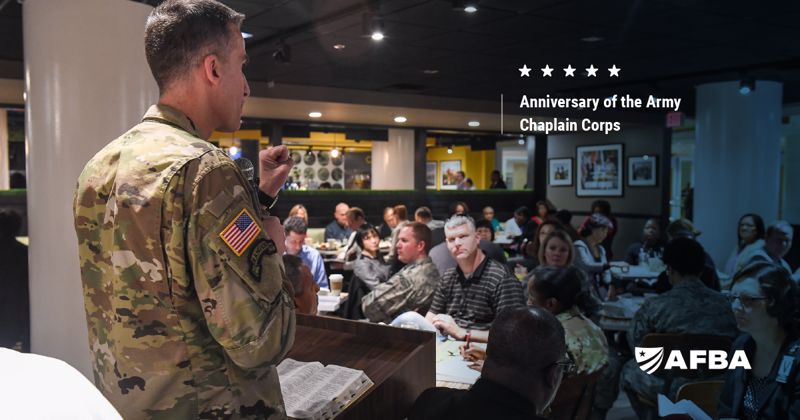 “The appearance of the U.S. Department of Defense (DoD) visual information does not imply or constitute DoD endorsement.”
What does the DACH do?
The primary purpose behind the DACH is to offer support to the U.S. Army. This is usually religious support for a wide range of faiths, but they also help those who do not subscribe to any particular religion. This can include counseling, church services or other moral support. They also:
- Serve in correctional or medical facilities or combat hospitals.
- Offer family or marriage counseling.
- Can act as instructors in officer service schools.
Some chaplains choose to further their training and education to prepare them for higher-level work. This could mean taking on staffing responsibilities, handling personnel-related tasks, or being involved in financial and logistical duties.
The DACH never stops working. In peacetime or war, whether soldiers are deployed or at home, chaplains are always there to offer their services. They understand that servicemembers have a near-infinite variety of backgrounds, and they aim to help all who could benefit.
Army chaplains aren’t restricted in what type of unit they serve. Intelligence, infantry, community ministries, hospitals — you will find chaplains in all these places.
Considered non-combat personnel, chaplains are supported by religious affairs specialists. In addition to organizing worship services and religious programs, these specialist troops have administrative duties and must act as an armed guard to ensure chaplains’ safety in combat situations.
How do you become an Army chaplain?
Chaplains serve a vital purpose in their units, meaning they must undergo extensive education and training programs to prepare themselves for such great responsibilities. They’re treated as Army officers and receive all the privileges other officers have.
Unlike some other Army positions, Army chaplains must have formal higher education: at least a bachelor’s degree. In some cases, graduating college seniors can enlist.
An endorsement from the applicant’s faith group is necessary, as is being enrolled full-time in an accredited graduate program that can qualify them for ordination.
Another challenge is the Chaplain Candidate Program (CCP). Ministry students may begin this training while they’re still in school.
Chaplains are exempt from Basic Combat Training (BCT) but still undergo physical tests to build strength and endurance. Chaplains must pass the Chaplain Basic Officer Leader Course (CHBOLC): In addition to requiring an adequate level of fitness, this course trains chaplains academically and spiritually.
Celebrate the anniversary of the Chaplain Corps this July 29
The DACH has had nearly 250 anniversary celebrations during its lifetime, and they’ve remained a core part of many Army units. On July 29th, show your appreciation for the DACH and its role in providing religious support to every soldier.
A shared holiday between the U.S. and South Korea, Korean War Veterans Armistice Day has been celebrated every year for the past 70 years on July 27 since 1953. Its purpose is to honor veterans of the Korean War, which gave South Korea (then known as the Republic of Korea) independence from North Korea, which was called the Democratic People’s Republic of Korea at that time.
The Korean War is often referred to as “The Forgotten War” because of how little media attention it got. However, advocates for Korean War veterans fought to bring recognition to the heroic sacrifices of the many who died during the conflict. Soon after, Korean War Veterans Armistice Day was nationally recognized. It became a tradition for the President of the United States to make an address each year on the armistice’s anniversary.
The Deadly Chosin Reservoir Campaign
The Chosin Reservoir Campaign was an especially deadly period in which over 5,000 American troops died in the winter of 1950, either from the elements or in combat. One key battle in which the Chinese attacked the U.S. Marine-led forces became pivotal to winning the war. These efforts were not in vain and ultimately led to the U.S. and South Korea succeeding in rebuking North Korea and China.
Acting as a backup force for the North Koreans, this campaign was a core aspect of the Chinese Second Offensive. Its purpose was to force the United Nations to retreat from North Korea by destroying the 1st U.S. Marine Division, which had entered North Korea from the east before marching inland. They were in a weakened state and in a vulnerable position when the Chinese chose their moment to attack. About 120,000 Chinese soldiers attacked the remaining 15,000 U.S. soldiers and Marines, who fought alongside 15,000 UN soldiers.
The remaining U.S. and UN forces battled through the Chinese ranks to reach transport ships at the coast. This required moving through a series of mountain passes, a bridged chasm and a narrow road — a 78-mile hike through the most treacherous terrain in Korea.
Despite the odds being strongly against them, the historic General Douglas MacArthur led an effort that succeeded in heroically fighting through the Chinese army and evacuating 98,000 refugees while preventing the annihilation of the UN forces. The battle became legendary in Marine Corps lore as one of their greatest moments.
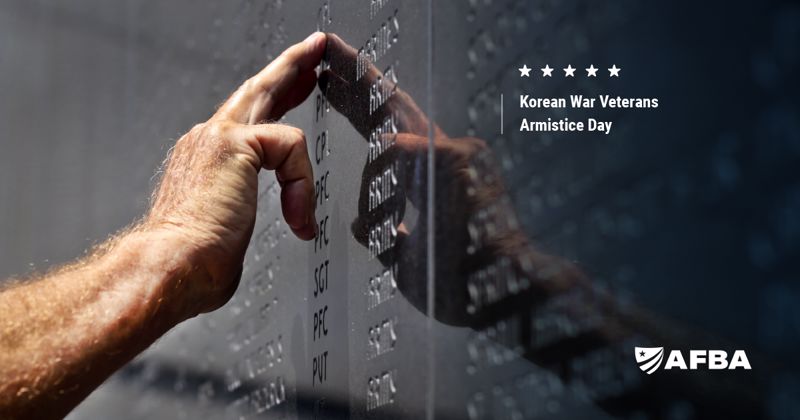 “The appearance of the U.S. Department of Defense (DoD) visual information does not imply or constitute DoD endorsement.”
The end of the Korean War
The U.S. considered the Korean War a fight against communism itself. They feared that if North Korea succeeded in overtaking South Korea, the Soviets and their allies would be emboldened to invade more countries.
There was fear among some, especially the Americans, that a prolonged conflict could bring Russia into the war — potentially bringing about World War III. They were thus strongly motivated to reach an armistice as soon as they could. By the time the Korean War ended in July 1953, an estimated 23,600 U.S. servicemembers had died. North Korea’s invasion was unsuccessful, and there were few territory shifts.
Pay respects to Korean War veterans on July 27
Thanks to the efforts of advocates, July 27 is a national holiday in which we honor veterans of the Korean War. Pay your respects to these distinguished individuals when the anniversary of the armistice comes. These are servicemembers who most certainly shouldn’t be forgotten in “the forgotten war.”
Paramedics are the front lines of any medical-related 911 emergency — they’re the ones who are expected to respond to repeated life-or-death scenarios in a calm, collected manner.
This tolerance for extreme stress while maintaining a steady hand is a special skill all paramedics must have. That’s why not everyone has what it takes. But choosing to become a paramedic is an honorable — and challenging — way of performing public service.
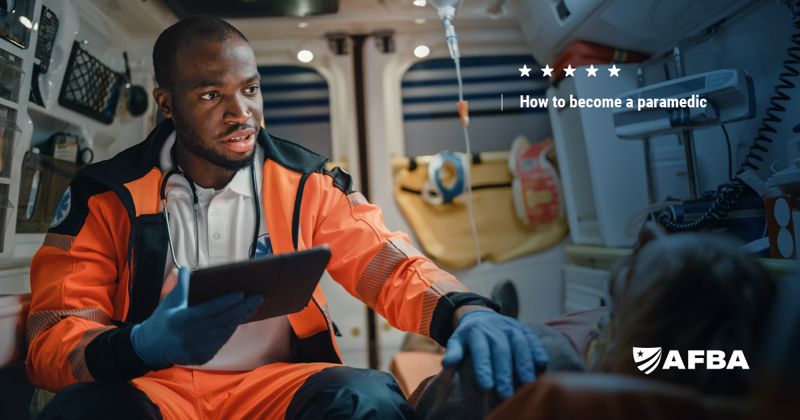 “The appearance of the U.S. Department of Defense (DoD) visual information does not imply or constitute DoD endorsement.”
Decide if being a paramedic is for you
Paramedics are similar to emergency room doctors in that they deal with medical crises that often put the patient’s life in their hands. However, their roles in the process aren’t the same. A paramedic’s job is to stabilize a patient so they’re fit to be taken to a hospital or clinic, then drive them there in an ambulance (or sometimes, a helicopter or airplane).
The ability to stay calm in an intense environment is critical. Problem-solving skills are also a must, as it’s up to you to decide what the best course of action is after you assess the situation. You’ll want strong communication skills; you’ll need to effectively talk to patients and families who are in distress and may not be able to speak clearly.
You should know what to expect from your education, including paramedic school, which will put you in a high-stress environment to prepare you for the intensity of the job. Your physical fitness will be tested to ensure you have the proper amount of strength and endurance to handle a wide variety of situations in rapid succession. Many paramedics work 12-hour shifts or more, including at night, so you’ll want to be in top shape.
Consider your personality type and aptitudes before you decide to pursue a career as a paramedic.
Get the right education
Paramedics, while extensively trained, do not need to pass medical school and they don’t have letters after their names. In short, they’re not doctors.
However, this is not to imply paramedics don’t require a great deal of education. A license is required to be a paramedic, and obtaining one requires unwavering dedication and physical and mental endurance. Start by graduating high school or earning a GED, and then you can expect to go through this sequence:
- Get your EMT-Basic certification. Normally, this takes six months. This will teach you the basics, such as cardiopulmonary resuscitation (CPR) and non-invasive treatment.
- Work as an Emergency Medical Technician (EMT) for at least six months. Many paramedic schools prefer you have some experience as an EMT before you apply.
- Enroll in paramedic training. This generally takes 1-2 years to complete and is much more intensive than getting EMT-Basic certification. It’s essentially an advanced course, where you’ll learn invasive treatments such as intubation.
- Earn your license. Next is passing the National Registry of Emergency Medical Technicians (NREMT) exam, which will put you through tests such as out-of-hospital training scenarios, trauma management and dynamic cardiology.
- Pass the state-specific exam if needed. Some states require this; others don’t.
If you’d like to get started, check out the National Registry of Emergency Medical Technicians guide of where to start training.
If you think you have what it takes, step up and become a paramedic
If you can become a paramedic, congratulations are in order: You’ve earned the honor of being a vital first responder. Becoming a paramedic and serving as one is by no means easy — but if you’re willing to test your limits, you too can join the honored ranks.
When summer hits, the kids are off, your spouse’s PTO is saved up and the promise of a fun adventure is on the horizon. A trip to Washington DC could serve to be a rewarding experience for the whole family. Not only do you get to feel the heartbeat of America, but you can also dive into its deep history.
Before booking your trip, here’s what you need to know and some spots to put on your itinerary.
Planning your trip
DC has a lot to offer the common traveler. From the White House and Capitol to the presidential and military memorials. With so many attractions and potentially not a lot of time to see them, it’s important to narrow your choices and focus on a specific aspect of the city. Let’s get down to how to plan your trip.
 “The appearance of the U.S. Department of Defense (DoD) visual information does not imply or constitute DoD endorsement.”
AFBA travel benefits
If you’re an AFBA member, you have certain travel benefits you should take advantage of before booking anything.
- Car rental discounts: While DC is notoriously easy to walk through and shared rides are abundant, you may consider booking a car rental. This can be helpful if you want to stay somewhere outside the city and visit surrounding sites, want to make DC more accessible on your own time or have specific travel needs like wheelchair access.
- Armed Forces vacation club: From hotels to exclusive discounts, any member of AFBA can benefit from starting their itinerary with this one-stop-shop website.
- Wholesale hotel rates: Receive wholesale rates at over 600,000 hotels around the country — that’s 60% of any hotel on the list!
All of these advantages can put your trip on the right foot.
What to bring and not bring
Traveling comes with it a host of decisions, but here’s what to bring and leave behind on your trip.
Summer in DC is known for its humidity and average temperatures falling between the high 80s and low 90s. These two weather conditions combined make for summer storms as well. So, pack your raincoat, a good pair of walking shoes and your favorite breezy summer clothes to make this trip the best one yet.
DC is also a fairly large city, and it could get confusing if you’re not familiar with the area. Map out where each site and attraction is beforehand so you’re not wasting your time zig-zagging across town. If you book a tour, be sure to mark where the guide will meet you.
The top museums and locations to visit
Along with the main attractions like the National Mall and the Lincoln Memorial, here are the best places to see if you’re a military history enthusiast:
- The Korean War Veterans Memorial.
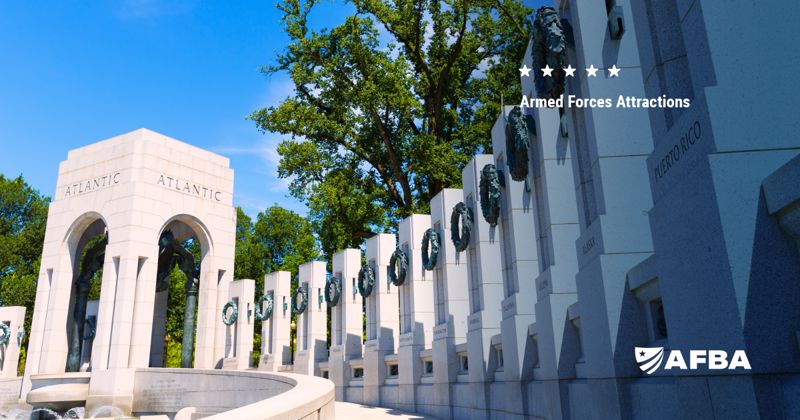
- National World War II Memorial.
- Smithsonian National Museum of American History.
- National Museum of the United States Army.
- Vietnam Veterans Memorial.
- National Museum of the United States Navy.
There is a lot to do and see when you visit Washington DC. Once you have your itinerary planned out, enjoy the music, food, art and culture of the area.