
Veterans have been hailed for their unique leadership skills often gained while completing their service in the military, and the ways in which that acumen can be applied to business ownership. Nonprofit groups, private businesses and government officials alike have been pushing for more projects to boost entrepreneurship in the veteran community, especially as this is one of the more effective ways to combat unemployment among service members.
Last month, ride sharing giant Uber announced that following the completion of its initial UberMilitary program, which saw 50,000 veterans sign up to become drivers, the firm is setting its eyes on real economic improvements for the group, Fox News reported. The source stated that Uber intend to inject about $500 million into the veteran community through the end of the decade. Other programs, including those that produce more traditional entrepreneurs, are also making a big difference on the national level.
Launching new companies
Washington Square News, New York University's school news paper, recently reported that the second class from the Veteran Entrepreneur Training program has graduated, and four startups are already set to be launched by the graduates. The university has been working with Brooklyn's Chamber of Commerce, which initiated the Veteran Entrepreneur Training program, for several years.

The source pointed out that the 10-week course is specifically tailored to veterans, and teaches students a range of business management skills. Interestingly, the school has also been involved in sustainable energy-related projects that work specifically toward the encouragement of more startups that yield green innovations. Washington Square News noted that the Energy Economic Department was established by a veteran who graduated the program and now help businesses become more environmentally friendly.
"The mission is to advance America's energy profile into the new millennium," James Hendon told the school newspaper. "It's one thing if you have this great idea in your mind; it's another thing when you speak to other people about it and they give you feedback and they force you to be very disciplined in how you analyze your ability to make it successful, to make it profitable, for it to work and achieve your grand mission."
Another graduate created a startup devoted to supporting veteran-run breweries, and this is not the first service member foray into the craft brew arena.
A thriving industry
MilitaryTimes reported that veterans are highly involved in the craft brewery industry today, which has been one of the healthiest of all in the United States, noting that one study from the Brewers Association estimated an 18 percent increase in sales in 2014 alone. The source cited several success stories from veterans who have cultivated a strong business with their craft beers, including one brand that had a $5 million investment tag and $17.5 million in revenue through the first three years.
The U.S. Small Business Administration and other government agencies can also provide veteran entrepreneurs with resources needed to get the startups off of the ground and into action.
Veteran unemployment, much like national unemployment, has dropped significantly in the past few years, especially compared to the years directly following the recession. Myriad programs have been launched to assist veterans through the challenges of finding a job, starting a company, running for office and other means of employment, and some have been immensely successful.
Last fall, Military Times reported that unemployment in the veteran community had dropped to the lowest level in seven years, falling from 6.9 percent in October 2013 to 3.9 percent that same month in 2015. There is still much to be done in this area, but clearer information regarding the best employment opportunities available to veterans is becoming available.
Top professions
G.I. Jobs® recently released its latest report regarding the best jobs for veterans in the country, and announced that business operations manager roles were ranked No. 1 this year. Those occupations were followed by information technology specialist, logistician and supply chain manager, customer service manager, and sales representative and business development for the top five.
"It's exciting to see the dichotomy of occupation types open to today's service members," VictoryMedia's G.I. Jobs® chief product officer Daniel Nichols, who also served in the Navy, explained. "Notably, positions on the 2016 Top 25 Hot Jobs list focus less on military occupational skills and more on intangible skills and attributes gained through military training: teamwork, leadership, effective communication, trainability and logistics experience. What company wouldn't want those?"
Interestingly, the remaining five positions in the top 10 were highly related to the types of training certain military members undergo while completing their service. For example, engineers, electrical technicians, mechanical technicians, industrial systems operators and operations and facilities managers were all within the top 10, while asset protection officer positions appear to be a highly coveted role for veterans. The analysts noted that this was the first year that position made it into the top 25.
This type of information can help veterans make better decisions when navigating the job market for the private sector, though there have been some setbacks in the public sector related to veteran employment.
Government's hot and cold outlook
The Washington Post recently reported that the programs in place to boost hiring of veterans into public sector positions have had mixed reviews throughout their roughly seven years in action. According to the news provider, the biggest problem right now is more so related to a miscommunication of the employment programs and laws, and that resentment has become an issue in certain areas.
The source noted that about one-third of the individuals hired by federal government departments and agencies are now veterans, and that these figures are largely due to a bill put in place back in 2009 by the Obama administration. With the economy showing more promise with the passing of each year, veterans will likely enjoy a more promising job market in both the private and public sectors for the foreseeable future.
In recent years, the major hacking attacks on retailers' and other websites have gained a lot of infamy. And unfortunately, one recent issue has arisen which specifically impacts the security of personal data and medical information for a large number of veterans. This incident not only highlights how vulnerable everyone's data may be – even if it's stored on a government website – but also how important it is for people to understand the best practices for securely using the internet on a daily basis.
The hack in question impacted the eBenefits website run by the U.S. Departments of Veterans Affairs and Defense, and put a lot of information at risk for potentially millions of veterans nationwide, according to a report from Seattle television station KING 5. One victim, whose account was improperly accessed twice in a six-month period, said that the direct deposit for his monthly disability check was moved to an account he did not recognize both times the incidents happened.
"Why would I change my bank account and put it on a Green Dot card? Why?" veteran Marvin Corbin, told the station. "I'm like, 'The landlord isn't going to understand this,' and we [were] like 'Other creditors ain't either.'"

More details
While the VA has not revealed the source of the problem at this time, it does seem to be widespread, the report said. Specifically, the VA added that it's "too early to draw any conclusions" about why the attacks were happening.
But nationwide, some 713 veterans have filed at least one report with the agency since last year, the report said. Corbin further noted that because of the hacking attacks he's suffered, he no longer uses that site to handle his finances, despite the convenience it is supposed to bring.
What else can veterans do?
In hacking incidents like this, consumers regardless of former military status may not have a lot of ways in which they can protect themselves. However, everyone should still follow basic cybersecurity measures to make themselves far less likely to be impacted. That should include having a unique password that includes letters, numbers, and symbols, and isn't something that could be easily guessed like a birthday, pet name, or the like. In fact, many experts recommend that passwords be totally random, and involve at least 10 characters, to ensure that they will be extremely difficult to crack. These passwords should also be changed every six months or so.
Likewise, veterans and others should make sure they're careful about the websites and especially the email attachments they click on. That's because viruses and other malware can come in even the most innocuous-looking packages. This is also true of downloading apps on some mobile platforms. Having anti-virus and firewall software, and so on, will go a long way toward protecting personal, financial, and medical data for veterans and civilians alike.
That, in turn, can provide significant peace of mind for people as they go about their daily lives in an increasingly online world.
The suicide rate within the veteran community has been widely discussed for several years, especially following the landmark report released by the U.S. Department of Veterans Affairs in 2012. The Los Angeles Times once reported that the prevalence of suicide among veterans is 50 percent higher than within the population as a whole. In the wake of such reports, many programs have been established to help dramatically reduce the number of veterans who experience this fate.
One of the more prominent types of events takes place on the 22nd day of each month, which is the same number that is generally cited as being the amount of veteran suicides each day. Mission 22, as it is called, will have several events on April 22 to raise awareness and reach out to those in need of support.
This April
The veteran community has become a bit more unified in its approach toward combating suicide. The New York Times reported that social media is increasingly being used as a tool to bring these individuals together and act as a platform through which support and care can be found. According to the news provider, some groups have launched pushup challenges, while others will simply check in on the other veterans with whom they were deployed.
The source pointed out that social media is also becoming a powerful tool when coupled with geographic technologies, as maps can provide veterans with immediate locations of places where they can get support. Generally, the events that are established through Facebook and other social media websites will coincide with the 22 of each month. Although this particular tactic has not been effective at all times, it has been viewed as a highly positive movement.

The New York Times added that some participants in buddy checks and similar social media activities have viewed these activities as therapeutic, incorporating those opportunities into standing rehabilitation programs and assisting in acclimation post discharge. Awareness is one of the greatest weapons against veteran suicide and similar issues in the community, and other events are scheduled to take place this month to ensure the word gets out.
A long jaunt
Daily Journal recently reported that veterans in Mississippi will participate in what is being called a "ruck" that will span 22 miles on April 22 in Tupelo. The source spoke to one of the event's organizers, Marine Matthew Foster, regarding his experiences in putting the hike together.
"People started contacting me with their stories, about their husband or son who killed themselves," Foster told Daily Journal. "I knew it was a serious issue, but I didn't know it was right here. It is definitely a problem in our community, with guys who actually live here. It was barely on my own radar, so I would imagine normal people don't know at all."
Veterans in need of assistance when re-acclimating themselves to civilian life or struggling with post-traumatic stress disorder can find support through smaller groups, as well as government resources.
The floods in Texas have been deemed historic in the past several days, with several individuals losing their lives in Houston and damages to homes and infrastructure rising rapidly. Evacuations have been taking place in that city, while the region around it received as much as a foot of rain within a very short period of time, CNN reported. Suffice it to say that the Coast Guard and local first responders have been pivotal throughout this trying time in the Lone Star State.
Protecting those in need
KHOU recently reported that one of the buildings impacted by the Houston floods was an assisted living facility that specifically caters to those suffering from Alzheimer's. Although the facility and area of Houston – Cypress Creek – did not flood during the initial span of rain, the source noted that it became a problem as some of the runoff began to make its way to the neighborhood.
Due to the severity of the flood, first responders had to step in to rescue the 40 residents of the facility, KHOU pointed out, while another 60 have been relocated to a safer building as well. This was not a straightforward rescue by any means, as the water had rose high enough to necessitate military vehicles to complete the task.

According to the news provider, Cypress Creek officials are on high alert given the fact that the floods are still pressing on the region's infrastructure. First responders will be on the front lines tackling the rescue and assistance needs of residents throughout Houston and its surrounding neighborhoods.
Assisting the responders
Texas A&M University hosted a discussion on the use of information technology to assist first responders through the challenges of their jobs, the school's newspaper The Eagle reported. As part of the Aggies Invent program, which takes place several times throughout the year, students were tasked with developing tools to protect first responders and help them more effectively serve the community.
According to The Eagle, teams dreamed up ideas spanning from advanced smoke detectors to spinal cord injury management and presented them at the event. The winning project ended up being a communication tool that uses drone technology to connect individuals in need with first responders more safely. By blending advanced innovation with first responders, communities will likely benefit immensely.
Cybersecurity is a constant point of discussion in the private and public sectors, and is even beginning to be a more prominent concern among consumers given the magnitude of identity theft's spread in the past few years. The military has been entrenched in cyber warfare for years now, and is working to enhance its defenses through investments in more advanced technologies and service member professional development.
Many experts and distinguished generals have argued that cyberspace is indeed the battleground of the modern landscape, and these assertions are validated when looking at how frequently the government is attacked by hackers. Two new programs launched by the National Guard are showing just how much stock is being placed in cybersecurity within the military today, and both could positively impact the veteran job market as well.
Big move in Maryland
The Baltimore Sun recently reported that the Maryland National Guard will participate in one of the more complex cybersecurity tests around, and the troops therein will be the first to be involved in such a project. According to the news provider, this international simulation brings some of the world's greatest hackers and various military entities together in a faux computer attack, with the former group throwing everything it has at the system's defenses.

The military groups involved will attempt to protect the networks from the hackers throughout the simulation, and are chosen by NATO officials. Interestingly, the source pointed out that the U.S. Department of Defense has already launched initiatives to train a large number of active service members across the military in cybersecurity, and the National Guard appears to be the branch standing in the spotlight of such ventures at the moment.
Given the fact that cybersecurity skills are among the most sought-after abilities in the job market today, such programs to help defend the nation's digital assets can easily translate into stronger employment rates in the veteran community down the line.
New class offered
The International Society of Automation recently announced that it would be providing National Guard troops based in Indiana with cybersecurity training. This nonprofit is among the leading names in cybersecurity training, and estimates 900 service members from across the country and hailing from the Navy, Marines and other wings will participate in this particular event.
Cybersecurity will remain a hot topic in government, military and business for the foreseeable future, and these types of programs are likely to scale up as a result.
Plenty of evidence has been made available to prove the merits of pairing veterans with service dogs, so much so that national bills are being weighed in Washington to fund relevant programs on a larger scale. In local communities, these types of initiatives have boomed in the post-Sept. 11 era, especially for service members who were injured on duty. A range of individuals are driving the popularity of these programs in the United States.
Success in Scranton
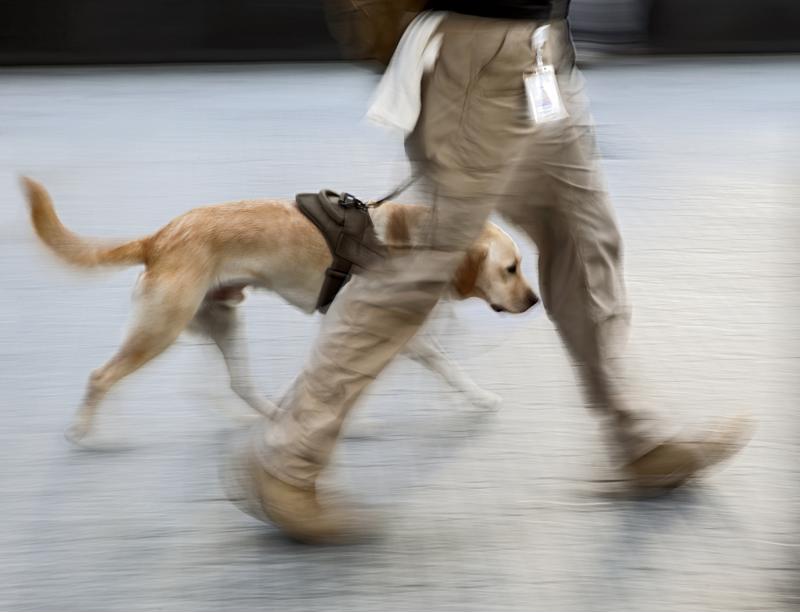
WNEP recently reported that a group effort on behalf of nonprofit organization Dog T.A.G.S. and the Marywood University Student Veterans Alliance assisted in providing service dogs to veterans in need in Scranton, Pennsylvania. Those who participated explained how this has helped them overcome the challenges of living as a veteran, including Army veteran Scott Taylor who adopted a dog named Molly at the event.
"Before I got her, I did not want to leave the house. I did not want to do anything, and when I got her, I am out moving around in crowds, in front of a camera. She has been helping out a lot," Taylor told WNEP.
Larger-scale endeavor
CBS 19 reported that Marine Cole Lyle, who has himself lived with post-traumatic stress disorder since serving in Afghanistan, is working to get more service dogs into the veteran community. According to the news provider, the U.S. Department of Veterans Affairs does not currently have a program in place to fund this therapy, but Lyle testified before Congress to do his part to change that.
Lyle had similar comments to those of Taylor, in that he cited not having as many harsh times as he did before adopting his service dog, Kaya. The source noted that he also brought up a study from Purdue University that proved the benefits of these programs in the lives of veterans living with PTSD.
"People with PTSD often experience emotional numbing, yet the presence of an animal has been reported to elicit positive emotions and warmth," CBS 19 cited from the report. "Animals have also been demonstrated as social facilitators that can connect people and reduce loneliness, which may assist individuals with PTSD break out of isolation and connect to the humans around them."
In the coming months, these types of national and local programs are likely to expand even further thanks to their overwhelming success thus far.
In the past several years, the U.S. Department of Veterans Affairs has come under fire for a number of issues related to the ways in which former service members are able to tap their benefits. Certainly, this has been the case when it comes to medical treatments in particular, and it's a problem that the government is working to address. Now, though, it's important to highlight that more efforts are being made to highlight the actual fallout from these problems so that they can be more clearly understood.
Of particular note here is the fact that newly enrolled veterans are having more difficulty than others in obtaining the treatments needed to make life after service a little easier to deal with, according to a new study from the watchdog U.S. Government Accountability Office. In all, 1 in 3 of the veterans examined in this study experienced wait times so significant for even basic health care needs that they still hadn't been seen by a doctor when the study wrapped up. Almost half of those vets didn't even have an appointment scheduled despite VA policies related to getting them scheduled and seen as quickly as possible.

Other issues
And among the 2 in 3 newly enrolled veterans who did end up seeing a doctor, the wait times were still significant, the report said. In fact, they saw the delays range between 22 and 71 days between when they submitted requests for an appointment and when they were actually able to get it completed. This was mainly due to a lack of available appointment times, and "unnecessary delays" caused by scheduling problems on the part of the VA services at treatment centers.
Meanwhile, though, the U.S. Veterans Health Administration estimates that wait time between submitting a request and when the veteran is actually contacted by the VA to schedule an appointment is just four days, the report said. In reality, the most common wait time in this regard was about 17 days, with more time coming between that date and when the appointment actually takes place.
Addressing the issue
This has long been a recognized issue, but this data suggests the problem may be worse than many might have expected, the report said. Consequently, the GAO has a number of recommendations for the VA to undertake as a means of helping to ensure this system works better going forward. First is that the VA put more resources into improving turnaround times between a submitted request and first contact for scheduling. Second is that the VA take greater efforts to more carefully monitor wait times, especially for the newly enrolled vets who need care. Finally, it believes the VA should update its scheduling policy in general.
Veterans deserve the full military benefits due to them as a result of their service, and also that the government does all it can to improve their access to those benefits. That kind of care can make life after military service a lot easier for them to handle.
This year has been a big one for veterans across the nation, with communities and organizations recognizing active and retired service members in various ways. In addition to the many memorials and events taking place to honor Vietnam war veterans, there have been other instances of communities celebrating their local veterans.
Warmth in Arizona
AZCentral recently reported that volunteers stitched 21 quilts and gave them to the MANA House, a transitional housing establishment devoted to assisting homeless veterans in moving into a new abode. The news provider also noted that the group had already shipped a large batch of quilts over state lines to the Eagles Healing Nest for Veterans in Minnesota.
Arizona has among the highest populations of veterans in the country, and the state is no stranger to large and small events that aim to show gratitude to those who have served in the military. For example, AZCentral noted that Phoenix will host a history program that involves the Spirit of St. Louis at the end of this month with one of the descendants of Donald Hall, an aircraft designer who had participated in the project.
A heart-warming story in Iowa
Social media posts can have a major impact on communities and the nation itself. One such post on Facebook led a town to get behind a Navy veteran who had passed away in Marshalltown, Iowa, the Des Moines Register reported. According to the news provider, the Mitchell Family Funeral Home had discovered that veteran Charles Lanam did not have any family at the time of his death, and posted that news on its Facebook page to alert the community.
The source pointed out that the post received about 1,500 shares within about a day, and that his funeral will likely be a packed house thanks to the visibility of the post, as well as the nearly 60 Patriot Guards who will be leading the procession on motorcycles.
"Whether there's two people there or 200 people, Marty decided that this man needed a funeral," Jordan Borcherding, a director at the funeral home, told the Des Moines Register, discussing his colleague's decision to publish the post. "This man served our country honorably and we should honorably serve him with a funeral."
Sometimes these types of local gestures can affect the veteran community more positively than some might think.
Combating the challenges of living as a wounded veteran following service has long been a difficult process, and one that many groups and government agencies have been working hard to push in the right direction. The Wounded Warrior Project estimates that 52,430 veterans have been wounded in the post-Sept. 11 battlefront, while 400,000 are living with post-traumatic stress disorder and 320,000 with traumatic brain injuries.
One particular area of this conversation that has been discussed in many circles of late is the community of veterans who were injured in such a way that prevents them from having children. This February, NPR reported that wounded veterans were being forced to pay for their own fertility tests, which meant many who were incapable of reproducing as a result of their injuries would not be able to afford treatment. However, the tide might be shifting in this conversation.
Senate speaks out
Stars and Stripes reported that the Senate Appropriations Committee had been weighing a bill that would inject roughly $88 million into programs that help veterans foot the costs of reproductive treatments and other procedures such as in vitro fertilization. Introduced by Senator Patty Murray of Washington, the source explained that the money would pass through the Department of Veterans Affairs and give individuals payments of roughly $20,000 for relevant needs.
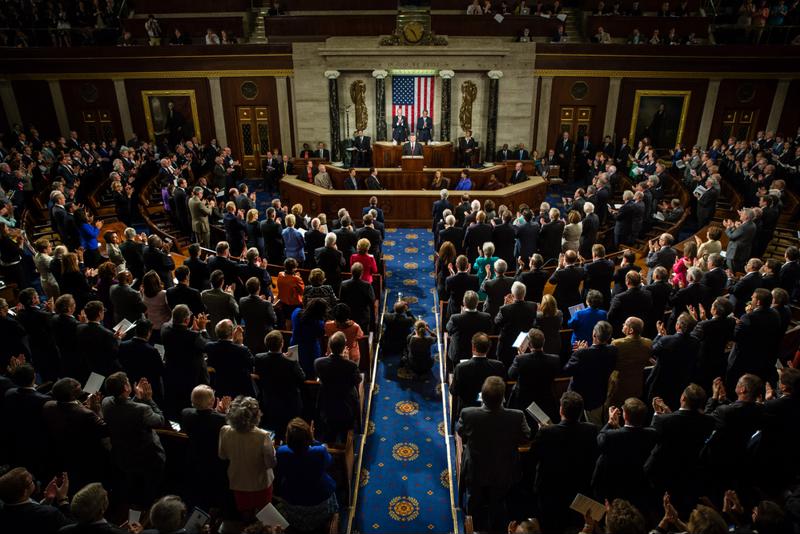
"The amendment I am offering today fulfills the promise to those military families we are asking to sacrifice and serve, and gives them real peace of mind by ensuring that we cover these services in the event of these tragic injuries," Murray explained, according to the news provider.
Stars and Stripes noted that while the bill did indeed pass in the Senate Appropriations Committee vote, the full Senate will need to vote in favor of the initiative to keep it moving along in the right direction.
Assistance available today
This bill would make a big difference in many veterans' lives, and there are other assistance programs that have already been made available to wounded servicemen and women. For example, Military.com explained that special monthly compensation programs, which come through the VA, are available for veterans who have either lost or lost use of a range of appendages while on active duty in the military.