
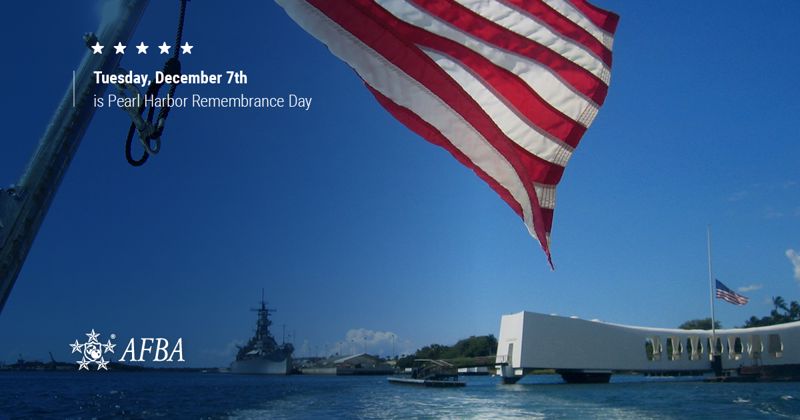
National Pearl Harbor Remembrance Day is on December 7th and was created to honor the men and women who lost their lives on the same day in 1941 during the attacks on Pearl Harbor, Hawaii. Each year, veterans, families, and American citizens gather to commemorate the 2,403 service members who were killed in the Japanese attack. Let's take a look back and learn a little more about why this day is so important.
Leading up to December 7
The Imperial Japanese Navy Air Service conducted a surprise strike that cost thousands of Americans their lives. Because most of the U.S. battleships in the Pacific at the time were located in the same Pearl Harbor port, they were a perfect target for the Japanese.
That fateful Sunday morning would "live in infamy" as stated by President Franklin D. Roosevelt. The radar station operators spotted a few unidentified planes that turned out to be the Japanese bombers.
According to the Navy ship deck log's running record, the attacks began around 7:55 AM and the main engines on the USS Arizona and the USS Oklahoma needed emergency repairs because they were among the first to be hit. From there, the USS Maryland, the USS California, the USS Solace and many other ships which were hit had logs that contributed to our current knowledge of the tragic day. With the chaos the day brought, the sequence of events is not perfectly known.
Because the attack was a surprise, there was an element of confusion at play that contributed to the response. The attack ended up lasting two hours and much of the U.S. Pacific Fleet was destroyed. This included 8 battleships, 3 cruisers, and 188 airplanes that were ruined and many lives lost. During the attack, despite the chaos and confusion, the U.S. military fought with extreme bravery to save their fellow men and salvage the damaged ships. Following the Japanese surprise, the United States declared war on Japan and was fully engaged in World War ll.
According to the Navy's military history website, fifteen U.S. Navy veterans were awarded the Medal of Honor, ten of whom sacrificed their lives in the Pearl Harbor attacks.
A day in remembrance
On August 23, 1994, congress created Pearl Harbor Remembrance Day and designated December 7th of every year as a day to honor the tragic losses of the attack in Oahu, Hawaii. Nationally sanctioned events occur every year in remembrance. The final event is a commemoration ceremony held at the Pearl Harbor National Memorial.
This year marks the 80th anniversary of the terrible and tragic attack on Pearl Harbor. The commemoration ceremony will be held at Joint Base Pearl Harbor-Hickam. This year's theme is Valor, Sacrifice, and Peace and will work to educate future generations not only about the attack but about the subsequent war. Aside from the main ceremony, there are different events leading up to December 7th that include ceremonies on the USS Nevada, USS Utah, and USS Oklahoma, which are open to the public.
This year, take the time to consider the implications of the attacks on Pearl Harbor and the over 2,000 lives lost that day or even attend the virtual panels that are available.
After nearly two years of unprecedented changes as a result of the COVID-19 pandemic, some things are finally getting back to normal for Americans. The precautionary measures impacted the general public and changed how military personnel and first responders operated in their daily lives. While the virus is still impacting the economy and most workplaces, the creation of vaccines and a better understanding of how COVID-19 works have helped aid in returning to normal. So what does this mean for active-duty members and first responders?
Military members return to normal
When the COVID-19 pandemic hit America, the Department of Defense (DOD) implemented serious travel restrictions on active duty military members. According to the Chinese government, patient zero was believed to have contracted the virus on November 17, 2019, in Wuhan, China. On Jan. 30, 2020, the DOD U.S. Indo-Pacific Command restricted travel to China and the quarantine requirements and other restrictions just increased from there in order to maintain safety standards. Now, things are far less restrictive than they once were.
On August 25, 2021, the Deputy Secretary of Defense gave "a message to the force, directing secretaries of the military departments to immediately begin full vaccination of all members of the Armed Forces under DOD authority on active duty or in the Ready Reserve, including National Guard, who are not fully vaccinated against COVID-19."
The existence of the vaccine has given more freedom to the U.S. armed forces members and the ability to visit their families and return to normalcy. Some service members are attending support groups in the wake of their homeland COVID-related duties. Travel restrictions have been loosened for those who are vaccinated, leading to more gatherings and less strict quarantine restrictions for active-duty military members. In fact, COVID-19 cases have been improving in some states as compared to early in the pandemic, especially in the Northeast U.S.
First responders seeing some return to normalcy
Society has relied on EMS service members and other first responders more than ever during the pandemic, their work more critical than ever in light of the virus. In most states, first responders were given some priority when it came to receiving the vaccine. Similar to the armed forces, first responders have received more freedom as a result of obtaining the vaccine.
The way that first responders do their job has changed, but now they are able to continue doing their jobs and some may say that things are returning to usual life. According to CNBC, health care workers are finding joy in the small things and their 2020 report showed that participating in TikTok challenges and coming together as a community helped boost spirits.
For both the first responder and military communities, having a sense of community is the best way to deal with the stress of the past two years. The CDC lists spending "time outdoors either being physically active or relaxing," and doing "things you enjoy during non-work hours" as a way to cope with difficulties and enhance resilience. Regardless of the community, people have become adept at pushing through the realities of covid and finding joy in the outside/family/etc
More gyms are starting to open and allow group classes, making it easier to blow off steam. Military bases have continued their physical testing requirements and opened up their training facilities. According to the Military Health System, some active-duty service members have been doubling down on their exercise routine in order to promote good mental health.
Time has offered some reprise from the chaos of late 2019 and early 2020. Military members and first responders who have had to adjust their daily work routines are finding comfort in returning to the normalcy of attending events and building a sense of community outside of computer screens.
American military veterans are heroes for the work they do overseas and on the home front. Once they return to civilian life, this work shifts to their own home as parents and caregivers. Nearly 50% of veterans live in a household with children, making the need for reliable childcare a critical and important step to a well-adjusted and successful family life.
Let's first dive into the average childcare expenses to prepare for, as well as the top veteran-specific options for high-quality care and a few budget tips to further ease the financial expense.
The cost of childcare in America
Regardless of whether you are a veteran, childcare in America is expensive. According to a survey conducted by YouGov on behalf of Bankrate, most people pay an average of $8,355 per child for all-year care. This comes down to about "$750 per child per month during the school year and an average of $834 for summer child care." Cutting costs with a cheaper choice is an option, and some veterans may ask family members to watch their children, but high-quality and reliable childcare is valuable no matter who provides it.

Even with subsidized and other government benefits, childcare can eat up a large portion of a family budget. Most public funding comes from the federal Child Care and Development Fund (CCDF), authorized by the Child Care Development Block Grant Act, or CCDBG.4, but there are some private childcare providers that offer discounted childcare for veterans as well.
Top veteran options for childcare
Below are some of the best childcare options, government-funded and otherwise, for veterans:
- The Office of Human Resources Management VA Child Care Subsidy Program: This is a childcare option provided by the U.S. Office of Veteran Affairs, where veterans are given a subsidy to put toward the cost of childcare. To see childcare centers local to your area, check out this interactive map feature which includes the name and address of places that are supported through the VA program.
- Financial assistance from Child Care Aware: Child Care Aware is a program that, according to their website, "serves more than 10,000 military children every year." Families from every branch of the military are supported through this fee assistance program, whether in an active-duty service member or veteran role.
- Ask if there are veteran discounts: Many childcare businesses and establishments that aren't associated with a federal agency want to show their support and gratitude to veterans through discounts, but many of them don't actively advertise these benefits. In some cases, savings can even apply to spouses of veterans. Never be afraid to ask if there are discounts available to your military family.
Additional tips and other options
If there are no VA-sponsored programs available in your area, try looking for a federal center within your state of residence. This additional resource page on the GSA.gov website can match you with a nearby option based on your region.
When seeking childcare coverage, start early. Childcare centers and in-home care providers often have a waitlist, and program approval processes can take a while to complete. Spend some time planning ahead and mapping out your needs so you can weigh these various options and utilize them if you qualify.
Childcare is one of the most important things to any parent, but the financial stress that it can add to the life of a veteran can be mitigated by using the above tips. The options are out there, and more Americans than you might think are working to support veterans and their families.
Childcare can be expensive and time-consuming for anyone, but the American Heroes that are veterans may have some options to alleviate some of that stress.
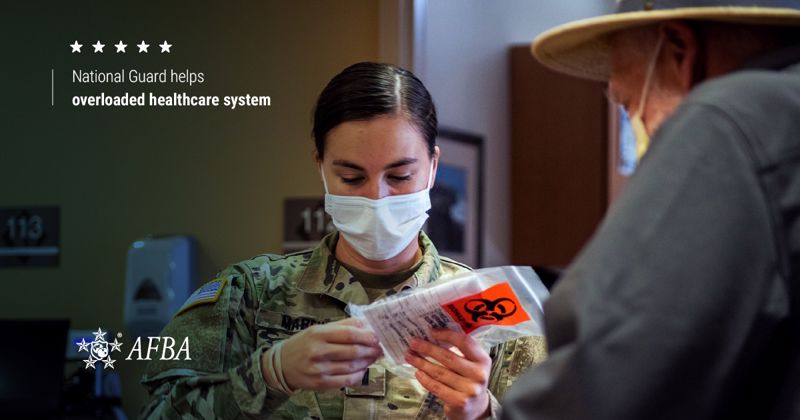
Throughout the entirety of the COVID-19 pandemic, the National Guard has answered the call to support our country during a national emergency. Most recently, governors across the U.S. called for the guard to come to the aid of hospitals that are overloaded with patients. From assisting with COVID-19 testing to supporting the vaccination process, the health care system in America can use all the help it can get.
As with most national crises, the National Guard offers aid in the most dire of situations, and this is no exception. Here is a shortlist of where the guard has taken some of the weight off the overwhelmed health care workers.
Kentucky
According to CNN, Gov. Andy Beshear said at a recent news conference that about 25 of Kentucky's regional hospitals were not only "at a critical staffing shortage stage", but were seeing an influx in patients. In response, the National Guard, consisting of five National Guard teams, were deployed starting on Sept. 1. In all, about one-third of the state's ICU beds are currently occupied by people who are suffering serious symptoms related to COVID-19, according to HHS Protect Public Data Hub.
In Kentucky, the guard members are preparing for their new role in hospitals by learning how to correctly wear personal protective equipment in order to shield themselves from becoming infected in the line of duty, according to Lexington news source the Herald Leader.
At The Medical Center at Bowling Green, guardsmen allowed hospital employees to be reallocated or afforded a much needed break. "In food services, the Soldiers and staff seemed like they have worked together for years," said Joseph Knight, food services manager at The Medical Center. "The teamwork between them has been incredible to watch," he added.
Oregon
Oregon has seen increasing numbers of patients who require specialized medical attention, and, similar to many other states, faces staffing shortages. Gov. Kate Brown deployed 1,500 National Guard members to help health care providers with testing, vaccinations and other hospital operations, like admitting patients and cleaning rooms.
With only 7% of ICU beds available statewide, Oregon is not only having trouble keeping hospitals staffed, but quickly running out of room. This means that, sometimes, hospitals have to put two patients in one ICU room. The National Guard's aid is absolutely necessary in these hospitals that are over capacity.
Georgia
While Georgia Gov. Brian Kemp has previously deployed 105 National Guard soldiers as part of a COVID response team; he called for an additional 85 soldiers to aid healthcare workers in the state. Kemp made it clear that there is room for 2,500 more to be deployed if the need arises.
The Georgia health care system is buckling under the weight of not having enough staff combined with over half the ICU beds that are taken by COVID-19 patients, the National Guard's help is greatly appreciated. National Guard 2nd Lt. Noah Wilson told local news station News 4 JAX that the response team has eight medics who are trained medics and that they will be able to assist nurses directly.
Illinois
The Illinois National Guard has joined forces with a Polish medical team to fight COVID-19 in Chicago. The teams work together in critical care units and other spaces that have been converted into makeshift hospitals, similar to how McCormick Place Convention Center in downtown Chicago once was.
The National Guard's motto of "always ready, always there" has continued to be proven true, especially during these times of desperation and crisis.
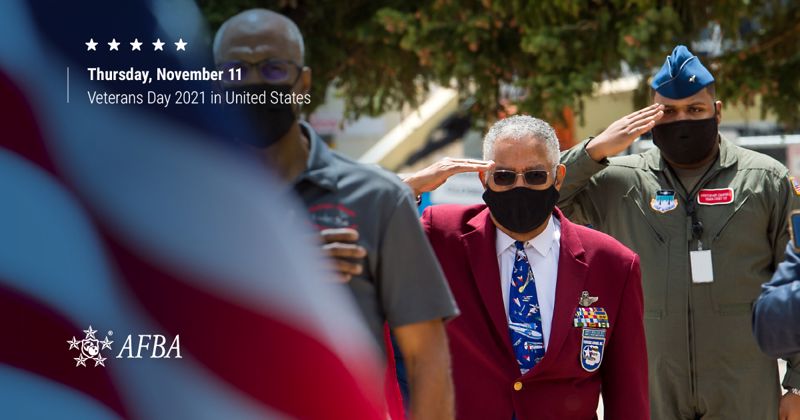
Thursday, November 11 is Veterans Day in America, a day when we take the time to celebrate the brave U.S. military veterans who have done so much for our country. Each year, the federal holiday encourages citizens to pause in remembrance of those who have served in the armed forces, but there is a lot of history attached to the day. Here are three things you might not know about Veterans Day.
1. Veterans day was originally called Armistice Day
Originally, November 11th was meant to recognize the signing of the agreement that ended World War l. In 1918 the Allied powers ended the war and a year later, President Woodrow Wilson made November 11 a federal holiday.
According to the Library of Congress, he said: "To us in America, the reflections of Armistice Day will be filled with solemn pride in the heroism of those who died in the country's service and with gratitude for the victory, both because of the thing from which it has freed us and because of the opportunity it has given America to show her sympathy with peace and justice in the councils of the nations…"
2. The Uniform Holiday Bill changed Veterans day
In 1968, the Uniform Holiday Bill was signed with the purpose of making sure that federal employees could enjoy three-day weekends during four specific national holidays by ensuring that they fall on Mondays. The four holidays include:
- Washington's Birthday: February 22
- Memorial Day: May 30
- Veterans Day: November 11
- Columbus Day: October 11
However, the first time that Veteran's day was celebrated was not on the original holiday but on October 25, 1971. The holiday, after the law was passed, was very confusing for the citizens. Because of this, it returned to being observed on November 11 in 1978, no matter the day of the week it happens to fall on.
3. National Veterans Day Ceremony
At 11 am on November 11, the Veterans Day National Ceremony is held at Arlington National Cemetery. The first part of the ceremony consists of laying a wreath on the Tomb of the Unknown Soldier, a monument dedicated to the soldiers who were never found in conflict. There is a parade of colors by different veterans organizations as well as meaningful speeches. The Veterans Day National Committee also picks different places across the country for beautiful government-sponsored parades and military exhibits.
This Veteran's day, take the time to thank a Veteran or go to a museum to learn more about how the armed forces have helped shape America into the place it is today.
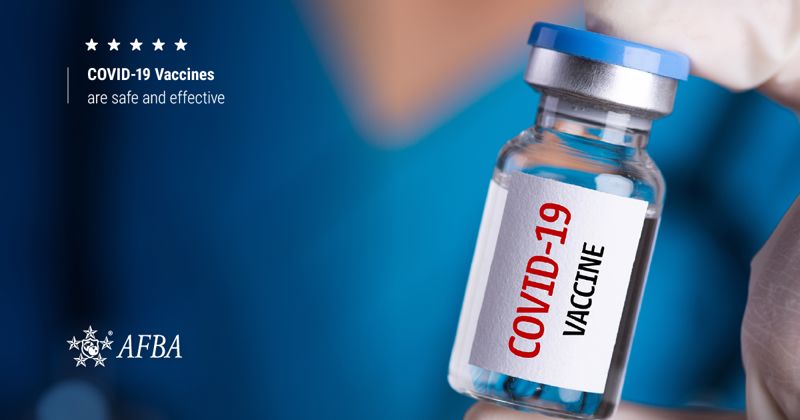
Since the start of the COVID-19 pandemic, scientists and researchers were hard at work trying to develop a vaccine for the virus. On December 11, 2020, the Food and Drug Administration (FDA) enacted the first emergency use authorization (EUA) for the administration of a vaccine to prevent COVID-19. The Pfizer-BioNTech COVID-19 Vaccine was the first to find approval, with Moderna not far behind on December 18, 2020. The single-dose Johnson & Johnson vaccine was approved on February 27, 2021.
Since then, 55.67% of Americans have received full vaccination against the COVID-19 virus (as of October 2021). However, some citizens still have questions about the safety and efficacy of the vaccine. Let's take a look at what it took to create a safe and effective tool in the battle against the deadly virus, as well as the FDA's approval process.
Preparation
Despite the fact that no one could have predicted the pervasive and world-altering COVID-19 pandemic, previous deadly coronavirus diseases like Middle East Respiratory Syndrome (MERS) and Severe Acute Respiratory Syndrome (SARS) laid the groundwork for the newest flu vaccines. In fact, scientists have been studying virology and respiratory communicable diseases for decades. According to the American Medical Association (AMA), prior research and vaccine developments aided in the speedy development of COVID-19 vaccines.
Because of the vaccinations that were created to aid in previous outbreaks, scientists were able to use the information to get a jump-start on the COVID-19 vaccine. Since the first SARS outbreak in 2003, vaccine researchers have been hard at work developing the most effective ways to prevent dangerous respiratory viruses. So while the development of the COVID-19 vaccination may have seemed alarmingly quick to the general public, it had actually been in the making for over a decade. Here is the typical, heavily regulated FDA process for developing the vaccine:
- Research and discovery
- Pre-clinical
- Phase 1 trial
- Phase 2 trial
- Phase 3 trial
- License and application to the FDA
The effectiveness of the COVID-19 vaccine
The FDA has strict guidelines for approving any kind of medication, especially vaccinations. Even when it comes to emergency approval, there are continual and ongoing reevaluations as the FDA notes its effectiveness in the real world. Here are some factors that the FDA looks for when evaluating "real-world vaccine effectiveness":
- Population host factors: This is how the vaccine impacts people who may have not been included in the trials.
- Virus factors: Potential variants and changes to the original virus.
- Programmatic factors: How well the vaccines are administered and whether the population is adhering to guidelines.
So how effective is the COVID-19 vaccine? The Centers for Disease Control (CDC) reports that those who took both doses saw a reduction in their risk of COVID-19, including severe illness by 90% or more.
How safe is the COVID-19 vaccine?
Because the new vaccine has been developed using research that has been tried, tested and successful for decades, the vaccines are extremely safe. According to the CDC, the COVID-19 vaccine has undergone some of the most rigorous and strict testings in the Center's history. Even still, they undergo intensive monitoring to ensure that the vaccines remain safe and effective.
Millions of people have been safely vaccinated and we are already seeing positive results in communities that have been responsive. According to the U.S. Department of Health & Human Services, vaccinations have led to the prevention of "265,000 COVID-19 infections, 107,000 hospitalizations, and 39,000 deaths among Medicare beneficiaries between January and May 2021."
Both the CDC and the FDA have made research and testing information public in an attempt to dispel any potential vaccine hesitancy. Even if you have already had COVID-19, vaccinations are necessary to help build protection and boost herd immunity.
Worried about getting sick after vaccination? Fear not. According to the CDC, "none of the COVID-19 vaccines contain the live virus that causes COVID-19 so a COVID-19 vaccine cannot make you sick with COVID-19." However, consult your physician to find out more about the possible side effects and your vulnerability level.
To learn more about the safety and efficacy of the COVID-19 vaccine, visit the CDC or the FDA's websites.
With winter fast approaching, its important to take the opportunity to consider enacting some of these at-home fire safety tips. The past year has been one of the most dangerous in regard to wildfires. The increased number of fires, many of which were preventable, put more firefighter lives at risk and destroyed natural habitats. The National Centers for Environmental Information reports that in 2021 alone, 5,907,288 acres of American land were burned. Let’s take a closer look at a few simple ways to protect yourself and those around you from the dangers of fire.
 The appearance of U.S. Department of Defense (DoD) visual information does not imply or constitute DoD endorsement
1. Manage heat sources
Whether your home has a fireplace, baseboard heaters or you use a space heater, many structure fires are caused by those indoor heat sources. Especially as the colder months approach, keep clothing and other items away from the fire or vents. Make sure that the space heater is placed on a level, non-flammable surface.
2. Invest in a good fire alarm system
According to the San Francisco Fire Department, two-thirds of people who passed away as a result of a fire that was started in the house were asleep when the fire began in 2018. Even if you have a fire alarm system, it is important that you make sure to keep it in top shape and replace any dead batteries.
3. Put out your cigarettes
Cigarettes are among the top causes of fires because they can be extremely dangerous when not disposed of correctly. According to the National Library of Medicine, cigarettes and “smoking cause an estimated 30% of the U.S. and 10% of global fire death burdens.” Make sure that every spark is extinguished in a predetermined area.
4. Mitigate electrical fires
Electrical fires are some of the most dangerous because they can be very explosive and cause not only structural fires but expand into wildfires. Always hire an electrical professional to do all electrical work to prevent damage. Provide some education to your children about how electricity can be dangerous and outlets should not be played with.
5. Put out your outdoor fires
According to the U.S. Department of the Interior, 9 out of 10 wildfires are caused by humans. Here are a few tips that will reduce the likelihood of an accidental fire.
- Build campfires in open areas, away from low-hanging branches.
- Always douse your campfires and ensure they are fully extinguished.
- Consider the environment and conditions before setting off fireworks.
Structure fires can often lead to wildfires; all it takes is a small spark to start a terrible and costly fire. Be careful and, most of all, mindful of the consequences of your actions.
Consider keep these tips in play year-round. While winter brings on the use of space heaters and fireplaces, the potential for fire is everywhere. Stay safe, and remember to thank a firefighter next time you see one.
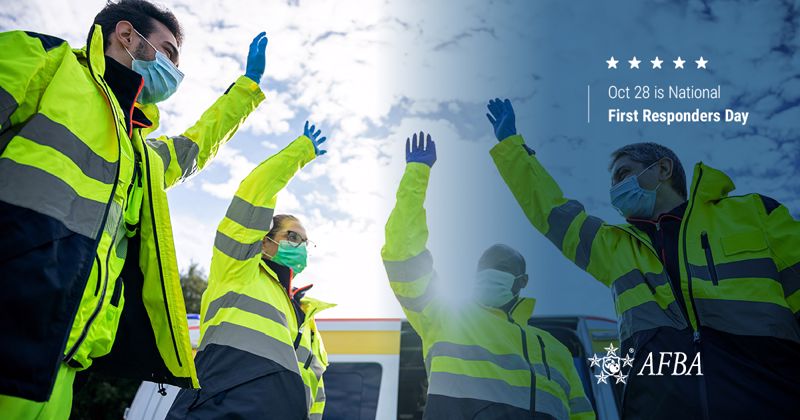
While we should be thanking our firefighters, paramedics and EMTs every day, October 28 is National First Responders Day, which offers a unique opportunity to show our appreciation. These heroic men and women are the first ones on the scene of natural disasters, tragedies and accidents. They devote their lives to making the world a better — and safer — place.
The creation of National First Responders Day
The day of recognition is a relatively new holiday, but it was a long time coming. Congress made October 28 National First Responders Day in 2017, though the first bipartisan resolution passed through the senate in 2019.
At the time, there were about “4.6 million career and volunteer firefighters, police, emergency medical technicians, and paramedic workers serving communities all across the United States,” according to the Department of Homeland Security. Even before the creation of National First Responders Day, Americans knew how valuable and necessary they were.
 “The appearance of U.S. Department of Defense (DoD) visual information does not imply or constitute DoD endorsement.”
First responders in 2020 and 2021
Only a few months after the first holiday, the COVID-19 pandemic would sweep the globe. First responders were the ones who stepped forward when no one else could. It is more important than ever to show support for these front-line workers, over a year into one of the greatest crises of the last decade.
According to The Associated Press, many first responders have lost their lives as a result of the pandemic. Often first on the scene, EMTs and paramedics are exposed to unique situations that increase their likelihood of contraction.
Even outside of the COVID-19 pandemic, natural disasters caused destruction across the U.S., requiring firefighters and other first responders to show up in unprecedented force. According to the U.S. Drought Monitor, about 90% of the land in the Western U.S. is experiencing “moderate to severe drought.”
This has led to a staggering increase in wild fires. The National Interagency Fire Center reports that 12.6 million acres of land were burned in 2020 and 2021. Firefighters from around the nation risked their lives and left their families to protect the environment and American citizens.
Beyond the pervasive fires, the U.S. has faced an increase in floods, droughts, hurricanes, blizzards, earthquakes and other natural disasters. The National Oceanic and Atmospheric Administration’s data shows that there have been 18 weather disasters in 2021, as of October 8.
Recognizing first responders
When National First Responders day was announced, Chairman of the Homeland Security and Governmental Affairs Committee Ron Johnson (R-Wis.) explained the reason for the new day of recognition.
“Our first responders save countless lives every day, and many tragically pay the ultimate price in the line of duty — a sacrifice we should never forget. Designating a day to honor their service and sacrifice is the least we can do to express our gratitude,” he said in a June 7, 2019 press release.
The 116th congress wrote in the act that “During times of national crisis, first responders have consistently been a source of aid, hope, and comfort for all Americans.”
Show your support for America’s brave first responders by thanking them for their service or donating to a first responder charity. Here are a few to choose from:
National First Responders Day is your opportunity to show gratitude and to recognize the professionals who play an important role in ensuring the safety of every American citizen.
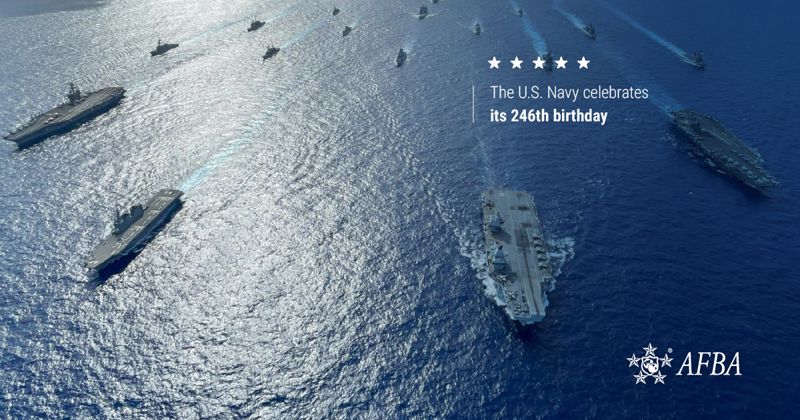
October 13 marks 246 years of the United States Navy. The creation of the Navy and its history is fascinating and intertwined with America’s own story of bravery. As we approach the branch’s birthday, let’s take a moment to look back at how far the Navy has come. This year, the Navy has decided on “Resilient and Ready” as the theme of its birthday and heritage week. The theme ties into the Navy’s history of perseverance and dynamic problem-solving in times of strife.
 The appearance of U.S. Department of Defense (DoD) visual information does not imply or constitute DoD endorsement.
The Continental Navy
The Navy was first created on October 13, 1775, after the Continental Congress established it at the behest of the United States Constitution. The Constitution urged Congress “to provide and maintain a navy.”
The very first, unofficial version of the “navy” consisted of two sailing vessels, each with 10 carriage guns and a few swivel guns. Each vessel was outfitted with a crew of 80 men and was set to sea to monitor communications of the British Army stationed in America. Especially at the time, this sent a clear message to the British and illustrated the fact the revolution was in full force. The British ruled the seas at the time, and their navy was one of their most prominent weapons against revolution and allowed them to colonize with relative ease.
Those first two ships eventually led to the Continental Congress asking for “a fleet of sufficient force for the protection of these colonies”, even outside of each separate colony trying to protect themselves from the water. In Philadelphia, Congress came to the conclusion that a committee should be formed (John Langdon, Silas Deane, and John Adams) to advise on the formation of the U.S. Navy. According to the Navy, the original goals were to protect American trade and strategically intercept ships that were potentially bringing supplies to British forces.
The only branch to be established twice
After the Revolutionary War, our Navy was not a priority. In fact, it became “unestablished” because it was not used. In the 1790s, the country’s overseas trade was falling victim to raiders and thieves, which urged America to look into reestablishing the United States Navy. There was debate about whether it would be more fiscally responsible to pay the ransoms or to invest in a strong navy.
In the end, however, Congress saw the benefit of having a branch of the military to protect the coasts and the seas. On March 27, 1794, the Navy was reestablished. The first three warships that were the predecessors for the modern Navy were U.S.S. United States, U.S.S. Constellation and U.S.S. Constitution. Eventually, the Department of the Navy was established in 1798.
The modern Navy
Having undergone many iterations, the modern Navy lives by its motto “forged by the sea.” In 2019, there were 278 thousand members of the Navy and they have hundreds of massive ships and submarines with the latest technology. The United States Navy has a long history of tackling disasters and challenges head-on, and it will continue to do so with its unparalleled career opportunities and perseverance.
As the COVID-19 pandemic continues to negatively impact the U.S., the Pentagon is taking steps to keep its employees safe and to set a good example for the rest of the country.
The facility updated its mask guidelines for the facility in the month of July, and mask mandates were added not long after. The Pentagon changed its rules in order to comply with the CDC and direction from the DoD.
How the mask mandate has changed
According to the DoD, the Pentagon’s Director of Administration & Management has made it mandatory to “wear a mask in an indoor setting in installations and other facilities owned, leased or otherwise controlled by DoD in the Pentagon Reservation.” All service members, federal employees, onsite contractor employees and visitors must follow these guidelines, even if they are fully vaccinated.
The original mask mandate and all subsequent updates issued by Deputy Pentagon Press Secretary Jamal Brown have been published in a document called the “Updated Mask Guidance for the Pentagon Reservation.” The goal of the guidelines is to protect government employees and to set a good example for the rest of the nation, through the CDC suggested guidance.
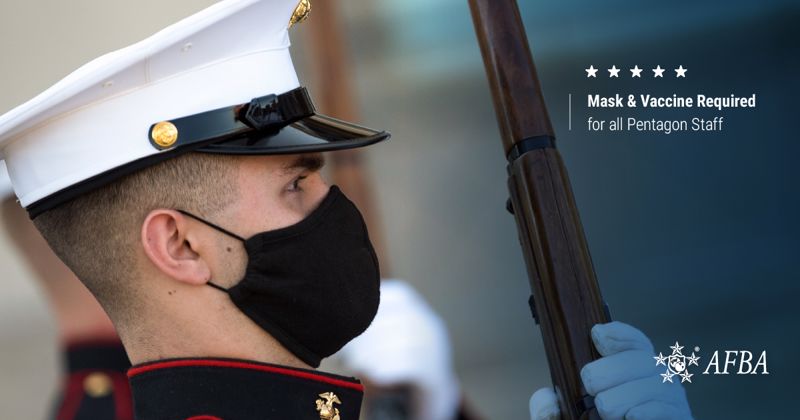 The appearance of U.S. Department of Defense (DoD) visual information does not imply or constitute DoD endorsement.
The CDC guidelines
The Pentagon’s updated mask requirements came only a day after the CDC changed and updated its mask suggestions and mandates. The mandate requires people in “substantial or high transmission” areas to wear a mask, and that includes the Pentagon and several military bases. The new mandates came as a result of the pervasive Delta variant. Here are some of the most notable changes that the updated CDC mandate made that the Pentagon followed:
- Mask suggested for even those who are vaccinated.
- Masks recommended, regardless of transmission level.
- Testing and isolation suggested for those before and after travel.
Pentagon aims to protect employees with new safety guidelines
On August 23, 2021 Defense Secretary Lloyd Austin made it mandatory for all active service members and Pentagon employees to be vaccinated as well. This came on the heels of the FDA approval of the Pfizer-BioNTech vaccine.
With the combination of the vaccination and updated mask mandates, the DoD and the Pentagon are taking steps to stop the spread of coronavirus and its variants. There is no excuse for visitors, as the memorandum says, “Personnel coming on to the Pentagon Reservation or other facilities who do not have a mask may be provided one by DoD.”
As the world continues its struggle against the COVID-19 virus, the U.S. DoD will lead the battle against the pandemic on its bases and facilities.