
In an effort to reduce its carbon footprint and pursue alternative energy options, the U.S. Department of Defense (DoD) is moving forward with a major transportable advanced nuclear microreactor project.
As part of Project Pele, the DoD's Strategic Capabilities Office (SCO) has chosen two private companies to help accomplish this mission: BWXT Advanced Technologies and X-energy. Westinghouse Government Services is also part of the program.
Project Pele in action
Project Pele is a whole-of-government effort, which includes the DoD, the Department of Energy, the Nuclear Regulatory Commission, the National Aeronautics and Space Administration (NASA) and the National Nuclear Security Administration. Its goal is to develop a portable nuclear reactor to power operations in the field. If successful, this project would result in a stable and portable source of a significant amount of power for the military.
According to a DoD press release, the department currently uses approximately 30 Terawatt-hours of electricity per year and more than 10 million gallons of fuel per day. With current plans to grow the number of electric vehicles in its fleet, this will only increase the amount of energy consumed by the DoD. The department is seeking a transportable nuclear reactor system that will operate for at least three years and generate up to 5 megawatts of electricity.
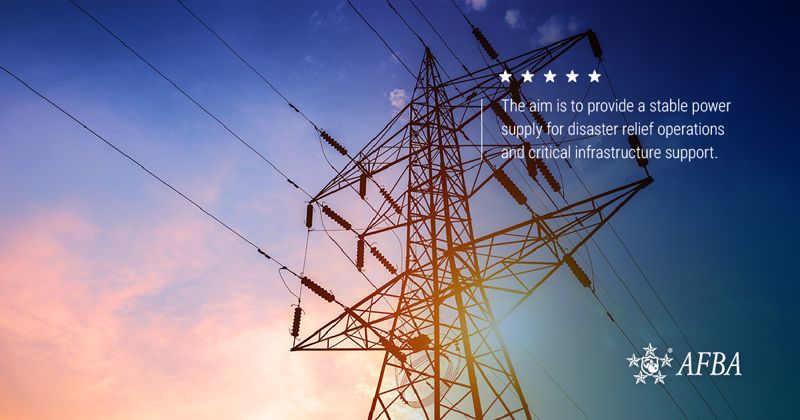
The aim is to provide a stable power supply for disaster relief operations and critical infrastructure support. This will make the military's energy supply more resilient to an electric grid attack. It will also streamline energy logistics and delivery for forward-operating bases, all without increasing the DoD's carbon footprint.
About the contractors
Based out of Lynchburg, Virginia, BWXT Advanced Technologies, LLC, has more than 60 years of nuclear innovation. It has delivered more than 400 reactors for Naval nuclear power, provided 315 steam generators to nuclear power plants and managed 18 high-consequence U.S. sites.
Operating out of Greenbelt, Maryland, X-energy, LLC, is a nuclear reactor and fuel design engineering company that designs safe and efficient modular reactors for a wide range of global markets and applications. The company also manufactures its own proprietary particle fuels.
Current state of the design and development process
In March 2021, the companies were awarded preliminary contracts of less than $15 million. Final designs are not due until 2022. At that point, the DoD will make a determination on the project's viability for long-term production. As it stands, Dr. Jeff Waksman, Project Pele program manager, is optimistic about the project's success.
"We are confident that by early 2022 we will have two engineering designs matured to a sufficient state that we will be able to determine suitability for possible construction and testing," Dr. Waksman stated.
After the second design phase of the project, and following an environmental analysis, the SCO may competitively award the manufacturing and deployment of the microreactor prototype. Ultimately, the companies involved will have to demonstrate a successful combination of this first-of-its-kind technological solution and proven production processes to meet DoD's power generation needs.
Each year in April, families, communities and people of all stripes come together to celebrate military children and applaud them for surmounting unique challenges.
The Department of Defense Education Activity (DODEA) commemorates this month with its "Purple Up!" campaign, in which people wear and display the color purple to show support for the children of soldiers. The military chose this color with the reasoning that purple combines each branch's colors into one, since the Air Force, Navy and Coast Guard all use shades of blue, the Army uses green and the Marines use red.
Month of the Military Child: A backstory
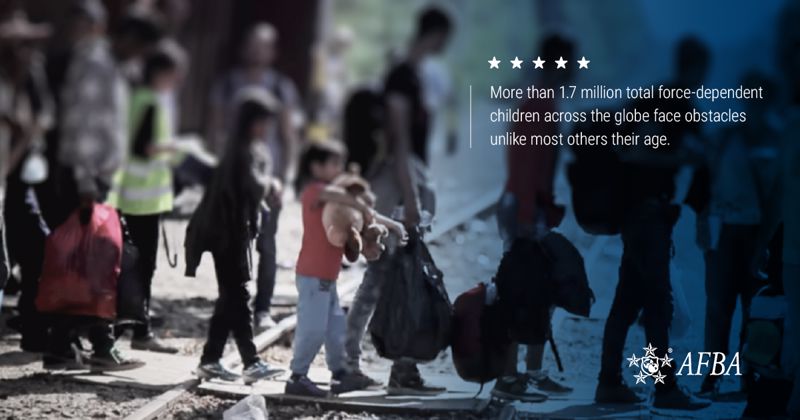
Established by former Defense Secretary Caspar Weinberger in 1986, the Month of the Military Child has since become an annual tradition for military families deployed worldwide. More than 1.7 million total force-dependent children across the globe face obstacles unlike most others their age. Wearing purple helps let them know you care.
While the entire month of April is set aside to celebrate children of soldiers, the military also designates a single day during the month as "Purple Up! For Military Kids" Day. This typically falls halfway through the month, at or around April 15 each year.
Many military-related private organizations put a special emphasis on the programs they administer and provide downloadable toolkits and other resources for military children and families.
Additionally, participating Exchange restaurants worldwide will often offer free treats or other specials for any child who wears purple during the month.
How you can Purple Up! this April
Although schools and workplaces are not closed for Purple Up! Day, there are still plenty of creative ways to observe this important occasion. Many military bases and communities celebrate with special events, such as contests, parades, fairs and seminars all centered around the central message of supporting military children.
In addition to wearing purple throughout the month, anyone not currently stationed at a military base can consider trying some of these activities to observe the Month of the Military Child:
- Work with local schools, governments, businesses and organizations to raise awareness of this observance.
- Spread the word by using the #purpleup hashtag on social media or putting up purple flyers in community centers.
- Write a letter to your local newspaper that recognizes and celebrates military children.
- Create an award, or use one created by Blue Star Families, to let a military child know that they're awesome.
- Print out and pass around Purple Up! labels from the Military Child Education Coalition.
If you're already involved with the local schools and organizations, consider holding an award ceremony for military children. Be sure to include recognition of military children during morning announcements and have members or students tie purple ribbons around trees outside.
For more ways to celebrate our country's youngest heroes, check out these 50 additional ideas from the Military Child Education Coalition.
After a long year of uncertainty, many Americans are seeking a means to get the COVID-19 vaccination. Meeting this demand will require a momentous effort, involving a diverse range of contributors from the health care industry and beyond.
Following a request from the Federal Emergency Management Agency (FEMA), the U.S. Department of Defense (DoD) stepped in to join the fight against COVID-19. Now, the Army and National Guard are both playing a vital part in vaccine distribution.
Members of the armed forces make for ideal candidates to help in this crucially important process. Active-duty servicemembers can efficiently organize and quickly mobilize to areas in need. Plus, the many specialized skill sets found among soldiers are extremely useful for managing a complex and multi-faceted mission like mass vaccine distribution.
Servicemembers' role to date
The National Guard has already activated more than 20,000 servicemembers and military medical personnel to assist with COVID-19 response, reported Military.com. Some of the jobs active-duty forces are performing include administering vaccines, issuing health assessments and guiding the public through the vaccination process.
In many instances, a dual-status commander is involved to coordinate and oversee emergency response missions. This allows different military components, such as the Army and National Guard, to establish a single chain of command. The dual-status commander can then provide direction and facilitate communications among all involved servicemembers, as well as federal, state and local government agency personnel.
Where are servicemembers helping out?
All across the country and U.S. territories, active-duty servicemembers are doing their part to help with vaccine distribution.
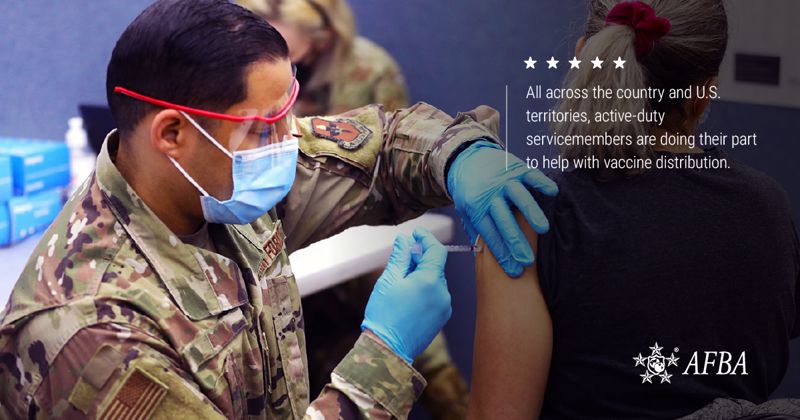
The Army sent 200 soldiers from the storied 101st Airborne Division to the United Center in Chicago, Illinois to help with vaccine distribution as part of the DoD's COVID-19 response operation. These soldiers are assigned to the 426th Brigade Support Batallion's 1st Brigade Combat Team.
"The 101st has a long history of answering our nation's call, which at times has been to support civil authority here within the U.S.," explained Lt. Col. Derek Di Bello, the battalion commander. "It is a mission we will take on with the same focus and energy that we would any task given to us."
In Pueblo, Colorado, approximately 140 soldiers with the 2nd Stryker Brigade Combat Team, 4th Infantry Division, are supporting civilian partners at the state-run, federally supported COVID-19 Community Vaccination Center.
Around 170 military personnel from the 2nd Marine Division based at Camp Lejeune in North Carolina are working with the federally run vaccination center in Memphis, Tennessee.
At the mass vaccination site located at New York City's Jacob Javits Convention Center, more than 350 New York National Guard Soldiers and Airmen, along with members of the New York Guard State Defense Force and New York Naval Militia, are working in partnership with the state's Department of Health.
These are just some of the examples of how the steadfast assistance of servicemembers has contributed greatly to delivering more than 100 million vaccinations already. While there's still have plenty of hard work ahead, if anyone is up for the job, it's our brave servicemen and women.
Firefighters must meet many unique requirements to successfully complete their duties and capably serve in their roles.
Safely navigating the dangers posed by uncontrolled blazes is perhaps the most visible and serious concern for these first responders. However, the especially important nature of the job means firefighters often follow taxing work schedules, with long shifts and weekly hours frequently exceeding those seen in other careers.
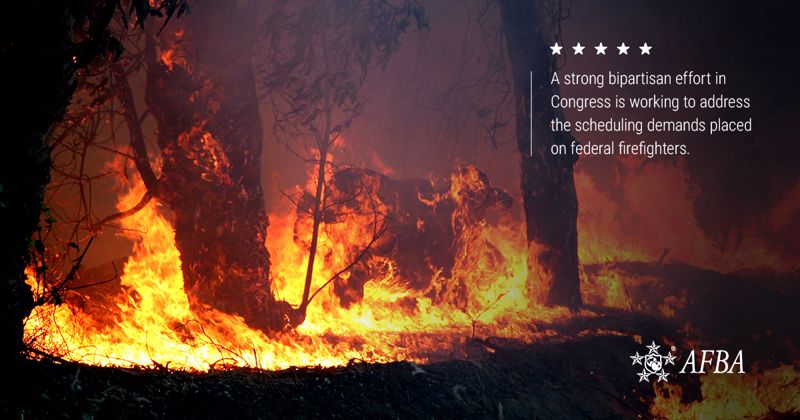
A strong bipartisan effort in Congress is working to address the scheduling demands placed on federal firefighters. These efforts include relaxing rules around trading shifts that could quickly improve work-life balance for these professionals.
Strict schedules for federal firefighters
Federal firefighters work for agencies including the Bureau of Land Management and U.S. Forest Service, along with branches of the U.S. Armed Forces, according to ZipRecruiter. They tend to fight wildfires and blazes in remote areas. Their work often necessitates especially long schedules, frequently clocking in at 24 hours per shift and 72 hours per week.
The demands placed on federal firefighters mean their free time is limited and, therefore, uniquely valuable. However, these firefighters are limited by federal rules around trading shifts to accommodate family obligations and similar needs. Many federal agencies currently avoid shift trading among firefighters because of the complexities that can arise when trades occur across pay periods, which necessitate pay adjustments and, in some cases, the provision of overtime.
Although these firefighters enjoy significant time off between working weeks, as Government Executive reported, they might be forced to miss a variety of personal events and obligations, should one fall during their time on the job.
The Federal Times explained that firefighters working for these government agencies need to use some form of leave to excuse an absence during their scheduled hours, even if they can find a colleague willing to cover that shift. This isn't a concern for municipal and state-level professionals, who already have this additional freedom in scheduling.
A bipartisan push to increase flexibility
A group of five senators, spanning both houses of the federal legislature and both major political parties, reintroduced a bill called the The Federal Firefighter Flexibility and Fairness Act in late March. This piece of legislation would allow federal firefighters to trade shifts without penalty, doing away with the requirement to use some form of leave to facilitate trades and addressing the compensation issues that currently arise.
"It's no secret that wildfires across the West are burning bigger and longer, meaning our federal firefighters work overtime, putting their lives on the line to keep our communities safe," said Sen. Jon Tester of Montana. "This critical bill gives them the flexibility they need to better balance their work and home lives, and it saves taxpayer dollars. Switching shifts is common practice among state and local firefighters — it's only common sense that our federal firefighters are able to do the same."
While the bill still needs to pass through the U.S. Capitol and White House before becoming a law, it has strong support and a strong underlying principle of fairness to first responders on its side.
The United States Postal Service counts on economical, long-lasting and easily repairable vehicles as a major part of its mission to deliver mail to all Americans. In fact, the most common mail truck used by the USPS is called the Long Life Vehicle (LLV). Produced by Grumman, a company with plenty of government contracting experience, the LLV was designed specifically with these qualities in mind.
With LLVs starting to reach an advanced age, even when accounting for their durable design, the USPS requested proposals for a new general-use mail delivery vehicle from potential providers. And, just as an experienced contractor earned the rights to produce the LLV, the new generation of USPS mail trucks will be produced by another company with plenty of history in this field.
Oshkosh to produce new USPS vehicle
Oshkosh Corporation, based in the city of the same name in eastern Wisconsin, recently won the bidding process to produce a new generation of USPS mail trucks. Car and Driver reported the relationship includes a $482 million investment to finalize the design of the new vehicle, ideally readying it for use by 2023. The mail truck, called the Next Generation Delivery Vehicle (NGDV), will represent significant steps forward in terms of design, function, safety and more.
The newest LLVs were produced in 1994, but were intended to have a 24-year useful life. The oldest vehicles still in service were made in 1987, representing 34 years of service. The replacements may come as a welcome change to mail carriers who use the LLV. A lack of air conditioning, an unreliable heater, mixed performance in severe weather and, most seriously, the fire risk, as reported by CNet, are all problems for postal employees. The new design will address these longstanding issues as well as add some important benefits, according to The Verge:
- A collision avoidance system.
- Improved ergonomics.
- Better lines of sight for the driver.
- Accommodation of both electric and gas engines, with the capability to easily convert combustion units to electric in the future.
An innovative design from a proven contractor
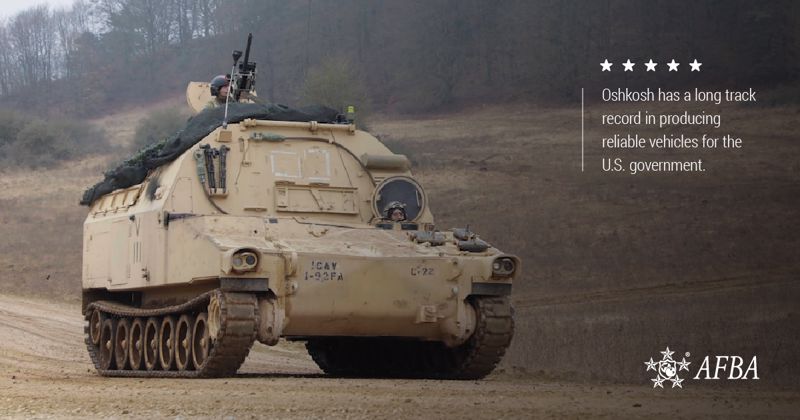
Oshkosh has a long track record in producing reliable vehicles for the U.S. government. The company's history stretches back to the early 20th century, and it began producing trucks under contract for the U.S. military in World War II, according to Forbes contributor Jim Vinoski. During the 1970s, it secured the rights to produce the M911 for the U.S. Army's tank transporter program and entered into a longstanding contracting relationship with the federal government.
Oshkosh is well known for producing a successor to the Humvee military vehicle, the Joint Light Tactical Vehicle (JLTV). The JLTV is an example of Oshkosh's ability to improve on significant flaws in vehicle design. In the case of the JLTV, the issues addressed were the vulnerability to improvised explosive devices faced by the stock Humvee, and a desire for more vehicle carrying capacity than Humvees with enhanced armor. Oshkosh has already produced 10,000 of these vehicles, and they have generally been received as reliable and effective by the servicemembers who use them.
While the risks facing postal workers and military servicemembers are vastly different, Oshkosh has proven its ability to identify limitations and defects in prior designs of equipment, then improve upon them.
Plenty of work remains to be done on the contractor's part, including opening a production plan and finalizing the design of the vehicle itself. But, if past performance is any indication, the new NGDV may well prove to be a significant improvement over the current LLV.

Vietnam War Veterans Day became a nationwide, yearly observance in 2017. A strong bipartisan effort to recognize the holiday on a regular schedule concluded with President Donald Trump signing the Vietnam War Veterans Recognition Act of 2017 into law. Since then, National Vietnam War Veterans Day has fallen on March 29 each year.
The roots of a dedicated holiday
This special observance recognizes all veterans who served in the U.S. military over the course of the Vietnam War, which spanned nearly 20 years of escalating conflict.
The first U.S. ground combat troops — 3,500 Marines — arrived in 1965, according to The Atlantic. By early 1973, when U.S. combat forces were ordered to withdraw from the country, 3,403,000 Americans had served in the armed forces during the Vietnam conflict, according to the U.S. Department of Veterans Affairs. That number includes more than 55,000 servicemembers who gave their lives for their country, and more than 150,000 who were wounded.
Despite meritorious service from so many servicemembers and the ultimate sacrifice made by tens of thousands of U.S. troops, the tense and complex social and political climate of the mid-1970s meant that many returning veterans were denied a proper welcome home, as the National Conference of State Legislatures explained. National Vietnam War Veterans Day, and the somewhat irregular state- and territory-level observances that preceded it, are an effort to belatedly recognize the valiant efforts of U.S. troops who served in this war.
The date of the observance is especially significant for veterans. March 29, 1973 was the day the last combat troops left Vietnam.
Supporting Vietnam veterans every year
Military Benefits estimated a total of 6.4 million Americans living today served in the armed forces during the Vietnam War.
The holiday takes this into account: It officially recognizes all personnel with active-duty service between Nov. 1, 1955 and May 15, 1975. This inclusive approach celebrates and shows respect to all Vietnam veterans regardless of other details such as length of service, where they were stationed and which duties they performed.
A single, national date for the observance also raises cultural awareness as events across the country fall on the same date on a predictable, yearly schedule. Instead of most, but not all, states and territories holding observances on or around March 29, the entirety of the U.S. recognizes a unified event.
Safely recognizing National Vietnam War Veterans Day during a pandemic
Memorials and ceremonies recognizing and thanking Vietnam veterans for their service have developed across the country since the conflict ended. They represent untold hours of organizing and effort on the part of veterans groups, nonprofits, government agencies and others who want to provide the appropriate respect and gratitude to the Americans who served in this conflict. While the coronavirus pandemic has curtailed many in-person gatherings, the U.S. Department of Defense (DOD) highlighted many examples of safer events that still effectively thank and remember Vietnam veterans.
The DOD listed three goals for the 2021 observance of this event, and for every March 29 in the future:
- Thanking and honoring Vietnam veterans for their service and sacrifice.
- Connecting with veterans who are isolated or hard to reach.
- Supporting the healing that occurs when veterans denied a proper welcome home after their service finally receive the recognition they deserve.
As March 29 approaches, take some time out of your day to recognize the Vietnam veterans in your own life and community.
Two especially large and powerful winter storms swept across large parts of the U.S. in February 2021. The storms' widespread effects had an especially harsh impact in Texas, a state unaccustomed to severe cold, ice and snow. As is so often the case in adverse events, first responders across Texas played a critical role in providing emergency services.
Power outages across the state and broader region affected millions of Texans. By February 12, before the second storm hit, Texas had already suffered more than 1,000 car crashes due to slippery, hazardous roads, according to Dallas-Fort Worth NBC affiliate KXAS.
Time magazine reported that many factors related to the storms, such as rolling blackouts and differences in figures reported by various sources, made it hard to land on the exact number of impacted residents. However, Time offered an educated guess that about 15 million people were without power at various points during and after the storm. The federal government quickly made a Federal Emergency Declaration to facilitate the provision of safe places to shelter and access to basic resources.
With so many dangerous elements in play — cold temperatures, snow and ice on roads and many people without power, heat or access to potable water — emergency responders fielded an incredibly large number of calls for help.
First responders rise to the call of a state in crisis
Dallas-based ABC affiliate WFAA reported that, in the North Texas region, first responders and dispatchers received far more requests for assistance than they had during any other emergency in the previous 10 years. In the city of Wylie, the population of just under 50,000 residents made about 200 calls to first responders on an average day. During the week when the second major winter storm swept across the Lone Star State, that number rose to about 1,200 calls — a staggering 500% increase.
This drastic jump in the need for emergency services is reflected in the selfless actions taken by so many first responders in Texas. In Wylie, Julia Maschmann, an experienced dispatcher, slept in the office, ate in the shared kitchen of the city's Public Safety Building and did her laundry at machines inside the city jail — all so she could stay on the job.
"You don't leave your people, you help your people," Maschmann told WFAA.
KXAN, a Fox affiliate located in Austin, reported that Kevin Horton, a fire specialist with the city's fire department, worked 120 hours in a row during the extended emergency. Overall, Austin's fire department fielded more than 5,500 requests for assistance as the storm hit the area and in its aftermath. That included playing a key role in rescuing thousands of doses of COVID-19 vaccine that could have otherwise spoiled or gone to waste, due to the severe disruption caused by the hazardous conditions.
First responders across the state drew on their knowledge, skills and past experience to respond to calls in uniquely treacherous conditions and organize their available resources in the most efficient manner possible, to provide as much assistance as they could. In terms of experience, past work in colder climates paid off for one fire department. The city of Killeen, in central Texas, had recently hired James C. Kubinski, a veteran Chicago firefighter, as its department chief, according to the Killeen Daily Herald.
"I had experienced the increased call volume and broken water pipes associated with a deep freeze and thaw more than once, so I knew what was going to be coming," Kubinski told the Herald. "There was no hesitation when the captains and battalion chiefs asked for approval to implement a plan they developed that included increased staffing and adding booster trucks as quick response vehicles. Larger fire apparatus were only put on the street for more major incidents."
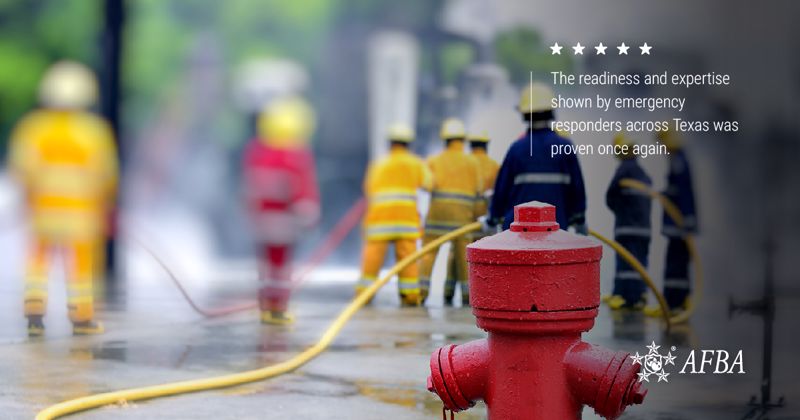
The readiness and expertise shown by emergency responders across Texas was proven once again. These professionals are community heroes and they play absolutely crucial roles in trying times.
As fate would have it, 2020 marked the 100th anniversary of the first certified respirator — as well as a major surge in awareness around this essential piece of protection.
While the COVID-19 pandemic has brought more attention to the value of face coverings in helping reduce disease transmission, various types of personal protective equipment (PPE) have supported health care professionals and emergency responders in the workforce for centuries.
Here is a look at the evolution of these PPE essentials and milestones that have led to advancements that keep the first responder communities safe today.
Early face coverings were intended to offer protection from toxic chemicals
The history of the face mask has its origins in the first century CE, according to the Centers for Disease Control and Prevention (CDC). The Roman philosopher Pliny the Elder relied on animal bladder skins to avoid inhaling toxic minerals like cinnabar that were popular in the decorative arts. Leonardo da Vinci suggested damp cloths for protecting the nose and mouth from similar risks.
It was clear to Bernardino Ramazzini that toxic agents were occupational hazards in need of superior protective equipment to address them. The observations in his 1700 publication, "De Morbis Artificum Diatriba" (Diseases of Workers), made Ramazzini the father of occupational medicine.
Medical discoveries led to improvements in filtration technology
Miasma theory, which incorrectly identified the source of epidemic diseases as odors from rotting organic material, led 17th-century "plague doctors" to wear beak-like masks filled with fragrant herbs. These coverings were intended for protection against the noxious "bad air" that was believed caused disease transmission. Throughout the 18th and 19th centuries, however, researchers made new discoveries about the nature of airborne particles and their impact on respiratory health. A series of particulate respirator designs relied on early filtration systems to keep the nose and mouth safe from smoke and harmful gases.
20th-century crises underscored the need for respiratory protection
As the 20th century unfolded, the population was woefully unprepared for the respiratory risks to come, on the battlefield and on the home front. Aggressive chemical warfare strategies of World War I caused nearly one-third of casualties since troops in combat were not equipped with respirators. As a result, during World War II, servicemembers and civilians were urged to carry and wear gas masks.
In response to high fatality rates among mineworkers and the 1918 influenza pandemic, the newly formed United States Bureau of Mines (USMB) launched the first respirator certification initiative in 1919. The Gibbs respirator — a "closed-circuit self-contained breathing apparatus" — became the first certified model under this program the following year, according to the CDC.
The formation of the Occupational Safety and Health Administration (OSHA) in 1970 transformed earlier respiratory protection recommendations into requirements across industrial settings.
1990s-2010s events led to further PPE research and standardization
It was not until the 1990s that health care respiratory protection garnered significant attention. A tuberculosis outbreak sparked the adoption of air-purifying respiratory equipment as a safer alternative to surgical masks. The 9/11 attacks also drew attention to other first responders' PPE needs, as firefighters suffered from ineffective respiratory protection during rescue and recovery efforts. By the time the Ebola epidemic reached the U.S. in 2014, emergency response professionals were urged to wear the N95 respirator.
Each of these crises has led to significant scientific advancements, tighter regulations and heightened awareness of the importance of PPE. Researchers continue to make new discoveries amid the COVID-19 pandemic, which will undoubtedly help protect first responders from the respiratory risks of the future.
When signing the Buy America executive order in late January, President Biden discussed his administration's push to transition government fleets to electric vehicles (EVs) of American origin. During the press conference, Biden situated this initiative as part of the administration's "Build Back Better" recovery plan and efforts to modernize infrastructure, according to CNBC.
Here's a look at the current state of fleet manufacturing and use, as well as what contractors can expect moving forward.
Government agencies account for 645,000 vehicles
As Biden explained during the press conference, "The federal government also owns an enormous fleet of vehicles, which we're going to replace with clean, electric vehicles made right here in America by American workers, creating millions of jobs."
According to the U.S. General Services Administration's 2019 Federal Fleet Report, the federal government owns and operates about 645,000 vehicles, which consume 375 million gallons of gasoline and diesel fuel per year. Of these vehicles, about 225,000 are operated by the post office and 173,000 are for the military.
New focus on Made-in-America fleets and contract opportunities for small businesses
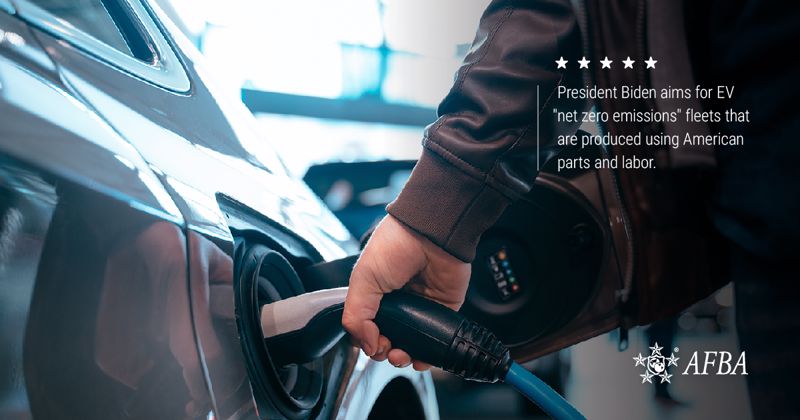
President Biden aims for EV "net zero emissions" fleets that are produced using American parts and labor.
The administration noted that, in recent years, the federal government "spent nearly $300 million on foreign engines and on vehicles, instead of buying American vehicles and engines from American companies, putting Americans to work."
To ensure government spending supports U.S. businesses, the Buy America executive order included appointing a new Director of Made-in-America at the White House Office of Management and Budget. Part of the director's purview will be to support more transparent and participatory procedures for U.S. businesses.
For instance, the procurement process is expected to carefully assess and publicize all waiver requests that favor foreign parts and products. This way, American manufacturers, including small businesses, can have the opportunity to offer up their services.
Under the current component requirements, vehicles manufactured for government use are intended to contain 50% American parts. Biden said new initiatives would close existing loopholes and ensure that the highest-value components — steel, engines, glass and so forth — are manufactured domestically.
An 'avalanche' of new EV offerings and auto jobs expected
This push toward electric fleets comes as part of Biden's clean energy mission to create 1 million new jobs across the automotive industry and "position America to be the global leader in the manufacture of electric vehicles and their input materials and parts."
This announcement is promising for the few EV manufacturers in the U.S. like Tesla, Lordstown and Rivian as well as longstanding companies like General Motors, Nissan and Ford, which are actively pivoting to invest in EV production. But industry experts forecast opportunities for U.S. businesses beyond these big-name companies.
"The current [EV] offerings are pretty slim, but the industry's about to unleash an avalanche of new product, and a lot of it built in North America," Kristin Dziczek, vice president of industry, labor and economics at the Center for Automotive Research, said in an interview with CNBC. "Just about every U.S. plant is going to have a hybrid or electric product."
Nearly 100 years ago in 1926, Carter G. Woodson, a scholar of African American history and the African diaspora, set aside a week in February for the recognition and remembrance of Black history. Fifty years later during the U.S. bicentennial, President Gerald Ford extended this into the federal observance now known as Black History Month.
Ford urged the nation to "seize the opportunity to honor the too-often neglected accomplishments of Black Americans in every area of endeavor throughout our history."
This February, we are honoring the accomplishments of Black servicemembers in the armed forces by sharing a timeline of several notable firsts that contributed to key turning points in military history, from 1770 to the present.
1770: Crispus Attucks, first American casualty in the Revolutionary War
Crispus Attucks, a former enslaved person and dockworker of African and Native American descent, joined a group of Boston patriots in protest against British soldiers. He was fatally shot, becoming the first American to sacrifice his life in defense of the colonies. Tens of thousands of Black soldiers would ultimately serve in the Revolutionary War. Attucks was honored at the time of his death and would later become a symbol for the abolitionist movement.
1863: William Carney, first Black Medal of Honor recipient
William Carney enlisted in the first Black unit recruited for the Union Army — the 54th Massachusetts Infantry Regiment — where he served alongside 40 other Black service members. When the unit's color guard was shot during battle, Carney sustained enemy fire and nearly lost his life in an effort to ensure that the American flag did not touch the ground. His moving and valiant patriotism was acknowledged in 1900 with the Congressional Medal of Honor. As of 2020, 92 remarkable Black servicemembers have since been awarded the Medal of Honor.
1917: Harlem Hellfighters, first all-Black combat unit to serve overseas during WWI
During the First World War, the 369th Infantry regiment — known as the Harlem Hellfighters — became the first Black combat unit to serve overseas. The U.S. did not offer combat roles to African Americans, so the unit was assigned to the French Army. The Hellfighters served in the trenches for 191 days straight without getting captured or ceding any ground, earning them the Croix de Guerre.
1946: Della Raney, first Black woman to serve as an Army major
In 1941, nursing graduate Della Raney became the first Black nurse to serve as a lieutenant in the U.S. Army Nurse Corps. As the Second World War continued, Raney continued as a trailblazer in the Army, marking new firsts with each promotion. She was promoted to captain in 1944 and major in 1946. Maj. Raney continued her Army service until her retirement in 1978.
1941: Tuskegee Airmen, first Black military aviators
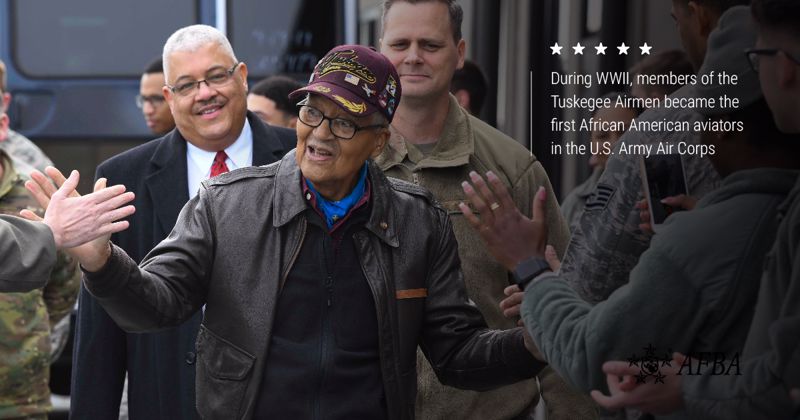
During WWII, nearly 1,000 members of the Tuskegee Airmen trained in the Jim Crow South and became the first African American aviators in the U.S. Army Air Corps, the precursor to the U.S. Air Force. They never lost an escorted plane to enemy forces despite completing hundreds of escort missions and more than 15,000 sorties. The Tuskegee Airmen earned 150 Distinguished Flying Crosses and are being recognized in 2021 with a commemorative quarter inscribed, "They fought two wars."
1989: Colin Powell, first Black Chairman of the Joint Chiefs of Staff
When he was appointed as the Chairman of the Joint Chiefs of Staff by President George H.W. Bush, Colin Powell took on the highest-ranking military position in the Department of Defense and became the first African American and youngest person to do so.
Present day
According to the latest data, roughly 224,000 servicemembers and about 2.1 million military veterans are Black Americans. These brave men and women have continued making a mark on military history thanks to their courageous contributions and service to the nation.