
The U.S. Armed Forces continue to push technological innovation while boosting inclusion for all of its brave servicemembers. One recent example of this is how women jet fighter pilots may have a better-fitting and safer G-force suit available in the near future.
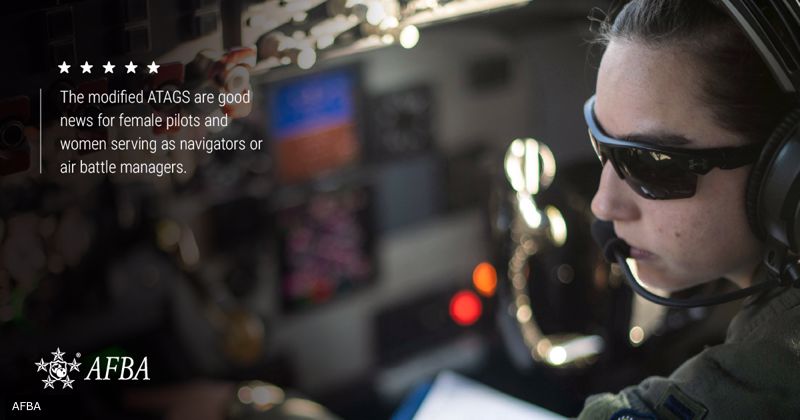
The Air Force announced the testing of a modified version of the Advanced Technology Anti-Gravity Suit (ATAGS) by five female fighter pilots in late October 2020. This is good news for the more than 800 female pilots and approximately 580 women serving as navigators or air battle managers.
Design problems with the current ATAGS
ATAGS, sometimes referred to as G-suits or anti-G suits, are worn by fighter pilots to protect them from the extremely high G-force exerted on their bodies during flights. Without these protections in place, pilots would be susceptible to losing consciousness or suffering hypoxia (a lack of oxygen to tissue cells) during maneuvers in fighter aircrafts.
One such protection includes an inflatable bladder that pushes blood toward the wearer's torso and exerts pressure on their lungs. This prevents a pilot from blacking out from the acceleration that can cause blood to pool in the bottom half of the body.
Up until now, pilots used a version of the ATAGS that was designed in 2001 and used body specs taken from pilots in the 1960s. This means the suits were designed primarily for male bodies. Further, due to the nature of the suits' protections, they are not easy to adjust for a better fit, let alone adjust to a completely different body type. This means shorter pilots with smaller frames don't receive the full protections from the current design of the suits, such as proper performance of the waist bladder.
How the suits were redesigned
The new ATAGS design stems from the joint effort between the Air Force Life Cycle Management Center (AFLCMC) and AFWERX, a U.S. Air Force program that fosters a culture of innovation within the service, according to a U.S. Air Force news release.
The redesign addressed two key areas. The first modification includes wider lacing panels at the waist, thigh and calf. This will allow for more adjustments to accommodate a greater variety of body proportions. The second big change is that the suit now comes with a darted waist. This tailored waist design does not interfere with the inflatable waist bladder but allows for a better fit.
"In the past, some pilots with a shorter torso have had issues with ATAGS that were too large riding up and causing bruising on the rib cages, while pilots who are hard-to-fit may have had one size that fits through the legs, but need a smaller size in the waist," said Charles Cruze, an AFLCMC Human Systems Division engineer. "Now, the waist can be darted up to 3.75 inches, allowing for a more custom and accurate fit, preventing both of those issues."
Results of the new design's tests
After testing and evaluating the new suits with five pilots and one aircrew member, the results came back with overwhelming praise for the redesign.
Capt. Brittany Trimble, an F-16 Fighting Falcon instructor pilot, relayed her positive experience testing the modified ATAGS in the announcement. "I definitely noticed improvement with the new updates and the darted waist in particular," said Trimble.
Following this positive review, the 46th Test Squadron will next draft a test report on its findings. While the modified flight suit is not yet approved, the current acquisition strategy could put the updated ATAGS into use within 12 to 24 months.
This is a great step forward for the Air Force, and just one of many new improvements for ensuring the safety of its female service members.
Small businesses are the backbone of the American economy, and veteran-owned and -operated businesses make up a sizable chunk of these companies. There are 2.52 million businesses in the U.S. that are majority-owned by veterans, according to the Small Business Administration (SBA). Of these, 442,485 veteran-owned businesses have employees and 2.08 million are run by self-employed veterans without other staff.
In recognition of the service and sacrifices these veterans made for the country, the government offers their companies a variety of benefits. Small businesses owned and operated by veterans have many options for accessing support through agencies like the U.S. Department of Veterans Affair (VA) and the SBA.
Does the company qualify as a Veteran-Owned Small Business (VOSB)?
To receive VOSB benefits, a company must meet certain requirements as defined by the VA. Among these requirements, the veteran must own 51% or more of the small business and hold the highest officer position with full control over its daily management, decision-making and strategic policy. In addition, if the veteran isn't the highest-paid person in the company, they must provide a written statement explaining why a lower salary helps the company.
Service-disabled veteran-owned small businesses (SDVOSB) also qualify for benefits. The company must follow the same criteria as a VOSB, with the veteran having a VA-issued disability letter confirming a service-connected disability rating between 0 and 100%, or a disability determination from the Department of Defense (DOD).
VA Benefits
One of the main incentives for VOSBs and SDVOSBs is the ability to do business with the VA. The VA sets aside a sizable portion of its contracts for these types of businesses. Federal law provides unique authority for the VA to offer VOSBs and SDVOSBs set-aside and sole-source contracts. This means the only businesses that can bid on these contracts are those owned by veterans who qualify for the program.
The VA provides priority access to federal and state government contracts as well as better access to capital and tax relief. The administration also provides support in finding VA procurement, contract awards and acquisition awards. In addition, the VA offers resources, education and training to help veteran owners learn more about doing business with the agency.
SBA Benefits
The SBA also offers a wide range of benefits, opportunities and services for VOSBs and SDVOSBs. The administration set up the Office of Veterans Business Development (OVBC), which is exclusively dedicated to promoting veteran entrepreneurship. The OVBC has several initiatives to accomplish this goal.
Much like the VA, the SBA also gives procuring agencies the authority to set aside contracts exclusively for competition amongst SDVOSBs.
The Boots to Business and Boots to Business Reboot programs offer education, training and guidance for applicable business ownership fundamentals. The Women Veteran Entrepreneurship Training Program (WVETP) provides training for women who are veterans, service members and spouses of service members and veterans. Both of these programs are useful for those owners just getting started, and for established owners looking to gain new business insights.
The Veteran Federal Procurement Entrepreneurship Training Program (VFPETP) is a veteran-focused program that specifically addresses federal procurement. With government contracting already providing great business avenues for veterans, becoming trained and certified to go this route can help grow a VOSB.
The SBA also offers the Veterans Advantage 7(a) loan, one of the administration's most popular programs. This type of business loan comes with reduced fees for veterans who qualify.
These are just some of the many benefits and incentives offered for veteran-owned small businesses. Many other agencies and departments also make VOSBs and SDVOSBs a priority for contracting and acquisitions.
Happy Thanksgiving! Check out our tips for enjoying the holiday with your military family.
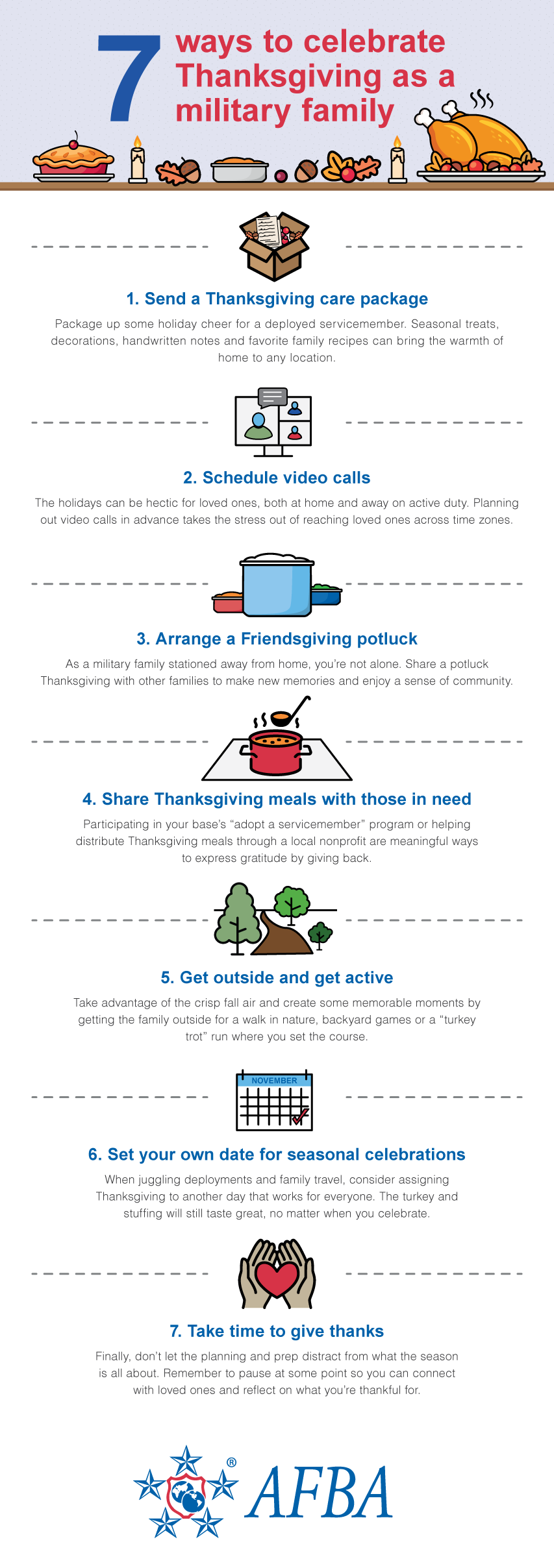 7 Ways to Celebrate Thanksgiving as a Military Family
There's no denying this year has been one of uncertainty and slowdowns across countless industries. Although opportunities have dried up in some areas, other sectors remain stable and profitable. One such sector is federal contracting. Many enterprises whose commercial markets have suffered this year have leaned more heavily into their contract work for the government.
After taking stock of what the contracting market offers and which businesses are positioned for success, consider the four straightforward steps you'll need to follow to successfully enter this profitable and rewarding market.
The current state of federal contracting
The 2020 Bloomberg Government report revealed that contractor spending is up from last year, with a whopping $597 billion in federal government spending in fiscal 2019, a 6% increase from 2018's $561 billion. This follows four consecutive years of growth since the $442 billion allocated in fiscal 2015, and sets a record high for spending.
Federal contracting provides a viable route for growing your business no matter the size, as the government leans on many different types of service providers beyond leading defense contractors. In fact, the government aims to award at least 23% of federal contracts to small businesses. This includes businesses in:
- Research and development.
- Sustainment supplies and equipment.
- Electronic and communication equipment.
- Clothing and textiles.
- Supplies and equipment.
- Office management.
- Facilities and construction.
- Information technology (IT).
- And many more.
If your business could fill one of these needs, here are the four steps to take to become a federal contractor:
1. Research
The government has strict guidelines, regulations and laws that apply to federal contracts and the businesses that receive them. These vary by industry and sector. Take some time to research and learn about the responsibilities of federal contractors provided by the Small Business Administration (SBA). Any errors or missteps can create costly legal problems.
It's also a good idea to know the six-digit North American Industry Classification System (NAICS) code that applies to your business. This is necessary to compete for federal contracts.
2. Register
Obtaining a federal contract requires registration in a few areas. Much like knowing your industry's NAICS code, you'll also need to register for a Data Universal Numbering System (DUNS) code to apply for federal contracts.
Once you're ready to take the next step, you'll have to register and create an account on the government's System for Award Management (SAM). This is the official site for registering your business with the government. It's also where you'll upload and store important information for your business, such as certifications and licenses.
3. Plan
It's important that you create an internal business plan that directly addresses your external contract proposal. This plan should include your marketing plan for the contract, staffing and employment details, certifications, specialization, experience and other pertinent information that relates to your industry.
You will also need to calculate and include a comprehensive cost analysis and profit-margin outline for the services or products the government will be contracting from your business.
4. Bid
After conducting all the prerequisite research, registration and planning, you can move into the bidding phase. The government's SAM site offers a search option where you can look up procurement notices and bidding opportunities from federal contracting offices. You can search by keyword, soliticiation ID or a particular agency's name.
Once you find a solicitation that fits your business, carefully review all the contracting documentation. If you have any questions, be sure to reach out and ask so that you're fully aware of what the opportunity requires and entails.
Based on this information, follow the solicitation instructions for filling out and submitting all the requested forms, and for providing all the technical, past performance and pricing information in the appropriate manner.
Be prepared to negotiate with the government for the most optimal offer. In many instances, you'll be competing against other industry peers for these contracts, so you'll need to ensure your prices and offerings are the best possible that you can provide.

With this year's tumultuous employment landscape and renewed emphasis on keeping communities strong, many people are looking for ways to step up and help out or are considering a new career. A promising opportunity to accomplish this could be employment as a first responder.
Recent data from the U.S. Bureau of Labor Statistics (BLS) shows that the number of first responder jobs is expected to grow significantly over the next decade. Collectively, analysts are forecasting roughly 77,900 new career opportunities for this sector, which includes firefighters, police officers, emergency medical technicians (EMTs) and paramedics.
Although local municipal budgets fluctuate with the times — which can impact the bottom line for these sectors — a career as a first responder remains a stable and in-demand job option. There will always be a need for those willing to bravely face emergencies and disasters.
Let's break down how the individual sectors are likely to fare by examining the BLS data with a bit more granularity.
Job outlook for EMTs and paramedics
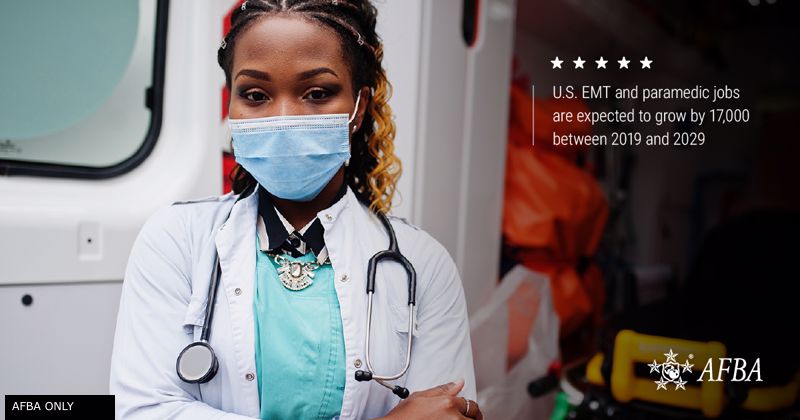
Analysts forecast the number of EMT and paramedic jobs will grow by 17,000 across the U.S. between 2019 and 2029.
With 265,200 jobs as of 2019, this represents a 6% increase over the next decade. Although this might not seem like a big increase, this is faster than the 4% average growth rate across all occupations.
Emergencies like car crashes and natural disasters that require the skills of EMTs and paramedics aren't going to disappear any time soon. Simply put, these jobs are nearly indispensable.
To become an EMT or paramedic requires completion of a post-secondary educational program after high school. While this generally refers to college or university programs, it also covers trade schools and community colleges. Aspiring EMTs and paramedics must then obtain a state license, with the requirements varying from state to state.
Job outlook for firefighters
For firefighters, over the next decade the BLS expects that 20,300 jobs will be added to the current total, which was 335,500 in 2019. Like EMTs and paramedics, this would also account for a jump of 6%, which is faster than the national average.
Those interested in pursuing a career as a firefighter should understand how to go about doing so. While qualifications may vary from one jurisdiction to another, typically individuals need a high school diploma and emergency medical training. Once those requirements are met, the next step is to attend a fire academy to receive proper training and then successfully pass a written and physical test. In many locations, firefighters must also have EMT certification.
Job outlook for police officers
BLS data indicates that police and detective careers are also expected to increase substantially. The next decade should see 40,600 new police and detective jobs to add onto the 813,500 jobs in existence as of 2019. This would represent growth of 5%, which is slightly faster than average.
Continued need for public safety will drive this positive employment change in the coming decade; however, demand will vary by location.
To become a police officer, applicants typically need a high school diploma, although some jurisdictions require a college degree. Applicants must graduate from the local police academy and have on-the-job training before entering the police force.
As we can see, the occupational outlook for first responders remains positive and full of opportunities. Whether you're fresh out of high school or looking for a mid-career change, there will be significant demand for EMTs and paramedics, firefighters and police officers in the coming decade.

Day of the Deployed is a relatively recent military observance, but it is no less meaningful to the men and women who serve on active duty, or the community members that honor their efforts on Oct. 26 each year.
Read on to learn about what the Day of the Deployed observance recognizes, how it came to be and how to support military servicemembers and their families at this time and throughout the year.
Origins of Day of the Deployed
The proposal to create a day recognizing the sacrifices and valor of servicemembers on deployment came from Shelle Michaels Aberle of Solider’s Angels, a nonprofit organization offering support to members of the military community.
In 2006, Aberle pitched the idea to then-governer of North Dakota John Hoeven, after being inspired by her cousin, LTC David Hosna, who was serving in Iraq at the time. North Dakota chose to recognize Day of the Deployed on Oct. 26 — Hosna’s birthday — and many other states quickly followed suit with their own state observances.
Several years later, when Hoeven became a U.S. Senator, he put forth a resolution to enact a nationwide Day of the Deployed. In 2011, this measure passed unanimously in the Senate.
Paying tribute to 200,000 deployed servicemembers
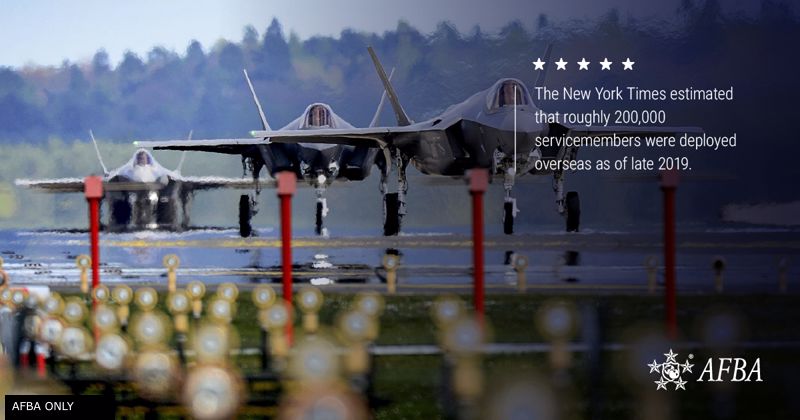
According to the Department of Defense, the U.S. armed forces have a presence across all seven continents, with some 4,800 defense sites across 160 countries. The New York Times estimated that roughly 200,000 servicemembers were deployed overseas as of late 2019.
When the national observance was adopted, Aberle described the state and federal recognition as “an honorable way to extend appreciation to the deployed service members and their families. Day of the Deployed is recognition for their hard work, dedication and commitment to the United States of America. This day is all about them.”
 “The appearance of U.S. Department of Defense (DoD) visual information does not imply or constitute DoD endorsement.”
“Our U.S. service men and women currently deployed, along with their loved ones, make untold sacrifices as they serve our nation,” Hoeven remarked on the occasion. “A national Day of the Deployed pays tribute to their commitment to our country and their work to protect our freedoms. We want to ensure that our military members and their loved ones know of our appreciation and support before, during and after their service.”
Ways to raise awareness and offer support
Around the U.S. and across the globe, members and supporters of the military community can find countless morale-boosting ways to mark the occasion. Here are just a few ideas for Day of the Deployed:
- Send handwritten notes or care packages to deployed servicemembers in your life or through a nonprofit organization.
- Make a charitable donation to an organization that supports members of the armed services.
- Bring awareness to the observance and the experiences of deployed members of the armed focus and their families using the hashtag #DayoftheDeployed on social media.
- Display a yellow ribbon in support of the troops serving away from home.
- Spend time socializing with a military family — or offer support in the form of babysitting, running errands or delivering a homemade meal.
You can support a deployed servicemember in your life, or connect with a nonprofit organization to reach out to other military members. And don’t forget that your efforts need not be limited to the official Day of the Deployed.
“Even a small act of gratitude goes a long way,” Nicole Motsek of the EOD Warrior Foundation noted in an interview with U.S. Veterans Magazine. “Any time of the year is a great time to show gratitude for the deployed, but this day serves as a great reminder.”
An extensive project of digitizing Vietnam deck logs reached completion in late September 2020. The effort was an interagency project between the Department of Veterans Affairs (VA) and the National Archives and Records Administration (NARA). Improved access to the data held within these records should speed up the processing of Blue Water Navy (BWN) veterans’ disability claims.
Digitized deck logs to quickly substantiate disability claims
According to Archivist of the United States David S. Ferriero, “Through this scanning project, VA contractors digitized declassified Navy and Coast Guard deck logs from 1956-1978 in NARA’s holdings.”
Scanned records included those of the hospital ship USS Sanctuary, which Ferriero served aboard during his time in the Navy. “As a veteran from this era, I recognize the unprecedented value this provides to veterans making these logs easily accessible online,” he said.
These deck logs — also called captain’s logs and ship logs — contain manually recorded details outlining the day-to-day activities of a given vessel or Navy unit. This information is regularly used when processing VA disability benefits claims as it provides evidence of exposure to chemicals used for tactical purposes during the conflict in Vietnam.
As established by the 2019 Blue Water Navy Veterans Act, Navy service members who served less than 12 nautical miles out from Vietnamese and Cambodian waters are assumed to have been exposed to Agent Orange. This carcinogenic herbicide is connected with more than a dozen known illnesses and conditions, including Parkinson’s disease, diabetes, ischemic heart disease and seven types of cancers.
 “The appearance of U.S. Department of Defense (DoD) visual information does not imply or constitute DoD endorsement.”
Prior to the BWN Veterans Act, service members stationed offshore did not receive the same presumptive disability benefits as their peers who served inland. Now, BWN veterans can no longer be denied these benefits, which can amount to several thousand dollars per month, depending on the individual’s specific condition and health care needs. The completion of this yearlong digitization project means it will be easier to access proof of a veteran’s service and award the necessary disability coverage.
Access to BWN veteran benefits no longer a burden
According to VA Secretary Robert Wilkie, thousands of claims have already been processed this year, using deck log data as it became available. Military Times reported that approximately $641 million has already been issued to 22,524 affected Vietnam veterans.
“The team at NARA recognizes the importance of this effort making it easier for BWN Veterans to receive the benefits they’ve earned without burdening them with paperwork,” Wilkie said in the press announcement.
The total VA payout amount is expected to reach around $5.5 billion over a 10-year timeframe, according to the American Legion. This substantial sum was apparently a topic of concern while the proposal was under consideration.
However, as Ralph Bozella, chairman of The American Legion’s National Veteran Affairs and Rehabilitation Commission, noted: “The cost of caring for veterans after a wartime experience should never be a deterrent to what a veteran earns in benefits.”
It is predicted that some 90,000 BWN veterans may be eligible for these delayed benefits. Veterans, surviving spouses and dependents are urged to file claims as soon as they can. The VA recommends contacting approved Veterans Service Organizations for support in filing a claim.
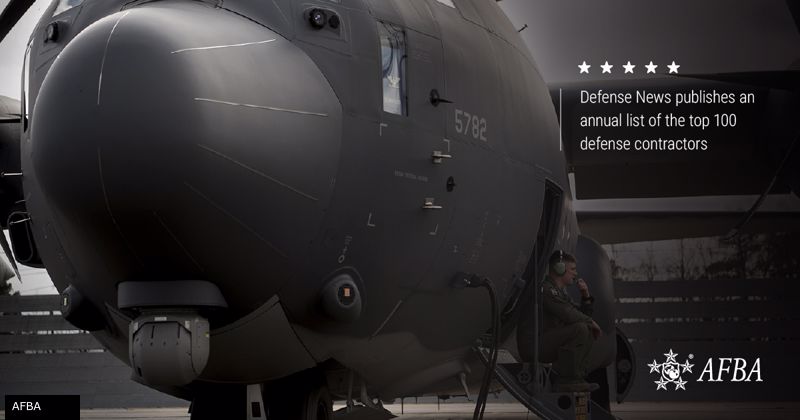
Defense News publishes an annual list of the top 100 defense contractors. But the 2020 Defense News Top 100 does more than just identify leading players in the industry. With some careful analysis, it can offer a snapshot of the current state of defense contracting and hints at what the future might hold. Let’s take a look at which companies top the list, and what trends and takeaways federal contracting companies of all sizes should be aware of.
1. Stagnation among the top 5 spots
A glance at the six leading names in the 2020 Defense News Top 100 would look remarkably similar to past years’ reports. Lockheed Martin has held the No. 1 spot since 2003 — and the company has been the top U.S. contractor by sales for 40 years running.
The same four enterprises have similarly occupied the second to fifth places for several years as well. This year, they rank in order as Boeing, General Dynamics, Northrop Grumman and Raytheon. Typically in 1 of the top 6 spots, BAE systems has fallen to No. 7 this year.
Most major changes in ranking come as a result of mergers, acquisitions and divestitures. For instance, Raytheon Technologies Corporation — a result of the April 2020 merger between Raytheon Company and United Technologies Corporation — was listed for the first time as a signal entity in this year’s list.
 “The appearance of U.S. Department of Defense (DoD) visual information does not imply or constitute DoD endorsement.”
2. Growing influence of Chinese enterprises
Eight Chinese companies have taken spots in the 2020 Defense News Top 100 — and the outlet predicts more Chinese contractors will lead the global defense market in the next several years.
“Because these enterprises are state-owned and often part of large, diversified enterprises, the data for annual sales is difficult to obtain,” Defense News author Byron Callan noted in a 2019 assessment, explaining the omission of Chinese companies in the past.
However, the relatively recent inclusion of Chinese companies paints a different picture compared to previous reports. And they aren’t trailing behind U.S. and European entities; they’re clustered at the top of the list. All eight contractors occupy places in the top 24, meaning that China’s state-owned enterprises make up one-third of the top quarter of the list.
Also, it is important to note that the data reflects the activities of an active, international market. Companies are listed by country of origin, but it is not specified what percentage of sales came from their home country, the U.S. or another foreign nation.
3. Stability in spite of the coronavirus pandemic
According to Defense News authors Doug Berenson and Chris Higgins, “Although the defense sector has faced pandemic-related business disruptions, it remains a safe haven, with most defense-oriented firms reporting only modest impact on revenues and profits.”
Most companies that make the list each year follow one of three business models. They either primarily serve the government and defense sectors, serve both defense and commercial clients or operate as industrial conglomerates serving markets far and wide. Enterprises whose commercial markets have been severely impacted by COVID-19 — such as aviation leaders like Boeing — have leaned heavily on the defense market over the past year, according to Berenson and Higgins.
4. Some industry leaders may yet be missing
The ranking methodology is largely dependent on sales data provided by the companies in question. As a result, several influential companies are missing from the 2020 list.
Examples Callan noted in his 2020 Defense News Top 100 analysis include several major players in the U.S. such as SpaceX and BWX Technologies, as well as large defense contractors based in Japan, Spain, Russia, Poland, Australia and India.
Despite the fact that these enterprises remain off the list, at least for the time being, industry analysts still emphasize the importance of keeping an eye on their significant — and, in the case of SpaceX, highly disruptive — contributions to defense contracting.
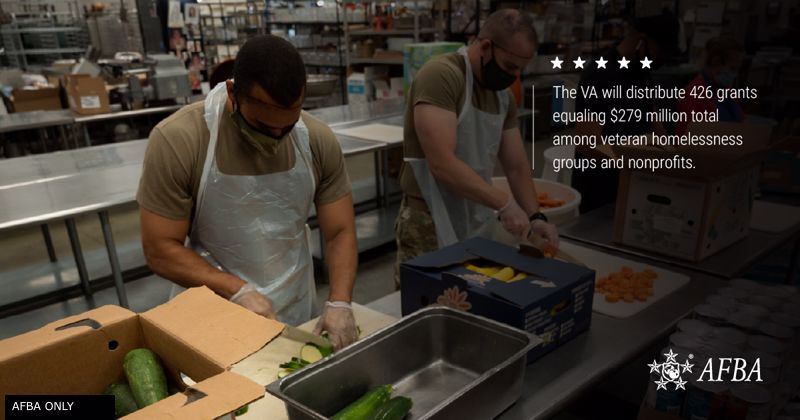
The U.S. Department of Veterans Affairs (VA) recently announced it will award a significant number of grants to community organizations that provide assistance and aid to veterans experiencing homelessness. The VA will distribute 426 grants equaling $279 million total among various groups and nonprofits.
Expansion of the VA's Grant and Per Diem program
This initiative is part of ongoing efforts, including the Grant and Per Diem (GPD) program, to prevent veteran homelessness and help veterans exit homelessness.
According to the VA, the GPD program's mission is "to promote the development and provision of supportive housing and/or supportive services with the goal of helping homeless veterans achieve residential stability, increase their skill levels and/or income, and obtain greater self-determination."
Service centers and supportive housing programs are eligible for GPD funding. Grants are issued to help organizations acquire, build or renovate facilities that will be used for transitional housing. Additionally, per diem subsidies are awarded to help cover the housing and operational costs for centers that provide supportive housing and other services to veterans experiencing homelessness. Grant recipients are typically first in line to receive per diem funding, although other groups can apply.
"The GPD program is one component of VA's multifaceted continuum of services and resources to help veterans exit homelessness," VA Secretary Robert Wilkie said in the announcement. "No veteran should ever have to worry whether they will have stable housing, and these grants put us one step closer to ensuring all veterans are living in a safe and supportive environment."
Grant types designed to support veterans' various needs
Beginning Oct. 1, 2020, the VA will start awarding three types of grants to eligible community organizations. The majority of the newly announced funds — roughly $221 million — will be directed toward "per diem only grants," which will subsidize 12,138 beds and 18 service centers to cover the costs of lodging and care.
An additional $2.4 million will be provided through "special needs grants" aimed at supporting veterans experiencing homelessness who have additional care needs related to chronic mental illnesses, childcare or women's health.
Finally, $55.3 million worth of "transition in place grants" will be awarded to community agencies that help veterans exit homelessness and achieve housing stability and independence. According to the VA, veterans participating in transitional housing programs benefit from support services and housing with the goal of taking ownership of their housing agreements.
Veteran homelessness rates in decline
As of January 2019, the U.S. Department of Housing and Urban Development (HUD) determined that 37,085 veterans were living in unsheltered locations, emergency shelters or transitional housing programs. At that time, states with the largest population of veterans experiencing homelessness were California, Florida and Texas.
However, the number of homeless veterans has dropped by 43.3% since 2011, as a result of interventions like the GPD program. Additionally, as of September 2019, three states (Virginia, Delaware and Connecticut) and 78 communities around the U.S. had eliminated veteran homelessness.
"Our nation's veterans have sacrificed so much for our country and now it's our duty to make certain they have a home to call their own," HUD Secretary Ben Carson noted in a 2019 news release. "We've made great progress in our efforts to end veteran homelessness, but we still have a lot of work to do to ensure our heroes have access to affordable housing."
Since 2017, California has experienced a succession of wildfires that caused historic levels of destruction. At the start of this year, U.S. firefighters were helping battle the Australian bushfires for the first time in a decade. Presently, teams are diligently working to suppress wildfires raging up and down the West Coast, from Washington and Oregon to California.
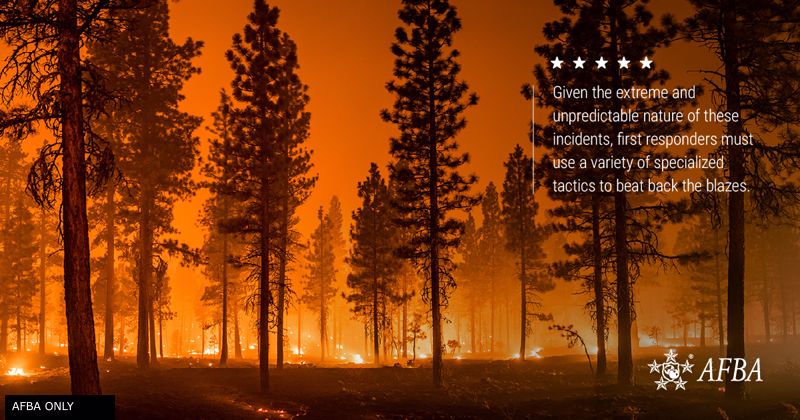
Given the extreme and unpredictable nature of these incidents, first responders must use a variety of specialized tactics to beat back the blazes. Understanding what happens on the fireground and how skilled firefighters manage and suppress these outbreaks year after year is an important way to recognize their efforts and honor their sacrifices.
Establishing control lines to manage the spread of wildfires
Firefighters strategically create and use boundaries to keep wildfires in containment. These can be natural boundaries, such as rivers, or engineered ones where teams manipulate the landscape to remove any potential fire fuel sources and limit its spread.
Creating a true fire line involves stripping the land down to the soil, but teams often create preliminary scratch lines when they need to work quickly. They'll also establish temporary wet lines by applying water or fire-retarding chemicals to the ground. Explosives are also used to quickly taking down flammable trees and brush.
Suppressing flames and embers to keep wildfires in check
When faced with a sizeable wildfire, firefighting teams have to make tactical decisions about how, when and where they will work to extinguish the flames. They will work on the fireground and conduct aerial attacks to keep the fire under control.
Often, the first step will be hotspotting. This involves assessing the overall behavior of the fire and suppressing specific points that pose the highest threat of spreading quickly or causing damage. Teams will also knock down or reduce the heat and flames in particularly active parts of the fire's outer edge using water, soil and fire-retarding chemicals.
Once areas have been contained, firefighters will still work diligently to ensure that the control line remains intact. A mop-up is when embers and burning materials near the control line are removed or extinguished. Cold trailing is a technique where firefighters inspect the "dead" fire edge for any signs of heat. They'll often feel around with their hands to locate and dig out any embers or hot spots.
Using strategic, controlled fires to support containment efforts
It might be surprising to learn that firefighters actually light small fires as a way to manage larger blazes. For instance, teams might conduct a burn out within a new control line to use up the available fuel and bolster the effectiveness of the created boundary. Similarly, firefighters will create backfires downwind of a major fire to change its direction. These advanced techniques require a great deal of experience and careful attention the wildfire's movements.
Initiating prescribed fires to promote healthy ecosystems and reduce risk
Wildfires are a force of nature, and they play a role in keeping ecosystems healthy. A significant amount of scientific research goes into understanding that role and how it can be accomplished in a contained manner that doesn't endanger human lives. The U.S. Forest Services explains that strategic prescribed fires throughout the year help maintain the right balance and reduce the risk of unwanted, uncontrolled outbreaks.
After a major wildfire is successfully extinguished, the work continues with Burned Area Emergency Response efforts. Teams of soil scientists, vegetation specialists, hydrologists, engineers and other experts will evaluate a scorched area. Their assessment will help determine how to stabilize and rehabilitate the environment so it remains safe for the plants, animals and people that inhabit the region.