
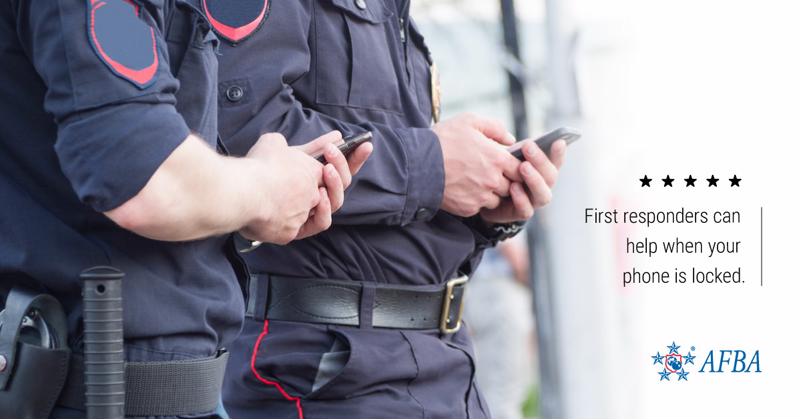
Our smartphones are on us at nearly all times, and they can become crucial devices if an accident or medical emergency strikes. However, if you're not able to call 911 yourself, a first responder can use your phone even if it's in lock mode to contact your family or physician, as well as review any necessary emergency information.
But first responders can only help in such a way if you have that information pre-programmed into your phone. Smartphone technology makes doing this easy. Taking just a little time to add or update your information may make all the difference if you react to a medication, are involved in an accident or otherwise need help and you're indisposed. Just be aware that depending on what phone you have, the process for inputting your information may be different.
iPhone
The first thing you should do with your iPhone is set up your Medical ID. Your Medical ID will display on the lock screen if first responders find your phone and don't have the passcode. You can use this function to bring attention to any allergies, prescriptions or conditions, as well as who to contact. Setting up your Medical ID is a 5-step process:
- Open the Health app, clicking the Medical ID tab.
- Tap Edit (and If asked, tap Edit Medical ID).
- Tap Show When Locked to make your Medical ID available while the phone is locked.
- Enter personal information like your birth date, height, and blood type.
- Tap Done.
One of the most helpful features iPhones sport is Emergency SOS. For iPhones 8 and later, users can press and hold on both the side button and either volume button until it brings up the Emergency SOS slider. Your phone will automatically call emergency services if you drag the slider, or after a 10-second countdown if you continue to hold the buttons. Whenever you make a call with Emergency SOS, your emergency contacts will be notified of the action.
Android
If you have a phone that runs the Android operating system, the process of adding information is generally as simple. Phone owners can enter the same type of personal, contact and medication information to be displayed on the lock screen. To do so for Google's Pixel phone, for example, you would:
- Open the phone's Settings app.
- Tap About phone and then tap Emergency information.
- Enter the info you want to share.
- For medical info, tap Edit information.
- For emergency contacts, tap Add contact.
You can also add a short message to the lock screen, which may be able to direct first responders on who to call first, or provide them with key insight about yourself.
Samsung
While Samsung phones do use Android, the steps to configuring your emergency information are a bit different. Users go through the Contacts app: Update your own contact profile first, as there's a place for entering medical information. This should be at the bottom of the profile page, just tap Save when you're done. Navigate back to the main contacts page and select Group, then find one labeled "ICE – Emergency Contacts." ICE stands for in case of emergency, so add people who should be contacted if first responders use your phone.
Everything else
In case you a phone not represented above, it might take a little tinkering with your phone's settings, or creative use of apps. While your phone may be different than the above, looking for the same words and prompts might direct you to a solution. Individual contact cards, for instance, may have a button to select them as an emergency contact. If you want to make essential medical information front and center, but don't know how to do so through the phone's settings, use a note-taking app. Screenshot whatever notes you take on blood type, medication, allergies or conditions, and then set that as your phone's background and lock screen.
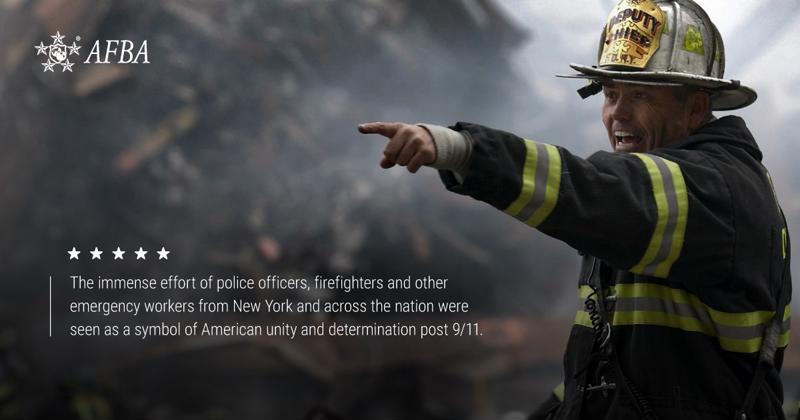
First responders worked tirelessly in the immediate aftermath of the 9/11 terror attacks, as well as for months after. The immense effort of police officers, firefighters and other emergency workers from New York and across the nation was often seen as a symbol of American unity and determination. Yet those same first responders who risked everything to help were themselves at risk of losing government support in meeting health care bills stemming from their relief work.
The September 11th Victim Compensation Fund (VCF) was set to expire in 2020, but has now been extended permanently thanks to a long, emotional campaign by first responders, families and media.
VCF reopened in 2011 to help pay for medical bills
The VCF was initially active between 2001 to 2003, processing claims of injury and death related to the 9/11 attacks. By mid-June 2004, the fund had closed, after about $38 billion in aid had been paid out, according to CNN. However, it wasn't until the next decade when action was taken to reopen the fund in light of the emergence of chronic conditions and terminal illness among first responders. Working in the rubble would have a significant impact on the health of first responders, who now have a higher risk of heart disease, the New York Post says. Cardiovascular disease and cancer would go on to claim the lives of many 9/11 emergency workers, while others would need to pay bills for their care.
In 2011, President Barack Obama signed legislation reactivating the VCF, known as the James Zadroga 9/11 Health and Compensation Act, expanding it to include health care coverage and compensation to first responders and individuals who have developed 9/11-related health problems.
Legislation avoided the fund expiring
According to ABC, since being reopened in 2011, the Congressional Budget Office estimated the fund had paid awards to around 22,400 people at a value of about $5.2 billion by 2019, while claims related to cancer had risen to 45% of all awards. In February of 2019, a warning bell was sounded: The special master in charge of managing the fund said payments would have to be reduced by half, and some by 70 percent because $5 billion of the $7.4 billion allocated for 2015-2020 had been spent, The New York Times reported.
Without further action from Washington, D.C. the fund would expire, and thousands of people would lose key government care. This triggered a reaction across the country, from first responders and their families, to civic organizations and media personalities. Jon Stewart, former host of "The Daily Show," would become a much-heard voice of the campaign to extend the fund, regularly demonstrating with first responders, as well as making an emotional speech to Congress.
Their appeal was ultimately successful, as the Senate voted 97-2 to extend the fund for the next 73 years. More than $10 billion has been set aside for awards during the first decade after reauthorization. President Donald Trump signed the bill surrounded by first responders.
"In the wake of the Sept. 11 attacks, courageous Americans raced into smoke, fire and debris in lower Manhattan, the Pentagon and a field in Shanksville, Pennsylvania. The whole world witnessed the might and resilience of our nation in the extraordinary men and women of the New York Fire Department and the New York Police Department, selfless patriots of unmatched character and devotion," Trump, who lived in Manhattan during the attacks, said. "I grew up with them so I can tell you that's absolutely true."
Now, Stewart and others are joining to help educate first responders and others about their eligibility to submit a claim.

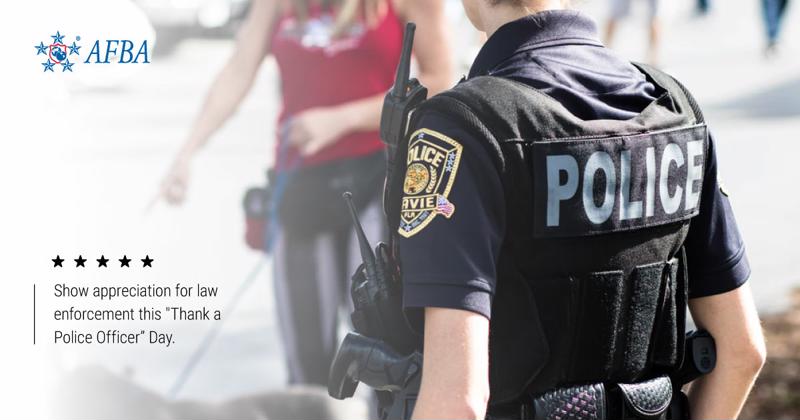
Police officers put their lives on the line every day to protect communities and keep the peace. Yet, it can be a bit of a thankless job, which is why the third Saturday of September is now recognized nationally as "Thank a Police Officer Day." Showing appreciation for law enforcement can go a long way in boosting the morale of officers. Residents, businesses and civic organizations can all participate on "Thank a Police Officer Day," as there are many creative ways people across the country are getting involved. To start, here's some more information about the date and how it is observed.
First event held in 2012
"Thank a Police Officer Day," sometimes also called "National Tell a Police Officer 'Thank You' Day," was begun in 2012 by the Whole Truth Project, an organization that describes itself as "serving and protecting those who serve and protect our communities." The Whole Truth Project itself was begun by Andrew Hale, a Chicago-based attorney who represented law enforcement in several different high-profile cases. Hale, in announcing the inaugural "Thank a Police Officer Day" in 2012, said he was inspired to create the event to honor and recognize the service of police officers.
"We want people to show their appreciation for the job that the brave men and women of law enforcement do every day," Hale said. "Having represented police officers for several years, I know the difficult job these men and women undertake every day and I think we often take our police officers for granted. We must show support and appreciation for those that serve and protect us."
Hale's other motivation in starting the "Thank a Police Officer Day" campaign was the negative headlines that had come to dominate the news and headlines and public perception of police.
"Unfortunately the bad tends to stand out and make more interesting news stories," Hale said to HuffingtonPost. "Mistakes and problems tend to be more dramatic, attention-getting, adrenalin-fueling — far more than the calm, peaceful good deeds police officers do every day."
Many creative ways to say thanks
While "Thank a Police Officer Day" is a relatively recent observation, support for the cause has been seen across the country in many different ways. Some of those examples include Sylacauga, Alabama, where local residents, businesses, houses of worship and civic organizations were encouraged to affix a blue ribbon to their doors to "Paint the Town Blue." In Fairfax County, Virginia, officers discovered small rocks painted with messages of affirmation and appreciation in blue paint.
"You don't know what someone's going through and what sort of circumstances they're dealing with or facing and what kind of day they're having," Julie Trace, the rock painter, told the local CBS affiliate. "It could just help them in the moment to put a smile on their face or if they're facing something really big in their life."
As demonstrated, there are several opportunities to get creative with expressing your thanks, but some ideas for "Thank a Police Officer Day" on Sept. 21 include:
- Paying it forward if you see a police officer in line for coffee, or donating a cup on the house if you own a business.
- Attending, hosting or organizing an event.
- Wearing blue or decorating your house with blue lights.
- Sending a thank-you card to your local police department.
- Making goodie bags and dropping them off at the nearest station.
Police officers regularly put themselves in danger to ensure the safety of the communities they serve; a small "thank you" can go a long way on "Thank a Police Office Day."
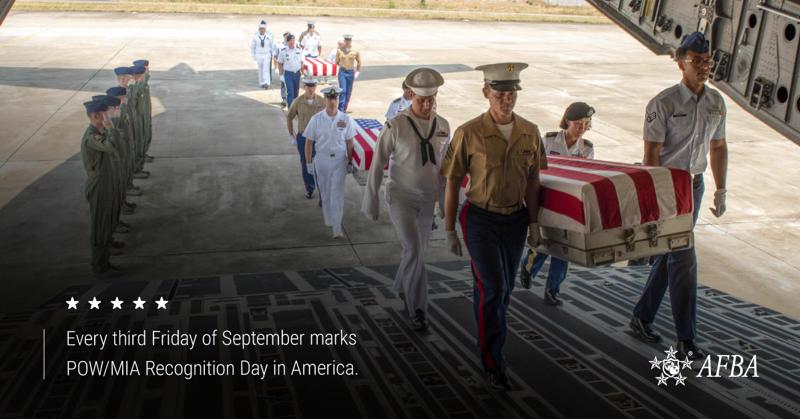
The words "You are not forgotten" are written on the familiar black-and-white POW/MIA flags flown across the country. While former and current prisoners of war and those missing in action are remembered year-round, every third Friday of September marks POW/MIA Recognition Day in America. That date in 2019 will be Sept. 20, a Friday to honor the sacrifice and memory of all POW/MIA servicemembers, as well as their families. Here's more information about the day of remembrance, POW/MIAs and what you can do.
Established in 1979
POW/MIA Recognition Day is not tied to any one armed conflict, but was began after a push by veterans of the Vietnam War. In 1979, Congress passed resolutions making the observance official while President Jimmy Carter issued a proclamation. Subsequent presidents have done the same to commemorate the date and its importance. During the first recognition day, a ceremony was held at the National Cathedral in the District of Columbia, whole other smaller services were held across U.S. military installations and communities. The day was initially held in July, before being moved to the third Friday of September in 1986.
As noted by the Defense POW/MIA Accounting Agency, Americans prisoners of war and unaccounted for date back to the American Revolution, but it took more than 200 years for the country to recognize them. Appreciating the importance of POW/MIA Recognition Day means understanding the sacrifice of those fighting to protect the U.S.. According to the accounting agency,
- More than 82,000 Americans remain missing from WWII (72,669 missing), the Korean War (7,624), the Vietnam War (1,587), the Cold War (126), and the Gulf Wars/other conflicts (6).
- 75% of losses happened in the Indo-Pacific.
- 41,000 of the missing are presumed lost at sea (i.e. ship losses, known aircraft water losses, etc.).
A separate report prepared for Congress in 2005 detailed the number of prisoners of war:
- 130,201 World War II servicemembers were imprisoned; 14,072 them died.
- 7,140 Korean War servicemembers were imprisoned; 2,701 of them died.
- 725 Vietnam War servicemembers were imprisoned; 64 of them died.
- 37 servicemembers were imprisoned during conflicts since 1991, including both Gulf wars; none are still in captivity.
Iconography a big part of recognition
The POW/MIA flag is perhaps one of the more recognized symbols in America today, regularly flown at homes, post offices and VA clinics around the country. The flag itself actually predates POW/MIA Recognition Day. In 1970, the wife of a servicemember declared MIA in the Vietnam War contracted an artist and worked with the National League of POW/MIA Families to create an indelible image that would help create attention for their cause and honor POW/MIAs.
In 1982, it would go onto to become the only other flag to be flown at the White House. President Bill Clinton further elevated the importance of the flag and POW/MIA Recognition by designating the date as one of six when the POW/MIA flag is required to be flown at federal government locations: Armed Forces Day, Memorial Day, Flag Day, Independence Day and Veterans Day are the others.
Posters have been created to mark POW/MIA Recognition Day since at least 1999. These illustrated efforts have also become imagery associated with the day.
How POWs/MIAs are honored
Typically, ceremonies are held at military installations, federal government buildings, war memorials and in communities. The Pentagon holds an annual event, while some veterans groups will hold candlelight vigils and aerial forces fly a missing-man formation. Another form of recognition is the missing-man table. These ritual meals are commonly held on POW/MIA day: A seat and setting is left open for the POW/MIA being remembered. The Defense POW/MIA Accounting Agency has more information and etiquette for how to honor those held prisoner or unaccounted for.
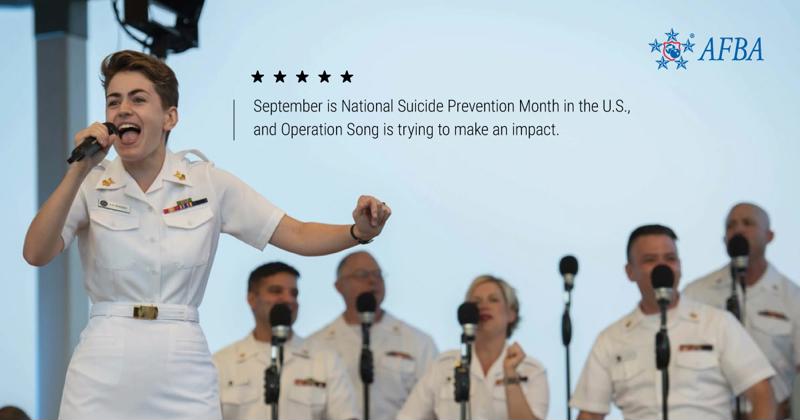
Suicide among veterans and members of the Armed Forces continues to be a concern. As the numbers rise and persist, those across the military community are trying to find solutions that can help those at risk find help. Sometimes that may come through a creative outlet, as Operation Song has showed to be possible.
An organization that has teamed with the Department of Veterans Affairs, Operation Song connections veterans with musicians and songwriters. The aim? To translate pain, anxiety, experiences and suffering into song, and through that process achieve some form of therapeutic relief.
September is National Suicide Prevention Month in the U.S., and it's important to recognize the efforts of Operation Song as it continues to try to help those dealing with dark times.
What is Operation Song?
A nonprofit based in Nashville, Operation Song started in 2012 and has helped write some 700 songs, working with everyone from World War II veterans to those currently serving. Created by Bob Reagan, a Grammy-nominated songwriter, Operation Song has a diverse board of directors, including veterans, professional musicians and other military stakeholders. That makeup reflects the organization's mission to empower those struggling with PTSD, suicidal thoughts or injuries sustained from service by immersing them in the songwriting process. Not only does writing a song help them process emotions or work through thoughts, but the final product can be a cathartic release, as well as a lasting memory.
Reagan started with a single weekly session at a VA center in Murfreesboro, Tennessee, that gathered eight veterans and a musical therapist. The program has since expanded to several regular sessions held throughout Middle Tennessee, as well as retreats where a veteran can be paired one on one with a songwriter. There is zero requirement for veterans to have a previous background in music, all they need is impetus to tell a personal story or honor those they served with.
VA seeks increased collaboration
The success that Operation Song has found with veterans and active duty members has led the VA to expand a partnership with the nonprofit, according to Military.com. Operation Song held a pilot retreat in 2018, and another in the summer of 2019. The results were positive enough to lead the VA to join as co-host of a national workshop and retreat to be held in November 2019.
"VA is always striving to find unique ways to help Veterans build on their military experiences, and music therapy is just one component of VA's robust Recreation Therapy programs, which serve Veterans around the country," said VA Secretary Robert Wilkie in a statement. "Music can provide an outlet for expression of feelings, as well as be an avenue of communication for those who find it difficult to express themselves."
One of the most notable songs that has been produced through Operation Song is "Last Monday in May," whose subject is Memorial Day through the years. The song was a collective effort written by six Iraq, Afghanistan and Vietnam veterans, as has been performed at the Grande Ole Opry in Nashville, as well as at the National Mall for the past five Memorial Days.
While those who want to work with Operation Song must be referred through a VA provider, those who do cannot say enough for what the program did for them.
" … I was in a rough spot before. I had contemplated suicide," Van Booth, a retired infantryman. told the Montrose Press of Colorado. "When I say Operation Song saved my life, that's what I mean."
To learn more about Operation Song, visit its site today. Or, get involved in National Suicide Prevention Month.
For those in the Armed Forces, protecting their country is the priority. But that's on the job: When at home, those same servicemembers strive to protect and provide for their families. You want to make sure that your family is taken care of should the worst happen, but that can be difficult without life insurance.
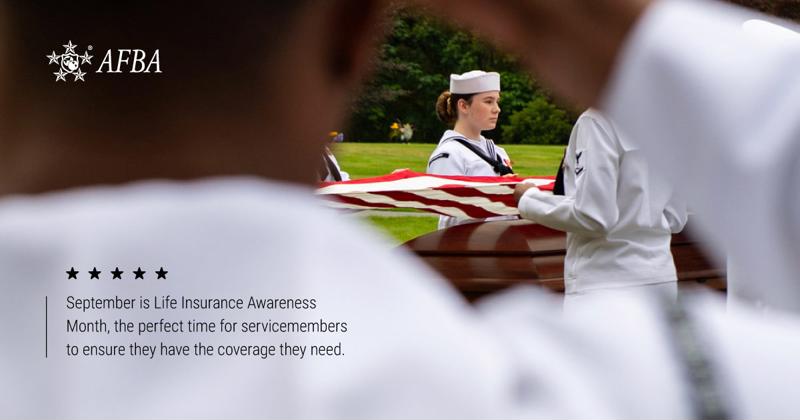
Life insurance can seem like a complicated product, but it's essential to ensuring peace of mind in the most difficult of times. If your family happens to lose your income, how would they meet obligations like mortgage payments and debts? If you have a life insurance policy, your family will enjoy a degree of protection against such costs. To help educate the public, September is Life Insurance Awareness month. Here are a couple facts you need to know.
What is life insurance?
Like other forms of insurance, life insurance protects policyholders against damages and losses. In this context, should you pass unexpectedly, your family will have a fall-back in the death benefit life insurance pays. You can take out a certain amount of coverage (whether $25,000 or $250,000) that will help your family maintain financial stability when they need it most. The advantage is the death benefit is often paid out to your family, or other designated beneficiaries, free of income tax.
What types of life insurance exist?
Life insurance products break down into two main groups: term and whole. Term life insurance policies are active for a set number of years, like 15 or 30 years. Your family will be covered during that time, but once the term expires, so does coverage. Many families utilize term plans for household planning for near-term needs, in addition to creating a financial backstop. Term life policies often feature variable rates and the ability to convert coverage to a permanent option.
On the other hand is whole life insurance. These policies grant a lifetime of coverage with the first payment. As long as you meet premiums, your family will benefit from coverage that won't expire. Another key advantage is cash value. With whole life policies, a portion of the premium you pay each month is diverted toward a fund that you can draw from and pay back, or take loans against. Cash value builds with each premium, but just be aware that any amount you take out will be deducted from the eventual payout your beneficiaries receive.
Why take out life insurance?
The overarching reason why many families obtain life insurance is to provide a financial buttress against uncertainty or costs. For instance, funeral expenses are a major outlay, but life insurance often addresses those costs directly as part of the policy. When you sit down to research policies, consider what life insurance can be used toward, including:
- Mortgage payment: If you have 10 years left on your mortgage, you may want to take out a term life policy of the same length to ensure paying it off stays on track.
- Personal debts: Your family may be held for any personal debts you held. Life insurance protects them against those costs.
- Higher education: Tuition and housing take a major chunk out of household budgets, but a policy will make sure such costs are met and degrees can be obtained even if your income is lost.
- Medical bills: Many policies will have an option to pay out living benefits for chronic or terminal illnesses, which can decrease your costs.
Learn more during September
If you are interested in more about life insurance and how it can help your family, consider getting involved this September. Education events and financial literacy seminars are taking place all over the country during Life Insurance Awareness Month, so check out what's happening your area.
When a 35-day partial government shutdown hit the nation in the 2018-2019 winter, thousands of federal employees, contractors and others went without pay. Even the Coast Guard missed paychecks after more than a month political standstill, but kept working through the shutdown. This was notable because the Coast Guard was the only part of the nation's armed forces that went without pay during that stretch, as it is part of the Department of Homeland Security and not the Department of Defense, whose funding did not lapse.
While members of the Coast Guard did receive back pay, Congress has recently moved to remedy that oversight and prevent any future shutdowns from obstructing Coast Guard from being paid.
Bill passes House and Senate panels
The Coast Guard Reauthorization Act of 2019 is the latest edition in a regular series of legislation that makes appropriations and other updates to modernize and improve the service and how it operates. A feature of this reauthorization act is the stipulation that requires Coast Guard to be paid should any shutdowns materialize in the future, among other reforms. This was done through the inclusion of an amendment titled the "Coast Guard Pay Parity Act" that would ensure paychecks are sent despite any shutdown occurring.
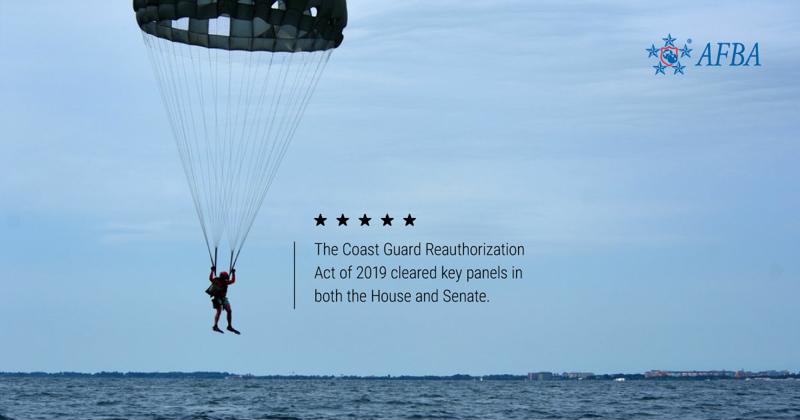
The legislation is well on its way to passing through Congress, having cleared key panels in both the House and the Senate with bipartisan support. The House Transportation and Infrastructure Committee had passed the reauthorization act near the end of June. At that time, Committee Chair Rep. Peter DeFazio (D-OR) hailed it as crucial to protecting both the men and women of the Coast Guard and recognizing their sacrifice.
"This legislation ensures our Coasties can continue carrying out their important work to secure our waterways and keep our communities safe," DeFazio said. "In addition, I am proud to have added an amendment which guarantees that members of the Coast Guard are paid on time and in full, even in the event of another senseless government shutdown."
On July 31 the Senate Committee on Commerce, Science, and Transportation approved the Coast Guard Reauthorization Act of 2019.
"I'm honored to have led the effort on this year's Coast Guard reauthorization, supporting members of the fifth branch of our military who are far too often overlooked or forgotten," said Dan Sullivan (R-AK). "With this legislation, we will ensure that Coast Guardsmen never again are risking their lives and serving without pay – as they were during the partial government shutdown earlier this year."
The full House and Senate will need to vote on and pass the act before it can be sent to the president and signed.
42,000 went without pay last time
The unique circumstances of the Coast Guard being part of the Department of Homeland Security — instead of Defense, like the other four branches of the military — led to it being affected by the shutdown. During those 35 days, 42,000 missed a paycheck, including active duty members, reservists and retirees, according to NBC news. The lapse negatively affected thousands who had families to support and payments to make, like those for mortgage or credit cards. The Coast Guard even provided its members with a financial management tip list.
The legislation is hugely important not just for members themselves, but for national security and the efficacy of the Coast Guard. According to a report from The Wall Street Journal, the Coast Guard took time to recover after the shutdown delayed crucial maintenance and supply replenishment.
The Marines are heralded in the U.S. as some of nation's most skilled and elite warriors, an identity known around the world. Part of that renowned fighting force is the Marine Corps Reserve, a group of service members ready to answer the call of duty whenever it comes. With roots dating back to World War I, the Marine Corps Reserve — also known as the Marine Forces Reserve, or MARFORRES — has a long tradition of excellence and bravery in the armed conflicts America has been a part of, as well in other operational duties.
Aug. 29, 2019, marks the 103rd birthday of the Marine Corps Reserve, an observance and celebration of the men and women who stand at the ready as part of reserve forces. Here's more information about the history and purpose of the MARFORRES.
Contributions in WWI and beyond
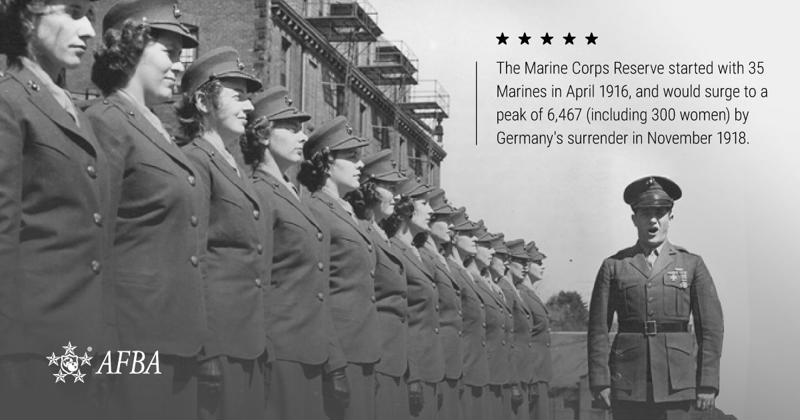
According to the Marine Corps, the need for reserves was an issue as early as the Civil War. However, it was not until Woodrow Wilson signed the Naval Appropriations Act of 1916 was such forces were created — and not a moment too soon, as American would join World War I a year later. The Marine Corps Reserve started with 35 Marines on April 1, 1916, and would surge to a peak of 6,467 (including 300 women) by Germany's surrender in November 1918.
The purpose of the MARFORRES is to augment and enhance Marine forces by providing a group of fully trained individuals who can be mobilized for war, national emergencies and contingency operations. This responsive nature to the needs of the nation were on display soon after WWI, when the thousands of Marine reservists demobilized and reentered civilian life. While MARFORRES had fallen into inactivity in the years after, it was quickly rebuilt, growing to more than 10,000 reservists by 1930. Those reserve forces would soon be called on during World War II: According to the Marine Corp, of the nearly 590,000 Marines who served in the war, 70 percent were estimated to be reservists. Whether ace fighter pilots or reporters on the frontlines, reserve forces would earn honors and distinction for their service and importance.
After the war wind-down, the Marine Corps Reserve would reach some 128,000 personnel on the eve of the Korean War, which many participated in. Fast forward to now, and the reserve forces remain among the most crucial cogs to the American armed forces after legislation that has modernized and updated the Marine Corps Reserve for today's military needs. Currently, it is split in two units: the 38,000-strong Marine Corps Select Reserve, and the Individual Ready Reserve.
Fighting modern threats
Today, the Marine Corps Reserve is active in addressing the many global threats the U.S. faces today, including serving in Iraq and Afghanistan, as well as other counter-terror combat operations. Providing peacetime aid is a large focus for the reserve forces, who assist in national and state emergencies. Also, the Marine Corps Reserve is made of diverse Americans. According to the Marine Corps, "their experience is extensive and includes occupations such as police officers, fire fighters, federal agents, mechanics, city planners, politicians, truck drivers, information technology and cyber professionals, carpenters, electricians, and business owners. The depth and diversity of experience is a force enabler that adds enormous value to the modern battlefield."
Celebrating MARFORRES
The Marine Corps Reserve birthday may not show up on every calendar, but it's important to remember and honor the sacrifice and service of those who have been part of the reserve forces. In fact, the occasion is often an event observed within the Marines, not commonly with public displays. However, you can opt to fly a Marines flag on Aug. 29 or undertake other activities.
Mark Esper was recently confirmed as the new Secretary of Defense. His swearing in marked the end of seven months in which the department went without a confirmed leader, the longest such period in its history.
A veteran of the Army and the defense industry, Esper said he aims to tackle leadership vacancies within the department as America and the global community confront various modern threats.
West Point grad, Screaming Eagle
Esper was born in Uniontown, Pennsylvania, in 1964, and was a 1986 graduate of the United States Military Academy, receiving a commission in the infantry. According to his DoD biography, Esper completed Ranger and Pathfinder training, serving in the 1990-91 Gulf War with the 101st Airborne Division, also known as the "Screaming Eagles." Esper also commanded a Rifle Company in the 3-325 Airborne Combat Team in Vicenza, Italy, before retiring from the Army in 2007 after 10 years on active duty and 11 years in the National Guard and Army Reserve. He has been awarded the Department of Defense Medal for Distinguished Public Service, as well as military honors including the Legion of Merit, Bronze Star Medal, the Kuwait Liberation Medal, Kuwait Liberation Medal-Saudi Arabia, and the Combat Infantryman Badge. Esper holds both a Master of Public Administration and a doctorate in Public Policy.
In the private sector, Esper most notably worked as Vice President for Government Relations at Raytheon. He also spent time at The Heritage Foundation think tank, the Aerospace Industries Association and the U.S. Chamber of Commerce Global Intellectual Property Center. Esper also worked for several politicians, becoming an advisor to former Senators Chuck Hagel, Bill Frist and Fred Thompson. In 2017 he was confirmed as Secretary of the Army.
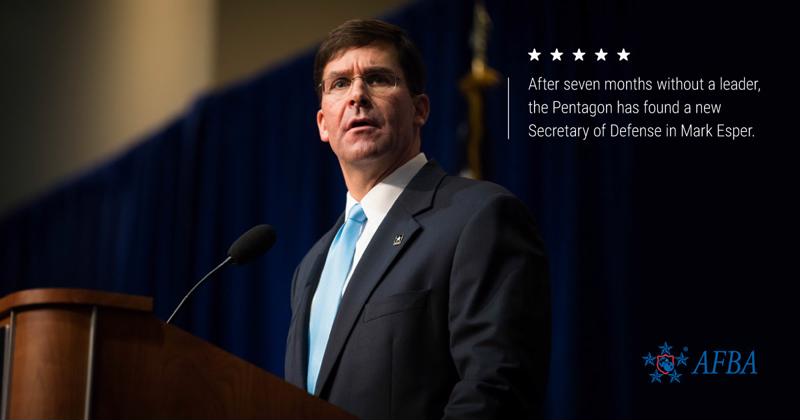
27th Secretary of Defense
Despite some pointed questions from the Senate about his previous lobbying for Raytheon, one of the largest defense contractors, Esper sailed through confirmation on a bipartisan vote of 90-8. That ended the seven-month, record-breaking stretch of DoD operating without a confirmed leader. The lull was created when Jim Mattis stepped down amid apparent policy differences with the Trump Administration. Patrick Shanahan, a former Boeing executive, served as acting secretary but withdrew from the position after complications in his personal life emerged.
Esper succeeded Shanahan in an acting capacity, but as secretary has pledged to maintain U.S. alliances, modernize the military and reform the Pentagon. He also has vowed to continue on the National Defense Strategy path, a strategic plan crafted by Mattis that focuses on long-term competition with China and Russia.
The margin of the vote was notable in for a Trump-appointed official, and was largely seen as reflective of Capitol Hill's desire to return normalcy to DoD with a permanent leader.
"We're in a very great position … in that we have someone that is enthusiastically supported by Republicans, by Democrats, and he is obviously the right person who has the trust of our president, he has the trust of our military, the trust of Congress and the country to keep our nation safe," Senator Jim Inhofe (R-OK), chairman of the Senate Armed Services Committee, said to the Senate in support of Esper, according to Stars and Stripes.
Senator Mitch McConnell (R-KY), Senate Majority Leader, also added praise for the pedigree Esper built with the Army in support of his confirmation as secretary, concluding that his leadership skills would be welcomed at the Pentagon.
"His record of public service is beyond impressive," McConnell said, according to Defense News. "His commitment to serving our service members is beyond obvious. And the need for a Senate-confirmed Secretary of Defense is beyond urgent."
The story of American paratroopers is deeply woven into the fabric of the nation's military history and identity. The sight alone of these airborne armed forces inspires awe, and the honorable service of these men and women over 70 years of parachuting has created a tradition of excellence that has become synonymous with the paratrooper divisions within the Army, as well as the greater military.
That's why every Aug. 16 is celebrated as National Airborne Day. This moment of reflection gives us a way to remember and recognize the valor and effort displayed paratrooper forces. They have demonstrated courage and commitment since the first experimental jump in 1940 through the many armed conflicts the U.S. has engaged in since. After all, it takes a lot of self-determination to fling yourself out of a moving plane a thousand feet up in the air.
Here's more information about the history of paratroopers, National Airborne day, and how the observance is celebrated.
The first jump in August 1940
As the story goes, the idea to parachute troops into combat operations was first conceived by Brigadier General William Mitchell after World War I concluded. Regarded as the father of the U.S. Air Force, he focused on the advantage of dropping elite ground forces behind enemy lines. By 1940, World War II had broken out, and though the U.S. was not yet involved, it put into motion the paratrooper initiative by authorizing the Army Parachute Test Platoon that summer. On Aug. 16, 1940, 48 soldiers from the 29th Infantry Regiment jumped from a Douglas B-18 over Lawson Army Airfield at Fort Benning in Georgia.
Service in WWII and beyond
American paratroopers have become among the most definitive images associated with WWII. Along with Allied forces that stormed the beaches on D-Day, U.S. parachuting forces were critical to the success of the operation, and would go on to fight in the Battle of the Bulge. However, the first combat jumps took place over North Africa in November 1942, when members of the 2nd Battalion, 503rd Parachute Infantry Regiment, leapt from a C-47.
Paratrooper forces would then go on to serve in various conflicts and military operations including Korea, Vietnam, Grenada, Panama, Somalia, the Balkans, Afghanistan and Iraq. They have also participated in peace-keeping missions in Lebanon, the Dominican Republic, and Kosovo.
The 'Screaming Eagles'
Today, paratroopers comprise some of the most recognizable divisions in the Army, most notably the 101st Airborne, otherwise known as the Screaming Eagles. But the 101st is far from alone in representing Army paratroopers, which also include the 11th, 13th, 17th, 80th, 82nd (known as "America's Guard of Honor") and 108th Airborne Divisions. Paratroopers also make up the Army's XVIII Airborne Corps and the 75th Infantry (Ranger) Regiment. Airborne-trained troops are also found in the Navy SEALs and other Special Forces units, as well as the Marines and Air Force.
Airborne Day created by G.W. Bush
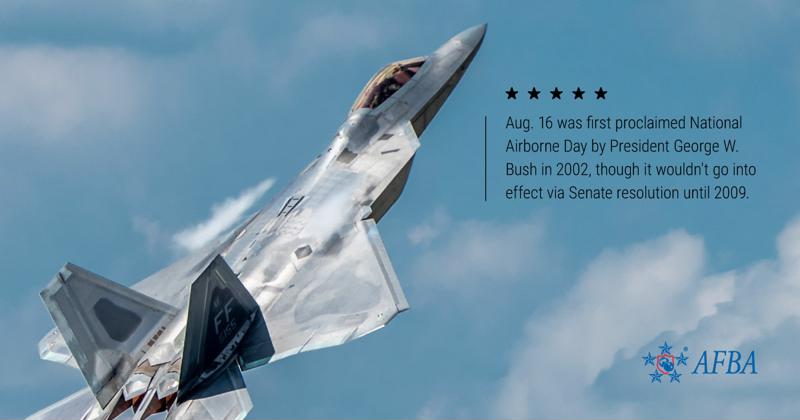
Aug. 16 was first proclaimed National Airborne Day by President George W. Bush in 2002, though it would take until 2009 for a Senate resolution to recognize the observance.
"Airborne combat continues to be driven by the bravery and daring spirit of sky soldiers. Often called into action with little notice, these forces have earned an enduring reputation for dedication, excellence, and honor. As we face the challenges of a new era, I encourage all people to recognize the contributions of these courageous soldiers to our nation and the world," Bush wrote in the official proclamation.
Now, many events are held at military bases and other locales around the country that display that technique and skill of these "sky soldiers." The Army's Golden Knights are well-known, while the Special Operations Command Parachute Team, the Black Daggers, also dazzle on-lookers from the ground.
As we celebrate National Airborne Day this Aug. 16, take time to reflect on the service and sacrifice of these brave parachuting forces.