
The Purple Heart is among America’s most honored and recognizable distinctions. Awarded to members of the Armed Forces who have been killed or injured in battle, the Purple Heart is given in gratitude for the sacrifice and courage displayed by those who have earned it.
The medal has a long history, rooted in the Revolutionary War, and is notable for many reasons, such as the fact it can be awarded multiple times. Changes in criteria have also occurred, but the stunning and evocative visual imagery of the medal has always been a constant.
Aug. 7 is Purple Heart Day, and 2019 will mark the 237th anniversary of the medal’s birth. In observance of that fact and in respect for those who have earned the medal, let’s explore the history of the Purple Heart and the courageous examples set by our armed forces members.
 “The appearance of U.S. Department of Defense (DoD) visual information does not imply or constitute DoD endorsement.”
Created by Washington, revived by MacArthur
The Purple Heart is America’s oldest military award, despite falling into disuse for more than a century. In 1782, the Continental Congress had halted promotions and commissions due to lack of funds, leading General George Washington to create the Badge of Military Merit as a alternative to recognize merit displayed by soldiers.
“The General ever desirous to cherish virtuous ambition in his soldiers, as well as to foster and encourage every species of Military merit, directs that whenever any singularly meritorious action is performed, the author of it shall be permitted to wear on his facings over the left breast, the figure of a heart in purple cloth, or silk, edged with narrow lace or binding,” Washington wrote in the order that established the medal and described its physical construction. A privilege of receiving this medal was enlisted men being able to pass sentries as if they were commissioned officers.
However, the Badge of Military Merit was only awarded to three participants of the Revolutionary War. It went unused until 1932, when then Army Chief of Staff General Douglas MacArthur announced the reviving of the medal in honor of Washington’s 200th birthday. MacArthur worked with the Washington Commission of Fine Arts and Elizabeth Will, a heraldry specialist in the Army’s Office of the Quartermaster General to style the medal along the lines of Washington’s description.

Reforms to eligibility
Until 1942, the Purple Heart had been a distinction exclusive to the Army. It was not until then that President Franklin D. Roosevelt authorized Navy service personnel, which included Marines and Coast Guard, to receive the award. That included members who “are wounded in action against an enemy of the United States, or as a result of an act of such enemy, provided such would necessitate treatment by a medical officer,” according to the Department of Veterans Affairs.
But that wouldn’t be the end to reforms that broadened eligibility for the Purple Heart. President John F. Kennedy in 1962 amended standards to include “any civilian national of the United States, who while serving under competent authority in any capacity with an armed force…, has been, or may hereafter be, wounded” and the posthumous awarding of the medal. The medal would later become specific to the Armed Forces.
1.8 million awarded
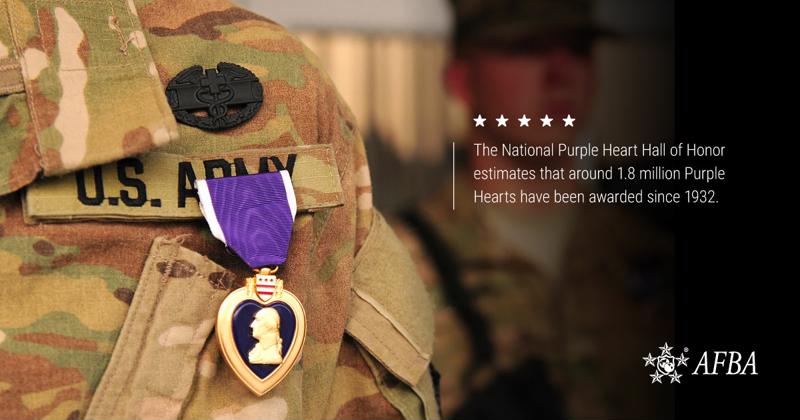
While there is no official record, the National Purple Heart Hall of Honor says current estimates are that around 1.8 million Purple Hearts have been awarded since the 1932 resumption. Most recently, in 2015, the eligibility criteria were expanded to include those who were killed or wounded as part of certain instances of domestic terrorism.
Aug. 7 is a date to remember the many ways in which American Armed Forces members consistently prove to be heroes in combat or protection of their fellow man. This year, take time to recognize the 234th anniversary of the Purple Heart and the accomplishments of hose who have earned it.
One of the five service branches of the U.S. Armed Forces, the Coast Guard plays a vital role in patrolling the country's coasts and waterways. Now more than two centuries old, the Coast Guard has a storied and rich history in the American military. And while it is the smallest of the five branches, it has an outsized role in advancing and protecting U.S. public, environmental and economic maritime interests.
In recognition of the service the Coast Guard and its members have rendered, every August 4 is celebrated as the Coast Guard's birthday. Now turning 229, one could hardly notice its age, as the Coast Guard continues to become more technologically advanced and responsive to the call of its country.
So on Sunday, Aug. 4, 2019 remember all the Coast Guard has given, and celebrate its continued achievement as the oldest continuous sea-going service in the United States.
10 ships started it all
The Coast Guard's age puts it on par with the Army, which was established even before the Declaration of Independence was signed. The Revenue-Marine were commissioned on Aug. 4, 1790 under the Tariff Act, which was signed by President George Washington. This unit, which would go on to become the Coast Guard, was initially made of 10 ships, and was brought into being with the support of the nation's first Secretary of the Treasury, Alexander Hamilton.
Ten cutters, a type of sea vessel, were created and its crews were tasked with the enforcement of tariff laws, prevention of smuggling and protection of federal tax collectors. Added responsibilities were taken on in short order, including combating piracy, conducting rescue operations and ice-breaking missions, to name a few. These varied law enforcement, military and humanitarian duties serve as the basis for the three mandates of the Coast Guard:
- Safety.
- Security.
- Stewardship.
In time, the Revenue-Marine would expand and grow into the Revenue Cutter Service, and in 1915 was merged with the U.S. Life-Saving Service. The resulting entity was renamed the Coast Guard, and it continued to acquire new responsibilities, like oversight of the country's lighthouses and marine inspection and navigation. Now, the Coast Guard seizes a drug-smuggling boat every five days, saves thousands of lives every year, and assists 193,938 tons of shipping daily during Great Lakes ice season.
More facts about the Coast Guard
There's a lot to be accomplished in 229 years, and the Coast Guard has done quite a bit, including:
- Serving in 17 wars and conflicts in U.S. history. During wartime the Coast Guard can operate independent mission or serve as part of the Navy.
- Being the only of the five branches to be placed under the Department of Homeland Security.
- Patrolling more than 4.5 million square miles of Exclusive Economic Zones, as well as providing services in international waters.
- Operating its own anti-terror team, The Maritime Safety and Security Team. According to the USO, it is the only special operations force that can arrest submerged SCUBA divers.
- Having Sinbad, a dog that served aboard the USCGC George W. Campbell in World War II, as its mascot. Sinbad provided company to troops, while also being onboard for anti-submarine confict.
How you can celebrate the Coast Guard's birthday
In lieu of trying to send a Happy Birthday card to the Coast Guard itself, take time to recognize and celebrate the service of its members:
- Participate in or organize a local event that can help educate children on the Coast Guard history or hear active duty members or veterans speak.
- Offer a special discount on Aug. 4 if you run a business for Coast Guard members and veterans.
- Visit memorials or other locations to pay respects for the fallen and recognize their sacrifice.
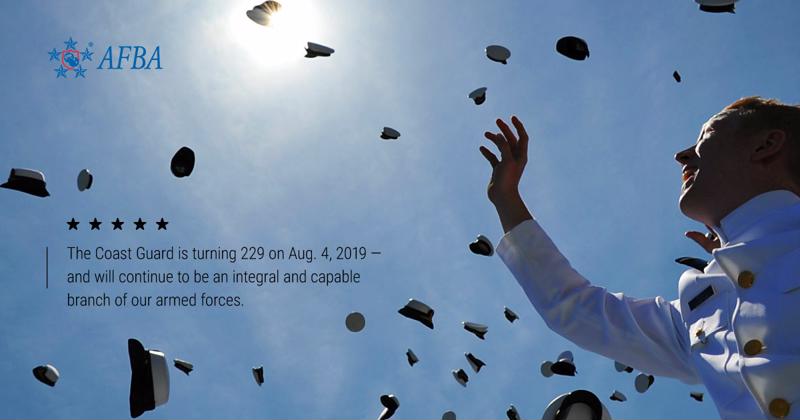
The Coast Guard is turning 229 on Aug. 4, 2019 — and will continue to be in the future an integral and capable branch of our armed forces.

The 35-day partial government shutdown that ushered in 2019 had a massive impact on the country and population. Hundreds of thousands of federal workers were furloughed during that time and went unpaid, but have since been compensated.
Federal contractors, on the other hand, have not seen back pay from that stretch in which they lost shifts and income. Security guards and maintenance staff for government sites who work on a contract basis, among others, have not been included in previous back pay agreements.
That changed when the House approved a bill that would provide restitution for federal contractors who were affected by the shutdown. However, while the measure passed the House, it still faces an uncertain future in the Senate and a skeptical White House.
Back pay part of larger agreement
In late June 2019, the House cleared a minibus spending package that appropriated funds for departments like Justice, Commerce, and Veterans Affairs, as well as other agencies and projects. Included in that proposal was a provision that would institute a mechanism for contractor back pay.
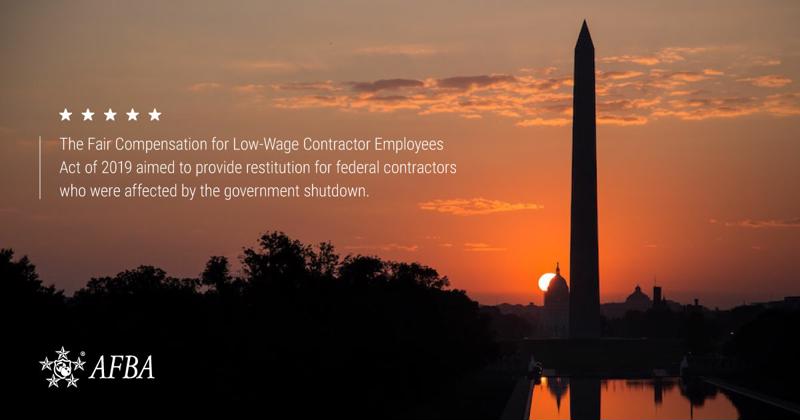
The Fair Compensation for Low-Wage Contractor Employees Act of 2019 was introduced by Rep. Ayanna Pressley (D-MA), but did not progress as legislation. Instead, it was incorporated into the minibus spending package, and would instruct departments affected by the 35-day shutdown to adjust the price of contracts or restore pay for contractors who were laid off or furloughed.
"I'm thrilled the House has passed legislation that would finally provide federal contract workers the back pay," said Pressley, according to The Hill. "Our government relies on these hardworking men and women to keep our government buildings running, and we have a moral obligation to make them whole for the pay they lost during the government shut down."
Uncertainty and outright opposition from Senate and White House
While the House's approval was a major step forward for federal contractor back pay, it will take much more to make the compensation a reality. The minibus spending agreement passed largely along party lines by a vote of 227-194, with conservatives largely against the provision. The reasons for opposing it included worries that it increases federal spending, rewards already profitable contracting companies, and would be difficult to implement and ensure payout went to contractors.
With Republicans controlling the Senate, the minibus bill containing the back pay provision faces daunting prospects for approval. And if it somehow does make it through the upper chamber, it still faces the threat of veto from the White House.
"While contractors play an important role in helping government agencies meet their missions, this legislation ignores important principles of federal contracting, and would lead to increased cost and a significant increase in the risk of fraud, waste, and improper payment," The Office of Management and Budget wrote in a policy document. "The administration anticipates significant, disruptive, and costly challenges in trying to force-fit the requirements of contractor back-pay legislation into an acquisition system that is not designed or equipped to manage contractor employees, making it difficult, if not impossible, to meet the dual goals of paying quickly and paying accurately."
Conventional logic may hold that a wet winter should be enough to ward off the threat of wildfires, especially in California. However, while winter precipitation has done wonders to reverse the state's drought conditions, it's not having the desired effect as a natural guard against wildfires.
If anything, the wet winters that California is experiencing recently have exacerbated the risk of wildfire, with lush vegetation regrowing rapidly, only to be burnt again. Additionally, a new body of evidence is increasingly pointing toward an abrupt turnaround in the relationship between preceding winters and wildfire seasons — as in, no matter how snowy and rainy the winter is, it's not reducing the threat of wildfires.
As these trends continue to develop, first responders in and around the state are starting to prepare for wildfires year-round.
'The new normal'
The wildfire watch is kept throughout the year in California, meaning first responders have to be ready 24/7/365. After a 2018 that saw the state's deadliest fire and numerous other destructive and high-profile blazes, California government and first responders are adjusting.
"This is the new normal," then Gov. Jerry Brown had said in December 2017. "We're about ready to have firefighting at Christmas. This is very odd and unusual."
April showers may bring May fires
The 2018-2019 winter season has been a long one for California, stretching into May, according to the Los Angeles Times. The extended winter has brought much-needed precipitation to the state. It's also done an excellent job at nourishing the grounds that were charred just months ago, allowing flora to regrow at a rapid pace. However, the return to green is anything but welcome by wildfire experts, who warn the thriving brush is just kindling waiting to burst as soon as the intense, dry air comes in.
"The good news is we need the water, but the bad news is it's building the fuel load for what has always been our fire season," Bill Patzert, a local weather expert and former climatologist with the Jet Propulsion Laboratory, told the LA Times.
Some plants regrow faster after a fire, which makes it worse when they dry out under oppressive summer heat and arid conditions. The dead grass and brush creates the ideal fuel bed, allowing wildfires to spread and grow quickly. The Washington Post has also reported on the increased risks brought on by wet winters, and the more expansive forest management the state must undertake.
Increased moisture does not decrease wildfire risk
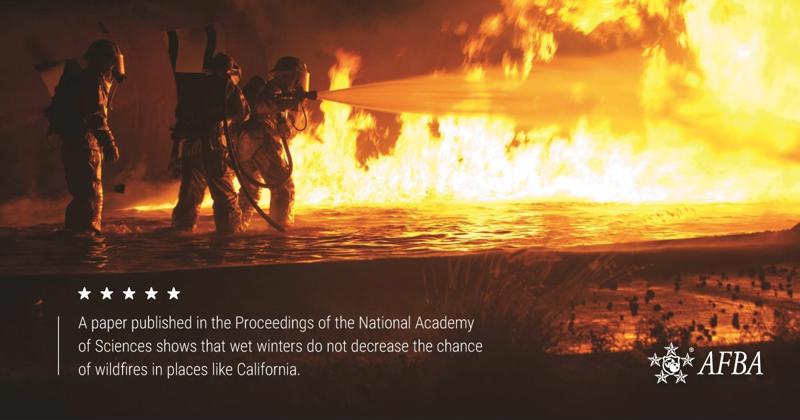
For centuries, wet California winters were scientifically linked to reduced wildfire risk. Researchers recently looked at this connection and found between 1600 and 1903, rainy winters brought on by the North Pacific jet stream were followed by low wildfire activity; conversely, dry winters begot higher wildfire activity. But after 1904, the association started to weaken, according to the paper published in the Proceedings of the National Academy of Sciences.
Now, the link may be erased entirely.
"The moisture availability over California is still strongly linked to the position of the jet stream, but fire no longer is," said co-author Valerie Trouet, an associate professor of dendrochronology at the University of Arizona Laboratory of Tree-Ring Research. "I didn't expect there to be no relationship between jet stream dynamics and fire in the 20th century. I expected it to be maybe weaker than before, but not to completely disappear."
As historical trends reverse and the risk of wildfire continue to rise, first responders will need to prepare to meet the demands of that "new normal."
Posttraumatic stress disorder, also known as PTSD, is a mental disorder that can develop after someone has been forced to experience a traumatic event, such as the conditions of battle and warfare. Although a psychological condition, there are severe physical risks associated with PTSD, as sufferers are at a heightened risk of self-harm and suicide.
Good mental health has always been one of the first casualties of war, but society's understanding of PTSD has changed considerably over the years. In World War I, soldiers suffering from various nervous and mental symptoms were said to be suffering from "shell shock." In World War II, the diagnosis was changed to "combat stress fatigue."
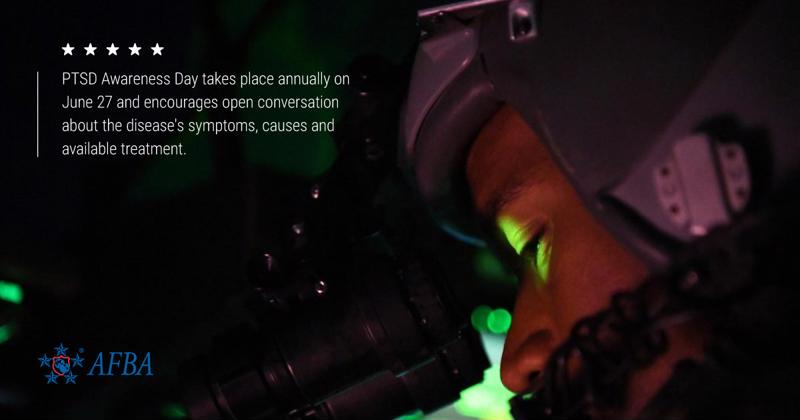
PTSD became an official psychiatric diagnosis in 1980, which was strongly influenced by the experiences and conditions of U.S. military veterans of the Vietnam War. A study conducted in the late 80s determined 15% of Vietnam veterans were suffering from PTSD, and today the VA estimates that 30% of Vietnam vets have had PTSD at some point in their lifetime.
About 12% of Gulf War veterans have PTSD, while somewhere between 11 and 20% of soldiers who fought in Operations Iraqi Freedom and Enduring Freedom are estimated to be afflicted with the condition.
These numbers are alarming, and speak to the importance of providing mental health resources to our nation's soldiers. And on June 27, advocates are especially emphatic in making that point.
How to advance the cause of PTSD awareness
PTSD Awareness Day can trace its origins back to the tragedy of Staff Sergeant Joe Biel, a North Dakota National Guard member who took his own life in 2007 following two tours in Iraq. SSgt. Biel, who suffered from PTSD, committed suicide after his return from duty to his home state.
In 2010, Senator Kent Conrad led the effort to get official recognition of PTSD via a "day of awareness," and SSgt. Biel's birthday, June 27, was chosen as the official PTSD Awareness Day, according to Military Benefits. In 2014, the Senate expounded upon the annual observance by designating the full month of June as National PTSD Awareness Month.
Today, individuals primarily observe PTSD Awareness Day by encouraging open conversations about the disorder, with frank and informative discussions of its causes, symptoms and available treatment methods. Despite the fact that it has been an official medical diagnosis for nearly four decades, PTSD is still frequently misunderstood, particularly by those who have only seen it portrayed in movies and other pop culture dramatizations.
To aid in this effort, the Department of Defense publishes circulars, articles and other materials designed to better educate and inform military members and their families about PTSD. Furthermore, the VA's website has lots of articles and resources dedicated to PTSD, and when retiring military members fill out their VA claim forms, there is an option to be evaluated for PTSD.
If you or someone you know is potentially suffering from PTSD, it's important to look for the warning signs. Though not always the case, common non-specific symptoms include irritability, depression and, particularly prevalent in veterans and active military members with the condition, something known as "hypervigilance" or "hyperarousal." Repeatedly experiencing a traumatic event through flashbacks, nightmares and persistent memories is another symptom of PTSD. The biggest red flag is suicidal ideation, and anyone experiencing such thoughts should immediately seek help.
The mental scars accrued in combat are often far more difficult to heal than the physical wounds, but there is always hope for recovery. PTSD Awareness Month is the perfect time to make sure that message reaches everyone who needs to hear it.
This year, the United States Coast Guard Auxiliary celebrates a major milestone with its 80th anniversary on Sunday, June 23, 2019.
In the last eight decades, Auxiliarists have grown to become a vital component of the U.S. Coast Guard, and today the USCG Aux boasts 26,000 serving out nation in 825 local units with 1,800 vessels and 160 aircraft in between them.
Collectively, Auxiliarists volunteer over 4.5 million hours per year and complete nearly 500,000 missions in support of the Coast Guard, saving approximately 500 lives, assisting 15,000 distressed boaters and conducting over 150,000 safety examinations of recreational vessels.
To understand how the U.S. Coast Guard Auxiliary got its start, and how its role has expanded over the past 80 years, it's helpful to examine the civilian auxiliary's rich history.
Looking back on eight decades of being "Semper Paratus"
What is today the Auxiliary began life as the Coast Guard Reserve, which was authorized by an act of Congress on June 23, 1939. A response to the increase in the number of recreational boaters in America, the move gave the Coast Guard a legislative mandate to use civilian volunteers to promote safety on and over the high seas and the country's navigable waters. At its creation, the Coast Guard Reserve was a non-military service comprised of unpaid, volunteer citizens who owned motorboats or yachts.
Two years later, Congress amended the 1939 act by passing the Auxiliary and Reserve Act of 1941 on Feb. 19. The new legislation designated the Reserve as a military branch of the active service, and designated civilian volunteers as the Auxiliary.
Today, Feb. 19 is formally recognized as the birthday of the Coast Guard Reserve, and June 23 is celebrated as the birth of the Coast Guard Auxiliary.
When America entered World War II, many Auxiliary members became temporary members of the Coast Guard Reserve. As many as 50,000 Auxiliarists joined the war effort, guarding waterfronts, carrying out coastal picket patrols and rescuing survivors from scuttled ships, among many other heroic acts. Many of the Auxiliary members had their private vessels pressed into service, as well.
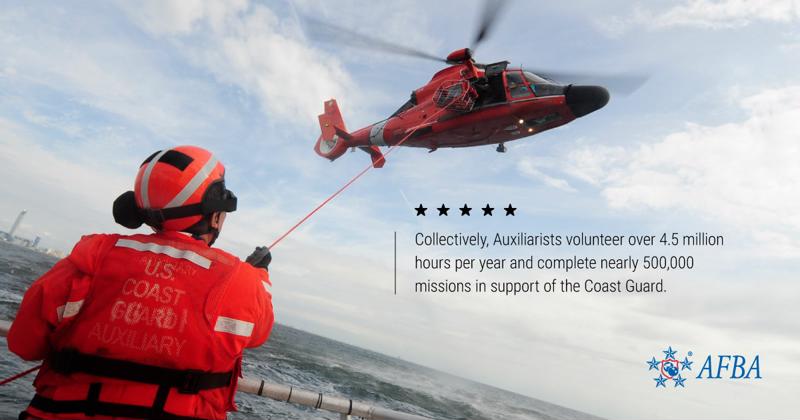
Once the war was won, Auxiliarists returned to their recreational boating safety duties, which included a renewed interest in safety education. It was in 1952 that the Auxiliary first observed "Safe Boating Week," which has since grown to become an international campaign led by the National Safe Boating Council.
In 1976, a study commissioned by the Coast Guard concluded that the Auxiliary was one of the Guard's, and the country's, greatest assets.
"In summary, we consider the Auxiliary the greatest economical resource readily available to the COGARD," the study's authors wrote. "It performs in an outstanding manner and its personnel are among the most professional group of volunteers in the nation."
Twenty years later, Congress expanded the Auxiliary's role to allow members to assist in any Coast Guard mission, except those that involved direct law enforcement and military operations. This enabled Auxiliarists to begin examining commercial fishing vessels, flying in C-130 aircraft and working in Coast Guard offices, among other new prerogatives.
Today's Auxiliary members also perform free Vessel Safety Checks, teach boating safety to boaters of all ages, perform harbor and pollution patrols and serve an important role in the Coast Guard Search and Rescue team.
As an all-volunteer unit, Auxiliarists are said to save U.S. taxpayers millions of dollars every year through their acts of service, which include lifesaving rescue missions on our nation's waters. As the United States Coast Guard Auxiliary celebrates its 80th birthday, there's never been a better time to thank the tens of thousands of members who help keep our nation and its citizens safe at sea.
Seven college students studying at Colorado State University-Pueblo have found a way to integrate NASA technology into a brand new product that takes the concept of a "security blanket" to a whole new level.
Though the prototype looks like nothing more than a simple green blanket with a silver circle design in the center, the invention may one day become an essential public safety tool, and has already succeeded in earning the CSU-Pueblo engineering undergrads a trip to the Johnson Space Center in Houston and a prestigious award.
The design integrates the NASA concept of a "portable wireless signal booster" into a lightweight, practical, waterproof nylon blanket that could easily be stuffed in a backpack or attached to camping gear. The students sewed a stamped copper Fresnel lens between two sheets of water-resistant fabric, creating a multipurpose product that can be used as a passive antenna able to boost incoming electromagnetic signals, or radio waves, up to 10 decibels in areas of low coverage.
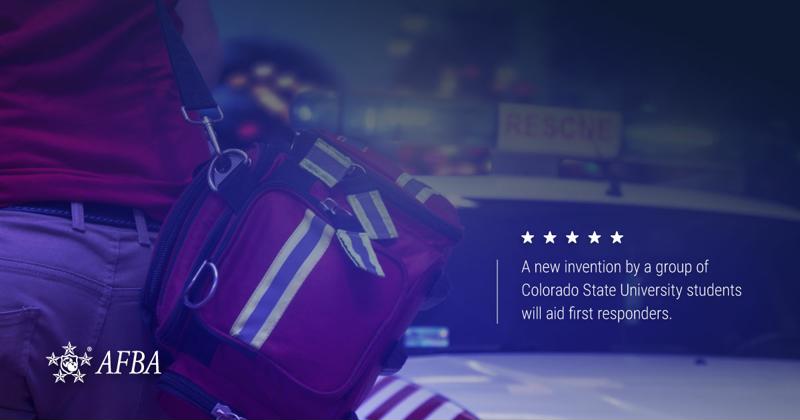
"This will boost the signal on your cell phone," Kenneth "Kordell" Roberts, a three-year industrial engineering student at Colorado State University-Pueblo, explained to The Pueblo Chieftain. "If you are backpacking or hiking out in the wilderness, normally there would be no signal. But this will help."
Roberts and fellow students Alex Goodwin, Daniel Hoyle-Aguon, Connor Foust, Julian Fierro, Shermann Mcdermott and Wyatt Farris created the signal-boosting blanket as a way to assist first responders fighting wildfires and search and rescue teams attempting to locate lost hikers.
"We targeted more of search and rescue, wildfire firefighters and those types of markets where you would have a great need for something that was very lightweight and that was able to help increase your signal," Roberts explained. "They are not going to want to carry an active signal boosting system, because those weigh 20, 30, 40 pounds. We thought it would be good to create a product that would be very lightweight that can also provide these benefits."
Potentially life-saving invention earns students NASA internships, awards
In recognition of their genius innovation, the CSU-Pueblo students received an invitation to the NASA MITTIC Technology Transfer competition at the Johnson Space Center in Houston this past March.
The contest's entrants were tasked with designing a commercially viable product by implementing one of about 20 different NASA intellectual properties, which included the signal booster. The students then had a month to develop a 12-page concept paper which included planning and the development of a prototype. After submitting their paper to NASA, the students were named to the list of top 10 finalists and invited to spend four days touring the NASA facilities in Houston, listening to guest speakers and networking with other students and professionals in their field.
"We also continued to work on our prototype and the 10-minute presentation we did there. It was almost like a 'Shark Tank' pitch of the product we made," said Connor Foust, a second-year mechatronics engineering student at CSU-Pueblo.
Of the seven students that worked on the project, only four were able to make the trip to Houston, per NASA contest rules. Of those four, three were awarded prestigious NASA internships, according to La Voz Bilingüe, Colorado's longest-running bilingual newspaper.
"Two of them will be going to Ames Research Center in California's Silicon Valley," Dr. Jude DePalma, the students' engineering professor, told the newspaper. "It's life-changing for those students."
Additionally, student group leader Kenneth Roberts was recognized by NASA with the competition's Outstanding Leader Award.
The invention has clearly already made a difference in the lives of these students, but could one day help save the lives of countless others, as firefighters and other first responders use the technology to rescue those in danger.
June 14, 2019 represents both the 244th birthday of the U.S. Army, and the 242nd birthday of the U.S. flag.
The Second Continental Congress officially adopted the original flag of the United States on June 14, 1777, exactly two years after the Congress created the Continental Army to fight Great Britain in the Revolutionary War.
President Woodrow Wilson issued a proclamation in 1916 officially establishing June 14th as Flag Day, and thirty years later, National Flag Day was established by an Act of Congress. Though not a federal holiday, Americans continue to observe the creation of the Stars and Stripes, and over the years, this has led to the celebration of National Flag Week, which occurs every year during the week of June 14th.
In 2019, June 14th falls on a Friday, and National Flag Week runs from June 9th to 15th.
History of the U.S. flag and National Flag Week
The Flag Resolution passed by Congress in 1777 specified that "the flag of the thirteen United States be thirteen stripes, alternate red and white; that the union be thirteen stars, white in a blue field, representing a new constellation."
No arrangement of the stars was specified, so the maker of the flag was left to decide how to orient them, with some choosing to place the stars in a row and others opting for a circular layout that is today recognized as the "Betsy Ross design."
According to Military Benefits, American troops first carried the flag into war three months after the resolution at the Battle of the Brandywine. A year later, U.S. forces took over a British fort, marking the first time that the flag was hoisted over a vanquished foe.
However, the idea of devoting a day of celebration to the flag did not start to gain traction until over a century later.
It was in 1886 that Bernard J. Cigrand, a grade school teacher in Waubeka, Wisconsin, made his first public proposal for an annual observance of the birth of the flag. Cigrand's advocacy led to some of the first June 14th Flag Day celebrations.
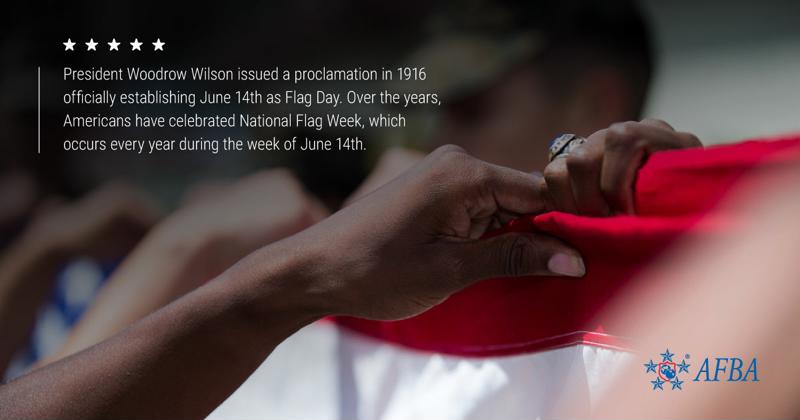
President Harry S. Truman signed legislation in 1949 that designated June 14th as Flag Day and the week surrounding it as National Flag Week. In 2004, Congress voted unanimously to recognize Flag Day as having originated in Ozaukee County, Waubeka, Wisconsin.
Every year, National Flag Week begins with the sitting President making a proclamation declaring the week of June 14 as the official observance of the holiday and directing government officials to display the flag in government offices. The Presidential Proclamation also requests that U.S. citizens participate by flying the flag at residences and local businesses.
Celebrating National Flag Week can be as easy as hoisting Old Glory at your home or workplace, though there may also be parades or other celebratory events happening in your local community.
Fairfield, Washington claims to be home to the oldest continuing Flag Day parade, having held a parade every year since 1910, and celebrating the centennial of the parade in 2010. Appleton, Wisconsin, has held its own National Flag Day parade since 1950, and Quincy, Massachusetts, has had a similarly long-running parade since 1952.
When privately observing National Flag Week, you should be sure to follow proper flag etiquette. The Flag Code formalizes many traditions, including making sure that no part of the flag touches the ground or any other object when being lowered, as well as neatly and ceremoniously folding and storing the flag. There are also special rules for how the flag should be displayed indoors and outdoors.
With National Flag Day and the U.S. Army birthday both taking place on June 14th, there is no shortage of anniversaries for patriotic Americans to celebrate this time of year.
The oldest and most senior branch of the United States military in order of precedence, the U.S. Army actually predates the U.S. itself. Congress established the First Continental Army on June 14, 1775, more than a full year before the signing of the Declaration of Independence, to recruit professionally trained soldiers that could combat the British "Redcoats" in the Revolutionary War.
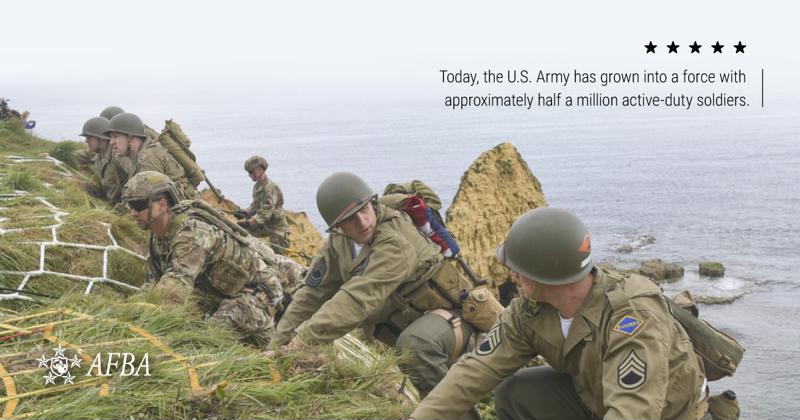
In the centuries since then, America's Army has grown into a fighting force with approximately half a million active-duty soldiers. And on Friday, June 14, 2019, the U.S. Army will observe its 244th birthday, affording military servicemembers and civilians alike an opportunity to celebrate the branch's rich history and continued role as a force for good in the world.
How to celebrate the U.S. Army's birthday in 2019
The Army's birthday is not an official state or federal holiday, meaning government offices and private places of business remain open on June 14th, while Army and Department of Defense agencies typically choose to celebrate the occasion at the base or local level with special events, ceremonies and social occasions.
The USO, AMVETS, The American Legion, VFW and other military service organizations also usually observe the holiday on a local or agency-wide level each year. If you would like to know if and how the birthday is being celebrated in your community, you can reach out to the local chapter of your preferred Veterans Service Organization.
One unique annual celebration is the Army Birthday Ball, which is held at military bases, community centers, civilian hotels and other applicable sites around the world. This black-tie formal event features military members in full-service dress, also known as "Dress Blues" or "Mess Dress," and includes a long list of traditions that are intended to pay respect to those who sacrificed life and limb to serve, and to welcome the newest members of the service and salute the future of the Army at large.
In that spirit, one of the most popular traditions at the ball is the cutting of the Army birthday cake, in which the oldest serving soldier and the youngest serving soldier use a ceremonial saber to cut the first slice. Another common tradition is the receiving line, in which Army leaders personally greet each attendee entering the ballroom, and the giving of toasts to the United States, military families and to fallen comrades, the latter toast one that is always respectfully answered in silence.
This year, the 244th U.S. Army Birthday Ball will be held at the Washington Hilton Hotel in Washington D.C. on the evening of Saturday, June 15, and to commemorate the 75th anniversary of the Normandy invasion, will feature a theme of "honoring the call to service from D-Day to Today." Similarly, on June 14, all U.S. Army veterans and active duty personnel will receive free admission to the National D-Day Memorial in Bedford, Virginia.
Several other high profile military celebrations will be taking place that weekend, as well. Different chapters of the Association of the United States Army will be holding their own Birthday Balls in various venues across the country on June 14 and 15. Additionally, Fort Knox will be hosting a birthday bash on June 14 that includes a variety of community events, all of which will be open to the general public.
Additionally, private citizens can always organize events in their own community, or find ways to celebrate with friends and family. The 244th anniversary of the U.S. Army provides a wonderful opportunity to both reflect on the centuries of sacrifice that have come before, and celebrate the bright future that lies ahead for America's fighting force.
On Tuesday, June 6, 1944, the Allied forces of World War II landed on the beaches of Normandy, with over 160,000 men participating in history's largest seaborne invasion. By the end of D-Day, none of the assault forces had secured their first-day objectives, and an estimated 10,000 Allied soldiers were killed, wounded or missing in action, including 6,603 American casualties.
Yet over the course of the following days, the Allies gradually expanded their foothold, and began the liberation of German-occupied France, and eventually Europe, from Nazi control.
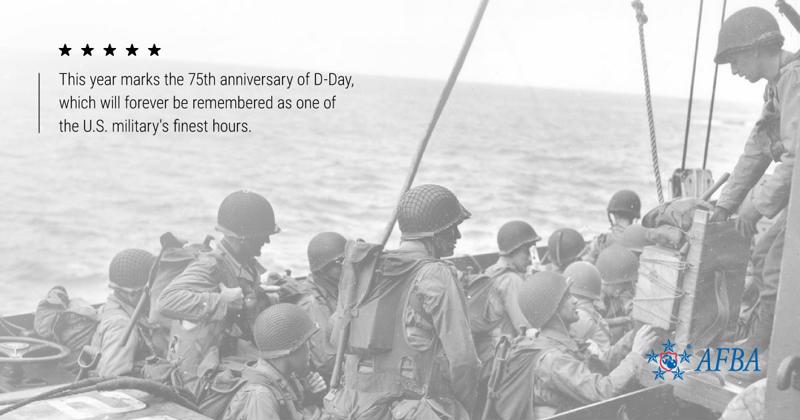
Though historians still debate what the "D" stood for, there is no disputing the legacy of D-Day, which will forever be remembered as one of the U.S. military's finest hours. And this year, as that fateful day turns 75 years old, several special ceremonies and events have been planned to commemorate the heroism displayed on the beaches of Normandy all those years ago.
D-Day observances planned for the 75th anniversary
The small community of Bedford, Virginia, lost 20 of the 32 sons it sent to the invasion of Normandy, earning the town the tragic yet honorable distinction of sustaining the highest per capita D-Day losses of any American city. In 2001, Bedford became the site of the National D-Day Memorial, which this year will observe the 75th Anniversary by hosting six days of ceremonies, displays, interviews and more, beginning June 4 and concluding on June 9.
Included in the schedule of events is an aerial tribute to veterans on the morning of June 6, followed by a commemorative observance titled "The Final Salute," which organizers expect will represent the last large gathering of D-Day veterans around the globe. The itinerary for that Thursday also includes World War II reenactments, a USO show and a free screening of "Saving Private Ryan," which memorably and thrillingly depicts the U.S. forces landing at Omaha Beach.
Other commemorative events will be held on the day of the 75th anniversary in Alexandria, Virginia; Louisville, Kentucky and Wheaton, Illinois, according to this list of D-Day observances being held throughout the world.
Each year, thousands of people visit Normandy to reflect on the acts of sacrifice that took place there more than seven decades ago. And for the 75th anniversary, one very special visitor will be making a return trip of sorts.
In 2015, a derelict airplane was discovered in a boneyard in Wisconsin, and aviation historians determined it was actually the plane that led the D-Day invasion. Donors were able to raise hundreds of thousands of dollars for the plane's restoration, and by 2018, it was once again in flying condition.
And on June 5, the historic Dakota C-47 will meet up with a dozen other European Dakotas to form a "D-Day Squadron" that will recreate the start of Normandy invasion by crossing the English Channel, according to the New York Times.
"That's why we're doing this mission," said Andy Maag, who is piloting the 75-year-old C-47. "We're bringing history to life."