
A push to extend more health benefits to "Blue Water" Navy veterans of the Vietnam War appears to be gaining momentum.
Members of the House recently voted to make permanent a court ruling that grants benefits to roughly 90,000 sailors who claim to have been exposed to Agent Orange in Vietnam, advancing the legislation to the Senate and encouraging advocates who have long fought for these protections.
Blue Water Navy Vietnam Veterans Act would alter VA policy
The infamous Agent Orange is an herbicide that was widely used as part of the U.S. military's "Operation Ranch Hand," which lasted from 1962 until 1971. The operation's objective was to spray chemicals that would deprive the Viet Cong of food and vegetation cover, but the toxicity of the herbicide had the unintended consequence of causing significant health problems for the many individuals who were exposed to it.
It is the Department of Veterans Affairs' current position that the vets who served on open sea ships off the shores of Vietnam, often referred to as "Blue Water Veterans," were not exposed to Agent Orange since they never set foot on the Indochina Peninsula. As a result, the VA requires that these Blue Water veterans "show on a factual basis" that they were actually exposed to herbicides during their military service in order to receive disability compensation for diseases related to Agent Orange.
However, veterans advocates have long maintained that the burden of proof should not be on those who served, and many lawmakers are inclined to agree.
"I've no way to prove where I walked 40 years ago," said ranking Veterans Affairs Committee member Rep. Phil Roe, R-Tenn., who served near the Korean demilitarized zone.
This proposed legislative fix was primarily triggered by a January Federal Circuit decision in the case of Procopio v. Wilkie, which ruled that Blue Water veterans were, in fact, entitled to a presumption of benefits under the Agent Orange Act of 1991, vindicating former sailors who fought for years to challenge the VA's decision to limit the presumption standard only to those soldiers who had "boots on the ground." It appears unlikely that the VA will challenge the court's decision, according to Bloomberg Government, which is why some in Congress are pushing to officially codify and fund the expansion of benefits.
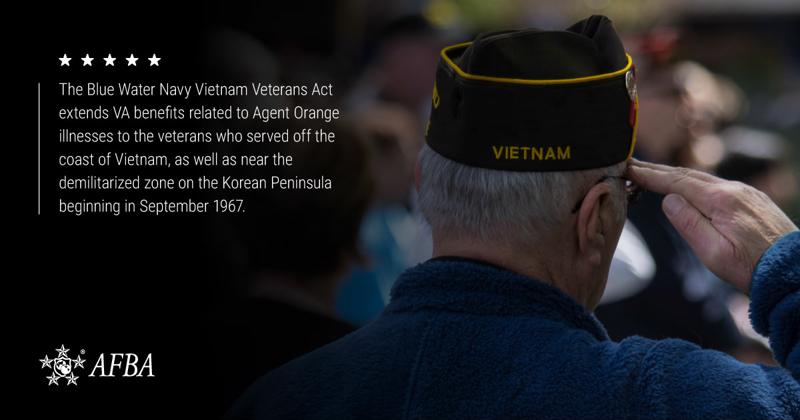
On May 14, 2019, House members voted to pass the Blue Water Navy Vietnam Veterans Act, which extends access to VA benefits related to Agent Orange illnesses to the sailors who served off the coast of Vietnam, as well as veterans who served near the demilitarized zone on the Korean Peninsula beginning in September 1967. If passed, the bill would also require the VA to identify American military bases in Thailand where Agent Orange was used.
House Veterans Affairs Committee chairman Rep. Mark Takano and Rep. Roe have said that they have included a funding plan that will cover the cost of extending new benefits to veterans for the treatment of Agent Orange illnesses.
"Congress has failed our Blue Water Navy veterans – plain and simple," said Rep. Mark Takano. "It was unjust then and it is unjust now. But today we have an opportunity to right this wrong. Congress didn't find the resolve to act until 1991 and it left out key groups exposed to agent orange… effectively denying their suffering that was a direct result of their service. This bill is the quickest and surest way to deliver benefits to these veterans."
Supporters in the House are now asking their colleagues in the Senate to take up and pass the legislation, as are veteran advocates who are also championing the bill.
"For decades, tens of thousands of veterans, their families and survivors have been denied their earned benefits," leaders of veterans service organizations wrote in a letter to Takano and Roe, according to ConnectingVets.com. "While it is long past due, it is time that we correct the injustice done to Blue Water Navy veterans and provide protection of the Procopio decision by passing H.R. 299."

Though one is far more prominent than the other, there are actually two Memorial Days for Americans to observe this month.
Most everyone is familiar with the federal holiday, which occurs the last Monday of every May and honors the men and women who have died while serving in the U.S. Armed Forces. But far fewer are aware of Peace Officers Memorial Day, which takes place every May 15 and pays tribute to the local, state and federal peace officers who have died or become disabled in the line of duty.
Here is everything you need to know in order to pay your respects during this time of remembrance:
History of Peace Officers Memorial Day
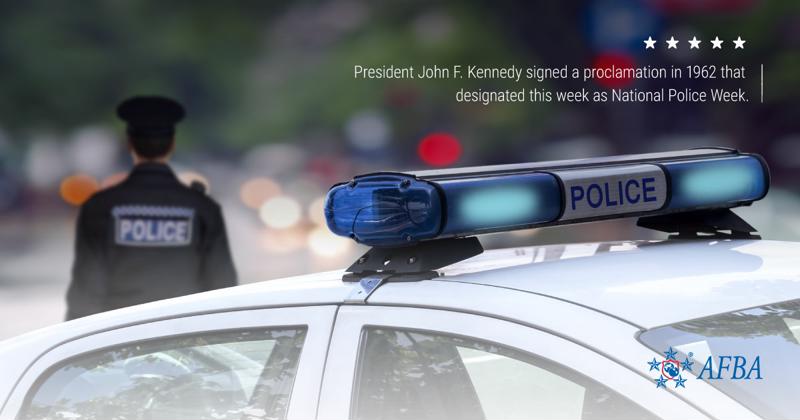
In 1962, President John F. Kennedy signed a proclamation designating May 15 as Peace Officers Memorial Day, and the calendar week of each year during which May 15 occurs as Police Week. The proclamation stated, in part, that the purpose of this holiday and corresponding week was to "pay tribute to the law enforcement officers who have made the ultimate sacrifice for our country and to voice our appreciation for all those who currently serve on the front lines of the battle against crime."
In 1982, the Peace Officers Memorial Service was first held in Senate Park, with approximately 120 survivors and supporters of law enforcement gathering near the steps of the U.S. Capitol. In the decades since, the service has grown into a series of events held in our nation's capital, which draw between 25,000 to 40,000 attendees each year, according to PoliceWeek.org.
Over the years, the National Law Enforcement Officers Memorial in D.C.'s Judiciary Square has become an increasingly important site for National Police Week events. Completed in 1982, the monument features the names of over 21,000 law enforcement officers who have died in the line of duty throughout American history. This year will mark the 30th anniversary of the sculpture's groundbreaking.
In 1994, a subsequent proclamation by President Bill Clinton directed that the flag be flown at half-mast on Peace Officers Memorial Day.
Celebrating National Police Week
This year, there are multiple services and events happening in Washington D.C. throughout Police Week, and the complete schedule can be found online.
From the annual Blue Mass held by first responders at St. Patrick's Catholic Church to the Police K-9 Memorial Service for fallen police dogs, there are many special commemorations taking place in our nation's capital. The largest such event will be the 38th Annual National Peace Officers' Memorial Service, sponsored by the Grand Lodge Fraternal Order of Police and the Grand Lodge Fraternal Order of Police Auxiliary. The service will be held at 11:00 a.m. on Wednesday, May 15, on the West Front of the United States Capitol, and is expected to run for 2 hours. There will also be a wreath-laying ceremony immediately following the Memorial Service.
The event follows the 31st Annual Candlelight Vigil held on the National Mall on the evening of Monday, May 13.
To accommodate the tens of thousands of law enforcement officers who flock to D.C. each year, the Fraternal Order of Police D.C. Lodge #1 sponsors receptions open to all law enforcement personnel each afternoon and evening during Police Week.
Even if you aren't headed to Washington D.C., there are many ways to honor law enforcement officers this week. Communities across the country host their own memorial services, so you may be able to find a local event. And even if there are none happening near you, there are always individual ways to privately remember those who have sacrificed their lives in the line of duty, and to thank the men and women who serve in your local law enforcement agency.
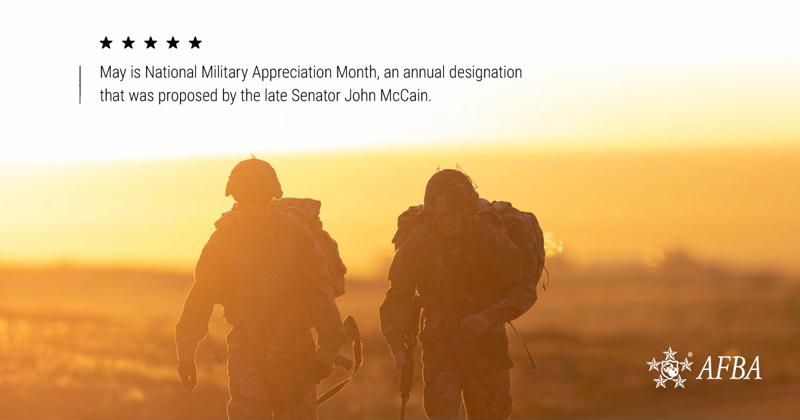
In 1999, the late Senator John McCain, himself a former naval pilot and prisoner of war in Vietnam, introduced legislation to designate the month of May as National Military Appreciation Month. Each and every year for the past two decades, the Senate and House of Representatives have adopted resolutions urging the President to issue a proclamation that calls on the people of the United States to recognize and honor U.S. service members as "an act of national unity."
There are a variety of ways for ordinary Americans to heed this call and pay tribute to the brave men and women who serve our country at home and abroad. From recognizing the many national days of observance that take place throughout the month, to performing individual acts of kindness for service members, here are some of the best ways to demonstrate your gratitude this National Military Appreciation Month.
National observances during National Military Appreciation Month
NMAM kicks off each year on May 1 with Loyalty Day, a special day set aside "for the reaffirmation of loyalty to the United States and for the recognition of the heritage of American freedom." First celebrated in 1921, Loyalty Day was made an official recurring holiday by Congress in 1958, and has been recognized with an official proclamation every year by every president since Dwight Eisenhower.
Every May also presents the opportunity to commemorate Victory in Europe Day, which occurred on May 8, 1945, and represented the end of World War II in Europe. This year, VE Day will fall on Wednesday, May 8, and will mark the 74th anniversary of Germany's unconditional surrender to America and the allied forces.
VE Day is shortly followed by Military Spouse Appreciation Day, which traditionally occurs on the Friday before Mother's Day. On May 10, 2019, Americans will honor military spouses with appropriate ceremonies and activities, and recognize the crucial part that military families have to play in strengthening our Armed Forces.
Celebrated the third Saturday in May every year, and this year on May 18, Armed Forces Day is a time reserved for citizens to come together and thank our military members for their service. This holiday celebrates every member of every branch of the U.S. military: the Army, Navy, Air Force, Marines and Coast Guard.
The last Monday of May is reserved for Memorial Day, a federal holiday meant to commemorate the men and women who died while in military service. This year, Memorial Day falls on May 27, 2019, and events are scheduled to take place throughout the country, with military parades happening in many cities and towns.
How to demonstrate your gratitude this May
There are many individual gestures you can make during NMAM, either in conjunction with one of the individual national observances, or simply as a random act of gratitude.
If there is a specific service member or military family in your life, you can let them know you appreciate their sacrifices with a gift, a thank you card or simply by taking the time to tell them. Offering to cook dinner for a military family or handle their chores on Military Spouse Appreciation Day is a good way to show you care. Similarly, calling and thanking a service member on May 18 is a great way to truly celebrate Armed Forces Day.
If you would like to reach out to service members you are not personally acquainted with, remember that a care package is always welcome. Operation Support Our Troops America has a program that ships boxes full of comfort items to men and women serving abroad, and you can find ways to donate, volunteer or join the mission on their website.
You can also do it on your own. The U.S. Postal Service offers a free "Military Care Kit" with all of the necessary supplies for sending packages overseas, including boxes, packing tape and customs forms. Get your free kit shipped to you by visiting the USPS website.
The brave men and women of the U.S. Armed Forces protect our nation day in and day out, and are deserving of our respect and thanks all year long. But National Military Appreciation Month should inspire us to make a special effort to show our appreciation and display conspicuous acts of gratitude.
April showers bring May flowers, along with a whole host of other special days.
The month kicks off with May Day, and then keeps the celebrations and observances coming, with such holiday highlights as Cinco de Mayo, Armed Forces Day and Memorial Day.
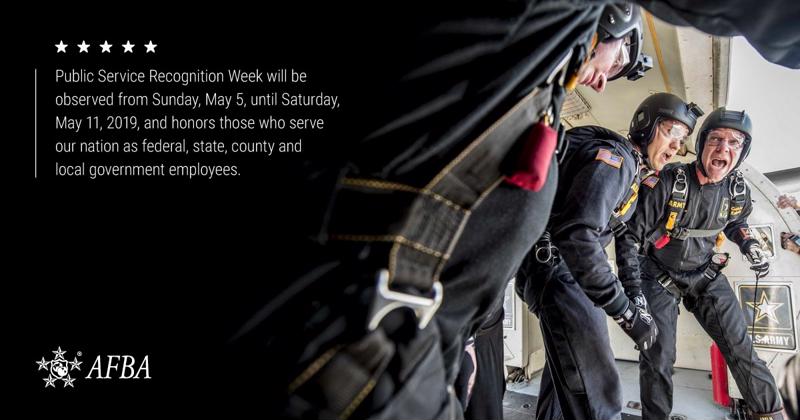
Public servants are fortunate to receive not just one but seven days in this particularly jam-packed month. Celebrated every first full week of May since 1985, Public Service Recognition Week is a time set aside for honoring the men and women who serve our nation as federal, state, county and local government employees.
This year, PSRW will be observed from Sunday, May 5, until Saturday, May 11, 2019, and there will be a variety of ways to mark the occasion.
How to celebrate Public Service Recognition Week
For over three decades, PSRW has been a time not only for ordinary Americans to thank public servants, but for public employees to educate citizens about the work that they do and the reasons that they have chosen public service careers. The program's stated goals include connecting with and educating citizens nationwide about the work of their government, improving the perception and morale of federal workers and other public servants and helping to inspire a new generation of public servants.
To that end, there are several PSRW events planned for this week in May, taking place in a variety of venues ranging from the steps of the Capitol building to some of the smallest towns in the country.
On Sunday, April 28, the festivities got a headstart in the form of the seventh annual Public Service Charity 5K/1M Run/Walk in National Harbor, Maryland. Over 500 runners, walkers and volunteers participated in the D.C. metro area event, raising money to support FEEA, the Federal Employee Education and Assistance Fund's disaster relief, emergency hardship loan and scholarship programs.
And on Thursday, May 9, the finalists for the Samuel J. Heyman Service to America Medals will be announced. Named for the nonprofit, nonpartisan Partnership for Public Service's late founder, the "Sammies" are the Oscars of government service, awarded to exceptional federal workers who are making the government more effective.
Last year's honorees included Margaret Moeser of the Justice Department and Karen Dodge of the Federal Trade Commission, who led criminal and civil investigations that ultimately resulted in nearly $600 million in financial losses being restored to hundreds of thousands of people who were defrauded by money transfer scams. The massive settlement represented the largest forfeiture ever by a money services business.
The 2018 Federal Employee of the Year award went to Dr. Daniel Kastner, Scientific Director at the National Institutes of Health, who identified an entire new class of rare genetic diseases and treatments to help thousands of patients in the U.S. and around the world.
Similar events will take place all over the country, with various FEB Excellence in Federal Government Awards ceremonies scheduled to take place in multiple cities, ranging from Honolulu to Cincinnati.
In our nation's capital, public servants will also get to enjoy the national pastime. On May 14, the Washington Nationals will host National Federal Workforce Day, providing government employees with discounted tickets to that evening's game and featuring an on-field ceremony before the first pitch.
Local government agencies, Federal Executive Boards, military bases and schools are all encouraged to observe Public Service Recognition Week as well, and the official PSRW website has a Celebration Toolkit that can help you plan your participation. The online resources are designed to provide ideas and tools that can help individuals reach out to their community, local media and local educators to encourage everyone to show public servants the respect and appreciation they deserve.
If you've ever wanted to go on a ride along with first responders, but without exposing yourself to the very real and present dangers faced by those who bravely risk their lives responding to emergency rescue calls, you now need only a basic cable subscription to accomplish your dream.
The new documentary television series "Live Rescue" gets up close and personal with real first responders across the country, providing live look-ins at the life-threatening situations they encounter on a nightly basis.
'Live PD' spinoff 'Live Rescue' airing Monday nights on A&E
In March, the A&E channel announced that it was following up its immensely popular "Live PD" series with the spin-off show "Live Rescue."
"Live PD" follows police officers across the country as they perform their nighttime patrols, broadcasting live select interactions they have in the course of duty. The show is hosted by ABC News chief legal affairs anchor Dan Abrams, who is joined in the studio by police and crime analysts. Throughout each episode, viewers are treated to footage from live video feeds for eight different law enforcement agencies.
The series premiered on the network in 2016, and has since aired 200 episodes over the past three years, in the process becoming one of cable's most-watched programs. In 2018, "Live PD" was the most-viewed show of the year on DVR, video on demand and over-the-top media services, topping every chart except, ironically, the live-viewing category.
"Live PD" can also lay claim to being cable's No. 1 justice series, and the No. 1 show on cable on Friday and Saturday nights.
Looking to replicate that success by focusing on a similar yet different breed of hero, A&E ordered eight two-hour episodes of "Live Rescue" from Big Fish Entertainment, the same MGM Company behind "Live PD."

"'Live Rescue' is the next incarnation of our groundbreaking partnership with Big Fish Entertainment, following the brave paramedics and first responders who risk their lives every day to keep us safe despite the challenges of their jobs," said Elaine Frontain Bryant, Executive Vice President and Head of Programming for A&E. "The team at Big Fish has assembled a best-in-class production team of broadcast news veterans and we are looking forward to adding 'Live Rescue' to the A&E portfolio of brave storytelling."
To host the new program, A&E tapped veteran journalist Ashleigh Banfield, whose previous credits include "CNN Newsroom" and HLN's "Primetime Justice with Ashleigh Banfield." In a commercial for "Live Rescue," Banfield says "everyone should know what first responders go through, and now you can."
The first episode debuted live at 9:00 pm ET on Monday, April 22. Banfield was joined in-studio by analysts Dan Flynn, a nationally registered paramedic and registered nurse in New Orleans, Louisiana, and Titus Tero, a nationally registered paramedic for the City of New Orleans EMS.
With the aid of 32 roaming cameras, the trio was able to keep tabs on the exploits of seven different agencies in cities across the country, including the St. Louis Fire Department. The real-time documentary reality series will have three film crews placed on two ambulances and one fire engine every Monday night of the show's initial eight-week run, according to the St. Louis Post-Dispatch.
"Both EMS and fire do a phenomenal job of keeping the city safe every day," department spokesman Garon Mosby told the Post-Dispatch. "We think this is an opportunity to show the world how good they are."
Less than two weeks after the youngest of America's military reserve components celebrated its birthday, now the oldest member of the family is preparing to observe its own anniversary.
On April 14, 2019, the United States Air Force Reserve turned 71 years young, and on April 23, the U.S. Army Reserve will celebrate 111 years of age. In addition to being the country's oldest reserve component, the USAR also holds the distinction of being the largest, with nearly 200,000 members.
With more than ten decades of existence to draw from, the U.S. Army Reserve has a rich historical tradition that is worth remembering and honoring as the nation celebrates its most recent anniversary.
Army Reservists crucial to US military operations since WWI
Though officially only 111 years old, the Army Reserve could legitimately trace its roots back as far the French and Indian War of the mid-1700s. Until the 19th century, America did not require a large standing army, and so relied heavily on the militias of individual states.
It was not until April 23, 1908, that Congress first created a Federal Reserve Force. As a response to mobilization and preparedness issues that the country had experienced during its wars of the 1800s, the United States created the first reserve force to exist under direct command and control of the federal government, known then as the Medical Reserve Corps.
A few years later, the "Preparedness Movement" led by former President Theodore Roosevelt would help secure passage of the National Defense Act of 1916, which created the Officer's Reserve Corps, the Enlisted Reserve Corps and Reserve Officers' Training Corps. When war was declared the following year, the ranks of the Officer Reserve Corps swelled dramatically.
In total, the Army mobilized nearly 90,000 Reserve officers during World War I, roughly a third of whom were medical doctors, which quadrupled the Army's capacity to care for the sick and wounded.
Following the Great War, Congress used the National Defense Act of 1920 to reorganize the U.S. land forces by authorizing a Regular Army, a National Guard and an Organized Reserve, which encompassed the Officers Reserve Corps and Enlisted Reserve Corps and provided a peacetime pool of trained Reserve officers and enlisted men.
This proved to be a wise decision when America was once again plunged into a global conflict. According to the USAR, roughly one quarter of all Army officers who served in World War II came from the Organized Reserve, and from 1943 to 1944, Reserve officers constituted over half of all officers killed in action.
Having further established their importance in WWII, the Organized Reserve was rewarded with retirement and drill pay for the first time in 1948. Two years later, Reservists were again called into action, with more than 240,000 Army Reserve Soldiers serving in active duty during the Korean War. It was also during that conflict that Congress officially changed the Organized Reserve Corps into the United States Army Reserve, and divided the new organization into a Ready Reserve, Standby Reserve and Retired Reserve.
According to Military.com, the USAR was only mobilized twice during the subsequent Cold War: from 1961-1962, when over 68,500 Army Reserve Soldiers responded to the Berlin Crisis, and from 1968-1969, when nearly 6,000 were called into action as part of the Vietnam War.
In recent years, though, the U.S. Army Reserve has become more essential than ever to our nation's military operations across the globe. Both the Army Reserve and the Army National Guard have been routinely called upon to serve both locally and globally, though primarily in Iraq and Afghanistan. Since September 11, 2001, over 200,000 Army Reserve Soldiers have been activated in the Global War on Terrorism, outnumbering the number of Reservists in WWII.
Simply put, the nation cannot go to war without its Army Reserve Warrior Citizens, all of whom are owed a debt of gratitude as we celebrate the protection they have provided for well over a century.
Members of the U.S. Armed Forces bravely put their lives on the line for their country, regularly putting themselves at risk of both physical and mental injuries that can create lifelong scars. Some of these occupational hazards are obvious, while others are lesser known and cry out for more attention.
A 2016 United Health Foundation survey of one million veterans and civilians found that the former group was more likely than the latter to contract arthritis (25 percent for vets compared to 23 percent for civilians), cardiovascular disease (10 percent versus 7 percent), cancers (11 percent versus 10 percent) and illnesses that leave them functionally impaired (26 percent versus 21 percent).
Along those same lines, a North Carolina Medical Journal study concluded that osteoarthritis is one of the leading causes of military discharge during armed conflict, second only to combat wounds.
With more active-duty personnel and veterans developing arthritis as a result of their service, advocates are now asking Congress to increase funding for more research into potential methods for combating the disease.
ACR lobbying CDMRP to designate arthritis a research subject
In total, arthritis encompasses more than 100 diseases, including both degenerative and inflammatory varieties. The inflammatory forms typically involve immune-system disorders like lupus or rheumatoid arthritis.
Considering the types of physical activity mandated by military life, no one should be too surprised by the sheer prevalence of the disease among those who serve. The most susceptible service members are those who suffer knee injuries while deployed, with one recent study showing that one in five military members with a knee injury develop radiographic arthritis before the age of 30, cutting short the careers of many heroes still in the prime of their life.
"[Young veterans with arthritis] will be looking at a knee replacement in their early 40s versus a peer in the civilian world that may not have been subjected to a mechanical injury getting a knee replacement in their 60s or 70s," Dr. Colin Edgerton, chair of the American College of Rheumatology's Committee on Rheumatological Care, told the Military Times.
A former Army rheumatologist, Dr. Edgerton spent his time in the military treating soldiers with musculoskeletal disorders and, as part of his duties, had to judge whether those with arthritis needed to be medically discharged. Witnessing first-hand the impact the disease had on service members' lives and careers turned Dr. Edgerton into a fierce advocate for arthritis prevention.
"It's about stopping those injuries before they occur so that that person is not looking at early joint replacement surgery and disability at a point in life where they otherwise would not have had that," he said.
Dr. Edgerton and the American College of Rheumatology are hoping legislators will fund research that may uncover new methods of prevention and treatment. More specifically, they're hoping to have arthritis listed as a "line item" in the Congressionally Directed Medical Research Programs budget for fiscal-year 2020, which would mark the disease as a research subject worthy of sharper focus and increased funding.
"If there was a dedicated line in that research budget for arthritis, that would go a long way toward establishing kind of a sustainable focus on arthritis, since it is such a high-impact disease in the military population," Dr. Edgerton stressed.
Arthritis was previously listed as an area of interest in the Army's 2018 Medical Research and Material Command program, but only received roughly $6 million in research funding. By contrast, in 2019 the CDMRP allocated $130 million for breast cancer research.
Though the Congressional Arthritis Caucus made a failed attempt to have the disease included as a line item in the 2019 CDMRP, Dr. Edgerton hopes 2020 will be the year Congress finally funds research into this career-killing and life-altering ailment.
"Just three years ago we kind of recognized that this is something that needed to be done and each year we … get more support," he noted optimistically. "So we hope this is the year that we actually get it done."
April is designated the Month of the Military Child, a time for recognizing and paying tribute to the youngest soldiers fighting the war at home. Though the sacrifices of military members and their families are always worth valorizing, this month is set aside for focusing specifically on the experiences of the dependent children of military members serving at home and overseas.
Whether living the life of a "military brat" and bouncing from town to town or country to country, or having to live without a deployed parent for months at a time, military children have unique and often trying experiences that their civilian counterparts likely could never relate to.
Month of the Military Child 2019 is sponsored by the Department of Defense Military Community and Family Policy and supported by many other organizations, including the Department of Defense Education Activity.
Celebrate Purple Up! For Military Kids Day
Each April, DoDEA communities around the world celebrate the Month of the Military Child with Purple Up! For Military Kids Day, in which participants wear purple to show their support and appreciation of military children. The symbolism of that color is meant to convey that all branches of the military are supported, as it combines Air Force blue, Army green, Navy blue, Marine red and Coast Guard blue into a purple shade.
According to the agency's website, this year's Purple Up! celebrations will take place from April 8 through 12 at DoDEA Americas schools, and on April 17 at DoDEA Europe and Pacific schools.
You can celebrate Purple Up! in your own community by, of course, wearing purple, but also by encouraging others to participate, as well. Ask schools and teachers to recognize the event, and see if you can get local businesses and officials to wear purple, as well.
Other Month of the Military Child 2019 events in April
Like many similar celebrations that focus on military recognition, the Month Of The Military Child tends to be observed within military communities, often with parades, fairs, seminars and special events. There are, however, some communities, schools and organizations outside of military bases that participate as well.
Some military-related private organizations use April as an opportunity to tout some of their year-round programs. The Military Child Education Coalition, for example, will emphasize its stated goal of ensuring "inclusive, quality educational opportunities for all military-connected children affected by mobility, transition, deployments and family separation."
The group offers student-led "Student 2 Student" programs, as well as a "Parent To Parent" version year-round, and during the month of April, provides Month Of The Military Child downloadable toolkits and other resources.
Throughout the month, there are also the usual military base-level events, ceremonies, contests and special nights celebrating military families and their children. Because so many of these events are sponsored by military communities, those looking for ways to get involved in the celebrations should search for events with the base Public Affairs office, Military Family Readiness Centers, Department of Defense Dependent School admin offices and on-base Child Development Centers. The Military Times also recommends checking for activities listed at Morale Welfare and Recreation Centers in military installations both at home and abroad.
Whether you simply "purple up" your wardrobe, participate in a celebratory event or do something special for the military child in your life, this month is the perfect time to show the son or daughter of a U.S. Armed Forces member how much you appreciate them.
On April 14, 2019, the United States Air Force Reserve will turn 71 years young.
Last year, the Air Force Reserve held a cake-cutting ceremony at the Pentagon in honor of its 70th anniversary. Now that the military organization is turning 71, you may marvel at its advanced age, but it is actually the youngest of all the various reserve components. At 110 years old, the U.S. Army Reserve is the oldest of the bunch, followed by the 104-year-old Navy Reserve, the 102-year-old Marine Corps Reserve and the 78-year-old Coast Guard Reserve. Even the Air National Guard is one year younger than the Air Force Reserve.
Despite being the youngest sibling in the family of reserve corps, the Air Force Reserve has piled up an impressive number of accomplishments over its more than seven decades of history.
Over 70 years of distinguished service
Although the reserve component traces its lineage back over a century to the Reserve Airpower that was established by the National Defense Act of 1916, the official birth date of the U.S. Air Force Reserve is April 14, 1948. That's the date when the Army Air Corps Reserve was transferred to the Air Force, officially creating the Air Force Reserve as a separate component. The air reserve was formally established by President Harry Truman, who was seeking to create a program similar to one established during WWI, in which Reservists stood ready to serve during wartime.
The Air Force Reserve replaced Continental Air Command, which inactivated in 1968, at which point AFRES assumed command of all personnel, equipment and aircraft previously assigned to ConAC.
In 1970, Secretary of Defense Melvin Laird adopted the Total Force concept, which Secretary of Defense James Schlesinger declared policy in 1973. Once implemented, the Air Force Reserve became a multi-mission force, flying the same modern aircraft as the active Air Force and being held to the same readiness standards and inspections as regular Air Force units.
During the Cold War, Reservists continually volunteered for both military and humanitarian efforts, from the Israeli Airlift of 1973 to the resupply and evacuation missions undertaken in the aftermath of 1989's Hurricane Hugo.

Within days of Saddam Hussein's invasion of Kuwait in 1990, Air Force Reserve airlift and tanker crews were in the air, with AFRES special operations and rescue forces and Air Force Reserve A-10s operating close to the frontlines. According to the Air Force Reserve Command, it was a Reservist who scored the first-ever A-10 air-to-air kill.
When the United States was attacked by terrorists on September 11, 2001, Air Force Reservists were quickly out in full force, with Air Force Reserve F-16 fighters flying combat air patrols over America's cities with KC-135 tanker and AWACs providing air refuelings and security.
In recent years, the Air Force Reserve has become an increasingly integral part of the Air Force's efforts to engage in combats and global operations.
Today there are nearly 70,000 Citizen Airmen stationed in communities throughout the United States and overseas, serving every Combatant Command in air, space, and cyberspace.
"From the sands of Iraq to the mountains of Afghanistan from the jungles of South America to the Antarctic icecap, in the skies above the nation, inside hurricanes threatening our coastal areas and through wildfires endangering our countryside, dedicated Reservists answer the call to duty symbolizing the values of integrity, service before self, and excellence in all we do," according to the Air Force Reserve's official mission statement.
In honor of its 71 years of service to the United States, Americans everywhere should take the opportunity on April 14 to salute the U.S. Air Force Reserve for providing Citizen Airmen prepared to "fly, fight and win."
In 2011, the U.S. Department of Veterans Affairs surveyed U.S. veterans and found that a third of them were interested in childcare services, and more than one in ten said they had canceled or rescheduled at least one VA appointment due to lack of childcare. In response, the VA initiated a pilot program that set up three child care centers with free drop-in services for veterans with children.
Because the pilot was set to expire after one year, Congress had to reauthorize it four times since it first launched. However, it now appears likely that the program will finally become permanent, after the U.S. House of Representatives recently passed legislation that would provide free child care for certain veterans at VA facilities nationwide.
Bill would help veterans with issues requiring intensive and recurring treatment
The Veterans' Access to Child Care Act, H.R. 840, would provide free child care to veterans who are seeking help from the VA for certain intensive and recurring medical and mental health care issues, such as treatment for cancer or therapy for post-traumatic stress disorder. The law would expand and make permanent the 2011 pilot program, which has grown from three to five locations in the last few years.
In 2015, the VA estimated that more than 10,000 children had received free daycare in the first four years of the program's existence, with women veterans taking advantage of the program in significantly higher numbers than their male counterparts, according to Stars and Stripes. This was part of the VA's justification for starting the pilot, based on their estimation that women would constitute 10 percent of the veteran population by 2020, and 9.5 percent of all VA patients.
The legislation requires the VA to either provide child care on site, provide veterans with a stipend for the full cost of child care at licensed facilities, directly pay the facilities or collaborate with other agencies. The bill would also extend to grandparents and other primary caretakers.
"We made a promise that our veterans will get the care they've earned," Rep. Julia Brownley of California told the Military Times. "We can't put insurmountable roadblocks in front of their ability to receive that care."
Brownley introduced the legislation, and said that the VA secretary will ultimately determine which veterans are eligible for the program, but the intent is to help those with serious health care problems that require
"For example, a veteran who is undergoing cancer treatment cannot afford to miss medical appointments – and may need a safe place to leave their young child while they receive chemotherapy or radiation therapy," said Rep. Brownley. "Likewise, veterans who have regular mental healthcare appointments may need assistance with child care, because it would be inappropriate for young children to be present for tough conversations with a therapist."
The bill still needs to pass the Senate before it can be signed into law, but it appears to have broad bipartisan support.