
The United Service Organizations will be celebrating its 78th birthday on Monday, Feb. 4, 2019.
Better known as the USO, the private, not-for-profit organization works in cooperation with the Department of Defense to provide live entertainment and other services to members of the United States military and their families.
Born in 1941, the USO claims six different parents—the Salvation Army, the YMCA, the YWCA, Catholic Community Services, National Travelers Aid Association and the National Jewish Welfare Board. President Franklin D. Roosevelt asked the six agencies to combine their resources to boost the morale of troops fighting in World War II.
Although congressionally chartered, the USO is not a government agency, and has relied on charitable donations and the efforts of tens of thousands of volunteers for all of its nearly eight decades of history.
A new organization gives Hope to America's heroes
After being formed in 1941, the USO quickly became known for its live performances, which began with stateside military theaters spread throughout the country, and soon led to Hollywood stars heading overseas to entertain the troops.
Of those stars, the one most closely associated with the organization was comedian Bob Hope, who performed his first USO show only three months after its founding. Hope went on to entertain troops for the next 50 years, making his last trip overseas in 1990 during the Gulf War.
In 1997, the U.S. Congress declared Bob Hope the "first and only honorary veteran of the U.S. armed forces," in recognition of his half a century of entertaining those serving in the nation's wars. The USO Center at the Los Angeles International Airport also bears his name.
Of course, no one could have originally imagined that Hope would eventually develop such a lengthy tenure as an ambassador for the USO—especially since the organization originally disbanded in 1947, after the Axis powers surrendered and ended WWII.
But in 1949, with America at the beginning of what would eventually become a lengthy Cold War, the USO's six original founding organizations decided to revive the agency. But due to funding issues, it wasn't until the Korean War began that the USO was back entertaining troops overseas, and the Defense Department earmarked $13 million for the organization's operations.
Yet the agency dealt with similar funding issues after the war concluded, and became dormant once more, remaining inactive until the U.S. entered the conflict in Vietnam.
Eventually, the USO received a government charter, and the organization also began placing more emphasis on improving the lives of military families, while still providing entertainment to soldiers as well.
Over 35 million troops served
Today the USO claims over 200 locations spread across 14 countries, including America, where it has a presence in 27 states. Over 30,000 volunteers help the organization realize its mission, as do the many musicians and entertainers who continue to perform live shows for military service members.
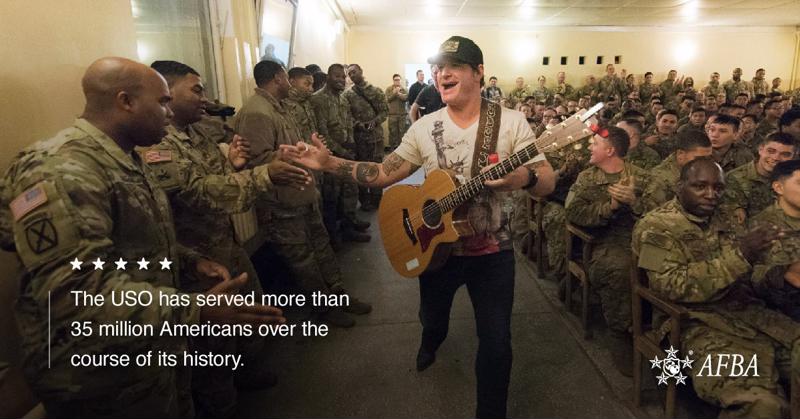
In 2016, during a gala event to celebrate the USO's 75th birthday, retired Army Gen. George W. Casey Jr. estimated that the USO had served more than 35 million Americans over the course of its history, according to The Providence Journal.
That service continues to take many forms, including family counseling for military members returning home from deployment, services for troops at airports as they travel to and from duty overseas and various programs that allow those deployed overseas to connect with their families stateside
As mentioned, the USO is a charity organization with a small paid staff, which relies on volunteers and charitable donations. To give the USO a birthday gift, head to their donation page and show your support.

Late last year, just days before breaking for the holidays, the 115th United States Congress managed to pass two pieces of legislation aimed at improving education benefits for members of the military transitioning into civilian life.
The Forever GI Bill Housing Payment Fulfillment Act, which was designed to correct mistakes made by the Department of Veterans Affairs that led to delayed and inaccurate payments for thousands of Post-9/11 GI Bill users, passed both houses with unanimous consent. Further bipartisan support was shown for the Veterans Benefits and Transition Act, which had a similar goal of protecting student veterans, as well as easing voting rules for military spouses and expanding burial benefits for military families, among other provisions.
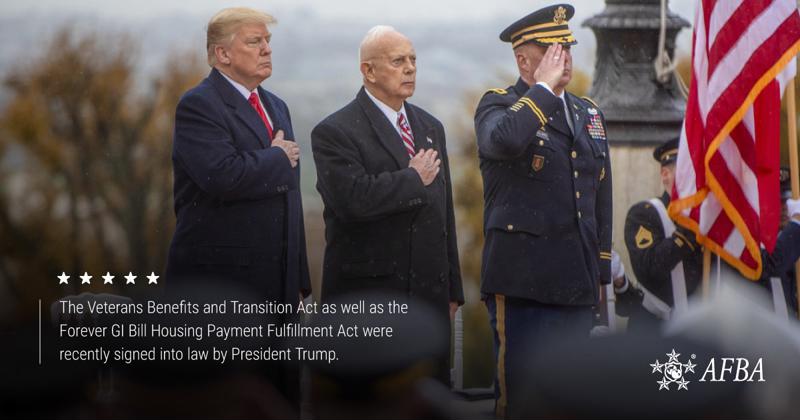
President Donald Trump has since signed both bills into law. Here's what the new legislation will mean for military members and veterans moving forward.
GI Bill students underpaid due to VA errors to receive reimbursement
The first bill pertains to those taking college classes or getting on-the-job training through the Post-9/11 GI Bill, which provides up to 36 months of education benefits to qualifying veterans or active duty military members with at least 90 days of aggregate active duty service after Sept. 10, 2001.
Veterans were previously required to use these education benefits within 15 years of completing their service, yet that deadline was erased with the creation of the Forever GI Bill. Unfortunately, a Forever GI Bill provision that changed the way housing stipends are calculated was not implemented on time due to major technology failures at the Department of Veterans Affairs, which led to many students being underpaid, according to Military Times.
Not only did some students struggle to pay their rent or mortgage bills as a result, but many were also hit by late fees for tuition that the VA also failed to pay on time.
The Forever GI Bill Housing Payment Fulfillment Act of 2018 holds the VA accountable for retroactively fixing inaccurate payments and reimbursing affected students, while also barring schools from the practice of charging GI Bill students for tuition payments that are delayed through no fault of their own.
"For many student veterans, every dime counts," said Sen. Brian Schatz, D-Hawaii, who co-sponsored the bill. "That's why the VA needs to get this right and pay student veterans the full amount of money they were promised. I'm glad that my colleagues in the Senate saw how important this issue is, and I hope this bill stays on the fast track to becoming law, so we can make this right for our veterans."
More benefits for student, transitioning and homeless veterans
These student veterans protections are complemented by a provision in the new Veterans Benefits and Transition Act of 2018, which requires the Department of Veterans Affairs to provide GI Bill users with electronic proof that they will be receiving housing payments from the VA.
The new requirement will enable students to prove to landlords their ability to pay for housing even if they are a full-time student without active employment. The new law also enables the spouse of a service member who dies on active duty to terminate a residential lease without penalty for up to one year after the death.
In addition to students, transitioning service members and homeless veterans are also set to receive greater assistance acclimating to life on the homefront, thanks to the new law.
The VA is now required to contract with a non-federal entity to identify and post a list of programs and organizations that can help service members transition out of the military.
Another provision gives homeless veterans up to 60 days after moving into housing to apply for employment assistance under the federal Homeless Veterans' Reintegration Program. Previously, only veterans living on the streets or in a shelter were eligible for assistance.
The spouses and family members of U.S. military members are also impacted by the new legislation, according to Air Force Times.
Military spouses are now allowed to use the same residence as their active-duty spouse for state and local voting purposes, whether or not they meet the residency requirements of a state on their own merits.
The law also extends veteran burial rights to the spouses and children of active-duty service members, even if they pass away before the military member. Previously, being buried in veteran cemeteries required approval from the VA.
When President Trump first suggested the creation of a Space Force during a March 2018 speech, the grand and seemingly sci-fi proposal was met with mockery in some corners.
Some of the more serious criticisms of the idea came from the Air Force Association, which voiced objections based on the “indivisible” nature of air and space and the high cost of creating a separate military branch. The AFA instead suggested merging the current air and space forces of the United States into something called the “United States Aerospace Force.”
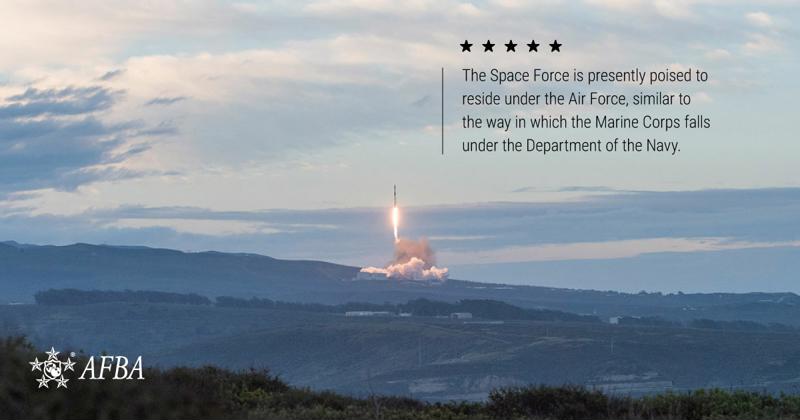
Though it now appears the Aerospace Force counterproposal will not come to fruition, after months of deliberation, the Space Force is presently poised to reside under the Air Force, according to Defense News.
Sixth branch of military would fall under Department of the Air Force
A draft of a legislative proposal set to be put forward with the fiscal year 2020 budget states, “There is established a United States Space Force as an armed force within the Department of the Air Force,” reports Defense News.
The relationship will be similar to the way in which the Marine Corps falls under the Department of the Navy.
The new, sixth branch of the military will be overseen by two newly created roles, the undersecretary of the Air Force for the Space Force and a Space Force chief of staff. The latter will sit on the Joint Chiefs of Staff, joining the Military Service Chiefs from the Army, Marine Corps, Navy and Air Force, and the Chief of the National Guard Bureau.
Though no one has gone on the record to outline the details of the legislative draft, the existence of the draft was at least confirmed by a statement from Lt. Col. Joe Buccino, who said, “In concert with White House guidance, we are moving forward with a legislative proposal for Space Force.” The proposal is reportedly set to be submitted to the Office of Management and Budget for inclusion in the Department of Defense budget sometime soon.
 “The appearance of U.S. Department of Defense (DoD) visual information does not imply or constitute DoD endorsement.”
New proposal seen as big win for Air Force
This decision represents a major victory for the Air Force, which took issue with President Trump’s earlier statement that the two branches would be “separate but equal.”
At the time, the creation of a new bureaucracy was opposed by now-former Defense Secretary Jim Mattis and active Air Force Secretary Heather Wilson. Though the latter eventually announced her support for the creation of a Space Force, it seems clear that the Air Force would like to continue to have a say in the area of military space, as the branch currently manages a three-star Space Command headquartered at Peterson Air Force Base in Colorado.
Of course, just because the Air Force is satisfied with the new proposal does not mean that Congress will be, and political opposition could still keep Space Force from launching.
Representative Adam Smith of Washington, the incoming chairman of the House Armed Services Committee, has previously voiced opposition to the high cost of creating a separate service, reports ABC News. Estimates vary, as the Air Force projected that a new service could cost $13 billion over the first five years, while Deputy Secretary of Defense Patrick Shanahan put the figure at less than $5 billion.
For now, it remains uncertain whether Space Force will ultimately become a separate branch of the United States military or a new branch under the Air Force.

The government shutdown that began on Dec. 22 has continued on into the new year, amid threats that it could last for months. The length of the shutdown has broken the previous record of 21 days, which was set during the government shutdown that extended from Dec. 5, 1995 to Jan. 6, 1996.
Much attention has been paid to the impact that the shutdown has had on government workers, as hundreds of thousand of federal employees have been furloughed or are working without pay. Yet the shutdown is impacting the livelihood of more than just those directly employed by the federal government, as many government contractors are now also feeling the pinch.
A range of responses from contractor community
How deeply a government contractor is impacted by the shutdown depends largely on the nature of their work.
"The government shutdown has certainly created anxiety throughout the contractor community, but the impact is very different for each contractor depending on which government clients the contractor serves," said Mark Colturi, executive vice president of Sevatec, an advanced technology company that has partnered with the government on border security and data protection.
"For some government contractors, including Sevatec, contracts are operating close to normal," Colturi said in an interview with Clearance Jobs. "In other circumstances, government contractors have been issued stop-work orders, which can be very difficult on employees who may have to take vacation time or leave without pay."
Whether a government contractor continues working throughout the shutdown is largely determined by whether or not their contract is deemed critical. Companies that have hundreds of individual government contracts, both of the essential and inessential variety, typically have some of their workforce operating at full capacity, and other employees working at diminished capacity.
Defense industry expressing concerns
Defense firms are among the government contractors most worried about the effect that this indefinite pause in business could have on the continuation of business as usual.
While the Defense Department has been funded for fiscal year 2019, allowing work on the military's weapons programs to continue uninterrupted, many defense companies hold contracts with agencies that have not received funding, according to Defense News. Among the agencies going without funding during the shutdown are NASA and the Department of Homeland Security, which includes the Coast Guard, Customs and Border Protection.
One notable example of shutdown consequences is the suspension of weapons sales and transfers to U.S. allies due to the closure of the State and Commerce Departments.
Now defense industry figures and lobbying groups such as the Aerospace Industries Association are advocating for an end to the government shutdown, and warning that its extension could have a negative impact on the balance of federal employees and contractors.
"There might be near-term collateral damage if people leave government service, but a 1-3 year factor to consider is how this shutdown and the potential for future ones accelerates reliance on federal service contractors," Byron Callan, an analyst for Capital Alpha Partners, said to Defense News.
Senators propose authorizing back pay for contractors
The Washington Post recently reported that a group of 34 Democratic United States senators released a letter urging federal agencies to work with contractors to provide back pay for low- and middle-income workers impacted by the government shutdown.
The senators argued that agencies have the authority to negotiate back pay for contracted employees, and therefore should act to ensure that the most vulnerable contracted workers are still paid during the shutdown.
Whether agencies will act to ensure that government contractors aren't going without paychecks, or if and when an agreement between Congress and the White House will eventually be reached, remain looming questions as the government shutdown lingers on.
The deadliest and most destructive wildfire in California history, Camp Fire caused at least 86 civilian fatalities, injured 12 civilians and 5 firefighters and wiped out thousands of homes and other structures.
Yet while many tragic stories came out of the recent California wildfires, the natural disaster also served to highlight the truly inspiring level of commitment and heroism that our nation's first responders are capable of achieving.
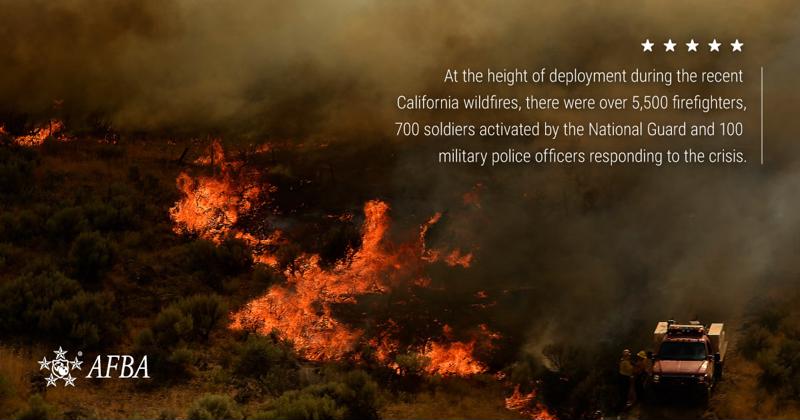
At the height of deployment, there were over 5,500 firefighters, along with 700 soldiers activated by the National Guard and 100 military police officers, many of whom went above and beyond the call of duty.
Many first responders help others despite own losses
Many of the first responders who worked to contain the blazes and assist those endangered or displaced by the disaster served in spite of the fact that they themselves had lost their homes in the fire.
According to CNN, four days after Camp Fire began, there were more than 50 firefighters working to contain the fire that had already destroyed their own homes. Similarly, more than 30 sheriff's deputies reported for duty even though they too had lost their homes, according to the Butte County Sheriff's Office.
Several tales of selflessness have emerged, including one of a first responder who engaged in a firefight that was just blocks away from his own home, unsure whether his house was itself burning, or whether his fiancée had gotten out.
Police Sergeant Jarrod Hughes at least had time to get his son and animals out of his home and to safety when the fire got closer, but immediately afterwards he got his uniform and patrol car and headed back to help.
"It's my community. It's where I grew up. It's something I absolutely had to do," Hughes explained to CNN affiliate KTXL. "There was no question about it. It was get my family to safety so I can get in and get back up there and help everybody else."
Leland Ratcliff, captain of the US Forest Service's Feather River Hotshot crew, had a similar rationale for choosing to evacuate neighbors when he still had keepsakes and other valuable items he could have been rescuing from his own home.
"We just do what we do because we like it. We like helping people," Ratcliff said when asked about the bravery of first responders. "The adrenaline rush and helping people. We like making a difference."
First responders still serving during the holidays
As one would expect, the first responders called to action during the California wildfires didn't take any time off for the holidays.
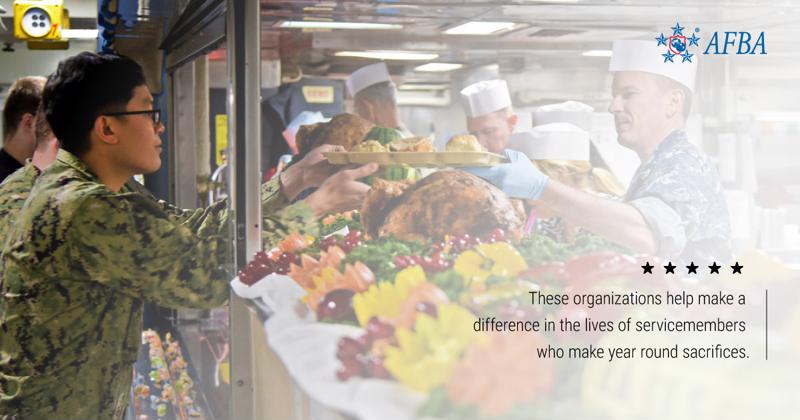
On the contrary, many were still serving on Thanksgiving, and in some cases, literally serving meals to those living in tents after Camp Fire destroyed their homes.
"To me this is almost like… I'd rather be here," firefighter Jim Irving told CBS. "You know it's helping other people and that's part of what Thanksgiving's about."
Irving had already spent weeks on the fire when he decided to provide meals to strangers instead of having dinner with his family.
On a holiday devoted to the concept of gratitude, the sacrifices of first responders like Irving did not go unappreciated by those who benefited.
"I thank every one of them as soon as I meet them," said wildfire victim Ron White, who lost his home and his father's home in Camp Fire. "I think that these are absolutely wonderful people. They deserve every consideration that they can get."
Massive data breaches dominated the headlines in 2018. In fact, if it seemed like there were even more stories about data breaches this past year than in 2017, that's because there were.
Although none were as newsworthy as the Equifax data breach of September 2017, occurrences were still on the rise this past year, with cyberattacks increasing by 32 percent in the first three months of 2018 and by 47 percent during the April to June period. And in December alone, high profile breaches of Dunkin', Marriott and Quora were announced within the span of a few days.
Billions of people have been affected by these hacks, and it's more likely than not that you're one of them, according to USA Today.
And it's not just corporations that are putting customers' personal information and other data at risk, but also government contractors that are sometimes entrusted with even more sensitive information about federal employees.
In light of these data breaches, the U.S. government's lead contracting agency recently announced changes to the requirements for how and when contractors are to disclose data breaches.

GSA announces new requirement for contractors
In November, the General Services Administration proposed a rule which would mandate that the GSA and the agency that's being served by the government contract have access to breached contractor systems. This would also require contractors to preserve images of the affected systems for the purpose of government review.
An independent agency of the United States government, the GSA supplies products for government offices, transportation and office space for federal employees and government-wide cost-effectiveness policies and other management tasks for federal agencies. Founded in 1949, the agency employs 12,000 federal employees, and is now the United States government's leading contracting agency.
The GSA's proposed rule regarding breached contractor systems is not scheduled to be published until February, and will come with a comment period that closes in April.
New rule a direct response to past contractor data breaches
This new requirement is likely inspired by the overall rise in cyberattacks, as well as recent incidents in which contractors were the victims of hacks.
For example, according to Nextgov, there were two separate contractor breaches in 2014 that exposed the background check information of approximately 73,000 government employees collectively.
The following year, there was the much larger Office of Personnel Management breach, which exposed background checks on more than 20 million current and former federal employees, as well as their families.
A February 2018 report from cybersecurity firm BitSight concluded that 5.6 percent of aerospace and defense contractors and 8 percent of health-sector government contractors had disclosed a data breach since January 2016.
The report also found that contractor cybersecurity was generally much lower than that of federal agencies.
Under the GSA's proposed amendments to the General Services Administration Acquisition Regulation, any data breach that compromises the "confidentiality, integrity, or availability" of data or information systems owned or managed on behalf of government agencies would need to be disclosed by government contractors. The mandate will also outline the ways in which the U.S. government will use and protect any proprietary information which a contractor shares in the process of a breach investigation.
"By incorporating cyber incident reporting requirements into the GSAR, the GSAR will provide centralized guidance to ensure consistent application of cybersecurity principles across the organization. Integrating these requirements into the GSAR will also allow industry to provide public comments through the rulemaking process," said the GSA.
We're often told around this time of year that it feels better to give than to receive, and that's especially true when the recipients of your generosity are those who have sacrificed the most for our country.
If you are a servicemember, you don't get to enjoy the kind of "Christmas bonuses" that many civilians see showing up in their paychecks during this season. Yet many military families badly need such a boost, especially when trying to purchase presents for their children on an already tight budget.
Fortunately, if you have a little money and kindness to spare, you can help make a difference in the lives of those who make year round sacrifices for all of us. Here are a few organizations that will help you have an impact:
Full Circle Home
Founded in 2007, Full Circle Home seeks to provide a link between deployed service members and their loved ones at home or on base. In a little over a decade, the organization has assisted over 21,000 troops in sending holiday gifts and love notes to their partners on the homefront. If you donate, you can help provide that connection between heroes serving overseas and their stateside significant others.
Pay Away the Layaway
Since 2011, Pay Away the Layaway has gone to cities across the country during both the back-to-school and holiday seasons to pay off the balances of families buying classroom supplies and Christmas gifts on layaway. Those interested in helping can become a "Layaway Angel" by making a donation to the nonprofit, or going directly to the layaway counter at their local Kmart, Walmart or Burlington Coat Factory and paying down a family's debt.
Right now, Military Benefits has partnered with Pay Away the Layaway to raise funds specifically for military families struggling to afford toys and other holiday gifts. You can donate here to help them meet their $5,000 goal.
Operation Christmas Spirit
Operation Help A Hero is an all-volunteer charity that seeks to support military units and families as they deal with difficulties related to the various stages of service, from preparing for separation, to deployment and the eventual transition back to the U.S.
Each year, the organization launches Operation Christmas Spirit, which has been showering military families with holiday gratitude for the last 16 years. There are many ways to help out, from hosting a toy drive to collecting gift cards to simply donating online and letting other volunteers do the holiday shopping.
If you'd like to get really involved, you can even "adopt" a military family and do their shopping for them. This late into the season, Operation Christmas Spirit encourages people to donate money instead, but if family adoption interests you, it's something to keep in mind for next year.
Operation Holiday Joy
The Armed Services YMCA is one of the best-rated charities in America, having been recognized by both Charity Navigator and Independent Charities of America. So you can be confident when the ASYMCA promises that 100 percent of your donation to their Operation Holiday Joy program will go directly to providing food and toys to deserving military families, as long as you check a box on your donation form requesting that they cover the processing costs.
For the last 14 years, Operation Holiday Joy has managed to raise more than $1.5 million, which has been used to purchase over 320,000 toys and in more than 25,000 baskets of food delivered to deserving military families on Thanksgiving and Christmas.
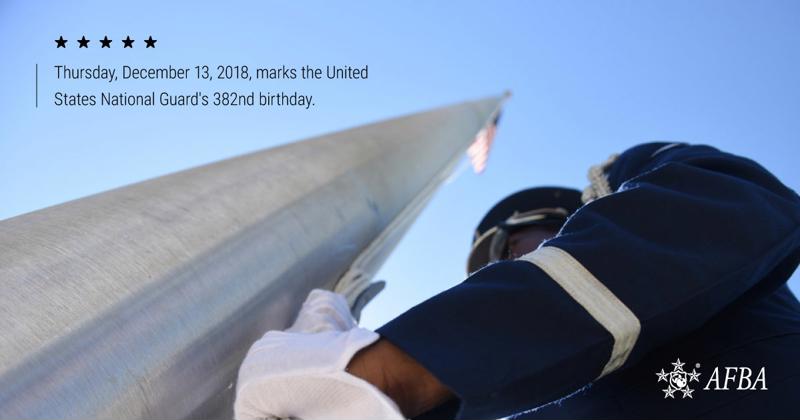
On Thursday, December 13, 2018, the United States National Guard will celebrate its 382nd birthday, making it 140 years older than the nation it protects.
Today, the reserve military force represents a joint effort on the part of two branches, the United States Army and Air Force. The Army National Guard and Air National Guard are garrisoned in all 50 states, as well as the District of Columbia and the territories of Guam, Puerto Rico and the Virgin Islands.
There's been quite a bit of history since the first militia organized in 1636, and this anniversary presents the perfect opportunity to reflect on the nearly four centuries during which the Guard has been "Always Ready, Always There!"
The history of the U.S. National Guard
Militia forces were first mustered in what is now the United States as early as 1565, when Spanish settlers in St. Augustine were tasked with guarding supplies during the onset of a hurricane, while regular troops were up north attacking a French settlement on the St. Johns River. In the early 1600s, militias were mustered in the New World's first permanent English settlements of Jamestown Colony and Plymouth Colony, which originally consisted of all able-bodied adult men.
However, according to the Department of Defense, the official birthdate of the National Guard took place on December 13, 1636, when the Massachusetts colonial legislature officially directed the colony's existing militia companies to be organized into three regiments. Today, the four descendants of that initial trio of regiments — the 101st Engineer Battalion, the 101st Field Artillery Regiment, the 181st Infantry Regiment, and the 182nd Infantry Regiment, all of the Massachusetts Army National Guard — hold the distinction of being the oldest units in the United States military.
It may seem strange to some that the National Guard is older than the U.S. Army, but that position is based on the Militia Act of May 8, 1792, which permitted already extant militia units to retain their "customary privileges."
In 1903, passage of the Dick Act required states to divide their militias into two sections, recommending the titles "Reserve Militia" and "National Guard." The passage of the National Guard Mobilization Act in 1933 fully codified the division between traditional state militias and the National Guard, mandating that all federally funded soldiers take a dual enlistment in both the state National Guard and the newly created National Guard of the United States.
The history of the Air National Guard
Following World War II, the Truman administration pushed for a major restructuring of the nation's military and intelligence agencies, which led to the passage of the National Defense Act of 1947. Among other things, this legislation created the Air Force as a separate branch of the Armed Forces, which consequently formed the Air National Guard of the United States as a unique entity separate from the Army National Guard.
And yet, the oldest unit in the Air National Guard actually predates the institution itself by over 30 years.
On November 22, 1915, the 102nd Rescue Squadron of the New York Air National Guard was organized in accordance with existing law and authorized in the New York National Guard as the Aero Company, Signal Corps. However, the oldest Air National Guard unit that has remained in continuous existence since it was first federally recognized is the 109th Airlift Squadron of the Minnesota Air National Guard, which originated as the 109th Observation Squadron on January 17, 1921.
All of the state, territory and District of Columbia militias that collectively form today's Army National Guard and Air National Guard trace their heritage back to those first three regiments organized at the direction of the Massachusetts colonial legislature on December 13, 1636. While the Guard may not literally have been "Always There" throughout time immemorial, at 382 years of age, they come pretty close.
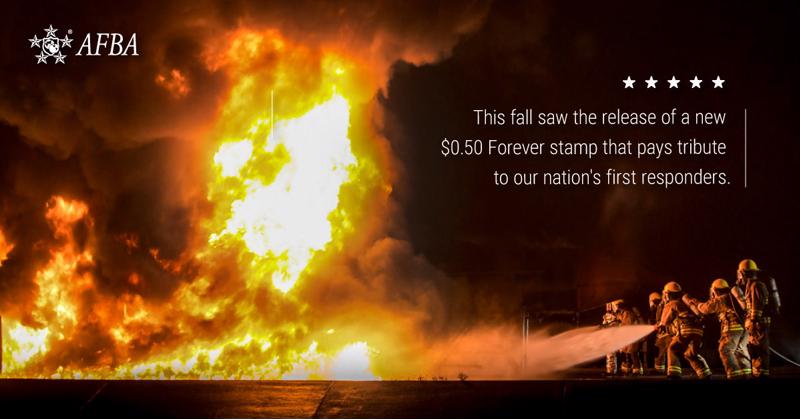
This fall saw the release of a new $0.50 Forever stamp that pays tribute to our nation's first responders.
According to the United States Postal Service, the new Honoring First Responders stamp is meant to recognize "the men and women who respond to critical situations with skill, dedication and uncommon bravery."
The stamp's design represents a collaboration between art director and designer Antonio Alcala, designer Ricky Altizer and artist Brian Stauffer. The latter has achieved worldwide recognition for his iconic magazine covers and other contributions to major magazine publications such as Time, The New York Times and The New Yorker.
The digital illustration Stauffer, Alcala and Altizer created for the stamp depicts three first responders forming a patriotic red-white-and-blue visual as they rush into a cloud of smoke that represents unknown danger. All three are shown in profile, facing right, looking towards the crisis to which they are hurrying to respond.
The first figure on the left is a red fireman carrying an ax, who is following behind a grayish-white EMT carrying an emergency bag, who is herself trailing a blue law-enforcement officer leading the way with a flashlight.
Special ceremony held for stamp's release
In September, a special first-day-of issue ceremony for the Honoring First Responders Forever stamp was held at the Aerial Fire Depot and Smokejumper Center in Missoula, Montana. The venue was chosen because of its status as the nation's largest training center for firefighters who combat wildfires by parachuting into remote areas of national forests.
"Our nation's first responders rush into life-threatening situations for the benefit of others," said Guy Cottrell, the Postal Inspection Service's Chief Postal Inspector and the dedicating official at the ceremony. "The Postal Service is pleased to honor their skill, dedication and unfailing bravery with this stamp."
The U.S. Postal Service says the intention of the stamp is to honor all types and varieties of first responders, ranging from those who serve small townships or are part of the federal government to those who volunteer and those who serve as a full-time job. The agency is also encouraging enthusiasts to use the hashtags #HonoringFirstResponders and #FirstRespondersStamps when discussing the stamp on social media.
If you would like a block of Honoring First Responders Forever stamps to use when sending out your holiday cards this season, you can purchase the stamps through the Postal Store at usps.com/shop, by phone at 800-STAMP24 (800-782-6724) or in-person at Post Office locations nationwide.
This Friday marks the 77th anniversary of the "date which will live in infamy," as President Franklin Delano Roosevelt famously described December 7, 1941.
A total of 2,403 service members and civilians were killed during the Japanese military's surprise aerial attack on the naval base at Pearl Harbor, Hawaii. An additional 1,178 Americans were injured in the tragedy, which also destroyed 188 aircraft and two U.S. Navy battleships, the USS. Arizona and USS. Utah.
For six decades, the incident stood as the deadliest attack on U.S. soil, until being eclipsed by the events of September 11, 2001. And each year since 1994, Americans have solemnly observed its anniversary with National Pearl Harbor Remembrance Day.
The history of the Pearl Harbor attack
Just before 8 a.m. on the morning of Sunday, December 7, 1941, a surprise attack consisting of 353 Imperial Japanese aircraft descended upon the Pearl Harbor Naval Base, located near Honolulu, on the Hawaiian island of Oahu.
The unprovoked act of war killed 2,335 members of the U.S. military, according to the Pearl Harbor Visitors Bureau, including 2,008 Navy personnel, 109 Marines and 218 Army service members. An additional 68 civilians also lost their lives as a result.
Nearly half of those casualties were from the USS Arizona. The remains of the battleship have since become a memorial to the incident, and are also the final resting place of 1,102 of the 1,177 sailors and Marines killed on the ship that day.
The day after the attack, Roosevelt delivered his iconic "Infamy Speech" to Congress and requested a formal declaration of war on the Empire of Japan, which the legislature granted in less than an hour. Three days later, Germany and Italy declared war on the United States.
"No matter how long it may take us to overcome this premeditated invasion, the American people in their righteous might will win through to absolute victory," Roosevelt promised during his speech to Congress.
It ended up taking over three years and eight months for America and its Allies to claim victory over the Axis powers. Though his words proved true, Roosevelt himself died in office five months before they fully came to fruition on September 2, 1945, when General Douglas MacArthur accepted Japan's surrender.
There were also 407,316 United States military members who never lived to see peace, having made the ultimate sacrifice for their country during the deadliest conflict in world history.
National Pearl Harbor Remembrance Day
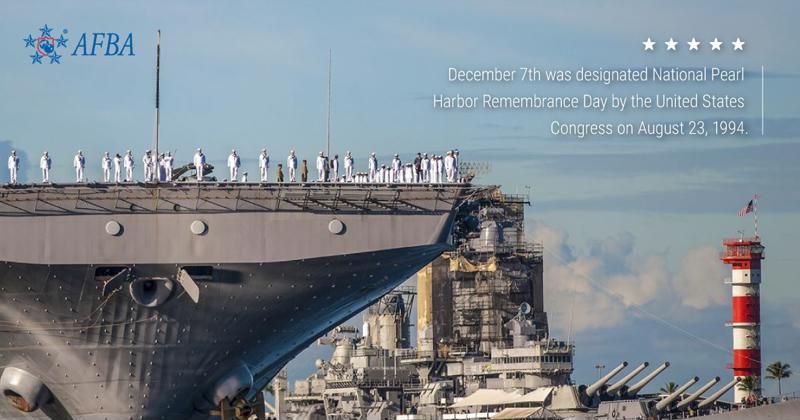
December 7th was designated National Pearl Harbor Remembrance Day by the United States Congress on August 23, 1994. The following November, 29, President Bill Clinton issued a proclamation declaring December 7, 1994 the first National Pearl Harbor Remembrance Day.
This year will be the 25th observance of National Pearl Harbor Remembrance. As is customary, events will be held at World War II Valor in the Pacific National Monument, culminating with a commemoration ceremony on Friday morning.
According to the National Parks Service, the 2018 National Pearl Harbor Remembrance Day Commemoration will take place from 7:50 a.m. until 9:15 a.m., and include a moment of silence at 7:55 a.m., when the original attack occurred. The event will be open to the public, with the Pearl Harbor Visitor Center opening at 6:00 a.m. and closing at 5:00 p.m. that day.
USS Arizona Memorial programs will run from 11:00 a.m. until 3:00 p.m., with tickets distributed on a first-come, first-served basis, beginning at 6:00 a.m. the morning of Dec. 7. Tickets cannot be reserved.
Those interested can go to the official Pearl Harbor Events website to find more information about other commemorative events happening that day in Hawaii, or to watch live streams of the ceremonies.