
Wright-Patterson Air Force Base in Dayton, Ohio, has a rich history as a proving ground for various major developments.
The base was built on and partially named after land that was once used by local inventors Wilbur and Orville Wright to test and perfect the world's first successful airplane. During World War II, German aircrafts were sent back to the laboratories for analysis. Beginning in the late 1940s, Wright-Patt's Air Technical Intelligence Center began its infamous investigation into reports of UFO sightings. In the late fifties, the base was the site of medical examinations to determine the final selection of the Mercury astronauts who eventually landed on the moon. Thousands of aeronautical inventions have been birthed at the base, including advanced gas turbine engines, aircraft electronic controls, stealth technology and precision-guided bombs.
And this year, Wright-Patterson Air Force Base designed and tested one of its latest innovations: better-fitting Air Force maternity uniforms.
Time for change
Earlier this fall, the base published calls for volunteers who were willing to wear the new maternity service dress shirt. At the time, officials told Military.com that they were looking for around 30 to 50 pregnant airmen to participate in the wear test.
"The greater the number of participants the more accurate the results, due to the ability to fit many different body types and stages of pregnancy," said base spokesman Daryl Mayer.
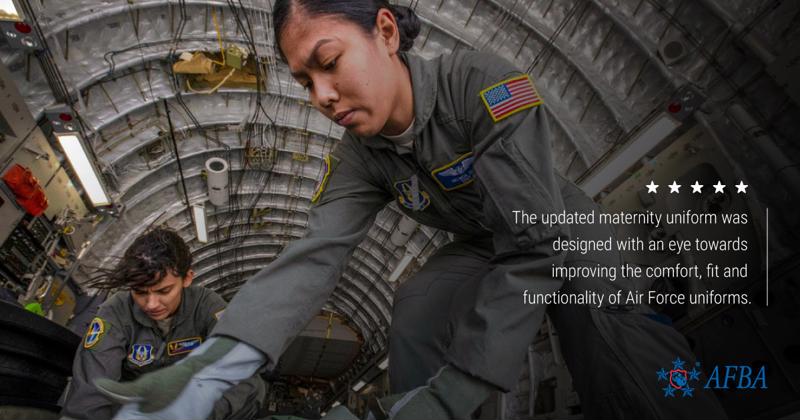
The updated maternity uniform was designed with an eye towards improving the comfort, fit and functionality of Air Force uniforms. As such, the new shirt now features darts on the front and back for a more fitted appearance, and is also made of a stretchier material that boasts better stain resistance and more opacity.
Whether the shirt hits its target of providing enhanced comfort will be determined by the volunteers, who were asked to fill out questionnaires at the end of the experience.
"The feedback from the fit/wear participants will be utilized to make any final adjustments to the fit or design of the improved maternity shirt," said Mayer. "This participant feedback ensures that we have a final product that meets the user's needs."
A wave of potential updates
This new maternity shirt is just the latest installment in a number of uniform changes that the Air Force has recently implemented to meet the needs of pregnant troops and new mothers alike. Last November, pregnant airmen at Wright-Patt were testing a maternity airman battle uniform. The camouflage maternity uniform, which featured pants with a full-stretch panel and an adjusted chest fit for the blouse, was so comfortable, according to Air Force Capt. Mollie Eshel, that her co-workers didn't even notice she was pregnant until her 34th week.
Talk about a successful camo outfit!
Many storied or technologically-advanced developments have come out of Wright-Patt over the years, but updated uniforms for expectant mothers actually serve a rather valuable and unheralded purpose.
"Women suffer in silence on many of the uniforms that don't fit. And they've never fit," said Air Force Chief of Staff Gen. David Goldfein. "The amount of money that women are spending altering essentially a men's uniform to fit a female frame is unsatisfactory. So we're going to get at this."
Working with only a $1.7 million budget and 18 staff members, the relatively small uniform office headquartered at Wright-Patterson Air Force Base is tasked with the order to "get at this." When you consider that the team is responsible for outfitting hundreds of thousands of Air Force personnel serving all over the globe – and above it – it's hard not to respect their service.

Thanksgiving is considered the kickoff of the holiday shopping season, and so far, it has succeeded in kicking off no less than three different unofficial retail holidays observed over a span of four days.
First there was Black Friday, the day after Thanksgiving, celebrated with massively popular "doorbuster deals," which enable companies to turn a profit and move from being "in the red" to "in the black." Then that gave way to Cyber Monday, in which e-commerce stores offered deep discounts to online shoppers. Feeling left out, mom-and-pop shops tried to lure customers away from big corporations by offering them Small Business Saturday specials, which occurred in between Black Friday and Cyber Monday.
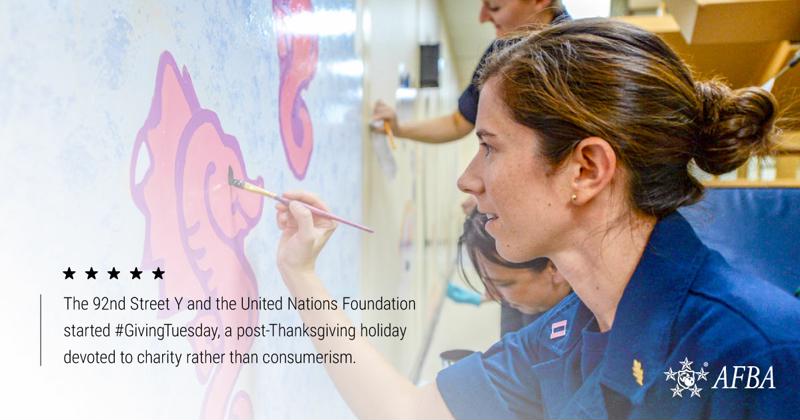
Lastly, in 2012, the 92nd Street Y and the United Nations Foundation started #GivingTuesday, the one post-Thanksgiving holiday devoted to charity rather than consumerism.
This year, Giving Tuesday will fall on November 27. There are many deserving nonprofits to which you can donate your time or money, but if you would like to give back to those who have given the most, here are some great ways to support veterans and military families this holiday season.
Homes For Our Troops
Homes For Our Troops is a private nonprofit devoted to building custom-made homes for injured post-9/11 veterans, many of whom suffer from partial or full paralysis and require specially designed homes to grant them full independence and mobility. This year, the organization is setting a #GivingTuesday fundraising goal of $150,000. You can help the nonprofit hit that goal by donating directly, and by sharing their #GivingTuesday video on social media channels like Facebook. And if you really want a concrete way to get involved, you can learn how to attend a build event and help welcome a family into their new, mortgage-free home.
Intrepid Fallen Heroes Fund
Many soldiers carry home wounds that aren't physical. Fortunately, there are resources available to them as well, including the Intrepid Fallen Heroes Fund, which serves United States military personnel experiencing Traumatic Brain Injury and Post-Traumatic Stress. The IFHF builds world-class advanced treatment centers that provide servicemembers with the best available TBI and PTS care. If you decide to get involved, you can feel good knowing that 100 percent of of every dollar donated from the public goes directly to funding programs.
Armed Services YMCA
For over 150 years, the Armed Services YMCA has provided servicemembers and their families with a place to turn for everything from recreational events to housing and educational programs. Low to no-cost childcare, hospital assistance, counseling, emergency food and clothing assistance are among the services that this top-rated charity provides to military families. You can help out by donating or volunteering at one of the Armed Services YMCA's 34 branch and affiliate locations.
USO
Closely associated with comedian Bob Hope, who in 1997 was named the "first and only honorary veteran of the U.S. armed forces" by Congress for his decades of performing for the troops, the United Service Organizations is a nonprofit that provides live entertainment to Armed Forces members and their families. The comedy shows and concerts put on by the organization help lift the spirits of those who serve. And despite being congressionally-chartered, the USO is not a government agency, and so relies on donations from supporters.
Toys for Tots
While not a charity that necessarily benefits veterans or military families directly, Toys for Tots is a program that is run by the United States Marine Corps Reserve. Founded in 1947 by reservist Major Bill Hendricks, Toys for Tots is dedicated to providing gifts to children whose families are struggling financially during the holiday season. All you need to give is a new, unwrapped toy, making this a fun and affordable way to contribute to a proud, 70-year-old military tradition.
Whether you have the skills that could help build a house for a wounded warrior, the funds that could help treat a veteran's physical or mental war injuries or simply a new toy that could help the Marines' mission to provide gifts to the underprivileged, there are many ways to contribute to the cause this Giving Tuesday.
The first Military Family Month was observed in 1993, with President Bill Clinton issuing a presidential proclamation that established National Military Families Recognition Day the following year. Since then, subsequent decrees and congressional resolutions have continued to designate November as Military Family Month.
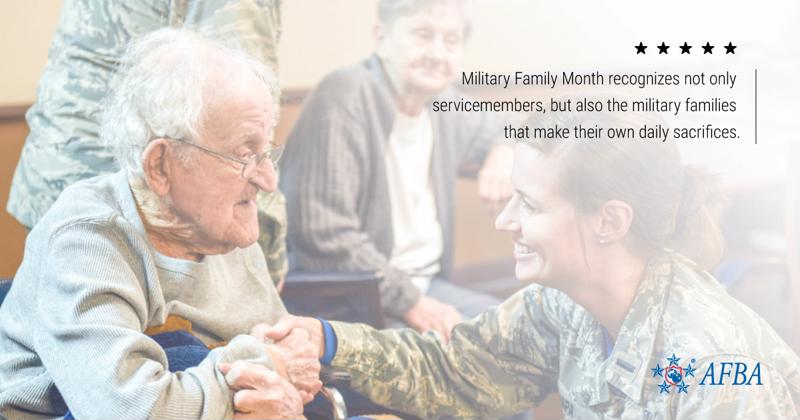
As the name implies, it is a time for recognizing not just those who have served, but also the military families that make their own daily sacrifices, which range from frequently moving to new cities to managing a household solo while a spouse is deployed.
If you belong to a military family, hopefully you have received additional support and gratitude during past Novembers. You may also be in a unique position where you are familiar with one or more military families that are going through a particularly stressful time. You likely know better than most what they are going through and what would best help them, but if you are looking for creative ways to show you care during this month, here are some ways to thank servicemembers and their loved ones during National Military Family Month:
Volunteer your time and energy
Know someone who has a packed schedule? Sacrifice some of your time so that they can have more of their own. Something as simple as babysitting kids so that a military mom has a night to herself can be huge. You could also get a bit more involved by cooking meals for harried military families, offering to handle errands like grocery shopping or taking care of the yardwork.
Plant an anonymous care package
Perhaps you want your goodwill gesture to pack more of a surprise. Military.com recommends leaving an anonymous care package on the doorstep of a military family, ringing the doorbell and fleeing before your largesse is discovered. Maybe you decide to fill your box with fun little gifts for every member of the family, or maybe you choose to pamper one parent in particular with little indulgences and a day pass to a relaxing spa or sauna. Either way, a random and anonymous present arriving out of the blue will show a military family know that their service is appreciated.
Join them in their own efforts to give back
Military families are very familiar with the concept of service, and as such, many have their own charitable passion projects. You can share their care by volunteering alongside them at whatever service organization they hold dear, whether it involves serving Thanksgiving dinner at a food pantry or helping to save lives at a Red Cross location. Helping out kills two birds with one stone, as you get to perform an act of service while also showing a military family that you care about their interests.
Make them aware of the many benefits available to military families
One easy but effective way to help out is simply to direct a military family towards the many benefits and services that are available to them. Operation Kid Comfort provides free photo transfer quilts to the children of deployed servicemen and women, the YMCA's military outreach program grants eligible military families free Y membership and companies like Sears and Home Depot offer significant discounts and gift cards to those who serve. Every military family should be able to take advantage of at least some of these benefits, so be sure to spread the word this season.
Showing your appreciation during Military Family Month doesn't require grand gestures. Something as small as providing an ear to bend or shoulder to lean on can mean more to someone than you may realize. And you can also feel free to perform such everyday acts of kindness throughout the year, and not just during Military Family Month in November.
A monumental weekend for military anniversaries is fast approaching. Not only is Armistice Day celebrating its centennial on Sunday, November 11, but Saturday, November 10, marks the 243rd birthday of the United States Marine Corps.
While the former event will be observed by many of the nations that were involved in World War I, the latter will be a distinctly American affair, as it has been ever since the first formal ball was held in 1925.
History of the Marine Corps birthday
The birth of the Marines actually predates the birth of the United States.
On November 11, 1775 – eight months before the Declaration of Independence – the Second Continental Congress established the Continental Marines. The legislature's resolution decreed, in part, "That two Battalions of marines be raised, consisting of one Colonel, two Lieutenant Colonels, two Majors, and other officers as usual in other regiments; and that they consist of an equal number of privates with other battalions." The Congressional Act also stipulated that these "American Marines" be comprised of, "good seamen, or so acquainted with maritime affairs as to be able to serve to advantage by sea when required; [and] that they be enlisted and commissioned to serve for and during the present war between Great Britain and the colonies, unless dismissed by order of Congress."
Samuel Nicholas, the first Commandant of the Marines, held a recruiting drive at Tun Tavern, a Philadelphia brewery now regarded as the birthplace of the Corps.
After the American Revolutionary War ended in 1783, the Continental Navy was disestablished, and consequently, so were the Continental Marines. The military branch was reestablished 15 years later, on July 11, 1798, when President John Adams signed the "act for establishing and organizing a Marine Corps."
For over 100 years, July 11th was considered the official Marine Corps birthday, and it passed with little fanfare. That all changed in 1921, when Major Edwin North McClellan, who was then in charge of the USMC's History Division, sent a memorandum to Commandant John A. Lejeune urging him to declare the Marines' original birthday of November 10th a Marine Corps holiday to be celebrated by the Corps.
On November 1, 1921, Lejeune so decreed in Marine Corps Order 47, which read in part, "In memory of [the many who have served as Marines] it is fitting that we who are Marines should commemorate the birthday of our corps by calling to mind the glories of its long and illustrious history."
What's in store for Marine Corps birthday 2018
The first Marine Corps birthday ball was held in 1925, though it wasn't until 1952 that Commandant Lemuel C. Shepherd, Jr. formalized and standardized the celebratory traditions still observed today.
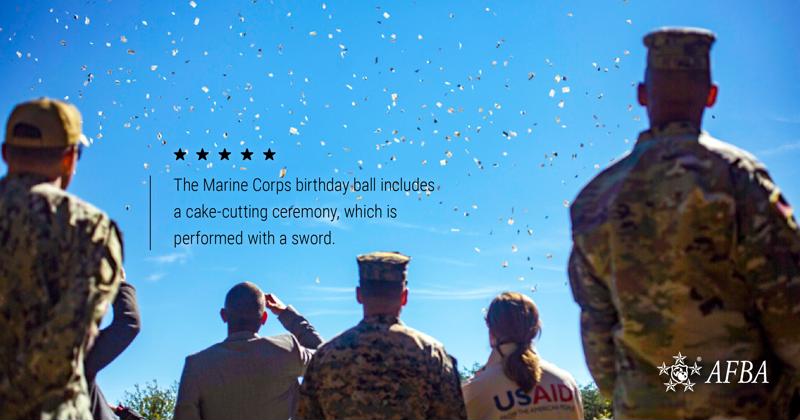
The most iconic aspect of the ball is the birthday cake-cutting ceremony, which is performed with a sword. The first three slices of cake are given to the guests of honor, the oldest Marine present and the youngest Marine in attendance.
A more recent tradition has been the annual release of a filmed Marine Corps birthday message, and this year's edition is a particularly stirring example. The seven-minute video is narrated by Gen. Robert Neller, Commandant of the Marine Corps, who describes the unique journey that every Marine takes before, during and after their service.
Also featured in the film is retired Sergeant Major John Canley, who was awarded the Medal of Honor last month for acts of heroism he committed 50 years ago. Canley, who used his brother's paperwork to enlist in the Marines while only 15 years old and remained in the service for 28 years, was recognized for the actions he took while serving as a Company Gunnery Sergeant during the Battle of Hue in 1968, which included carrying wounded soldiers to safety and taking charge after his commanding officer was severely injured.
Canley was singled out for praise in Commandant Neller's official birthday message, which also noted that this year marks the centennial anniversary of both the Battle of Belleau Wood and the Corps' first female enlistees. The 2018 Commandant's Marine Corps Birthday Ball will be held on Saturday, November 10, at the Washington Hilton in D.C., and will pay tribute to these major milestones.
Veterans Day has likely birthed more grammatical errors than any other federal holiday. Despite being frequently written as "Veteran's Day" or "Veterans' Day," the Department of Veterans Affairs insists that there should be no apostrophe there to make the noun possessive, "because it is not a day that 'belongs' to veterans, it is a day for honoring all veterans."
Yet despite the fact that Veterans Day is meant to be observed by all Americans, a majority of them still confuse the date with Memorial Day.
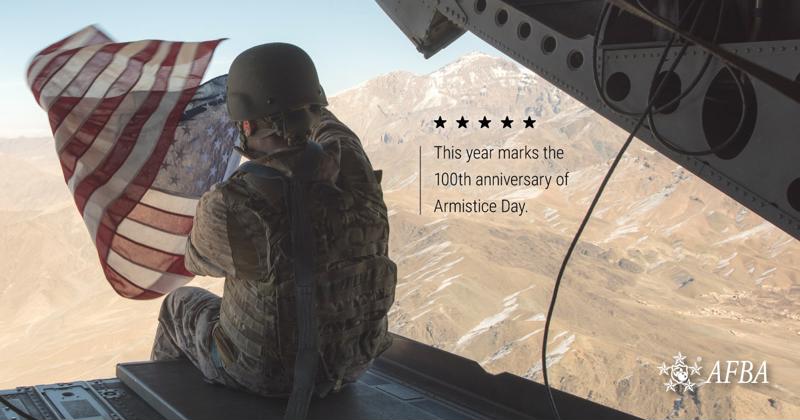
Even if you are familiar with Veterans Day history, there's no better time for a refresher, as this year marks the 100th anniversary of the holiday's forebear, Armistice Day.
The history of Armistice Day
Armistice Day was born out of World War I, or "The Great War," as it was initially known. The global conflict lasted from 1914 to 1918, and pitted the Central Powers—Germany, Austria-Hungary, Bulgaria and the Ottoman Empire—against the Allies, or Entente Powers, consisting principally of France, Great Britain, Japan, Italy, Russia and the United States. The First World War mobilized over 70 million military personnel, 60 million of whom were European, and the massive scale led many to optimistically, yet wrongly, predict that it would be "the war to end all wars."
After 9 million military casualties, there was finally permanent quiet on the Western Front after an armistice was signed between the Allies and Germany on November 11, 1918. The cessation of hostilities officially took effect at 11:00 that morning, or "the eleventh hour of the eleventh day of the eleventh month."
Armistice Day commemorated this end to the fighting, and is observed every November 11th by many of the Allied nations. This year's celebration of peace and remembrance of sacrifice will mark the 100th anniversary of Armistice Day. Events are planned all over the world, and President Donald Trump will travel to Paris to join French President Emmanuel Macron in honoring the more than 116,000 Americans and nearly 1.4 million French troops who died in WWI.
The history of Veterans Day
In the United States, President Woodrow Wilson declared November 11, 1919, as the first commemoration of Armistice Day, which was originally intended to involve parades and public meetings and a brief suspension of business beginning at 11:00 a.m.
Congress made Armistice Day a legal holiday in 1938, declaring it "a day to be dedicated to the cause of world peace."
In 1947, a World War II veteran named Raymond Weeks organized a "National Veterans Day" in Birmingham, Alabama. His intention was to expand Armistice Day into a holiday that celebrates all veterans, not just those from World War I. This idea was later championed by U.S. Representative Edward Rees of Kansas, who proposed a bill that would officially change Armistice Day to Veterans Day. The bill was passed in 1954, and signed into law by President Dwight D. Eisenhower, who later that year issued the first "Veterans Day Proclamation," which read in part, "In order to insure proper and widespread observance of this anniversary, all veterans, all veterans' organizations, and the entire citizenry will wish to join hands in the common purpose."
This year, veterans and citizens alike should again unite to appreciate the service of all veterans, with special attention paid to the century that has passed since peace was achieved with an Armistice signed on the eleventh hour of the eleventh day of the eleventh month.
The Southeastern United States has recently been battered by two hurricanes in as many months, beginning with the damage done to the Carolinas in September by Hurricane Florence, and escalating with the devastation wrought in Florida and Georgia in early October by Hurricane Michael.
And while many sad stories have come out of these two storms, the aftermath has also had the effect of highlighting the exceptional work done by the thousands of first responders who’ve volunteered or been pressed into service during this tumultuous period.
Region weathers some of the worst storms in recent memory
Though classified as a Category 4 major hurricane during peak intensity in early September, Florence had dissipated to a Category 1 when it made landfall on Wrightsville Beach, North Carolina, on September 14. Despite the downgrade in severity, Florence still possessed strength sufficient to uproot trees and cause mass power outages throughout the Carolinas over the next several days. The storm also spawned widespread freshwater flooding, producing as much as 35 inches of rainfall in some areas. In all, a total of 53 deaths have been attributed to the storm.
Less than one month after Hurricane Florence had finished its slow yet destructive crawl across the Southeastern U.S., the region was suddenly hit by the historic Hurricane Michael. When the Category 4 hurricane made landfall near Mexico Beach, Florida, on October 10, it became the strongest storm on record in the Florida Panhandle. With maximum sustained winds of 155 mph – just 2 mph short of a Category 5 designation – Hurricane Michael also gained the dubious distinction of being the most intense landfalling U.S. hurricane in nearly 50 years. The impact was felt not just in Florida, but in Georgia, Virginia and parts of the Carolinas where wounds from Florence were still fresh.
The number of fatalities caused by Hurricane Michael stood at 36 some 10 days after landfall, though many more individuals remained missing and unaccounted for.
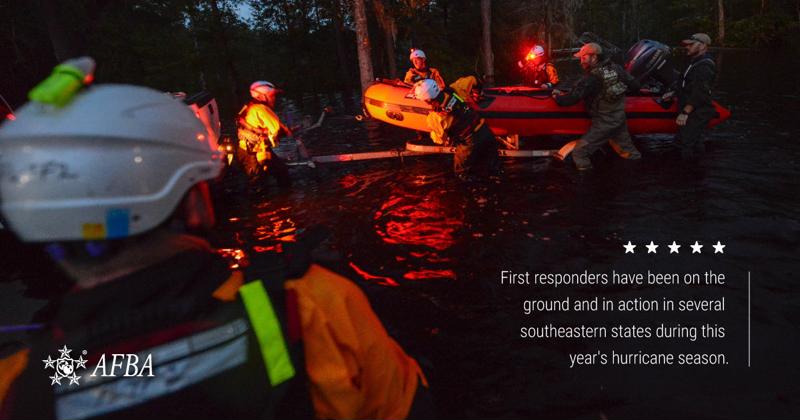 Hurricanes Florence and Michael led to many first responders stepping up to help their fellow citizens.
Area witnesses some of the best the country has to offer
While it is heartbreaking to reflect upon the loss of life caused by these two storms, the pair of tragedies has also produced many inspirational stories of first responders from both near and far descending upon the affected areas.
Just as the last of Hurricane Michael was finally dissipating on October 16, Forbes contributor Don Yaeger recalled sharing a flight with several dozen first responders on their way to his home state of Florida. When Yaeger asked a Sheriff’s Officer from Iowa if he was going there to help any family or friends living in the panhandle, the man answered, “I don’t know anyone there, I just know this is where I’m supposed to be.”
Fox 29 News Philadelphia reported on a Pennsylvania task force that spent 19 days assisting those in need in the wake of Hurricane Florence. Then, just days after the elite group of urban rescuers and paramedics had returned home to the Keystone State, the arrival of Hurricane Michael had them once again traveling over 1,000 miles south for another two-week deployment.
While the many first responders who came from miles away to lend a hand made truly admirable sacrifices, perhaps even more extraordinary were those who helped out despite being themselves victims.
CNN reports that in Panama City, Florida, one of the towns hit hardest by Michael, many local first responders were dealing with their own property damage and displaced families while still honoring their commitment to the wider community.
“While we’re here at work we’ve kind of got to put those emotions and things that are going on in our personal lives aside, because we have to worry about what’s going on here,” said Panama City Battalion Chief David Collier, whose own home was damaged in the storm. “We have to worry about our own personnel and the citizens we’re trying to protect.”
The full, lasting impact of Hurricanes Florence and Michael is still unknown, and will almost certainly bring more bad news further down the road. But we can all be grateful for the first responders who were on-hand to keep the immediate impact from being any worse.
If you’ve spent enough time in the military, you’re probably used to moving from one duty station to another—not to mention taking some extended trips overseas. But once you’ve moved on from your active duty military career and are finally getting to decide for yourself where to go, which location should you choose?
That’s the question a new report from Military Times attempted to answer. The magazine evaluated over 599 American cities based on: employment and population figures obtained from the 2016 Census; military installation locations documented in a Defense Department report; VA health and benefits information taken from the Veterans Affairs website; FBI crime reports; school ratings and area health data drawn from a variety of sources. After synthesizing all of that information, the publication came up with a list of the six best places for veterans to live.
 Colorado Springs, Colorado is one of six best places for veterans to live.
The best big cities for veterans
Among the 83 large cities—defined as those with populations exceeding 250,000—that were examined, there were three cited as particular standouts.
Taking the top spot was Colorado Springs, Colorado, which was also just named “the most desirable place to live” by a 2018 U.S. News and World Report. While U.S. News praised the city’s easy access to mountain hiking and nearby resort skiing, Military Times cited the over 10,000 servicemembers and 53,000 veterans living there, as well as the large number of veteran service organizations present.
The sunny waterfront town of Virginia Beach, where veterans make up 17 percent of the population and earn more on average than nonveterans, was next on the list. Rounding out the top three was San Antonio, the historic home of the Alamo and the current home of Joint Base San Antonio. Last year, the populous Texas city actually trademarked itself as “Military City USA.”
The best medium-sized cities for veterans
Service members who don’t love the overwhelming feel of big cities or the slower pace of life in small towns may feel “just right” in the best cities for veterans with populations of at least 100,000 but fewer than 250,000.
Two of the top cities sit across the river from Washington, D.C. – Alexandria and Arlington, Virginia. The former boasts an unemployment rate for veterans and civilians below the national average, while the latter owes its spot to the Pentagon, the Iwo Jima Memorial and a fantastic area health rating.
Another mid-sized highlight is Olathe, Kansas, where veteran growth has outpaced overall growth by 17 percent to 5 percent, driven in part by the convenience of 16 nearby VA health centers.
The best small cities for veterans
With a population of 95,000, Portsmouth, Virginia, may be a small city, but it is located next to the world’s largest naval base, Naval Station Norfolk. It’s also near 11 Veterans Affairs facilities and 10 military installations, and on average, former servicemembers make nearly double the salaries of nonveterans.
The Baltimore suburb of Glen Burnie, Maryland, is another diamond in the rough. The town of 69,500 boasts 26 VA health facilities within 25 miles, and although the unemployment rate is 7 percent higher than the national average, veterans make almost $20,000 more a year than nonveterans do.
New Braunfels, Texas, completes the list, thanks largely to having some of the best-rated schools around. With a population under 80,000, available housing, a good economy and small-town charm to spare, this is a great place to raise a family.
Whether you are looking to settle down in a sleepy little town, experience the bright lights of the big city, or do anything in between, there are plenty of great locales ideally suited to veterans excited to start living their life after the military.
In 2013, President Obama issued a proclamation officially recognizing November as Military Family Appreciation Month, marking it as a time to for the country to "celebrate the families who make daily sacrifices to keep our Nation whole."
Though it is far from the largest sacrifice they are asked to make, frequently having to relocate from one duty station to another can be a huge disruption in the lives of military families. Fortunately, there are cures for some of the headaches caused by moving.
If you move to a new location and your household goods aren't delivered on time, you can file an inconvenience claim with your transportation service provider (TSP) to get reimbursed for any out-of-pocket expenses you incurred while waiting for your stuff to show up. To ensure you're protected, though, it's essential to know which goods and services are eligible for coverage, and how you can file a claim.

What items are covered by inconvenience claims?
Inconvenience claims are simply a way to cover any personal expenditures you may have as a direct result of your TSP missing the required delivery date. That means if your bed hasn't shown up yet and you don't feel like subjecting your family to army cots, you can rent a bed or air mattress for the time being, and then submit your receipts to the TSP for a full refund.
Other types of rental furniture that can be covered by inconvenience claims include cribs, chairs, sofas, tables, appliances and one television per household.
Certain purchases are also covered. Any sheets, towels, paper plates, napkins, disposable cutlery or pots and pans you are forced to buy while waiting for your own stuff to arrive can be reimbursed, as long as you remember to save the receipts.
And if renting furniture and purchasing new cookware seems like too much of a hassle, you can potentially get your hotel bills and Chinese takeout paid for, as lodging and meals are also covered, provided they meet certain requirements.
What items aren't covered?
"The maximum liability for lodging and meal expenses cannot exceed the DoD's daily lodging and meal per diem rate."
According to the Department of Defense's official customer moving portal, items expressly excluded from inconvenience claims include groceries and meals if a customer is in a residence, cleaning supplies, toiletries and cosmetics, snacks, military attire and personal clothing, school supplies, toys and any alcohol or drugs. Also, while "laundry service" is covered, dry cleaning is not. And any expenses that occur before the delivery date or out of the local area are also ineligible.
Additionally, the DoD requires that all expenses claimed "must be reasonable," and be directly related to "a definite hardship" caused by the delay in delivery. So while lodging expenses would be covered, a stay in the Plaza Hotel's honeymoon suite would not be. Similarly, although any necessary furniture rental should be eligible for reimbursement, this is sadly not your chance to freely relax on a $5,000 Eames Lounge Chair and Ottoman. The same goes for any purchases, with the DoD specifically singling out Wal-Mart, Target and the Army and Air Force Exchange Service as "reasonable" retailers.
To put an even finer point on it, the maximum liability for lodging and meal expenses cannot exceed the daily lodging and meal per diem rate, which can be found at the DoD's Travel and Per Diem website. For families, per diems are also based on the number of dependents, and while spouses are expected to share one room in a hotel, children or other dependents may be able to get their own rooms. However, any additional rooms must be pre-approved and authorized in writing by the TSP.
How do you file an inconvenience claim?
Inconvenience claims are handled not by the Department of Defense, but by the transportation service provider that was awarded your shipment. As such, you need to file directly with the claim department of your moving company.
Make sure you know your actual moving company—because TSPs frequently subcontract things like pickup and delivery, it's not necessarily the name you see on the truck. TSPs will typically send you an email with contact information when the shipment is first awarded, so hold onto that info. And because inconvenience claims are not a standardized procedure, you'll need to reach out directly to your moving company to find out how to proceed.
Military Times also notes that the best point of contact for servicemembers with moving-related problems is the personal property/transportation management office at their installation. Contact the office at the current location if you have issues related to pickup and packing, and get in touch with the office at your new location if there are problems settling in.
Move.mil is also a great resource for claim forms and other information, and the military relief society can potentially assist individuals and families experiencing a financial strain.
Nothing can completely alleviate the stress that comes from moving, but understanding how inconvenience claims work can help provide some peace of mind during a turbulent time.
To pay tribute to America’s first responders, the annual postseason college football game played at Dallas’ Cotton Bowl Stadium has been renamed the SERVPRO First Responder Bowl. The bowl game formerly known as the Heart of Dallas Bowl will be broadcast by ESPN under its new name at 12:30 p.m. C.T., on December 26, 2018.
Police officers, firefighters, EMS workers, search and rescue, dispatchers, federal agents and specialized military personnel will be among the first responders honored at the event, according to the Journal of Emergency Medical Services. Additionally, game tickets for first responders will be underwritten by corporate sponsors.
“This is an exciting change, and we are humbled by the fact that an actual bowl game has been named exclusively for the first responders of this country,” said Dallas Fire-Rescue Fire Chief David Coatney.
Sentiments echoed by the city law enforcement officials
“We are truly honored to have a bowl game here in Dallas named after the hard working men and women serving and protecting communities across this country,” said Dallas Police Chief U. Renee Hall. “It always feels great to be recognized, and I know our officers and firefighters are touched by this overwhelming show of support.”
The TicketCity Bowl was played at the Cotton Bowl Stadium in Dallas as a physical replacement for the Cotton Bowl, which left its namesake arena for nearby Arlington’s AT&T Stadium in 2010. The game was renamed the Heart of Dallas Bowl presented by PlainsCapital Bank for the 2013 and 2014 contests, and has been known as the Zaxby’s Heart of Dallas Bowl for the last four years.
The new title is the result of an agreement between ESPN Events and SERVPRO, a fire and water restoration company headquartered in Gallatin, Tennessee.
“We are proud to present the SERVPRO First Responder Bowl dedicated to honoring some of the hardest working men and women in our country” said SERVPRO CEO Sue Steen. “We recognize the dedication and selfless acts of our First Responders and are honored to help highlight and celebrate the commitment of these everyday heroes.”
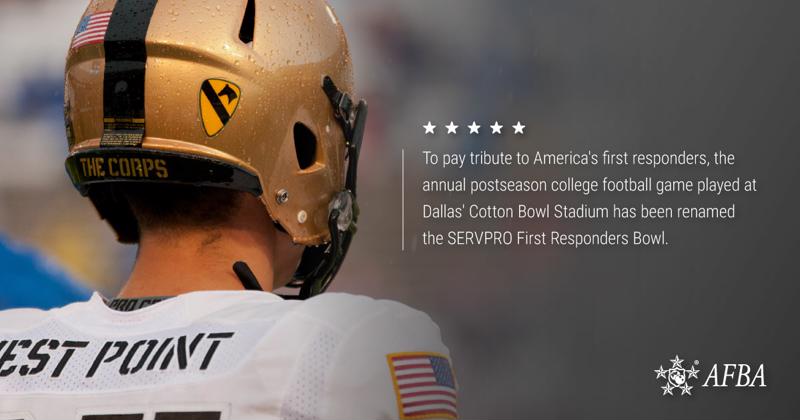 The SERVPRO First Responder Bowl will join the Lockheed Martin Armed Forces Bowl and the Military Bowl as the three college bowl games that pay tribute to our nation’s bravest men and women.
“We are truly grateful for all first responders’ sacrifice and service,” added Brant Ringler, Executive Director of the SERVPRO First Responder Bowl. “It is a tremendous privilege to honor these brave men and women who protect our communities 24/7/365.”
The 2018 SERVPRO First Responder Bowl will be the ninth edition of this bowl game, and yet another entry in the rich, 89-year history of college football at Cotton Bowl Stadium, which also famously hosts the annual State Fair Classic and Red River Showdown. The venue was also the longtime home of the Southern Methodist University Mustangs, and became known as “The House That Doak Built” in the 1940s, in reference to the large crowds drawn by SMU running back Doak Walker.
The SERVPRO First Responder Bowl will join the Lockheed Martin Armed Forces Bowl on December 22 and the Military Bowl Presented by Northrop Grumman on December 31 as the three college bowl games that pay tribute to our nation’s bravest men and women. Fans interested in attending the Armed Forces Bowl in person can purchase tickets now.
When servicemembers transition to civilian status, they must deliver their medical records from the Department of Defense to the Department of Veterans Affairs. Currently, no solution exists to seamlessly transfer this information – a fact that has vexed both the Pentagon and the VA. Because the two medical systems are incompatible with one another, it's possible that important information gets lost in the shuffle.
To remedy this situation, the VA is now undertaking the largest transition to electronic health records ever attempted in the U.S. Its goal is to create a system compatible with the Pentagon's.
Creating a new EHR system: A process that's taken decades
Lawmakers have pressed both organizations to create compatible EHR systems since at least 2000, according to Military.com. The VA has attempted this process many times, but each trial ended in costly failure.
The latest attempt was an integrated electronic health record (iEHR) system known as the Veterans Information Systems and Technology Architecture Evolution, or VistA Evolution. However, a 2017 audit from the nonpartisan Government Accountability Office found the VA spent about $1.1 billion between 2011 and 2016 on this project.
Despite the significant investment, former VA Secretary Dr. David Shulkin determined VistA wasn't achieving its goals and needed replacement. Before he was removed by President Donald Trump, Shulkin began looking into off-the-shelf solutions, eventually settling on health information technology provider Cerner Corp. of Kansas City, Missouri.
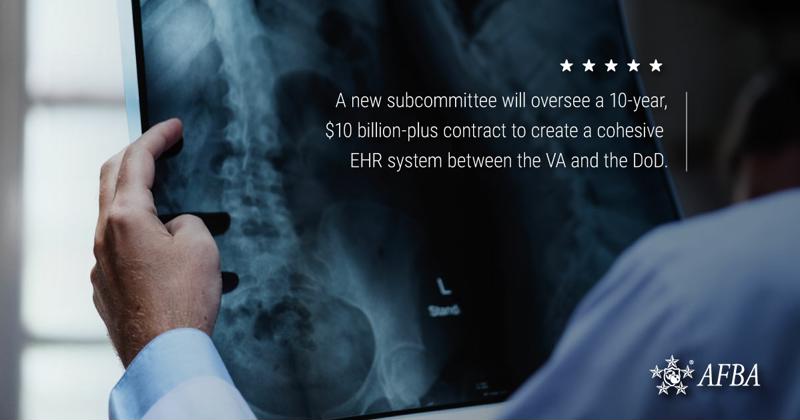
Though Shulkin was never able to complete a deal with Cerner, his replacement, acting VA Secretary Robert Wilkie, awarded Cerner a 10-year, $10 billion contract. Additional costs could drive these expenses up to $16 billion.
Monitoring the EHR process
Such an expensive project requires immense oversight to ensure funds are being allocated efficiently – something members of Congress know all too well.
"As the department embarks on the nation's largest overhaul, it is critical that we ensure veterans and taxpayers are protected throughout the transition," said Chairman of the House Veterans' Affairs Committee Rep. Phil Roe, R-TN, in a statement, per Military.com. "I know how much potential there is for a project like this to be a costly disruption. Congress has a duty to conduct rigorous oversight every step of the way."
To maintain this efficiency and transparency, the House created the new Subcommittee on Technology Modernization. One of five such bodies within the House Veterans' Affairs Committee, this new group is tasked solely with overseeing the new EHR implementation.
It's not the only new group doing so, however. Now that the Cerner deal is in place, the DoD, the VA and the IPO are working to establish joint modernization governance bodies. These interdepartmental groups will improve interagency communication, promote sharing of resources and create a more collaborative decision-making process, according to EHR Intelligence.
"If successful, it will be one of the lynchpins of a more responsive, agile, and efficient VA," said Subcommittee on Technology Modernization Chairman Rep. Jim Banks, R-IN, per EHR Intelligence. "If mismanaged, I fear a daunting and disappointing setback."
Given the amount of money involved, along with a history of failed attempts, it's safe to say that many different parties concerned with veterans' affairs, the DoD and government spending will watch this EHR project closely as it develops. If successful, the new technology will give servicemembers and veterans piece of mind, as they can rest assured that their health records will remain complete as they transition.