
September is National Suicide Prevention Month, a time for mental health providers, advocates, survivors and allies to promote suicide prevention awareness. This idea encompasses everything from reducing mental health stigma, promoting treatment and supporting intervention strategies.
Suicide in America
According to the Centers for Disease Control and Prevention, suicide is one of the leading causes of death in the U.S. Rates have increased by more than 30 percent since 1999. In fact, Nevada was the only state to see a decrease in suicides during this time period.
Suicide isn't just a mental health issue. Per the CDC, other contributing factors include relationship issues, substance abuse, stress and more. Yet it's important to understand how depression, anxiety and other emotional or behavioral issues contribute to such tragic circumstances. Rates of suicide may finally decrease if the stigma around mental health care disappears for good.
Events like Suicide Prevention Month – as well as Suicide Prevention Day and Suicide Prevention Week – were created to reduce this stigma and offer support to those who may be suffering.
Veteran suicide statistics
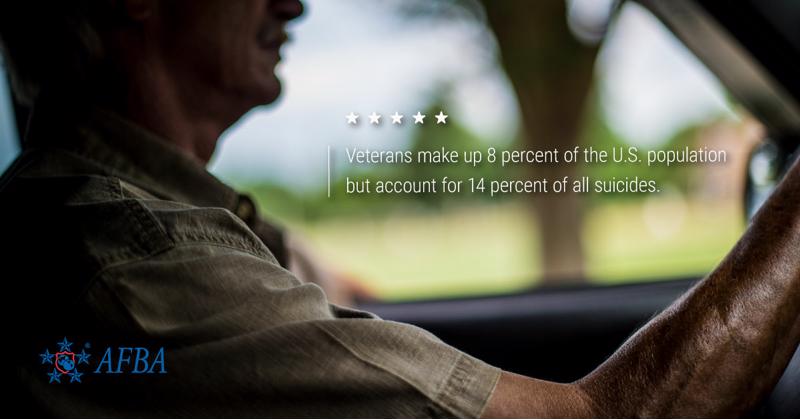
Unfortunately, veterans are more likely to die by suicide than the general population. A report from the Department of Veterans Affairs found that although retired servicemembers make up 8 percent of people in America, they account for 14 percent of all suicides. Overall, nearly 21 veterans die by suicide every day, which translates to a rate that's 2.1 times higher than that of nonveteran adults.
There are numerous possibilities for why veteran suicide rates are higher than civilians'. One study, published in the Journal of the American Medical Association's JAMA Psychiatry, found timing may have an effect. Researchers found that veterans who had little down time between deployment or who were initially deployed within the first year of service were at higher risk of suicide.
Trauma and post-traumatic stress disorder are also culprits that may affect veterans more strongly than the general population. As the VA noted, veterans who suffer combat trauma, especially multiple wounds and/or hospitalizations, are at a high risk of suicide. The more times the person was subjected to trauma, the greater that risk increased. Similarly, one study found that PTSD and suicide had a strong correlation – more so than other anxiety disorders.
Resources for friends and family
The VA understands that suicide is a serious problem affecting veterans and servicemembers, and the department knows it's in a position to help. Veterans who receive mental health assistance through the VA are less likely to commit suicide than those who do not.
In 2007, the VA launched the Veterans Crisis Line to help veterans, servicemembers and their loved ones who may be having mental health issues or suicidal thoughts. The Crisis Line offers 24/7 support, 365 days a year, even if the caller isn't registered with the VA or enrolled in its health care services.
Friends and loved ones should keep an eye out and look for signs of crisis among the veterans in their lives. Vets themselves should also look for these red flags so they can take themselves to treatment. Signs of possible self harm include:
- Continuous sadness or depression.
- Feelings of hopelessness.
- Agitation or mood swings.
- Sleeplessness.
- Excessive guilt, shame or sense of failure.
- Rage.
- Substance abuse.
- Neglecting personal care.
- Withdrawing from friends and family.
- Giving away cherished possessions.
The Crisis Line, in collaboration with the VA and the American Foundation for Suicide Prevention, also created a handy tool called the Veterans Self-Check Quiz to help former servicemembers determine if they need treatment. Users can decide what to do after they take the assessment, whether that would be chatting with a responder, getting a referral for an in-person visit or nothing at all.
While suicide and mental health issues affect veterans at a higher rate than the rest of the population, it's important to remember that help is available. National Suicide Prevention Month is the time for veterans, servicemembers and their families to spread awareness and end stigma once and for all.
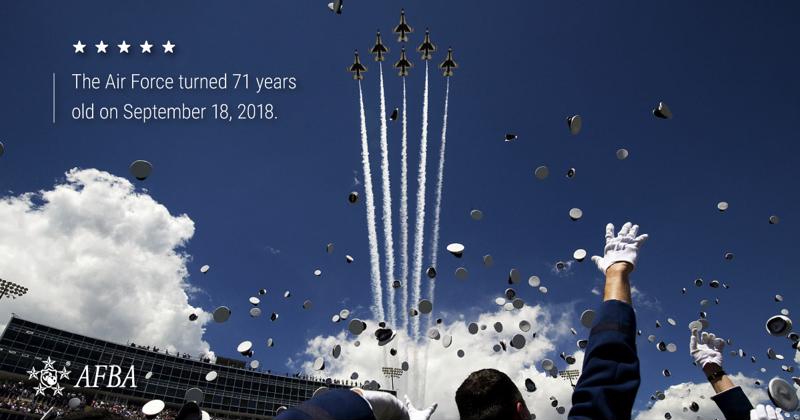
The U.S. Air Force became a distinct branch of the military on Sept. 18, 1947. Yet its roots began decades beforehand. Throughout its history of 71 years, the Air Force has been a remarkable source of innovation and inspiration.
Here, we'll take a look at the branch's history in celebration of the date it was started.
A brief history of the Air Force
While the Air Force didn't become an official military department until after World War II, aviation emerged as a military interest decades earlier. The first group to arise from this interest was the Army Signal Corps Aeronautical Division, which was created Aug. 1, 1907. This organization was developed to oversee anything related to air machines, military ballooning and other related matters.
The Signal Corps began testing the first military airplane at Fort Myers, Florida. One of its original flights ended in disaster; Lt. Thomas E. Selfridge, who was flying with Orville Wright, died during a crash on Sept. 9, 1908. Historical records consider Selfridge the first military aviation casualty, per Military.com.
However, on Aug. 2, 1909, the Army formally accepted what it called "Airplane No. 1."
Still, military aviators didn't serve in combat until around 1913. Early that year, servicemembers training in Augusta, Georgia, and Palm Beach, Florida, were ordered to take part in 2nd Division maneuvers. They were sent to Galveston, Texas on March 3 as the 1st Provisional Aero Squadron, led by Capt. Charles DeF. Chandler.
The squadron was the first military unit solely dedicated to aviation, and servicemembers began flying a few days later. It was also the Army's first air combat unit, and it's still active today.
Military aviators during wartime
The 1st Aero Squadron was the U.S. Army's air division during World War 1. By December 1915, the unit had 224 enlisted men, 44 officers and 23 planes, according to Military.com. This was only a fraction of the air power held by European countries, and the discrepancy forced the U.S. to devote more attention to aviation.
However, the U.S. may have been a bit overzealous with its response. At the time, all of the military's aviation power consisted of 24 squadrons, operating under different organizations.
When World War 1 broke out, the U.S. transferred aviation from the Signal Corps to two other agencies. Having so many different groups made it difficult to coordinate them all.
Today's Air Force
The National Security Act of 1947 restructured the way the U.S. government approached aviation and military endeavors. The act created the National Military Establishment, which was later renamed the Department of Defense. This organization consisted of the Army, the Marine Corps, the Navy and the new and improved Air Force.
It was a long time coming, as aviation in the military had been through six different iterations:
- Aug. 1, 1907 to July 18, 1914: Signal Corps Aeronautical Division.
- July 18, 1914 to May 20, 1918: Signal Corps Aviation Section.
- May 20, 1918 to May 24, 1918: Division of Military Aeronautics.
- May 24, 1918 to July 2, 1926: U.S. Army Air Service.
- July 2, 1926 to June 20, 1941: U.S. Army Air Corps.
- June 20, 1941 to Sept. 17, 1947: U.S. Army Air Forces.
- Sept. 18, 1947 to present: Air Force.
The fact that the branch has lasted this long in its current form is encouraging. Currently, the Air Force has 320,923 servicemembers on active duty, 62,688 officers and 258,235 enlisted, per the Air Force's Personnel Center. As part of the U.S. military, it's one of the strongest forces in the world.

Government contractors – especially those working with the Department of Defense – have recently come under fire for poor data security. These organizations often hold and use sensitive data in their work, and a security breach has consequences not only for the business but the U.S. government as a whole. This statement is especially true for DoD contractors, who may have access to classified weapons plans or military strategies.
Unfortunately, per a report from BitSight Technologies, a significant number of contractors aren't nearly as secure as they need to be. When scored on the tech company's security ratings scale, federal agencies scored an average of 15 points higher than contractors. In fact, more than half of the latter businesses scored a letter grade below C in terms of protective technology. Furthermore, 20 percent of technology and defense contractors work on outdated internet browsers, and more than 8 percent of healthcare contractors have disclosed a data breach since 2016.
Something clearly needs to be done, and thankfully, the government is taking the issues seriously. In December 2015, the DoD published the Defense Federal Acquisition Regulation Supplement (DFARS) minimum security standards to guide contractors that process, transmit or store Controlled Unclassified Information (CUI). Contractors had two years (until Dec. 31, 2017) to comply. Those that haven't yet must do so immediately or risk losing their working partnership with the DoD.

Complying with DFARS
DFARS was written to match security requirements set by the National Institute of Standards and Technology. Its extensive guidelines are available as part of a self-assessment handbook on the NIST website.
Requirements in the handbook include:
- Limiting access only to authorized users (rather than every employee).
- Limiting the functions that authorized users can perform.
- Controlling the flow of information so only relevant individuals have access.
- Separating duties so that multiple employees don't have access to the same information, thereby reducing the possibility of malevolent activity.
- Limiting unsuccessful logon attempts, locking the application after a certain number of failures or after a specific amount of time has passed.
- Automatically terminating user sessions after a defined condition, such as a certain period of inactivity.
Compliance options
The full DFARS handbook is much more thorough than the few examples shown here. As such, compliance can be incredibly difficult for contractors who don't know what they're doing.
Businesses do have the option of self assessing, as evidenced by the handbook, but leaving assessment to an inexperienced eye can lead to critical oversights or confusions that ultimately cost the company its contract with the DoD. It's best to dedicate DFARS compliance to an experienced security professional.
If contractors have no such employees on their staff, they can hire a third-party consultant – specifically one experienced in government compliance. Doing so can remove a lot of the headaches of evaluating and updating security, especially if the company in question has several improvements to make.
Regardless of which option they choose, contractors must make certain their processes comply as soon as possible, lest they lose the support of the government and suffer financial consequences.
The Department of Defense announced that veterans and servicemembers will be limited in their ability to transfer their post-9/11 GI Bill benefits starting July 12, 2019, Military.com reported. Those with more than 16 years of service will no longer be able to transfer their benefits to a spouse or child. The goal of this upcoming change is to increase military retention.
"After a thorough review of the policy, we saw a need to focus on retention in a time of increased growth of the armed forces," said Stephanie Miller, director of accessions policy in the Office of the Secretary of Defense, in a statement, per Military.com. "This change continues to allow career service members that earned this benefit to share it with their family members while they continue to serve."

The GI Bill: A tool, not an entitlement
The post-9/11 bill offered educational benefits to military volunteers in areas of sustained conflict such as Iraq and Afghanistan. Under the bill, active-duty servicemembers and veterans were eligible for funding to cover in-state tuition and fees at public colleges and universities along with a monthly allowance for housing. They could also transfer these benefits to their spouse or children, assuming they served when the bill started or enrolled after.
This educational benefit is authorized by law, but the Pentagon decides how it's implemented. Previously, the only requirement was six years of service and commitment to an additional four. Those who planned to serve but were barred from completing their time – for instance, due to an injury or medical discharge – were still eligible for the transfer.
Now, all servicemembers must be cleared to serve for an additional four years when they choose to transfer their GI benefits. This aligns the policy with a 2015 report clarifying the bill as a retention tool, not an entitlement. The department will track the change's effectiveness, monitoring recruit quality and retention metrics, and may make additional alterations in the coming years.
Veterans groups have different reactions
Some advocates understand the change to the bill, while others are strongly against it. The American Legion falls in the latter category, announcing it is "100 percent" opposed.
"We understand the minimum time in service for transferability for retention purposes," said the Legion's Director of Media Relations Joseph Plenzler, according to Stars and Stripes. "But the 16-year cap on the transferability significantly limits a veteran's ability to execute the full economic potential of that benefit in a way that best suits the veteran and his or her family."
The National Military Family Association expressed disappointment but also seemed to understand. The association's Deputy Director of Government Relations, Eileen Huck, noted that many servicemembers and their families were upset by the news but acknowledged that the bill has always been a tool for retention. Meanwhile, the Veterans of Foreign Wars announced it wasn't against the change but urges veterans to transfer their benefits as soon as possible.
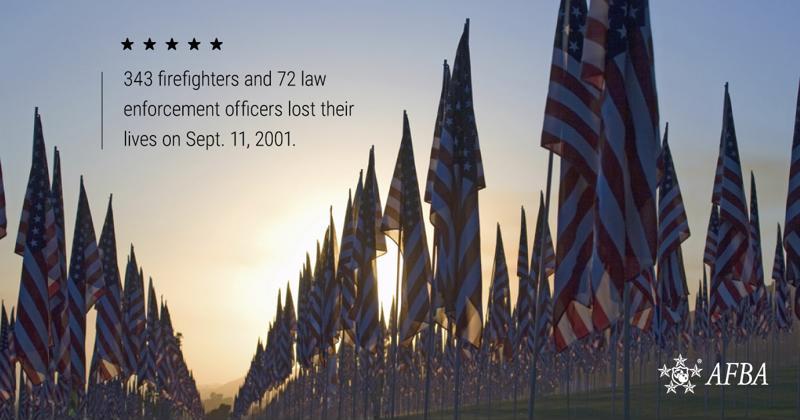
Sept. 11, 2001 was one of the most fateful days in recent history for the U.S. On that date, the terrorist group al-Qaeda launched a series of four coordinated attacks on American soil. Per statistics from CNN, the attacks ended the lives of 2,977 people in Washington, DC, New York City and an area near Shanksville, PA. Additionally, more than 6,000 others were injured during the event. 9/11 was also noted as the deadliest day for first responders, as 343 firefighters and 72 law enforcement officers lost their lives trying to help others.
The event drastically affected the nation, directly leading to the creation of the Department of Homeland Security and a $40 billion anti-terrorism package. But 9/11's effects weren't just of a macro size. Many individuals were directly affected, and communities both big and small came together to honor the dead and celebrate those who rushed to provide aid to others.
Those celebrations continue across the country to this day. Cities big and small are holding charity walks, dinners and similar events to raise money for first responders in the name of that fateful day.
Rock Island, IL, holding a walk to remember
The Rock Island military community is sponsoring a walk to remember those who lost their lives during the terrorist attacks, according to the Quad-City Times. Each participant will hold a flag representing the life of a civilian, first responder or servicemember who died that day. They will walk 2.5 miles to a Field of Honor, where they will place the flags.
"It is our sincere desire that this remembrance walk evokes a new sense of re-commitment to the task at hand," said a news release.
Pasadena, TX, raises funds for first responders
According to The Houston Chronicle, the city of Pasadena is holding its own fundraiser to benefit local first responders. The event includes singing and music performances from police and firefighters, plus a 9/11 reenactment by actors from the Pasadena Little Theater. Eight performers will portray the 26 characters in the docudrama "110 stories."
"I had been looking for something to do around 9/11 to pay tribute to first responders," said Gregory R. Brown, treasurer of the theater, to The Houston Chronicle. "Last December, I visited the (911 Memorial and Museum in New York City), and I found this script online in January. I was so moved that I brought it to the board in the hopes of presenting it as a way to give back to the first responders in the community we are a part of."
Ticket proceeds will go to the Pasadena Citizen Police Academy Alumni and the Pasadena Volunteer Fireman's Association.
The Travis Manion Foundation sponsors 9/11 Heroes Runs
Runners and walkers across the nation have organized 9/11 Heroes Runs in the name of 1st Lt. Travis Manion, a young man who was killed in action during his tour in Iraq. Manion's unit was ambushed while searching a suspected insurgent house, and Manion bravely sacrificed himself drawing enemy fire. His strength of character allowed the rest of his unit to survive. He was posthumously awarded the Silver Star and the Bronze Star with Valor, and his actions (and friendship with another servicemember) were memorialized in the book "Brothers Forever."
The first 9/11 Heroes Run was a small memorial created by the Travis Manion Foundation, but it quickly spread into a nationwide event. Runs are currently scheduled in areas such as Houston, Philadelphia, Virginia Beach, San Diego and more.
Remembering 9/11
These are just a small selection of the various memorial events taking place across the country this September. Given the severity of the 9/11 attacks and the effects they had on the nation, it's safe to say that such services will continue for years to come.

Cancer is still one of the most complicated diseases health care researchers all over the world struggle to cure. This devastating illness can take a particular toll on former servicemembers. The U.S. Veterans Administration records nearly 50,000 incidents of cancer every year, per a report from the Durham Veterans Affairs Health Care System in Durham, NC.
That said, the rate of cancer-related deaths among the U.S. population as a whole is declining steadily, according to the American Cancer Society, falling 26 percent from its highest in 1991. Similarly, cancer diagnoses fell about 2 percent per year in men over the past decade (rates remained the same for women, however). These declining rates are the result of fewer people choosing to smoke and earlier detection.
Still, over 4,700 people are diagnosed with cancer every day. Innovative treatments are absolutely necessary to continue this rate of decline, especially among the veteran population. The VA already conducts cancer research, but it has problems combining its findings with external sources, according to the Military Times.
Thankfully, a new partnership may correct that problem.

Addressing cancer among veterans
The VA and the National Cancer Institute, part of the National Institutes of Health, are working together to help veterans with cancer access new treatments and experimental trials. By working together, the two hope to both improve outcomes for veterans and contribute to overall cancer research.
The partnership is named the NCI and VA Interagency Group to Accelerate Trials Enrollment (NAVIGATE) and will help veterans access the NCI's national clinical trials network and the CNI Community Oncology research program. Per a press release from the NIH, NAVIGATE launched at 12 VA sites across the country:
- West Haven, CT.
- Bronx, NY.
- Durham, NC.
- Atlanta, GA.
- Charleston, SC.
- Hines, IL.
- Minneapolis, MN.
- San Antonio, TX.
- Denver, CO.
- Portland, OR.
- Palo Alto, CA.
- Long Beach, CA.
"NAVIGATE is an opportunity for VA and NCI to partner at the national level to make clinical trials more accessible to veterans," said deputy director for NCI Clinical and Translational Research James Doroshow, M.D., in the NIH press release. "This agreement will not only provide veterans greater access to NCI clinical trials, it will enhance accrual to NCTN and NCORP trials, resulting in more timely completion of these studies. This interagency collaboration will also work to help veterans overcome barriers they've faced trying to access clinical trials as part of their cancer care."
Both the VA and the NCI will manage NAVIGATE together for up to three years. During that time, the 12 initial sites will share their knowledge and outline best practices so other VA operations can work with veteran patients to enroll them in clinical trials. Eventually, the two government groups hope the partnership will continue bringing opportunities to veterans and highlighting the unique challenges they face even after NAVIGATE ends.
Given that veterans may have been exposed to various cancer-causing agents during their time serving, this partnership is all too necessary. Hopefully the research will help veterans get the care they need and offer promising results for patients across the country.
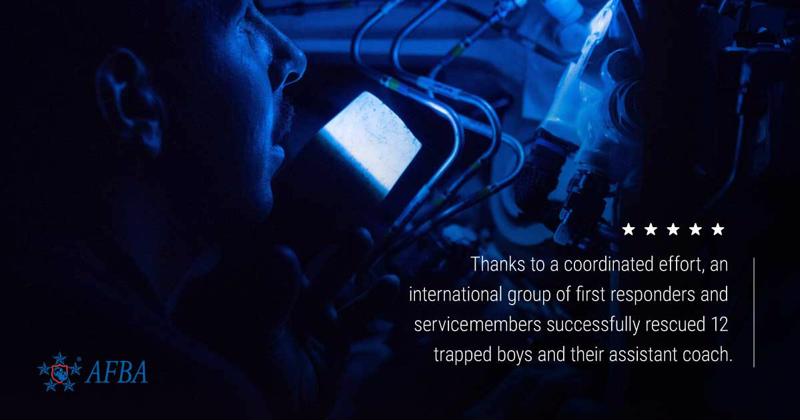
The Thai cave rescue of early July 2018 was an incredible tale of tragedy avoided. What could have been a disastrous situation became a successful recovery of 12 teenage boys and their 25-year-old assistant coach. This incredible ordeal highlights how complicated the work of first responders and expert servicemembers can be.
Finding the trapped team
On June 23, 12 members of a junior soccer team went to explore the Tham Luang Nang Non cave after practice with their assistant coach. Heavy rains partially flooded the cave shortly after, trapping the group inside. Although the boys were declared missing and the head coach discovered their abandoned belongings near the cave's entrance that same day, the rising water and strong currents made it difficult for rescuers to help. It was more than a week before initial contact was finally made.
The rescue expanded into a massive operation that received international attention and support. Thai Navy SEALs were the first on the scene, and they were quickly supported by divers from the British Cave Rescue Council, open water divers, the U.S. Air Force, a team of Specialist Response Group divers from the Australian Federal Police and divers from the Beijing Peaceland Foundation. Even sniffer dogs and drones were used to locate the boys, looking for openings above ground.
The search had to be put on hold multiple times due to continuous rain and flooding. Finally, the group was discovered on July 2, but the rescue's problems didn't cease. The boys and their coach were about 2.5 miles from the cave's entrance, and divers had to figure out how to rescue them through areas with strong currents, low visibility and narrow passages. If the boys panicked on their journey out, they could have died.
The next day, three Thai Navy SEALs joined the stranded group. A doctor, tasked with evaluating the boys and helping keep their spirits up, was among them. Yet, it was still a few days before rescuers could begin removing the team. During this time, on July 5, a Thai Navy SEAL named Saman Kunan died during a mission to provide oxygen to the stranded group. He was the only fatality of the operation.
Major challenges to rescue
Rescuers had to deal with several factors complicating their rescue mission, including:
- Consistent flooding.
- Falling oxygen levels.
- A large group of boys, many who couldn't swim, exhausted by the ordeal.
"The cave was dry when we arrived, and within an hour and half it had already filled up by 2 to 3 feet and we were being pushed out," said Derek Anderson, a 32-year-old U.S. Air Force rescue specialist, to Military.com. "That was just in the very beginning of the cave and at that point we realized this problem is going to be much more complex than we thought."
Because of the constant rains and lack of oxygen, waiting until the flooding season was over to rescue the boys wasn't an option. Instead, on July 8, 18 rescue divers (consisting of 5 Thai Navy SEALs and 13 international supporters) went into the cave, each tasked with rescuing one boy. The divers were equipped with hooded wetsuits, positive pressure face masks, bungee cords and other materials to keep the boys as bundled and close as possible so divers could keep control. The last person in the cave, the assistant coach, was rescued July 10.
Servicemembers and first responders pull off a difficult operation
The team was driven to the hospital in emergency vehicles and given anti-anxiety medication upon rescue. It was only thanks to the dedicated work of trained specialists.
"The world just needs to know that what was accomplished was a once in a lifetime rescue that I think has never been done before," said Anderson. "It's important to realize how complex and how many pieces of this puzzle had to come together."
Do you know what type of compensation you're eligible for as an active-duty servicemember? There are many possibilities based on your experience, assignments, location and more. Here, we'll break down the different kinds of military pay to help you get started on your financial planning for the future
Active duty basic pay
This is the primary form of income for active duty servicemembers and is similar to a civilian's paycheck. The government sends checks for basic pay every month, and servicemembers can expect an annual increase if approved by Congress. This is similar to a tenure-based raise or benefits increase that must be approved by upper management. This year, servicemembers saw their basic pay increase by 2.4 percent as of their Jan. 12 paycheck.

Other types of pay and allowances
Servicemembers often get other forms of compensation depending on various factors, including but not limited to:
- Professional skills.
- Area of assignment.
- Marital status.
- Types of duties performed.
It must be noted that the military provides general categories for two types of compensation:
Pay
Pay is generally subject to taxes and included in the taxable income reported to state and federal governments.
- Assignment Incentive Pay (AIP): Those who serve under unusual circumstances – such as involuntarily extended stay in Iraq, Afghanistan and even South Korea – may get financial compensation for their trouble.
- Career sea pay: Granted to active-duty sailors who have spent at least three years at sea. Amounts are based on the person's rank, and an additional $100 per month is granted for each subsequent month.
- Diving pay: Officers whose duties involve diving can receive up to $240 per month. Enlisted members with similar duties may receive up to $340 per month.
- Enlistment and reenlistment bonus: Those who initially enlist or extend their period of active duty are eligible for an Enlistment or Reenlistment bonus. The amount varies by skills and department but can be as much as $40,000.
- Foreign language proficiency pay: Those who maintain proficiency in certain languages (chosen by military departments) may receive a monthly payment of up to $1,000.
- Hardship duty pay (HDP): HDP-L payments, ranging from $50 to $150 are for officers and personnel serving in designated locations. HDP-M payments are for performing designated missions that involve recovering the remains of U.S. servicemembers.
- Hazardous duty incentive pay: Members who work in certain hazardous situations – including demolition, working with toxic fuel, flight deck operations and more – are authorized to receive $150 per month.
- Hostile fire and imminent danger pay: Servicemembers working in imminent danger zones are authorized to receive a $225 monthly payment.
- Involuntary separation pay: Members who are involuntarily and temporarily unable to serve (for reasons other than misconduct) and have served at least six – but no more than 20 years – of active duty are eligible for a special lump-sum.
- Medical pay: Medical specialists (doctors, dentists, nurses, pharmacist, physical therapists, radiation specialists, optometrists and others) are entitled to a variety of special pays.
- Special duty assignment pay: Servicemembers who perform duties with a high level of responsibility or that are extremely difficult can get a monthly payment ranging from $75 to $450.
Allowance
Allowance is not subject to taxation and not included in annual taxable income.
- Basic allowance for housing (BAH): Members not assigned to government quarters get a monthly allowance calculated to equalize out-of-pocket housing expenses, regardless of location. By 2019, members should only have to pay 5 percent of such costs from their own funds.
- Basic Allowance for Subsistence (BAS): Each month, officers get $254.39 and enlisted members authorized to mess separately get $369.39 to offset the cost of meals.
- Clothing Allowance: Officers get an initial uniform allowance, payable only once. Clothing replacement allowances are granted to members who must either wear civilian-type or special military clothing.
- Cost of living allowance for the continental United States (CONUS COLA): Servicemembers living in designated high-cost areas within the U.S. receive an allowance to offset non-housing costs. Most payments range from $20 to $300; sums are based on rank, dependent status, location and years of service.
- Dislocation allowance (DLA): Active-duty personnel dealing with a permanent change of station may have some of their moving expenses reimbursed. The amount depends on the member's grade and whether they have dependents.
- Family separation allowances (FSA): Only members with dependents may receive this allowance. There are three types: FSA-R (when dependents don't live nearby and the government won't expense their transportation), FSA-S (when the member is aboard a ship that is continuously away from more than 30 days) and FSA-T (when the member is on TDY or away from the permanent duty station for over 30 days).
- Overseas station allowances: This series of payments helps offset the costs for food, lodging and similar expenses when servicemembers are assigned outside the U.S. It consists of four components: cost of living allowance, overseas housing allowance, temporary lodging allowance and interim housing allowance.
- Temporary lodging expense (TLE): If a servicemember and/or dependents must stay in temporary lodgings while moving because of a permanent change of station, TLE partially offsets this cost and meal expenses.
Understanding your pay and allowances is the first step toward planning for your financial future. Armed Forces Benefit Association can help you with the rest.
Dogs are loyal, intelligent and devoted to their families, so it's no wonder these pets are chosen to help people with physical disabilities and chronic mental health issues. Many veterans use dogs to help them adjust to combat-related ailments. However, getting a service dog and understanding what the VA will cover can be complicated. This guide will help veterans understand how to get their own service animal and what the VA does to support dogs as a mental health treatment.
The VA and service dogs
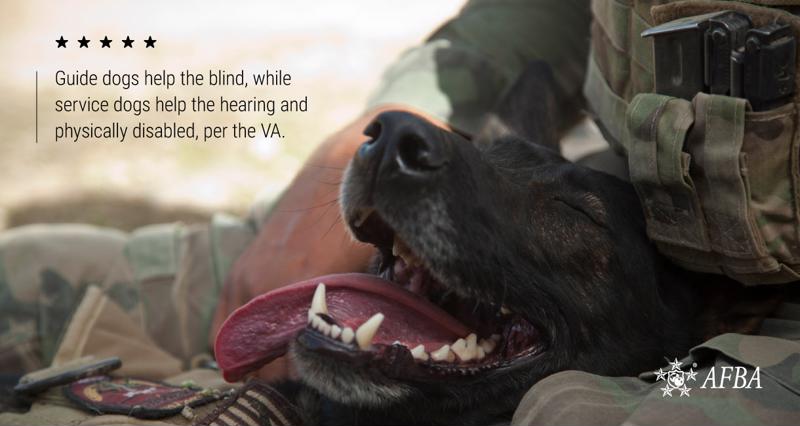
The VA classifies dogs into two types:
- Guide dogs assist blind veterans.
- Service dogs assist veterans with a physical or severe to profound hearing impairment.
Vets who enroll in VA healthcare may be eligible for either type depending on their condition. That said, the government doesn't provide a dog to everyone who asks. Veterans must demonstrate a medical need, as evaluated by a physician, for a guide or service animal. The process summarized looks like this:
- A vision, hearing or physically impaired veteran talks to their primary care provider, who refers the veteran to a specialist.
- A VA medical team conducts a complete evaluation to see if a dog is the best type of treatment for the veteran.
Additionally, the VA doesn't provide service or guide dogs itself. Rather, it works with accredited non-VA agencies — organizations that specialize in training service animals. Veterans will go through an educational process to learn how to communicate with their service dog, after which the canine will become the veteran's property.
That said, the VA does pay for veterinary care — though not other expenses like food, grooming and boarding — through VA Prosthetics and Sensory Aids.
Service dogs and mental health
Currently, the VA doesn't provide service dog assistance for veterans with post-traumatic stress disorder or other mental health issues. This type of help is offered by independent veterans groups and nonprofits. Advocates are pushing for VA-funded mental health service dogs, and their efforts might pay off in the next few years.
Many individual success stories show the positive effects service dogs have. For example, a study from Purdue University found both current servicemembers and veterans with a trained service dog showed significantly lower signs of PTSD and related symptoms such as social isolation, absenteeism and depression. They also displayed higher signs of psychological well-being like social functioning and quality of life.
However, as the study's author noted in a conversation with The Washington Post, this research is still preliminary. The VA also wants to be certain that service dogs truly help veterans from a mental health perspective. If benefits are clinically proven, the VA wants to create a thoroughly researched checklist of what skills these animals should learn before considering paying for their care.
To that end, the government is currently conducting a $12 million, multi-year study on the benefits of mental health service dogs. Originally, this research drew a lot of criticism. Per The Washington Post, the dogs were provided by contracted groups, and some of the animals bit participants' children. The animal trainers also potentially biased veteran opinions (and thus the outcome of the study) by saying how helpful the dogs could be. The study has since been redesigned to include VA-hired trainers and a control group of veterans with emotional support dogs. The initial results are expected in 2019.
That said, the VA also launched a service dog pilot program limited to 100 veterans, according to Military.com.
"I've seen the impact that these dogs can have on veterans and so I'm a believer," VA Secretary David Shulkin said of the pilot, per Military.com. "I don't want to wait until the research is there. If there's something that can help our veterans, we want to be pursuing it."
If results from the pilot program and study are positive, veterans may be able to receive VA assistance for their service dogs within the next few years.
The 911 emergency response system is one of the country's most vital communication tools, yet it's notoriously outdated. One of the primary issues is that, thanks to the prevalence of cell phones, first responders can have a difficult time locating callers.
Apple hopes to help solve that problem with its latest mobile operating system update. Per a company press release, iOS 12 will allow iPhone users to automatically send accurate, secure location data to 911 operators.
Apple updates old tech to help first responders
The iOS update relies on technology Apple first launched in 2015. HELO, which stands for Hybridized Emergency Location, estimates a mobile 911 caller's location using cell towers and on-device data sources such as GPS and WiFi access points. iOS 12 will work with RapidSOS, an emergency technology company, to share HELO location information with 911 call centers.
"911 telecommunicators do extraordinary work managing millions of emergencies with little more than a voice connection," RapidSOS CEO Michael Martin said in the press release. "We are excited to work with Apple to provide first responders a new path for accurate, device-based caller location using transformative Next Generation 911 technology."
The data, which will only be available for emergencies, will be sent using RapidSOS's data pipeline. This pipeline will send HELO data quickly and securely.

An emergency system that failed to keep up with the times
This can and has led to deadly results. In 2014, a woman named Shanell Anderson called 911 after losing control of her SUV and crashing into a pond. Anderson drowned after a dispatcher couldn't locate her, despite Anderson stating exactly where she was. The dispatcher tried everything she could, but Anderson's cell phone call was routed through the nearest tower to a neighboring county's 911 system, which didn't have the woman's location on their maps.
While that incident was caused by cell tower routing issues, even using a phone's location data doesn't always provide accurate results. As The Atlantic reported, Julius Genachowski, former chairman of the Federal Communications Commission, once toured a 911 call center in Fairfax, Virginia. Genachowski tested the system by calling 911 on his cell phone while still inside the call center. Once connected, a dispatcher asked for permission to locate Genachowski using his phone's GPS. He consented, but the location data said that he was at a Costco half a mile away from the center.
Cell phones make locating 911 callers surprisingly difficult. When people relied on landlines, dispatchers could look up the caller's billing address or search a database of every phone number in their area with a matching street address. A cell phone's billing address doesn't necessarily indicate where the call is coming from. What's more, cell towers are easily overloaded, meaning one call could be rerouted to a tower farther away. A phone's GPS service helps, but it works best when the feature has been turned on for hours, allowing satellites to better detect its location.
The FCC has attempted to modernize the emergency call system, but it's still far behind the times. This is very unfortunate as, according to Pew Research Center, 95 percent of Americans have a mobile phone. This means an increasing number of 911 calls are likely coming from cell phones rather than landlines.
Updates like Apple's will hopefully help solve the 911 caller location issue. Other communications companies may want to take note.
"This new functionality is an example of how companies and first responders can use technology to dramatically improve public safety," former FCC chairman Tom Wheeler said in the Apple press release. "Lives will be saved thanks to this effort by Apple and RapidSOS."