
National Maritime Day, which falls on May 22 each year, was officially declared to commemorate the first successful passage of a steamship from the U.S. to England. Yet, the holiday incorporates so much more than that in these modern times. It celebrates the sacrifices that merchant marines made during World War II and the benefits that American ports bring to the economy.
The U.S.S. Savannah: The first steamship to cross the Atlantic
On May 22, 1819, a steamship left from its home port in Savannah, GA, headed to Liverpool, England. The ship reached its destination in 29 days and four hours, according to the Maritime Administration, part of the U.S. Department of Transportation. Although the ship's sails did the majority of the work, the steam engine had no failures, and the successful voyage launched a new era of U.S. technological leadership and showed the world the power of steam.
Congress declared May 22 National Maritime Day via a joint resolution passed May 20, 1933.
" … the President is authorized and requested annually to issue a proclamation calling upon the people of the United States to observe such National Maritime Day by displaying the flag at their homes or other suitable places and Government officials to display the flag on all Government buildings on May 22 of each year," the resolution read in part.
President Donald Trump upheld this request in 2017, asking for U.S. citizens to fly the flag and for boats to dress ship. It's likely he will do the same this year.

Merchant marines during World War II
U.S. shipyards and merchant marines were integral to the Allies' World War II victory. They were the first to enter the war, as their ships were captured or sunk before the U.S. officially entered the conflict. They were also the last to return, using their ships to bring servicemembers home.
Merchant ships were the only way the U.S. Armed Forces could fight in Europe, as they were needed to carry supplies ranging from food to tanks. As such, these marines sailed across the three major oceans and the Arctic Circle. They carried nearly 270 billion tons of cargo during the war, averaging a delivery rate of 17 million pounds an hour in 1945.
For all their valor, merchant marines also sacrificed much during the war. Nearly one in 30 didn't return home, and the marines suffered the highest casualty rate of all U.S. military branches. Over 6,000 sailors and more than 700 ships were lost in the war.
Unfortunately, the survivors weren't given veterans benefits at the time, nor were the dead recognized for their service. For years, merchant marines were excluded from all celebrations commemorating the Armed Forces. Finally, the group won some veterans' rights and privileges after a long court battle that ended January 19, 1988. They gained additional rights 10 years later during a congressional ceremony recognizing Persian Gulf War veterans. Merchant marines were also commemorated at various national monuments, including the U.S. Navy Memorial and the World War II Memorial, both in Washington, D.C. The flags at the latter display the seals of the five services of the military: the Army, the Navy, the Marine Corps, the Coast Guard, the Army Air Corps and the Merchant Marines.
Celebrating National Maritime Day
The holiday is celebrated in many ways across the nation. As Maritime Executive noted, May 22 is not just a time to think of the history of the merchant marines but also to recognize how the nation's ports bring jobs and economic development.
"America's seaports support 23.1 million jobs, annually generate more than $321 billion in federal, state and local taxes, account for over a quarter of the U.S. economy and handle more than 2.2 billion metric tons of international and domestic cargo," said Kurt Nagle, president and CEO of the American Association of Port Authorities, to the publication. "From these statistics alone, it's clear that ports play a vital role in supporting our national economy, jobs, tax resources and their communities."
This year, Americans can acknowledge this day of remembrance by flying the flag, attending local events and learning more about the history of maritime merchants during World War II.

No one doubts the great amount of integrity, strength and discipline required to serve the U.S. armed forces. Yet, many myths about military life prevail among the public. Military.com listed some of the most common: that servicemembers are isolated from their families and friends, unable to start their own families, penalized for getting pregnant, unable to pay for college and left alone after leaving the service. These misconceptions cause perfectly acceptable candidates to question their own enrollment.
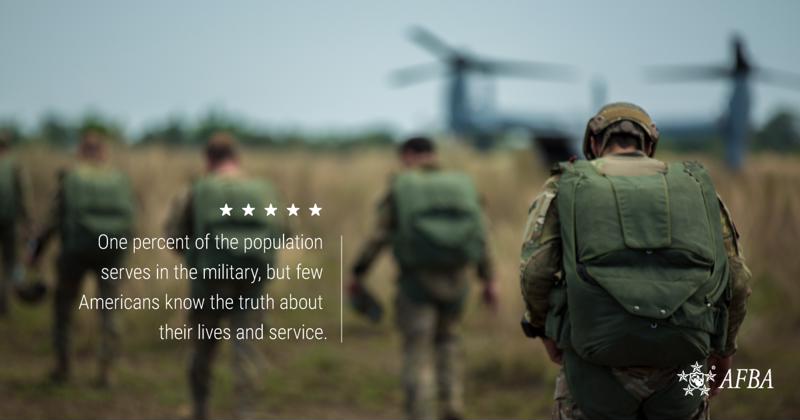
The U.S. Department of Defense plans to change these ideas with a new initiative known as This Is Your Military. Launched Feb. 1, 2018, This Is Your Military was designed to familiarize the American public with the 1 percent of the population that serves in the armed forces.
"We want to showcase how the military is relevant to Americans' lives on a daily basis, and how innovative the department is, and how we're a force for good," said Amber Smith, former deputy assistant to the Secretary of Defense for outreach.
Showing the truth of military life
This Is Your Military shines a light on military missions that the American public might not think of. Instead of focusing on battles overseas, the project tells stories of domestic disaster relief, community service and more. Some stories even feature civilians taking tours of military bases.
For example, one article tells the story of a group of higher education leaders who got the opportunity to attend the Mini Joint Civilian Orientation Conference in late April. Attendees got a glimpse into military life (even getting to look inside official vehicles and machinery) and learned how they can help by engaging directly with servicemembers to hear their needs firsthand.
"Through their insights, we left with new understandings, updated perceptions and creative ideas about how to improve higher education pathways for individuals with military backgrounds and recognize more fully the skills and expertise they bring to our workforce, economy and communities," wrote Dr. Carrie Besnett Hauser, conference attendee and president and CEO of Colorado Mountain College, for DoD Live, the official blog of the Department of Defense.
Additionally, the project aims to counteract the idea that military service causes mental grief. This Is Your Military points out that many servicemembers have fulfilling jobs and can support their families. Furthermore, This Is Your Military also plans to emphasize the numerous roles women can achieve within the armed forces, showing that women can be active members and not simply serve in support positions.

Outreach efforts
This Is Your Military will showcase a different aspect of military life each month – including, but not limited to innovation, entrepreneurship, family life, jobs, benefits and global missions – via video, photographs, coverage of recreational and ceremonial events, and even graphic imagery. In fact, a new exclusive poster is unveiled each month, viewable on the official This Is Your Military website.
What's more, the website isn't the only place people can see This Is Your Military content. The initiative also appears on Facebook, Instagram and Twitter, and content on these platforms is connected by the hashtag #KnowYourMil.
With Pew Research showing the number of active-duty servicemembers continuously decreasing, falling from just over 2 million in 1990 to 1.3 million in 2015, initiatives like This Is Your Military will hopefully be effective in encouraging more men and women to enlist. It will also correct common military myths among civilians, making people less likely to repeat untruths and discourage others from enrolling.
Armed Forces Day is fast approaching. It's celebrated on the third Saturday in May, a month filled with holidays dedicated to various servicemembers: Military Appreciation Month, Memorial Day, Victory in Europe Day, Military Spouse Appreciation Day and more. Celebrations are typically local and include parades, social events and sometimes sales. This year, Armed Forces Day falls on May 19.
Armed Forces Day celebrates a significant event in history: the unification of the separate branches of the military. Before the end of World War II, the War Department and the Naval Department acted separately, and the secretary of each organization reported directly to the president.
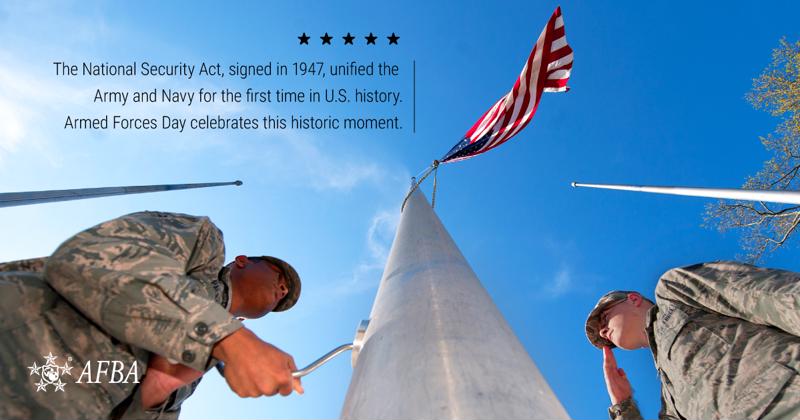
At the end of the war, President Harry Truman proposed a unified department to handle all aspects of national defense, believing this would cut back on wasteful spending and encourage interdepartmental collaboration. He signed the National Security Act in 1947, creating the National Military Establishment to unite the Army and Navy. In addition, the law created the U.S. Air Force (which had been known as the Army Air Forces), the Central Intelligence Agency, the National Security Council, the National Security Resources Board and the Joint Chiefs of Staff.
In charge of the National Military Establishment was a single Secretary of Defense. The establishment was then renamed the Department of Defense on August 10, 1949.
That same year, Defense Secretary Louis Johnson announced the creation of Armed Forces Day to replace separate celebrations for the Army, Navy and Air Force. This goal wasn't exactly achieved, as each branch of the military still has its own day of recognition. That said, Armed Forces Day remains an opportunity for all servicemembers and civilians to celebrate the role of the military in upholding the American way of life.
Secretary Johnson had the support of President Truman, per the Department of Defense, speaking on the holiday during his Presidential Proclamation on Feb. 27, 1950.
"Armed Forces Day, Saturday, May 20, 1950, marks the first combined demonstration by America's defense team of its progress, under the National Security Act, towards the goal of readiness for any eventuality," he said, according to the DoD. "It is the first parade of preparedness by the unified forces of our land, sea, and air defense."
Despite being held in such high regard, Armed Forces Day didn't become a national holiday until President John F. Kennedy declared it so in 1961.
Celebrating Armed Forces Day
The first holiday in 1950 had air shows, receptions, open houses and parades. It was also celebrated internationally; servicemembers in Berlin had their own festivities. Every year has a theme, and the first was "Teamed for Defense" to express the unification of all military forces. This first holiday was also an opportunity for civilians to learn more about the goals and achievements of the military.
Other themes for Armed Forces Day include:
- Freedom.
- Patriotism.
- Liberty.
- Freedom Through Unity.
- Guardians of Peace.
- Appreciation of a Nation.
- Arsenal of Freedom and Democracy.
- Deter if Possible, Fight if Necessary.
- Lasting Peace.
- Dedication and Devotions.
This year's theme is "All Across America," per the DoD, showcasing the ways servicemembers work for civilians while on American soil. The theme coincides with the department's This Is Your Military initiative and #KnowYourMil hashtag, which aim to display the positive truth of military life.
This Armed Forces Day, let's take time to celebrate the unified military and all the ways servicemembers have protected American freedoms. Civilians can share personal stories of the servicemembers and veterans in their lives on social media by contributing to the #KnowYourMil campaign.
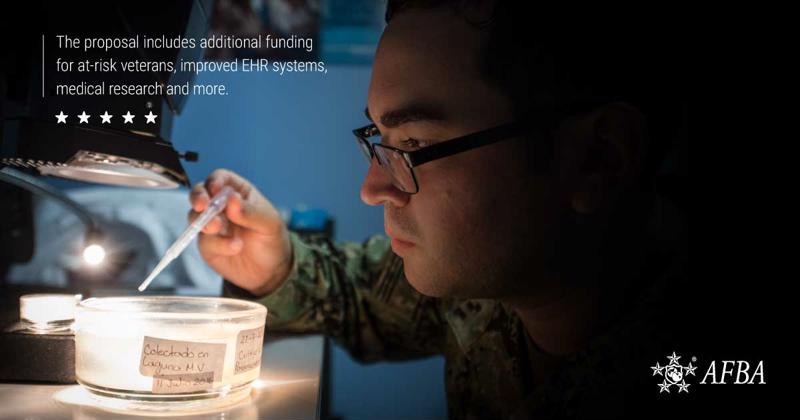
President Donald Trump's 2019 federal budget proposal would increase the budget for the Department of Veterans Affairs by $198.6 billion, according to Military Times. That part of the proposal drew widespread support, particularly from veterans advocates.
A detailed breakdown of the proposal indicates a comprehensive strategy to address the issues that affect today's veterans, including:
- $1.6 billion in funding for support services that assist at-risk and homeless veterans.
- $1.2 billion allocated to modernize veterans' electronic health records.
- $727 million dedicated to medical and prosthetic research.
- $511 million to fund gender-specific healthcare services for female veterans.
- $381 million to find and support alternative pain management methods that reduce veteran reliance on opioids.
If passed, the proposal would be a significant increase in VA funding occurring as budgets for other departments are constrained. The VA budget was less than $49 billion in fiscal year 2001, per Military Times, and reached $93.7 billion in fiscal 2009. Similarly, President Trump allocated more money to the VA just last year when he signed the VA Choice and Quality Employment Act. This bill received widespread bipartisan support and, again, praise from veterans's advocate groups.
The act allocated $3.9 billion in funding to support the Veterans Choice Program, which was nearly bankrupt at the time, according to Stars and Stripes. The majority of the funding – $2.1 billion, to be precise – was designated for the Choice program to help veterans find care provided outside VA clinics and hospitals. The remaining $1.8 billion will be used to hire more staff, improve existing VA facilities and open 28 new clinics.
"This bill will ensure veterans will continue to have the ability to see the doctor of their choice," Trump said. "So important. Our great veterans deserve only the best and that's what they're getting."
The future of the VA budget – what would the money be spent on?
In all likelihood, the allocated funding will be, in some ways, spent on health-related technology. This theory is based on a recent report reviewed by the Federal Times which found the VA is on course to be the top agency for government health IT spending within the next five years. By 2020, the VA will account for 40 percent of such spending. Currently, the Department of Health and Human Services is the top health IT spender, but the Affordable Care Act mitigated those expenses somewhat.
Much of what will cause the VA to overtake the HHS is a new electronic health records system that the former plans to implement. Last year, then-Secretary of Veterans Affairs David Shulkin announced the agency would use the same platform as the Department of Defense to better allow both agencies to transfer health records as needed. This would make the transition from active servicemember to veteran much easier from a healthcare perspective, as it would eliminate the need for doctors and servicemembers to fill out separate forms with the same information.
"Our new electronic health records system will enable VA to keep pace with the improvements in health IT and cybersecurity, which the current system, VistA, is unable to do," said Scott Blackburn, the VA's acting Chief Information Officer.
The initial rollout of the new EHR system is expected to begin June 2019, which aligns with the above budget proposal and the prediction that VA health IT spending will soon increase. Per a separate Federal Times article, project is expected to cost $10 million and would be the biggest EHR system implementation in history.

This past February, President Donald Trump and Congress ended weeks of turmoil after agreeing to a bipartisan budget package. That agreement extended the continuing resolution until March 23, when a bill was passed that ended the financial back-and-forth seen over the previous months and funded the government through Sept.30, 2019 – the end of that fiscal year.
This resolution authorized a significant amount of spending. Most of it was allocated to the Department of Defense, but many civilian agencies gained as well. This information should come as great news to government contractors, as the bill lifted the sequester on government spending and gives them more stability. It also eliminated the possibility of a government shutdown – which, as Washington Technology pointed out, has already happened twice this year – for 18 months. Contractors can now breathe a sigh of relief, knowing they won't have to worry about such uncertainty again until the end of September 2019.

A breakdown of the bill
By fully repealing the sequester through fiscal year 2019, the budget bill effectively boosts government spending for the DoD by $54 billion for both FY18 and FY19, per the law firm Venable LLP. Furthermore, it includes an additional $31 billion above the sequester cap for FY18.
The repeal also brings $37 billion to civilian government agencies across both fiscal years, plus $31 billion above the sequester gap for FY19. Per Venable LLP, the total non-defense funding cap is $117 billion higher than what the Trump administration requested for the FY18 budget. Some are concerned that these agencies won't find use for these funds, but Congress attempted to allay these fears by pledging certain amounts to various initiatives, including:
- $20 billion for infrastructure, including surface transportation, clean drinking water, rural broadband, energy infrastructure and rural water and wastewater.
- $6 billion to help solve the opioid epidemic and assist with mental health care.
- $5.8 billion for the Child Care Development Block Grant program.
- $4 billion for initiatives that help make college more affordable (including those helping teachers, firefighters and police officers).
- $4 billion to improve VA clinics and hospitals.
- $2 billion for research at the National Institutes of Health.
Congress also directed some of this funding to initiatives that will increase emergency response and further invest in healthcare. FEMA, for instance, will receive $23.5 billion, while the Army Corps will get $15 billion. Furthermore, the bill allocates $28 million in community development block grands for economic revitalization, housing, infrastructure repairs and more.
To help people in areas affected by last year's numerous natural disasters, Congress committed $4.9 billion in Medicaid funds for Puerto Rico and the U.S. Virgin Islands. Another $2.36 billion was granted to Florida disaster assistance.
The healthcare commitments included more than $7 billion in funding for community health centers, $253 million over two years for teaching health centers and $620 million over two years for the National Health Service Corps.
Benefiting from the recent budget bill
While the budget is definitely good news for government contractors, these businesses must still face competition with each other. It's true that there is more money to go around, but contractors aren't guaranteed a portion unless they prove their usefulness to the government.
As such, these organizations should position themselves as the best resources to solve the various civilian issues listed above, as well as those faced by the DoD. Successfully securing contracts is all about marketing and cost-effective pricing.
That said, the end to the financial uncertainly that prevailed over the past few months is nothing short of great news.
The Army Basic Training course is being revamped due to what military leaders say is a lack of readiness and discipline. The new course is designed to produce soldiers who are more physically fit, more diligent and are better motivated overall.
Officers identify issues with emerging recruits
A poll of more than 27,000 warrant officers, noncommissioned officers and others ranging in rank from second lieutenant to colonel were ask to identify deficiencies they saw among the service's newest soldiers, according to Stars and Stripes. The resounding primary concern was a lack of discipline. Officers saw that many of the soldiers had issues following orders and seemed to lack respect for their superiors. Unkempt uniforms and late arrival were also common problems, indicating poor work ethic.
The revised Army Basic Training will focus on two goals: promoting Army values and producing graduates with better physical fitness.
In terms of the first focus, the fact that the U.S. was engaged in two ground wars over the past 20 years caused several long-standing traditions to fall by the wayside. Routines such as shoe shining were dropped in favor of preparing servicemembers for combat.
Now, some of those traditions will be incorporated into the revised training program. Recruits will have bunk inspections once again, and ceremony participation will increase. Recruits will also be tested on army history.
According to Maj. Gen. Malcolm Frost, the historical focus was included to teach trainees military values through lessons on America's most pivotal battles. The lessons will revolve around the actions of individual servicemembers to show recruits "what it means to be a U.S. army soldier," according to Stars and Stripes.
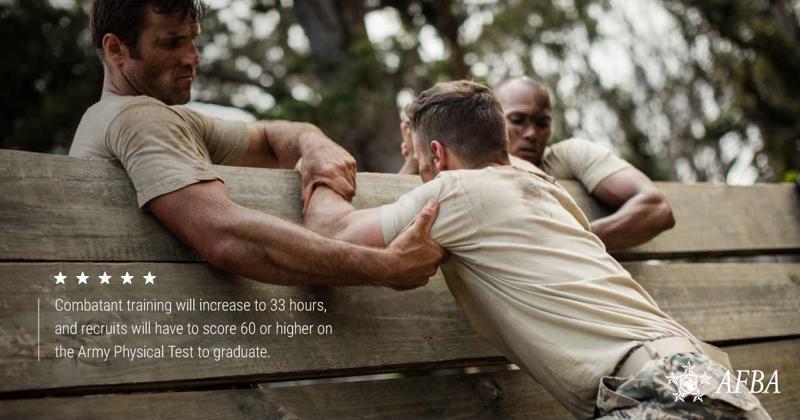
Additionally, recruits will go through physical training exercises designed to better reflect encounters they may have in the field. As part of this effort, combatant training will increase from 22 to 33 hours, and they will practice shooting rifles with only iron sights. Trainees will also be taught important, non-combative skills like arm signal communication and first aid.
The training comes with a new final exercise, known as The Forge, which has a time limit of 81 hours. Trainees will traverse 40 miles of road with various tasks arranged along the way. These vary from night infiltration, medical evaluation and missions to supply troops to patrols and obstacle courses.
The recruits will be held to higher physical fitness standards in order to graduate. They'll need to score 60 or higher in the three categories of the Army Physical Fitness test – sit ups, push ups and a two-mile run – rather than 50.
That said, the revised program doesn't just add; it also reduces or eliminates unnecessary training features. One example would be hand grenade competency, which will no longer be a graduation requirement, according to Military.com. Recruits will still be trained in hand grenade use, however.
"What we have found is it is taking far, far too much time," Frost said, according to the website. "It's taking three to four times as much time … just to qualify folks on the hand grenade course than we had designated…"
Launching the full program
Military officials plan to fully roll out the training course by the end of the fiscal year. Recruits at Fort Jackson in South Carolina have already undergone test versions of the program to great success, according to the Army Times.
"They're more resilient," Sgt. 1st Class Heidi Dougherty, a senior drill sergeant, said of the new recruits to the publication. "They're mentally tougher, physically tougher."
Not only is the revised training producing better servicemembers, but the significant accomplishment instill a sense of pride in the recruits.
"A year and a half ago [training] wasn't very mission-oriented," Fort Jackson Commander Maj. Gen. Pete Johnson told the Army Times. "It was essentially one mission: it was occupy a defense and dig a foxhole to standard. It would take 36 hours of four days, and there was no real sense of achievement at the end of it."
The Fort Jackson results are clearly encouraging, and one can only hope all recruits who undergo the new process will emerge with the same promise.
Clothes say a lot about who we are and display our profession to the world. In times of crisis, they help us identify the people in charge of rescue – the police, EMTs and firefighters who will lead us to safety. These jobs come with iconic uniforms, allowing anyone and everyone to know who they are and what their purpose is.
Clothes are also designed to protect our first responders. The suits that firefighters wear are built to withstand heat, smoke and flame, while police officers often don bulletproof vests, and EMT gear is made to help professionals tend to the wounded. Now, some companies are adding technology to make these uniforms even safer.
Nokia builds a smart jacket
Finnish telecommunications company Nokia, maker of the famously indestructible phones, recently unveiled a new concept it is working on: a versatile jacket enhanced with wearable technology designed specifically for first responders. Titled the CHASE (connected health and safety equipment) LifeTech FR (first responders) jacket, the garment would be suitable for a variety of professions, including EMS/EMT, firefighters and police.
The CHASE LifeTech FR jacket was designed in collaboration with Czech software developer GINA and South Korean fashion brand Kolon. It was created to be both stylish and versatile, and its structure mimics jackets seen on the runway, according to Engadget reviewer Edgar Alvarez. That said, its florescent yellow coloring makes it easily identifiable to other responders as well as civilians. In addition, the jacket has wide reflective strips for increased visibility, and the material it's made from is both breathable and waterproof.
However, it's the wearable tech that makes this jacket truly revolutionary. The CHASE LifeTech FR comes with a number of modular sensors designed to monitor metrics such as heart rate, temperature, location and locomotion. These modules are housed in secure pockets, meaning they can easily be swapped out depending on the wearer's need. As Alvarez pointed out, police and firefighters could wear the exact same jacket, but the former would equip theirs with body cameras and the latter with temperature sensors.
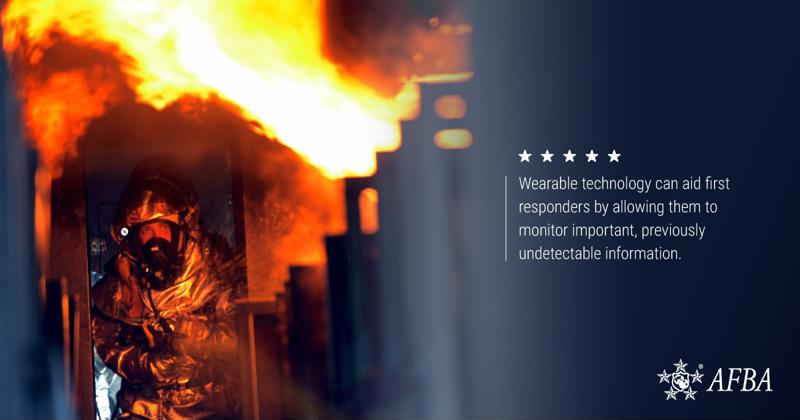
The data collected from these wearables is sent back to GINA and processed in real time, allowing all associated persons to keep track of individual responders. This would bring unmeasurable safety benefits; for instance, monitors could check a responder's breathing and heart rate and warn the individual before he or she undergoes too much physical stress. In addition, GPS monitors could help first responders locate each other if one needs assistance or help groups find a missing person.
While the jacket is still a concept for now, Nokia and Kolon plan to release a full version within the next 12 to 18 months.
Wearables in the working world
Incorporating technology into clothing and accessories isn't new – think of Fitbits and Apple Watches – but the industry is heading in a way many didn't expect. Instead of being dominated by consumers, wearables are quickly attracting the interest of businesses. Much of this interest was driven by manufacturing and mining, which are both extremely dangerous professions.
That said, and as Nokia revealed, wearables can be of great use to first responders. The technology can notice tiny details – both environmental and internal – that responders can't keep track of.
By expanding on this idea even further, wearables within EMT gear can keep civilians and first responders connected 24/7, allowing people to call for help whenever necessary. Chinese tech company ZTE is already working on such a product, according to Digital Trends. Such technology would greatly improve upon current 911 systems, which are limited by poor infrastructure and lack of GPS capabilities.
As wearable technology grows more advanced, we can only imagine what new developments it will bring for first responders.
The school shooting at Marjory Stoneman Douglas High School in Parkland, Florida, once again thrust the work of first responders into the spotlight. On February 14, a former student entered the school and shot 34 people – 17 of them fatally. Still, many people at the school during the attack were lucky, surviving due to the quick thinking of their fellow students, staff and the first responders who rushed to the scene.
One such lucky survivor was Madeleine Wilford, known to her friends as Maddy. Wilford suffered multiple gunshot wounds during the attack and likely would have died were it not for first responder Lt. Laz Ojeda.
The situation was dire; Wilford's gunshot wounds were incredibly severe, her lung had collapsed and she was in danger of drowning in her own blood. Three officers had to seal her chest and move her to a patient transport area, where Lt. Ojeda came upon her.

Ojeda had two options. The first was to follow policy regarding child patients. This idea gave him pause. The earlier officers estimated Wilford was 15, and protocol dictated all child patients would be sent to a hospital 30 miles away from the scene. Ojeda had doubts about her estimated age.
His second option was to take her to Broward Health North, a facility focused on urgent care that was only 12 miles away. Ojeda had to decide fast, so he shook her to see if she would respond. Wilford became alert on Ojeda's second try, telling him she was 17 and confirming his suspicions. Per The Washington Post, he took her to the closest hospital, where she underwent several surgeries that took 40 hours in total.
"She is very lucky," trauma surgeon Igor Nichiporenko told reporters during the press conference, according to The Washington Post. "Because we're talking about large-caliber bullets penetrating through the chest and the abdomen."
The past few years have seen many notable firsts for women in the military. In 2017, an anonymous female Marine became the first woman to complete the Infantry Officer Course. In 2016, Air Force Gen. Lori Robinson became the highest ranking woman in history when she led U.S. Northern Command. That same year was the first time female sailors deployed on submarines.
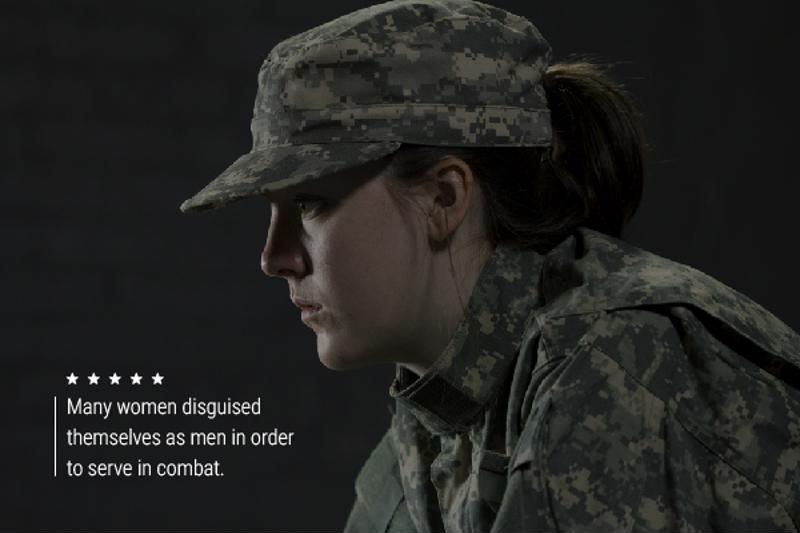
Despite these firsts happening so recently, women have participated in the military since the Revolutionary War. They acted as more than nurses; some were spies, and others served in combat (though they had to disguise themselves as men). Here is a brief overview into the ways women worked in the military during the country's formative years:
Women in the Revolutionary War
During this time, women served in the Army as cooks, seamstresses and nurses. In fact, George Washington – then commander-in-chief of the Continental Army – asked that Congress provide one nurse for every ten sick or injured servicemen, according to the Army's website.
That said, some women acted as spies, transporting messages and contraband and notifying troops of any British movement on their properties. One woman by the name of Nancy Morgan Hart used her masculine looks to her advantage; she disguised herself as a mentally distressed man and entered British camps in Augusta, Georgia. Another woman, Deborah Sampson, disguised herself as a man named Robert Shirtliffe and enlisted in the Army, where her sex wasn't discovered until she was wounded in combat. Sampson was discharged, but her service was recognized after her death when Congress allowed her husband to receive a widow's pension.
Women in the Civil War
Women's positions only expanded during the Civil War – more than 400 disguised themselves as men in order to enlist the the Union and Confederate armies. Yet this period was notable for another reason. Dr. Mary Walker, an assistant surgeon who served for the Union in 1862 and 1863, was the first and only woman to receive the Medal of Honor.
Her journey to this distinction wasn't easy, however. Walker was rejected when she first tried to get a job as an Army surgeon, so she was forced to work as an unpaid volunteer wherever necessary. Eventually, her office was converted to a hospital, and Walker worked as an unpaid assistant surgeon. To work more efficiently, she traded her women's uniform for a modified version of a man's. Walker also helped create an organization to assist women who visited wounded relatives in Washington.
Walker traveled to various camps during her tenure but was consistently denied a paying job. According to the Association of the United States Army, she was finally appointed as an assistant surgeon in 1863, but she was captured by Confederate forces in April 1864. Because of her attire, Walker's captors deemed she was a spy and imprisoned her for four months. She was released in August as part of an exchange for a captured Confederate surgeon.
After the war, Walker demanded recognition for her service, requesting a promotion to major. While she was denied by the Secretary of War, President Andrew Johnson decided to award her a Medal of Honor.
The future of women in the military
Women in the military have come a long way since these beginnings, yet they still haven't achieved full integration. As citizens, veterans and active-duty military, it is important that we listen to the concerns of our female servicemembers and celebrate their accomplishments.
Dogs are more than our best friends; they're also one of our greatest protectors. Nowhere is this statement more true than within the military and first responder groups across the country. Countless K-9 units of four-legged heroes have worked alongside human companions to protect American citizens.
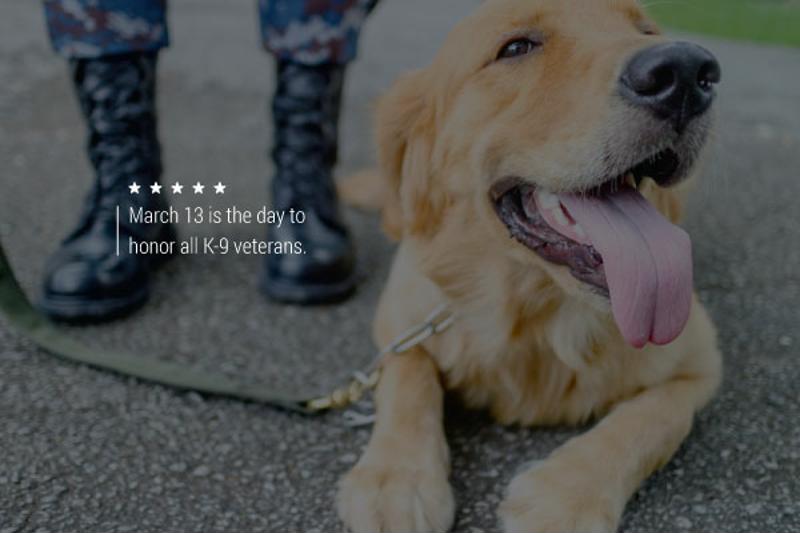
Joe White, a retired working dog trainer, believed these animals deserved recognition. He advocated for March 13 to become an official holiday known as K-9 Veterans Day. Former Florida governor Charlie Crist agreed with White, making Florida the first state to acknowledge the holiday. According to the Defense Media Network, White was proud to see the dogs honored and sent Crist a heartfelt email.
"Dogs have served with honor throughout the history of our country's birth and growth, and have served at many jobs in all of our wars," White's email read. "They, too, served, bled and died for our freedom."
White is completely correct; the nations K-9s have done incredible things in the name of freedom. Join AFBA in celebrating K-9 Veterans Day by learning about the history of these courageous animals.
A brief history of trained service dogs
The U.S. Army first began training dogs for military purposes on March 13, 1942, as part of the War Dog Program, also known as the K-9 Corps. What started as nine trained dogs grew to more than 10,000 before the end of World War II.
Still, these were only the first official dogs to serve in combat. U.S. military forces used dogs in an unofficial capacity years before. One of the original and most famous was Sgt. Stubby, a stray terrier mix who was unofficially adopted by a soldier named Robert Conroy. Their bond grew so strong that Conroy and his fellow soldiers smuggled the dog onboard the SS Minnesota as the unit was deployed to Europe in October 1917. Although he was discovered, Stubby won the heart of Conroy's commanding officer with a well-timed salute.
Stubby initially served as the unit's mascot, providing emotional support to the soldiers. On February 5, 1918, however, Stubby displayed his bravery by following Conroy across a battlefield under constant fire. The unit soon realized Stubby could hear artillery and smell gas before either hit – a talent that kept soldiers safe and prevented the enemy from gaining the upper hand. Stubby even sniffed out a German spy wearing an American uniform. For his bravery, Stubby was promoted to sergeant, granted several medals and got to meet three First Ladies.
Sgt. Stubby may have been the first to be formally recognized, but he certainly wasn't the last. Smoky the Terrier served an important role during World War II. Found in a foxhole, Smoky became one of the first therapy dogs and visited injured soldiers. She also helped her owner's unit string communication wire across an old Japanese airfield. The area lacked telephone poles, and digging new trenches for the wires would have exposed them to the enemy. Instead, they used Smoky to pull the string through old pipes.
"You couldn't get a dog in a thousand to go through a dark tunnel like that that they'd never seen before," Cpl. Bill Wynne, Smoky's owner, told NPR. During the war, Wynne purchased Smoky from her original rescuer for six dollars. "But she was well-trained in obedience, and she did it because I asked her to. She trusted me."
K-9 units today
These days, K-9 units are some of the most revered servicemembers and first responders around. Yet many people wonder what happens after they've served their time. Although many die in combat, the 2016 National Defense Authorization Act allows retired military dogs to come home and gives their handlers first priority for adoptions. Similarly, many police canines are adopted out or retire to live with their handlers – a fitting, comfortable end to several years of service.