
The Oscars aired this month, and people everywhere were commenting on who won what – and who wore what. At first glance, Hollywood life and military life seem to have nothing in common. However, many actors and actresses have lesser-known pasts as servicemembers. They aren't all action heroes, either. Many are comedians, sitcom stars and voice actors. Here are just four of the many actors and actresses who served their country:
1. Drew Carey
Star of the 1990s sitcom "The Drew Carey Show", former host of the U.S. version of the sketch comedy program "Whose Line Is It Anyway?" and current host of "The Price Is Right", Drew Carey may be one of the more surprising names on this list. Interestingly, his time in the armed forces is what led him to enter the world of comedy – and gave him his signature look of a crew cut and horn-rimmed glasses. He joined the Marine Corps Reserve in 1981 and served for six years. He needed a way to make more money during his tenure, and someone suggested performing standup. According to Military.com, Carey made around $10 per joke back then (he's worth approximately $165 million now).
2. Clark Gable
Unlike most veteran actors, Clark Gable enlisted in the middle of his career. In fact, he starred in his most famous role (Rhett Butler in "Gone with the Wind") three years before entering the Air Force on August 12, 1942. His decision was spawned by grief; Gable decided to enlist after his third wife tragically died in a plane crash. He served in England during WWII and returned to the U.S. in October 1943. Approximately nine months later, he was relieved from active duty and returned to acting.
3. Bea Arthur
Not much is known about Bea Arthur's time in the military. In fact, she previously denied her service during an interview. However, tabloid website The Smoking Gun found and exposed her military records, proving Arthur served in the Marines for 30 months.
Always a trailblazer, Arthur was one of the first members of the Women's Reserve. She started basic training in March 1943 and hoped for an assignment in ground aviation but instead worked as a typist and truck driver. According to her personality appraisal sheet, Arthur acted much like the characters she would play in the future: frank and argumentative.
4. James Earl Jones
One could say James Earl Jones' military career began during his college years. The famous actor attended the University of Michigan as a pre-med major. During his time at school, he enrolled and excelled in ROTC. Jones eventually realized medicine wasn't his passion and switched his major to drama in 1955.
After graduation, while the Korean War gained momentum, Jones was recruited to the Army. He expected to see combat, but his battalion was tasked with building a cold-weather command center in Colorado.
Jones left the military for two primary reasons, according to a separate Military.com article. A superior officer suggested he take a break to decide whether he wanted to stay in the military full time, and Jones figured he could re-enlist if acting didn't pan out as a career. Needless to say, Jones had a very successful acting career and voiced some of the most famous characters in the film industry.

Female veterans face unique struggles after their service – some of which mirror the complications they faced in the military. Thankfully, a growing number of resources from the public, government and other vets are emerging to help them.
One such resource comes in the form of a woman named Diane Ahrens of East Dundee, Illinois. A former servicemember herself and owner of Piece-A-Cake Bakery, Ahren has helped coordinate baby showers for Chicago-area expecting veterans for the past three years.
A growing event to support pregnant veterans
According to the Chicago Tribune, attendance at the baby shower events has grown steadily each year.
"The first year we only had four signed up and by the time of the shower, we had 11 or 12," Ahrens told the newspaper. "Last year, we had 25. This year, we're working toward 30."
The bakery provides desserts, while other restaurants offer entrees. In addition, the attendees receive free baby essentials, which are provided by donations and community partnerships. This year, fundraising efforts and help from a local Kohl's Cares group collected $5,000 in toys, formula, car seats, diaper bags and other items.
Ahren herself is no stranger to the struggles of an expecting veteran; she got pregnant approximately 30 years ago after serving in the Marines. Afterward, Ahren was a single mother for seven years. Her participation in the baby shower events stemmed from her desire to help women experience the same things she did, no matter how small that help may be.
The unique struggles of female veterans
Debates have gone back and forth about women's roles in the military, but it's clear the armed forces are growing more gender inclusive. That said, certain procedures and persistent beliefs still present obstacles.
As one article on Task and Purpose detailed, most military equipment is made for a man's physique, not a woman's. Ill-fitting armor and weaponry puts servicemembers in danger, as one Navy supply officer discovered when her unit was attacked in Afghanistan. The incident left her back and neck permanently damaged – all because she wore the wrong armor. Furthermore, the lack of proper care and resources worsens the already high-stress environment of the military.
These struggles don't end after women return to civilian life. Female veterans are the fastest growing homeless population in the U.S. In addition, the U.S. Department of Veteran Affairs found women vets were 2.5 times more likely to commit suicide than their civilian counterparts.
With this in mind, current female veterans should never be afraid to seek support. Feeling that they need to adhere to a standard set for others will do them more harm than good.
Thankfully, the VA provides many services to meet women's specific needs, including maternity care and family planning. Women who are pregnant or are trying to get pregnant are encouraged to talk to their healthcare provider for prenatal and preconception, maternity and newborn care services. Veterans who are struggling to get pregnant can also contact the VA for infertility counseling, assessment and certain treatments.
The department also offers family planning services for women who want to delay motherhood for the foreseeable future. Women can choose between multiple birth control methods, including pills, shots, implants, IUDs and other devices.
Motherhood can be complicated, but the struggle for female veterans can be even greater. Thankfully, many local and national services are dedicated to giving them the support they need.
The world of government contracting naturally comes with a certain amount of financial instability. Thankfully, many experts predict that 2018 will be a good year for the contracting field. Plenty of people assumed the numerous government shutdowns would be disastrous for contractors, but that turned out not to be the case. In fact, something close to the opposite happened: Congress approved a spending plan that included a huge budget increase for the Department of Defense, leading analysts to speculate that much of this money will be spent on contractors.
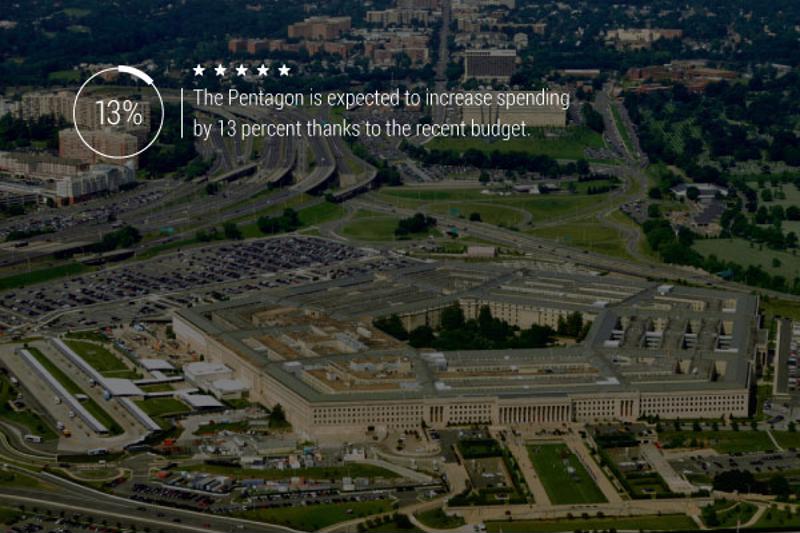
According to the Washington Post, the current budget, which lifts the 2013 sequestration, should increase Pentagon spending by 13 percent. Some analysts believe that money will be spent on the innovation or modernization of the Pentagon's (and other government offices') IT infrastructure. Such an update is long overdue and would bring the U.S. government more in line with every other industry.
Furthermore, this type of spending would take advantage of D.C.'s substantial tech base. Last year, real estate company Cushman & Wakefield identified D.C. as the third-best tech city in the nation – right behind San Jose and San Francisco/San Mateo. Clearly, there's a lot of opportunity for these businesses to profit from the anticipated spending.
As for the specific type of tech progress the government will invest in, it seems nothing is off limits. Speaking with the Washington Post, John Wood, CEO of data security company Telos, noted that the government is quickly switching to cloud-based software. Meanwhile, Deloitte Consulting Managing Director Michael Isman predicts automation, digital reality and blockchain data storage will all catch the government's interest.
What tech contractors must consider
Last year, the government purchased fewer tech services as new appointees adjusted to their positions. Now, as the administration settles into its second year, such growth will likely pick back up.
Unfortunately, this means contractors will presumably become more attractive targets for data breaches. Theft of a single contractor's data could have huge, irreversible consequences.
What's more, these companies are no stranger to breaches. A report from BitSight, a cybersecurity firm, revealed 4.3 percent of technology contractors reported at least one data breach over the past two years. Such attacks often take months – possibly even years – to detect, and many are never discovered at all. This means that there's a possibility that more tech companies have been hacked than the report suggests.
"Not only can these breaches often affect government and private sector employees, they may expose data that is fundamental to national security," wrote the authors of the BitSight report.
Because of the potential for increased spending coupled with the threat of data breaches, tech contractors must be more committed to digital security than ever before. Not only will doing so keep sensitive information private, but it could give these companies a leg up against their competitors.
One way contractors can get ahead is by using less common or accessible service providers for hosting, domain and email services. Amazon Web Services and similar cloud companies are a favorite of tech companies in all sectors, meaning data thieves expect them to hold tons of valuable information.
That said, even if contractors don't change vendors, they must take other measures to prioritize security.
Government spending in 2018
While the anticipated tech spending is still just a prediction, it stands to reason that tech contractors will benefit from the increased budget. That said, competition will grow more fierce, too, meaning businesses must bring their A-game to secure government contracts.

Black History Month is a time to reflect on the many strides and accomplishments of African Americans. The Tuskegee Airmen are arguably the most famous group of black Americans to achieve success in the military. At a time when the U.S. was tainted by legal and institutional racism, the Tuskegee Airmen rose above their setbacks and left a legacy like few others.
America's first black military pilots
The Tuskegee Airmen formed the 332nd fighter group and the 477th bombardment group of the U.S. Army Air Corps, the precursor to the U.S. Air Force. They fought in World War II at a time when many people thought African Americans weren't patriotic, courageous, intelligent or skillful enough to serve in the military. Yet the Tuskegee airmen proved them wrong, and the group wasn't just made of pilots. Mechanics, nurses, cooks and other support members were also part of the Tuskegee group, and all were important to their numerous victories.
The history of the group starts in 1938. That year, President Franklin D. Roosevelt announced an expansion of the civil pilot training program. However, due to the strict and segregated nature of the military, the NAACP and various black newspapers began pressing to make sure African Americans would be included, according to The History Channel. In response, FDR announced the AAC would also train black pilots. All training would be conducted at the Tuskegee Army Air Field, which was under construction at the time of the announcement. This field was located in the heart of the Jim Crow south, where racism was particularly rampant. Yet African American graduates came from all over the country to participate in the training course.
The first class consisted of 13 students, five of which completed it.
Actions in World War II
Tuskegee pilots made up the 99th pursuit squadron, which was deployed to North Africa in April 1942. Unfortunately, they were forced to use second-hand P-40 planes, putting them at a disadvantage in combat. The group was then transferred to Italy, where they shot down 12 German fighters in two days.

In February 1944, the 99th joined the 100th, 301st and 302nd fighter squadrons to form the new 332nd fighter group. Their mission was to escort the heavy bombers of the 15th Air Force, and they painted the tails of their P-51 Mustangs red for identification purposes. This earned the group the nickname of the Red Tails, and they became the most famous group of the Tuskegee airmen.
The end of a war, the start of a legacy
The 332nd flew its last combat mission on April 26, 1945 – just two weeks before the German surrender. Their incredible accomplishments proved that black Americans had the skills, bravery and patriotism necessary to serve in the armed forces.
Yet despite their success, the airmen returned home to face the same racism and prejudice they had experienced before leaving. That being said, their actions were important for the eventual racial integration of the military in 1948.
These days, African Americans make up 17 percent of active-duty servicemembers, according to numbers from Pew Research. Overall, 40 percent of the military consists of racial or ethnic minorities. Clearly, the Department of Defense has come a long way since the days of the Tuskegee Airmen.
Have you ever wondered why Presidents' Day is celebrated on the third Monday of February? What about its name: Is the holiday celebrating all presidents or just George Washington's birthday?
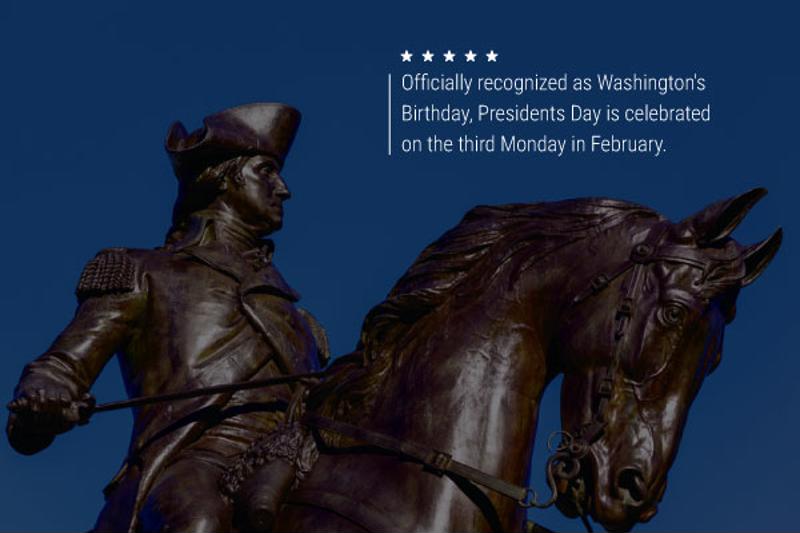
In fact, Presidents' Day is still officially referred to as "Washington's Birthday" by the federal government. This was the holiday's intended purpose; after Washington's death in 1799, people turned his birthday, February 22, into a day of remembrance. It was a fitting tribute for the man recognized as the most important figure in American history.
The holiday wasn't officially recognized by the federal government until the late 1800's. In the 1870s, Senator Steven Wallace Dorsey of Arkansas proposed the idea, and President Rutherford B. Hayes signed the holiday into law in 1879.
At this time, the holiday was still celebrated on Washington's official birthday. It wasn't until the late 1960s that the date changed.
Giving Americans more three-day weekends
In the 1960s, Congress recognized a problem plaguing U.S. businesses and workers. Because many federal holidays fell on specific dates, they days they were celebrated shifted from year to year. One holiday could fall on a Tuesday one year and a Friday the next. As such, American workers weren't consistent with their time off, and absenteeism became an issue.
To solve the problem, Congress proposed the Uniform Holiday Act. The law would shift several federal holidays from specific dates to specific Mondays, creating more three-day weekends for workers. The reasoning was that having more consistency among federal holidays between the years would reduce the number of employees missing work.
President Richard Nixon signed an executive order in 1971 making the Uniform Holiday Act permanent, officially shifting Washington's Birthday to the third Monday in February. However, this put it close to the birthday of another significant president: Abraham Lincoln. Additionally, another U.S. president had a birthday in February: William Henry Harrison. This confused the public, who were no longer sure if the holiday celebrated one president or many. In fact, some members of Congress wanted the day to act as a combination of Washington's and Lincoln's birthdays.
Although the federal name never changed, people began referring to Washington's Birthday as Presidents' Day, and most people think of it as a celebration of all of the nation's presidents.
The importance of America's first commander in chief
Although most people picture extended weekends and retail sales when discussing Presidents Day, the holiday is primarily about America's first commander in chief. The fact that President Washington has a holiday devoted to him and him alone is nothing short of significant. In fact, he is one of only two people to have a federally recognized holiday in his honor. The second is Dr. Martin Luther King, Jr.
Presidents' Day celebrates the nation's first commander-in-chief, President Washington. Thanks to his leadership during the American Revolution, the U.S. military was able to successfully defeat the British empire, allowing the nation to declare independence.
Washington's devotion to the nation and the military started long before his presidential appointment. In fact, he was first appointed as commander in chief in 1775 when he lead the Continental Army, more than a decade before he became president.
Washington left quite a legacy with the U.S. military. He brought attention to the causes that sustain the nation's servicemembers to this day: freedom and liberty.
As such, not only should we recognize President Washington during this holiday, but we should also honor the servicemembers who carry out his legacy.
Valentine's Day is fast approaching. No doubt you've noticed all the heart decorations, fancy boxes of chocolate and displays of roses in practically every store. If you or your loved one is stationed overseas, however, this holiday is more bittersweet than romantic.
Luckily, there are ways you and your loved one can celebrate the holiday despite living so far apart. Here are five tips for celebrating Valentine's Day during deployment:

1. Create a handmade card for your loved one
Nothing says "I love you" more than the personal touch of something handmade. A crafted valentine will mean much more to your loved one than something bought from Target or Walgreens. Possible materials for your project include:
- Cardstock (much sturdier and sleeker than construction paper).
- A bone folder (for a crisp, professional-looking folded edge).
- An Xacto knife (makes cutting curves much easier).
- Stencils or a calligraphy pen (for crisp lettering).
Additionally, there are many online resources, including DIY and crafting blogs, to help you create a professional-looking valentine.
2. Hold an unboxing Skype session
If you and your sweetheart plan to send packages or gifts to each other, schedule a time to meet on Skype, FaceTime or another video conference platform. Save your presents for your virtual date, then open them in front of each other. This way, the two of you can share the magical moment of seeing a gift for the first time, in real time.
3. Host a Gal/Palentine's party for other military spouses
It may be next to impossible to get ahold of your loved one on February 14. In that case, spend time with your friends or associates who are in a similar situation. Host an outing or dinner for people whose loved ones are also deployed servicemembers. You can simply meet up at a bar after work or arrange an elaborate weekend potluck.
Though the mood of the event won't necessarily be romantic, it'll be a great chance for everyone to talk about their thoughts and feelings in regard to being apart from the person they love. Having a deployed spouse or significant other is a unique struggle, and it's good to express these feelings with people who truly understand.
4. Get active
Sometimes, Valentine's Day is the absolute last thing you want to think about. After all, you may tell yourself, what's the point of acknowledging the holiday if you can't be with the person you love?
If you feel this way, spend February 14 exploring a new or favorite physical activity. Sign up for a high-intensity workout like spinning, rebounding or weightlifting. Alternatively, you can take a relaxing walk around a local park. The goal here is to stave off a holiday-induced depression by getting your heart rate up and your endorphins flowing. Even just leaving the house can lift your spirits a bit.
5. Spend the holiday with your children
Valentine's Day isn't just about romantic love; it's also about family relationships. If you're a parent, spend today celebrating in the love of your children. Arrange a special treat for them – cupcakes, a trip to the movies, or a video conference with their deployed parent. Take them out to their favorite restaurant, buy them chocolates or let them stay up a bit past their bedtime.
At some point, you can have a conversation about the parent overseas. Kids often don't have the words to express their complex emotions, but talking with you can help them process what they're feeling.
Keeping love alive despite the distance
Being separated from a loved one is incredibly difficult, but there are still ways to keep your relationship healthy. Use any of these five tips to celebrate the year's most romantic holiday with your significant other, your friends or your children.
As the New York Times detailed, 555 mass shootings have occurred in the U.S. since June 12, 2016. That night, a gunman opened fire in nightclub in Orlando, taking the lives of 49 people. It was America's deadliest shooting at the time, only to be eclipsed just over a year later when, on Oct. 1, 2017, another shooter attacked a music festival in Las Vegas. This catastrophe left 59 dead and at least 527 injured.
First responders are always on the front lines of such events, valiantly working amidst the chaos to save as many lives as they can. As we commend their bravery, it is important to listen to what they have to say.
Shootings take an emotional toll on first responders
The people who respond to mass shootings are some of the bravest and most resilient individuals on Earth. They're the only ones equipped to save countless lives during disastrous events, and they must think and act quickly in order to rescue as many as they can.
That said, they're also exposed to untold horrors as they carry out their duties. Even a successful rescue doesn't guarantee a life saved, as Paul Brunner, an EMS volunteer in La Vernia, Texas, explained to a local NBC news affiliate.
"Reports of the ones that we were able to treat, move, and transport, and didn't make it, are very difficult to deal with," he said, speaking of the aftermath of the Sutherland Springs shooting.
According to a separate news organization, an ABC affiliate, responders had to return later in the evening to collect the bodies of the people who didn't survive the attack. The process took more than three hours, but responders returned to the church as a group later in the week. According to their statements, being in the church again gave them a sense of closure.
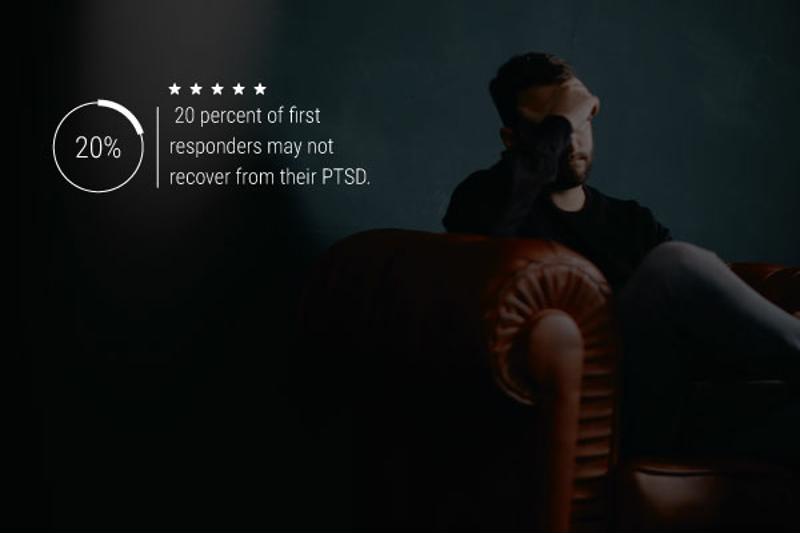
Responders to the Las Vegas shooting felt similarly when it came to the stress of helping people during and after the event. In fact, the effects of such tragedies last longer than we might think. According to NBC News, 20 percent of the first responders who helped during Las Vegas (and likely other events) may not recover from the post traumatic stress disorder caused by such experiences.
PTSD symptoms include nightmares, insomnia, memory problems, paranoia and flashbacks. If these symptoms persist, it will affect the ability of first responders to complete their jobs later in their careers.
"Employees are going through a range of emotions, including anger and fear," Glen Simpson, an advanced emergency medical technician who assisted during the Oct. 1 shooting, told NBC News.
Understanding first responders in their own words
Written news reports can only describe so much; indeed, video is often better for conveying complex emotions to a widespread audience.
To help people understand the role of a first responder, director Kim A. Snyder created a three-part docuseries called "We Are All Newtown," referencing the tragic shooting that claimed the lives of 20 children and six adult educational staff, as well as that of the shooter and his mother.
As The Atlantic detailed, the series follows doctors who have responded to mass shooting events to gain their perspective on the intersection between gun violence and public health.
"They are the ones who spend sleepless nights replaying moments of trying to stop bleeds and informing loved ones in waiting rooms about the suicides, homicides, and mass shootings that make up the nearly 34,000 gun deaths each year," Snyder told The Atlantic.
Hopefully there will never be another mass shooting, but in the event of such a catastrophe, it's important to listen to first responders as we commend them for their service.
Some active-duty servicemembers living off base saw their housing allowance increase slightly, while others saw no change at all this January 1. As Military.com reported, the Basic Allowance for Housing increased an average of 0.7 percent – the equivalent of $10 per month – at the start of 2018. Individual increases varied depending on a servicemember's location, pay grade and whether or not he or she has dependents.
That said, the increase only applies to servicemembers stationed in certain military housing areas. Local BAH rates will fall in 128 of the 301 locations. However, no current recipient will see their allowances decrease unless they're demoted, their number of dependents changes or they move to a new location.
"We do not penalize members who have already gone to a location, signed a lease and then rates happen to decrease," said Summer Britford, a chief with the Defense Travel Management Office. "Incoming members do have access to lowered [rental] costs so they do experience those decreases."
That latter statement doesn't exactly align with the expenses experienced by many servicemembers and civilians. As Military.com pointed out, the BAH adjustments haven't matched changing rent and utility costs. That said, the new rate does agree with the Defense Department's decision to reduce housing allowances overall, leaving servicemembers responsible for some expenses once again.
A brief history of housing allowances
Originally, allowances were only designed to cover approximately 80 percent of servicemembers' housing costs, leaving them responsible for the remaining 20. However, according to Military Benefits, the Defense Department began increasing allowance rates in the late 1990s to keep them in line with nationwide rental costs. By 2005, housing allowances covered 100 percent of housing costs for servicemembers.
In 2015, however, the DoD reduced BAH rates to cover 99 percent of these costs. The department also began excluding rental insurance from rate calculations at that time. The next year, the DoD determined that BAH rates would be set at 95 percent, falling at a rate of 1 percent per year over four years. The current rate covers 96 percent of housing costs; it will drop again for a final time next year.
Defense officials wish to use the millions of dollars saved by reduced BAH rates for other needs as defense budgets tighten and the country struggles to eliminate the deficit.

Other housing allowance 'solutions' could hurt servicemembers
While the DoD works internally to find the right housing allowance balance, other organizations have come up with their own ideas. As a separate Military.com article revealed, The Heritage Foundation proposed a reduction of housing allowances in the 2018 budget.
"[The housing allowance] is not military compensation," the report read, according to Military.com. "Housing allowances should be based on the amount of money that service members must pay to obtain adequate housing. Service members are not entitled to, nor should they have any expectation, that money above what they pay for housing can be retained as 'extra compensation.'"
The report implies that servicemembers receive allowances that cover more than the cost of housing in their area; however, BAH rates are designed only to cover a portion of these expenses. While this suggestion wasn't included in the budget, think tanks and government officials will likely continue to adjust BAH rates to the detriment of active servicemembers.
U.S. military veterans are finding new purpose by serving their country in a different way. Though their time protecting American freedoms is up, they're now supporting medical research through the Million Veterans Program.
First veterans, now MVPs
Launched in 2011, the MVP is a voluntary research program funded entirely by the Department of Veterans Affairs Office of Research and Development. It connects military veterans with genetic researchers to help the latter study how genes affect health. In doing so, scientists believe the MVP will give insight into the hereditary aspects of diseases like diabetes, cancer and heart disease in addition to helping uncover the reasons why and how some people respond to certain medications. The research will also help scientists learn more about military-related illnesses like post-traumatic stress disorder.
The ultimate goal of the MVP is to collect health information and blood samples from at least one million military veterans. This collection would be one of the world's largest and most racially diverse medical databases.
Veterans are not enrolled in the program automatically; they may choose to participate or, if they don't wish to join the program, keep their records private. To be part of the study, vets must fill out a survey about their current health and behaviors in addition to having a sample of their blood drawn. Furthermore, they must allow researchers to access their VA and VA-linked health information, including all past and future data. Finally, vets must agree to remain in contact with MVP organizers in the future.
Why military veterans?
Some might consider that, after years of valor and sacrifice, having veterans participate in medical research is asking too much. However, vets are the perfect sample for such studies.
Heath researchers need large sample sizes for their research but often have a hard time locating enough participants. Given that there were approximately 20.4 million veterans in the U.S. as of 2016, according to the VA, researchers can easily find enough people to provide a healthy data set.
In addition, veterans using VA services have consistent medical records, which provide for better research. The average citizen switches health providers and/or insurance companies multiple times throughout their life, so their records aren't centralized or – in some cases – even complete. Veterans, meanwhile, have decades of consistent records in one database, so health officials don't have to worry about inaccuracies.
That said, many veterans experience encounters during their service that could have had a genetic impact. Studies show chronic stress affects chromosomes in a manner that, according to the American Psychological Association, can contribute to cellular aging and increase the risk of heart disease, cancer and diabetes. MVP researchers are aware of this fact and will structure their research accordingly.
Additionally, the majority of military veterans are male, which would skew the database in terms of gender. According to the Milwaukee Journal Sentinel, women make up approximately 8 percent of current MVP participants, and organizers are working to get more female volunteers. Still, the current sample is one of the most racially diverse in the world. African-American participants make up 17 percent of the group, Hispanics 7 percent and American Indians 2 percent.
The MVP's present and future
The program currently has over 630,000 veterans, according to the Milwaukee Journal Sentinel. Organizers plan to gather the full one million genetic samples by 2020 or 2021. However, researchers have no plans to wait to get started. Eight studies are already in progress, and more are expected to begin shortly.
So far, scientists have begun or plan to start using the collected genetic samples to research:
- Mental health issues, including PTSD, substance abuse, bipolar depression and schizophrenia.
- Chronic heart and kidney disease.
- Diabetes.
- Tinnitus.
- Breast cancer.
- Age-related macular degeneration.
The breadth of conditions these genetic samples can provide insight on is yet another way for veterans to continue serving their country.
This past year, a series of Navy-related disasters prompted much deliberation over the processes and inefficiencies within the military branch. As CNN summarized at the end of November, six such incidents occurred during the span of 2017. The two most major resulted in the deaths of numerous sailors.
To recap, the USS Fitzgerald collided with a Philippine container ship in the early morning of June 17, 2017, just off the coast of Yokosuka, Japan. The damage was extensive; according to the Navy Times, the Philippine vessel was more than four times the size of the Fitzgerald. The latter ship was penetrated below the waterline, flooding two crew sleeping spaces, a radio room and a machinery space. In addition, the captain's cabin was crushed. Seven crew members died from the flooding, and the commanding officer and two sailors were injured.
A few months later, on the morning of August 21, the USS John McCain crashed into a Liberian oil tanker off the coast of Singapore. Again, machinery, communications and crew sleeping rooms were flooded. Though the ship was able to sail to the Changi Naval Base in Singapore, 10 U.S. sailors were killed during the incident.
As a result of these incidents, as well as the others that only caused damage but no loss of life, Navy Secretary Richard V. Spencer launched a Strategic Readiness Review. Completed under the supervision of retired Admiral Gary Roughed and utilizing the consulting services of over a dozen companies and organizations, the resulting report pointed to a significant decline in Navy readiness and capability since the end of the Cold War.
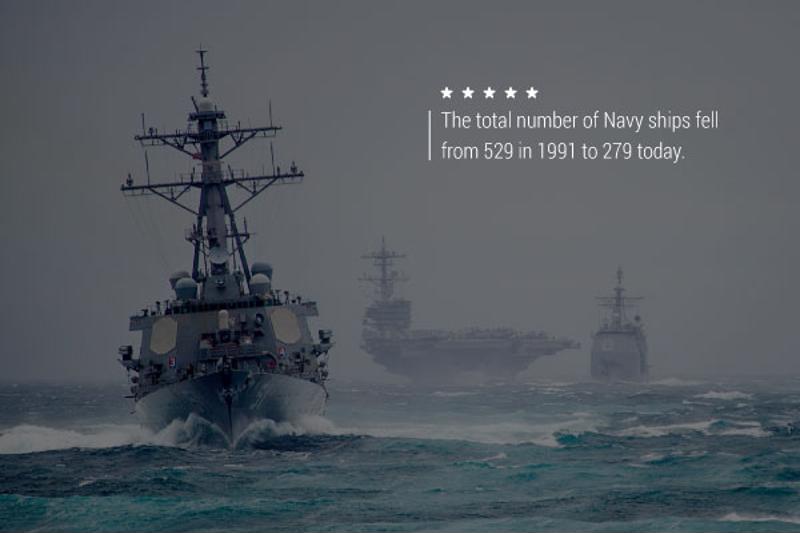
Part of this decline, the report noted, was due do diminishing quantities of ships and servicemembers. The total number of Navy ships fell from 529 in 1991 to 316 in 2001; it currently sits at 279. However, the same 100 ships have been continuously deployed throughout the decades, placing a strain on the military branch.
"Within the fleet, often the only option to meet those growing demands has been short-term trade-offs in training, manning and maintenance," Spencer said to reporters, according to Military.com.
In short, as Navy resources were depleted, servicemembers began lowering their standards and accepting errors and near-misses. This casual mindset led to the numerous crashes and collisions seen last year.
This review isn't the first to point to such problems within the Navy. According to a separate article from Military.com, a similar report from the Government Accountability Office discovered nearly 40 percent of the necessary certifications for Navy ships based in Japan were expired. Furthermore, smaller crew sizes increased the workloads of the sailors who remained, sometimes forcing them to work more than 100 hours per week.
Improving Navy protocol
Overall, the Strategic Readiness Review recommended 23 actionable ways to improve the Navy and reduce future collisions and servicemember deaths. Among the suggestions were better training and restructured career paths that would provide sailors with more practical experience. In this way, they would be better at spotting and averting potential disasters before they occur.
The theme of better training for servicemembers appeared time and again throughout the prior year as reports of the various crashes emerged in the news. As CNN noted, the crew of the Fitzgerald failed to recognize the warning signs of an impending crash until it was far too late. Similarly, as Ars Technica detailed, insufficient training and confusion over the user interface of the McCain's navigation system led to the collision with the Liberian tanker.
Hopefully, the results of the Strategic Readiness Review will compel the Navy to fix the indicated issues and improve the safety of its sailors.