
Recent budget cuts and travel restrictions have negatively affected the ability of government agencies to find and partner with vendors in a variety of ways. For instance, these factors lead to the cancelation of annual outreach events like GSA Expos, meaning contractors have less chance to interact with agency representatives and promote their benefits.
As a result, hopeful contractors must work even harder to enter into such partnerships. If you fall into this category, here's a brief guide detailing how to win government contracts:
Get noticed
The best way to secure a contract is to increase your chances of being noticed by your target agencies. If this is your first time trying to partner with a government organization, Cayenne Consulting suggested subcontracting with a firm that's already done so. Collaborating with other groups reduces your risk, and building positive relationships with these vendors increases your chances of securing a private contract.
Also, be sure to register in the System for Award Management if you haven't done so already. This gives government agencies access to all of the information they need, including the services or product your company offers, the type of business you run, the size of your organization and specific points of contact.
Finally, you should obtain a GSA Schedule. These also boost your chances of securing a contract; according to Federal Schedules, Inc., many agencies only place orders through this program. GSA Schedule Contracts have predetermined prices, warranties and other terms and they comply with all laws and regulations, simplifying the contracting process on behalf of the government.
Know your target contracts
The better you know specific agencies and contracts you want to obtain, the more effectively you can market your business. Make note of your target's selection criteria, key decision makers, anticipated competitors, locations and other factors. D.C.-area PR firm Boscobel Marketing Communications recommended setting up Google Alerts so you can stay up to date on any news about your preferred agencies, their contracts and their decision makers.

In addition, don't be shy about promoting your success stories. If you've successfully partnered with other contractors, feel free to mention these collaborations when relevant. Publish case studies on your company website and share snippets of glowing customer reviews on social media.
Don't forget to position your business as a thought leader. Write articles or white papers with unique takes on recent news or market trends, and publish these pieces on your website or channels like LinkedIn and Medium.

Get certified by a state or national entity
Government agencies love certifications, as they allow them to easily evaluate a business. Decision makers are assured that certified vendors adhere to certain practices, standards or regulations.
Some Small Business Administration certifications are specifically set aside for small businesses, especially those run by specific demographics:
- The Woman Owned Small Business program is for companies controlled primarily by women.
- The 8(a) program is for companies controlled primarily by minorities.
- The HUBZone program is for businesses in economically disadvantaged areas.
- The Service Disabled Veteran Owned Small Business Concern program is for companies owned mainly by vets wounded during their service.
The process of securing a government contract is filled with bureaucracy and competition. Depending on the agency in question, you may face dozens or even hundreds of other vendors fighting for the same arrangement. To come out on top, you need to have a proven product or service, be skilled at promoting your company and obtain certification or some other recognition that makes a decision-maker's job easier.
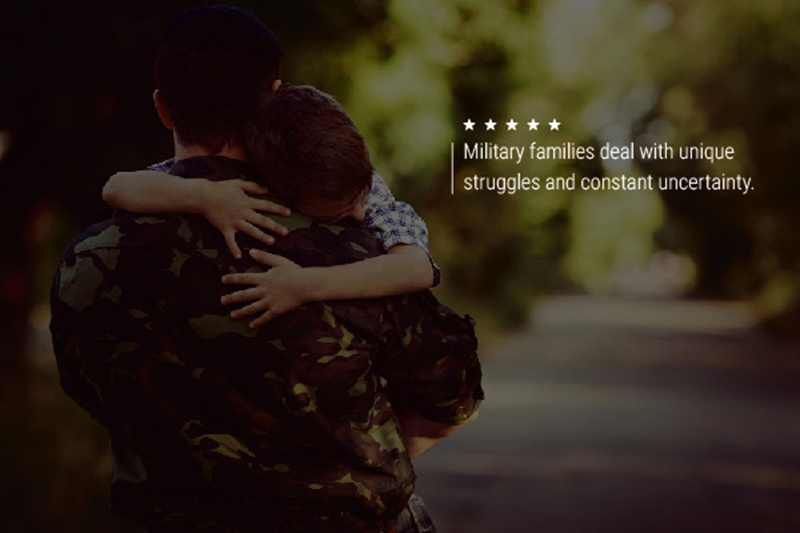
Military Family Appreciation Month is this November. Designated as a time to honor the commitments and sacrifices of the families of our nation's servicemembers, the month-long celebration should serve as a reminder of the struggles and sacrifices that the spouses, children, parents and extended relatives of military personnel must go through. Whether their loved ones are stationed miles from home or awaiting orders, military families deal with unfathomable uncertainly every day. This November, take a moment to recognize their struggles and learn how to comfort them in times of grief.
How to show appreciation to a military family
Civilians can take simple yet actionable steps to show their appreciation for the various military families in their lives.
One way is to volunteer their time to help with regular chores and errands, especially if the servicemember leaves a family behind. Homes with a deployed spouse are comparable to single-parent families, as all of the primary responsibilities fall on the the remaining head of household. Even if the children are old enough to help care for themselves and their siblings, their homebound parent could use a break. Offer to give mom or dad a day off by looking after the kids or running errands; he or she will be grateful for the break.
Alternatively, you can create a care package for the family. This could be very helpful for homes that struggle financially. Put together a box of household items and food – homebaked goods are a nice personal touch – or even send a premade fruit basket. If you want to go above and beyond, organize a group event and get the entire community involved.
Finally, sometimes simply listening to their concerns is enough. Military family members go through a lot of emotional turmoil, facing unique problems that don't apply to standard civilian life. Yet they may feel guilty because they're not the ones in combat. Lend a friendly ear next time you see them.
How to comfort grieving military families
If tragedy happens, it's good to know how to comfort a grieving military family. According to Joanne Steen, certified counselor and co-author of "Military Widow: A Survival Guide," the best thing to say is a simple, "I'm sorry for your loss." State the deceased's name as they were known by the family, not by their military rank. Also, specify the servicemember's relationship to the survivor – wife, husband, etc. – to personalize them.
In addition, if you feel it's appropriate, ask noninvasive questions about the deceased. Talking about their hobbies, favorite movies and similar matters helps grieving families work through their loss. If, however, the surviving family members don't want to talk, don't push them.
Our servicemembers sacrifice a lot for their country, but their families must deal with their own struggles. This November, take time to recognize them during Military Family Appreciation Month.
As businesses everywhere organize Veterans Day sales, promotions and giveaways, it's important to remember the true spirit of this national holiday. Originally, the event was named Armistice Day and commemorated the end of World War I. It's been through several changes between then and now, notably switching names in 1954, after WWII showed the nation that its predecessor was not, in fact, the war to end all wars.
Though the name has changed, the holiday's intention remains the same. Veterans Day is a time to honor the experiences and sacrifices of all of our former servicemembers. This year we switch the narrative from one that emphasizes their hardships to one that uplifts our veterans and gives them hope.
Rob Jones completes a month of marathons on Veterans Day
One inspirational story is sure to make headlines this year. As Time Magazine reported, Marine Corps veteran Rob Jones plans to complete 31 marathons in as many days – thanks to his prosthetic limbs.
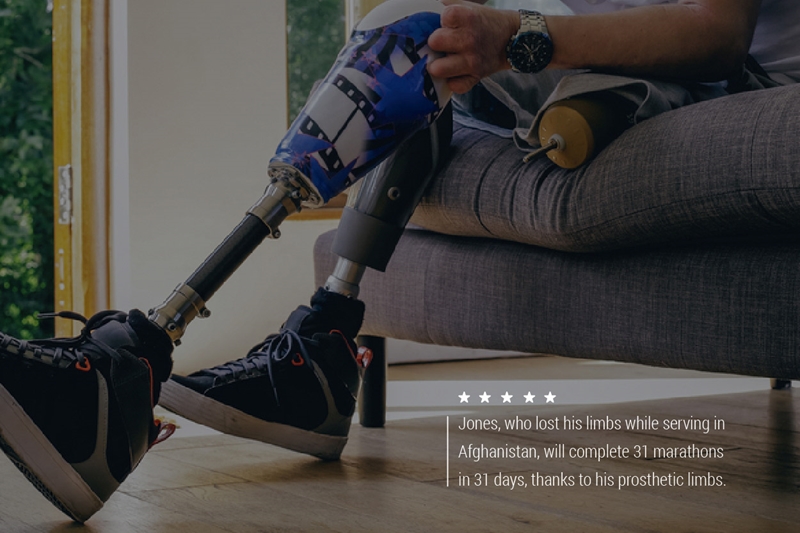
In 2010, Jones, then a corporal in the Marine Corps, was looking for IEDs with a metal detector while stationed in Afghanistan. A mine exploded beneath him during the search, and both his legs had to be amputated just below the knee. Though he could no longer serve, Jones was eager to get active again after his injury. He not only relearned to walk with his prosthetic limbs but also to run, row and bike. His determination paid off; Jones won a bronze medal for rowing at the Paralympics in 2012 and biked cross country in 2013.
His current series of marathons began Oct. 12, and he'll complete his final race on Nov. 11 – Veterans Day – in Washington D.C. Jones, who noted veteran suicides are often driven by isolation and the challenge of returning to civilian life, hopes his story will inspire others who are struggling.
"Hopefully when a veteran sees that I was able to lose both legs above the knee and still have a purpose, still be a part of society, still contribute to my family, they can picture themselves doing it," he said to Time Magazine.
A retired Army specialist receives free home during Veterans Day Parade
According to a local ABC News affiliate, the 2015 San Francisco Veterans Day Parade came with a life-changing surprise for a retired army specialist. During the event, Jonathan Allen, who had to leave the military after an injury, and his wife were gifted a free house with the mortgage fully paid for. The home was donated to Military Warriors Support Foundation, a nonprofit that helps wounded servicemembers transition to civilian life, by Wells Fargo.
In order to be eligible for a free home, the Allens had to first go through a financial mentoring program. Although they were selected to receive the gift, they weren't aware of the surprise until it was delivered to them. The couple then got to ride through the parade in a horse-drawn stagecoach provided by the bank.
"It's life-changing honestly," Allen told the news affiliate. "I'm trying to make the transition out of the Military. I'm going to school, wasn't planning to get out of the Military then I got injured."
National Day of the Deployed is a time to recognize and honor the sacrifices of servicemembers and their families. However, it didn't begin as a national holiday. It came from the mind of a resident of North Dakota named Shelle Michaels Aberel, who had a cousin – LTC David Hosna – stationed in Iraq. In 2006, Aberel approached then-governor John Hoeven to create a state holiday recognizing deployed servicemembers. Convinced, Hoeven officially declared Hosna's birthday, Oct. 26, as Day of the Deployed.
The idea quickly spread across the country, and now all states recognize Oct. 26 in some fashion. During this day, people at home are encouraged to support servicemembers by sending care packages and letters of encouragement.
This year's Day of the Deployed is particularly noteworthy, however. According to Pew Research Center, the number of U.S. military personnel stationed overseas is the smallest it's been in decades.
Overseas servicemembers at a historic low
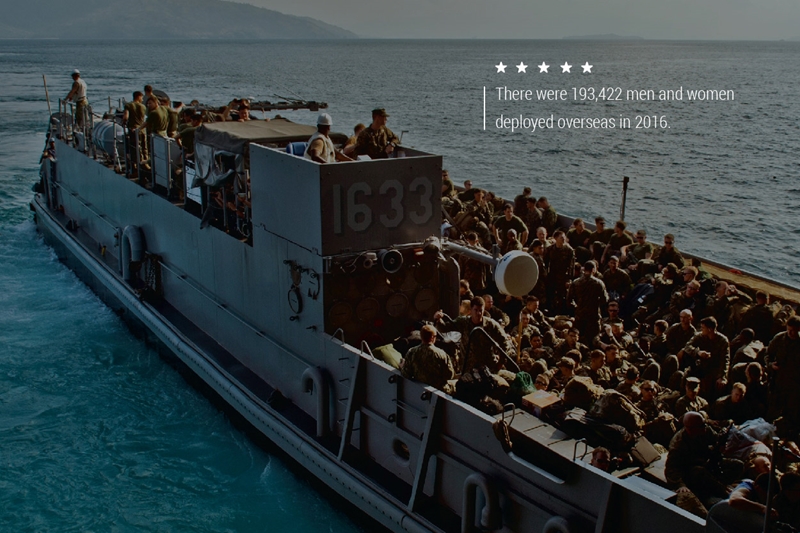
The research organization analyzed information from the Defense Manpower Data Center, concluding that the military has the smallest number and share of active-duty military members stationed internationally since at least 1957. As of last year, there were 193,422 men and women deployed overseas, equating 15 percent of active duty military personnel. Last year, 2016, was the first time this figure fell below 200,000 in at least 60 years.
There doesn't appear to be one factor contributing to this decline, as even countries with the largest U.S. military presence saw their numbers fall. Germany, for example, currently has 34,602 U.S. servicemembers, making it second to Japan as the country with the greatest number of personnel stationed outside the U.S. However, this figure is down from a peak of 274,119 in 1962. Similarly, South Korea currently has 24,189 servicemembers, which is around one third of its peak of 71,043 in 1957. In terms of dates, the gap between peak and current numbers is much shorter for Afghanistan, which had 82,174 servicemembers in 2011 and 9,023 last year.
Will the number of overseas deployments continue to fall?
While Pew Research didn't provide an explanation for why overall deployment numbers fell so low, an increasing need for local military presence could continue the trend. As CNN recently reported, relief efforts for Hurricanes Irma and Maria are forcing military planners to reevaluate their overseas deployment schedules for the next few years. Those with knowledge of the situation didn't give specific details due to security concerns, but they did discuss a few ideas publicly.
"We are ready to go even to the point that it's going to impact the deployments, perhaps, of some of these troops overseas next year because we've interrupted their preparation," said Defense Secretary James Mattis when testifying before the Senate Armed Services Committee, according to CNN. His statement confirmed the military was willing to remain in Puerto Rico as long as necessary.
According to CNN, the military hopes for no more than a two-week setback in Afghanistan deployments. As a result, however, servicemembers scheduled to return home might not be able to depart until their replacements arrive. Additionally, they may be forced to leave their equipment until an aircraft can return to retrieve it at a later date.
The proposition further highlights the need for Day of the Deployed. Even a two-week wait is agonizing for servicemembers who are forced to spend more time away from their homes and loved ones. Individuals at home can show their support by sending packages or messages to those stationed overseas or by raising awareness about Day of the Deployed in their communities and on social media.
This year's hurricane season was one of the most devastating in recent history. Most notably, Hurricane Harvey was the first major hurricane to make landfall in the U.S. in 12 years. The storm hovered over southeast Texas and unleashed an unprecedented amount of rainfall – anywhere from 40-61 inches, according to The Weather Channel.
Following Harvey was Hurricane Irma, which also reached incredible extremes. The storm is one of five in history with maximum sustained winds at or exceeding 185 miles per hour. It maintained these speeds for 37 hours, which is the longest length of time on record. In terms of damage, Irma ravaged the islands of Barbuda and Antigua, leaving the former island completely evacuated and damaging 95 percent of its existing structures, according to USA Today. The state of Florida was also heavily damaged by the storm, leaving thousands without housing.
First responders and members of the National Guard have been essential to mitigating the damage done by these and other major storms as much as possible. While it's impossible to tell each of their individual stories, we should recognize their courage and efficiency as best we can. Below are a few examples of how these emergency personnel have reacted to this year's hurricane season:
Coordination – and help from citizens – in Texas
If Hurricane Harvey can be considered an extraordinary storm, so were its recovery efforts. The city of Houston was hit hard, but first responders gathered from all over the state to help. According to The Texas Tribune, they were able to do so thanks to a system created by the state legislature in 2007. The Texas Statewide Mutual Aid System allows agencies to request assistance without creating a contract to settle liability and cost beforehand. Instead, the requesting agency simply reimburses those that come to assist it with federal aid money. Thanks to this system, San Antonio, El Paso and Fort Worth were able to easily and quickly send more than 30, 40 and 100 officers, respectively.
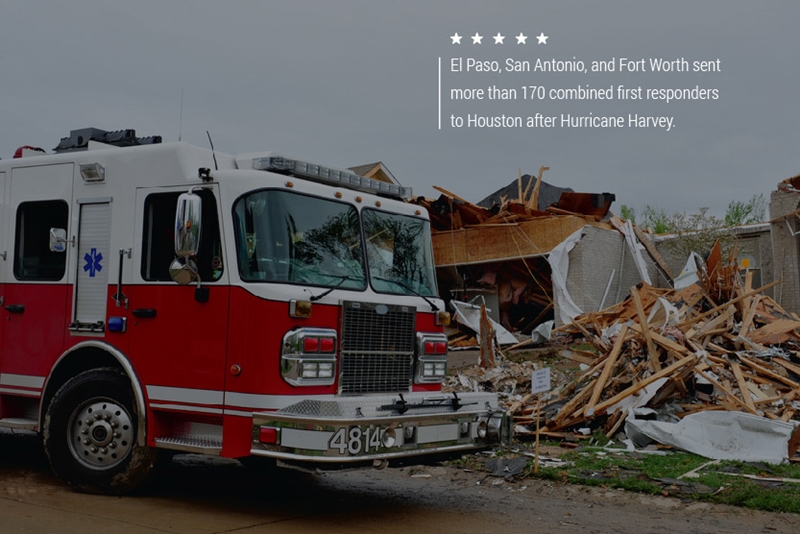
Overall, the city's rescue efforts were well-coordinated, according to Michael Walter, public information officer for the Office of Emergency Management in Houston.
"What I can tell you is that I have never seen so much coordination," he told the national news organization. "I have never seen such a request – when a request goes out, I've never seen so many agencies so willing to jump in and help."
The city's residents, in turn, helped their rescuers, and thousands came together to provide hot meals. One woman, Kristel Meadows, even did laundry for a team of firefighters and organized a series of traveling food drives, according to Time Magazine.
Out-of-state response to Irma and Maria
"FEMA sent 34,000 responders to respond to Hurricane Irma."
Response to Hurricane Irma was swift and efficient, according to Federal Emergency Management Agency Director Brock Long. In a separate Time Magazine article, he credited the agency's success to the veteran emergency managers who had experienced past disasters. He also added that FEMA sent 34,000 responders to assist with Irma-related damage. Additionally, the Environmental Protection Agency and the Department of Health and Human Services coordinated to create pop-up hospitals that both treated patients and tested floodwaters for contamination.
A great number of resources for Puerto Rico also came from outside of the island. Some of the initial response came from individual states. For instance, New York City alone sent 140 first responders, according to the New York Times. Additionally, National Guard members from several states converged to assist with relief efforts, including Pennsylvania, Kentucky, Texas and Maryland.
Though this hurricane season has been one of the most destructive on record, the dedicated work of the nation's first responders helped ensure the people most at risk received the help they needed.
A growing number of cities and states are celebrating Indigenous Peoples Day, created to highlight the legacy of Native Americans. Falling on the second Monday in October (this year, Oct. 9), Indigenous Peoples Day was first recognized in 1992 by the state of South Dakota and the city of Berkeley, California. It has since spread to include Los Angeles, Seattle, Minneapolis, Phoenix, Denver and the states of Alaska and Vermont, in addition to other places.
This Oct. 9, we'd like to celebrate Indigenous Peoples Day and reflect on the great achievements our current and former native servicemembers brought to this country.
An indigenous history of the U.S. military
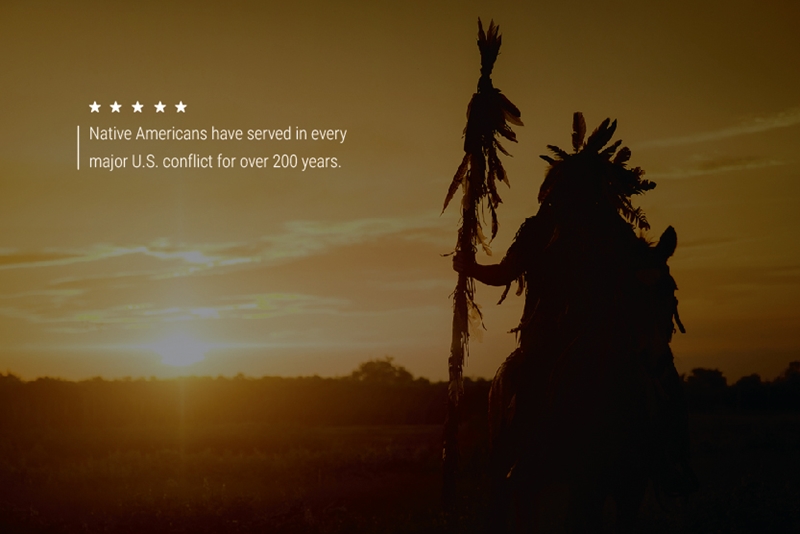
Writing for the Huffington Post, Kevin Gover, a citizen of the Pawnee Tribe of Oklahoma and Director of the Smithsonian National Museum of the American Indian, shed light on the impact Native Americans have had on the U.S. military. Members of this group have served in every major American conflict for over 200 years and have joined the military in greater numbers per capita than any other ethnicity. This means they served even before they were given the legal to right to vote as American citizens, displaying an honorable dedication.
In fact, as Indian Country Today pointed out, American Indians served as volunteers throughout much of their history with the military. The WWI code talkers and other servicemembers couldn't have been drafted as they weren't considered U.S. citizens. They weren't granted such status until the Nationalities Act of 1940 amended earlier citizenship and immigration law. Once they had the option, 99 percent of all eligible native men registered for the draft by January of 1942.
"The code talkers are arguably the most famous example of American Indians serving in the military."
The code talkers of World Wars I and II are arguably the most famous example of American Indians serving in the military. Their native languages were incredibly valuable, helping American forces exchange information without it being decoded by the enemy. Cryptography was another option, and while the practice of encoding and decoding messages was certainly useful, it was also time-consuming, and such codes could be broken. The strength of Native American languages was that only a select number of people could speak them. What's more, only a few of the languages were ever written down, meaning the only people who could translate them were native speakers.
Additionally, Native American sometimes had to put their dedication to the U.S. against the best interest of their native nations. For example, they served on both Confederate and Union sides of the Civil War, knowing whichever was the victor would determine the fate of their people in addition to slavery.
Notable Native American servicemembers
Though their actual numbers have been smaller than other ethic groups, Native Americans in the military have certainly accomplished enough to achieve recognition. In fact, a member of the Pawnee nation was the first American Indian to be awarded the Congressional Medal of Honor. This happened in 1869, just eight years after the honor was first established.
Since then, a number of Native Americans have received the medal. One of the most recent was Master Sergeant Woodrow Wilson Keeble, a WWII and Korean War veteran of a Sioux tribe known as the Sisseton Wahpeton Oyate of the Lake Traverse Reservation, according to the California Indian Education organization. Master Sergeant Keeble received his medal approximately 16 years after his death, awarded by President George W. Bush in 2008.
Another notable Native American serviceman was Private First Class Charles George, a Cherokee from North Carolina. George also received the Medal of Honor posthumously, having thrown his body on a grenade to save his comrades. Such acts of selflessness are common among American Indian and Alaskan Native servicemembers, and it would take an entire book to honor them all. That, in essence, is why it is important to remember their sacrifice this Indigenous Peoples Day.
Startups created by young entrepreneurs are solving some of the world's most complex issues. These fledgling companies have brought innovative thinking and methods to financial technology, health care, city planning and many other industries. As such, it's only natural that the Department of Defense would start to show interest. If the initial developments from Hacking for Defense are anything to go by, that interest will lead to positive results.
Enterprising students solve DOD issues
The Hacking for Defense program, commonly referred to as H4D, first began as a 10-week pilot course in 2016 at Stanford University. It has since spread to a total of nine colleges nationwide, including:
- Stanford University
- Georgetown University
- Columbia University
- The University of Southern California
- The University of California at San Diego
- Boise State
- The University of Pittsburgh
- James Madison University
- The University of Southern Mississippi
Several other schools are currently developing the program within their own institutions, Wired reported. H4D was started by Steve Blank, creator of the Lean Startup movement, and two retired Army colonels: Joe Felter and Peter Newell. The program's goal is to help students learn entrepreneurship skills while solving complex military problems and engaging in public service.
H4D connects teams of students with sponsors inside the DOD and intelligence communities, including the CIA, the National Security Agency and others. The students get real-world experience solving problems as a startup would, while sponsors get answers to their most troublesome dilemmas and, as an extra bonus, learn Lean Startup methodology.
One such hurdle, Wired detailed, was inefficiencies in evaluating prospective Navy SEALS. Students were tasked with making the process less time consuming, and part of their research involved going through recruit training in Coronado, California. Ultimately, the group of four created an app that streamlined recruit assessments.

Benefiting students and military
H4D grants students the opportunity to work on stimulating projects with real-life results before they graduate. They become a part of something bigger than themselves while preparing for work in a field that will be endlessly stimulating.
"The U.S. government doesn't have dog-friendly offices or competitive pay, but they have an endless list of interesting problems that no tech company can match," program co-creator Blank said to Bloomberg.
As Bloomberg noted, technology is quickly becoming one of the primary weapons used by adversaries of the U.S. There's no doubt the military and DOD will want the country's best and brightest working on these threats.
That said, students who participate in H4D aren't required to work for the government after graduating. They're free to seek jobs at Facebook, Google or any other tech industry leader or startup if they choose. Additionally, according to Voice of America, H4D attracts a number of international students.
"I was surprised by the number of foreign students from Singapore, China and India who were just interested in learning the same methodology and take it home from wherever they are," Blank told the news publication.
Meanwhile, sponsors are introduced to some of the latest innovations in technology and problem solving. The military lags behind most industries in these areas yet arguably needs them most. For example, one H4D team introduced wearable tech to improve casualty care triage. According to an article from the U.S. Army, the students created sensors that automatically collect and transmit data while the patient is on the battlefield, allowing doctors and nurses to more efficiently prioritize.
While the long-term effects of H4D remain to be seen, the short-term evidence is incredibly promising. The program will likely continue spreading to more schools and attracting an even greater number of students.
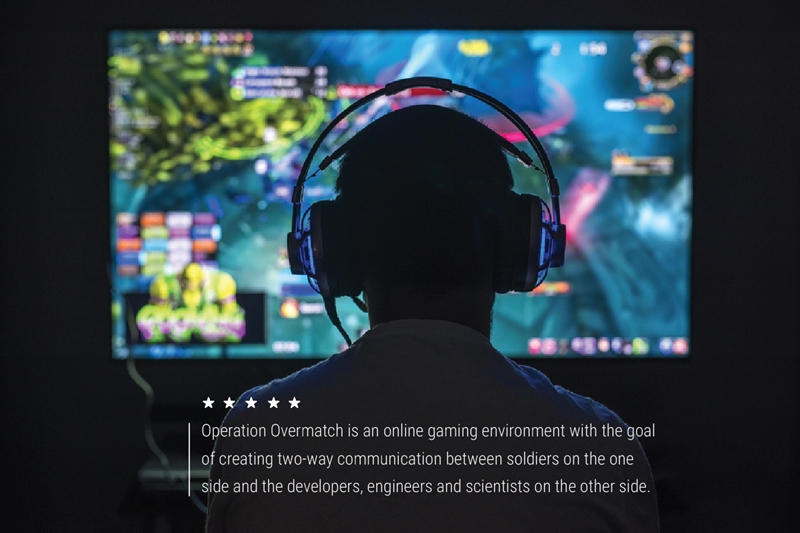
Are you a soldier who likes playing video games? If you're an active duty servicemember, chances are the answer is yes, as video games are a popular past time for those serving in the Army. Now, the military will be leveraging soldiers' love and aptitude for video games with Operation Overmatch, an online game that will contribute to the development of the future fighting force.
What is Operation Overmatch?
Operation Overmatch, initiated by the U.S. Army Capabilities Integration Center, is an online, multi-player game. Its goal is to boost combat effectiveness. This endeavor {Operation Overmatch} is an online gaming environment whose goal is to create two-way communication between soldiers on the one side and the developers, engineers and scientists on the other side.
While it might seem like the Army is merely providing people with a new game to play, there's a real-world component to Operation Overmatch. The army reported that it is actively seeking soldiers to play and provide feedback.
"The army is actively seeking soldiers to play the game."
"Soldiers have the advantage of understanding how equipment, doctrine and organization will be used in the field – the strengths and weaknesses," explained Michael Barnett, chief engineer at the Army Game Studio and project lead for Operation Overmatch. "And they have immediate ideas about what to use, what to change and what to abandon – how to adapt quickly."
The service's Training and Doctrine Command and Army Game Studio has been developing the game since 2016. Soldiers will get to beta-test machines they pilot in the game and see if weapon and armor concepts are worth pursuing before the Army orders real-life prototypes.
The game will allow players to select among thousands of options for certain predetermined capabilities, such as weapons, caliber and robotics, and use these in an "adversary threat platform" to determine effectiveness. After playing the game, the soldiers should provide feedback on the concept and capability of the prototypes and how they would likely play out on the battlefield.
For now, developers are still in early stages, but beta-testing is scheduled to begin in October. However, while soldiers will get a chance to play, the game is focused more on gear than tactics, and the viability of proposed or experimental weapons.
Applying video game skills to the real world
Some people might be wary about using skills learned in video games in real-life combat situations. Others might even be skeptical that there are any skills to develop by playing video games.
According to data from Pew Research Center, 26 percent of all adults thought most video games were a waste of time, while slightly fewer respondents (24 percent) thought the opposite. A similar disconnect can be seen among people who believe video games develop strategic thinking and problem-solving skills.
However, a recent study showed that playing video games strengthens a range of cognitive skills, according to the American Psychological Association. The study found that three-dimensional environments and the need to solve complex puzzles necessary to successfully navigate video games improved a host of skills, including:
- Spatial navigation
- Reasoning
- Memory
- Perception
"This has critical implications for education and career development, as previous research has established the power of spatial skills for achievement in science, technology, engineering and mathematics," said Isabela Granic, PhD, the lead author of the article.
Another finding unearthed by the researchers was that the ongoing failures that accompany video game trials and tribulations help build emotional resiliency.
By helping to further strengthen these cognitive skills, problem-solving abilities and building resilience in the face of failure, video games make the perfect tool for soldiers. When mixed with the prototyping options available for new gear, these training capabilities should serve to further strengthen our military.
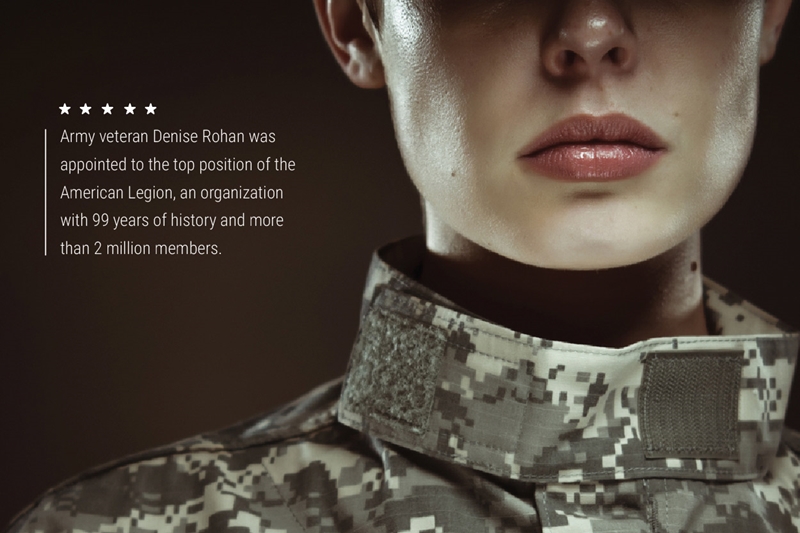
Recently, two legacy veterans organizations elected their first female commanders. Army veteran Denise Rohan was appointed to the top position of the American Legion, an organization with 99 years of history and more than 2 million members. That same month, Delphine Metcalf-Foster was voted commander of Disabled American Veterans, which is slightly younger than the Legion and has approximately 1.7 million members. The two join Mary Stout, former female commander of the Vietnam Veterans of America, as the only women to lead a major national veteran's issues group, according to Military.com.
Denise Rohan: A veteran originally turned away
According to her official biography, Rohan left her Iowa hometown in 1974 to complete basic training at Fort McClellan, Alabama. She was honorably discharged in 1976, but not before meeting her husband, Mike.
During her speech at the Legion's annual convention in Reno, Nevada, this past August, Rohan recalled how she came to be a part of the organization. A recruiter came to her home in 1980 to convince her husband to join the local chapter. Rohan asked about joining herself but was told to contact the American Legion Auxiliary – a group for veteran's spouses – instead.
That incident did not stop her, however. Four years later, Rohan joined the Legion chapter in Sun Prairie, Wisconsin. She served various leadership positions before her current appointment as commander.
"When our organization was started back in 1919, our founders said, 'A veteran is a veteran,' Rohan said during her speech, according to Military.com. "So ever since then, women have been part of our organization. Women could vote for national commander of the American Legion before they could vote for president of the United States, and there are females leading this organization across the nation."
Delphine Metcalf-Foster: Advocating for women's health
Metcalf-Foster's father passed away when she was 7 years old, but his stories about his time as a Buffalo soldier stuck with her. She joined the army as a nurse at age 34, serving 21 years before suffering nerve damage in 1991. One year later, a DAV representative spoke to Metcalf-Foster and her fellow servicemembers about the organization, and she decided to join. She became the first female commander of the DAV's California branch in 2004 and, according to The Vallejo Times-Herald, was awarded Veteran of the Year by former congressional representative George Miller in 2009.
"As a female, disabled, combat veteran Delphine brings to her new position as the National Commander of DAV a truly unique set of skills and a broad base of knowledge that will be a tremendous asset to all," George Miller told the newspaper.
The issues at hand
Each of the newly elected officials will focus on specific veteran's issues during their tenure. Inspired by an incident in her own life, Metcalf-Foster said she wanted to highlight issues within the Department of Veterans Affairs that are specific to women. She once went to the VA for a knee replacement but wasn't given a female-specific prosthetic. Metcalf-Foster also plans to continue DAV's efforts to extend VA caregiver benefits to people injured before 9/11.
Rohan also intends to use her new position to further work with the VA. During an interview with NPR, she acknowledged that many veterans don't have access to proper care from the government organization, especially those in rural areas. However, she noted the Legion is opposed to privatization and would prefer to work with the VA to ensure all veterans get the care they need. She also discussed this year's theme for the Legion, which is "Family First."
The appointment of Rohan and Metcalf-Foster marks a significant moment in American veteran history. The two are evidence that women's contributions to the military are not to be discounted, and that they are just as capable and deserving of leadership as their male peers.
Although it has been sixteen years since the tragic September 11 terror attacks, the incident's lasting impacts still ripple through society. We have many to honor and remember.
First responders to the rescue
Many forget who the true heroes of the day were: first responders, such as firefighters, police officers from the New York City Police Department and the Port Authority of New York and New Jersey, EMTs and paramedics.
Immediately after the hijacked planes hit the the Pentagon in Washington, D.C., and the first of the Twin Towers in New York City, the first responders were rushing into the catastrophic scene as everyone else was running away from it. Shortly thereafter the first tower collapsed, but the heroic first responders nonetheless continued to selflessly perform their duties and help those who were trapped or injured.
With the loss of 343 firefighters, the 9/11 attack was the deadliest day in the 152-year history of the New York City Fire Department, according to Fire Engineering. Meanwhile, during the evacuation of the Twin Towers, an additional 23 New York City police officers and 37 Port Authority police officers gave their lives to ensure others could survive.
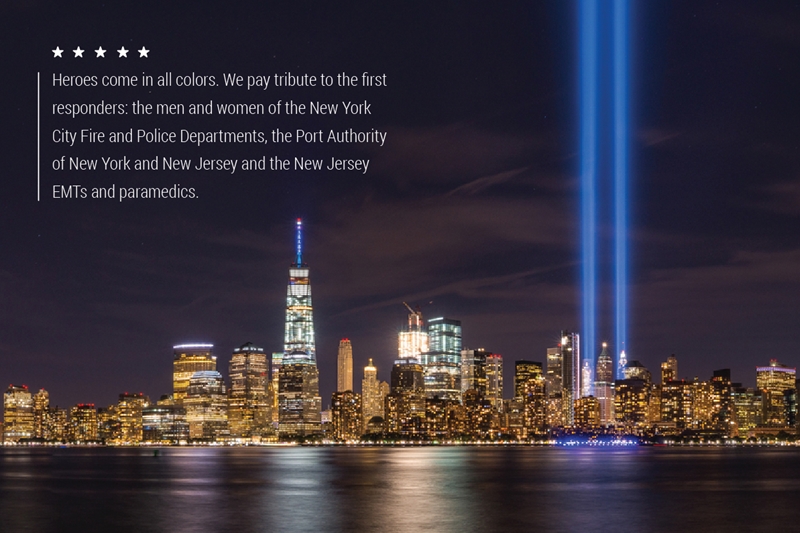
These first responders were doing everything they could to try and save as many civilians as possible. Thanks to their heroic efforts, hundreds and even thousands of people survived this devastating day and were able to return to their lives.
The short- and long-term aftershocks of 9/11
That evening, as people across the country and world were still trying to process what had happened earlier that day, President George W. Bush delivered a television address wherein he stated, "Terrorist attacks can shake the foundations of our biggest buildings, but they cannot touch the foundation of America. These acts shatter steel, but they cannot dent the steel of American resolve."
While military endeavors continue in the fight against terrorism, first responders continue to live with long-term injuries and other debilitating health problems that stem from these terrorist attacks.
Ray Pfeifer, a member of FDNY Engine 40 and Ladder 35 station in Manhattan, was a first responder on the site of the Twin Towers a few hours after their collapse, according to ABCNews. Pfeifer worked alongside other first responders for months following the attack to continue searching through the still-smoldering pile of ruins in search of remains and survivors.
During this time, many of his peers began developing what they called the "World Trade Center cough." In the following months and years, these coughs led to asthma, lung problems and, ultimately, cancer.
"There's not one person that put their foot on the Trade Center and worked down there that doesn't think in the back of their mind that they're not going to get sick," Pfeifer stated.
"Many lingering issues and unanswered questions remain for 9/11 first responders."
In the time since the attacks, illnesses related to working at Ground Zero have taken the lives of an additional 127 firefighters, and thousands more have medical conditions and health problems associated with exposure at Ground Zero.
Although Congress has taken steps to help, including passing the Zadroga 9/11 Health and Compensation Act of 2010, there are still many lingering issues and unanswered questions for first responders and military personnel. Mental health concerns, such as post-traumatic stress disorder and depression, and physical ailments, such as chronic sinus inflammation and lung disease, remain rampant problems for first responders who were at ground zero.
As we take a solemn moment to reflect on the events of this tragic day, we must not forget those still suffering from the long-term effects of their heroic actions.