
If you're a servicemember called up to active duty service or long-term deployment, you'll no doubt have a lot of important financial and legal questions: What will happen to my current rental agreement or mortgage? How will I handle any ongoing legal disputes, including court appearances?
Thankfully, you are entitled to financial relief and legal protection under the Servicemembers Civil Relief Act (SCRA). It's critical that you understand how this law impacts your rights and responsibilities so you can take full advantage of its benefits.
What is the Servicemembers Civil Relief Act?
In 2003, Congress passed the SCRA to protect soldiers, sailors, airmen, marines, coast guardsmen and commissioned officers in the Public Health Service and National Oceanic and Atmospheric Administration from being the subject of a lawsuit while engaged in active duty and for one year following it.
"The act's origin can be traced back to the Civil War."
The act's origin can be traced back to the Civil War, when Congress exempted Union soldiers from legal action while serving in the war. Since then, the law has existed in one form or another until it settled into its current form in 2003.
At its core, the SCRA is designed to ensure that active duty soldiers can focus all of their attention on serving their country and devote their entire energy to the defense needs of the nation without having to worry about a car lease or the interest rate on their credit card during this time.
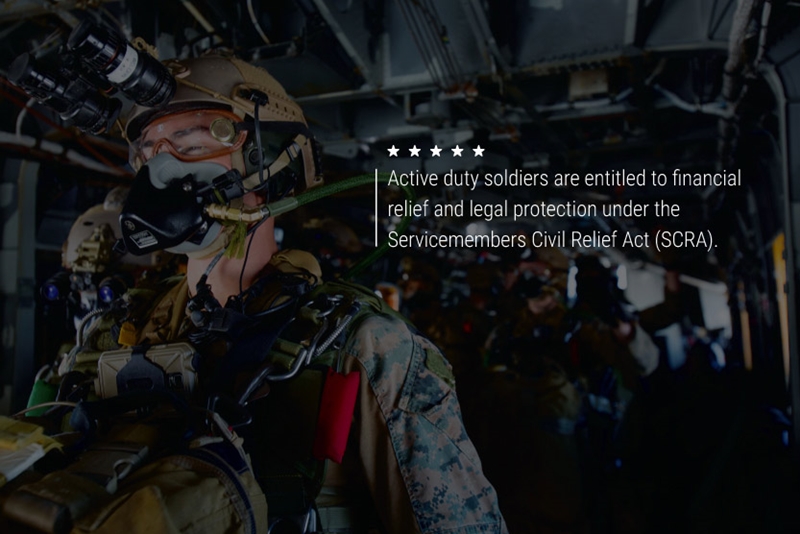
The benefits of SCRA
Much like most laws, the SCRA is a long, complex document full of legalese. While it has an abundance of provisions, these are the key points that you should know:
- Interest rate cap – You can cap any interest rate at 6 percent for any credit card, mortgage or other loan you or your spouse obtained prior to entering active duty status.
- Property lease termination/automobile lease cancellation – You generally have the ability to leave a residential or business property lease or cancel a car lease without penalty.
- Judicial relief – You have the option to postpone any court appearances for a civil case or civil administrative proceeding. This does not apply to any criminal court proceedings.
- Eviction protection – You and your immediate family are protected against eviction from housing due to nonpayment of rent. The monetary limit of the rental protection available changes every year, and was $3,584.99 per month or less in 2017, according to Military.com.
- State tax relief – If your service or deployment relocates you to a different state, your domicile or legal residence for tax purposes does not change. This means you are only responsible for paying state taxes wherever your home is, and not in every state you're relocated to during your service.
Since it deals with legal proceedings and financial obligations, SCRA is a complicated piece of public law. Therefore you should always ensure you speak with an Armed Forces Legal Assistance Attorney before you seek any relief or waive any of your rights under this act.
First responders face dangerous situations on a daily basis. As such, these individuals need to ensure they have the best possible training to handle the chaotic moments inherent in their line of work.
Chicago announces new training facility
In a move aimed at improving the readiness of first responders, the City of Chicago recently announced the opening of the Public Safety Training Academy for firefighters and police officers, according to WGNTV.
The facility will be built on 30 acres of land in the Garfield Park neighborhood on the city's west side, and will house a mock two-flat building, public buses and locomotives used to simulate real-world scenarios for training purposes. The nearly $96 million "state-of-the-art" facility will also include shooting ranges and dive-training pools in addition to classroom and outdoor areas for staging emergency scenes.

"It will include the resources we need to prepare for policing in the 21st century," noted Chicago Police Department Superintendent Kevin Navarro.
City officials said construction will begin in 2018 and will take two to three years to finish. Officials also noted that the project will create nearly 100 construction jobs for the neighborhood.
Building greater partnerships
Not only will the new facility serve as an advanced training ground for local first responders, but city leaders also expect it to create greater bonds of unity between various departments, agencies, municipalities and jurisdictions.
"The new center will train firefighters and police officers simultaneously."
Unlike its current system, where firefighters and police officers train at their own respective facilities, the new center will train both groups simultaneously. This setup should prove helpful as most emergency situations in Chicago involve members of both the fire and police departments.
Chicago Fire Department Commissioner Jose Santiago welcomed the news, noting that it's more important than ever before that all types of first responders train together since communities are impacted by emergencies that often require simultaneous police, fire and EMS services. When all of these different departments can successfully work in concert, it produces better overall results for everyone.
Mayor Rahm Emanuel believes Chicago will become a must-visit destination for departmental training from nearby states as well.
"So it will be a real economic development," Emanuel explained. "People from the suburbs come train here, downstate come stay here for small fee; [sic] we will let people from Wisconsin, Indiana come train here."
Colorado opens new training facility
Chicago isn't the only place making efforts to update the training of its first responders, as other locales also take steps to upgrade their facilities to reflect real-world scenarios and the ever-changing nature of the threats they face on a daily basis.
For instance, Wheat Ridge, Colorado, recently transformed a closed-down elementary school into a first responders training facility, according to NBC affiliate KUSA-TV. After 60 years of educating children, the Jefferson County School District shut down Martensen Elementary in 2011.
The facility – named The Frank DeAngelis Center for Community Safety after the principal at Columbine High School during its infamous student shooting incident – has already hosted 17 agencies from across the country. These bomb techs, SWAT teams, school resource officers, federal agents and Navy Seals use the facility as it reproduces a realistic school environment, providing first responders a better idea of their limitations and capabilities as they protect students and teachers.
Faced with evolving threats and dangerous situations, first responders need training adequate enough to prepare themselves for the latest iteration of emergencies. With upgrades and state-of-the-art facilities at their disposal, first responders will have the tools and means to improve their practices and be ready to face a whole new set of real-life situations.
Defense obligations to buy goods and services have followed a downward trajectory over the past few years. In this current market, it's crucial that government contractors take the necessary steps to increase their visibility through marketing and networking endeavors in order to grow their operations.
The most recent data from the U.S. Government Accountability Office revealed that defense spending on government contracts dropped nearly 32 percent between fiscal year 2011 and 2015, from $399.4 billion to $273.6 billion. Meanwhile civilian obligations remained fairly steady at an average $128.3 billion over this same time period.
Faced with declining agency spending, government contractors need to ensure they're putting themselves in a position to succeed. This task involves establishing a smart growth strategy and implementing it through to the finish. Consider these four smart tips for growing your government contracting business:
1. Draft a plan
The first step to any successfully growth strategy involves crafting a master plan. Without a clear route to follow, you won't be able to track your progress and you may ultimately find your company lost in a maze of bureaucracy and red tape. A three- to five-year plan will help you acquire the right contracts for long-term growth.
"A three- to five-year plan will help you acquire the right contracts for long-term growth."
What are your main goals? To gain more government contracts? To increase the scope of your current contracts? To move into a new sector and leverage your skills and experience there?
Once you identify your objectives, you can fine-tune your strategy by working backwards and adding the steps necessary to reach your goal. Include incremental growth milestones along the way so that you can still reach smaller aims along the route.
Remember, while it's always important to follow through with the original plan, you'll also need to be ready to pivot if circumstances required it, so flexibility is also crucial.
2. Consider acquiring GWACs/IDIQs
Government-Wide Acquisition Contracts (GWACs) or Indefinite Delivery/Indefinite Quantity (IDIQ) contracts are a great way to grow a government contracting business. Both of these are multiple-award contracts (MACs) that allow government agencies to use to purchase an unlimited number of services or products from contractors over a specified period.
As noted by Multibriefs: Exclusive, half of all services and products procured by the government since 2011 have been obtained through GWACs, IDIQs or blank purchase agreements (BPAs). Although the overall number of MACs has declined from 2,892 in 2012 to 2,653 in 2016, mature GWACs/IDIQs have surged in market share since 2013.
3. Diversify your practice area
As noted above, defense contracts have been on a downward trajectory over the past few years. While the new administration's budget might reverse this course, there's a chance that this trend will continue.
If you're currently focused primarily in this space, it could be wise to diversify your practice areas into complementary lines of business. While you might not be able to grow all of these at the same time, having additional areas will help keep your business growing if federal buying stalls in your sole practice sector.

4. Build relationships
Networking is key in any business, no matter which sector you operate in. Government contractors are no different, and building solid working relationships will be crucial for growing your business.
Creating working relationships with government agencies and officials will help keep your business top of mind when new contracts are announced, ensuring your bids remain competitive. However, it's also important to nurture relationships with other mid-tier businesses, as this can create strong ties for teaming or joint venturing, which is another way to make your company more likely to win contracts.
While there's a Law Enforcement Appreciation Day and an International Firefighters' Day (January 9th and May 4, respectively, for those who want to mark their calendars), there is currently no national day of remembrance and appreciation for first responders. Firefighters and law enforcement agents certainly fall under the umbrella of first responders. However, there are also other individuals who are not firefighters or law enforcement agents who go out everyday to brave natural disasters and emergency situations.
Petition calls for National First Responder Appreciation Day
To address this glaring omission, several groups have attempted to get a day recognized in the past. Advocates first proposed in 2006 to create a National First Responder Appreciation Day, but their petitions were unsuccessful.
However, supporters have recently renewed their efforts to establish this day as a way to show thanks for everything first responders do. After failing to pass the first attempt, Congressman Michael Capuano has reintroduced legislation to have a nationally recognized National First Responders Day. To further support his proposal, there is an online petition you can sign to help show the overwhelming public support for the establishment of this national day of observance.

Why First Responders deserve a day of their own
The title "first responder" can be somewhat of an abstract concept for some people to understand since it covers a wide range of occupations, some public and some private. So what roles fall under the umbrella of first responders?
From emergency medical technicians and paramedics to animal control officers and park rangers, a first responder is anyone who is specifically trained to respond to an emergency. While most first responders are members of their local community, others may serve a role in the federal government, such as in the Coast Guard or as a TSA agent.
"There are more than 90 different types of jobs considered as first responders."
According to the National First Responders Organization, there are more than 90 different types of positions that fall under this title. These individuals play a crucial role in keeping people and property safe during dangerous situations. Without their fearless and focused contributions following natural disasters and other emergencies, the fallout from any one of these types of events would be even more devastating.
Shedding more light on the situations and hazards facing first responders by dedicating a national day of appreciation will help raise awareness among the general population and highlight the thanks we offer to these individuals.
For instance, The National Emergency Number Association reported that Americans make an estimated 240 million calls to 911 each year on average. Emergency medical services personnel treat 22 million patients a year. Yet, despite the fact that work-related injury and fatality rates among U.S. EMTs and paramedics are higher than the national average for other occupations, very little is known of the risks they face on the job, according to a 2013 study published in the "Prehospital Disaster Medicine" journal.
With greater awareness of the obstacles and risks involved in these occupations, we can find new avenues for safety precautions and post-event treatments.
Local observances of First Responders Day
While there's no federal day set aside to honor first responders, many states and local communities have dedicated days to honor these brave individuals.
For instance, Texas shows their respect for First Responders on September 11. Albuquerque, New Mexico, Mayor Richard Berry recently declared July 30 as First Responder Appreciation Day.
Even if there is no nationally observed first responders day, we can still take time to thank these men and women for their help and continue to raise awareness to the dangers they face on a daily basis.
A May 2017 survey of government contractor sales expectations set a new record high score for respondents' confidence for the coming 12 months. Respondents cited an improving economy that is allowing them to focus on increasing public sector sales and marketing investment. With growing confidence in the government contracting sector, vendor sentiment in this market looks good for the upcoming year.
How confident are government contractors?
The 2017 Onvia Government Contractor Confidence Index (GCCI), now in its third year, showed a score of 135.8 for 2017, representing a 5 percent uptick from 2016's score of 129.4. With an upper range of 200, any score higher than 100 typically indicates government contractors can look forward to an expanding market for their services.
"The 2017 GCCI provides a view into why government vendors are feeling optimistic about their prospects for increased sales," explained Paul Irby, business-to-government market analyst for Onvia. "The 5 percent increase in this year's score was driven most notably by 21 percent improvement in expectations for overall agency spending and 8 percent improvement in the outlook for funding in specific departments."

The GCCI surveyed 424 companies who sell to federal, state, local and education agencies on their opinion for how the next 12 months will fare compared to their self-reported performance over the past year.
The index questioned these companies on how agency budgets are likely to impact their sales and how public sector sales grow. GCCI asked how respondents felt about the upcoming year for:
- Outlook for individual agency department budgets.
- Outlook for overall agency budgets.
- Expected increase in sales.
Nine factors were considered as the top drivers of growth, including:
- Overall economy.
- Overall agency budgets.
- Allocation of funding by agency department.
- Company sales and marketing budget.
- Cooperative purchasing.
- Contract requirements.
- Government regulations.
- Competition for agency contracts.
- Labor market constraints.
Among these factors, overall economy, overall agency budgets, allocation of funding by agency department and government regulations saw the most positive increases at 26.7 percent, 14 percent, 8.9 percent and 7.6 percent, respectively.
When asked which government market would have the greatest potential for growth in the next two to three years, 40.8 percent said federal, with 29.2 percent saying local, 21.9 percent saying state and 8.2 percent saying education.
What this means for government contractors
While the 2017 GCCI represents a marked improvement over the uncertainty surrounding the election-year index of 2016, it's still merely a gauge of expectations, so the reality of the matter may be subject to change. However, if these predictions hold true, then government contractors will be facing very favorable conditions in the coming year.
"Government contractors will need to step up their marketing endeavors to more agencies."
To take advantage of the current positive environment, government contractors will need to step up their marketing endeavors to more agencies. This will ensure that contractors are building brand awareness and generating buzz about their capabilities to attract more businesses and sign more lucrative contracts.
With the federal fiscal year approaching at the end of September, American City and County recommended being more strategic about spending marketing dollars at upcoming events, whether they are conferences, trade shows, seminars, agency briefings and more. Be sure to target events with producers that are focused on the public sector, especially those sponsored by a government agency. It's also wise to be wary of event producers that only visit government markets occasionally, as these most likely won't have the greatest connections to agencies.
In some cases, contractors can pursue government work from agencies or in areas they previously did not focus on in the past. They can take this moment as an opportunity to expand their operations and generate more revenue by moving into new fields. This might also require increasing sales staff to target different market segments and achieve these objectives. While it can be risky to move into a new sector, the rewards can be more than worth it.
With government contractors' confidence reaching record highs, now is the perfect time for identifying new growth opportunities and pursuing lucrative new contracts.
Many people join the armed forces as a stepping stone to obtaining a college degree with the help of the G.I. Bill. While this is an excellent way to get the financial assistance you need to pursue your dreams of a higher education, sometimes a Bachelor's Degree isn't enough.
To assist soldiers with long-term academic goals, in 2012 the School of Advanced Military Studies developed a program that combines a professional army education program and a doctoral degree. Located in Fort Leavenworth, Kansas, the School created the Advanced Strategic Planning and Policy Program, or ASP3, that lets military officers study history, strategic theory and planning. Although there are only 60 officers currently participating in the program, there's plenty of room to grow.

Why should you get a PhD?
In the past, a Bachelor's Degree would give you a competitive edge in the job market once you transition into civilian life. In some cases, even other post-graduate programs like an MBA or a Master's degree won't suffice in the modern job market.
Obtaining a PhD with the ASP3 allows you to not only further your educational pursuits, but it also provides a pathway to development from a field-grade officer to a strategic planner and future senior military leader.
Not only does a doctorate give you a solid educational foundation and support for your future experiences, it also gives you a personal sense of accomplishment. This is especially true for people who enjoy surmounting challenging situations and for those who truly enjoy the learning-teaching process.
A PhD program is also a great route if you're interested in innovating and inventing new concepts, processes and fields of study.
"The ASP3 program is a promising career path for bright officers."
How do you know if you should get a PhD?
While earning a PhD will certainly help you obtain a higher-paying job, it isn't a path for everyone.
You'll be required to conduct countless hours of research and write a comprehensive thesis. However, if you have the ambition and the commitment, the program is a promising career path for bright officers who want to progress to the next level of leadership and still hold a command position.
Speaking with the U.S. Department of Defense's new teams, Army Col. Oscar Doward Jr., commander of the U.S. Army Central's 2503rd Digital Liaison Detachment, explained his reasoning for pursuing a PhD at the School of Advanced Military Studies.
"Applying for the program was an opportunity for me to earn a [doctorate], a desire I've always had," said Doward. "I also saw it as a great opportunity to have an effect on the strategic policy level."
Currently, Doward is writing his dissertation on "African-American officer development and evolution in the Army during the 20th century, focusing on the period between World War I and the Korean War."
Although juggling your military and academic responsibilities can be difficult, it opens the door to a number of great opportunities. But by taking a good look at where you want to be in five or six years time you can draft a plan of action that puts you on a route to getting your PhD while you're in the armed forces.
With all that veterans do and sacrifice to defend the country, these brave men and women need a place to recharge their batteries when they return home. In response to this need, veterans retreats are opening all across the country, aimed at providing a serene environment to help veterans find some peace of mind. Many communities even host fundraising events to assist veterans in covering the cost of a stay at the retreat.
Why veterans retreats are important
Being an active duty service member can be a grueling and exhausting experience. This is compounded when soldiers enter into combat zones, come under fire from enemy troops or live through other dangerous situations. Due to this, many returning troops come back from deployment with physical and emotional tolls that need to be addressed. Whether soldiers come home with a life-long disability, or suffer from Post-Traumatic Stress Disorder, it's important that they seek out the best ways to heal their body and mind.
In some instances, veterans rely on medication to help them deal with depression, anxiety, sleeplessness and physical pain. In addition to pharmaceutical solutions, veterans retreats offer a complementary way to help these individuals with the healing process.

What kinds of veterans retreats exist?
In recent years, there's been a surge in the number of retreat options for veterans, with many of them focusing specifically on a particular subset or group of veterans, such as disabled soldiers or those with families.
For instance, Operation We Are Here lists more than 60 different retreats all geared solely for veterans that provide support for caregivers, female veterans, PTSD, civilian reintegration, traumatic brain injury (TBI) and wounded warriors. These retreats come with a range of therapeutic opportunities at certain locations, including:
- Biking
- Horseback riding
- Farming
- Golfing
- Hyperbarbic oxygen therapy (HBOT)
- Healing arts (art, dance, film, theater, writing)
- Music
- Outdoor activities (white water rafting, scuba diving, sporting events, fishing, etc)
- Service dogs, therapy dogs and companion pets
- Volunteering and community service
While some veterans retreats do cost money, a large percentage of them are absolutely free for veterans, and sometimes for their families too. Each one focuses on its singular mission, which means there are specific retreats for nearly all aspects of life. Similarly, each location is unique.
"A large number of veterans retreats are actually free."
One example, Project Sanctuary, aims to help veterans transition from battle-ready to family-ready by addressing three areas: counseling, education and therapeutic recreation.
Another retreat, a 277-acre property in Franklinville, New Jersey, is currently building 60 microhousing units (tiny houses) for veterans to spend 24 months at the compound and rehabilitate themselves upon their return from deployment. The retreat, which its founder, Donnie Davis, intends to be free of charge for veterans, will also provide soldiers with work skills and the opportunity to undergo equine therapy.
Many retreats cater specifically to wounded veterans, but each one brings its own unique perspective to this endeavor. For instance, veterans who like to be active can check out Combat Veterans Sports Foundation, which provides wounded combat veterans with the opportunity to volunteer through professional sports organizations. Another, Fairways for Warriors, offers golf equipment, instructions and outings for wounded veterans and their families.
While many soldiers will no doubt say they don't know the meaning of the word "retreat" in the context of a battle, there are plenty of ways attending a retreat can help heal these individuals, both physically and emotionally.
With Independence Day upon us, Americans are hosting patriotic parades, parties and fireworks displays across the country to celebrate our nation's founding and thank our veterans for fighting for our freedom.
Why is July 4 Independence Day?
After the Revolutionary War started in April 1775, the Second Continental Congress did not vote on the issue of independence from Great Britain until July 2, 1776. Writing in his journal, John Adams, who would go on to serve as our second president, believed this day would go down as the founding of our new country, according to the National Archives. But as we all know, this isn't the case. So what happened?
Following the unanimous decision to reject British rule, the committee appointed Thomas Jefferson to draft the formal written explanation stating why the Congress voted to declare independence. Two days later, July 4, Congress ratified and issued the Declaration of Independence. In doing so, the Founding Fathers severed America's ties with the British crown and set the course for the formation of the United States.
How the army responded to news of Independence
The signing of the Declaration of Independence had a profound impact on the military at the time. The announcement changed the armed forces from a ragtag band of colonial militias into the unified Continental Army. This also reshaped their purpose, since now they were fighting against British rule and for the ideals that would come to shape our country.
"The Declaration of Independence had a profound impact on the military."
Since news traveled so slowly during the Revolutionary War era, many soldiers had to wait days and weeks to learn the Continental Congress adopted the Declaration of Independence, according to the National Museum of American History. After the 56 delegates signed that historic document, they dispatched couriers by land and sea to deliver the news to headquarters of all the Continental Army commands. While General George Washington and his troops heard the news in New York City square on July 9, it took until August 5 for word to reach troops stationed in Charleston, South Carolina.
According to the source, after hearing about the signing of the Declaration of Independence, soldiers lined up next to two rows of 13 cannons and fired 13 shots to represent each colony, followed by a fusillade. They repeated the ceremony three times. Following speeches and cheers, the soldiers would then indulge in games or drinks. In some places, such as Charleston, the troops paraded and read the Declaration aloud.
On July 15, 1776, Captain Joseph Bloomfield of the 3rd New Jersey Continental Regiment recorded in his journal the account of hearing our founding document:
"The Declaration of Independency being read, the whole present signifyed their hearty & sincere Approbation by Three Cheers and cheerfully drinking the following Patriotic Toastes, Harmony, virtue, Honor and all Prosperity to the free and independent United States of America, Wise Legislatures, brave & Victorious Armies, both by Sea & Land to the American States."
More than 225 years later, these words still ring as true as ever.
Keep our soldiers in mind this holiday
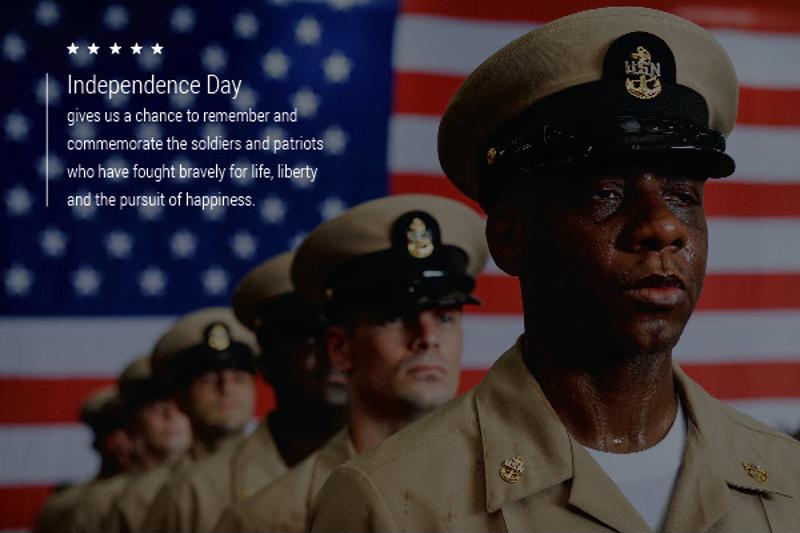
Independence Day gives us a chance to remember and commemorate the soldiers and patriots who have fought bravely for life, liberty and the pursuit of happiness. Their service since the Revolution continues to protect the values we hold dear today.
Whether it's going to a parade, hosting a celebration or attending a ceremony, remember to thank members of the armed services for fighting for our freedoms.
Contracting work with the government is the bread and butter of many companies. For those that contract with the U.S. Department of Defense, a new federal security directive will now require all contractors to either implement a robust cybersecurity plan to protect their digital data, or have a detailed plan in place for doing so by December 2017. Failure to comply will prevent companies from contracting with the DoD.
What's this new federal directive?
In December 2016, the National Institute for Standards and Technology, an agency under the U.S. Department of Commerce, released NIST Special Publication 800-171, "Protecting Controlled Unclassified Information in Nonfederal Systems and Organizations."
Dubbed "NIST 800-171" or simply "rule 171," the directive covers whether a company has the IT safeguards and security measures necessary to protect any classified data in order to conduct business with the federal government.
This covers every type of company contracting with the government, from defense engineering firms to janitorial services. And this isn't strictly limited to contractors – it also covers subcontractors. In practice, any company that has access to classified government information that needs to be protected.
In addition to rule 171, the DoD has also issued another clause that is likely to impact government contracting, the Defense Acquisition Regulations System (DFARS) Clause 252.204-7012, "Safeguarding Covered Defense Information and Cyber Incident Reporting." This clause covers implementing adequate security measures on all covered information systems owned, operated or utilized by the contractor.

How should government contractors respond?
With these new rules set to go into effect in 2018, it's imperative that government contractors have a plan in place to implement all of the technology.
Speaking with GovTech, Shawn Walker, vice president and co-founder of Secure Cyber Defense LLC, noted this directive impacts any company with classified information issued by the government and that it will take some time to implement.
"Starting from nothing, it will probably take six to 12 months to get all the technology in place to be able to say you're compliant," said Walker. "To put the plan together may take 30 to 60 days."
Companies can't simply wait until the last minute and cobble together a statement about a plan of action. Instead, they should start early and ensure they've accurately covered the list of 110 requirements outlined in the rule.

Steps to take
First, contractors should familiarize themselves with NIST 800-171 and the new DFARS clause, as these will be paramount in discerning how the directives apply to their firm and how they will affect operations and resources. Noncompliance with these new rules may cause the government contractors to forfeit their chances for a government partnership, so be sure to leave no stone unturned when reviewing the new rule and clause.
Next, perform a risk assessment of the organization based on the directive's requirements. The U.S. Department of Homeland Security provides a handy guide for conducting a thorough risk assessment, called the Cyber Security Evaluation Tool (CSET). According to its website, this tool provides contractors with a "systematic and repeatable approach for assessing the security posture of their cyber systems and networks."
Once risks are assessed, develop a plan of action and milestones for the company. This will serve as the guideline and map for every step, task and policy the organization implements to meet compliance.
Consider getting medium-assurance certification from the Information Assurance Support Environment, which allows for outside entities to securely communicate with the DoD and authenticate to DoD information systems.
With a carefully crafted plan of action, government contractors can tackle the new cybersecurity regulations with ease.
The U.S. Department of Defense recently introduced the new and improved Blended Military Retirement Plan. There are some significant changes to the system and calculating the difference between the old and new military retirements plan might be a difficult endeavor for current service members.
Let's shed some light on the new BRP: What is it, who's impacted by it, and how do you navigate the new system.
How big is the change?
The upgrade isn't a minor tweak of the military's current retirement system, rather it's a sweeping disruption. Anthony Kurta, who is performing the duties of undersecretary of defense for personnel and readiness, spoke with Pentagon reporters about this key step in modernizing the military's retirement system to more closely align with similar private-sector plans.
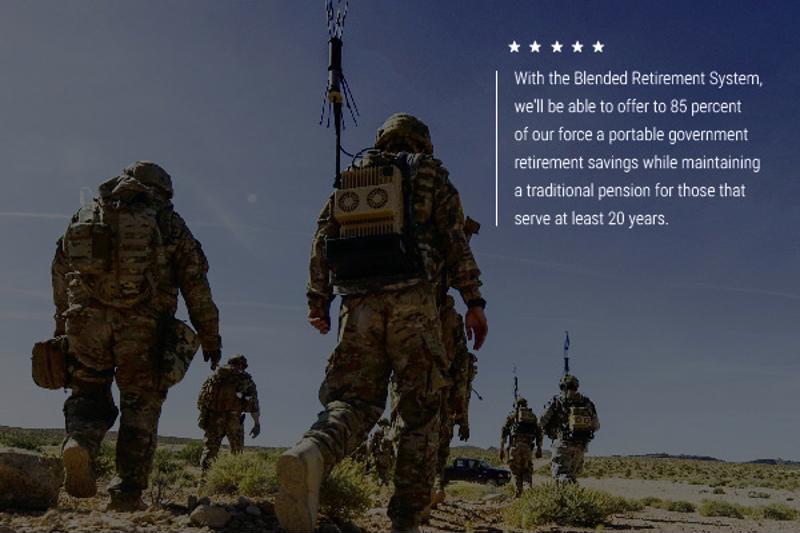
"[The new military retirement system is] one of the most significant changes to military pay and benefits that we've ever had over the past 70 years," explained Kurta. "We'll now be able to offer to 85 percent of our force a portable government retirement savings while still maintaining a traditional pension for those that serve at least 20 years."
What is the Blended Military Retirement Plan?
Now that we know it's a pretty big deal, let's dive into what the changes mean. The 2017 National Defense Authorization Act (NDAA) originally introduced the change that will affect all new entrants to the military as of Jan. 1, 2018. The change, known as the Blended Retirement System, is a dramatic departure from the military's current retirement plan. As it stands, immediately upon retirement, the military awards 50 percent of base pay as a pension for qualifying services, according to Military Times.
"The new system merges a defined benefit plan with a defined contribution plan."
However, the new Blended Retirement System merges the defined benefit plan with a defined contribution plan, which is similar to a 401(k). Dubbed the Thrift Savings Plan, this feature will add up to a 5 percent match on all personal contributions to the plan.
Who's impacted by the change?
Anyone who joined the military before 2006 is automatically grandfathered into the old system. Meanwhile, anyone who joins in 2018 or beyond will be covered by the new system. However, active duty service members with between one and 12 years must decide between either the old system or the new system. This is no easy decision, yet about 1.15 million service members, or roughly 88 percent of all active duty military, fall into this third category.
How to navigate the new system
Thankfully, active duty service members don't have to make their decision immediately – they'll have one year to make a choice on which plan they'll want to use. This provides ample time to speak with support groups, such as family and friends, consult with an accountant or other wealth management advisors and make an informed decision about the best path forward.
To assist in the decision-making process, the military rolled out a Blended Retirement Service Comparison Calculator designed to assist eligible service members in their efforts to compare and contrast the new and old systems.
It will be crucial for those active duty military members who will be impacted by this change to review the Blended Retirement System to ensure they fully understand the changes and they make the most informed decision on the fate of their retirement.