
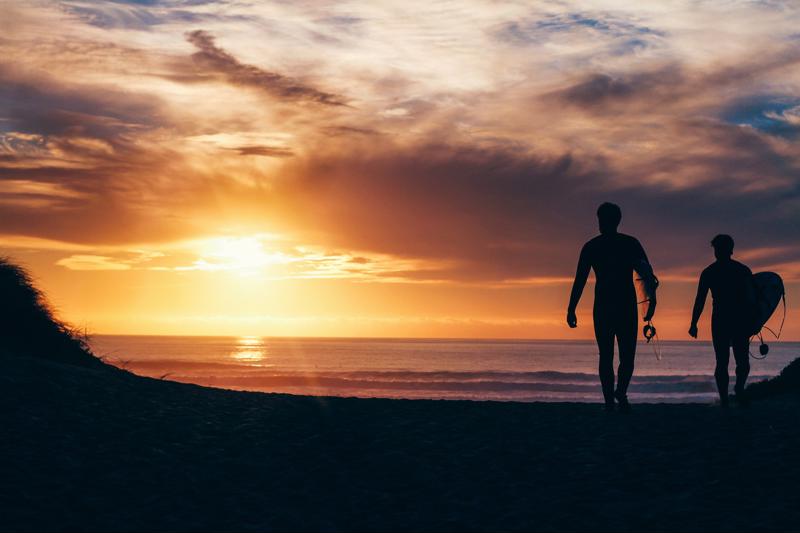
Organizations across the country deploy service animals to aid veterans struggling with the physical and psychological wounds of war. However, one Escondido, California-based group has separated itself from the pack by offering ocean-based therapy sessions featuring a surfing canine, according to Today. The organization, called Waves of Empowerment, pairs former service members with human instructors who not only teach them how to ride the waves but also work to rebuild their self-confidence and offer strategies for coping with problems stemming from post-traumatic stress disorder and other conditions. Additionally, most participants interact with a special service animal named Ricochet who lends essential support as they navigate new emotional and physical territory.
Making waves
Retired Staff Sgt. Randall Dexter returned from his second and final tour in Iraq in 2012. Upon arrival, he was assigned to the Naval Medical Center in San Diego, where he was treated for a traumatic brain injury. An improvised explosive device had rocked Dexter's Army unit, leaving him unsteady. While in treatment, doctors diagnosed the veteran with PTSD, further shaking his battle-worn psyche.
"It was all brutal," Dexter told Today. "I was contemplating suicide and was a hot mess."
After a year of prescription-based treatment failed to move things forward, Dexter reached out to a nonprofit that connected veterans with service dogs. Soon after, he met his canine match: Ricochet. The results were almost immediate.
"The minute Ricochet came up to me, my wife – who's also my caregiver – noticed a big change in me," the former Army officer explained. "Ricochet has this amazing softness in her eyes. It was definitely a turning point when I met her."
However, Dexter soon found out she had much more to offer than most service animals.
A buoyant beginning
Judy Fridono enrolled Ricochet in service dog training soon after she was born in January 2008. However, the golden retriever showed little interest in the instruction and instead spent sessions chasing wildlife. Even though Ricochet ultimately earned her service animal certification, Fridono was reluctant to deploy her, as her rambunctious behavior could present problems for most patients. Still, the animal found work with a San Diego-based organization called Paws'itive Teams. Ricochet also started learning how to surf and, at 15 months, competed in the Purina Incredible Dog Challenge, earning third place.
Her performance in the event, along with a viral video that showed her riding along with a quadriplegic surfer named Patrick Ivison, caught the attention of news outlets across the country. By the time Dexter met Ricochet in 2013, she had worked with more than 50 veterans and raised tens of thousands of dollars for health organizations across the country through surfing events. Earlier this month, the dog surpassed the $500,000 mark, The San Diego Tribune reported.
Today, she continues to help disabled Americans across the country through Waves of Empowerment, which grew out of her connection with Dexter.
"She gave me freedom and gave me my life back," the Army veteran told Today.
The program now staffs trained therapeutic surfers who help former service members and others overcome their problems out on the open ocean, just as Ricochet did when she partnered with the retired sergeant four years ago.
In recent years, large numbers of veterans have returned home and enrolled in college to broaden their civilian skill sets and hopefully begin a fulfilling career during their life after service. As of today, more than a million former service members have taken advantage of their educational benefits, according to statistics from the Department of Veterans Affairs. This number is expected to increase by 20 percent in the years to come. Despite these encouraging enrollment numbers, many veterans have struggled with the transition from the battlefield to the lecture hall, Military Times reported.
“To come on campus in your mid-20s after having served, having nothing in common with your peers, it tends to generate feelings of separation,” retired Army Lt. Col. John Bechtol told the publication. “There’s often just this sense of loneliness, a feeling of being disconnected from their classmates.”
Institutions across the country are well aware of this problem but most find it difficult to pinpoint a solution. Luckily, these schools now have a workable blueprint off of which they can base on-campus veteran service programs.
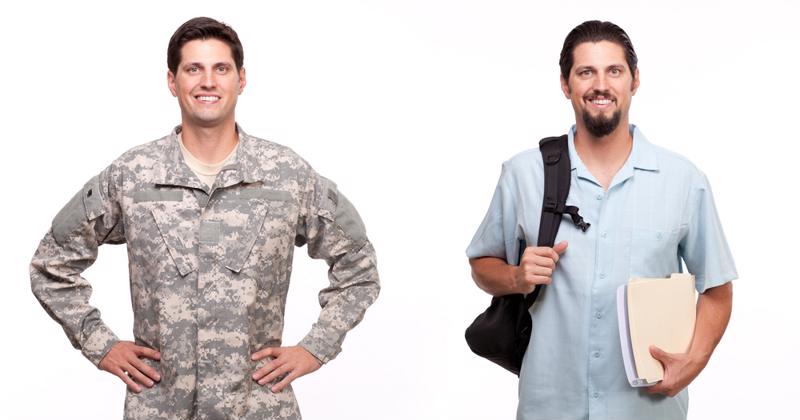 Colleges are helping veterans transition from the battlefield to the lecture hall.
New England school steps up
Northeastern University in Boston is home to approximately 600 student veterans, according to the college’s Center for the Advancement of Veterans and Service Members (CAVS). Why do so many discharged military personnel flock to the university? Northeastern has cultivated an effective financial and social support system, WBUR reported. The process started back in 2012 when school administrators invested $2 million in the VA’s Yellow Ribbon Program, a federal educational initiative that lowers tuition costs and fees for veterans enrolled in degree-granting institutions. In the years since, Northeastern has participated in the program and contributes an estimated $25,000 in financial aid to its 150 undergraduate veterans.
Marine Corps veteran Max Spahn was able to graduate last year free of debt, which he attributes to the school’s robust financial incentives.
“Zero costs to me out of pocket is the biggest thing,” he explained. “And I’m still going to be able to graduate without a dime coming out of my pocket, because of Northeastern.”
In addition to its aid packages, the college offers a comforting social atmosphere for former service personnel. For starters, CAVS, established in 2015, helps veterans navigate campus and connect with staff and students who have also served in the armed forces. Andy McCarty, director for the organization, takes a hands-on approach, guiding war-weary young men and women as they move on from their military days.
“They think that because the military gave them a job, a very specific job, their military occupation skill, that that’s somehow a vocation, and the job that they have to hold for the rest of their lives,” McCarty, an Air Force veteran, told WBUR.
Other on-campus organizations, such as the Student Veterans Association, provide extra support. Together, these fixtures combine to form a unique educational experience for the former service members who attend Northeastern, 82 percent of whom go on to graduate.
“Northeastern offers a comforting social atmosphere for former service personnel.”
Northeastern moves forward
This month, the university once again added to its veteran services portfolio, opening an on-campus Veterans for Foreign Wars (VFW) post, the second of its kind. Spahn has signed on to command the post, which has no physical location as of yet. Still, the new VFW post will allow former service members at Northeastern to engage with the veteran community at large and provide yet another point of connection for the men and women who have served. The post will cater to younger veterans who want to get out and explore rather than stay indoors and reminisce.
“They do more of the social gatherings, and it’s not necessarily at a VFW post all the time,” Brian Martin, state commander for the Massachusetts VFW, told WBUR. “They’re looking for the camaraderie, but in different settings. They have running teams. They do the Tough Mudder races, things like that. That’s how they join together. They go out together, and they compete in things.”
Overall, Northeastern’s commitment to student veterans stands as shining example for colleges searching for ways to connect with the military population and provide an ideal academic and social environment for former service members hoping to build a life post-discharge.
Honoring and publicly acknowledging veterans who served decades ago also lets those individuals know they and their contributions to the country are not forgotten. This process may prove especially important for veterans who served in the Vietnam War, due to that conflict's controversial reception at the time and mixed legacy since. Now that decades have passed since the war, those who served are growing older – but it's not too late to ensure they are celebrated and remembered by the government and public.
"The process is meant to ensure the public has access to photos of every American veteran of the Vietnam War."
Online project gets 50,000th photo
One of the most memorable and dynamic veterans memorials, the Vietnam Veterans Memorial in Washington, D.C., is celebrating its 35th anniversary. The memorial fund that maintains the installation recently announced that its online companion program, the Wall of Faces, has collected its 50,000th image. The process is meant to ensure the public has access to photos of every American veteran of the Vietnam War, as another way to ensure their service and sacrifices are not forgotten. The Wall of Faces has been collecting pictures since 2009.
Former Secretary of Defense Chuck Hagel, who is heading up the 35th-anniversary commemoration for the memorial, urged members of the public to come forward with pictures of Vietnam veterans who are not yet represented in the Wall of Faces. He expressed hope that the collection could be completed by the end of 2017, and explained that it's especially important to collect the images of those who died during the war, to make sure their memory lives on.
Veterans groups around the country have been active in finding pictures for the Wall of Faces. The Vietnam Veterans Memorial Fund announced that the 50,000th picture for the virtual wall came from VVA Chapter 1036, based in Florida. That chapter has been actively seeking out photos over the past year. The milestone photo is of local Bobby Joe Quinn of Morristown, Tennessee.
Pinning ceremony honors vets
While lasting archives such as the Wall of Faces and the physical memorial in Washington, D.C., help the world remember the Vietnam War, there is also value in events that directly reach out to the veterans themselves. This is where pinning ceremonies come in, with individuals across the country thanked for their service in person and receiving a commemorative pin. The Daily Commercial in Lake County, Wisconsin, reported on one such gathering. At AMVETS Post 2006 in Leesburg, Wisconsin, approximately 180 vets received the pins, which are being given as a 50-year remembrance of the war.
The news provider noted that the pinning campaign is being carried out following President Barack Obama's 2012 presidential proclamation authorizing honors for every living veteran who served from Nov. 1, 1955, to May 15, 1975. At the Leesburg ceremony, speakers included Mayor Bob Bone, who thanked veterans for their efforts, and retired Army Command Sgt. Major Jimmie W. Spencer, who stated that the troubles that characterized the Vietnam War era must never be allowed to return.
Although many of them were ignored or vilified in their own time, Vietnam veterans have recently been able to find public support from various local and national programs. The aforementioned are just two examples of this phenomenon.
The opportunity frequently arises to honor veterans from conflicts that took place decades ago. While at first glance it may seem strange to bestow honors on individuals who served 50 years ago or more, these thank-yous remain relevant and appreciated. Service members who have taken risks and made sacrifices for the sake of their country still merit attention and praise for their actions all these years later, especially if the honors given are those that, for whatever reason, were skipped over at the time.
Programs to award veterans can take many forms, some based on which branch of the military individuals belonged to or the conflict in which they participated, others predicated on where the recipients dwell now.
Honoring the OSS
During World War II, the Office of Strategic Services was a vital piece of the intelligence network of the Allies' war effort. Now, 60 years later, those who served in the OSS will receive recognition for their activities. According to Military Times, a bill to award the Congressional Gold Medal to OSS veterans has now been signed by President Barack Obama, after spending the year passing through both chambers of Congress. The passage of the measure is the culmination of a long campaign to receive particular recognition for the role played by America's World War II spy corps.
The source noted that the bill received support from the OSS Society, a group based in Virginia, along with surviving veterans of the service. The OSS, set up by Gen. William Donovan, carried out daring operations behind enemy lines during the war. OSS officers were responsible for coordinating resistance efforts in Axis-held territories and gathering intelligence in both the European and Asian theaters of war.
Vets receiving care get honors
While the aforementioned act hands out recognition based on veterans' military roles, other programs are being organized by locality. Nevada Fox affiliate KRXI recently highlighted such a program in Nevada. In a series of services across the state, Governor Brian Sandoval has been bestowing honors on veterans who are living in care facilities across the state. The program, Veterans In Care, has thus far identified and offered recognition to more than 500 veterans.
The news source explained that the program's most recent ceremony was held at Five Star Premier care home in Reno. Among the several dozen veterans to receive recognition from the state government was Margaret Allen. At 107 years of age, Allen is one of the oldest living U.S. vets. At the event, the retired service members were given certificates of appreciation from the state and pins to commemorate their service.
It's never too late
As the veterans who served in World War II and the Korean War age, it's important to acknowledge their contributions. Ceremonies conferring honors are good ways to remind these vets that their communities remember all they've given and thank them. Putting such recognition off presents problems, as eventually, it will be too late. Treating yesterday's military personnel well also sets a good precedent, implying that once today's service members have retired and grown older, the country will remember and honor them as well.
Responding to emergencies as a police officer, firefighter or EMT is one of the most dangerous and demanding job descriptions in existence, no matter what season it is. However, in winter, the brave men and women who serve in these roles deserve an extra salute for their commitment to keeping their communities safe. Winter weather can be the cause of innumerable different types of accidents, and it's up to first responders to deal with bad conditions when carrying out rescue operations. It's worth taking a moment to pay tribute to the dedication that carries public safety personnel through the months from December to March.
"On top of other seasonal dangers, the cold itself can cause serious harm."
New risks open up
When the temperatures drop, snow and ice can become hazards on roads, leading to the potential for car crashes and making it harder for emergency vehicles to respond. Furthermore, heating elements can pose a fire risk if people aren't careful. On top of these seasonal dangers, the cold itself can cause serious harm.
Fox 28 in Spokane, Washington, recently explained that local first responders are worried about individuals falling victim to hypothermia when temperatures drop. Spokane Valley Fire Department Health Services Manager Mike Lopez told the news provider that when conditions become extreme, hypothermia can develop in as little as 15 minutes. When merely being outside is a risk, first responders must step up to educate the public and take action to protect the vulnerable.
Lopez added that the elderly are especially at risk of developing hypothermia. The homeless are also in danger, as not having anywhere warm to shelter can put someone at immediate risk of serious harm or even death. First responders in Spokane and around the country will be looking out for people who need help. Lopez told Fox 28 that individuals out in the cold should look out for one another, watching for confusion, lack of coordination and other warning signs that hypothermia is a possibility.
Working through the holidays
Another prominent element of first responders' work in winter is the need for them to remain on duty when others take time off for the holidays. Fox 7 in Austin, Texas, described the weekend duties local emergency personnel faced, while many individuals in other lines of work took Monday off to celebrate a belated New Year's Day. Rescuers had to help several injured individuals in harsh weather conditions, with fog and rain getting in the way. The news provider added that five years ago, first responders in the region faced an especially tough New Year, dealing with three different fire emergencies.
With their nonstop dedication to keeping their communities safe, first responders deserve unfailing respect at all times, but especially during the holidays. Those in other lines of work can enjoy their festive days off because these brave individuals are vigilant about their duties, and equipped with the training and experience to carry out rescue operations, even when the conditions become harsh. Everything from icy roads to the reduced visibility of short daylight hours may make emergency responders' jobs harder, making it even more impressive when they safeguard the lives of their neighbors.
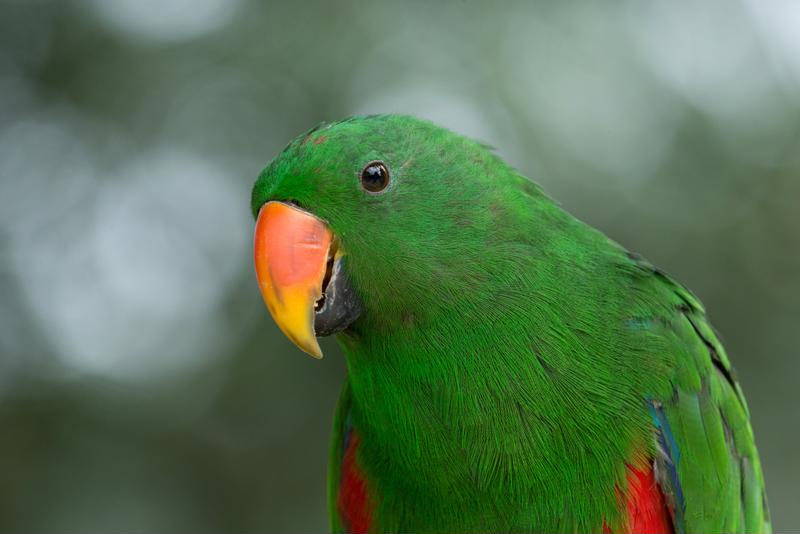
Former service members suffering from the physical and psychological effects of warfare have long looked to service animals for comfort and support. While most veterans work with trained mammals such as dogs, others bond with less common creatures, according to Today.
Christopher Driggins, founder of the Vancouver, Washington-based nonprofit Parrots for Patriots, pairs veterans dealing with post-traumatic stress disorder and other conditions with abandoned birds. These animals help normalize the lives of their owners, lending the structure and support veterans need to truly address serious war wounds within.
"With PTSD or any other type of mental disorder, your life is a little confused," Driggins explained. "Birds demand normalcy, and certain birds are very needy. They help you fall into a pattern – get up at this time, give me a treat at this time, give me TLC. Then you find yourself in a normal routine again. You don't have those restless nights where you're up all night worrying."
Bringing birds to the fore
Driggins, an Army veteran and president of the Northwest Bird Rescue in Vancouver, founded Parrots for Patriots back in 2015, The Oregonian reported. After coming across so many homeless animals and speaking with fellow former service members, Driggins decided to address two problems with one solution. Now, veterans across the country can apply to adopt a bird. Various sponsors, including the Department of Veterans Affairs, absorb a portion of the adoption costs. Applicants are responsible for picking up the remaining amount and paying a $25 processing fee. Those who pass the evaluation process must agree to take bird caretaking classes at the Exotic Bird Rescue of Oregon in Portland.
The program is open to all veterans, including those who have been dishonorably discharged.
Promoting new methods
Driggins' avian-based therapeutic techniques aren't unheard of, according to the Los Angeles Times. In fact, the VA facility located in West Los Angeles hosts an extensive exotic bird facility that is home to dozens of parrots. The birds housed at the site, called the Serenity Park Parrot Sanctuary, are used for the VA Medical Center's Feathered Friends initiative, a therapy program helps veterans work through their problems by learning about and caring for the animals. Matthew Simmons, a Navy veteran and director of operations for Serenity Park, helps participants cycle through the program. He believes the parrots help struggling former service members reconnect with nature and peacefully sort through their troubles.
"Anger and resentment are not going to solve this problem," Simmons told the Times. "Clinical diagnosis will solve some. But what it is, is it's an inside job, and we've got to give them the tools to heal internally … outside the brick and mortar."
Making the right connection
Further north, Driggins takes the same approach, uniting veterans with animals that may help them rebuild from the inside out. Many applicants have experience with other types of service animals but turn to parrots in an effort to achieve emotional stability. While dogs and other mammals act as loving partners, most tend to live shorter lives, meaning owners must deal with the troubling emotions that come along with the passing of one or more companions.
Air Force veteran Paul Thomas owned other service animals before signing up with Parrots for Patriots. Now, he takes care of a 21-year-old African gray parrot named Sabrina, who, like most aves, has a life span of up to 80 years.
"The ongoing traumatic experience can carry a weight," he said in an interview with The Oregonian. "The concept of having an animal that's going to be with you literally your entire life is a good, positive thing."
Like dogs and other mammals, birds like Sabrina are adept at unpacking human emotions and know exactly when to offer support.
"They read us like we read books. If you're nervous, they're nervous. If you're afraid, they're afraid. You really have to be in control of your emotional state before interacting with them," Thomas told the newspaper.
As Parrots for Patriots continues to grow, more veterans will gain access to special animals with the power to mitigate the long-lasting psychological symptoms of war.
When veterans return home from active duty, it's important to ensure they have access to services that will help them transition into the worlds of employment or academia. Fortunately, many organizations exist around the country to help vets with this transition, including those who find their calling is creating works of art. When veterans return from military service with inspiration, it can lead to breathtaking contributions to many different artistic mediums, and groups that feature their works can enable and fuel further creative expression.
"The show could act as inspiration to other veterans."
New exhibit in Lincoln
Gallery 9, an art cooperative in Lincoln, Nebraska, recently premiered a veterans-only show to demonstrate the ways ex-military artists in the area are expressing themselves. According to the Lincoln Journal Star, the idea came from a member of the co-op, Bruce Thiel, who also works for the Veterans Association for the region. He explained that the show could act as inspiration, with veterans coming in to see what fellow service members have created and perhaps deciding to take up art themselves.
Some of the artists whose works are on display at Gallery 9 gathered fuel for their pieces while serving. The news provider gave the example of Bryon Line, who gave up painting during a long military career but returned to it afterward, sometimes including imagery from his Army years, notably parachutes descending from a plane.
Thiel noted to the Journal Star, however, that a direct military influence on the work is not a prerequisite to be a part of the show. Some artists, such as Navy veteran Jeff Wild, keep their artistic careers and their service time separate. Thiel noted that the lineup of artists shows veterans have a variety of perspectives. Some, such as wounded Air Force vet Shaw McLoed, have used their work as a type of therapy.
Creative arts festival in Fargo
In Fargo, North Dakota, area veterans will compete across multiple disciplines in an art contest as part of a creative festival. According to The Forum of Fargo-Moorehead, the winners will become the area's representatives in a national contest held by the VA this fall. Everything from glasswork and pottery to drawing with pastels and jewelry creation will be judged by local artists. Of course, competition isn't the only thing on the agenda. The event is also a community gathering celebrating local veteran creativity, and will be open to the public in mid-February.
Whether at a gallery as in Lincoln, or with the direct involvement of the VA, as is occurring in Fargo, veterans art is seeing support by various groups around the country. This is an encouraging trend, as one of the most important elements of welcoming vets back into civilian society is ensuring they don't become isolated. Hearing what these individuals have to say as artists, whether the work is inspired by their time in the service or not, is a valuable form of connection. There are numerous skilled creators among the ranks of veterans, and there is much to learn from discovering their work.
With technology progressing rapidly in recent years, it seems appropriate that first responders and emergency personnel, in general, should reap the benefits of new developments. It's hard to think of work more important than the duties these brave individuals take on every day, so advanced software and hardware developments that could improve their success rate and keep them safe in the field are clearly worth pursuing.
"First responders will have a variety of exciting new options."
If there is one theme to tech development today, it is that every kind of item is up for reinvention. From backend software systems to everyday devices, consumer-friendly products to industrial-use-only assets, these are all fair game. First responders will have a variety of exciting new options in the years ahead.
Real-time tracker goes beyond GPS
The Mercury News recently highlighted an exciting new solution that could overcome the problems with conventional GPS tracking and help first responders when responding to fires in buildings or carrying out underground rescues. The NASA Jet Propulsion Laboratory is hard at work on the solution, which is called Precision Outdoor and Indoor Navigation and Tracking for Emergency Responders, or POINTER. The product is based on using electromagnetic fields to project location data, even through steel walls or the ground, obstacles which hamper GPS reception.
POINTER could become a go-to position-tracking option in time, provided responders have access to the schematics of buildings they want to see inside of. The Mercury News pointed out that despite its great future potential, it isn't quite ready for use. As of now, the tech is large – approximately the size of a backpack. The next step for NASA's team is to make a receiver the size of a modern cellphone.
The Jet Propulsion Laboratory is also developing technologies that will pair well with POINTER, such as an artificial intelligence system called AUDREY. According to the news provider, the latter solution is based on analyzing real-time information and feeding first responders information automatically. Combining the two systems could help firefighters get out of compromised structures effectively, among other emergency-response applications.
Drones to the rescue
The Richmond Times-Dispatch reported on another tech innovation in the public safety sector, this one already in limited use: drones. From aerial fire observation to detailed searches for missing persons, drones can provide a set of eyes that travel in three dimensions, letting emergency personnel reach places they can't go in person. With the technology so young, departments are just learning the best practices of drone operation, which are becoming clearer due to trailblazing work by early-adopter agencies.
The news source explained that organizations are trying to ensure wider use of drones goes smoothly, with Virginia emergency agencies working toward a set of unique regulations, standards and protocols. Whenever a new technology enters use, there is a need to ensure it is used in a consistent and safe fashion, and adjusting rules to suit the new assets is a natural stage of this process. As long as there are good use cases for the technology, such an adjustment period is worth it.
One of the big issues that many veterans face after they leave the service is that they sometimes have difficulty finding work. This issue can create myriad problems for anyone, let alone vets who may not have enough experience in civilian life, or could have mental or physical problems that further hamper their chances. With this in mind, more is now being done on the part of many organizations – including those within the government – to improve veterans' work prospects.
This is especially true in the state of Florida, where one lawmaker recently filed a bill in the state legislature to help ensure vets have ample access to employment opportunities in the Sunshine State, according to a report from the Miami Herald. Specifically, SB 152 would extend sizable grants – totaling $10 million over a period of several years – to small businesses that hire veterans, in particular.
A closer look at the proposal
Specifically, the distributed grants could total as much as $900,000 per year, the report said. Under the program, small businesses would receive $3,000 for hiring a veteran and $5,000 for hiring a veteran with disabilities. The group Florida Is For Veterans would administer these grants.
No small business would be able to receive more than $25,000 in grants in any given year, the report said. The bill, advanced by state Sen. Rene Garcia – a Republican representing Hialeah – will not be voted on until the Florida Senate opens its next legislative session in early 2017.
Other efforts underway
Meanwhile, while it's certainly a good idea to encourage companies to hire veterans, it's also important to make sure former service members have all the skills necessary to enter the workforce and have that transition be as smooth as possible, according to a report from the Lakeland Ledger. That includes everything from the training they will need to actually perform jobs in their fields of interest to something as simple as putting together a resume and learning basic job interview skills.
To that end, Lakeland resident Susannah Wesley-Ahlschwede recently started a nonprofit called Battlefield to Boardroom, which provides many of these necessary services to vets in the area at no cost, the report said. The organization only began in May and has assisted 74 veterans so far. Of that group, nearly half already have jobs as a direct result of the assistance they received. Vets who have gone through the program say it's a real difference-maker in their job searches.
"This is so good because it's really needed," Adam Winchester, a local veteran who now serves on the board for Battlefield to Boardroom, told the newspaper. "I have known so many guys who thought they were going to get out and get great jobs but couldn't because their resumes weren't strong enough."
Often, the process starts with vets just writing down the skills they acquired during their military service and the kinds of jobs they did, the report said. Then, the organization works to find local job openings that line up with those needs.
This kind of service is crucial because many younger veterans, in particular, can struggle to find work, the report said. The most recent data shows that vets who served after 2001 have an unemployment rate of 5.8 percent, significantly higher than the national average. That leaves about 150,000 without jobs but actively looking for work, while many more have likely just given up the search.
Veterans often prove to be dedicated and fastidious workers who stand out among their peers, so all it may take is a little encouragement for businesses and assistance for the former service members themselves to make successful, lasting job connections.
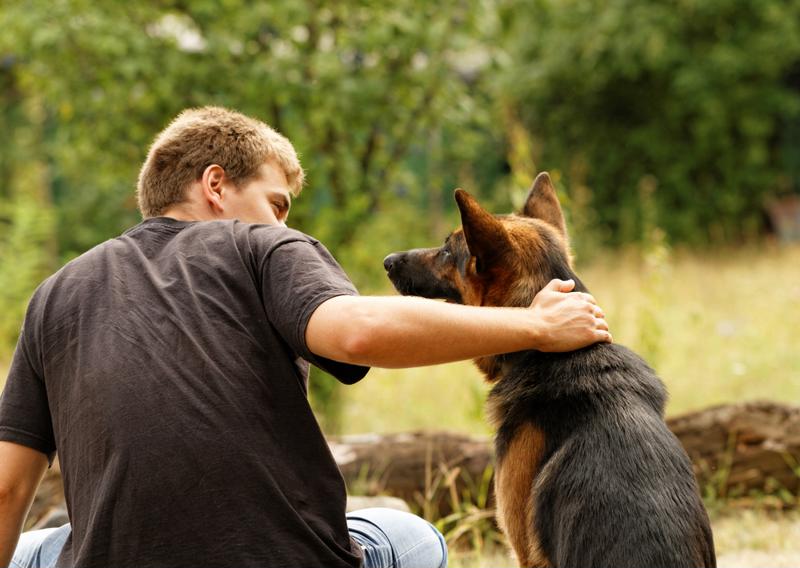
Numerous studies have shown that veterans struggling with a number of physical or mental health issues tend to do better in their everyday lives with the help of service animals. To that end, greater efforts are now being undertaken all over the country to connect vets with dogs and other creatures to help them navigate any given day. The stakes here are quite high, because while many people aim to help vets in any way they can, it's not always easy to actually connect them with these sometimes life-saving animals.
Often, a properly trained service animal can cost a vet thousands of dollars or more, and while the help these creatures provide is priceless at the end of the day, putting together that kind of money isn't always easy, according to a report from the Independent Journal Review. As a result, federal lawmakers and a handful of veterans are working to pass the Puppies Assisting Wounded Service Members (or PAWS) Act, and things seem to be going well early in the legislative process.
Easy to get onboard
Most lawmakers are willing to help out vets legislatively whenever they can, and when they can put a face – or in this case, faces – to the cause, it becomes even easier to pitch financial assistance for vets who need service animals, the report said. That's where Cole Lyle – who had depression and anxiety when he left the Marines in 2011 – and his service dog Kaya come in. They've been making the rounds on Capitol Hill in support of PAWS for some time, and lawmakers have been eager to meet with them.
"Service dogs are not supposed to be petted, but one day a member called me into his office," Lyle told the site. "He told me, 'I already read your bill so you don't have to pitch me. I just want to cuddle with your dog.' Apparently he was having a stressful day. It just speaks to the power of service animals."
Lyle recently graduated from Texas A&M University with a degree in political science and says he couldn't have done it without Kaya, the report said. Now he's turning his attention to law school and living in Washington, D.C., and hopes they can get the PAWS Act passed so more vets can enjoy the same benefits.
Help from the private sector
In the meantime, many who have nothing to do with the legislative process are still working to help vets find service animals who can provide them with a calming presence on a daily basis, according to the Hagerstown Herald-Mail. In Greencastle, Pennsylvania, a professional dog trainer was approached by the Franklin County Veterans Affairs Office a few years ago and asked to help train dogs to work with vets suffering from mental issues as a result of their service. It was an easy decision.
"Utilizing (the dogs) to a greater potential really makes the dog a happier dog – they're working, they're happy, and they're enabling this veteran to have a better life," Helen Carlson, who runs the Good Dog Training School, told the newspaper. "The combination just fuels me."
In a little more than a year and a half, Carlson has successfully trained two dogs and placed them with local vets, the report said. The dogs are trained to do everything from simply being that calming presence to turning lights on and off, picking up items and opening doors. The program pairs vets with dogs and walks them through an 11-week training course, and Carlson also cares for a number of dogs herself.
These kinds of efforts can really pay off in the long run, but it's vital that work continues to expand veterans' access to affordable service animals.