
Furthering their education is just one route veterans can take after leaving active duty. Moving from the military into undergraduate, vocational or advanced schooling can equip former military members with the tools they need to carve out successful new roles within the civilian sphere. With the assistance provided by legislation, vets are going back to school and realizing their potential. However, assuming current programs are perfect as is would be a mistake. There are still ways for individuals to fall through the cracks, and efforts to keep students on the path to good degrees and job opportunities are still necessary.
"The legislation blocks non-certified schools from taking G.I. Bill funds to train veteran students."
New bill meant to fight unaccredited programs
What happens when a veteran goes through a whole academic program, only to learn that the school is not accredited? This scenario could result in lost job prospects, and lawmakers are eager to make sure it doesn't occur anymore. According to Inside Higher Ed, the government spending bill recently approved in the Senate contains the Career Ready Student Veterans Act. This piece of legislation is meant as a way to block non-certified schools from taking G.I. Bill funds to train veteran students.
According to Veterans for Education Success Policy Director Walter Ochinko, some states require colleges to get their programs for specific vocations such as teaching or nursing accredited at the state level to make students eligible for state exams. When educational institutions fail to go through this process, they can claim G.I. Bill funds, teach veterans – and leave the graduating pupils unable to sit for their exams. Inside Higher Ed stated that when Ochinko studied 300 G.I. Bill-approved programs at for-profit colleges, he found 20 percent of them lacked proper accreditation.
Providing a specific example of a course of study that failed its students, the news source noted that Westwood College ran a Chicago-based criminal justice course that did not give its students the credentials needed to move into law enforcement work in Illinois. Westwood is now defunct. Furthermore, Inside Higher Ed pointed to the Federal Trade Commission's action against online college Ashworth. The FTC says Ashworth didn't accurately represent the credentials it could give out.
Other education provisions
The protection from unaccredited programs is only one of the legal provisions for veteran education currently moving forward in Congress. According to Military Times, the most recent omnibus veterans reform bill ensures war widows are able to claim some of the education benefits promised to veterans. Some spouses of military personnel killed between September 11, 2001, and January 1, 2006, were previously excluded from claiming educational credits, and they have now been added to the coverage. The education provision was among what the source described as a non-controversial assortment of items in the spending bill.
When it comes to veterans and spouses, education benefits are important and worth defending because they point the way to a more productive and positive future in a civilian setting. Legislators have taken action several times in recent years to work more educational benefits and protection into laws, and every time a veteran successfully makes the transition from the military to the workforce via a degree or vocational certification, their efforts pay off.
As more military members came home from service over the past few years, some might have struggled to find job opportunities that aligned with both their skill sets and their passions. For this reason, a large number of veterans have decided to turn to entrepreneurship as a means of supporting themselves and their communities. And in many cases, they've also found that those communities were more than happy to support them as well.
Veteran entrepreneurship is growing in both success and popularity nationwide, as an ever-larger number of former service members find fertile ground for their business ideas across the country. One of the big cities where such activity is increasingly located these days is San Diego and its outlying suburbs, because the region is home to hundreds of thousands of veterans already, according to a report from The New York Times. In fact, no metro area anywhere in the country has a larger veteran population. Today, veterans are 45 percent more likely to run their own businesses than those who did not serve in the military.

Why start in Southern California?
The reason so many veterans live in the San Diego area is two-fold: First, the climate is quite nice, and second, the city is home to significant military operations, the report said. In fact, many of the businesses veterans start in the region after leaving the military cater directly to these bases and both active and former service members. Moreover, the city of San Diego itself has tried to concentrate on fostering an environment in which veteran-owned small businesses can thrive.
Currently the greater San Diego area has dozens of services designed to help small businesses thrive, across a number of fields, the report said. But where veterans in particular are concerned, separate organizations exist to help them work their way through the startup process, which can include the tricky task of obtaining capital to get going in the first place. Often, vets may not have the easiest time in this regard – especially in competitive markets such as San Diego – because they don't have any real business background financial institutions or private backers might otherwise like to see. Training to help bridge that knowledge and experience gap can therefore go a long way.
"When you're starting a brand-new business and you don't have any type of business track record because you've been serving in the military, it's very hard to get a loan or find investors," Carlos Figari, director of the SoCal Veterans Business Outreach Center, which puts together programs for would-be veteran entrepreneurs, told the newspaper. "If you are starting a company that's directly connected to the experience obtained while you were in the military, then you have a network to tap. But if you want to open a Subway, that's a totally different story."
"Public and private organizations are working to help veterans get a leg up."
Other efforts proliferating as well
Of course, San Diego isn't the only place where public and private organizations are working to help veterans get a leg up as they set out for themselves in the business world. At New York University's Tandon School of Engineering, located in Brooklyn, a number of vets recently completed a short training period of 14 weeks designed to help them start their own businesses off on the right foot, according to a report from the Brooklyn Eagle.
The no-cost program was created through collaboration between NYU Polytechnic School of Engineering and the Brooklyn Chamber of Commerce, and funded by a locally based state lawmaker's office, the report said. Specifically, it works to help vets develop what their companies will offer to the world – be it goods or services – as well as some basic how-to about getting the word out with public relations, fundraising and so on.
The training effort is designed to help vets with just about any business vision hit the ground running, even if they're working in collaboration with other business partners, which they often are, the report said. One recent graduate was planning to launch a media production company, while another had developed a product that measures water quality and reduces waste, and others planned subscription services and emergency alert equipment for motorcycles.
When these programs work as intended, they can provide a massive benefit to many of the men and women who served their country but also have big plans for their post-service lives. And the good news for those vets who may have a business idea brewing in their heads but aren't sure of how to proceed is that such efforts exist all over the country. All it may take to connect them with a training program that can help them advance their ideas from concept to execution is an hour or two of online research.
More than 250,000 Filipino veterans fought in World War II, according to the White House Initiative on Asian Americans and Pacific Islanders. These men participated in some of the conflict's most intense combat operations, including the famous 1945 raid on the Japanese internment camp in Los Banos, Laguna, Philippines, which resulted in the liberation of over 2,000 prisoners of war. However, most never received official recognition for their service and were denied military benefits.
On Nov. 30, the House of Representatives took a step toward righting this injustice, passing legislation that would award a Congressional Gold Medal to the Filipino fighters who served during World War II, NBC News reported.
Rep. Tulsi Gabbard, D-Hawaii, cosponsored the bill with Reps. Colleen Hanabusa, D-Hawaii, Mike Honda, D-Calif., Judy Chu, D-Calif., Joe Heck, R-Nev., and others. President Obama is expected to sign the legislation into law.
"Today is truly a great day, a significant seminal period in American history – second only to the liberation of the Philippines and surrender of the Japanese Imperial Forces on August 15, 1945," retired Maj. Gen. Antonio Taguba, chair for the Filipino Veterans Recognition and Education Project, told the news organization. "Now we can tell our veterans with pride in our hearts that this grateful nation has, at last, granted them recognition for the selfless sacrifice they endured in war, and restored their dignity and honor in service to their nation."

An unofficial force
In 1941, President Franklin D. Roosevelt called on the citizens of the Philippines, then a U.S. commonwealth, to contribute to the war effort. The administration armed civilian guerrillas and fighters enlisted in the Philippine Army, and promised them full military benefits and citizenship in exchange for their sacrifice.
One year later, these Filipino soldiers saw their first action, engaging Japanese forces, who had invaded the island and installed a puppet government in the capital city of Manila, according to the Los Angeles Times. The conflict ended in March 1945, after local fighters and U.S. troops collaborated to retake Manila and repel the remaining Japanese soldiers from the Philippines.
Despite their exceptional performance and immense bravery, the Filipino soldiers involved in World War II never saw the benefits they were guaranteed. In 1946, Congress passed the Rescission Act, which stated that the service of Filipinos "shall not be deemed to be or to have been service in the military or national forces of the United States or any component thereof or any law of the United States conferring rights, privileges or benefits," PBS reported.
Though the bill included more than $200 million to pay the Philippine Army, veterans from the commonwealth were vexed. President Harry S. Truman, who signed the legislation, later expressed regret over the decision not honor his predecessor's agreement with Filipino forces.
Making up for mistakes
In the decades following the passage of the Rescission Act, activists and veterans lobbied the U.S. government to intervene and correct the mistake. And, over this time, many of the Filipinos who served in World War II passed away.
After years of hard work, advocates achieved their first victory in 2009, when President Barack Obama signed into law the Filipino Veterans Equity Compensation Act, which called on the Department of Veterans Affairs to distribute one-time lump sum payments to Filipino veterans who fought in their home country during the conflict. Those in the U.S. were eligible for remunerations of $15,000, while Filipino service members who still lived back home could receive payments of $9,000. The agency has received more than 180,000 claims since Obama signed the bill.
"…the proud service of many of these Filipino veterans was never fully recognized by the United States. Many were denied the compensation they had been promised. It was an injustice. So in recent years, my administration, working with Congress and others, have worked to right this wrong," the president explained during a speech at Fort Bonifacio, home of the Philippine Army, in 2014.
"The U.S. government continues its effort to honor and rightfully compensate Filipino soldiers who fought during World War II."
Earlier this year, service members from the nation scored another victory, when Citizenship and Immigration Services established a special program that allows those living in the U.S. to obtain visas for family based in the Philippines.
This recent bill marks yet another step in the U.S. government's effort to honor and rightfully compensate the Filipino soldiers who fought during World War II. Though only 18,000 of the 260,000 who served remain alive today, they will finally receive the recognition they deserve.
"Today's House passage is the culmination of decades of work by these veterans and their families to recognize their key role in the Allied victory, and their decades-long fight for benefits," Sen. Mazie Hirono, D-Hawaii, who brought the bill to the Senate floor in July and oversaw its passage, told NBC News.
If Obama signs the bill, the House will make arrangements for presenting the Congressional Gold Medal. The award itself is scheduled to go on display at the Smithsonian Institute, according to congressional records.
When veterans return from active duty, they may choose to branch out and start their own businesses instead of joining the everyday workforce. While it takes grit and determination to take the lead and start a company, this is just the kind of mindset honed by military training and service. These new businesses can take any form, and seeing examples of a few that have succeeded, as well as noting the funding methods they used to get their start, could be inspirational for vets pondering the same kind of move. Companies just starting out now have the potential to go far in the years ahead.
Social connections, apparel, coffee and more
CNBC recently spotlighted several companies founded by veterans starting up around the nation. For instance, 82nd Airborne Division veteran Raymond Collazo has launched a social network for members of the film, stage and television worlds that will help individuals staff their productions. The startup is not his first project on returning from active duty – that was writing a movie about a veteran's post-deployment experiences. The process of filmmaking, and the difficulties therein, pushed him to create the social network.
According to the news source, Collazo gained support from services designed to get veteran-helmed startups off the ground. A collaboration between the New York State Small Business Development Center and law firm Cahill, Gordon & Reindel smoothens the founding process, with pro bono legal services and consulting knocking down roadblocks veteran entrepreneurs may encounter in their companies' early days.
Another of the company founders profiled by CNBC, 17-year Air Force veteran Robert Pricipato, launched his two companies without working with third-party organizations, though he did note that his base offered such services. Pricipato's two new firms are in different areas, one in the coffee business and the other an apparel provider. They do share a link, however – both companies are connected with programs raising awareness of high suicide rates among veterans and aiming to bring those numbers down. Pricipato told the source being mission-driven is a great asset in entrepreneurship.

The right skills
Syracuse University's Institute for Veterans and Military Families recently released a report on the connection between military skills and success as a company founder. According to the Salisbury Post, the study found that some of the abilities gained in military training – namely leadership and communication – can stoke an interest in leading a business. While confirming that there is a connection between veterans skills and founding companies, the study also pointed out that the challenges to becoming an entrepreneur remain. Businesses need capital and know-how to get going.
Thus far, veterans have done well in becoming company founders, despite the hurdles. The Syracuse research found that company ownership is more common among the veteran population than civilians who have never served. Also encouragingly, more women and ethnic minorities are among the latest wave of veterans founding their own companies. As for what's next for entrepreneurs with a military background, success rates may depend on the support systems that exist. For their part, the next generation of potential founders have the experience and abilities to succeed.
Founding a small company has become more than just a business strategy in recent years – it has been enshrined as a way of life. Entrepreneurs turning a bright idea into an industry-disrupting force have made their mark on many industries. Joining the ranks of these company founders is an exciting move, and it could be a great career pivot for veterans returning to civilian life from active duty. With the leadership, determination and decision-making skills they honed in the military, vets can tackle the managerial challenges of entrepreneurship and enrich their communities through bold and promising new business ideas.
"No one is more prepared to lead than veterans."
The case for investment
Fortune contributor Chris Gosselin recently urged venture capitalists to back veterans' companies with their funds, explaining that former members of the military have what it takes to found great companies. The author explained that no one in the business sector is more prepared to lead than veterans, due to the intensive training they receive while serving. With an ability to focus on the mission at hand, military members are top-notch decision-makers.
Gosselin pointed out that some of the businesses that have dominated their respective fields were originally founded by veterans. From Nike to Esurance to FedEx, leading organizations have military experience as part of their makeup. The author explained that FedEx founder and CEO Frederick Smith credits his time in the Marine Corps with giving him the principles that have guided his leadership of the firm and its massive expansion over its history.
At present, the number of veterans starting companies is declining rather than increasing. Gosselin lamented this fact and explained that there are programs that can help individuals get started, including entrepreneurship courses and specialty loans. Getting larger venture capital funds involved could deliver tremendous aid to vets considering joining the field, and the results could be great for the firms that take the plunge. The author noted that venture groups led by veterans tend to invest in vet-led companies, seeing good return on investment.
Fighting veteran unemployment with entrepreneurship
Claudia Viek of the California Association for Micro Enterprise Opportunity, contributing to The Huffington Post, explained that some sectors of the veteran population have significantly greater amounts of unemployment than the average. Women and young people are experiencing higher unemployment rates at the moment, which is the same trend observed in the nation as a whole. Viek noted that when opportunities for employment are scarce, founding a small company can help. Vets who begin their own businesses can create circumstances uniquely suited to their particular abilities.
In addition to gaining work in a self-designed environment, a veteran beginning a new company is able to target unique goals. Viek also noted that when vets return from service with unique physical or mental health needs, the standard workforce may be a difficult fit. Founding a company or joining a small enterprise created by a fellow veteran could place an individual in a more suitable setting. Viek stated that with the right coaching, an infusion of capital and connections in their target markets, vets can enter business ownership with confidence.
Taking care of a wounded veteran is one of the most important services a nonprofit or government agency can render, but these organizations aren't there with patients 24/7. In the end, a great deal of care is provided by caregivers, often spouses or other family members of the injured service members. Taking a moment to recognize the people who care for injured vets is important, as these contributions are too vital to go unnoticed.
Partners learn to help
Wisconsin Public Radio recently spotlighted Barbara McNally, author of a guide that gives knowledge and support to the spouses of wounded vets. McNally explained that witnessing a veteran's tragic suicide galvanized her to write the book. She explained that returning from active duty with a serious wound can be a surprising trauma, one that both the injured parties and those closest to them feel unable to handle or cope with. By giving out common-sense information, she hopes to help improve these situations.
Military spouses can have a huge positive impact on their wounded partners, and McNally wants to be sure they meet this potential. She recounted the story of a vet afflicted with severe depression. The vet's wife introduced him to a fly fishing program meant for military members. Husband and wife participated together, and he managed to reconnect with the world, via an activity he loved, and communication with other vets in the program. By knowing him well enough, the vet's wife put him on a track back to normalcy.
"A young couple coping with a severe wound may be blindsided by the strain."
In addition to having a lack of experience dealing with mental or physical injuries, many veterans' caregivers are very young. McNally noted that there are 5 million caregivers helping veterans in the country today, and 20 percent of them are under 30. A young couple coping with a severe wound may be blindsided by the strain, but with the right mindset and some knowledge, they can persevere.
Treating vet caregivers
Some organizations aimed at helping vets make a point of acknowledging the vital role caregivers play in helping injured warriors re-integrate with the civilian world. Events planned to salute the troops or give out free services can increase their scope to caregivers. WHNT pointed out one such program in Huntsville, Alabama, in which the Salon Professional Academy gave out free beauty care to women who are either veterans or caregivers. The salon closed to the public and served 16 caretakers and two vets, giving makeovers ahead of the Marine Corps Ball.
Marine veteran Lori Martin explained to WHNT that the beauty care proved to be a helpful bonding experience for the vets and wives. Considering the vital role caregivers play in helping wounded vets – and the amount of effort it can take to step into that time-consuming position, it's heartening to see caretakers honored alongside veterans in promotions, giveaways and other events dedicated to saluting the military. While there are many great programs that provide assistance for wounded vets, spouses and other family members are still the backbone of the support system upon their return from service.
When it comes to ensuring regulations, laws and policies at both state and federal levels adequately support veterans, it helps to have more military representation throughout agencies. While anyone can help vets programs along, the experience that comes from serving is unique, and this is a useful perspective to tap into. Today, veterans of the post-9/11 conflicts in the Middle East are re-entering the workforce at home in great numbers, giving public sector agencies a talented pool of potential young employees to draw from. The views of people who have spent the past few years as service members can help guide the conversation around veteran-friendly policymaking.
Congressional staff numbers still low
Lawmakers themselves aren't the only ones setting the agenda in Congress. According to Military Times, Capitol staff working group HillVets wants more veterans to find work as policy team members, helping senators and representatives decide on courses of action. As of now, less than 1 percent of policy staffers are veterans.
Including roles beyond policymaking, there are over 3,000 employees in total serving members of Congress at any time but at the moment, only 3 percent are veterans. This is a marked contrast with elected officials – the source explained that at least 102 veterans will serve in elected office next year. That includes 27 individuals who served in Iraq or Afghanistan.
"More representation could ensure that veteran-specific legislation is always a high priority."
HillVets wants members of Congress to get their views on veterans issues directly from people with firsthand experience. That's why the group has encouraged each senator and representative to have at least one veteran on staff in a policy capacity. More representation could ensure that veteran-specific legislation is always a high priority and, when such laws do pass, they accurately reflect the actual needs of today's ex-military members.
The surprising part of low veteran employment numbers among congressional staff is that other businesses have made much steadier progress in stepping up veteran hiring. HillVets told Military Times that companies and communities at large have expressed praise for the veterans they have hired. Having someone with military experience on staff brings a new perspective and set of skills, and that could be just what Congress needs.
Congress is an outlier
Some of the groups that have been hiring veterans at a fast pace are right in the federal government, according to The Washington Post. The source explained that vet hiring has stayed steady for the past five years, with approximately 45 percent of new permanent roles going to individuals with military experience. With young people coming home from Iraq and Afghanistan, there's no shortage of talented potential hires.
The news source specified that hiring rates differ widely between agencies. The 45 percent average doesn't tell the whole story, as some agencies are bringing in significantly more vets than that while others lag behind. In a promising development, disabled veterans seem to be receiving plenty of roles. Seven percent of federal full-time jobs went to disabled veterans in the 2015 fiscal year, making up 43 percent of veterans hired, according to The Washington Post. While institutions such as Congress have been slow to add vets to their teams, the overall pattern remains strong.
Veterans are not always adequately recognized for their efforts on behalf of the country. It's always heartening when groups, individuals and government agencies correct these oversights, giving vets the honors and remembrance they deserve. It's especially important to keep elderly veterans in mind as their service careers fade into the history books. Though it's been over 70 years since the last shot was fired in World War II, communities around the country are keeping veterans of the conflict in their thoughts, engaging in positive civic gestures.
Belated medals handed out in Iowa
There are still many vets in this country who are owed honors, commendations or medals they haven't received. In Iowa, two men who served in the Navy during World War II recently received their awards after decades. According to KMA News, Dean Kester and Harold Walter both earned the Navy Good Conduct Medal, the World War II Victory Medal and the American Campaign Medal. Walter also earned the Discharge Button and Honorable Service Lapel Pin, while Kester was owed the American Defense Service Medal and the Asiatic Pacific Campaign Medal.
The source noted that the two veterans received their belated honors at a ceremony in Lenox, Iowa, hosted by Senator Joni Ernst. The lawmaker told the news provider that other vets in the state who may have outstanding honors should contact her office to receive their awards, no matter how long ago they earned them. The ceremony for Kester and Walter was the first of several scheduled to commemorate Veterans Day in Iowa.
Numerous circumstances could have caused veterans to come home without all the medals and other honors they qualified for. Ernst told KMA that the chaos inherent to wartime can lead to these ceremonies falling by the wayside. Now that these service members are home, they can finally receive the medals they've earned, whether it has been seven or 70 years since they were discharged.
Local history remembered
The huge number of men and women who enlisted in the armed forces during World War II means the conflict had a seismic impact on towns and cities throughout the country. Remembering this impact is another way to keep the people who fought in World War II in mind, even all these years later. Illinois news source the Daily Herald recently spotlighted Cynthia Christ Nelson's scrapbook of clippings that chronicled the town of Elgin's involvement in the war. Nelson plans to donate her collection to the Elgin History Museum, so the public can share in the memories.
Contained in the scrapbook are stories of heroism and sacrifice, with members of the community sometimes enlisting directly out of high school or taking groups of friends with them into the service. In stories that served as a precursor to the recent surge in female enlistment, many women from Elgin served in World War II, joining the ranks of nurses or the Women Accepted for Volunteer Emergency Service (WAVES). Having a deep reservoir of contemporary news reports about one region's role in helping win World War II puts a local spin and a human face on the conflict. This is valuable perspective more than 70 years later.
Between 11 and 20 percent of the service members who participated in Operations Enduring Freedom and Iraqi Freedom suffer from post-traumatic stress disorder, according to the National Center for PTSD. These troubled service members cope with the disorder in a variety of ways. Some immerse themselves in the creative process or take their minds off painful memories by engaging in vigorous exercise. Others turn to four-legged companions for comfort.
In the months and years since service members started returning from conflicts in the Middle East, pet therapy organizations have sprung up across the country, helping combat veterans connect with service animals that offer support during the occasionally turbulent moments that can arise in life after service.
K9s For Warriors is one of these groups, Parade reported. Shari Duval founded the Ponte Vedra, Florida-based organization in March 2011 after learning that her son, a contract bomb dog handler for the Department of Defense, suffered from PTSD – the result of two tours in Iraq.
In the years since, K9s For Warriors has provided approximately 263 service dogs to veterans in need, including former Air Force officer LaWanna Viers. She, like many of her fellow service members, returned home from Iraq with PTSD. After months of anxiety and insomnia, Viers reached out to K9s For Warriors and was presented with a female bulldog-boxer mix named Corey. The effect was immediate.
"The day that I got [Corey], I felt this sense of calm come over me," Viers recalled in an interview with Parade. "When I saw her eyes, I knew everything was going to be OK."
Now, the 25-year Air Force veteran can enjoy carefree moments with her husband and children and navigate large crowds and tense situations, knowing Corey is prepared to act should she show signs of anxiety.
"She can tell when I am anxious or having a panic attack. She'll pull me to a quiet place and then block me from people," Viers explained.
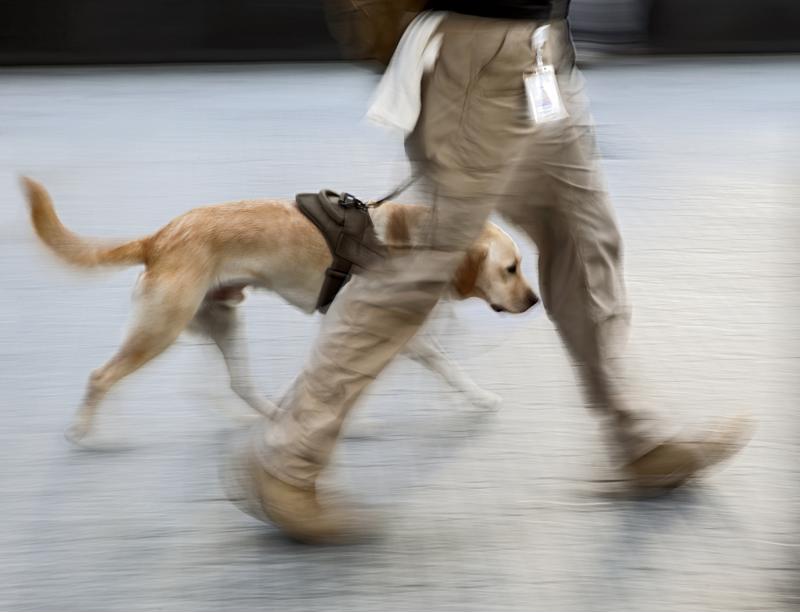
Of course, canines like Corey aren't naturally equipped to shepherd their owners away from despair. These animals undergo extensive training and learn to pinpoint the emotional and physical cues that signal anxiety in humans. The trainers at K9s For Warriors work with veterans and their service animals for months to help cultivate deep bonds between them.
The organization hosts five participants at time, leading them and their assigned dogs through 120 hours of tailored training. Approximately 90 percent of the veterans who graduate the program return regularly to recertify their animals and brush up on new handling techniques.
At K9s For Warriors, most of the assigned canines are rescues. In fact, the group has saved more than 300 dogs since its launch in 2011.
Despite the obvious benefits of service dogs, most therapists believe they do little to treat individuals with PTSD, The New York Times reported. Most advise sufferers to continue therapy even after obtaining these animals.
Still, the Veterans Administration recommends them, especially for former service members who may need physical assistance. And, as long as veterans like Viers continue to see results, it will likely continue to do so.
Some service members who go missing during overseas conflicts are never heard from again, so there's a bittersweet sense of closure when the remains of a previously unidentified military member can be returned home for a proper burial.
Resting place discovered
According to The Washington Post, a painstaking process of searching and inquiry led an Army recovery team to a grave site in North Korea in 2005. The burial place contained the body of an American soldier, who was identified as Wayne Minard after DNA testing based on results from two of his sisters. Minard went missing in 1950 and now his body will return to Kansas for a proper burial after 65 years.
The source explained that the burial site yielded more remains, with two other soldiers who served alongside Minard interred there, as well as 30 other individuals. The encounter that led to Minard's capture was fought on November 25, 1950, but he never officially appeared on a prisoner of war list. His death was confirmed by repatriated prisoners in 1951.
Now, family back home will finally get to give Wayne Minard a burial with full military honors in his hometown. These family members had assumed they would never know for sure where he was buried, according to The Washington Post. Some of those who will attend the funeral, such as great-nephew Bruce Stubbs, never had the chance to know him while he was alive.
"There are still 7,784 Americans unaccounted for from the Korean War alone."
Efforts to bring the remains of military members from past conflicts home for burial are painstaking and difficult, and the amount of work ahead is daunting. According to the news source, there are still 7,784 Americans unaccounted for from the Korean War alone. Having no records of what became of these individuals can take a toll back home. Stubbs noted that family members close to Minard thought about him throughout their lives.
Wake attracts vets of all eras
In another instance of an identification after decades, the body of Roy C. Fink was laid to rest in Amherst, New York. The Buffalo News reported that veterans of other conflicts turned out for the service. Despite never knowing Fink when he lived, they were drawn by a sense of kinship and the hope that he is merely one of many previously missing or unidentified war dead who will someday be identified and offered a proper burial. Like Minard, Fink was identified by DNA tests of relatives, in this case his nephew Paul DeFrain. Fink's remains were found at the site of the Battle of Chosin Reservoir, fought in 1950.
DeFrain explained to the source that it was touching to interact with the 65 people who attended the wake. Family members got the chance to say goodbye properly to someone many of them never had the chance to know when he was alive, and the vets who attended were able to share a moment of connection. Vietnam veteran Patrick B. Kavanagh gave DeFrain a patch and hat from the division Fink served in to strengthen the bond between nephew and uncle. Hopefully, many more such ceremonies will be possible as the missing are identified and laid to rest with proper honors.