
The transition to the civilian workforce is a pivotal moment for veterans, and ensuring that this journey is as smooth as possible will take effort from all parties involved. Bridging the gap between the very unique experiences that come with being in the military and the different set of challenges facing the civilian workforce is critical to ensuring communication between vets and employers. The state of that bond is important, and in cases where it's less than ironclad, improvement is needed.
Hiring managers voice opinions
Military Times reported that, according to a recent poll circulated by Hiring Our Heroes, hiring managers expressed the opinion that veterans are likely to bring important skills to the workforce. Managers asked about recruiting priorities listed military service at No. 3, with 77 percent stating that abilities learned in the military are important in civilian offices. This is good news, as esteem among hiring managers will help veterans get a foot in the door at great companies on returning from active duty. However, the survey results also noted that some businesses are unsure how to help vets transition to their new roles.
"Two-way communication between business and military communities is needed."
One of the major problems facing hiring managers today is a lack of knowledge. Without knowing more about the military, they may be ill-equipped to give veterans an ideal environment to transition into. According to Military Times, the Hiring Our Heroes data found over half of surveyed professionals don't have a deep understanding of military structure. This means they're sometimes unaware of what level or role a military member should enter at. Veterans themselves may not know what they are going into. Two-way communication between business and military communities is needed.
Some negativity experienced by vets in civilian workplaces may be persisting because company leaders aren't aware it's there. The source reported that less than one-fourth of surveyed hiring managers say they work at organizations that contain bias against veterans. Among veterans asked, however, almost half said they had experienced such an issue. This lack of agreement on a fundamental fact shows the need for better exchange of ideas from both public and private sector entities.
States stepping up programs
Getting more veterans hired for good jobs in the private sector is a priority at national and state levels, and some formalized programs have emerged to help make this a reality. According to Virginia Business, the Virginia Values Veterans (V3) initiative in Virginia recently reached its goal – 20,000 veterans have joined certified businesses since 2012. The list of employers working with the program totals over 700, and they had until January 2018 to reach the hiring mark according to the original plan.
As state and federal agencies across the country step up their efforts to work with the business community on a close level, there is room for communication between all involved parties to improve. If hiring managers and veterans can get on the same page, there is ample potential for service members to find fulfilling new careers soon after returning from active duty. Creating a military-to-business pipeline that works is a goal everyone can agree on.
An estimated 949 homeless veterans live in the state of Massachusetts, according to the Department of Housing and Urban Development. The New England Center and Home For Veterans in Boston currently serves more than a third of these individuals, offering them food and sleeping quarters.
Peace Foxx, Mark Helberg and Ken Smith founded the nonprofit in 1989 to serve local Vietnam veterans. In the years since, the organization has grown considerably. Now, it offers everything from service member training programs to formalized behavioral health services. NECHV also maintains 59 permanent apartments for veterans transitioning from life on the street into normal living situations. The center includes a women's dormitory as well.
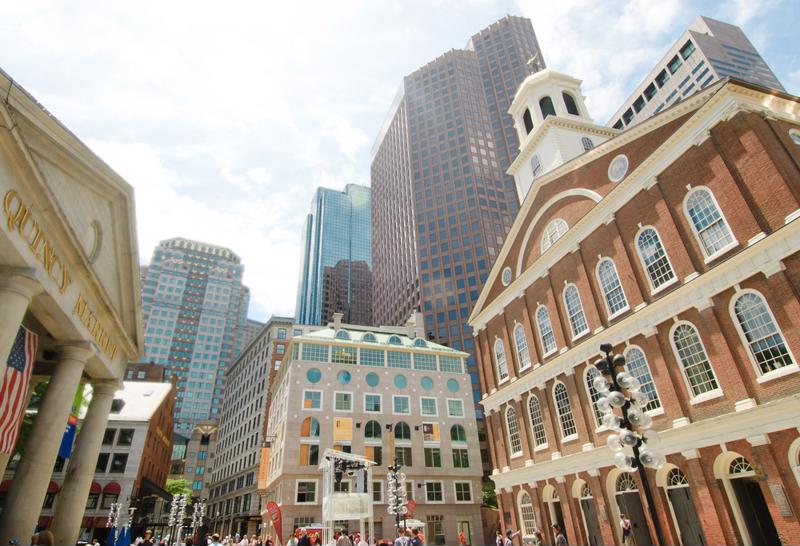
However, the organization will soon offer new accommodations as part of a $31 million renovation, The Boston Globe reported. In May 2015, crews broke ground on the project, which is expected to yield 200 transitional housing units and 38 additional permanent apartments. NECHV headquarters, located at 17 Court Street in the center of downtown Boston, is also undergoing renovations.
The center initiated the overhaul to accommodate the changing demographics of the local veteran population, which now includes more women.
"The veteran population in our city is very diverse, and we need to be able to provide tailored and individualized services to them," Andy McCawley, a Navy veteran and the president of NECHV, told the newspaper. "We have seen an increase, and we want to provide the best and most effective opportunities for our female veterans."
The renovation is expected to be completed by the end of the year. McCawley believes the improvements will allow the center to serve at least 1,500 more former service members.
Boston Mayor Marty Walsh is a key supporter of the project, as it folds into a city-wide veterans housing initiative he started soon after taking office in 2014.
"Sustainable, independent living requires support at every level. And that's what this center is going to do for more veterans than ever before, every step of the way," Walsh told The Globe.
As NECHV upgrades its capabilities, veteran homelessness in Massachusetts continues to decline, according to WBUR. In 2015, the state was home to 1,133 homeless veterans, 1,001 of whom lived in shelters. Only 32 were classified as unsheltered. This year, the total has fallen below 1,000. In March, the city of Lynn became the first Massachusetts municipality to end veteran homelessness, one local CBS affiliate reported. These numbers will continue to fall as specialized housing programs for former service members mature.
Even after every veteran in the state has found a home, McCawley believes his organization will still be able to offer unique and ultimately essential services to ex military personnel living in New England, WBZ reported.
"The goal of the center is to be a human resource, so the veterans can get connected, stay connected, and be successful," he explained. "So as we reach the … end of veteran homelessness, doesn't mean the need for human services will go away. We want to be a resource for Veterans in the community for essentially generations in the future, and we will have a brand new building in a great location to do that."
There are many ways for first responders to interact with their communities, and they're worth pursuing. It's always heartening to see a strong bond between a town or city and the brave professionals who put their lives on the line to keep people safe. Sometimes, these bonding exercises involve learning, and the emergency responders can be either the learners or the teachers.
In some cases, they'll acquire new skills that help them engage with those around them, and in other cases, they'll share their accumulated knowledge. Both types of programs are worth investigating for community leaders and department chiefs.
South Carolina: Learning sign language
A recent report from WACH revealed employees of the Irmo, South Carolina, are learning American sign language to ensure that they'll be able to better serve deaf and hearing-impaired members of the community. The importance of communication can't be understated. Program director Dave Bitters noted that teaching sign language to emergency responders may help avoid a repeat from a tragic incident earlier this year. A deaf man in North Carolina died when he was shot by police officers – his family has suggested that inability to communicate played a role in what happened.
"Contact between departments and the people they serve is always critical."
The training has taken hold with several different departments throughout the state. Police officers in Lexington and Rock Hill, as well as Lexington County Sheriff's deputies have taken sign classes. Contact between departments and the people they serve is always critical. Without the aid of sign language, hearing deficiencies can be a huge impediment to communication.
Even when situations are more mundane, mutual understanding between civilians and first responders is at a premium. In emergency circumstances, the value of easy contact becomes extreme. This is one case where gaining knowledge beyond their basic job descriptions will help police officers, firefighters and paramedics better serve their departments.
Washington: Outreach in schools
Of course, first responders can improve their bonds with their communities by teaching as well as learning. The Highline Times recently zoomed in on interactions between police and fire personnel and students in Port of Seattle, Washington. The officers and firefighters treated kids from local high schools to demonstrations of equipment, as well as a chance to see police dogs in action. The first responders also spoke at length with the students, describing what it takes to join the force.
The departments intend to hire aggressively over the next few years as the Port of Seattle community grows. This means the bonds established in school outreach programs may encourage more high schoolers to become interns and potentially join the force. This pipeline of new talent may dry up in communities where the bond and trust between first responders and young residents isn't strong, which adds importance to the idea of running such programs.
With their years of experience in a unique and exciting field, emergency services employees are well qualified to speak engagingly to young people, and this could be a great way to establish a deeper connection to the community. Whether learning new skills or acting as the teachers, education may be key to improving first responders' role in towns across the country.
On Election Day, voters in five states will decide whether to legalize marijuana, The New York Times reported. Arizona, California, Maine, Massachusetts and Nevada have decriminalization measures on the ballot. If these initiatives pass, the total number of states that permit marijuana use will rise to nine.
This may prove helpful to the veterans in these areas who suffer from post-traumatic stress disorder, as marijuana is a viable treatment for the symptoms that accompany this condition, according to the Department of Veterans Affairs. However, many physicians and government administrators have been slow to accept the treatment. Veterans groups are pushing the issue in an effort to open up treatment options for former service members with PTSD.
In September, the American Legion took up the cause, urging Congress to remove marijuana from the list of illegal substances outlined in the Controlled Substances Act, The Washington Post reported. The organization, which includes more than 2.2 million military veterans, chose to move forward with the request during its annual convention in August.
Members of the American Legion believe that the decriminalization of marijuana will allow researchers to more thoroughly study the substance and unlock its therapeutic powers for use in more impactful PTSD treatments.
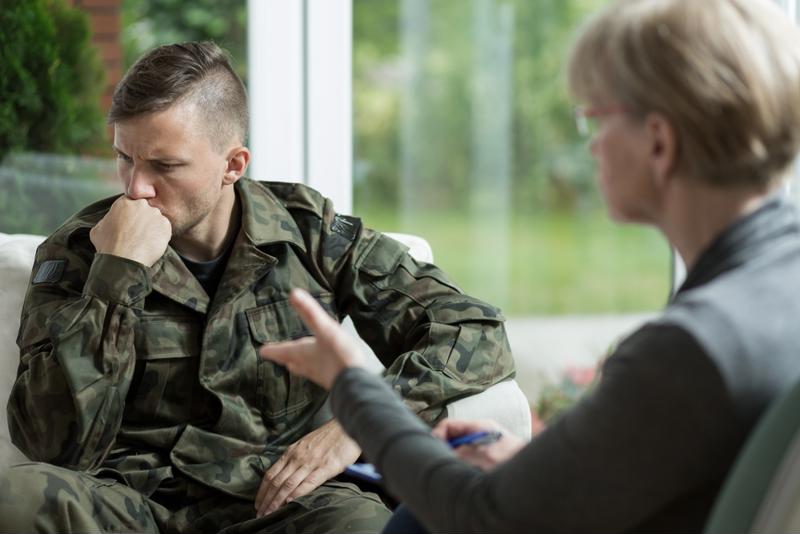
Some in the medical field have already made headway in this area. In fact, the Food and Drug Administration recently approved the first trial to test marijuana as a treatment for PTSD symptoms. Investigators from the University of Colorado, Johns Hopkins University and the Scottsdale Research Institute have begun recruiting veterans for the trial, which will last two years, Stars and Stripes reported.
"By working with chronic treatment-resistant veterans, we address a national emergency and limit variability at the potential expense of generalizability," Rebecca Matthews, a researcher at the Multidisciplinary Association for Psychedelic Studies in Santa Cruz, California and the lead investigator for the trial, told the publication. "Further research will be needed to determine if these results will apply to other groups of PTSD sufferers."
Another investigator on the research team addressed members of the American Legion Affairs and Rehabilitation Commission during the organization's conference in August, according to a press release. Dr. Sue Sisley, a clinician at the Scottsdale Research Institute and former VA psychiatrist, explained to those assembled that prescription drugs and other conventional remedies are simply not enough for some former service members.
"Veterans are exhausted and feel like guinea pigs; they're getting desperate," she explained.
However, one of the primary roadblocks in the way of the legitimization of marijuana as a treatment for PTSD and other conditions is the lack of regulation, as ingredients vary between supplies. Advocates argue that simply decriminalizing the drug will quash this issue. Federal and state agencies would be able to step in and control dosages and ingredients just as they do with prescription drugs. Indeed, states that have legalized cannabis require sellers to label their products with detailed descriptions that indicate how much tetrahydrocannabinol – the chemical that produces the high associated with the substance – they contain, The Washington Post reported.
Of course, there are other dangers as well. Marijuana has been known to cause harm to individuals with specific neurological chemistries.
Veterans who served in Operations Enduring Freedom and Iraqi Freedom by and large support the decriminalization of cannabis, according to research from Iraq and Afghanistan Veterans of America. An estimated 68 percent of these service members believe states should pass laws legalizing marijuana.
Those living in California, Maine and Massachusetts may soon get their wish – experts predict that the legalization initiatives up for vote in these states will pass.
With Veterans Day right around the corner, city officials across the country are putting the final touches on celebrations to honor American service members. Of course, this happens every year during the days leading up to November 11. Literally thousands of events take place on this hallowed holiday, whose roots can be traced back to World War I. In 1918 on the eleventh hour of the eleventh day of the eleventh month, Germany and Austria-Hungary agreed to a cease-fire with the Allied nations of the United States, Great Britain, France and Russia, according to the Department of Veterans Affairs. This marked the unofficial end of the Great War, which would formally conclude with the signing of the Treaty of Versailles eight months later.
Soon after, President Woodrow Wilson declared November 11 Armistice Day in honor of the historic truce. In 1954, President Dwight D. Eisenhower renamed the occasion Veterans Day in an effort to make it applicable to service members who participated in other armed conflicts outside of World War I. Fourteen years later, Congress moved the holiday to the fourth Monday in October. However, this change left many Americans unhappy. After more than a decade of complaints, President Gerald R. Ford in 1975 signed into law new legislation that declared November 11 Veterans Day once again.
Every year on this day, citizens flood the streets to express gratitude and support for veterans, and demonstrate their passion for the country they call home. This November 11 will be no different, as most cities have planned exciting festivities to celebrate their local service members.
New York
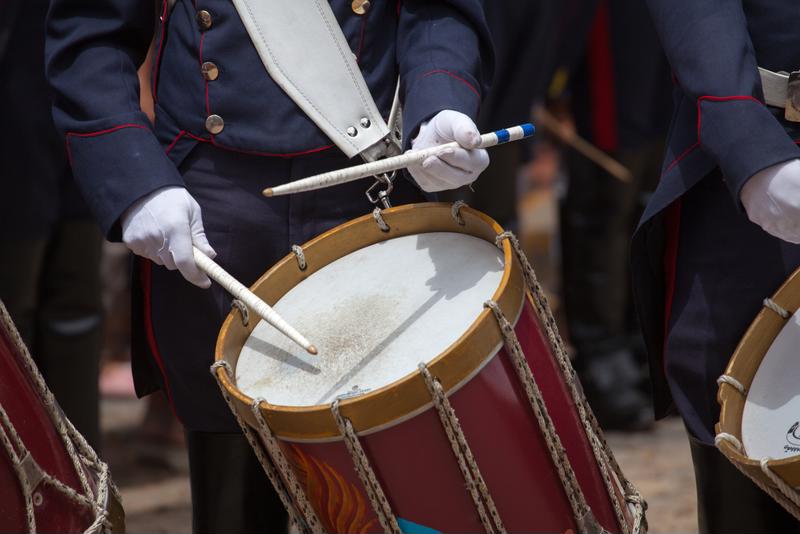
Since the 1970s, New York City has hosted America's Parade, the single largest Veterans Day celebration in the country. Though the event got off to a shaky start and struggled to gain traction throughout the 1980s and 1990s, it has become a staple in recent years, Business Insider reported. Now, hundreds of thousands of New Yorkers line the streets to look on as veterans and allies march along the parade route, which winds through Midtown Manhattan.
This year, America's Parade will once again take place. Retired Army Colonel Stephanie Dawson, who now serves as the chief operating officer of the Port Authority of New York and New Jersey, will helm the procession, along with local Iraq War veterans Joseph Duggan Jr. and Nelson Vergara, both of whom were also first responders during the 9/11 attacks.
Los Angeles
For the first time ever, the city of Los Angeles will host its own version of America's Parade, according to the American Legion. Officials from the Los Angeles County Department of Military and Veterans Affairs collaborated with United War Veterans Council, the organization behind the original celebration in New York, and the American Legion to put on this event.
"This parade will honor veterans from all wars and all eras, creating a sea to shining sea of Veterans Day parades throughout our great country," Stephanie Stone, chief deputy of the Los Angeles County VA, explained.
Paraders will depart from West Los Angeles VA Medical Center and continue on a one-mile route through the campus.
Seattle
Veterans in Auburn, Washington, a southern suburb of Seattle, are expected to participate in the annual Veterans Day Parade and Observance, the Seattle Times reported. Despite its modest trappings, this mile-long parade is actually one of the largest Veterans Day celebrations in the country, regularly drawing crowds numbering in the thousands. This year, the event will include more than 200 units and end with a veterans fair and showcase.
Returning from active duty with a serious injury can make adjustment to civilian life very difficult for veterans today. Whether or not an individual suffers a physical wound, he or she may also bear psychological scars that are invisible yet still dangerous, and vets with these ailments who don't receive treatment may end up with serious complications over time. This is where nonprofit groups and agencies can step in to ensure that these individuals, who have sacrificed so much while serving their country, get the best care possible, tailored to their specific and unique needs.
Today, there are many different programs that offer aid to wounded vets, with some regions containing several. The following examples, both from the Miami area, are different from one another but can each help service members coping with trauma. This goes to show the range of options that exist.
"Life can be hectic and this may exacerbate the trauma of living with a serious injury or disability."
Taking to the seas
The relaxing nature of the ocean makes it an ideal venue for therapeutic pursuits and, according to the Miami Herald, a group called Veterans Ocean Adventures is harnessing that power to help combat veterans deal with trauma. Life can be hectic and this may exacerbate the trauma of living with a serious injury or disability. The program's founder, Branson Rector, explained that scuba diving takes individuals to a more tranquil world. The organization also offers sailing, fishing and rock climbing classes and excursions.
Veterans Ocean Adventures is run by volunteer staff, and allows veterans to connect with one another as well as experience nature. The peace of the ocean and the camaraderie of interacting with others can fight back against the mental strain and isolation that have become scourges to service members around the world.
Veterans who want to take one of Rector's expeditions don't pay out of pocket – The Miami Herald reported that the organization is funded via donations from private sources, as well as a grant from the Department of Veterans Affairs. These sources are enough to fund trips for between 400 and 600 vets a year.
Relaxing with yoga
While the sea is a great place to relax, peace for wounded vets is available on land, too. A separate Miami Herald report highlighted another of the region's programs that can help deal with both physical and mental trauma – yoga classes. The physical component of the yoga sessions is only one piece of the puzzle. Warrior Wednesday, the monthly yoga class associated with veterans group Mission United, is designed around both meditation and communication. Vets and civilians alike can fight stress through community spirit and physical exercises alike.
The news source explained that the most recent session of Warrior Wednesday focused on mindfulness. Its host, yoga instructor Molly Birkholm, runs a practice called Warriors at Ease specifically aimed at veterans with physical wounds or mental trauma. Physical yoga exercises accompanied mental tasks, and the end goal was less restlessness for participants. Trauma can follow vets home from active duty and keep them up at night – programs such as Warrior Wednesday are designed to resolve these feelings and keep individuals from running into mental roadblocks on their way to reintegration into civilian life.
Legislation that helps former military members is fairly common in states across the nation. Members of local and national government bodies alike feel a duty to aid the veterans in their communities. At the state level, state representatives, senators and governors have kept up a stream of new proposals to ensure their constituencies stay appealing places for vets to live, work and start families. It can be difficult to track these initiatives due to their number and diverse nature, but they're still valuable. Below are two examples of states at work on new legislation.
Meeting of the minds in Virginia
A recent forum in Virginia sought to establish common ground between legislators and veterans' groups, according to local news station WSLS. These kinds of meetings between vets and the individuals who represent them in the general assembly can help ensure that the initiatives being advanced are actually helpful and represent good uses of state money.
The news source laid out the items proposed for discussion in 2017. For instance, Virginia Veterans and Family Support Services may soon be getting help in the form of new full-time employees and money. Additionally, overseas veterans from Virginia may soon be able to return their election ballots digitally via a new secure system. Other items on the agenda included in-state tuition rates for Reserve Components members, as well as income tax subtraction for National Guard members. These many planned pieces of legislation are part of a concerted effort to ensure Virginia is a veteran-friendly state.
"It's important to ensure vets have their voices heard concerning changes that would be positive from their perspective."
Retired Army Colonel John Miller told WSLS that the forum saw good attendance, and discussion focused on whether items will be able to pass in the general assembly in a year when the budget is particularly tight. With conditions pointing to limited new spending, it's especially important to ensure vets have their voices heard concerning the changes that would be particularly positive from their perspective. When they meet legislators and the governor in person, these individuals can make their points. Miller added that he hopes the general assembly holds a similar forum every year – the recent event was the first of its kind in Virginia.
SMB bill advances in Pennsylvania
In Pennsylvania, a recent bill provides a good look at the kind of laws being proposed to ease everyday life for vets. According to local news source The Morning Call, House Bill 1600 eliminates small-business founding fees. A charge of $125 for company creation or $70 for name changes would be waived for entrepreneurs coming from the military under the proposed law. Missouri already has such an exception, and this gave State Rep. Ryan Mackenzie the idea.
Mackenzie stated that he considers the bill a help to both the vets who would be stepping into the new SMB roles and the local entrepreneurial community. Military members feeling more comfortable starting their own companies can stimulate the business climate while also eliminating the job search process. The news source reported that Mackenzie also believes that with more new organizations being founded, a number jobs will open up that will boost the region in general.
Construction continues on a new veterans museum in Columbus, Ohio, Stars and Stripes reported. When completed, the $75 million facility – called the National Veterans Memorial and Museum – will measure 50,000 square feet. The site sits on a seven-acre parcel located on the banks of the Scioto River.
Work crews kicked off the project in December 2015. The grand opening is scheduled to take place in the spring or summer of 2018, according to the website for the museum.
Unlike many spaces dedicated to past and present service members, the National Veterans Memorial and Museum will include few combat-related artifacts. Instead, curators at the facility will focus on acquiring personal items belonging to on-the-ground military personnel in an effort to humanize armed conflict and its aftermath.
"This is all about people," Amy Taylor, chief operating officer for the Columbus Downtown Development Corporation (CDDC), the organization tasked with developing the museum, told Stars and Stripes. "There are no big tanks or fighter planes. This is a story of people and experiences through service and after service."
So far, the museum has collected small trinkets, such a playing card one Army veteran carried during Operation Desert Storm. Its administrators hope objects like this will give attendees inside access to the lives of the men and women who serve here and overseas.
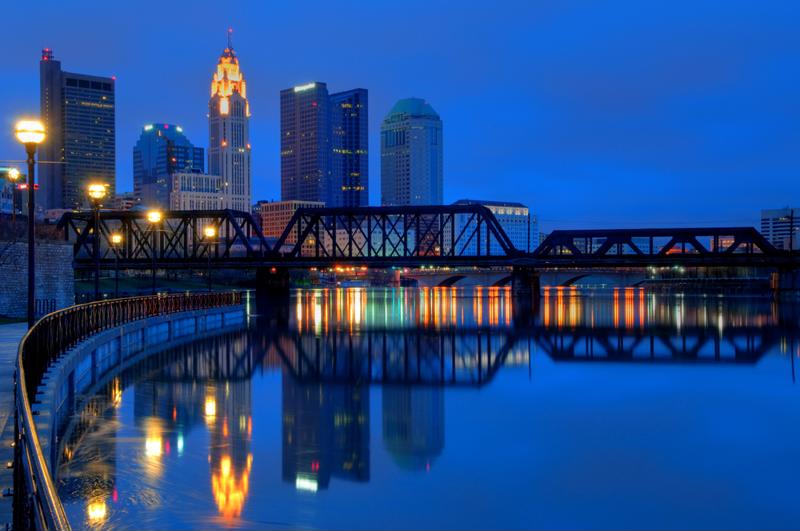
In addition to exhibition areas, the structure will include classrooms and event spaces. A memorial grove lined with trees will encircle the building.
Originally, the project was more modest. Former Ohio Sen. John Glenn proposed the idea of honoring the 900,000 veterans living in the state with a riverside memorial back in 2013. Soon after the project received the green light, plans changed. CDDC signed on and assembled a 16-person veteran advisory committee, whose members realized that something more substantial was required.
"Many people were telling us they weren't really from Ohio, and we realized there was a much bigger story to tell," Army Maj. Gen. Dennis Laich, chair of the committee, told Stars and Stripes. "We realized we could have a much richer fabric if we broaden the scope of the stories."
CDDC revised the project plans, adding a museum. In September, Ohio Sen. Rob Portman, a Republican, collaborated with his Democratic colleague Sen. Sherrod Brown to draft legislation that would designate the facility a national monument, Columbus Business First reported. Ultimately, the bill passed, making the museum one of only three national monuments located outside of Washington, D.C.
Veterans in the area are pleased with the progress of the project and say CDDC has done an excellent job involving local service members. The developer specifically reached out to the American Legion for help planning exhibitions.
"Nothing like this has been done. Everyone is saying, 'Wow, it's about time,'" retired Air Force Col. Tom Moe said. "We want to focus the story here about the service of veterans, whether they be from Tallahassee to Anchorage, and also be a place where vets can call a home."
So far, private donors and the state of Ohio have sourced $60 million for the museum. CDDC hopes to acquire the remaining $15 million soon.
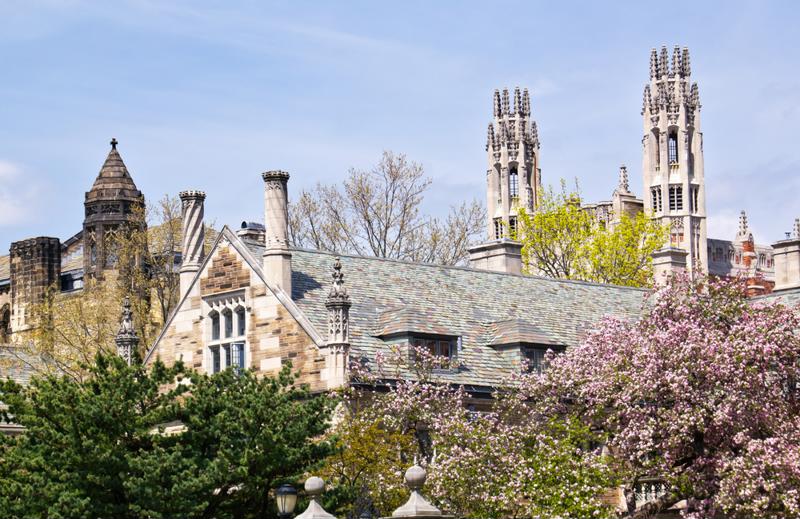
Ivy League colleges are notoriously selective. The institutions in this illustrious group maintained a collective acceptance rate of just over 8 percent for the class of 2020, according to Business Insider. In four years, an estimated 23,129 Americans will depart elite Ivies with undergraduate degrees. Unfortunately, very few will of these graduates will be veterans, The Associated Press reported.
Currently, 117 former service members are enrolled in undergraduate courses at Brown University, Cornell University, Dartmouth College, Harvard University, the University of Pennsylvania, Princeton University and Yale University. Columbia University in New York is the outlier among its fellow Ivies, hosting hundreds of veterans in its School of General Studies, which was established in 1947 for the expressed purpose of educating the millions of service members who returned home after the conclusion of World War II.
Still, veterans are not well represented in these top-tier institutions, a fact that troubles many inside and outside the military community.
"If we deny veterans the opportunity to go to these schools, not only do we deny them the same opportunity that others have, but we don't give our future leaders a chance to meet them," Peter Kiernan, a Marine veteran studying at Columbia, told The AP. "They don't get a chance to learn what it was like on the ground in Afghanistan or what combat is really like. These are important lessons that make them better leaders."
This is an especially serious concern considering historical declines in enlistment, which have left American legislative bodies nearly devoid of veteran voices. Only 102 former service members fill the 535 seats in Congress, according to the Congressional Research Center. Next year, this number is expected to fall, matching a decades-long trend.
This not only leaves the millions of veterans in U.S. without representation in the halls of power but also threatens national security, as legislators with no military experience attempt to craft legislation that dictates use of force, here and abroad.
Internal organizations at Ivies across the country are attempting to address the issue of veteran enrollment. For instance, Undergraduate Veterans Association of Cornell University is working to change how school administrators, instructors and students see veterans.
"We're not a bunch of knuckle draggers, so to speak," said Seamus Murphy, founding president of the organization, told The AP. "We're very well-rounded adult learners, with a different experience than the average student. We can bring a lot to the classroom and we can bring a lot to the university."
Some elite institutions have recognized the problem and are working to develop solutions. In 2014, Dartmouth collaborated with the Posse Organization, a nonprofit that helps identify qualified yet unique students in need of support, to recruit gifted veterans with their sights set on Ivy League institutions.
Veterans already enrolled at such schools are offering assistance as well. Michael Zaskey, a former soldier and neuroscience major at Brown University, works with his admissions office to reach out to fellow service members in search of high-level educational opportunities.
"We're trying to get vets to think more about the Ivies and we're trying to get the Ivies to think more about vets," he told The AP.
The federal government has also aided in this effort. The Post-9/11 G.I. Bill, passed in 2007, initiated the Yellow Ribbon Program, which allows expensive private colleges such as Columbia to partner with the Department of Defense to fund classes for veterans, The New York Times reported. This has made Ivies more accessible for former service members in search of elite educations.
Still, top-tier colleges must work harder to connect with veterans so they can share their experiences with others and enrich the institutions they attend.
The total number of military veterans in Congress is expected to fall next year, according to the Military Times. Currently, 102 former service members serve in the House of Representatives and Senate, representing a mere 18 percent of the legislature, the Congressional Research Service Found. Experts say this number will decrease over the course of 2017 as older veterans who served in the conflicts Korea and Vietnam retire from their posts.
"So it's natural to see the numbers drop," Seth Lynn, executive director of Veterans Campaign, a nonprofit organization that tracks former service members who are elected to public office, told the publication. "I feel like this is getting to the lower level we're going to see for quite a while."
Number of veterans declines
This is, of course, the product of a larger national trend. Fewer Americans join in the armed services every year, The Atlantic reported. Approximately 2.5 million citizens served in Afghanistan and Iraq, accounting for less than 1 percent of the total population. In fact, last year, more young people studied abroad than visited their local recruitment office. This has whittled down the size of the American fighting force to the smallest it has been in over 75 years. Although sophisticated combat technologies and changes in warfare have made large standing armies a thing of the past, people are still essential.
Legislative bodies have experienced something similar. Between 1965 and 1990, former service members filled more than 50 percent of the 535 seats in Congress, PBS News Hour reported. That number has declined significantly and now threatens to fall to an all-time low next year. This is an issue of great concern for the 21 million military veterans living in the U.S.
"Currently, 102 veterans serve in the House of Representatives and Senate, representing a mere 18 percent of the legislature."
New faces enter the fray
Still, there is hope for American veterans in risk of losing representation in the halls of power. In recent years, a number new legislators – some with military service under their belts and some without it – have risen to the fore to champion key issues affecting American veterans. In recent years, the number of female military veterans in Congress has grown, The Washington Post reported. Currently, four women with military experience – Sen. Joni Ernst, R-Iowa; Rep. Tammy Duckworth, D-Ill; Rep. Tulsi Gabbard, D-Hawaii, and Rep. Martha McSally, R- Arizona – hold seats and use their training to develop legislation, advocate for fellow service members and break boundaries.
In August, the four legislators worked to convince their male colleagues that women belonged in frontline positions and should be subject to the draft. Duckworth was especially passionate about the issue. After becoming a commissioned officer in the Illinois Army National Guard in 1992, a superior advised her to opt for a non-combat role. Duckworth declined and went on to pilot Blackhawk helicopters for the Army. She was shot down in Iraq in 2004 and lost both her legs in the crash. She retired in 2014.
"It's why I became a helicopter pilot," she told The Post. "And what I love about the military is if you can do the job, then you're part of that group – at the end of the day, it's the ultimate meritocracy."
Other veterans may soon join Duckworth and her colleagues in Congress. In September, Jason Kander, an Army National Guard veteran and Democratic U.S. Senate candidate in Missouri, made news when he released a campaign ad in which he assembles a service rifle blindfolded, The New York Times reported. With some luck, Kander may refill one of the seats vacated by retiring former service members in Congress.