
When a veteran returns home from active military service, several important elements need to fall into place to ensure a smooth transition back into civilian life. Health care for both physical and mental ailments is a must. Next, the veteran needs housing. After those considerations are squared away, it's time to either enter the workforce or return to academia for further education. Higher learning can play an important part in helping military personnel improve their lives, which is why programs that help connect vets with schools are in such high demand. Today, there are many organizations all over the country lending a hand in their communities.
Connecting vets with benefits in Jacksonville
Alabama news station ABC 33/40 recently focused on efforts by Jacksonville State University staff to make sure veterans in the area know how to access the education benefits they receive upon leaving the service. The college will soon sport a new veterans center on campus. JSU Director of Veteran Services Justin Parker explained that the school takes its role in vets' lives seriously – it can be the driving force that helps them rejoin the civilian population.
The GI Bill is in place to help pay for higher education, but since its benefits aren't universally known, projects such as JSU's have an important role to play. Congressman Mike Rogers told the news provider that a lack of clarity on education options is one of biggest hurdles keeping veterans from re-entering civilian life successfully.
"It was disappointing to learn that as part of their exit interviews and their exit process that they aren't given more in depth knowledge about all the opportunities that are there as far as assistance," Rogers added.
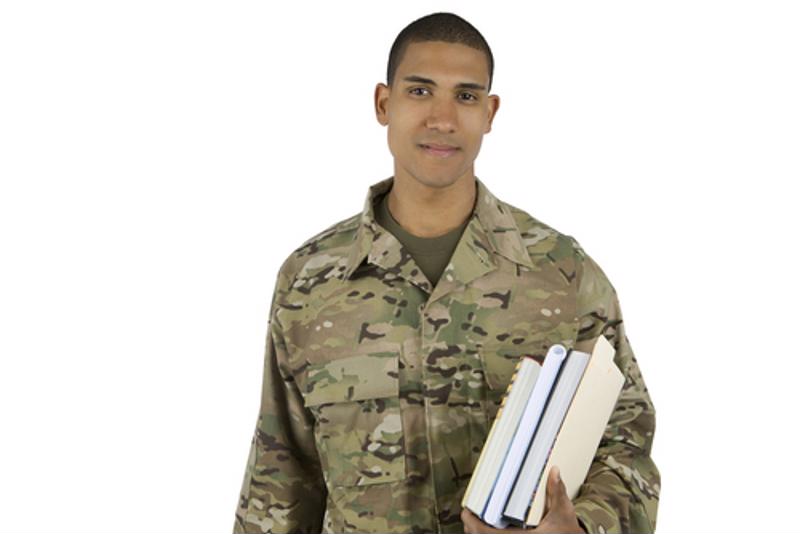
JSU appears to be an appropriate place for veterans outreach: The university had approximately 430 students using VA benefits as of the Spring 2016 semester. The opening of the new center will help this group, as well as the next wave of vets who may be considering school but are unsure what benefits they qualify for. Parker explained to ABC 33/40 that he sees JSU becoming an even greater part of the local community once it has more resources for military outreach.
Standing up for the GI Bill
Of course, benefits due to veterans could change. It depends on what happens to the GI Bill itself. According to Military Times, the organization Iraq and Afghanistan Veterans of America is attempting to ensure that lawmakers stop any cuts to this legislation. The group's campaign is a reaction to worries that the bill may be dismantled due to the fact that the Iraq and Afghanistan wars are no longer as prominent in the public consciousness.
The news provider noted that the House of Representatives passed legislation to halve the GI Bill housing allowance. The measure is up for evaluation in the Senate and, despite promises that some of the money saved with the cut will go to scholarships for children who have lost a military parent, leaders of IAVA are worried about the serious effect housing funding reductions could have on vets. With around $12 billion going to the bill this year, this is likely not the last attempt by lawmakers to cut parts of it.
One of the biggest issues many veterans face when they return home from service, and sometimes for a while afterward, is that it's not always easy to find a steady job. Fortunately, many companies now look to focus their hiring efforts specifically on veterans, and organizations also exist to help organize events at which vets can find work.
For instance, the U.S. Congressional delegation representing Delaware recently set up a pair of job fairs for veterans at Wilmington University in Dover, according to the Middletown Transcript. In all, 40 employers, including private enterprises and state and federal agencies, were in attendance. The event drew 50 vets and active military personnel with polished resumes, and another was scheduled for nearby Middletown, Delaware, a few days later.
Why is this important?
One of the problems former service members face when they try to find work is unfair stigmas about their applicable work experience and other issues common among veterans, the report said. However, anyone who has been in any branch of the military for a number of years has probably cultivated several highly valuable qualities – from intangibles such as leadership and teamwork to clear on-the-job skills – that put these individuals in a great position to contribute for any employer.
"Veterans have tremendous skills that can be used in almost any capacity," retired U.S. Air Force Col. Ron Sarg, chairman of the Delaware Commission of Veterans Affairs, told the newspaper. "Veterans know how to work as a team, and they know how to work independently. They can easily identify with any company's objectives."
Going high tech
In addition, efforts are also underway to help train veterans for jobs that already relate to the skills they've developed, if not their real-world experience, according to the Providence Journal. The U.S. Department of Homeland Security recently partnered with Hire Our Heroes to offer free cybersecurity training classes that can prepare former service members for careers in IT. The Veterans Cybersecurity Training and Education Guide offered by DHS can help vets determine how prepared they are to begin this training, and once they are ready, up to 800 hours of courses are available for free online. About 100,000 vets have used the program so far.
This kind of job opportunity may be crucial for veterans because IT security plays into strengths they likely developed in the military, such as critical thinking and analytical examination of a potential problem, the report said. Moreover, IT security jobs generally pay quite well, with such a position currently carrying an average annual salary of about $116,000.
It shouldn't be incumbent upon veterans to show why such a relationship can be mutually beneficial, but if organizations can make those strides on their behalf, that's vital to ensuring veterans' future prosperity. However, when job fairs and other hiring events take place, veterans should have a resume ready to go so they can seize the opportunities that might be available to them based on their skillsets.
While first responders perform difficult and dangerous work every day, they may go a long time without receiving thanks or support for their efforts. Some communities, however, have made concrete plans to rally around their firefighters, police officers and EMTs, letting them know that the services they provide are invaluable.
While such celebrations can seem downright understated – after all, first responders' jobs are about saving lives – appreciation can have an immense impact. Knowing that cities and towns are behind them and support the vital work they do can buoy emergency responders' spirits and forge strong bonds between communities and departments. The following are two examples of how these kinds of events can come together.
Family Fun Night in Gulfport
The Sun Herald, a Mississippi news source, described a recent gathering for Harrison County first responders and their families. The idea came from Mark and Alicia Powell, the proprietors of a party equipment rental business. When the couple called the police to help deal with an incident in which a renter refused to return an item, it served as a reminder of how much aid police, fire and EMT personnel provide to citizens every day. The Powells decided to organize a regional event showing the community's support for its first responders.
Since the couple behind the gathering rent out inflatable party equipment for a living, it was easy to set up a party that attendees' young children could enjoy. Despite rain, the party involved playtime for the kids and free food for everyone. The Sun Herald noted that a local youth group, WINGS for Performing Arts, put on a skit, and a fitness demonstration allowed guests to try a new kind of exercise set to music. The Lynn Meadows Discovery Center and local small businesses made the event possible by donating time and facilities.
Day of celebration declared in Winston County
In another example from the same state, Winston County declared a day of celebration for its first responders, according to local news station WTOK. In this case, Vowell's Market and Bennett's Do It Center decided to create a day that would highlight unity between the county and its police officers, firefighters, EMTs and sheriff's deputies. Louisville, Miss., police chief L.M. Claiborne explained why these events are so important.
"We're only as effective as a community will allow us to be and through their cooperation and working with us. I think it's important that we come out and meet them so they can put a name to the face," he told the news provider.
When communities band together to show their appreciation for fire, EMS and law enforcement personnel, they can choose from plenty of different gathering types. A meet-and-greet is one option, as is a dinner, carnival or talent-based event. The choice of agenda, however, is less important than ensuring that a forum exists for civilians and first responders to meet. Celebrating the aid these hard-working professionals give for their communities is always worthwhile.
The health risks and challenges facing veterans demand attention from the medical establishment. These are individuals who have given years of their lives for their country, risking extraordinary harm, so it is important that their physical and mental health alike receive attention and are not pushed aside. According to the Providence Journal, some important medical research is being helped along by veterans themselves, who have volunteered their genomic information for a database being run by the Department of Veterans Affairs. The Million Veteran Program aims to create a huge genetic database to unlock new health information and help formulate treatments.
Over 500,000 have enrolled
Gathering complete genomic data from blood samples and creating a huge database could be very helpful in identifying causes of and cures for serious medical conditions. To this end, the VA is seeking volunteers to become part of the Million Veteran Program and, the Providence Journal reported, has been very successful in its mission.
More than 500,000 individuals have joined the testing pool, which is currently the largest database of its kind. The program has been underway for five years now. In addition to logging genomic data, veterans respond to surveys about their health and their experiences during and after their military service. Between these answers and the hard data encoded in the blood samples, scientists have plenty to work with.
The news provider explained that many of the ailments studied by researchers working with the program are those that directly affect veterans more frequently than other populations. For instance, blood pressure issues, tinnitus and cancer strains common to service members are all subjects of study. By donating their time and the records of their genetic information, veterans are aiding in research that could be hugely relevant to their quality of life.
"We believe MVP will accelerate our understanding of disease detection, progression, prevention and treatment by combining this rich clinical, environmental and genomic data," said VA Undersecretary for Health Dr. David Shulkin, according to the Providence Journal. "MVP will allow the nation's top researchers to perform the most cutting edge science to treat some of the nation's most troubling diseases."
New approaches to veteran health care
Intensive research into health conditions that affect veterans is only one component of treating these issues. High-quality care facilities and programs are also needed to put the results of that research into practice. Health Data Management recently spotlighted an increasing focus on telemedicine among VA providers, in an attempt to see more patients without physical hospital visits.
The news provider explained that the VA is one of the most noted and advanced telemedicine users among all medical systems, with the programs being especially helpful when dealing with individuals who live in rural areas, far away from the nearest hospital. Travel time can be eliminated when experts use video technology to see what is going on at satellite clinics, or even in patients' own homes. In 2015, 677,000 veterans used telemedicine systems to converse with doctors. That impressive total accounted for 12 percent of all veterans in the country.
Creating adequate accommodations for homeless veterans is an urgent priority for communities around the country. It's shocking to think that individuals who have given so much for their country could end up in such a desperate situation. Fortunately, there are efforts underway to end or drastically reduce veteran homelessness. Each region has its own particular needs, and as such these programs will differ geographically, but the goal remains the same. Whatever the rate of homelessness amongst veterans is in a particular town or city, anything over zero is too high.
Austin programs certified as successes
When a city creates enough housing to get every one of its homeless veterans off the streets, it is a momentous occasion. According to the Austin American-Statesman, that milestone recently passed in Austin, Texas. The capital is now the third city in its state to earn federal certification of a zero homelessness rate among veterans. The source specified that the figure does not indicate that no veteran will ever become homeless in Austin, rather that the city has enough housing to offer these individuals places to stay if and when they lose their current accommodations.
The news provider explained that there are two main programs at work in Austin. The city has received 454 vouchers from the Housing and Urban Development department and implemented Supportive Housing, offered by the Veterans Administration. The city had to apply for fewer vouchers than Houston and San Antonio, the other two Texas cities that received certification of net zero veteran homelessness. Houston had a particularly hard time housing its vet population, needing 1,127 vouchers.
Cities ending veteran homelessness are seen as taking an important first step toward getting quality of life back on track for their military populations. The American-Statesman spoke with U.S. Housing and Urban Development Secretary Julian Castro, who explained that other efforts to integrate individuals back into civilian society all flow from housing. If people have a solid place to live, other efforts such as health care and social programs can be implemented. Voucher systems have kick-started this process of housing.
New Jersey cities step up efforts
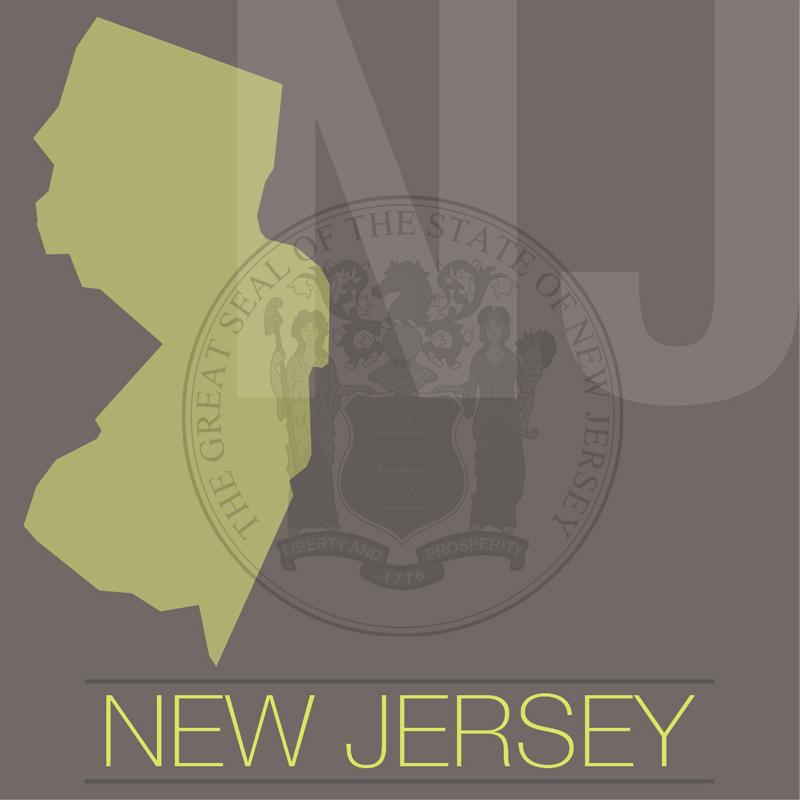
New Jersey radio station NJ 101.5 explained that the city of Brick has recently signed a pledge to eliminate veteran homelessness, along with numerous other leaders in counties, cities and towns all over the state. Bergen County has shown the way, with its rate of zero being certified by the federal government early in August. If other communities can equal this feat, the results for the state will be highly positive – according to recent data, 556 vets are still homeless in New Jersey.
The news provider added that Brick Mayor John Ducey is interested in creating 40 housing units for veterans. Getting the complex built, however, may take some doing – current state laws do not allow counties to fund developments that are just for vets. Previous results in the Garden State have been positive, with 1,838 homeless vets receiving homes between July 2015 and 2016.
There are few professions more strenuous than serving in the armed forces. Therefore, when veterans return home, it's only right that groups exist to help them deal with the burdens they have acquired during their time fulfilling their duties. These helpful programs can take many forms, and because individuals and their circumstances differ so much from one case to another, this diversity of approach makes sense. The only wrong answer would be to do nothing for veterans who need assistance getting their lives back on track and accomplishing the difficult transition from the rigors of active duty to civilian life.
Healing with horses
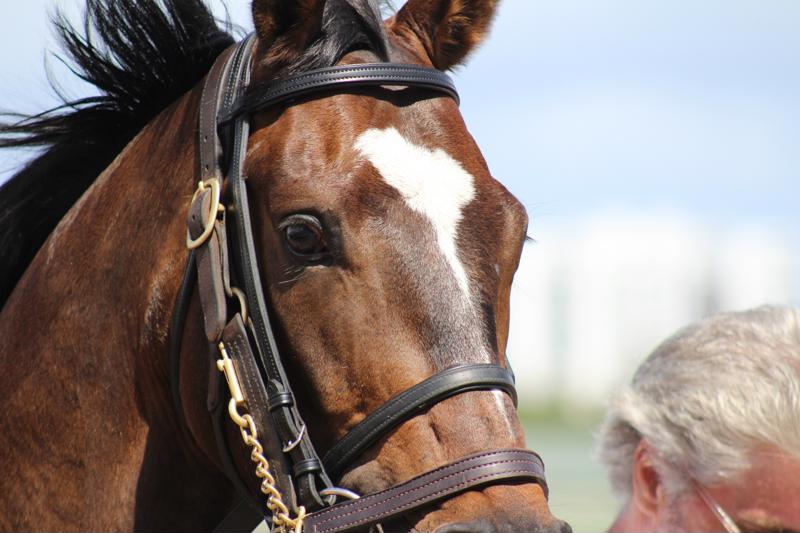
Sometimes, spending time in the company of horses can have the healing effects veterans need. Idaho news provider the Times-News recently profiled Horse Therapy, a group that offers free sessions to veterans to help with mental health issues. The organization earns its funds through a thrift store, which opened in March to support veterans programs and allow them to be offered without cost.
According to the Times-News, Horse Therapy began with a program to help troubled young people but expanded its mission to assist local veterans. It combines equine therapy with modern techniques that scan activity in the brain and generate soothing tones to counteract aggravation. By helping patients meditate and relax, the sounds are being used to assist veterans dealing with post-traumatic stress disorder. Symptoms such as anxiety attacks can be extremely disruptive in day-to-day life, highlighting the importance of seeking out treatment.
Programs around the country
The Idaho-based program above is far from the only organization committed to using horses as therapy animals. The Associated Press profiled another such group, the Right Path Riding Academy. That organization, based in Drumwright, Oklahoma, received a grant from the Disabled Veterans National Foundation to keep its Hooves on the Ground classes for veterans going.
When veterans come to Right Path, they learn the basics of horsemanship. Over the course of the program, the horses can have a healing presence, helping participants come out of their shells and engage with others more. For those suffering from PTSD and other afflictions, that transformation is particularly important and potentially life-saving.
A third such equine therapy organization exists in the towns of Harvard and Poplar Grove in Illinois. BraveHearts bears the distinction of being America's largest horsemanship group catering to veterans, the Northwest Herald reported. It is a pioneering organization in the field of equine therapy, with some of its work being adapted into curricula by the Professional Association for Therapeutic Horsemanship International.
Paddy McKevitt, director of operations at BraveHearts, told the news provider that the healing that occurs in participants does not occur at a uniform speed. While everyone reacts to the horses differently, however, the results have been positive and encouraging, with trust and communication emerging and lives being changed for the better. One veteran, Mitchell Hedlund, told the Northwest Herald that without the help offered by the program, he believes he would be one of the many veterans to fall victim to suicide. Working with horses literally saved him.
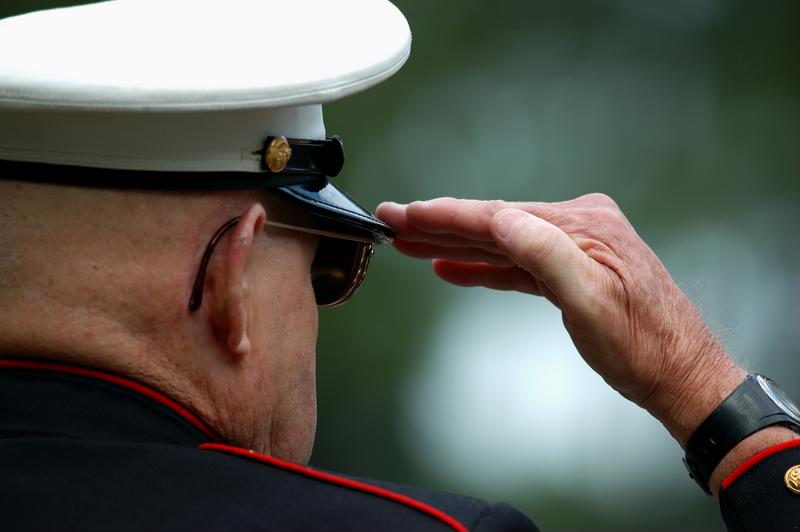
Running across the country is a difficult task for anyone to complete, let alone a 93-year-old service veteran. However, that's just what World War II vet Ernie Andrus did over the course of three years, starting in San Diego and concluding his journey in St. Simon's Island, Georgia.
Andrus, who served as a pharmacist's mate in the 1940s, ran to raise money for the upkeep of a WWII-era amphibious tank-landing ship known as the LST 325, which is currently housed in Indiana, according to a report from the San Diego Union-Tribune. The hope was to gather enough money to send it back to France for the 75th anniversary of D-Day in 2020. The run took three years and covered more than 2,600 miles.
An inspirational journey
An estimated 200-plus people greeted the vet in Georgia, and since he began his journey, he's run with potentially thousands more, according to a report from Georgia television station WTOC. Andrus is the oldest person in U.S. history to run the breadth of the country.
He ran three days a week over the course of his journey and inspired many along the way, the report said. He told the station he got the idea when he received plenty of local news attention for running in a relay race about five years ago.
"If an 88-year-old man gets this much attention in a relay race, how about a 90-year-old running coast to coast? So I decided right there, I'm gonna do it," Andrus told the station.
What's the takeaway?
Many Americans should take to heart the fact that Andrus ran to raise money for a cherished piece of military history. Veterans do plenty to help each other and their communities on a regular basis, and acknowledging those efforts is vital.
It should come as no surprise to first responders and their families that stress can be a major factor in their lives. Studies show that pretty much all of these workers, whether EMTs, police officers, or firefighters, experience some levels of stress as a result of their jobs.
However, about 40 percent say that the stress is moderate or worse, and if left untreated these issues can even result in post-traumatic stress disorder. That’s particularly a risk factor for those working more than one first-responder job, such as firefighters who also work as EMTs. Fortunately, many businesses or government organizations that employ first responders also provide them with access to support groups, training, and mental health care that can help them better deal with those concerns.
What else can be done?
There are also many groups that work with first responders and veterans – another big group of PTSD sufferers – to give them the chance to disconnect from the stresses of what they’ve had to deal with through their jobs. These include counseling, but also day trips, sports leagues, and even assistance in getting a service animal trained to help people cope with stress and PTSD.
Something to talk about
Of course, it’s not always easy for people to find someone they can talk to about these issues. For that reason, even those who feel they can’t reach out to friends, family, or co-workers can call specially designed crisis hotlines that will help connect those suffering from stress with the assistance they need.
The more help first responders can get when it comes to dealing with stress, the better off they and their loved ones will be. And fortunately, all it usually takes to find a rich array of resources in this regard is reaching out.
There are many different ways individuals and communities can show their admiration and respect for the first responders who keep them safe. Firefighters, police officers and paramedics put their lives on the line in the course of their everyday duties, and it's always heartening to see efforts made to salute their service. Whether these gestures of thanks take the form of one-off events or lasting monuments, the message will come through loud and clear: First responders render valuable services to their communities, placing the common good above their own safety. Below are two tributes to these sacrifices.
Chairs serve as memorials
Memorials to fallen first responders can take a number of forms. According to Texas news station KSAT, a nonprofit in San Antonio called Saving a Hero's Place is pioneering a new type of monument: wooden chairs. These symbolically hold spots for the fallen police officers, firefighters or paramedics they are dedicated to, ensuring the memory of those individuals lives on. The artisans behind the project explained that the finished pieces are often emotionally received by family members or departments that have lost someone and that their creative process has a powerful effect.
According to the news provider, Michael Pullen, a chaplain at the nonprofit group, believes the chairs are a powerful way to carry on the legacy of the individuals whose names are engraved on them. The materials for the chairs are donated and they are given away without cost. Instead of being mass-produced, the memorial chairs are each crafted by hand, which means they have a personal touch. Saving a Hero's Place has made more than 30 chairs so far.
"There's a lot of time to think about what the officer did," Pullen told KSAT. "Not necessarily how he died, but how he lived serving his community."
Eagle release salutes first responders
Another recent example of a unique and heartfelt salute to veterans comes from Utah, where the Southwest Wildlife Foundation plans to release a rescued eagle back into the wild in a ceremony dedicated to first responders. The organization's founder and CEO Martin Tyner explained that the conservation group hopes to highlight the bravery and dedication of emergency personnel through the symbolic act of returning the bird to the sky. He said that the natural beauty of the area where the eagle is being released, in the mountains overlooking Cedar City, Utah, should create a moving spectacle.
Join us for 1st Responders Eagle Release Fri 8/19/16 @ 4pm @ the C Overlook. #1stresponders #eagle #rescue #release pic.twitter.com/cYI2rzoLkp
— SWFgowildlife (@SWFgowildlife) August 15, 2016
Tyner stated the bird in question has been in the Southwest Wildlife Foundation's care since July. Suffering from the effects of heat and almost starving, the eagle was saved by care from the group's members. Over the past month, the golden eagle regained its strength, and now it is set to become part of the tribute to first responder bravery. Tyner noted that numerous native traditions ascribe prayers and wishes to eagle feathers, making it a fitting choice for such an event.
The eagle release and chair donation projects demonstrate that organizations thinking outside of the box can show they appreciate first responders' efforts and sacrifices through unique displays.
Seeing parades and other events that honor veterans is a common occurrence, but that shouldn't diminish the importance of these gatherings. Publicly celebrating military personnel is a great way to show that their commitment and sacrifice for their country is appreciated. People from all walks of life can take part in these celebrations, bringing communities together to salute the heroes in their midst.
Communities can host these events, and they can be organized around patriotic holidays or become local traditions in themselves. There's plenty of room for variation, and every town or city can salute its veterans in its own way. Here are two recent examples of this type of celebration in action:
Iowa State Fair parade salutes all military branches
The Des Moines Register recently reported from the Iowa State Fair, where a massive parade contained groups honoring veterans from many different branches of the military. The parade consisted of military bands and color guards, as well as delegations from Iowa Veterans of Foreign Wars chapters. Eight members of the Paralyzed Veterans of America joined the parade in wheelchairs, drawing applause from a crowd eager to thank them for their service.
The news provider noted that the Iowa State Fair is generally very supportive of the U.S. military. In fact, even when it shut down for four years during World War II, the grounds ended up helping the war effort, acting as a supply depot for the Army. These days, the annual parade follows the outer edge of the Iowa State Fair and lasts over an hour. The fair is a place where veterans often receive spontaneous thanks for their contributions.
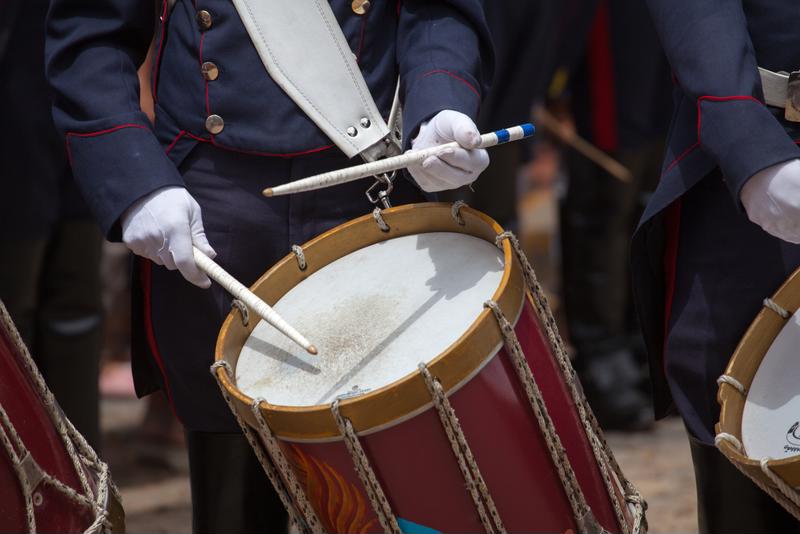
As far as events to honor vets go, this is a large-scale display. The Register noted that in addition to the color guards, bands and veterans organizations, many types of vehicles and horseback riders participate, as well as volunteers holding a massive U.S. flag – 20 feet by 38 feet. These patriotic displays should serve to reassure veterans that their contributions are close to people's hearts.
Communities of all sizes
While the Iowa State Fair is a major example of a parade to honor service members, these types of events can be held in small towns and cities with a great deal of success. The Post-Journal in Jamestown, New York, recently reported that the neighboring community of Randolph has held its first parade for Randolph Veterans Appreciation Day.
The news source explained that the gathering saw participation from veterans of conflicts from World War II to Iraq. The event concluded with a ceremony to honor the vets at the town's fire hall and was declared a success by organizers. Due to this positive reception in the parade's first year, it will soon become an annual event – Randolph aims to hold a second Veterans Appreciation Day next August. It's a positive sign that no matter the size of the community, chances are there are veterans living there, as well as groups and individuals ready to salute them.