
Over the past few years, more has been done at both the state and federal levels to assist veterans as they re-integrate into civilian life and deal with the aftereffects of their service. And while there have been plenty of bumps in the road during that time, the fact is that more is now being done than there has been in some time, and the government's efforts aren't going to stop soon.
President Barack Obama made this point and others in a speech to the annual convention of the Disabled American Veterans this week, according to a report from the Associated Press. While Obama was in office at the time the massive wait lists and documentation backlogs at the U.S. Department of Veterans Affairs were uncovered, he noted that his administration has also done more to cut down those problems since the revelations, and that veteran homelessness has been significantly reduced during his presidency.
A big announcement
Moreover, Obama also noted that the U.S. government is now more than halfway through its goal of building a database of health care information for every veteran nationwide, the report said. That, in turn, should go a long way toward helping to shore up the kind of care to which veterans have access, regardless of where they seek it. And in general, this comes at a time when many in the veterans' community already have a strong opinion of the treatments they get at the VA, just not how long they sometimes have to wait to get it.
"We know that even though the access is a problem, health care in the VA is very good," DAV executive director Garry Augustine told the news organization.
That could, in theory, still pose some problems going forward because demand for health care among vets grew 13 percent in the past year alone, and that number could continue to rise, the report said. Add in the backlog of disability claims the VA still has to process, and it's clear issues still linger. While only about 80,000 remain from the initial backlog number of 610,000, there are still hundreds of thousands more appeals left to review.
More steps being taken
Meanwhile, even as the Obama administration touts its achievements with respect to veteran care, more work is being done on their behalf in Washington as well, according to U.S. Senator Amy Klobuchar, a Democrat from Minnesota. Writing in the St. Cloud Times, she said that she and Iowa Republican Sen. Joni Ernst recently introduced a bipartisan bill that would allow veterans to have more personal power when it comes to scheduling health care treatments at the VA. As it stands now, wait times can easily exceed 90 days, and that number may be on the rise.
With all this in mind, it's important for veterans to know what it is that government officials are doing to help them when it comes to getting the care they need. Everyone in Washington and elsewhere would agree that veterans have sacrificed a great deal already, and therefore deserve the best possible treatment when their service is done.
Veterans have to deal with unique physical and mental stresses as a consequence of their demanding roles. The extent of the issue becomes more obvious with the release of every study on health and the military. That said, knowing about these problems is much better than letting them go unseen, and thus the wave of disclosures and increased focus on detection and prevention is a welcome development.
According to HealthDay News, one of the prominent challenges facing service members is troubled sleep. A good night's rest is vital to maintain overall well-being, but that can be an unreachable goal for some veterans, at least without treatment. As with all recurring issues affecting military personnel, the quality of their sleep is worth continued focus.
New report highlights sleep issues
The news service reported that the American Academy of Sleep Medicine carried out the study. The research covered 11 years, and the many veterans receiving health care from the Veterans Health Administration were the subjects. Over 9.7 million cases were studied, leaving the researchers with a huge pool of data. They concluded that veterans are six times more likely than members of the population at large to possess sleep disorders.
While the survey did not stipulate that post-traumatic stress disorder contributes to sleep problems, HealthDay reported that the researchers did find disorders were far more common among veterans afflicted with this condition.
"Veterans with PTSD had a very high sleep disorder prevalence of 16 percent, the highest among the various health conditions or other population characteristics that we examined," said James Burch, author of the study, according to the news provider.
The breakdown of disorders observed showed that there is no one sleep problem afflicting veterans. Instead, they can expect to face everything from insomnia to sleep apnea. HealthDay explained that chronic conditions not tied to sleep do tend to coincide with increased sleeping problems. The researchers stated that based on what they observed during the study period, veterans' sleep should be more carefully managed.
Mental health programs increasing
The suggestion that physical problems such as sleep disorders are tied to mental health outcomes puts more importance than ever on efforts to help veterans suffering from the effects of stress and trauma. Fortunately, many across the country are launching programs to do just this. Texas lawmakers Jose Rodriguez, Joe Moody and Cesar Blanco recently penned an El Paso Times column explaining their state's recent initiative to set up a center that will assist the service member community. It could serve as a model for similar project in other states.
The authors noted that the Texas Veterans + Family Alliance will now respond to mental health issues with the support of members of local communities. One of the program's signature features is a course that will equip veterans and their family members with mental health first aid, procedures that can help when conditions become unbearable. The training centers on issues that veterans frequently deal with, meaning that it will be highly relevant to the types of situations many service members encounter. Such training may create a more hospitable environment when military personnel come home.
Working as a first responder is one of the most difficult career paths an individual can take. Firefighters, police officers and paramedics find themselves in situations that put them under intense strain as part of their regular duties, and they need to find methods to cope with the added pressure. In this way, they share a great deal with active duty military personnel, who also spend plenty of time in dangerous conditions. As such, they are affected by some of the same problems that haunt veterans.
Coping with PTSD
The Aspen Daily News recently reported on efforts to help first responders deal with post-traumatic stress disorder. The news provider explained that, like veterans, emergency relief workers have a heightened risk of committing suicide – 10 times higher than the average U.S. adult. Bringing this rate down may rely on managing issues such as PTSD. Fortunately, some programs do exist to manage mental health and keep individuals comfortable, even when they have to face traumatic circumstances while on the job.
According to the Aspen Daily News, Michael Ferrara, former Aspen Ski Patrol member, paramedic and sheriff's deputy, is behind an effort to keep first responders mentally healthy. He told the news provider that he had his own difficult experiences suffering from PTSD in 2009, and that the issue is sometimes denied the focus it deserves because it is not a physical disorder. Mental health can be more difficult to recognize and diagnose, but it demands attention, and Ferrara's series of lectures is designed to shed light on PTSD in the community.
Discovering and mastering coping strategies and treatment methods for traumatic mental health issues are important steps for first responders. Ferrara explained to the Aspen Daily News that he recommends getting fresh air, as well as spending time with animals and staying physically active. He stated that people who have been exposed to trauma should try to depersonalize the incident and not take it to heart – and they must not become to isolated. Being alone can be very harmful to mental health, especially when a negative event is preying on an individual's mind.
Healing those with mental trauma
In addition to taking better care of their own mental health, first responders around the nation are learning to better serve those in the community who are suffering from related afflictions. According to Hartford news source NewsTimes, local paramedics and other officials have begun to receive mental health first aid training. This program is designed to help them respond in situations such as providing medical care to those who have made suicide attempts.
Participants in the course told NewsTimes that the training has helped them relate to individuals who are at risk and engage in situations that it feels more natural to avoid. If first responders receive direct lessons in dealing with mental illness, they may be able to step into situations beyond their normal purview and bring more people home safely. It's clear that between the struggles of the population at large and the trauma-induced challenges facing emergency personnel themselves, increased focus on recognizing and treating mental illness is worthwhile.
In an ideal world, military personnel returning home from active duty wouldn't have to worry about employment. That said, many individuals do find it difficult to slip into civilian jobs when their time in the service comes to an end. This is why it's important to seek out and publicize industries and programs that help veterans find work. A job is a cornerstone of a settled life, and when service members have fewer troubles finding work, the whole transition to home front life is easier.
Trucking industry makes direct pitch for vets
A recent Arkansas Democrat-Gazette report showed that trucking organizations are making efforts to get veterans as drivers, not just for the sake of supporting these individuals but because they tend to excel in those roles. The news provider spoke with leaders of transport companies who noted that skills honed in the military, from logistics knowledge to detail-oriented thinking to the ability to manage oneself independently, help drivers become top employees.
"Attention to detail, in layman's terms, is noticing things that other people would walk past and just not see. We have to constantly monitor our truck, inspect it and make sure everything is what it's supposed to be," veteran and truck driver Nathan Waite told the Democrat-Gazette. "I would also add self-discipline. It does take a lot of self-discipline to drive a truck, be on time, and get up out of bed when you're supposed to. They definitely teach you that in the military."
The news provider explained that there is now a joint program between transport industry organization FastPort and the Hiring Our Heroes Foundation, a U.S. Chamber of Commerce agency. The Trucking Track is meant to create connections in the industry, so that veterans may match up with companies eager to hire them. This mutually beneficial situation will have more trucks out on the road and fewer veterans looking for work.
That isn't the only program designed to bring military personnel into trucking, either. The Democrat-Gazette mentioned Troops for Truckers, a Veterans Resource Network service. This program includes the option of training, enabling veterans to move right into the transport field, even if they didn't perform similar work before or during their time in the armed forces.
Occupational programs popping up
Of course, fields beyond transport and logistics also have roles for veterans, and there are more general programs to help soldiers become civilian employees. California news provider Valley News recently highlighted California Employment Development Department funding for workforce training. The EDD's director, Patrick Henning Jr., cited military-honed traits such as discipline and dedication as reasons why employers should work with veterans.
Valley News reported that the funds described above, distributed by the Riverside County Economic Development Agency, have prepared military personnel for roles in numerous civilian fields, with construction, health care and the energy industry among them. With strong skills from their days in the armed forces and programs designed to help them find new employment, veterans have something to look forward to when they return home. Communities with good job training opportunities are helping these individuals enter a new stage in life.
There are many different ways to show appreciation and support for the firefighters, police officers and paramedics who put their lives at risk to help others in need. People all over the nation have shown great creativity and dedication in putting together events large and small to tell these first responders they are valued. Three quick looks at such efforts follow, and there are many more going on every day.
Helpful group for spouses sets up in Virginia
Virginia news channel WTKR recently focused on Backing the Thin Line, a group founded by Megan Stewart, herself the wife of a police officer. The TV station gave Stewart its People Taking Action Award for her efforts, which include organizing several helpful gatherings aimed at easing the burdens placed on the families of first responders. In the past, this has taken the form of fundraising to help relatives of those who have died in the line of duty, in addition to more general social get-togethers.
WTKR reported that Stewart's group also gathers presents for children at the holidays, and it recently took part in a training exercise for first responders hosted by the local elementary school. Backing the Thin Line volunteers handed out water to police and fire personnel while they participated in the simulated action.
A 'thank you' from local pupils
Derby, Kansas's, Derby Informer recently detailed another project designed to make first responders feel appreciated. This effort featured crafts by children at a Derby Presbyterian Church summer program. The kids at the program range in age from preschool to fifth grade levels, and they used oversized pieces of poster board to create large thank-you cards.
"The first responders were very appreciative and the kids loved seeing them here," the church's Christian education director, Michael Gutzmer, told the news provider. "It was a great time."
"Even simple gestures can make first responders feel appreciated."
The Informer noted that 11 emergency personnel were there to receive the children's thank-you cards and presents of candy, giving them stickers in return. The first responder group consisted of police officers, firefighters and one paramedic. This type of community connection shows that even simple gestures such as cards can make first responders feel appreciated.
Free meal to show support
Community meals shouldn't be overlooked among the many ways to thank local emergency personnel. Dealing with demanding schedules, first responders will have had to miss a fair few home-cooked meals in their years of service, so this gesture could be greatly appreciated. Dayton, Ohio's WHIO recently described one such gathering at the Fairborn Senior Center.
The news provider explained that no single group was behind the meal – it was conceived by an alliance of companies and churches, each wanting to do its part to make sure the first responders in the community know their service is valued. This demonstrates that even when individuals or groups don't feel they have the resources to launch such a venture, they can band together. However these events are created, they are a practical outlet through which to voice support for the police, fire and EMS personnel who keep their areas safe when emergencies strike.
Today, the problems and challenges facing veterans returning from active duty are drawing attention, perhaps more than ever before. This is a positive development, as if the issues were going unseen, many military personnel would be more likely to suffer without the help they need. A wave of grassroots efforts around the country is becoming evident, with organizers hoping to take action and assist the veterans in their communities. For inspiration, these rising events can look to some of the long-running gatherings setting the mold for veteran care.
"The event offers services to approximately 1,000 veterans every year."
San Diego event reaches 29 years
Fox 5 San Diego recently reported that Stand Down For Homeless Veterans, a program that runs over three days every year, has returned for its 29th year. The event, founded in 1988, offers services to approximately 1,000 veterans every year, dealing with some of the most vulnerable individuals in today's society – those who have returned from war only to end up with no home.
There are several different facets to the program, according to Fox 5, with clothing, housing and counseling needs all being addressed. It has become a blueprint for similar events in other cities, as the problem of homelessness among veterans is not limited by geography, and the numbers of individuals living with no shelter remains high. San Diego's Point-in-Time Count of homeless veterans found 584 in shelters and 573 unsheltered. Though the numbers are still high, they are moving in the right direction – 631 were unsheltered last year.
The news provider noted that Stand Down is accompanied in the San Diego area by Housing Our Heroes, a joint program between federal and local organizations, with a bill totaling $12.5 million. With that much funding muscle, organizers can help the homeless find permanent living situations. So far, 18 families have received homes through the effort, with 130 more individuals signed up and qualified. Between the families housed already, their are now 34 children with roofs over their heads.
Assistance in Georgia
A related program to help homeless veterans recently began in Georgia, according to local news source South Metro Neighbor. Stand Up For Stand Down is a drive to collect personal care items and toiletries to be given to the homeless in the area. The donation period lasts for months, from July through early September, then the products collected are handed out at affiliated Stand Down events similar to the San Diego version mentioned above. By inviting the public to donate toiletries in small and travel-sized packages, the Stand Up for Stand Down drive gives people an easy way to get involved when they want to assist the homeless with everyday needs.
According to the news provider, the 2015 version of the event created a large stockpile of personal care products, which were distributed to over 1,500 individuals throughout the state of Georgia. The extreme vulnerability of homeless populations calls for varied and determined efforts from those able to help. Fortunately, organizations and events such as these exist to fill that requirement – hopefully more will take up the call and strive toward the ultimate goal of ending veteran homelessness.
First responders' duties bring them into harm's way every day. Police officers, firefighters and paramedics put themselves on the front lines of dangerous and traumatic events, and it's common to wonder how you can thank these individuals, perhaps lessening the emotional burden of their work.
The following list is just a sampling of the many ways you can show a first responder that you care. These are good ideas to start with, and apply at any time of the year.
1. Cook a meal
Bringing home-cooked food to the local police or fire station can show the local first responder community that you care. Day-to-day life as a police officer, firefighter or paramedic can be stressful and the schedule irregular, meaning that home-cooked meals may be a luxury that will make these first responders grateful. And if you take the meal over yourself, you have a great chance to say a verbal thanks as well. Of course, since an alarm can sound at any time, it may be best if the meal is one that can be returned to later if the diners have to leave off in the middle.
2. Donate to a good cause
There are numerous charity drives in any given community to support the fire departments, police forces and more. A gift to one of these causes can make a material difference in the lives of first responders and the family members. Even if you don't possess the material means to make a big donation, there are plenty of ways to help charities, including organizing or volunteering at a drive or other event.
3. Send a letter of thanks
These days, many people don't take the time to write letters – electronic communication has driven paper out of favor. This means that sending a physical letter thanking first responders for their service may take on greater importance, feeling more personal, permanent and heartfelt than email. If you gather multiple letters from the community and deliver them all at once, the impression on the recipients could be significant.
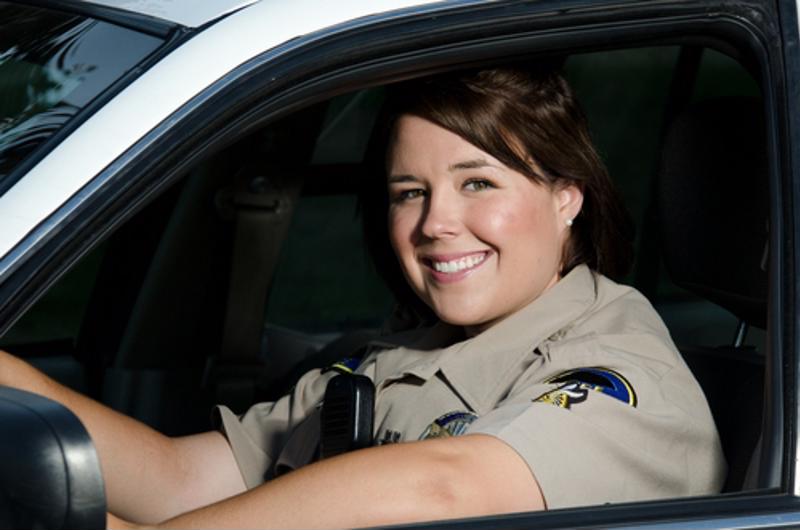
4. Send a practical gift basket
A gift basket is a classy way to express thanks. If you customize one of these presents to suit the tastes and needs of the local fire department or police force, it could be an incredibly thoughtful choice, one that will make your gratitude clear. Such a basket could include gift cards to restaurants in the area, allowing first responders to relax and unwind with good food between their high-stress assignments.
5. Use word of mouth
When you have a good experience with local first responders, spreading the word either online or in person can do a great service to the department. It's not a direct thanks to the police, fire and paramedic personnel, but speaking well of these individuals is a gesture of gratitude, one that is easy and impactful.
6. Just say 'thanks'
Just about every day, you likely pass police officers, firefighters and paramedics going about their daily business. Just saying a simple "Thank you for your service" can be a great way to show that individual you respect and appreciate what he or she is doing for the community. It's extremely simple, and could make a first responder's day.
Post-traumatic stress disorder is one of the most prominent and dangerous threats facing veterans today. When affected by this serious psychological condition, coming home from active duty becomes exponentially more difficult. Thankfully, resources are being directed toward programs and solutions that may be able to spare veterans from PTSD's most serious effects.
The use of therapy animals is one of the methods rising to prominence to help individuals suffering from trauma. The most common image of an animal companion is the faithful service dog, but some of these programs have taken on a different character, as there are many ways to treat PTSD.
Parrots as therapy animals
CBS recently shed light on an underexposed corner of the therapeutic world, pointing out that parrots are being used as therapy animals in programs for combat veterans. The birds bond with their human caretakers, with the connection helping to form an oasis of calm. For those suffering from stress and the after-effects of traumatic experiences, this type of quiet time caring for an animal may be just what they need to regain some equilibrium.
"They've taught me patience, they taught me trust. They taught me all about how you can be happy and playful even in the midst of pain," Coast Guard Reserve veteran Lilly Love told CBS. Love lived through a helicopter crash that killed many others and dealt with depression.
Lorin Lindner, founder of animal sanctuary Serenity Park, explained to the news provider that interacting with birds can bring out feelings of calm and softness that may be hard to access for those dealing with trauma, even in other types of therapy. The connection between human and animal can serve individuals in ways that conversations with other people cannot always accomplish. This shows the value of therapy animal programs relating to PTSD
CBS noted that the birds used as service animals tend to have had traumatic experiences of their own. Domestic parrots need frequent care, and when they live longer than their owners, they may end up cast out and cut off from that attention. Receiving that much-needed upkeep can soothe the birds, even as they help bring calm to the veterans feeding and grooming them.
PTSD receiving consistent attention
The use of therapy animals isn't the only approach currently being taken to counter the harmful effects of PTSD. Thankfully for veterans suffering from the condition, many events have been organized in the past few years to ease their burden. Pennsylvania-area news site Lehigh Valley Live recently focused on one such project, the Carry The Fallen Ruck March. This is a hike of about eight miles, with each participant carrying gear that stands in for the emotional burden of PTSD.
The news provider explained that the ruck march is a non-profit endeavor, raising money for Active Heroes, the owner and operator of a retreat for veterans. The event is open to people of all ages, with children as young as 7 marching alongside adults, all united in their attempts to raise awareness of and money for those who have returned home suffering from PTSD. Through more community events such as these, hopefully more individuals will find the help they need.
When veterans fall on hard times, there are often many ways in which they can get help. However, while plenty of organizations exist to help veterans receive anything from medical care to job opportunities, it's not always easy for those former service members to track down every option available to them. To that end, a non-profit in Arizona recently created a directory to help those in the Grand Canyon State get a better handle on things when they need a leg up.
There are currently more than half a million veterans living in Arizona alone, making it fertile ground for a project like the Veterans Directory, according to a report from the Arizona Republic. On the site, veterans can look up a number of different services for both themselves and their families, as well as learn about all the veteran-owned businesses in their area that they can easily support. The site has been open since May, and has data about job opportunities, training classes, financial help, legal advice, events for veterans, and more.

How it started
The Veterans Directory began when a Vietnam vet approached its CEO, Danita Rios, at another veteran's funeral and mentioned that the deceased's death (a suicide) might have been avoidable if the victim had better access to mental health services, through a "Yellow Pages" type of website, the report said. Four years later, the site was a reality, with plenty of fundraising and prep work in between. Currently, 90 percent of the people who work for the site or serve on its board are veterans. Private contributors, donators, and other funding helped get the site off the ground.
"It's been a beautiful, beautiful creation so far," Rios told the newspaper. "It can be a daunting, time-consuming task to comb through the hundreds of websites to find the right information about services. The Veterans Directory makes it easy by curating all the relevant information veterans in Arizona need when it comes to thinking about what's next."
Ongoing needs
Any veteran-owned businesses, or services that help former service members in some way, can be listed on the site, the report said. However, they have to submit themselves for approval through a form available through the Veterans Directory itself, and will be added after a review of their credentials.
The fact of the matter is that veterans face a lot of challenges, and sites like this can go a long way, not only toward helping them take small steps forward, but potentially changing their entire lives. That's because something as simple as a job with a good salary can often mean the difference between life and death for those who are struggling with some of the most common symptoms that can befall vets after they get out of the service. Issues like PTSD and depression need to be addressed as quickly and directly as possible. Fortunately, there now seems to be a growing number of options, including the Veterans Directory, to help them do just that.
It's always heartening when protection and support for active duty service members and veterans are added to state and federal laws. These regulations show that lawmakers are aware of the issues that affect today's military personnel and are doing something to help.
The challenges that come with serving and coming home from active duty are well known and documented, and this means there is plenty of scope to take action and step up aid at both state and national levels. The United States prides itself on being a country that looks after its veterans and current military members, and a few recent laws should help it live up to that promise.
Two new bills in Massachusetts
As the Eagle-Tribune recently reported, Massachusetts has recently passed not one, but two laws designed to help with everyday needs faced by military members in the state. The first piece of legislation eliminates state excise tax on vehicles. The bill was sponsored by state Representative Diana DiZoglio, who heard from a constituent that when military members are on active duty, their vehicles rack up high tax bills back home. Creating the new exception allows a little more financial peace of mind for service personnel.
The news provider reported the bill has now become a law after getting the approval of Governor Charlie Baker, and applies to members of the military deployed outside of Massachusetts over a period of six months or more. The fact that the new law deals with a single tax shows that it was conceived and passed with a specific problem in mind.
As for the second new military-focused bill, the Eagle-Tribune explained it is a wide-ranging bill seeking better conditions for veterans. It will achieve this end by authorizing the creation of a commission. The new body is meant to investigate pressing matters for returning service personnel, such as the risks of suffering from depression, anxiety or post-traumatic stress disorder. Broader topic areas to be addressed by the committee include the transition process from active duty soldier to civilian, with all the challenges that entails.
Medical records fees waived in Rhode Island
Rhode Island newspaper The Breeze recently explained that the state has just passed its own piece of practical, veteran-friendly legislation. The Rhode Island bill is designed to ensure that veterans applying for benefits do not need to pay money to access their medical records. One of the bill's sponsors, state Senator Donna Nesselbush, explained that the law is meant to create a clear pathway to benefits, a much-needed consideration when individuals return home with pressing medical needs.
The news provider laid out the fees covered by the law, including processing, retrieval and copying fees as well as postage. Language in the legislation also insists that agencies process requests quickly – within 30 days of submission. This is yet another bill that has a narrow scope but could be a huge help for the many veterans returning to their communities and applying for valuable medical services that can improve their quality of life.