
This year has been a big one for veterans across the nation, with communities and organizations recognizing active and retired service members in various ways. In addition to the many memorials and events taking place to honor Vietnam war veterans, there have been other instances of communities celebrating their local veterans.
Warmth in Arizona
AZCentral recently reported that volunteers stitched 21 quilts and gave them to the MANA House, a transitional housing establishment devoted to assisting homeless veterans in moving into a new abode. The news provider also noted that the group had already shipped a large batch of quilts over state lines to the Eagles Healing Nest for Veterans in Minnesota.
Arizona has among the highest populations of veterans in the country, and the state is no stranger to large and small events that aim to show gratitude to those who have served in the military. For example, AZCentral noted that Phoenix will host a history program that involves the Spirit of St. Louis at the end of this month with one of the descendants of Donald Hall, an aircraft designer who had participated in the project.
A heart-warming story in Iowa
Social media posts can have a major impact on communities and the nation itself. One such post on Facebook led a town to get behind a Navy veteran who had passed away in Marshalltown, Iowa, the Des Moines Register reported. According to the news provider, the Mitchell Family Funeral Home had discovered that veteran Charles Lanam did not have any family at the time of his death, and posted that news on its Facebook page to alert the community.
The source pointed out that the post received about 1,500 shares within about a day, and that his funeral will likely be a packed house thanks to the visibility of the post, as well as the nearly 60 Patriot Guards who will be leading the procession on motorcycles.
"Whether there's two people there or 200 people, Marty decided that this man needed a funeral," Jordan Borcherding, a director at the funeral home, told the Des Moines Register, discussing his colleague's decision to publish the post. "This man served our country honorably and we should honorably serve him with a funeral."
Sometimes these types of local gestures can affect the veteran community more positively than some might think.
Combating the challenges of living as a wounded veteran following service has long been a difficult process, and one that many groups and government agencies have been working hard to push in the right direction. The Wounded Warrior Project estimates that 52,430 veterans have been wounded in the post-Sept. 11 battlefront, while 400,000 are living with post-traumatic stress disorder and 320,000 with traumatic brain injuries.
One particular area of this conversation that has been discussed in many circles of late is the community of veterans who were injured in such a way that prevents them from having children. This February, NPR reported that wounded veterans were being forced to pay for their own fertility tests, which meant many who were incapable of reproducing as a result of their injuries would not be able to afford treatment. However, the tide might be shifting in this conversation.
Senate speaks out
Stars and Stripes reported that the Senate Appropriations Committee had been weighing a bill that would inject roughly $88 million into programs that help veterans foot the costs of reproductive treatments and other procedures such as in vitro fertilization. Introduced by Senator Patty Murray of Washington, the source explained that the money would pass through the Department of Veterans Affairs and give individuals payments of roughly $20,000 for relevant needs.
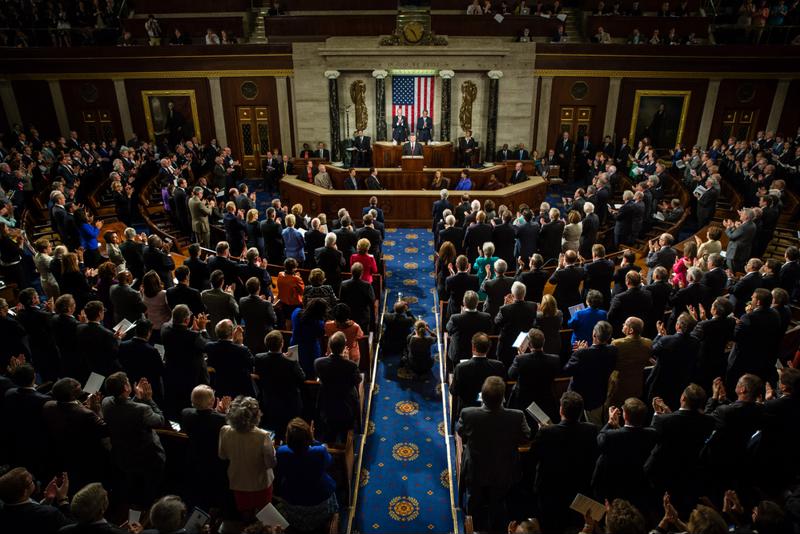
"The amendment I am offering today fulfills the promise to those military families we are asking to sacrifice and serve, and gives them real peace of mind by ensuring that we cover these services in the event of these tragic injuries," Murray explained, according to the news provider.
Stars and Stripes noted that while the bill did indeed pass in the Senate Appropriations Committee vote, the full Senate will need to vote in favor of the initiative to keep it moving along in the right direction.
Assistance available today
This bill would make a big difference in many veterans' lives, and there are other assistance programs that have already been made available to wounded servicemen and women. For example, Military.com explained that special monthly compensation programs, which come through the VA, are available for veterans who have either lost or lost use of a range of appendages while on active duty in the military.
Unemployment has been a major problem within the veteran community at several points throughout the past century, sometimes more intensely than others. Currently, matters are looking positive for veterans who are looking to either work or begin their own businesses as entrepreneurs. Last month, MilitaryTimes reported that last year was by far the most promising one for veterans who served after Sept. 11.
The news provider stated that the unemployment rate hit 5.8 percent on average across states in 2015 for veterans who served in the past 15 years, which is arguably unprecedented given the 7.2 percent rate recorded in 2014. Nationwide efforts, both large and small, are proving successful. The upward trend of veteran employment opportunities still looks positive going into the second quarter of 2016.
Uber's big move
CNET recently reported that ride-sharing giant Uber began a program back in the fall of 2014 called UberMilitary to put veterans to work, and it has been a major success thus far. According to the source, the program has since seen its participation rise to 50,000, with about 25,000 veterans already driving for the company. Interestingly, this particular initiative sought to address more than unemployment within the veteran community.

Drunk driving is sometimes more common in the vicinity of military bases. Uber saw the opportunity for veterans to help would-be impaired drivers get home safely. So not only do the drivers get paid, but they protect the community as well. CNET reported that several members of the UberMilitary advisory board are high-ranking military commanders.
In addition to boosting job opportunities, CNET noted that Uber donated $1 million to veterans groups as part of reaching the 50,000 participant mark.
Fairs sprouting up
The Modesto Bee reported that the Central Valley Job Fair and Veterans Summit that took place in Modesto, California this month was successful in connecting employers and veterans who were looking for jobs in the area. The news provider stated that programs that help to bridge the gap between skills learned in the military and those needed in the private sector could potentially reduce the unemployment rate in the veteran community even further.
Veteran homelessness is a widespread issue that affects communities in almost every state. The National Coalition for Homeless Veterans estimates there to be about 47,725 homeless veterans in the United States, with another 1.4 million at risk of losing their abodes for varying reasons.
Although the federal government and Department of Veterans Affairs have launched major initiatives to lower the number of at-risk or currently homeless veterans, states and local communities are certainly doing their fair share as well. In some instances, groups and local municipalities are getting a bit more creative in their strategies to end veteran homelessness in their areas.
Tiny homes in Wisconsin
The Star Tribune recently reported that a group in Racine, Wisconsin has started to leverage a broader movement called "tiny house" to erect shelters and homes for their veterans. According to the news provider, Veterans Outreach of Wisconsin have taken on many volunteers to so far build 15 tiny houses in a village of sorts that will be home to veterans upon completion.
As a note, tiny houses are popular in the eco-consciousness arena, with many homeowners who want to have the smallest possible carbon footprint choosing to take this approach to their construction. The size does not obstruct the comfort of the home itself, though.

"Up here you will have a lofted bed, and beneath it a couch," Veterans Outreach of Wisconsin Executive Director Jeff Gustin told the Star Tribune. "There will be a desk here in the corner with an outlet. You can put a microwave here and little refrigerator, and over there would be the composting toilet."
This is also by no means a permanent fix for any of the veterans involved. Rather, the source pointed out that the program will last for two years, with assistance in finding permanent housing being available toward the end.
Project in its infancy
The Rapid City Journal reported that a developer in the South Dakota community has purchased the Redwood Motel, which has been unlivable for a while now, and intends to renovate it for veterans. By the end of the project, the developer expects the building to house 34 separate units and just about as many veterans who are without homes currently, the news provider noted.
These types of smaller-scale projects can make all the difference in combating veteran homelessness.
Traumatic brain injuries and post-traumatic stress disorder are major problems faced by millions of veterans every day. While there is a lot of work being done to help address those issues on an ongoing basis, the fact remains that these issues being faced by former servicemembers perhaps does not receive as much attention as they deserve given the gravity of the situation. Fortunately, though, a lot of people are raising awareness of TBIs and PTSD, including many veterans.
Former Army Delta Force officer Josh Collins recently began an attempt at a Guinness World Record in Texas, according to a report from Panama City, Florida, television station WEAU. Back in March, Collins began his attempt to complete the longest trip ever on a stand-up paddleboard, calling it the Veteran Voyage 360. The 360 in this case refers to the fact that he's planning to take the paddleboard around the world, going more than 24,000 nautical miles with a goal of raising $22 million over the 18-month journey. If successful, it would be the first time someone has ever circumnavigated the globe on a stand-up paddleboard.

A huge effort
The first leg of his trip is to go around the edge of the Gulf of Mexico before passing the tip of Florida and heading up the East Coast, the report said. He has, of course, scheduled stops at various locations along the way – which he calls "rally points" – to raise awareness and hopefully some money for the very serious problems of PTSD and brain injuries. His goal is to reach Key Largo, Florida, by the beginning of May and Charleston, South Carolina, in early June.
"The response from folks along the way has been absolutely amazing," Collins told the station. "From Texas, Louisiana, Mississippi, Alabama, folks have let me know that they're supporting. That was fun, but the response has been absolutely great. There's quite a few veterans that have come out and they've let me know that this means a lot and how much it means to them and they're willing to support. It's a tearjerker sometimes when you meet some of those guys along the way that say this means so much to them."
A serious issue
These kinds of efforts can be incredibly impactful, especially where the fundraising is concerned. Often, what veterans dealing with PTSD and brain injuries need is careful attention or medical services that they might not seek on their own, or connections with those in their community so that they feel safe and welcome. The greater the work being put in when it comes to providing this type of support – and others – the better off veterans and their communities will be in the long run. For that reason, whether it's individuals, businesses, or government agencies, more can be done to support millions of veterans who deal with these problems.
Across the country, cities, states, and the federal government have come to recognize what a problem veteran homelessness and poverty has become. Now, more are moving to do something about it. That includes the opening of a new affordable housing facility in Glendale, California – just outside Los Angeles – to help ensure that former servicemembers find housing stability.
Veteran's Village is a 44-unit development that had its grand opening earlier this month, but has actually been accessible to former servicemembers since late last year, according to a report from the Los Angeles Times. When the initiative was first announced, interest among local veterans was immediate and widespread. More than 4,500 local vets submitted applications, and winners were chosen through a lottery system. Veterans of a number of different combat engagements, from all branches of the military, now live there.
"All of our guards are down," Joseph Garcia, a veteran of the Gulf War who is now working part-time as a carpenter and lives at the facility, told the newspaper. "We're like one big family. Whether people were in the Army, Air Force, Marines; we all get along together really well, and we're always covering for each other. We're helping each other with our kids and feeding each other."
A grand idea
The process itself of getting Veteran's Village off the ground, though, began awhile ago, with the city of Los Angeles bringing the idea to a local development firm in 2012, the report said. Construction began two years ago, and was funded through federal tax credits ($13.5 million) and both the City of Glendale and the Glendale Housing Authority ($7 million).
The units range in size and cost to make sure that they're fitting the needs of many veterans regardless of family and economic situations, the report said. There are 16 two-bedroom apartments, 14 three-bedrooms, and 13 one-bedrooms. Rents can fall anywhere from just $466 per month to as much as $1,292. Veteran's Village joins nearby Cypress Senior Living as the two veteran-specific developments in Glendale.
Plenty of support
Data suggests that as many as 4,000 veterans are living on the streets in Los Angeles County alone, which is why these efforts are seen as being so imperative to locals and elected officials alike, the report said. Glendale mayor Ara Najarian told the newspaper that he hopes to see neighboring cities take up the cause as well, because it ends up being money very well spent, and a source of pride for local residents and elected officials. Further, the fact that veterans are living in such close proximity with people who understand them is an additional benefit, because it can give them a sense of belonging and community that they otherwise might not have.
The more efforts that can be devoted to giving homeless and low-income veterans and opportunity to succeed, the better off both they and the communities supporting them will end up being. That's why these initiatives are starting to gain steam around the country.
Veteran homelessness is an issue that has been tackled head-on by state and local governments, as well as private organizations. However, more can always be done to get former servicemembers off the streets, and one group in New Jersey is taking up that challenge – and others – in earnest.
The Citizens-Veterans Advisory Council in Cape May County has only been in operation for three years, but has already helped many veterans find a home, according to a report from the Press of Atlantic City. Specifically, the organization helps arrange temporary housing for veterans while they wait for "emergency housing" provided by the government. Already, its efforts have been a big hit in the community.
But the efforts go beyond just housing, the report said. The group also helps with bills when veterans run short of money, and even buys clothes when needed.
These kinds of efforts can go a long way toward helping veterans avoid the pitfalls that come from difficult financial situations. Achieving stability in their lives after service is essential.
Many veterans are always looking for ways to bring attention to the causes that are important to them, and two intend to take that example to the extreme. A pair of amputee veterans have their sights set on scaling Mount Everest.
Chad Jukes and Charlie Linville, both of whom lost their legs to roadside bombs in Iraq during their military careers, plan to climb the mountain in just two months, likely making them the first combat amputees to accomplish the daring feat, according to a report from USA Today. The men have become proficient climbers since their unfortunate injuries.
"There is a pressure to show the world that I can climb Mount Everest," Jukes, 31, told the newspaper. "To say, 'I have one leg, but I can climb Mount Everest. I have PTSD, but can climb Mount Everest. I have a traumatic brain injury, but I can climb Mount Everest.'"
Interestingly, they aren't working together to accomplish this goal, instead participating in two separate teams, the report said. In fact, they don't even know each other. However, they are likely to encounter each other at least for a little while on their respective climbs. Linville has twice attempted to make the climb before, but ran into difficulties related to natural disasters both times. The two previous attempts were made with the Heroes Project, a veterans group.
These efforts, as Jukes says, show that even disabled veterans can do anything they put their mind toward accomplishing, and are an inspiration to fellow former servicemembers. While life may not always be easy, finding ways to overcome handicaps can be a boon for just about any veteran facing many kinds of issues in their lives.
Thousands of veterans leave the military for life after service every year. A major part of reintegration to civilian society is obtaining a civilian job. However, it can be difficult for former servicemembers to choose which career path they want to pursue. Take a look at some of the best job areas for veterans:
Cybersecurity
As the military become ever-increasingly technological, more and more military members are leaving service with a hefty set of cybersecurity skills. The training they receive during service can be applied to almost any civilian industry, and cybersecurity is currently one of the fastest growing fields. Veterans could apply for jobs such as Chief Information Security Officer, Forensics Investigator, Auditor and others with civilian businesses.
Human Resources
Former servicemembers searching for a career suited to post-military life should consider this career path. During service, military members get plenty of experience with conflict resolution, communications and other skills that make them strong candidates for human resources roles. Additionally, U.S. News and World Report stated that there are about 22,000 human resources jobs available.
Training and Development
If there is one thing that that former servicemembers understand, it is the importance of training. After boot camp and years of drills, veterans know that training molds people into the best versions of themselves. That is why these individuals are excellent in training and development roles. They will take pride in the organization of which they are a part and work hard to lead those around them. Former servicemembers are also good at taking direction and passing along the company message.
First Responders
Calm under pressure, quick workers and seemingly indefatigable: these are all qualities that are expected in both military servicemembers and first responders. Perhaps that is why so many veterans make the transition into careers as firefighters, Emergency Medical Technicians and police officers after service. There are typically plenty of first responder jobs available all across the country for interested veterans.
Finding a job in life after service is not only necessary, it is also a major part of the mental transition back into civilian life. However, finding a job that is well-suited to veterans can make the accomplishment all the more rewarding. By taking the time to speak with a military advisor and compiling a list of jobs that match a given set of skills, former servicemembers can find more meaningful careers in their post-service lives.
Veterans of the Vietnam War were not always treated with the respect they deserved when they returned home from their service. In fact, many were treated poorly. Established in 2012, the National Vietnam War Commemoration was created to recognize the former servicemembers who fought in this war and show them the respect they earned.
Nationwide, veterans of the Vietnam War are invited to attend ceremonies during which they are recognized for their service and given commemorative pins. WSLS 10 News described the front of the pins as having the image of an eagle and markers which were intended to represent the allies in the Vietnam War. The back is engraved with the phrase, "A grateful nation thanks and honors you."
"This is an opportunity for us to stop for a moment and acknowledge the sacrifice and the things that they did for this country," VA Regional Benefits Office director Bradley Mayes told the Boston Globe.
The news source reported that there are about 7 million living former servicemembers from the Vietnam War. The commemoration program's goal is to honor each and every one through the year 2025 by holding pinning ceremonies across the nation.