
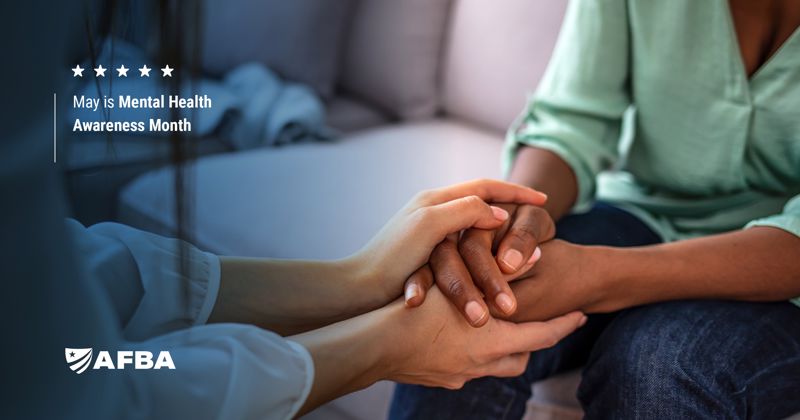
There is still a strong stigma attached to mental health. Mental Health Awareness Month is the perfect time to help shatter that perception and inspire those who need it to seek out help.
One group that experiences increased rates of psychiatric illness are first responders and armed forces servicemembers, especially those who were in combat. Too many suffer in silence, though they don’t have to, as there are many programs available specifically for veterans and first responders alike. Operation Resiliency is one such example that aims to help servicemembers deal with mental health issues by encouraging interaction between soldiers who share bonds forged through combat in the military.
 “The appearance of the U.S. Department of Defense (DoD) visual information does not imply or constitute DoD endorsement.”
Operation Resiliency
The underlying concept behind Operation Resiliency is that soldiers who form bonds in combat can help each other cope with trauma. Operation Resiliency hopes to assist both active duty and veteran service members better manage their mental health by bringing them together with no-cost retreats close to their homes. They also follow up with these individuals in an effort to keep connections strong among these soldiers.
Since the end of 2022, Operation Resiliency has served 468 service members. The project aims to hold six more retreats throughout 2023.
The origin of Operation Resiliency
The concept for Operation Resiliency came from Sarah Verardo, whose husband, Mike, was badly wounded in Afghanistan.
Verardo served in Bravo Company, 2nd Battalion, 508th Parachute Infantry Regiment of the 82nd Airborne Division. This unit fought in the especially deadly Arghandab region in Afghanistan, where nearly half of the soldiers in the team were awarded Purple Hearts. When several of these infantrymen committed suicide, Sarah called retired Army Command Sgt. Maj. Donald McAlister, first sergeant for Bravo Company in the Arghandab. They conceived of Operation Resiliency as part of their joint belief that they should do their part to prevent further tragedy.
McAlister led the first retreat for veterans in Bravo Company in North Carolina, where nearly 100 veterans of the company showed up. He believed he should lead them with full transparency of his own difficult reality to encourage others to do the same. “…Leading by example was being open and honest, and letting them know that mentally, physically, I’ll never be the man I was before…But at the end of the day, that’s OK…I told them, ‘You know, it’s OK for us all to not be OK, as long as we, as long as we acknowledge it. We can see the enemy, see what’s coming at us,” said McAllister, according to a report by the U.S. Department of Defense.
Psychiatric illnesses are not a sign of weakness
One in five adults suffers from mental illness, as claimed by the National Institute of Mental Health. This statistic is the same for first responders and those who serve in the armed forces. No one — no matter how tough the person may be — is immune, and no one can “power through” psychiatric disorder through sheer force of will any more than they can a broken leg.
If you’re experiencing a crisis or if you feel you may hurt yourself or others, you can dial 988, which connects you to the Suicide and Crisis Lifeline. Calling 911 is also an option.
Bravo Company is an example of the strongest among us recognizing their experiences and reaching out to their combat brothers for relief. Programs such as Operation Resiliency give these soldiers hope — which is what they require most in their time of need.
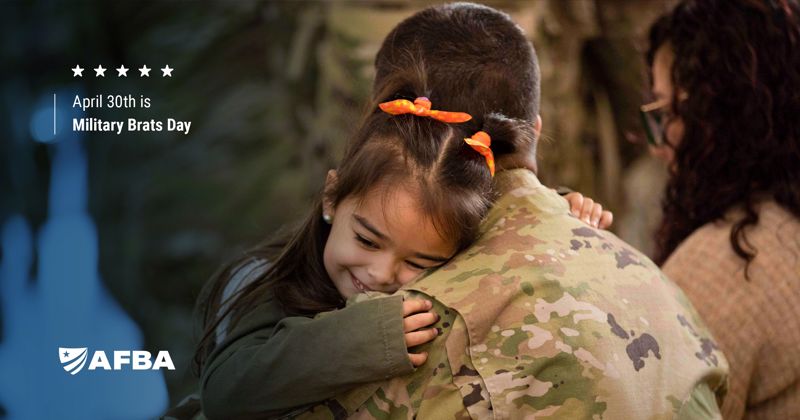
April is Military Child Month, and during this period there’s a particularly special day for children of military families. Military Brats Day, held on April 30th every year, offers a unique opportunity to recognize these “military brats” and bring attention to their uncommon experiences and challenges.
What is Military Brats Day, and where did it come from? Let’s dive in to explore this holiday.
The history of Military Brats Day
Military Brats Day has its origins in 2016 when the nonprofit organization Military Brats, Inc. made April 30 an unofficial holiday to celebrate kids from families in the armed forces. These “military brats” help support their parental servicemembers as proud sons and daughters — so in a very real way, they indirectly serve.
To some, the term “brat” might sound negative, but there’s a good reason why “military brats” are referred to that way. “BRAT” is an acronym originally coined in 1921 that stands for British Regiment Attached Traveler — family members who travel with service personnel. This became a popular way to refer to the kids of military families.
Military Brats, Inc. is currently lobbying Congress in an effort to make Military Brats Day an officially-recognized national holiday.
Military Brats, Inc.
Military Brats, Inc. has an explicit mission “to preserve the culture and heritage of those who grew up military.” Their goal is to bring assistance to military families through donation-led programs, wherever they may be needed.
Operation Footlocker is a program the organization is closely involved in along with the Museum of the American Military Family. Not to be confused with the educational program of the same name at the National World War II Museum in New Orleans, LA, this project aims to bring together military brats across the country at special events. The official Operation Footlocker home page defines it as “an occasion for brats to come together and swap stories, celebrate, and in various ways pay tribute to our roots.”
 “The appearance of the U.S. Department of Defense (DoD) visual information does not imply or constitute DoD endorsement.”
What makes military brats unique?
Military brats typically share certain characteristics that make them (and their upbringing) unique. Families in the armed forces often need to relocate frequently, and this includes the children of the parental servicemember(s). These young people follow their parents wherever they go, and this presents them with some uncommon challenges that shape their character for life. A military brat changes schools an average of six times in life, according to National Today.
This means military brats often have innate difficulties making lasting friendships with peers and don’t always have a place to call their hometown — but it also makes them closer to their families. These children have strong ties to the constants in their lives, not the least of which are their parents and siblings.
Parents who serve in the armed forces often have special qualities that they either inherently possess or learn in the military, such as discipline, honor and responsibility. These values are commonly taught to their offspring, giving another special value to military brats.
It’s not uncommon for these children to live at military bases with their parental servicemember, and this means they have access to the same perks. For example, they can spend time in the libraries at these locations or other shared recreational facilities. They can participate in any morale, welfare and recreational (MWR) activities as well.
Find a way to celebrate and honor military brats on this Military Brats Day
There’s no better time to honor the children of military families than Military Brats Day. Whether you’re a parental servicemember or a military brat yourself — or simply want to demonstrate your appreciation for military brats — use this April 30th to show it.
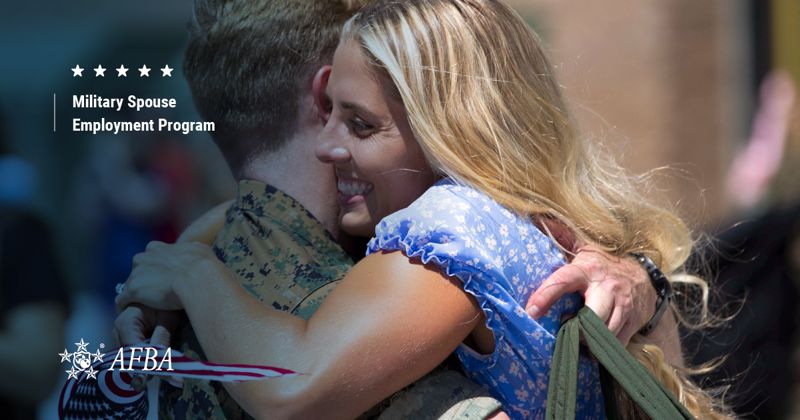
Military spouse unemployment remains high because of frequent relocation. This places undue financial hardship on military families who rely on dual incomes. Thankfully, the issue has been steadily getting better, in no small part, because of the Military Spouse Employment Partnership (MSEP) program.
An introduction to the MSEP
The MSEP was founded in 2011 and has helped over 250,000 military spouses find employment in a wide range of industries. From October 2021 to October 2022, MSEP partners added an additional 40,000 spouses to that list, which is a record number for the program.
In late 2022, the Defense Department expanded its MSEP program to include an additional 70 government organizations, private sector companies and nonprofits. With the new additions, the total number of organizations participating in ensuring military spouse employment has reached over 600.
 “The appearance of the U.S. Department of Defense (DoD) visual information does not imply or constitute DoD endorsement.”
MSEP Engage 2022
Virginia hosted the three-day MSEP Engage 2022 event in late October 2022. Gilbert R. Cisneros Jr., the undersecretary of defense for personnel and readiness, inducted the 70 new government organizations at the ceremony. He also spoke of the advances of the MSEP program. The third day of the event was notable for being the first time MSEP partners directly met with military spouses who were seeking employment.
Why military spouse employment is vital
Like many civilian families, military families often require incomes from both spouses to make ends meet. Unemployment in the general population has been getting far better in the past few years, with the current rate from April to July 2022 at 3.4%, according to the Bureau of Labor Statistics (BLS).
However, the rate of unemployment for military spouses is sitting at roughly 21%, making it a worse problem for military families. This is partially because military families tend to move often, which hinders their ability to keep a job for long periods. Military spouses are often educated, career-oriented individuals. Constant relocation brings with it a host of problems, not just in their financial lives, but also in their careers.
Military spouse unemployment is a known issue among many families in the armed forces, and it’s hurting the number of new enrollments in the military. Because of this and the associated financial burdens, these families have become less likely to recommend military service to their children, according to Mike Haynie, the executive director of the Institute for Veterans and Military Families at Syracuse University.
Hope for military spouse employment
Military spouse unemployment remains a serious issue for both the families themselves and the health of the armed forces as a whole. Satisfaction with the military is vital if service members are to stay on and encourage others, including their children, to join.
A sign of hope for this ongoing issue is in historical statistics: military spouse unemployment was at 30% in 1985 and has dropped considerably with the introduction of new programs and partnerships among the armed forces and private companies. The trend is slowly but surely moving toward more steady employment opportunities for military spouses.
Military spouses should know that they can be as eligible for unemployment benefits as anyone else. While not a complete or permanent solution, this can be a viable option to lessen any financial hardship a military family may be experiencing.
Unemployment is dropping among military spouses due to the MSEP program
New focus on the MSEP and other programs designed to encourage military spouse employment should offer new opportunities for military families so they can feel satisfied with steady employment and the easing of financial hardship.
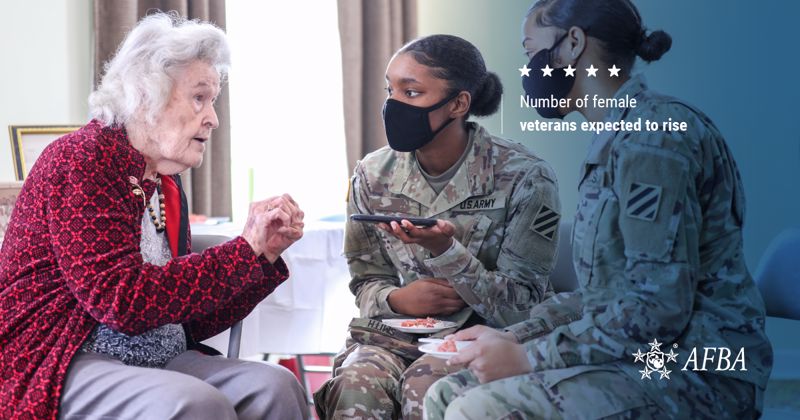
Women are the fastest-growing group in the veteran population, according to a report by the U.S. Department of Veterans Affairs. In 2000, the share of veterans who were women was 4%. By 2040, it’s projected to be 18%.
There are several factors contributing to the rise in women veterans, notably a shift in attitude toward women in the military. But women have found ways to serve even when they’re told they can’t. Here, we’ll talk about the developing trend of women joining the armed forces and touch on their accomplished history.
Increasing opportunities for women in the military
One of the biggest drivers of this increase is a more welcoming environment for women in the military. This was touched on in a previous blog post about Women’s History Month and Lieutenant Colonel Kathy La Sauce, who was one of the first women to serve in the Air Force in an active role. Before then, women had few opportunities in the armed forces, particularly in positions of power.
Times have changed, however. Today, women can serve in any position, including in leadership and combat roles.
That’s not to say women don’t have a long history of serving in some form or fashion. While it’s only been in recent decades that women have begun enlisting in larger numbers and reaching new heights, the origins of women assisting the U.S. armed forces go as far back as the Revolutionary War.
Women have served in the military since the Revolutionary War
 “The appearance of the U.S. Department of Defense (DoD) visual information does not imply or constitute DoD endorsement.”
For some exceptional people, feelings of patriotism overwhelm them so much they’re willing to overcome any obstacle — including being barred from officially serving in the armed forces. Such was the case with women who contributed during the Revolutionary War.
When colonial militias fought for Washington in the Continental Army, women — mothers, wives and daughters alike — insisted on coming to do their part. They did everything they could to help, including foraging for food, performing first aid and keeping the cannons functional.
Margaret Corbin was especially notable for the lengths she was willing to go. In addition to performing the aforementioned duties, Corbin disguised herself as a man so she could fight in a combat role alongside her husband, John. During the Battle of Fort Washington, she assisted John in loading the cannon. When he was killed by enemy fire, Margaret held her ground and continued to load and fire the cannon. When she was severely wounded by the British and permanently lost the use of her left arm, Washington’s forces granted her a military pension. She was the first woman to receive one.
The women serving today
The women who serve today are different from before. Many women veterans are part of an ethnic minority and/or unmarried, and they’re far more likely to serve as officers, according to Pew Research. They also serve in all branches of the military, though the Army is the most popular, followed by the Air Force.
As more women join the military, there will be a larger share of female veterans
Even though the armed forces are predominantly men, the percentage of women in the armed forces is increasing — and this trend is projected to continue. Since the inception of the U.S. military, women have been demonstrating that they’re just as capable as their male counterparts. The effect is that more women are inspired to serve. If history is any indication — and if patriotic women like Margaret Corbin have anything to say about it — they will continue to excel and embolden others to do the same.
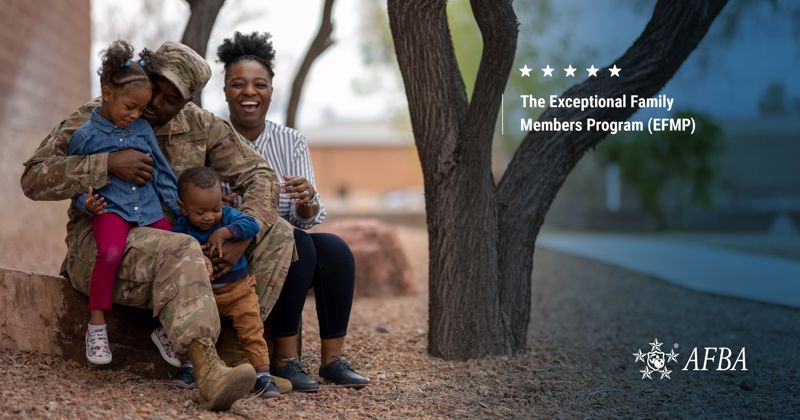
Every military family deserves superior health care tailored to their specific needs. There is a wealth of support programs for service members to seek out for their families. The Exceptional Family Members Program, designed for military families, includes support for dependents with special educational and medical needs.
What is the EFMP?
The EFMP is a resource offered to active duty service members who have spouses, children or adult dependents with special needs at home. The Department of Defense (DoD) provides this service.
There are three core components to EFMP:
- Enrolling a family member with special needs.
- Educating the military family on which projected duty station offers services for your family needs.
- Assisting the military family in accessing those programs and services.
But what is a special need?
What are some examples of a special need?
Special needs include, but are not limited to:
- Multiple sclerosis.
- Asthma.
- Diabetes.
- Attention deficit disorder.
Chronic conditions — including behavioral health conditions — that are treated by a medical specialist generally constitute a special need.
Why should you use the EFMP?
Active Duty Service members with special needs dependents face unique challenges in caring for their loved ones. Those challenges can become compounded when relocating. With the EFMP, the armed forces hope to ease our service member’s burden by offering support to their families so they can receive the care they deserve.
Are EFMP services available everywhere?
EFMP resources vary by location and may not be available in overseas or remote stations. This is why it’s vital to contact the nearest EFMP support office first to make sure you know what services are offered.
All military families can take advantage of Family Member Travel Screening (FMTS). Wherever you’re deployed, your family will have the resources they require, with careful consideration as to what your dependents’ needs are and what would be available to them.
The EFMP is not limited by which branch of the military you’re serving in; all branches offer the program.
 “The appearance of the U.S. Department of Defense (DoD) visual information does not imply or constitute DoD endorsement.”
How do you enroll in the EFMP?
Enrollment in the EFMP is mandatory for all active duty service members, and there are different ways to enroll if you’re not on active duty. Methods of enrolling and their applications are available in this quick guide.
The FMTS process includes a medical and educational screening for you and your family. This helps the support office identify what specific needs your family has. If those needs include anything that could apply to the EFMP, you should enroll in the program.
If you’re in the National Guard or Reserves, you might also be eligible for the EFMP, though you’ll need to contact your particular branch for instructions regarding enrollment in each.
What does “family support” include in the EFMP?
Family support includes, though is not limited to:
- Non-clinical case management, which includes Individualized service plans.
- Information on local schools and early intervention.
- Outreach and education.
- Support for transferring EVMP benefits from one location to another.
There’s no reason not to use the EFMP if you qualify
If you’re a military family that includes someone with special medical or educational needs, there’s no reason not to take advantage of the EFMP. The program gives service members peace of mind when deployed for active duty and their families the resources they can use to help meet those special needs.
You can access the EFMP family support by calling your local Military and Family Support Center or Military OneSource at 800-342-9647. Ask them for a referral to a special needs consultant.
In the military, you learn certain skills that stick with you throughout your life such as dedication, persistence, and attention to details. And that’s not even counting the specific job aptitudes you may have or learned while in the service.
A challenge veterans and their families often face when returning to civilian life is the transition to working in a non-military job. Thankfully, employers often appreciate those who have armed forces veteran status on their resumes. There are many businesses that specifically advertise to veterans and their families.
Here, we’ll go into a few of those employers that are currently looking for people from the armed forces
to work for them.
Amazon
Amazon advertises its need for employees with veteran status and even provides a helpful cheat sheet. This can tell you how the specific skills you learned in the armed forces would translate to being an effective employee. By filling out details about your service, such as which branch you served in, your rank and the number of years you were active, they’ll match you for a certain position.
The enterprise also features military recruiting teams that hold virtual hiring events. There are also apprenticeships available that can teach you how to build a career in cloud computing, which should be attractive to those with IT experience. Amazon even offers a Military SkillBridge program designed to help you transition from military life to civilian life if you’re within 180 days of leaving the service.
 The appearance of the U.S. Department of Defense (DoD) visual information does not imply or constitute DoD endorsement.
Capital One
Capital One claims to “value the service and sacrifice of our veterans, active military personnel and their families… accountability, collaboration, leadership and dedication make you a crucial member of our team.”
What special benefits do they have to appeal to veterans? Well, for starters, you can expect:
- Military training and active duty time off. Capital One claims that you can take up to eight weeks for training or active duty if you’re called to serve during your employment at the company. They even offer a pay differential between your company salary and military pay after you come back to work.
- Military Spouse Employment Partnership (MSEP). As a partner of MSEP, Capital One offers advantages to the spouses of service members.
- On-leave job security. If you need to go on leave for any reason, your job will be protected for a reasonable amount of time.
- Secondary insurance in addition to your military benefits. Dental, vision, supplemental life coverage, flexible spending accounts and medical care are offered to veterans working for Capital One. If you’re on leave, these benefits persist.
Cisco
As a top leader in the telecommunications, technology and networking industries, Cisco is always looking for bright new talent, especially those who have experience with these fields.
The company offers training for those early in their military transition back to civilian life, special programs and opportunities specifically for veterans, and connects service members and their families with jobs at Cisco and Cisco partners.
With a return to civilian life comes new opportunities just for you
These are just a handful of opportunities you can pursue as you return to civilian life. There are entire resources available just to help veterans find new careers as they transition back home. Some employers are better suited than others for service members, and many are actively looking for new employees with military experience.
If you’re in the armed forces and looking for work outside the military, why not give one of these opportunities a go? You may find it satisfying and rewarding.
More than 650,000 servicemembers were in operation from August 2, 1990, to July 31, 1991. Those who served in the Persian Gulf at Operation Desert Shield and Desert Storm are known as Gulf War-era veterans. Let’s learn a little more about Gulf War-era veterans in this spotlight.
What was the Gulf War?
The Gulf War lasted about seven months and was against Iraq and also involved troops from other countries as well. These troops include the United Kingdom, Saudi Arabia, Egypt, France and Kuwait, according to the U.S. Department of Veterans Affairs. The war was in response to Iraq invading Kuwait because of oil disputes.
The initial stage was known as Operation Desert Shield. Its main goal was to defend Saudi Arabia from Iraqi invading forces, in order to protect one of the world’s main sources of oil. The next part was dubbed Operation Desert Storm and was more of an offensive, active combat mission that was meant to force out the enemy. According to historical records, the Iraqi resistance fell after four days of bombing, and Kuwait was liberated. This is an extremely condensed version of the first Gulf War, and veterans from this era know the true extent of the conflict.
Who are the Gulf War Veterans?
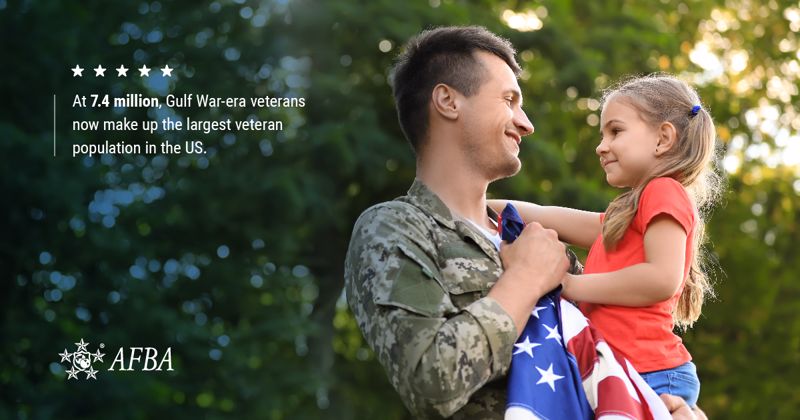
According to the Bureau of Labor Statistics (BLS), there are over 18.8 million veterans. Of these, there are about 7.4 million Gulf War-era veterans, which now make up the largest share of veterans. Before 2016, Vietnam-era veterans were the dominant group. The Gulf War demographic can also be further broken down:
- 17% of Gulf War-era veterans are women, higher than in most recent military conflicts.
- Almost 50% of Gulf War veterans are aged 45 to 54.
- 33% of Gulf War-era veterans are current or past members of the Reserve or National Guard.
 The appearance of the U.S. Department of Defense (DoD) visual information does not imply or constitute DoD endorsement.
Employment
BLS reports that “Gulf War-era II veterans had the highest unemployment rates from 2009 to 2015.” in 2019, “5.6 million Gulf War-era veterans were employed in 2019, about 6 percent of civilian U.S. workers.” Veterans Affairs (VA) offers programs to help people find opportunities to work, which can assist in matching them with employers who are looking for workers who have their skills.
Related health issues
The Gulf War had relatively few deaths during the conflict, but many of this demographic from this era are facing post-war illnesses. The VA reports that this group often experiences a “cluster of medically unexplained chronic symptoms that can include fatigue, headaches, joint pain, indigestion, insomnia, dizziness, respiratory disorders and memory problems,” called chronic multisymptom illness.
Other serious health issues include:
- Fibromyalgia.
- Myalgic Encephalomyelitis/Chronic Fatigue Syndrome (ME/CFS).
- Functional gastrointestinal disorders.
- PTSD.
Long-term illness may also come from the environment that those who served in the Gulf War found themselves in. This could be things like the effects of sand and dust on the respiratory system and chemical and biological weapon side effects. For those that were in proximity of oil well fires or spent any amount of time in military vehicles that use Chemical Agent Resistant Coating (CARC) paint, health issues may arise.
Gulf War veterans deserve our respect and support for their brave service during their time carrying out the nation’s mission. The demographic of post-war individuals in the country is changing, but their valor hasn’t.
While anyone can experience Post Traumatic Stress Disorder (PTSD) at some point during their lifetimes, it’s highly prevalent among veterans, first responders and active duty service members. Estimates of the rates of PTSD vary by era, but veterans who served during Operations Iraqi Freedom and Enduring Freedom have illness rates of about 11-20%, according to the U.S. Department of Veterans Affairs.
It’s not just combat that causes PTSD among veterans: 23% of women who use VA health care report having been sexually assaulted during their service, further increasing rates of PTSD among veterans.
One type of therapy, in particular, stands out as a unique and effective form of treatment for PTSD: music therapy.
What is PTSD, and why does it matter?
PTSD, once known as shell shock to describe similar symptoms among combat veterans, can be an extremely debilitating condition that can occur after a traumatic event. The disorder is a complicated psychiatric illness. Some symptoms of PTSD include, according to the Anxiety and Depression Association of America (ADAA):
- Intrusive thoughts or dreams about the traumatic experience that happen involuntarily and cause distress. This can include episodes of feeling like the traumatic incident is recurring and acting out the event (sometimes called “flashbacks”).
- Intense psychological distress and usually avoidance of triggers that remind one of the episode.
- An inability to remember details about the incident.
- Increased arousal and reactivity.
- Feelings of detachment or estrangement from other people.
- Persistent fear, horror, anger, guilt, or shame.
Left untreated, these symptoms can worsen over time. That’s why it’s vital for sufferers of PTSD to receive intervention from a qualified professional.
 The appearance of the U.S. Department of Defense (DoD) visual information does not imply or constitute DoD endorsement.
Music therapy and PTSD
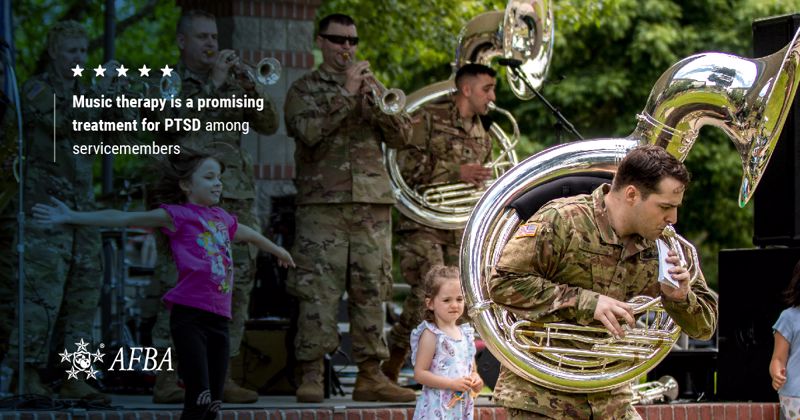
One form of complementary treatment to treat PTSD and other psychiatric illnesses, is music therapy. Music therapy is the use of music interventions to accomplish goals, e.g., to treat symptoms of PTSD. It can involve songwriting, or playing or listening to music.
Using music therapy to ease PTSD symptoms goes as far back as 1945 with the military’s Technical Bulletin 187, which observed how music affected the reconditioning of service members in Army hospitals.
The U.S. War Department discovered that music positively affected soldiers’ PTSD rehabilitation programs. This effect was demonstrated during physical reconditioning, occupational therapy, education, and recreation. The military followed up on this after the study was completed, attempting to further explore the possibilities of using music during therapy for recovering soldiers.
Various organizations have developed applications as a result of these studies to include programs ranging from active duty airmen improving their stress management and coping skills with music to using songwriting to treat PTSD symptoms.
Why use music therapy when traditional cognitive behavioral treatment exists?
Music therapy can be less intimidating than cognitive behavioral therapy (CBT) because of one factor: stigma. Despite the ongoing efforts by mental health professionals to encourage those with psychiatric symptoms to seek counseling and psychiatric treatment, there is still a strong aversion toward seeking mental health services. According to a recent study by the World Health Organization, between 30-80% of people with psychiatric illnesses do not seek treatment.
Many see music therapy as less intimidating or stigmatizing than psychotherapy, and thus is more broadly accepted.
Music therapy is a promising treatment for PTSD among service members
Since its initial success during World War II to treat symptoms of PTSD and promote recovery, associations such as the American Music Therapy Association (AMTA) have helped develop its use to treat psychiatric illnesses such as PTSD.
There’s a long way to go until any PTSD treatment is perfected and universally helpful for sufferers of its symptoms, but music therapy is helping lead the way as a promising source of hope.
In the event that something happens to you, how far do you want doctors to go to revive you? Whom would you prefer to manage your affairs? What do you want to happen to your estate? These are questions that you would no doubt like answered if something unexpected happens and you’re unable to make these decisions.
Why you need estate planning
While everyone can benefit from estate planning, service members understand that military life can be particularly dangerous. Just like in civilian life, it’s not always possible to predict what will come next.
Estate planning allows you to decide what the future will be like for your family should something happen to you. Without the proper arrangements, the distribution of your assets can be somewhat unpredictable. If you make your intentions clear ahead of time, you can determine what happens to your personal assets, property and financial obligations.
This also makes plans for your health care clear should you become unable to make decisions for yourself. Without this, your family could be left with large amounts of debt from medical bills.
In addition to being pragmatic, estate planning can take a large load off your family’s shoulders. With everything arranged ahead of time, neither you nor your loved ones have to worry about certain decisions that would have to be made in the event you become disabled or deceased.
 The appearance of the U.S. Department of Defense (DoD) visual information does not imply or constitute DoD endorsement.
To help get your affairs in order, use the AFBA estate planning checklist
We’ve created a helpful checklist to assist you with estate planning. Included is a list of necessary steps for successful arrangements, such as:
Draw up a will
First, you’ll need to prepare a document that outlines some very important details. This means naming a personal representative and substitute to carry out your wishes, providing a full list of assets and organizing funeral and burial intentions, among other tasks.
An executor of estate needs to be named in this document. This is the person who’s responsible for ensuring your intentions are carried out. The executor is a very important person and should be carefully considered, as they will work with your attorney, identify and manage your probate assets (bank accounts, property, life insurance etc.) and handle your debts.
Arrange for power of attorney
If you become unable to manage your estate, a loved one or other trusted representative can do it for you. While you can revoke this determination at any time, it otherwise lasts for your lifetime.
Create a “living will”
This isn’t the same thing as a traditional will. The living will decides what health care you do or don’t want should you become unable to make decisions for yourself. For example, to what extent should doctors try to resuscitate you? Do you want to be placed on a ventilator if needed to keep you alive?
Gather necessary documents
Personal documents, bank accounts, income tax information and various other papers and pieces of information need to be consolidated. This includes passwords for your online accounts, especially your banking credentials.
You don’t have to do all of this on your own. These steps can be made easier if you appoint a law firm to help you.
Help your loved ones by making plans for the future
There are many unknowns in life, both for civilians and active duty service members. With estate planning, you can get your affairs in order and be more certain of what happens to you and your loved ones. While you may not be able to predict what the future holds, you can still plan for it.
Every November since 1993 has been federally recognized as Military Family Appreciation Month. During this month, several military-themed holidays are celebrated. This period is a great opportunity to show your appreciation for both veterans and military families who have loved ones in the armed forces. If you know any of these people in your life or just want to anonymously help out with those you might not know, November is the perfect time to show them you recognize the uncommon challenges they go through.
Military families serve along with their loved servicemembers. They are aware of the risks involved in serving in the armed forces as well as the sacrifice of being away from them during long periods of training and deployment.
The history of Military Family Appreciation Month
In 1993, the Armed Services YMCA looked for a way to honor military families and recognize their sacrifice, dedication, and contributions to the armed forces which they’re an intrinsic part of. Thus, they came up with Military Family Appreciation Month as a time to do exactly that. After being officially endorsed by the President of the United States, November was chosen as the month in which the observation would take place.
 The appearance of the U.S. Department of Defense (DoD) visual information does not imply or constitute DoD endorsement.
What military-related holidays happen in November?
Several important holidays take place in November, and they’re perfect opportunities to plan out your shows of appreciation.
First is the Marine Corps’ Birthday on Nov. 10. This originated in 1921, when Marine Corps Order No. 47 was issued. This order intended to commemorate the founding of the Marine Corps and directed that it be repeated each year on the same day. This day is typically commemorated with the annual Marine Corps Birthday Ball. First held in 1925 and observed every year since, the ball includes entertainment, cake, and a formal dinner.
The celebration of the Marine Corps’ birthday has evolved over the years. In 1923, a formal dance was held at the Marine Barracks in Ft. Mifflin, Pennsylvania. Meanwhile, a mock battle occurred at the Washington Navy Yard, and a baseball game was held at Guantanamo Bay, Cuba. Later, in 1925, the first official Birthday Ball was held in Philadelphia. The cake-cutting ceremony began in 1952, which included the first piece of cake being presented to the oldest Marine present and being passed to the youngest as a symbol of the tradition passing.
After that is Veterans Day on Nov. 11. This day is especially important, as it is a federally-recognized holiday specifically meant as a day to pay respect to veterans. The day was originally known as Armistice Day to commemorate the end of World War I, but was later expanded to include all veterans.
Thanksgiving is also a part of Military Family Appreciation Month as one of the ideal times to give thanks to the people in our armed forces who have dedicated their lives to keeping America and its citizens safe from harm. Military families at the Thanksgiving table can use this opportunity to appreciate their loved servicemembers, while non-military families can take the time to show respect to both servicemembers and their families.
However you choose to recognize the holidays during Military Family Appreciation Month, it’s important to always give thanks both to servicemembers and their families so they know they’re loved and appreciated. In addition to the ever-important respect toward the members of the armed forces themselves, remember that the families of servicemembers have their own unique challenges to tackle every day and they deserve recognition just as much as their cherished servicemembers do.