
A shared holiday between the U.S. and South Korea, Korean War Veterans Armistice Day has been celebrated every year for the past 70 years on July 27 since 1953. Its purpose is to honor veterans of the Korean War, which gave South Korea (then known as the Republic of Korea) independence from North Korea, which was called the Democratic People’s Republic of Korea at that time.
The Korean War is often referred to as “The Forgotten War” because of how little media attention it got. However, advocates for Korean War veterans fought to bring recognition to the heroic sacrifices of the many who died during the conflict. Soon after, Korean War Veterans Armistice Day was nationally recognized. It became a tradition for the President of the United States to make an address each year on the armistice’s anniversary.
The Deadly Chosin Reservoir Campaign
The Chosin Reservoir Campaign was an especially deadly period in which over 5,000 American troops died in the winter of 1950, either from the elements or in combat. One key battle in which the Chinese attacked the U.S. Marine-led forces became pivotal to winning the war. These efforts were not in vain and ultimately led to the U.S. and South Korea succeeding in rebuking North Korea and China.
Acting as a backup force for the North Koreans, this campaign was a core aspect of the Chinese Second Offensive. Its purpose was to force the United Nations to retreat from North Korea by destroying the 1st U.S. Marine Division, which had entered North Korea from the east before marching inland. They were in a weakened state and in a vulnerable position when the Chinese chose their moment to attack. About 120,000 Chinese soldiers attacked the remaining 15,000 U.S. soldiers and Marines, who fought alongside 15,000 UN soldiers.
The remaining U.S. and UN forces battled through the Chinese ranks to reach transport ships at the coast. This required moving through a series of mountain passes, a bridged chasm and a narrow road — a 78-mile hike through the most treacherous terrain in Korea.
Despite the odds being strongly against them, the historic General Douglas MacArthur led an effort that succeeded in heroically fighting through the Chinese army and evacuating 98,000 refugees while preventing the annihilation of the UN forces. The battle became legendary in Marine Corps lore as one of their greatest moments.
 “The appearance of the U.S. Department of Defense (DoD) visual information does not imply or constitute DoD endorsement.”
The end of the Korean War
The U.S. considered the Korean War a fight against communism itself. They feared that if North Korea succeeded in overtaking South Korea, the Soviets and their allies would be emboldened to invade more countries.
There was fear among some, especially the Americans, that a prolonged conflict could bring Russia into the war — potentially bringing about World War III. They were thus strongly motivated to reach an armistice as soon as they could. By the time the Korean War ended in July 1953, an estimated 23,600 U.S. servicemembers had died. North Korea’s invasion was unsuccessful, and there were few territory shifts.
Pay respects to Korean War veterans on July 27
Thanks to the efforts of advocates, July 27 is a national holiday in which we honor veterans of the Korean War. Pay your respects to these distinguished individuals when the anniversary of the armistice comes. These are servicemembers who most certainly shouldn’t be forgotten in “the forgotten war.”
Paramedics are the front lines of any medical-related 911 emergency — they’re the ones who are expected to respond to repeated life-or-death scenarios in a calm, collected manner.
This tolerance for extreme stress while maintaining a steady hand is a special skill all paramedics must have. That’s why not everyone has what it takes. But choosing to become a paramedic is an honorable — and challenging — way of performing public service.
 “The appearance of the U.S. Department of Defense (DoD) visual information does not imply or constitute DoD endorsement.”
Decide if being a paramedic is for you
Paramedics are similar to emergency room doctors in that they deal with medical crises that often put the patient’s life in their hands. However, their roles in the process aren’t the same. A paramedic’s job is to stabilize a patient so they’re fit to be taken to a hospital or clinic, then drive them there in an ambulance (or sometimes, a helicopter or airplane).
The ability to stay calm in an intense environment is critical. Problem-solving skills are also a must, as it’s up to you to decide what the best course of action is after you assess the situation. You’ll want strong communication skills; you’ll need to effectively talk to patients and families who are in distress and may not be able to speak clearly.
You should know what to expect from your education, including paramedic school, which will put you in a high-stress environment to prepare you for the intensity of the job. Your physical fitness will be tested to ensure you have the proper amount of strength and endurance to handle a wide variety of situations in rapid succession. Many paramedics work 12-hour shifts or more, including at night, so you’ll want to be in top shape.
Consider your personality type and aptitudes before you decide to pursue a career as a paramedic.
Get the right education
Paramedics, while extensively trained, do not need to pass medical school and they don’t have letters after their names. In short, they’re not doctors.
However, this is not to imply paramedics don’t require a great deal of education. A license is required to be a paramedic, and obtaining one requires unwavering dedication and physical and mental endurance. Start by graduating high school or earning a GED, and then you can expect to go through this sequence:
- Get your EMT-Basic certification. Normally, this takes six months. This will teach you the basics, such as cardiopulmonary resuscitation (CPR) and non-invasive treatment.
- Work as an Emergency Medical Technician (EMT) for at least six months. Many paramedic schools prefer you have some experience as an EMT before you apply.
- Enroll in paramedic training. This generally takes 1-2 years to complete and is much more intensive than getting EMT-Basic certification. It’s essentially an advanced course, where you’ll learn invasive treatments such as intubation.
- Earn your license. Next is passing the National Registry of Emergency Medical Technicians (NREMT) exam, which will put you through tests such as out-of-hospital training scenarios, trauma management and dynamic cardiology.
- Pass the state-specific exam if needed. Some states require this; others don’t.
If you’d like to get started, check out the National Registry of Emergency Medical Technicians guide of where to start training.
If you think you have what it takes, step up and become a paramedic
If you can become a paramedic, congratulations are in order: You’ve earned the honor of being a vital first responder. Becoming a paramedic and serving as one is by no means easy — but if you’re willing to test your limits, you too can join the honored ranks.
What led up to the Declaration of Independence? Yes, it certified America as being independent of Britain, but influential thinkers like John Adams — who was initially considered a radical for wanting complete separation — didn’t become mainstream until Thomas Paine’s “Common Sense” publication. This piece will explore the development of how the idea of full independence came to be.
King George’s mercilessness shaped later public opinion
At the very beginning of the Revolution, most colonists didn’t want independence from Britain, but reconciliation. Still feeling loyal to King George III and Britain but opposed to the extreme taxes and unfair laws imposed upon them, they wanted to make a deal with the king and return as British citizens.
John Adams was one of the first individuals who called for full independence — to make America its own nation and government. However, he and others who thought like him were unable to change the majority opinions of the colonists — for a time.
Public sentiment started to shift as King George III ramped up his efforts to eliminate the rebels. When news of his intentions reached the colonies, the ideals of Adams and other “radicals” rapidly became more popular.
However, even this wasn’t the turning point. Many conservatives still held on to the idea that reconciliation was possible. The notion that America should be fully independent only became cemented in the majority of colonists’ minds after Thomas Paine published a pamphlet titled “Common Sense.”
 “The appearance of the U.S. Department of Defense (DoD) visual information does not imply or constitute DoD endorsement.”
“Common Sense” and its influence
Thomas Paine’s 47-page “Common Sense” pamphlet was published in Philadelphia in January 1776. Within it, Paine illustrated a passionate ideal for American exceptionalism. Believing America represented a “promise” that could only be achieved through total independence and separation between Americans and Britains, he laid out his case that this was the only natural option.
“Common Sense” was immensely popular. Its ideas influenced a massive number of colonists and galvanized support for the Revolution. By the time the Revolutionary War ended, it had sold about 500,000 copies — an astronomical number for its time. The publication would even influence some parts of the U.S. Constitution and the Bill of Rights.
Jumping back to 1776, the Continental Congress soon adopted Paine’s idea of separating from Britain and forging a new nation. On July 2, about seven months after Paine’s publication was released, Congress held a vote on declaring independence. The Declaration of Independence was ratified on the 4th and America became its own nation.
Thomas Paine’s humble beginnings belied his impact on history
Born in Thetford, England in 1737, Thomas Paine had little formal education and was plagued by a series of job failures and tragedies.
His luck would pick up when he met Benjamin Franklin in the spring of 1774. Offering Paine a letter of introduction so he could start a new life there, Franklin suggested he move to the American colonies. In November, Paine would arrive in Philadelphia and soon began editing the Pennsylvania Magazine. It was here he wrote a series of pieces following his ideals.
While nothing he wrote came anywhere near the influence of “Common Sense,” Paine wrote other essays and pamphlets. These included “The Age of Reason” and “Rights of Man,” which discussed religion’s role in society and a defense of the French Revolution, respectively. Another example proving he was well ahead of his time is “African Slavery in America,” a piece condemning the slave trade.
Celebrate the history of America’s independence this July 4th
America may never have been its own nation without the ideals and philosophies of people such as John Adams and Thomas Paine. This Independence Day, be grateful that these immensely influential and historically invaluable individuals helped bring you the liberty you have today.
Virtually everyone has used insurance at least once. It comes in a wide range of forms covering practically everything, from life and auto insurance to protection for parcels in the mail. You can even insure items like your watch or smartphone against being lost or stolen. The list may genuinely be endless.
If it can be insured, someone probably offers coverage for it. But do you regularly compare your insurance needs with the insurance you own? Are you getting what you need at the right price?
Do you need life insurance when you’re young (you do) or should you wait until you’re older? How likely do you think you are to be in an auto accident? Are you covered if you become ill or injured and need an emergency room visit or hospitalization?
Depending on the answers to questions like these, you may wish to alter your insurance plans. That’s what National Insurance Awareness Day — observed on June 28 every year — is for.
Insurance has been available for thousands of years
Some of the earliest civilizations had insurance. Somewhere between 4000 and 3000 BCE, Babylonian sea merchants would purchase bottomry contracts. These had a ship’s owner use their vessel as collateral in exchange for a loan including interest. If the ship was lost at sea or heavily damaged, the insurer would be out of luck; but if the ship returned safely in good condition, the loan and its interest would be repaid.
Marine insurance continued to develop in new forms across the world, including in ancient Greece and those who traded with them. The Romans, while they were busy revolutionizing civilization, invented life insurance.
In the 17th century, the famous and still-existing Lloyd’s of London was founded. Its founder, Edward Lloyd, would gather information about shipments from docks and compile them into the Lloyd’s List publication. While its information-gathering is a little more sophisticated than when it began, Lloyd’s List is still being updated today.
 “The appearance of the U.S. Department of Defense (DoD) visual information does not imply or constitute DoD endorsement.”
Why evaluate your insurance needs?
First, consider what you want to be insured. Medical bills and your automobile are some of the most popular options. Other types such as life insurance are all too often passed over.
Even if you have all the insurance you need, you may be paying too much. Rates are constantly changing, and it’s worth the time and effort to shop around for the best price.
If your life circumstances change, so should your insurance. Have you taken a new job that requires driving in dense traffic? Has your health changed? What about your marital status? Many life events warrant taking a fresh look at your insurance options.
You don’t necessarily need to shop for a new insurance provider and go through the paperwork all over again. You can talk to your current company and ask if they have other choices or promotions that might better suit your life situation. Many insurance companies allow you to customize your plan online.
Seeking out other ways to lower your insurance costs is something else to consider. Have you purchased a new car with advanced safety features? Bring it up with your auto insurance company. Are you taking care of yourself better? Maybe hitting the gym more, eating well and better controlling your weight? You could be eligible for health insurance discounts.
Look at your insurance options on National Insurance Awareness Day
It’s strongly recommended that you take the time annually to look at all your insurance options and find the best policies and rates that fit your specific needs.
Perhaps the most important thing you get from insurance is peace of mind. Knowing you’re covered in the event of an incident makes you feel better with less stress and worry — which can mean a longer lifespan and better overall health.
Father’s Day is a time to celebrate dads everywhere. But serving dads — whether military dads or first responder dads — deserve special appreciation for the uncommon challenges they face while serving, whether directly or indirectly.
The different types of serving dads
All serving dads are included in Father’s Day, but what does that term include?
Military dad and first responder dad are terms that can apply to many people. It can be a father serving in the armed forces or a first responder unit to a mother, son or daughter at home. It includes a dad supporting a serving mom. Just as the term “military family” refers to any proud kin who’s there for a related servicemember, a military dad is any type of serving dad.
 “The appearance of the U.S. Department of Defense (DoD) visual information does not imply or constitute DoD endorsement.”
Unique challenges serving dads face
Depending on the role of the military or first responder dad in their family, each faces unique challenges to be recognized and appreciated on Father’s Day.
Serving dads can be called to duty at any time, leaving their families for as long as their service is needed. Military dads are often required to relocate frequently, perhaps staying in one location for no more than a few months before being redeployed elsewhere. This forces them to leave shallow roots in their former place of residence to grow new ones elsewhere, which can cause stress to everyone in the family.
Being in the armed forces or a first responder unit inherently involves a degree of danger. For the serving dad, they must come to terms with the worry they may impose on those at home. The serving dad works all hours, day or night, whenever he’s called to action, which can potentially make communication with family members at home difficult.
The dad who supports his serving family member is on the other end of this. Perhaps they worry for a mother, son or daughter who serves. Maybe they, too, are facing the difficulties of keeping in touch when their servicemember could potentially be halfway around the world, or a first responder works 12-hour shifts, from evening to morning the next day.
Serving dads sacrifice uncommonly to serve their country and community. It is important to acknowledge this on Father’s Day, whether you’re a friend or family member of one.
Ideas for celebrating serving dads
What a serving dad may appreciate most differs from one to the next, but almost all would cherish a special gesture or two on Father’s Day. Here are a couple of ideas to get you started.
Write them a letter by hand
The difference between a phone call and a letter is permanence. Serving dads would almost certainly appreciate a phone call, but having a genuine letter carries a special significance. When times are toughest, the serving dad can take the time to stop, feel the paper in their hands and read the letter as many times as they wish.
Include a printed photo as an added bonus that they’ll be sure to appreciate.
Pay them a visit
If possible, go to where the serving dad is and spend some time with them.
Being a good listener can come in handy here. A serving dad to a military or first responder family member may have fewer opportunities than they’d prefer to talk about their challenges.
If you think they’d appreciate it, take them out to a favorite place of theirs, whether it’s a park, restaurant or some other special location.
However you show your appreciation on Father’s Day, do it with sincerity
Feel free to use one of these ideas or think of something special yourself. Few are the serving dads who wouldn’t feel their spirits lifted at a Father’s Day gift — especially those that carry a sincere gesture from the heart.
High blood pressure, or hypertension, affects about 65 million Americans, according to the Food and Drug Administration (FDA). Left unchecked, it can increase your risk of many different conditions, including heart disease, stroke, vision loss and kidney damage. That’s why it’s so important to be aware of your blood pressure and measure it daily.
Here, we’ll outline the why and how for effective blood pressure monitoring.
The importance of tracking your blood pressure every day
Not only should you measure your blood pressure at least twice each day, but you should also do it at the same time. Your blood pressure can change as the day progresses. The better you stick to these times, the more likely you are to get an accurate and consistent reading.
This is a good habit to get into even if you’re healthy. But for those who suffer from high blood pressure or are at risk of it, measuring it can be the difference between life and death.
 “The appearance of the U.S. Department of Defense (DoD) visual information does not imply or constitute DoD endorsement.”
Tips for tracking blood pressure
Not every time is appropriate to take your blood pressure. For example, you shouldn’t take your blood pressure as soon as you wake up in the morning. Instead, wait at least 30 minutes. Feel free to perform your morning routine before you take a reading.
However, it’s not a good idea to take your blood pressure immediately after breakfast, as both food and drink (especially if it contains caffeine) can affect your levels and prevent you from getting an accurate reading.
Good times to choose from might include right before you leave for work, after you come home or before bed. Ideally, for the most accurate results, you should have an empty bladder before taking your blood pressure.
While you can visit a doctor’s office to get readings, you don’t necessarily get the most accurate one there (especially if you tend to get nervous at such places). Devices that can check blood pressure, including pressure cuffs, are readily available over the counter.
There are a few key things to keep in mind when choosing:
- What can you afford? Blood pressure monitors vary significantly in price. Sometimes, insurance will cover the cost. Check before committing to a purchase.
- Does your cuff fit comfortably? It’s best to ask your doctor about this. They can take measurements and tell you exactly what size suits you.
- Can you read the display? Make sure the numbers on the screen are large enough for you to comfortably read.
- Is the device reliable? Ensure you choose a quality brand and model.
The benefits of tracking blood pressure
The primary benefit of tracking your blood pressure, even if you don’t knowingly suffer from high blood pressure, is to give yourself a chance to catch potential issues before they become big problems. If you find that your blood pressure readings are abnormally high for several days in a row, it could be a sign of illness.
If you suffer from high blood pressure or are at risk, then you also want to know if your treatment is working. There are many prescription treatments for high blood pressure and the only way to tell if they’re working is to measure the results.
Checking your blood pressure at home is a quick and easy way to stay safe
Use High Blood Pressure Education Month to learn all you can about how to better take care of yourself. To better stay in control of your health, you should know what your usual blood pressure is and check for changes. By doing this, you can ensure you’re as healthy as can be.
It is your heart we’re talking about, after all. Is there anything more vital to your well-being?
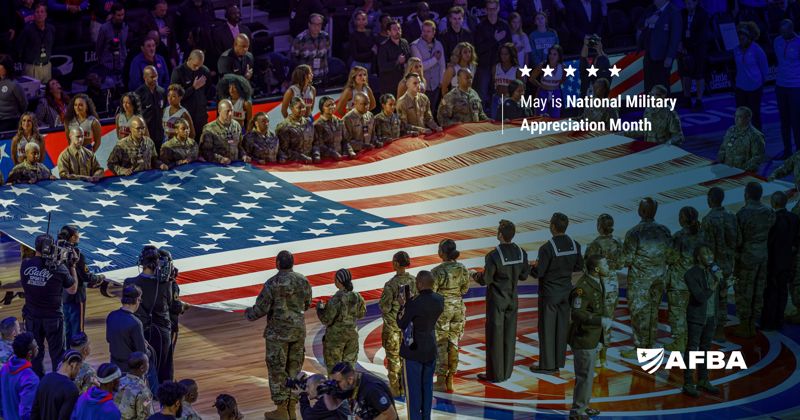
May stands out for a lot of reasons — summer is just around the corner, after all — but it also distinguishes itself as being National Military Appreciation Month.
National Military Appreciation Month consists of six holidays perfect for honoring service members and their families. While every day is a good day to honor those in the armed forces, these days are distinguished as particularly special.
Let’s talk a little about each in the chronological order they fall in 2023.
 “The appearance of the U.S. Department of Defense (DoD) visual information does not imply or constitute DoD endorsement.”
The individual holidays in National Military Appreciation Month
Each of the six military holidays in May serves a unique purpose, dedicated to a specific cause.
Loyalty Day (May 1)
This holiday is unique in both its relative obscurity and its purpose compared to the other military-themed holidays in May. Congress has described Loyalty Day as “a special day for the reaffirmation of loyalty to the United States and for the recognition of the heritage of American freedom.” If there’s an ideal day to recite the Pledge of Allegiance, this is it.
VE Day (May 8)
Short for “Victory in Europe Day,” this day marks the anniversary of the end of World War II on the European front in 1945. This holiday is recognized and celebrated across the world, and the U.S. is no exception. We had many allies in Europe who helped end the Second World War, and this day is for them.
Military Spouse Appreciation Day (May 12)
This day takes place every year on the Friday before Mother’s Day — May 12 in 2023. As you can probably tell by the name, this particular holiday is to commemorate and honor the spouses of those in the armed forces. These husbands and wives serve in their own capacities, encouraging their partners in any way they can. For many service members, their spouse’s support is invaluable.
Mother’s Day (May 14)
This holiday is held annually on the second Sunday of May. In 2023, that’s the 14th. Whether it’s a mother with a child in the military, a mother who serves or one who helps care for children with a serving father, they all deserve a special place on Mother’s Day. Many mothers are veterans themselves who instilled in their children values taught by the military: honor, discipline and patriotism, to name just a few.
Armed Forces Day (May 20)
Every third Saturday in May is when the U.S. celebrates Armed Forces Day, which in 2023 lies on May 20th. First celebrated in 1949, this day specifically honors those who currently serve in the armed forces. Originally, there were individual holidays for each military branch: Army Day, Navy Day and so on. This is the perfect time to help out the families of those who are away from home, selflessly serving their country.
Memorial Day (May 29)
The month’s observances end on the last Monday in May, when Memorial Day is held — May 29th, 2023. Veterans Day is for those who formerly served, Armed Forces Day is for the currently serving and Memorial Day is for those who have given their lives to protect the American way of life. Many visit the graves of fallen service members to pay their respects to these honored souls.
There is no better time to honor those in the armed forces
The year consists of many military-themed holidays, but no month is so bursting with meaning than National Military Appreciation Month. This year, demonstrate your appreciation for everything the service members in our armed forces do by recognizing and commemorating each holiday.
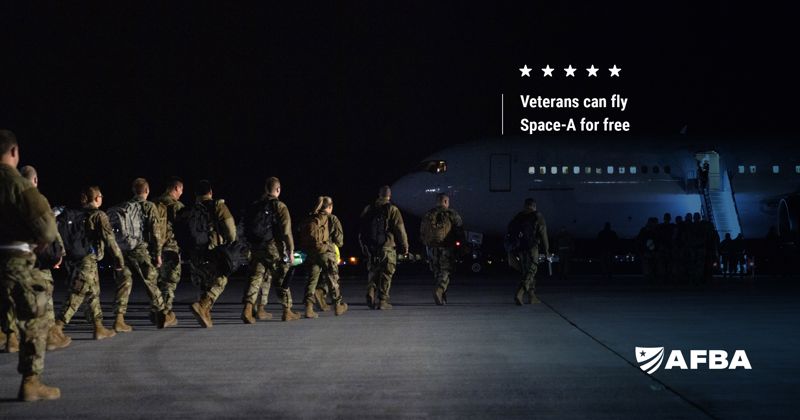
If you’re a servicemember, veteran, dependent or any other eligible type of passenger, you may qualify for free accommodations on Space-A flights if a vacancy is available.
What is a Space-A flight?
Space-A stands for space-available flight and is also referred to as military hopping. If a Department of Defense (DoD) aircraft has vacancies when traveling between air bases, eligible persons may fill these seats at no charge, according to the John S. McCain National Defense Authorization Act. The purpose of Space-A is to give certain types of people the freedom to travel on flights that have vacancies.
Space-A flights can be on commercial airplanes, but they might also be on fuel tankers or cargo aircraft.
 “The appearance of the U.S. Department of Defense (DoD) visual information does not imply or constitute DoD endorsement.”
The different categories of travelers
Depending on who you are and the reason for your travel, you’re placed in one of six categories. When Space-A considers who gets priority when someone requests to fill a vacancy, the lower categories get picked first. Here are the different categories and what they might include:
Category 1: Emergency leave travel
The emphasis here is on the word “emergency.” People who might qualify for this category include DoD civilian employees who are stationed overseas or full-time American Red Cross employees serving in a military capacity.
Category 2: Accompanied environmental and morale leave (EML)
This might include DoD Dependent School (DoDDS) teachers on vacation or sponsors traveling for EML purposes.
Category 3: Ordinary leave, house hunting TDY
Those on ordinary leave or military members who are house hunting (following PCS orders) generally qualify for this rank.
Category 4: Unaccompanied dependents on EML
Family members on EML are in this tier. This also encompasses DoDDS teachers and their family members.
Category 5: Permissive TDY, students, dependents, post-deployment/mobilization respite absence
If their sponsor is stationed overseas or in Alaska or Hawaii, students fall into this group.
Category 6: Retirees, dependents, reservists and disabled veterans
This category would apply to these types of flyers on vacation, for example.
How to sign up for Space-A flights
Signing up for a Space-A flight is very different from booking a seat on a commercial aircraft. You won’t be using traditional airports or booking accommodation at all; instead, you’ll communicate with an Air Mobility Command (AMC) Passenger Terminal to reserve a spot.
These are instructions to keep in mind, according to AMC. More information can be found on their website.
- Ensure your eligibility. There are six categories of travel that determine your eligibility for Space-A, with lower categories getting higher priority. This includes emergency leave, unfunded travel, and accompanied or unaccompanied environmental and morale leave (EML). Which category you fall into depends on the reason behind your travel and your duty status.
- Check which locations are available. Review your closest AMC Passenger Terminal through their social media page or website.
- Make sure your documents are in order. Look at which travel documents you need to prepare before your flight. This includes your passport (with visas, if applicable).
- Register at an AMC Passenger Terminal.
- Look at flight schedules. There is a 72-hour flight schedule on the American Forces Public Information Management System (AFPIMS) web page.
- Check-in at the terminal counter. Familiarize yourself with any newly updated flight information and declare that you are present. If everything is in order, the terminal will give you a Space-A call when they’re ready for you to board.
Roam the skies for free with Space-A flights
While not everyone is eligible to ride on a Space-A flight under all circumstances, as long as you meet the basic requirements, you can take advantage of this perk. For more information, contact your nearest AMC passenger terminal.
There is still a strong stigma attached to mental health. Mental Health Awareness Month is the perfect time to help shatter that perception and inspire those who need it to seek out help.
One group that experiences increased rates of psychiatric illness are first responders and armed forces servicemembers, especially those who were in combat. Too many suffer in silence, though they don’t have to, as there are many programs available specifically for veterans and first responders alike. Operation Resiliency is one such example that aims to help servicemembers deal with mental health issues by encouraging interaction between soldiers who share bonds forged through combat in the military.
 “The appearance of the U.S. Department of Defense (DoD) visual information does not imply or constitute DoD endorsement.”
Operation Resiliency
The underlying concept behind Operation Resiliency is that soldiers who form bonds in combat can help each other cope with trauma. Operation Resiliency hopes to assist both active duty and veteran service members better manage their mental health by bringing them together with no-cost retreats close to their homes. They also follow up with these individuals in an effort to keep connections strong among these soldiers.
Since the end of 2022, Operation Resiliency has served 468 service members. The project aims to hold six more retreats throughout 2023.
The origin of Operation Resiliency
The concept for Operation Resiliency came from Sarah Verardo, whose husband, Mike, was badly wounded in Afghanistan.
Verardo served in Bravo Company, 2nd Battalion, 508th Parachute Infantry Regiment of the 82nd Airborne Division. This unit fought in the especially deadly Arghandab region in Afghanistan, where nearly half of the soldiers in the team were awarded Purple Hearts. When several of these infantrymen committed suicide, Sarah called retired Army Command Sgt. Maj. Donald McAlister, first sergeant for Bravo Company in the Arghandab. They conceived of Operation Resiliency as part of their joint belief that they should do their part to prevent further tragedy.
McAlister led the first retreat for veterans in Bravo Company in North Carolina, where nearly 100 veterans of the company showed up. He believed he should lead them with full transparency of his own difficult reality to encourage others to do the same. “…Leading by example was being open and honest, and letting them know that mentally, physically, I’ll never be the man I was before…But at the end of the day, that’s OK…I told them, ‘You know, it’s OK for us all to not be OK, as long as we, as long as we acknowledge it. We can see the enemy, see what’s coming at us,” said McAllister, according to a report by the U.S. Department of Defense.
Psychiatric illnesses are not a sign of weakness
One in five adults suffers from mental illness, as claimed by the National Institute of Mental Health. This statistic is the same for first responders and those who serve in the armed forces. No one — no matter how tough the person may be — is immune, and no one can “power through” psychiatric disorder through sheer force of will any more than they can a broken leg.
If you’re experiencing a crisis or if you feel you may hurt yourself or others, you can dial 988, which connects you to the Suicide and Crisis Lifeline. Calling 911 is also an option.
Bravo Company is an example of the strongest among us recognizing their experiences and reaching out to their combat brothers for relief. Programs such as Operation Resiliency give these soldiers hope — which is what they require most in their time of need.
May is a special time to celebrate exceptional individuals of Asian American and Pacific Islander heritage. We’ll discuss three individuals who offer inspiring stories of their own.
Ellison Onizuka
Ellison Onizuka was the first Asian American to break through the atmosphere and fly into the great beyond of space on the Space Shuttle Discovery in 1985. He was also a distinguished servicemember of the U.S. Air Force.
While in the Air Force, Onizuka served as a test pilot and flight test engineer at the Sacramento Air Logistics Center, McClellan Air Force Base. At the U.S. Air Force Test Pilot School, he spent over 1,700 registered hours flying, ultimately earning the rank of Colonel.
As an astronaut, he was part of NASA’s historic Astronaut Class of 1978, also known as the “Thirty-Five New Guys.” This was the first new class of astronaut candidates since 1969.
Unfortunately Onizuka was one of the victims of the tragic Space Shuttle Challenger explosion in 1986. However, his memory is alive and well, and he’ll forever be an honored astronaut and Air Force veteran.
Norman Mineta
A member of the U.S. Army before becoming a politician, Norman Mineta would ultimately end up as the longest-serving member of the U.S. Department of Transportation and be in charge of reforming trust in flying after 9/11. He was one of the driving forces behind the formation of the Transportation Security Administration.
Mineta started his life as the son of Japanese immigrant parents. He and his family were forced into internment camps during World War II. When he was released, he attended and graduated from the University of California of Berkeley. Upon joining the Army in 1953, he served as an intelligence officer in Korea and Japan.
He soon decided to enter the political sphere in his hometown of San Jose, California. Mineta served on the City Council from 1967 to 1971 before becoming mayor in 1971 until 1974. This made him the first Asian American mayor of a major U.S. city. He would go on to eventually become a Congressman, overseeing the Department of Transportation during the 9/11 attacks.
Mineta was deeply affected by his experiences during World War II and became a prominent advocate for Asian American civil rights. One of his most notable accomplishments was his successful effort to pass the Civil Liberties Act of 1988. This act represented an official apology and offered reparations to Asian Americans who were victims of Japanese internment camps.
Tammy Duckworth
Tammy Duckworth is currently a U.S. Senator from Illinois, though she’s also well known as the former Assistant Secretary of the U.S. Department of Veterans Affairs.
Before that, Duckworth was an Iraq War veteran who flew combat missions in a Blackhawk helicopter. While flying in combat in 2004, her aircraft was struck by an RPG. She lost both her legs and some function of her right arm. However, she went on to hold a successful career in politics where she focused on veterans’ rights.
As Director of the Illinois Department of Veterans’ Affairs, Duckworth succeeded in establishing programs for veterans, including:
- Advancing availability of housing and health care.
- Instituted a crisis hotline.
- Developing a tax credit incentive for employers to hire former servicemembers.
Duckworth continued to help veterans in exemplary ways, going on to serve under President Obama, where she made a great many advancements aimed at easing the challenges this vulnerable population commonly faces.
 “The appearance of the U.S. Department of Defense (DoD) visual information does not imply or constitute DoD endorsement.”
Celebrate Asian American and Pacific Islander heritage this May
This May, you can use these stories as inspiration to excel in your own life. All three of these individuals have inspiring stories noteworthy for their instances of bravery and exceptional accomplishments.