
Founded June 14, 1775, the U.S. Army celebrates 242 years of bravery and sacrifices in protecting our great nation. Not only is June 14 the U.S. Army's birthday, it's also appropriately Flag Day.
A look back at the origin of the Army
Organized by the Continental Congress, the U.S. Army introduced new professional standards to long-standing militia traditions to fight the most powerful nation at the time – the British Empire. During these turbulent eight years of battle, the Army often served as the lone beacon for which patriots and champions of liberty united and drew their inspiration.
Although the colonists had already exchanged shots with British troops at Concord and Lexington in April of 1775, it was militia units and other volunteers from the New England colonies, not an official U.S. Army, who fought those battles. The Continental Congress convened in May, with the delegates voting to create an army that would serve all the North American colonies.
Then, on June 14, 1775, the Continental Congress passed this resolution:
"Resolved, that six companies of expert riflemen, be immediately raised in Pennsylvania, two in Maryland, and two in Virginia;… [and] that each company, as soon as completed [sic], shall march and join the army near Boston, to be there employed as light infantry, under command of the chief Officer in that army."
"The Continental Army became the fledgling country's first national institution."
Following this resolution, the Continental Army became the fledgling country's first national institution and remains in place as the oldest. Once established, the new fighting force needed an able commander, and so a few days later, the congress voted unanimously to commission George Washington as commander in chief.
After fighting hard for eight years, the Continental Army forced the British to recognize the sovereignty of the colonies, leading to the creation of the United States of America. In June 1784, the newly formed U.S. Congress disbanded the Continental Army and discharged its remaining soldiers, except for two companies they needed to protect military arms and stores. These two companies formed the basis for the 1st American Regiment. By the end of the year, eight infantry and two artillery companies formed the whole of the U.S. Army.
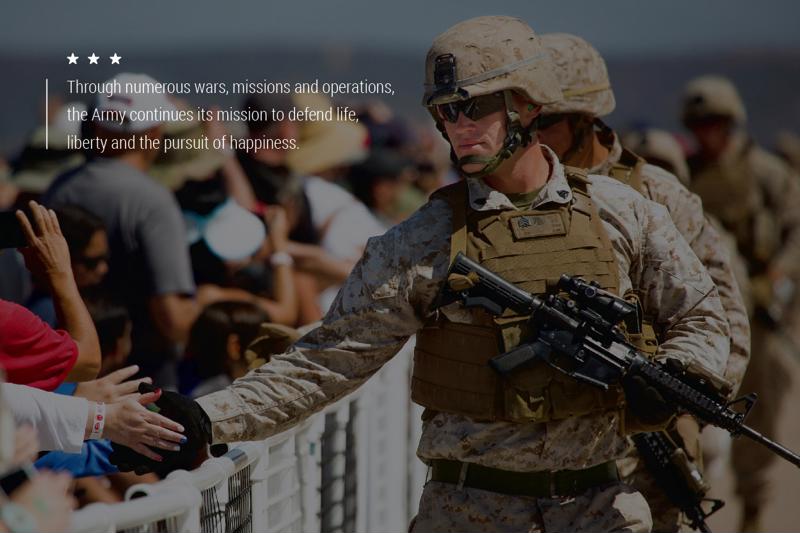
Now, 242 years after its creation, through numerous wars, missions and operations, the Army continues its mission to defend life, liberty and the pursuit of happiness.
Waving the flag proudly
The Stars and Stripes are the most recognizable symbol of the United States. Most people know the stars represent the 50 states and the 13 red-and-white stripes stand for the original colonies that revolted against the British and laid the foundation for our great country.
However, many people aren't aware of what the colors symbolize. While there's no federal law, resolution or executive order that explicitly lays out the reason or meaning for the flag's color, we do have some insight into their significance from a 1782 report from Charles Thomson, the secretary of the Continental Army, according to the Washington Post.
"White signifies purity and innocence," Thomson wrote. "Red hardiness and valour and Blue…signifies vigilance, perseverance and justice."
Despite the widespread belief that Betsy Ross designed the original flag, few historians believe this story, according to USFlag.org. While no one knows with absolute certainty who created the first flag, the general consensus is that Congressman Francis Hopkinson designed it. The flag has undergone many different alterations and additions as the country grew in size. However, it wasn't until President William Taft signed an Executive Order on June 24, 1912, prescribing the order of the stars and the proportions of the flag.
Various state and local communities began holding Flag Day celebrations around 1885, but it wasn't until 1949 that President Truman signed an Act of Congress designating June 14th as National Flag Day.
As we remember the history of the U.S. Army and the U.S. flag, let us make sure to remember those who have given their all so that the Stars and Stripes remains flying high.
With Loyalty Day on May 1, Victory in Europe Day on May 8, Military Spouse Appreciation Day on May 12, Armed Forces Day on May 20 and Memorial Day on May 29, this is a big month for the military. Due to the number of days honoring the armed forces, in 1999 Congress designated May as National Military Appreciation Month, according to Military.com. These days of national unity offer an opportunity for everyone to honor, recognize, remember and appreciate all those who have served and continue to serve our country.
- Loyalty Day kicks off the month-long celebration as a day set aside for everyone to reaffirm their loyalty to our great nation and take a moment to reflect on the proud heritage of our unique American freedom.
- Victory in Europe Day commemorates the Allies acceptance of the German surrender to end World War II in Europe.
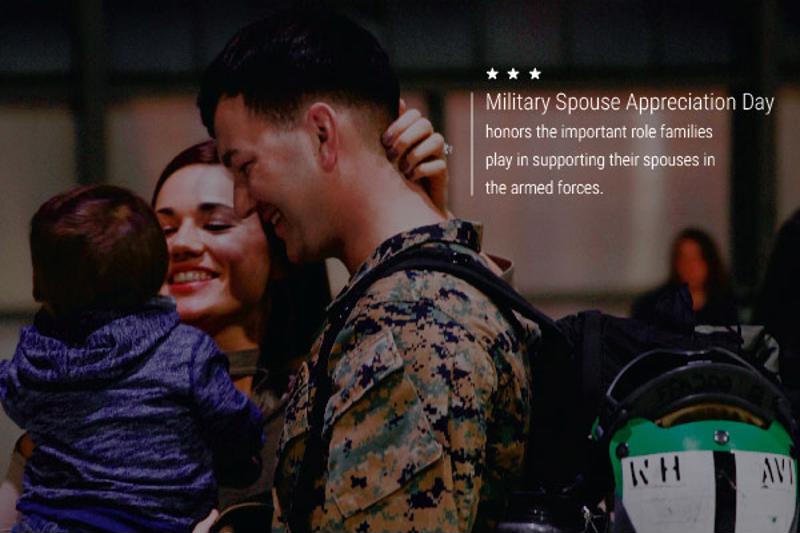
- Military Spouse Appreciation Day honors the important role families play in supporting their spouses in the armed forces.
- Armed Forces Day is when when citizens can show their appreciation and thanks to everyone serving in the U.S. military branches, including the Air Force, Army, Coast Guard, Marines and Navy.
- Memorial Day, while traditionally the kick-off to summer for most people, is one of the most cherished days for remembering and honoring the sacrifices made by those men and women who gave everything for our country.
"Retailers, restaurants and recreational organizations are providing discounts and promotions."
Some of the great benefits during this month
As a way of celebrating National Military Appreciation Month, many retailers, restaurants and recreational organizations provide discounts and promotions for members of the armed forces and veterans.
Home Depot and Lowe's offers a 10 percent discount on all in-store purchases on Memorial Day.
Blue Star Museums, in collaboration with the U.S. Department of Defense, the National Endowment of the Arts and Blue Star Families, offers free admission to military members starting Memorial Day and going through Labor Day.
Various hotels, such as Hilton, Red Roof Inn and Westgate Resorts also offer a 10 percent discount to all active, reserve or retired service members, offering a great incentive to hit the road and take in some much-needed relaxation.
Military families who want to take advantage of these hotel discounts, can take a trip and receive a discount at the following amusement parks and tourist sites:
- California's Great America.
- Carowinds in Charlotte, North Carolina.
- The Cincinnati Zoo.
- Colonial Williamsburg.
- Kings Island.
- Michigan's Adventure.
- Valleyfair.
In addition to these national chains offering great perks for military members and their families, small businesses and local organizations all across the country are also doing their part with various discounts and promotions. From parades to concerts to special events, people everywhere will be showing their support for the brave men and women who keep our country safe.
While most people tend to think of adults when it comes to the armed forces, children and teenagers play an important role in the military family. From dealing with a deployed parent to moving from one base and school to another, military children face their own set of challenges that most kids their age never have to experience. To applaud the commitment and sacrifices made by the youngest members of military families, the Department of Defense Military Community and Family Policy (MC&FP) designated April as the Month of the Military Child.
Spotlight on the military child
Started by Defense Secretary Caspar Weinberger in 1986, all the branches of the armed forces honor the Month of the Military Child in their own way. For instance, the Department of Defense Education Activity (DoDEA) celebrates these brave youths by:
- Implementing strategies designed to prepare DoDEA students more thoroughly for college and career readiness.
- Challenging students to embrace their full potential and excel academically, socially, physically and emotionally.
- Creating the organizational capacity to maximize the effectiveness and efficiency of its model, unified school system.
As noted by National PTA, since the 2001, about 2 million military children have seen one of their parents be deployed. Further, more than 900,000 youths have had one or both of their parents deployed multiple times. Currently, there are 1.2 million children around the world with a parent who's on an active duty.

Supporting military children
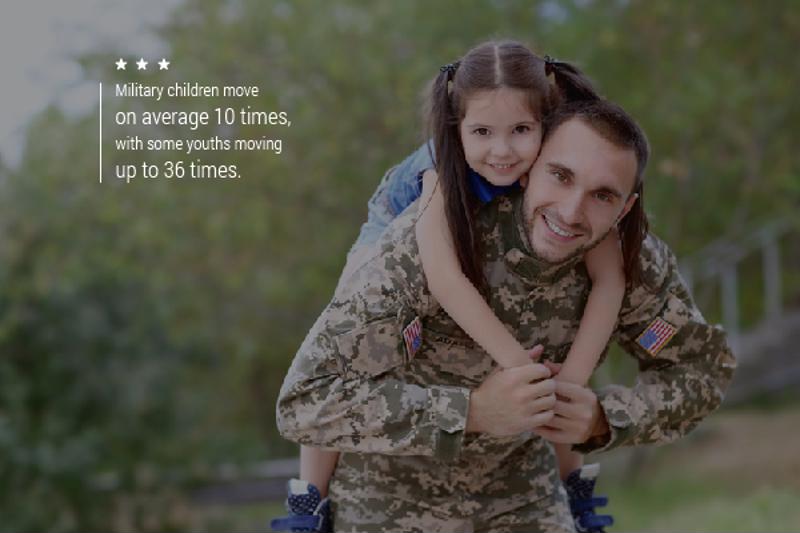
Regularly switching home, communities and schools can place a stressor on military children that other kids don't always have to face. Compared to civilian children, children in a military family will move, on average, about three times more often throughout their youth, the PTA noted. All told, military children move on average 10 times, with some youths moving up to 36 times.
From schools to sports to community programs, there are organizations and groups of all sorts that help children deal with some of the stressors arising from their unique experiences. For instance, the University of Southern California houses an entire department solely dedicated to researching and supporting military children in school. This is extremely helpful, as the PTA noted that it takes a school-wide effort to support military children during their transitions.
In March, the Washington Capitals hockey team invited more than 200 military members and their families to enjoy a night of ice skating at the Kettler Capitals IcePlex in Arlington, Virginia, according to the official blog of the Coast Guard workforce, All Hands. Several players of the team also came out to meet with the families.
One way that families with active duty servicemembers can alleviate some of their children's stress that arises from the constant moving is by adequately preparing them for the transition. All Hands noted that being honest with the children about what is happening should be a top priority. Communicating with children helps reassure them about the move and makes it easier to adjust to the changes. Further, providing fun activities for the trip, whether it's a short plane ride or a cross-country drive, can help.
Another way that organizations and groups show their support is by offering scholarships for military children. From Fisher House, a nonprofit organization that helps servicemembers and their families, to the Corvias Foundation, a private, charitable group, military children have plenty of options to choose from to pursue scholarship opportunities.
While their childhood might be a bit different than their civilian counterparts, military youths enjoy the support and gratitude from everyone for their strength and perseverance during what can sometimes be tough times.
We are proud to announce our 70th anniversary!
We were created as a nonprofit organization in 1947 with the support of General of the Army, Dwight D. Eisenhower. Initially formed in the basement of the Pentagon to provide $10,000 of life insurance to active duty officers serving overseas, we are one of the oldest and largest associations of our kind. Over the years, we have changed our name a few times, moved offices, added new products to our portfolio, and expanded our membership eligibility to cover all military, DoD, federal employees, and first responders. We have also created our own insurance company, 5Star Life, to underwrite our member eligible products and to serve our country's civilian work force through the worksite market.
"From workplace to war zone, we stand behind our insured families…"
While we have grown considerably and come a long way since our founding, our core mission remains steadfast – serving those who serve this great nation. And we will never be too large to forget that we are here to serve with integrity by offering flexible, customized insurance solutions.
Because there are no limits to the sacrifices our members and policyholders may be called up on to make, we do not exclude any occupation, duty assignment, deployment, or hazard from our protection at any time. From workplace to war zone, we stand behind our insured families, ready to deliver on our promise to pay claims quickly and compassionately. We hope to pay a benefit to the families suffering loss in every claim instance and we lean forward to do just that. And unlike anyone else in our industry, we offer a no cost scholarship benefit to the survivors of those whose deaths occur as a result of combat, terrorism, or participation as a first responder in an emergency.
We have paid almost $2 billion in claims, served thousands of members, and helped countless families achieve financial security in time of need. Today, we are 430,000 members strong, financially sound, and strategically positioned to face the future and serve new generations of members.
Thank you to our members, employees, field representatives, board of directors, and senior leaders as we say Happy Birthday AFBA!
While the organizations, systems and legal frameworks available to veterans are far from perfect, there has been recent progress in several relevant areas. One improvement has been the increasing understanding of post-traumatic stress disorder and the greater number of solutions put into place to address it among veterans. Nonprofits and government agencies at all levels have taken divergent approaches to assist vets struggling with PTSD. Some of the latest breakthroughs have come in the form of new legal protections directly dealing with stress in the military.
Spending authorization bill addresses PTSD, other mental traumas
The recent National Defense Authorization Act conference report included a bipartisan bill designed to assist veterans with metal traumas, including PTSD. The piece of legislation was put forward by senators Gary Peters, Steve Daines, Thom Tillis and Kirsten Gillibrand, according to The Oakland Press. It ensures that when service members leave the military with a less than honorable discharge caused by mental trauma, there are structures in place to assist them. Disorders left untreated can become even worse for their sufferers, making such legislation vital.
"Discharges may sometimes be directly caused by the symptoms of mental trauma."
Less than honorable discharges typically cause veterans to become exempt from many benefits which take effect after their service. The news source noted that the behavioral issues that lead to such discharges can be minor, and may sometimes be directly caused by the symptoms of mental trauma. In such cases, it's clear that veterans need help and assistance, rather than a severed connection to further government programs.
"This legislation will give our brave men and women who are suffering from the invisible wounds of war an opportunity to access the benefits they've earned through their service," Sen. Peters said, according to the source. He praised President Barack Obama for signing the bill into law.
Sen. Peters is himself a former U.S. Navy Reserve lieutenant commander. He restated his efforts to ensure veterans have help from the federal government as they transition into civilian situations. Those with traumatic brain injuries, PTSD, or any mental conditions brought on by trauma, will stand a better chance of making that move due to the passage of the recent amendment.
More specialized assistance needed
While the aforementioned bill and others like it will undoubtedly help some veterans, there's always more to do in the fight against trauma-related disorders. According to Idaho news channel KIDK, there is a need to focus on mental health services specifically for female veterans. With more women serving in the military than ever before, it stands to reason that they are being increasingly affected by the issues that can harm service members.
Army veteran Kelly Thompson told the news source that more specialized offerings are necessary, as female veterans sometimes feel hesitant to speak out about their experiences, especially if they are related to sexual harassment or assault. KIDK noted that the Female Veteran Suicide Act, signed into law by President Obama in June, tasks the Department of Veterans Affairs with investigating new ways to ensure female veterans receive the help they need. The suicide rate among female vets is six times that of women who have never served, and demands immediate attention.
On Friday, March 18, 2016 the U.S. State Department granted the Pentagon permission to open five new bases in the Philippines. The U.S. struck a deal with the Filipino government officials in Manila and was called the Enhanced Defense Cooperation Agreement, according to the Washington Post. The new bases are called the Mactan-Benito Ebuen Air Base, Fort Magsaysay, Basa Air Base, Lumbia Air Base and Antonio Bautista Air Base.
The news source stated that some believe the opening of the bases was inspired in part by the increasing level of Chinese military activity in the South China Sea. However, John Kirby, a State Department spokesperson, told the Washington Post that the move was more about improving relations with the Phillippines.
"It's not about selling it to the Chinese or to anybody," Kirby said. "It's about meeting our security commitments in a serious alliance with the Philippines. That's what this is about."
The Chinese government responded by stating their disapproval of the increased American presence. Officials have declared that improving relations with one country "should not harm the sovereignty or security interests of any other country," as reported by the news source.
Jennifer Suarez was determined to come out strong and not let anything stand in her way. Despite her battle with cancer, she continued on with her dream of being a part of the United States Marine Corps.
Curveball thrown her way
Everything seemed to be going well in Jennifer Suarez's life. She was recently married and was expecting her first baby in only four months, according to Stars and Stripes. Suarez had also accomplished her goal of becoming a Marine in the U.S. Armed Forces. Then out of nowhere a major curveball was thrown her way – she was tragically diagnosed with brain cancer.
Though hearing this news was a tough pill to swallow, through perseverance and strength, Suarez decided to fight hard and get her life back on track.
Inspiration to join the Marine Corps
Suarez decided she wanted to be a Marine in the fourth grade when her friend's dad spoke about his role as a Marine one day in class on Career Day, Stars and Stripes stated. Ever since then she had always had a passion for the military and ended up enlisting as soon as she could after high school.
At 17 she completed boot camp and then continued her education until she became a field wireman. Suarez was stationed in Okinawa, Japan for a couple of years before she got married and then settled down in Pendleton, California after becoming pregnant, according to Stars and Stripes.
Motivation to keep going
During the time of her first pregnancy, her health took a turn for the worse. One morning while enjoying breakfast with her husband, she suffered a seizure due to muscle spasms on the left side of her body. After immediately being escorted to the hospital, her brain was scanned, revealing an astrocytoma, a tumor in the brain tissues, the U.S. Department of State said. This news was devastating for not only her own life, but for her unborn baby's as well.
Her son Anthony was born prematurely with an emergency C-section, according to Stars and Stripes. Though Anthony was on the brink of death, he miraculously survived. With the motivation of her strong newborn son's survival, Suarez pushed through many challenging obstacles. Not only did she have to retire from the Corps because of her poor health, but she also experienced a divorce and had to face rehab and chemotherapy.
Back on top
Through it all, Suarez managed to come out strong and found herself right back where she wanted to be. After giving birth to her second child, the tumor shrunk, and her cancer was in remission. Five years later, Suarez re-enlisted in the military and was accepted, according to the U.S. Department of State. Because she worked hard to return to active duty, she was appointed as the commanding officer's driver and then promoted to sergeant shortly after.
In an article from Stars and Stripes, Col. Christian Wortman, commanding officer of The Basic School, said, "Sgt. Suarez has faced decisions and obstacles that many hope to never encounter yet she still rises above her challenges and continues to serve her family and the Corps to the best of her ability. Sgt. Suarez exemplifies the type of Marine all should strive to emulate with her attitude and determination. She truly lives our motto 'Semper Fidelis.'"
Suarez fought hard and came out on top and stronger than ever, despite the bumpy road along the way.
Some big changes are coming to the way the Pentagon recognizes combat service. According to the Military Times, a two-year internal review conducted by the Department of Defense has recommended 37 changes that will bring the military's medals system into the 21st century.
Among the changes are a new "C" device that will indicate a medal earned while in combat. Veterans will recognize its similarity to the "V" device currently signifying valor. Along with the new combat denotation is a definition – applicable to every service – of what "meritorious service in combat" means, a change that will affect the criteria for the Bronze Star.
"We're ensuring that the Bronze Star goes out to those who are incurring the risk of combat or actually have a significant risk of hostile action," a defense official told the Military Times.
But the Bronze Star isn't the only medal cast under a new light.
CNN reported on Wednesday that the military was going back to take a close look at more than 1,000 medals awarded since the terrorist attacks of Sep. 11, 2001, a review initiated by Chuck Hagel, then Secretary of Defense, intended to determine whether or not the actions cited in those awards were worthy of the Medal of Honor.
Seventeen Medals of Honor have been earned since U.S. troops first hit the ground in Afghanistan in 2001. The first seven were given posthumously, but in 2010 the Defense Department issued a clarification on what the "risk of life" qualification meant. Since then, CNN noted, all 10 recipients of the nation's highest honor have been living.
"There is no indication that any service members were not recognized appropriately, but the purpose of this is to ensure that those service members who performed valorously were recognized at the appropriate level," an official with the DOD told the news organization.
The 2016 Summer Olympic games in Rio de Janeiro are already filling athletes the world over with anticipation. In the United States, a small, elite group of soldiers were honored to be some of the first athletes to be chosen as members of Team USA in September. Now, with the new year right around the corner, another team of top-tier, active-duty soldiers are joining their ranks.
According to the Military Times, Spc. Nathan Schrimsher, a pentathlete with the Army's World Class Athlete Program, earned the honor of being the first American to qualify for his country's team after finishing third in July's Pan American Games. World-class shooters from WCAP, as well as from the Army Marksmanship Unit in Fort Benning, Georgia, were also named as members. One of the double-trap shooters, Sgt. First Class Glenn Eller, will travel to the Olympics for the fifth time in 2016.
Earlier this month, Ammoland – a shooting sports news site – reported that the Army's international shooting teams were practicing for the Olympic qualification trials after four soldiers with the International Pistol and Rifle Teams qualified at the 2015 Winter Airgun-Olympic Trials held in Colorado Springs. Staff Sgt. George Norton of Albuquerque; Sgt. First Class James Henderson of Pasadena, California; Staff Sgt. Greg Markowski, originally from Sycow, Poland; and Spc. Daniel Lowe of Federal Way, Washington will all move on to June's final selection match.
There are still plenty of qualifying events still to come. Pistol shooting is set to begin soon, and wrestling will hold its rounds in Iowa in April. A number of WCAP Greco-Roman grapplers will be in attendance, including 2012 Olympians Sgt. Spenser Mango, Sgt. Justin Lester and Spc. Ellis Coleman.
Previously, women in the military were limited in the jobs they could do. Female servicemembers were not allowed to serve in armor, infantry, reconnaissance and a few special operations units. That left about 220,000 combat positions that were exclusively for men, according to CNN. However, the Chairman of the Joint Chiefs of Staff Joseph Dunford recently announced that women would be allowed to take on these roles in service.
"Moving forward, my focus is to lead the full integration of women in a manner that maintains our joint war fighting capability, ensures the health and welfare of our people, and optimizes how we leverage talent across the Joint Force," Marine Gen. Dunford, said in his speech.
Though there has been some resistance since the chairman's announcement on Dec. 3, most are in favor of the military's new inclusion policy. USA Today reported that the Department of Defense gave all branches until Dec. 31 to incorporate the new policy.
Many of the policymakers acknowledge that full acceptance of this change will be an on-going process over the coming years, but they agree that it was the right move to bring the military into the 21st century.