
Thursday, November 11 is Veterans Day in America, a day when we take the time to celebrate the brave U.S. military veterans who have done so much for our country. Each year, the federal holiday encourages citizens to pause in remembrance of those who have served in the armed forces, but there is a lot of history attached to the day. Here are three things you might not know about Veterans Day.
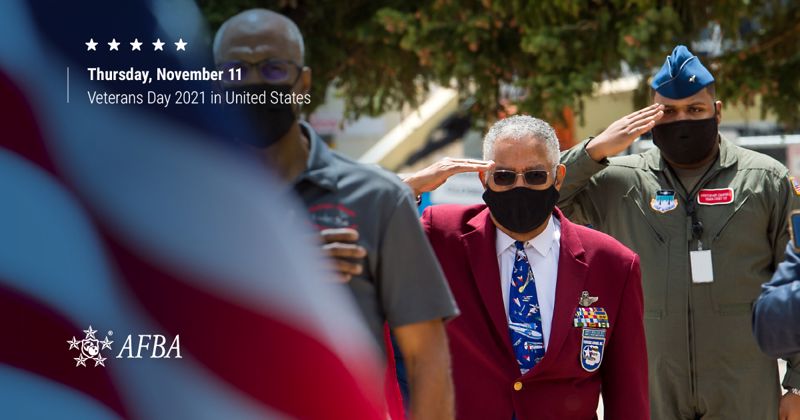
1. Veterans day was originally called Armistice Day
Originally, November 11th was meant to recognize the signing of the agreement that ended World War l. In 1918 the Allied powers ended the war and a year later, President Woodrow Wilson made November 11 a federal holiday.
According to the Library of Congress, he said: "To us in America, the reflections of Armistice Day will be filled with solemn pride in the heroism of those who died in the country's service and with gratitude for the victory, both because of the thing from which it has freed us and because of the opportunity it has given America to show her sympathy with peace and justice in the councils of the nations…"
2. The Uniform Holiday Bill changed Veterans day
In 1968, the Uniform Holiday Bill was signed with the purpose of making sure that federal employees could enjoy three-day weekends during four specific national holidays by ensuring that they fall on Mondays. The four holidays include:
- Washington's Birthday: February 22
- Memorial Day: May 30
- Veterans Day: November 11
- Columbus Day: October 11
However, the first time that Veteran's day was celebrated was not on the original holiday but on October 25, 1971. The holiday, after the law was passed, was very confusing for the citizens. Because of this, it returned to being observed on November 11 in 1978, no matter the day of the week it happens to fall on.
3. National Veterans Day Ceremony
At 11 am on November 11, the Veterans Day National Ceremony is held at Arlington National Cemetery. The first part of the ceremony consists of laying a wreath on the Tomb of the Unknown Soldier, a monument dedicated to the soldiers who were never found in conflict. There is a parade of colors by different veterans organizations as well as meaningful speeches. The Veterans Day National Committee also picks different places across the country for beautiful government-sponsored parades and military exhibits.
This Veteran's day, take the time to thank a Veteran or go to a museum to learn more about how the armed forces have helped shape America into the place it is today.
October 13 marks 246 years of the United States Navy. The creation of the Navy and its history is fascinating and intertwined with America’s own story of bravery. As we approach the branch’s birthday, let’s take a moment to look back at how far the Navy has come. This year, the Navy has decided on “Resilient and Ready” as the theme of its birthday and heritage week. The theme ties into the Navy’s history of perseverance and dynamic problem-solving in times of strife.
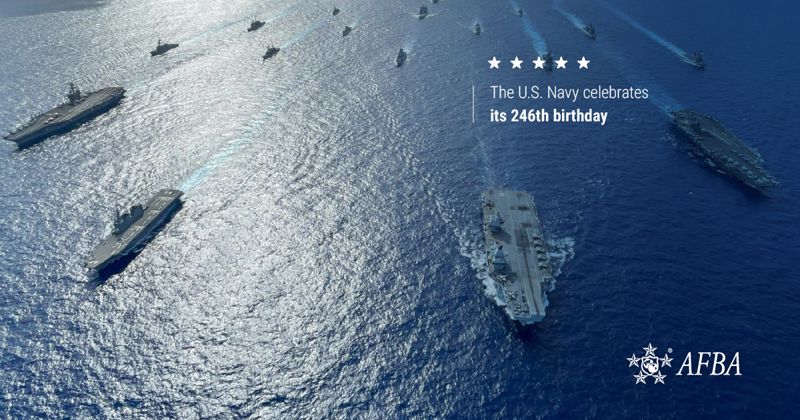 The appearance of U.S. Department of Defense (DoD) visual information does not imply or constitute DoD endorsement.
The Continental Navy
The Navy was first created on October 13, 1775, after the Continental Congress established it at the behest of the United States Constitution. The Constitution urged Congress “to provide and maintain a navy.”
The very first, unofficial version of the “navy” consisted of two sailing vessels, each with 10 carriage guns and a few swivel guns. Each vessel was outfitted with a crew of 80 men and was set to sea to monitor communications of the British Army stationed in America. Especially at the time, this sent a clear message to the British and illustrated the fact the revolution was in full force. The British ruled the seas at the time, and their navy was one of their most prominent weapons against revolution and allowed them to colonize with relative ease.
Those first two ships eventually led to the Continental Congress asking for “a fleet of sufficient force for the protection of these colonies”, even outside of each separate colony trying to protect themselves from the water. In Philadelphia, Congress came to the conclusion that a committee should be formed (John Langdon, Silas Deane, and John Adams) to advise on the formation of the U.S. Navy. According to the Navy, the original goals were to protect American trade and strategically intercept ships that were potentially bringing supplies to British forces.
The only branch to be established twice
After the Revolutionary War, our Navy was not a priority. In fact, it became “unestablished” because it was not used. In the 1790s, the country’s overseas trade was falling victim to raiders and thieves, which urged America to look into reestablishing the United States Navy. There was debate about whether it would be more fiscally responsible to pay the ransoms or to invest in a strong navy.
In the end, however, Congress saw the benefit of having a branch of the military to protect the coasts and the seas. On March 27, 1794, the Navy was reestablished. The first three warships that were the predecessors for the modern Navy were U.S.S. United States, U.S.S. Constellation and U.S.S. Constitution. Eventually, the Department of the Navy was established in 1798.
The modern Navy
Having undergone many iterations, the modern Navy lives by its motto “forged by the sea.” In 2019, there were 278 thousand members of the Navy and they have hundreds of massive ships and submarines with the latest technology. The United States Navy has a long history of tackling disasters and challenges head-on, and it will continue to do so with its unparalleled career opportunities and perseverance.
June 14th of every year marks the United States Army’s birthday. The 14th day of June 2021 was the Army’s 246th year of existence. Having been created in 1775, the Army is the oldest branch of the US military and is soaked with a richly fascinating history. The Army’s many years of committed service to the country truly reflect the branch’s dedication to defense.
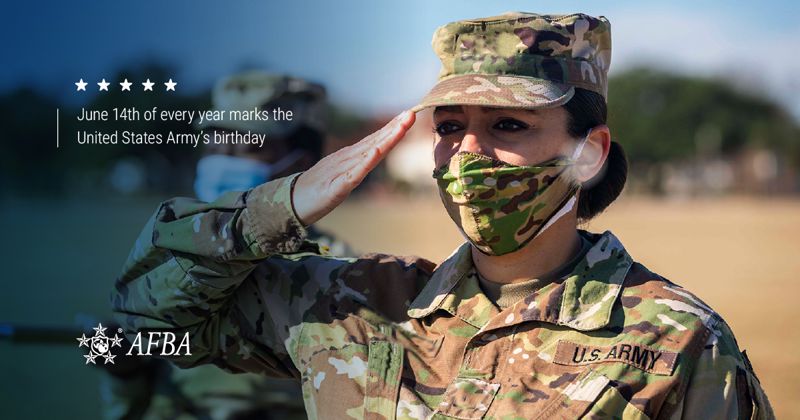 The appearance of U.S. Department of Defense (DoD) visual information does not imply or constitute DoD endorsement.
Historical legacy
The U.S. Army’s legacy started nearly in tandem with the United States itself. In 1778, the Army claimed the motto “This we’ll defend,” and has taken the phrase seriously ever since.
Revolutionary War (1775)
During the rise of civil unrest of the 1770s, the original 13 colonies formed the first version of a U.S. armed forces. The 2nd Continental Congress created the Continental Army as a means of revolting against the rule of Britain. This initial version of the army fought its first battle in 1776, and the 20,000 revolutionaries were forced to retreat by the much more sophisticated redcoats.
With grit and determination that remains today, the army rallied and followed its commander in chief, George Washington, to victory. The U.S. Army is inextricably linked with the United States of America’s brave and independent origins.
The Civil War (1861)
Nearly 100 years later, the United States Army was called into action and underwent a major renovation. The Civil War era was a very important time for weapons technology development in the army. The result was the most deadly war in the Army’s history.
World Wars (1917/1941)
It took many years for the army to build itself back up from the destruction the Civil War wrought. The first world war saw the advancement of the army’s technological sophistication as well as the creation of 17 new National Army divisions. This included the Aviation Section of the Army Signal Corps, which was the predecessor of the Air Force.
Some cite the second World War as being the beginning of the United States Military as we know it today. WWll was also a very important time for the evolution of modern battlefield strategy with the invention of the atomic bomb.
Modern day
Every era of major conflict (many of which are not named here) has resulted in a more advanced and strategic Army, but it’s roots of bravery and valor have remained at its core since the beginning. Today, the United States Army has more than 700,000 members, including both active duty and Army reserve.
Every year on June 14th, members of the Army and their families come together to celebrate the Army’s birthday with balls, dinners, parades and parties. This year was no exception. It was a time for modern-day servicemen to remember and commemorate the incredible history of their branch.
Just like every year, the Pentagon and Capitol Hill recognized the anniversary of the Army through a traditional cake cutting ceremony, using a classic Army saber. Even those who are not directly tied to the United States Army took a brief moment to recognize our country’s oldest military service.
A bill was recently introduced that would give first responders (law enforcement officers, firefighters, Emergency Medical Technicians, paramedics) and teachers access to no down payment options for securing a mortgage. The legislation was introduced by the House of Representatives in May and has been dubbed the HELPER bill, short for Homes for Every Local Protector, Educator, and Responder. The bipartisan HELPER bill is showing support for the community.

This is just one instance of the government reaching out to the people who work every day to make America a better place.
Breaking down HELPER
The national director of Heroes First Home Loans, Samuel Royer, first initiated the HELPER bill. As a former member of the Marine Corps who has benefited from similar legislation created for veterans, Royer looked at this bill as his chance to give back to his community. On may 20th, the HELPER bill was officially introduced by Representatives John Rutherford (R-FL), Al Lawson (D-FL), John Katko (R-NY) and Bonnie Watson Coleman (D-NJ).
The end goal is to give these service workers a leg up in today’s extremely competitive housing market. According to the National Association of Realtors’ Housing Affordability Index, most people have to pay more than 14% of their income in order to satisfy their home payment.
If passed, the HELPER bill would create a one-time-use home loan program that could be used one time under the Federal Housing Administration. Additionally, qualifying people would not need to make a down payment.
This would create opportunities for first responders and teachers that may not otherwise be available. Lastly, HELPER would remove the obligation for a monthly mortgage insurance premium, which is required for all FHA loans.
Government recognition
Teachers add immense value to society just by going to work every day. First responders like EMS personnel also have a low starting pay rate. Despite all this, the federal government has taken action to ensure that those who have chosen such a noble career path are taken care of.
In fact, HELPER is very similar to an already established program called VA Home Loan Program. Through this loan program, United States military veterans can receive benefits which reduce the initial cost of buying a home and can save them up to $90/month in payments. Similar government programs are not uncommon and serve a reminder that the government is grateful for the service of these individuals.
Community recognition
Teachers and first responders directly impact the community they work with and are often held at high personal esteem for their contributions. Despite the discrepancy in financial payment, many who serve find the nature of their work rewarding.
As an example, a survey of 2,000 people showed that 76% say they would gladly pay for a first responder’s meal, if they were out eating and saw one in a restaurant. A bipartisan piece of legislation like the HELPER bill, is a tangible way for a community to show their support.
For some, it might have been easy to take local protectors, educators and responders for granted, but 2020 truly exposed how invaluable they are. The balance of society was held in the palms of doctors, nurses, firefighters and EMT’s. Teachers adapted their entire teaching method and continued working toward a more educated tomorrow. Communities rallied together to support essential workers through classroom funds, in-store discounts and mask drives.
First responders, teachers and health care workers dedicate their lives for the betterment of society. These are people who often live in the communities they serve and the federal government is looking to help those communities show their gratitude by introducing important legislation like the HELPER bill.
After a long year of uncertainty, many Americans are seeking a means to get the COVID-19 vaccination. Meeting this demand will require a momentous effort, involving a diverse range of contributors from the health care industry and beyond.
Following a request from the Federal Emergency Management Agency (FEMA), the U.S. Department of Defense (DoD) stepped in to join the fight against COVID-19. Now, the Army and National Guard are both playing a vital part in vaccine distribution.
Members of the armed forces make for ideal candidates to help in this crucially important process. Active-duty servicemembers can efficiently organize and quickly mobilize to areas in need. Plus, the many specialized skill sets found among soldiers are extremely useful for managing a complex and multi-faceted mission like mass vaccine distribution.
Servicemembers' role to date
The National Guard has already activated more than 20,000 servicemembers and military medical personnel to assist with COVID-19 response, reported Military.com. Some of the jobs active-duty forces are performing include administering vaccines, issuing health assessments and guiding the public through the vaccination process.
In many instances, a dual-status commander is involved to coordinate and oversee emergency response missions. This allows different military components, such as the Army and National Guard, to establish a single chain of command. The dual-status commander can then provide direction and facilitate communications among all involved servicemembers, as well as federal, state and local government agency personnel.
Where are servicemembers helping out?
All across the country and U.S. territories, active-duty servicemembers are doing their part to help with vaccine distribution.
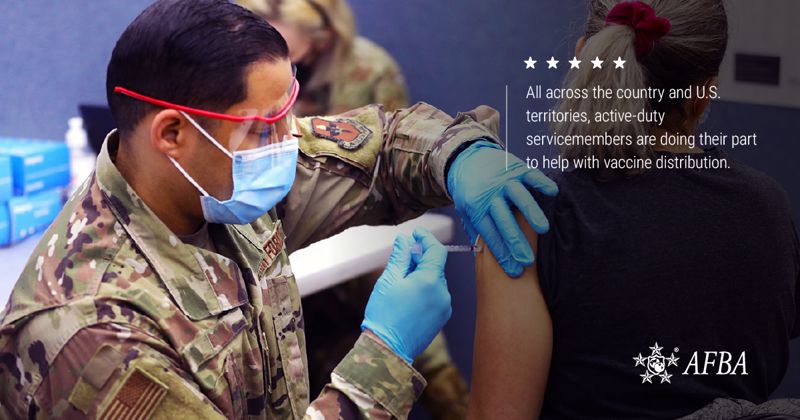
The Army sent 200 soldiers from the storied 101st Airborne Division to the United Center in Chicago, Illinois to help with vaccine distribution as part of the DoD's COVID-19 response operation. These soldiers are assigned to the 426th Brigade Support Batallion's 1st Brigade Combat Team.
"The 101st has a long history of answering our nation's call, which at times has been to support civil authority here within the U.S.," explained Lt. Col. Derek Di Bello, the battalion commander. "It is a mission we will take on with the same focus and energy that we would any task given to us."
In Pueblo, Colorado, approximately 140 soldiers with the 2nd Stryker Brigade Combat Team, 4th Infantry Division, are supporting civilian partners at the state-run, federally supported COVID-19 Community Vaccination Center.
Around 170 military personnel from the 2nd Marine Division based at Camp Lejeune in North Carolina are working with the federally run vaccination center in Memphis, Tennessee.
At the mass vaccination site located at New York City's Jacob Javits Convention Center, more than 350 New York National Guard Soldiers and Airmen, along with members of the New York Guard State Defense Force and New York Naval Militia, are working in partnership with the state's Department of Health.
These are just some of the examples of how the steadfast assistance of servicemembers has contributed greatly to delivering more than 100 million vaccinations already. While there's still have plenty of hard work ahead, if anyone is up for the job, it's our brave servicemen and women.
Nearly 100 years ago in 1926, Carter G. Woodson, a scholar of African American history and the African diaspora, set aside a week in February for the recognition and remembrance of Black history. Fifty years later during the U.S. bicentennial, President Gerald Ford extended this into the federal observance now known as Black History Month.
Ford urged the nation to "seize the opportunity to honor the too-often neglected accomplishments of Black Americans in every area of endeavor throughout our history."
This February, we are honoring the accomplishments of Black servicemembers in the armed forces by sharing a timeline of several notable firsts that contributed to key turning points in military history, from 1770 to the present.
1770: Crispus Attucks, first American casualty in the Revolutionary War
Crispus Attucks, a former enslaved person and dockworker of African and Native American descent, joined a group of Boston patriots in protest against British soldiers. He was fatally shot, becoming the first American to sacrifice his life in defense of the colonies. Tens of thousands of Black soldiers would ultimately serve in the Revolutionary War. Attucks was honored at the time of his death and would later become a symbol for the abolitionist movement.
1863: William Carney, first Black Medal of Honor recipient
William Carney enlisted in the first Black unit recruited for the Union Army — the 54th Massachusetts Infantry Regiment — where he served alongside 40 other Black service members. When the unit's color guard was shot during battle, Carney sustained enemy fire and nearly lost his life in an effort to ensure that the American flag did not touch the ground. His moving and valiant patriotism was acknowledged in 1900 with the Congressional Medal of Honor. As of 2020, 92 remarkable Black servicemembers have since been awarded the Medal of Honor.
1917: Harlem Hellfighters, first all-Black combat unit to serve overseas during WWI
During the First World War, the 369th Infantry regiment — known as the Harlem Hellfighters — became the first Black combat unit to serve overseas. The U.S. did not offer combat roles to African Americans, so the unit was assigned to the French Army. The Hellfighters served in the trenches for 191 days straight without getting captured or ceding any ground, earning them the Croix de Guerre.
1946: Della Raney, first Black woman to serve as an Army major
In 1941, nursing graduate Della Raney became the first Black nurse to serve as a lieutenant in the U.S. Army Nurse Corps. As the Second World War continued, Raney continued as a trailblazer in the Army, marking new firsts with each promotion. She was promoted to captain in 1944 and major in 1946. Maj. Raney continued her Army service until her retirement in 1978.
1941: Tuskegee Airmen, first Black military aviators
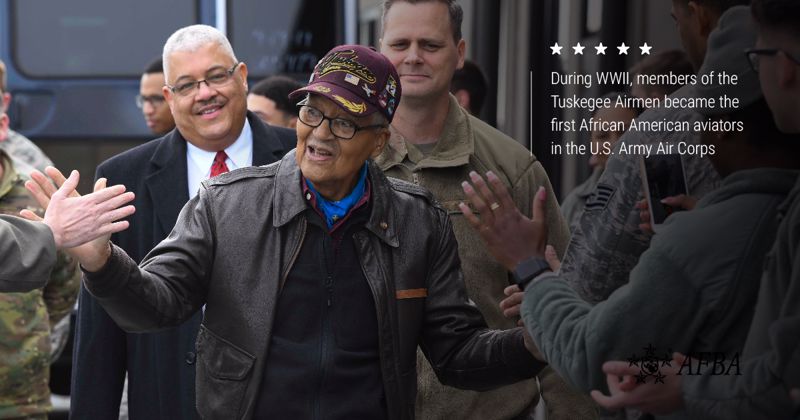
During WWII, nearly 1,000 members of the Tuskegee Airmen trained in the Jim Crow South and became the first African American aviators in the U.S. Army Air Corps, the precursor to the U.S. Air Force. They never lost an escorted plane to enemy forces despite completing hundreds of escort missions and more than 15,000 sorties. The Tuskegee Airmen earned 150 Distinguished Flying Crosses and are being recognized in 2021 with a commemorative quarter inscribed, "They fought two wars."
1989: Colin Powell, first Black Chairman of the Joint Chiefs of Staff
When he was appointed as the Chairman of the Joint Chiefs of Staff by President George H.W. Bush, Colin Powell took on the highest-ranking military position in the Department of Defense and became the first African American and youngest person to do so.
Present day
According to the latest data, roughly 224,000 servicemembers and about 2.1 million military veterans are Black Americans. These brave men and women have continued making a mark on military history thanks to their courageous contributions and service to the nation.

In the Valentine's Day spirit, we're tracing the history of "sweetheart jewelry," which became widely popular during the Second World War.
Traditionally given by a soldier heading off to war to a loved one at home, a piece of sweetheart jewelry was both romantic and patriotic in nature. Today, these items are considered collectible pieces of our nation's past.
Sentimental jewelry to remember soldiers during times of war
As the Cooper Hewitt museum explains, the custom of gifting sweetheart jewelry dates back to World War I. However, it became even more popular during World War II, when countless couples and families were separated as soldiers left home to fight overseas.
Sweetheart jewelry was most commonly exchanged between romantic couples. But fathers, brothers and sons also left family members with these tokens in their absence. Women purchased their own sweetheart jewelry, too, either to remember a certain soldier or show support for the nation's forces as a whole.
Wherever these sentimental items came from, their owners wore them proudly and passionately. Women wore brooches to keep their family and country close to the heart. They tucked pictures of the soldiers they missed into treasured lockets and they wore their hearts on their sleeves in the form of bracelets.
Patriotic colors and imagery permeated jewelry design
While hearts were a common theme, sweetheart jewelry was not only romantic in design; it was also highly patriotic. Many of these items featured military insignia and other icons related to a loved one's branch of service. Others included the American flag or details featuring stars and stripes.
An all-American red, white and blue color scheme was also typical of sweetheart jewelry. Additionally, a library of patriotic imagery, ranging from the eagle and the victory "V" to Uncle Sam's top hat, can be seen in jewelry from the WWII period. Phrases like "Loose Talk Can Cost Lives" and "Remember Pearl Harbor" also made their way into pins and pendants.
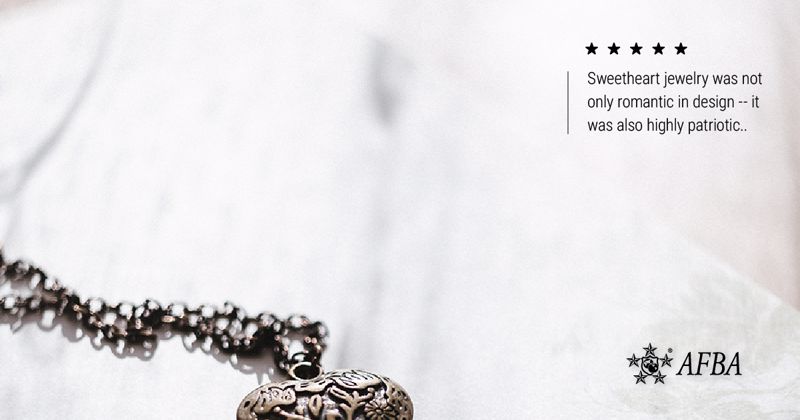
As the National Museum of American History explains, sweetheart jewelry became quite fashionable during WWII. Under rationing rules, new clothes and accessories were hard to come by. Women were urged to make do with what they had. Sporting a sparkling brooch was a welcome way to enliven an old dress collar and show one's support for the nation.
Meaningful jewelry made of modest materials
Sweetheart jewelry did not need to be made of fine, expensive materials like rubies, diamonds or sapphires set in gold. Instead, many Americans exchanged items made of gilded base metals set with sparkling glass crystals, rhinestones and imitation gemstones.
When access to certain base metals was restricted during rationing, jewelers turned to sterling silver. As the Cooper Hewitt museum notes, this forced one manufacturer to triple its jewelry prices — but consumer demand didn't falter.
Other materials such as enamel, wood, mother-of-pearl, shell, and celluloid and Bakelite plastics were also often found in sweetheart jewelry. Some soldiers handcrafted their own sweetheart jewelry items, carving bullets, coins, casings and other metal objects into sentimental adornments.
Sweetheart jewelry inspires a new generation of Americans
According to Collectors Weekly, wartime sweetheart jewelry is now highly collectible: "Sweetheart jewelry is among the most affordable of home-front collectibles, even though the prices have risen in the last 10 years. That's because these items have been growing in popularity with both military and jewelry collectors, as well as Americans who yearn to connect to veterans of past wars and express their patriotism."
Sweetheart jewelry has also inspired a new generation of jewelry makers, including Jessica Gibson, a former Supply Sergeant of the U.S. Army Reserves. In response to the COVID-19 pandemic, Gibson created a sweetheart jewelry-inspired collection.
As she explained in a news release, "1940s fashion and history have captivated my heart over the past few years. Considering all the challenges we are currently navigating, remembering that we've collectively navigated more challenging times has given me hope that together we'll get through this, as we've done in the past. Working on this collection has been therapeutic and inspiring as I designed it with the intention of providing the wearer with a sense of strength and comfort."
The U.S. Army recently announced several major updates to Army Regulation 670-1, Wear and Appearance of Army Uniforms and Insignia, slated to go into effect Feb. 24, 2021. Here is a look at some of the key revisions as well as the reasoning behind the changes.
A people-first approach
As part of the Army's Project Inclusion, instituted in mid-2020, the topics of hair and grooming have come under question. Current guidelines have been critiqued for being discriminatory against various groups, including Black Soldiers and women in the Army. The revised regulations aim to minimize racial bias and promote a more inclusive approach.
"The Army must continue to put people first by fostering a culture of trust that accepts the experiences and backgrounds of every Soldier and civilian," said Deputy Chief of Staff for Personnel, Lt. Gen. Gary Brito, in an announcement. "Our diverse workforce is a competitive advantage, and the Army must continue to offer fair treatment, access and opportunity across the force."
Newly authorized hairstyles are intended to promote healthy, natural hair for all Soldiers
As for hair, a wider range of styles will now be accepted. Previously, women were required to style their hair in a low, tight bun. As this can lead to hair loss, the updated regulations specify that styles such as long ponytails and braids may be worn. They can be tucked into a Soldier's uniform to prevent snagging, and are expected to improve the fit of combat helmets.
"In an effort to stop hair damage and loss stemming from hairstyles like the bun, the Army approved healthier hairstyle options that are more inclusive of various natural styles," explained Sgt. Maj. Mark Anthony Clark.
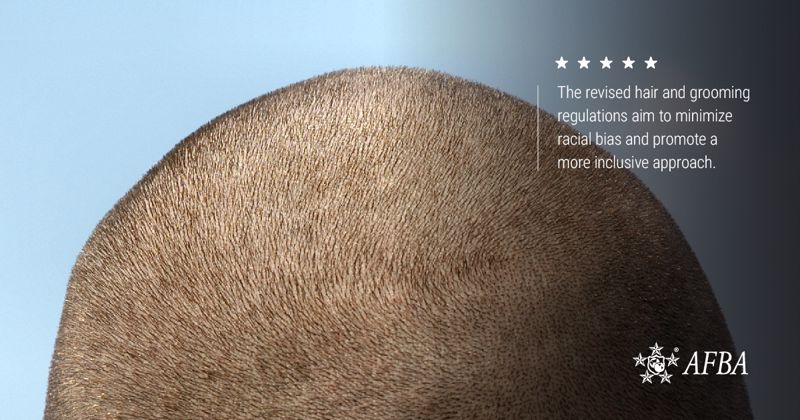
Furthermore, the Army has loosened strict requirements related to cornrows, braids, twists and locks which may be worn by Black servicemembers. Soldiers were previously permitted one such style at a time, with individual sections limited to half an inch in width. The width requirement has been removed, and Soldiers may now opt for more than one of these styles at a time.
Highlighted hair that maintains a natural appearance will also be permitted, although vibrant, artificial hues like blue, green and purple are still not authorized. A Soldier's dyed or bleached hair color "doesn't necessarily have to be a color that is typically seen on a certain ethnic group," explained Master Sgt. Quintana Mitchell.
In an attempt to improve cultural sensitivity within the grooming regulations, words describing particular styles, such as "Mohawk" and "Fu Manchu," are also being revised in favor of verbiage that is less offensive and more descriptive. New images have also been produced to provide clearer detail about the authorized and unauthorized styles.
Additional grooming guidelines support self-expression and safety
Once the new regulations are in place, simple gold, silver or diamond stud earrings will be authorized for women in most non-combat contexts. Additional lipstick and nail polish colors are being added to the list of accepted cosmetics for women. Male Soldiers will also be permitted to wear clear nail polish, either as a grooming choice or in order to protect their nails while working with rough tools and harsh chemical agents.
"Our identity is important," said Sgt. Maj. Brian Sanders in an Army announcement. "If we care about people first and the Soldier as a whole, we have to care about the many aspects to who they are as well. This is a small, but significant change that positively impacts a considerable size of our force."
"I use the analogy, 'If you look good, you feel good — and if you feel good, you perform [well]," Sanders added, explaining that this more inclusive approach to personal appearance and grooming may result in productivity improvements.
In early December 2020, the Department of Defense (DOD) announced that New Jersey-based construction firm Dobco, Inc. had been chosen to build the new Cyber and Engineering Academic Center (CEAC) at the U.S. Military Academy (USMA) at West Point.
Here's a look at the design and bid process for this major project and the timeline for its completion — as well as the emphasis on cyber engineering skills at West Point and the importance of this field to the military overall.
Award-winning design by Jacobs-EwingCole joint venture
Architecture firms Jacobs and EwingCole joined forces in designing the innovative CEAC building. As EwingCole noted, "it was conceived with an eye towards innovation, collaboration, and the tradition and history of West Point Academy simultaneously."
The CEAC will support scholarship and hands-on experience in the areas of science, technology, engineering and mathematics (STEM) and provide space for cadets across three departments:
- Civil and Mechanical Engineering.
- Electrical Engineering and Computer Science.
- Systems Engineering.
As a solution to academic space shortages and outdated facilities at West Point, the CEAC will include 59 flexible laboratory spaces designed to support interdisciplinary collaboration and innovation. These facilities will support project-based learning within the USMC's cyber, robotics, biomechanics, systems design and infrastructure specialties.
The building will be crowned with a rooftop colloquium space for hosting notable speakers, with views of the Hudson River. There will also be an enclosed pedestrian bridge connecting the CEAC to Mahan Hall across the street. Underground parking facilities for up to 450 vehicles will be added as well.
The Jacobs-EwingCole JV design was chosen for the Society of American Military Engineers' 2020 Planning, Design and Studies Merit Award.
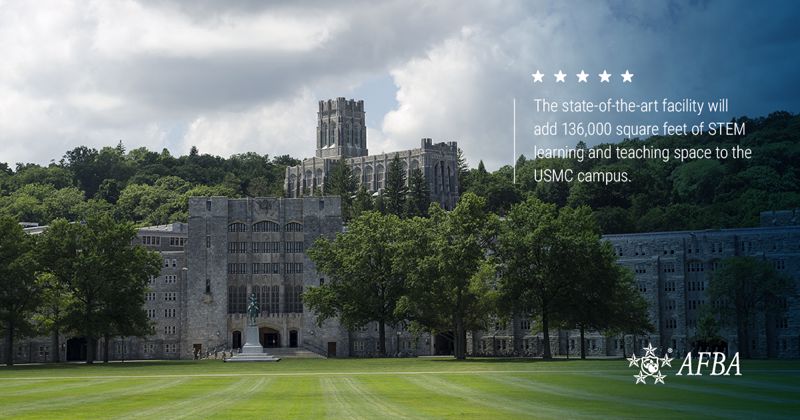
$137.8M bid awarded to build this 136,000-square-foot space
Bids were requested online in June 2020, and the DOD noted that four firms responded. The project falls under the purview of the U.S. Army Corps of Engineers in New York City, and the firm-fixed-price contract was awarded at $137,836,600 to Dobco, Inc.
The state-of-the-art facility will add 136,000 square feet of STEM learning and teaching space to the USMC campus. To prepare the site, 300,000 cubic yards of granite must be carefully removed without disturbing the surrounding academic buildings and barracks.
A groundbreaking ceremony was held on Dec. 11, 2020 — just one week after the bid was awarded. The project is slated for completion by December 2024, and is expected to support the attraction of new talent to West Point over the next several years.
The importance of STEM education for the battlefields of the future
In an increasingly digital era that presents many new and yet unknown vulnerabilities, the Army and the nation must be prepared with cutting-edge technological skills.
According to the U.S. Army Corps of Engineers' request for proposals, the CEAC will play a critical role in "enabling USMA Cadets to experiment and develop new and emerging technologies that will enable the United States Military to remain at the technological forefront of new battlefields, both physical and digital."
"The facility will profoundly and positively impact our mission to develop our graduates who will lead with character in a changing, uncertain and technology-driven world," said Brig. Gen. Cindy Jebb, Dean of the Academic Board, when CEAC broke ground. "We are thrilled that it will serve to attract quality talent across cadets, faculty and staff in an increasingly competitive higher ed landscape."
So you're making your list and checking it twice — but you're still stumped on holiday gift ideas for the military servicemembers in your life. Not to worry! We've put together a roundup of seven military-friendly finds your loved ones will enjoy.
1. Handmade challenge coin display
Throughout their military career, your loved one may have collected quite a few challenge coins. What better way to celebrate their accomplishments than to gift them a handsome challenge coin display. From small desk decorations to large wall displays, browsing the selection of handcrafted challenge coin displays on Etsy will show that there are many different ways for the person on your list to showcase their one-of-a-kind collection.
2. Personalized stationery kit
This is a chance to put together a festive gift basket that's functional, too. In your stationery kit, you can include nice-quality letters and envelopes, as well as a set of USPS stamps honoring military working dogs. You can also customize return address labels with your loved one's location and their branch's official emblem. Consider adding in a rugged military-ready pen, or a more formal writing utensil engraved with a special message. Whenever there's something to write home about, the military servicemember in your life will appreciate the convenience of having everything they need all in one place.
3. Tough tumbler and coffee from a veteran-owned brand
A hot cup of joe can help warm up even the coldest, earliest morning. Pick up a bag of coffee grounds from a veteran-owned and operated coffee company. Popular brands include Victory Coffee, founded by a former Navy SEAL, or Black Rifle Coffee Company, established by an Army Special Forces veteran. Pair that with a durable coffee tumbler and your gift is all set for sipping — just add water!
4. Custom military ring
If you're looking for an extra special holiday gift idea for the military servicemember in your life this year, consider ordering a personalized military ring. Whatever branch they serve in, you can find a corresponding ring style and customize the design with the decorative detailing, gemstone and precious metal of your choice. Military rings can even be engraved with a name, date or other meaningful inscription. The one you choose is sure to become are modern family heirloom, cherished for years to come.
5. Military travel guide
Satisfy your servicemember's wanderlust by gifting them a 2021 military travel guide. Options include guides of popular destinations around the U.S., top camping spots and even overseas travel options. This kind of guide book can be helpful for servicemembers and military families who want to make the most of their free time. With all the planning in place thanks to your gift, they can embark on an exciting adventure as soon as it's safe to do so next year.
6. Tablet with durable case
A tablet can be a great, multipurpose piece of technology for a servicemeber on active duty. It's an all-in-one tool that's useful for getting work done on the go, joining video chats with friends and family, winding down with an e-book and everything in between. The larger screen size makes a tablet a nice alternative to a smartphone for a little less eye strain, and the compact size makes it even more portable than a laptop. There are plenty of popular tablets on the market. Whichever you choose, pair it with a rugged case and screen protector to keep it protected in all environments.
7. Tactical socks
Combat boot blisters are no joke. Since the military servicemember on your gift list spends long hours on foot, a pair of comfy, cozy socks will surely bring a smile to their face. Compare some of the best boot socks for the military and you're sure to find a perfect fit.