
One in five veterans living today served on active duty following the 9/11 attacks. New data from the Pew Research Center demonstrates how their experiences differ from earlier generations of armed servicemembers.
"The American Veteran Experience and the Post-9/11 Generation" summarizes the results of a 2019 Pew survey. Respondents included nearly 800 veterans whose military service was completed before the attacks on Sept. 11, 2001 and nearly 500 vets who began serving afterward.
Among the key findings is the fact that younger veterans struggle more during the transition from active duty to civilian life.
The transition from active duty to civilian life
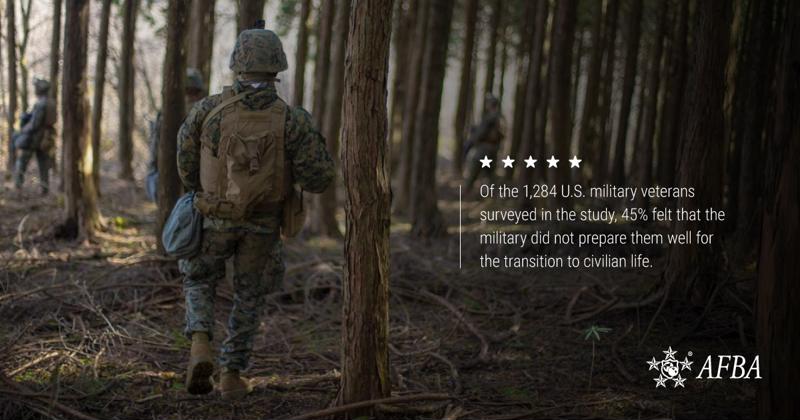
Of the 1,284 U.S. military veterans surveyed in the study, 45% felt that the military did not prepare them well for the transition to civilian life.
However, nearly half of post-9/11 veterans reported that the transition to civilian life was challenging, with 16% describing it as very difficult and a third describing it as somewhat difficult.
This stands in contrast to the relatively smooth transition experienced by pre-9/11 veterans: 78% considered the transition somewhat or very easy. Only 4% described it as being very difficult.
Civilian work-life challenges
In the first months and years following reentry into civilian life, veterans struggled with:
- Paying bills.
- Finding employment.
- Obtaining medical care.
- Alcohol or substance abuse.
- Emotional distance from friends and family.
- A lack of structure in civilian life.
The study found that about two in five post-9/11 veterans believed they were overqualified for their first post-military civilian job, although the majority stayed for at least one year. However, more than two-thirds reported that their deployment had a positive financial impact compared to the majority of pre-9/11 vets who felt it had no impact.
The older generation was more likely to feel pride in their service and optimism about their future, while the younger generation was more likely to find government assistance levels inadequate.
Mental and emotional health consequences
The post-9/11 generation was more likely to have experienced emotionally distressing or traumatic experiences and post-traumatic stress as a result of deployment.
The Pew study concluded that post-9/11 combat veterans, in particular, were the most likely to have experienced emotional trauma and were, therefore, more likely to struggle generally. The research revealed that 57% of all combat veterans had witnessed someone they served alongside be killed or seriously injured.
Because twice as many veterans saw combat in the post-9/11 era, twice as many came away with the emotional scars of those experiences. Of post-9/11 veterans, 42% reported that their service had negative mental health consequences, compared to only 17% of pre-9/11 veterans who felt similarly.
However, the post-9/11 generation was more likely to seek out help for emotional issues (35% compared to just 10% of pre-9/11 veterans).
Higher likelihood of serving in a combat zone
The difference between the experiences cited by both generations, according to Pew researchers, was the greater likelihood of serving in a combat zone. Post-9/11 veterans were far more likely to have experienced at least one deployment and were twice as likely to be combat veterans.
Over three-quarters of post-9/11 vets were deployed at least once, with 10% having been deployed eight or more times. Additionally, about half of post-9/11 vets experienced combat; less than a quarter of pre-9/11 vets did.
And yet, despite experiencing a more difficult transition from active duty to civilian life, roughly four in five post-9/11 veterans said that they would still encourage a young person to enlist.
The complete results of the study are available on the Pew Research Center's website.
American families will gather around the dinner table to celebrate Thanksgiving on Nov. 28, 2019. Meanwhile, many of the 1.4 million servicemembers currently on active duty won't be able to enjoy the comforts of home.
This year, we give thanks to the brave servicemen and women who protect our country on Thanksgiving Day and every day.
Thanksgiving traditions
Over the years, military members have celebrated Thanksgiving in a variety of ways.
President George Washington instituted a "day of public thanksgiving" on Oct. 3, 1789. Similar days were observed during the Revolutionary and Civil Wars, but the holiday as we know it wasn't instituted until 1863.
President Lincoln's Thanksgiving Proclamation made it clear that those at home and abroad are welcome to take part: "I do therefore invite my fellow citizens in every part of the United States, and also those who are at sea and those who are sojourning in foreign lands, to set apart and observe the last Thursday of November next, as a day of Thanksgiving and Praise."
During World War I, service organizations arranged Thanksgiving banquets, football games, and entertainment for military personnel to enjoy. After Armistice Day, those deployed in France enjoyed a distinctly American meal with French families.
From World War II onward, fall feast ingredients have been shipped or sourced locally so that military units around the world can observe and enjoy the holiday — even when such logistics seem impossible.
In November 1944, 1.6 tons of fresh turkey were plated up for Soldiers fighting in the European Theater of Operations. During Operation Desert Storm in 1990, President George H.W. Bush, sat down to Thanksgiving dinner with the troops stationed in Saudi Arabia.
It's now a military tradition that senior leaders dish out the Thanksgiving meal, when and wherever possible. Following a series of standardized recipes, each branch hosts Thanksgiving feasts on-base where the menu includes L-161-00 (roast turkey), I-013-00 (pumpkin pie) and Q-069-02 (marshmallow sweet potatoes). Veterans and guests are typically welcome to join.
Alternatively, servicemembers may sit down for a meal with a local family and share their beloved American customs wherever they are.
What you can do this Thanksgiving
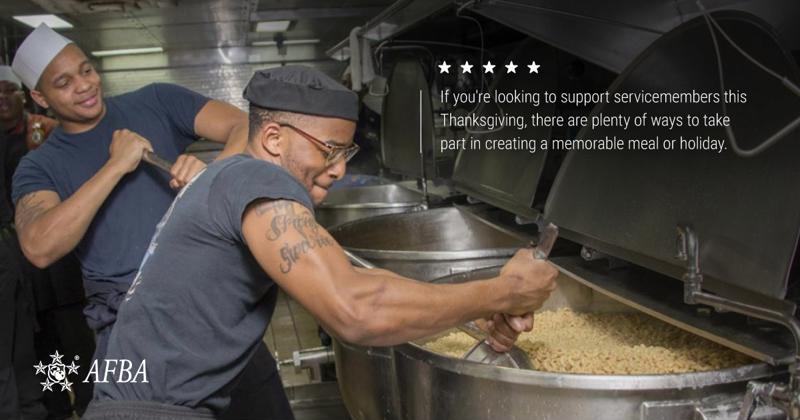
If you're looking to support servicemembers this Thanksgiving, know that there are plenty of ways to take part in creating a memorable meal or holiday.
Invite any servicemembers you know to join you for Thanksgiving dinner, or join an "adopt a servicemember" program to host someone in your area. Connect with the Morale, Welfare and Recreation (MWR) office at a nearby base or reach out to the USO or the Armed Services YMCA to learn about holiday programs and opportunities to give back.
In a story for Military.com, one military spouse wrote, "the inherent stress of inviting more than 40 soldiers … who were unable to travel home was more than balanced by the laughter and gratitude they shared with us."
This Thanksgiving, active-duty servicemembers will be thinking of nearly 2 million family members back home. Holidays can be difficult during a loved one's deployment, so extend some warmth and welcome a military family into your home.
Operation We Are Here publishes a list of locations opening their doors to military families for Thanksgiving dinner — see if you can volunteer to serve up turkey, stuffing and pie.
You can also support servicemembers abroad. Send a Thanksgiving card or care package to servicemen and women overseas or donate goods to a charitable organization that's arranging holiday shipments.
Finally, remember to include the brave men and women of the armed forces in your thankful thoughts this year.
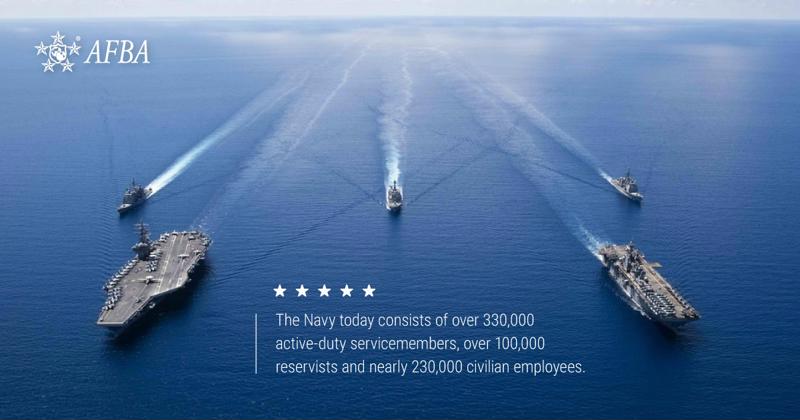
Sunday, Oct. 13, 2019, marks the 244th birthday of the U.S. Navy. Although it began with just two ships and a 160-person crew, the Navy today consists of over 330,000 active-duty service members, over 100,000 reservists and nearly 230,000 civilian employees.
The 244th Navy Birthday and Heritage Week honors well over two centuries of courage, loyalty, sacrifice and service. Additionally, this year's commemoration coincides with a major Naval milestone, the 75th anniversary of the Battle of Leyte Gulf.
The birth and growth of the Navy
The U.S. Navy was born on Oct. 13, 1775, upon the passage of a resolution by the Continental Congress. The Continental Navy, as it was then known, was designed to protect the soon-to-be-independent colonies from British advances at sea.
The second-oldest branch of the military didn't restrict its sights to the seas; naval aviation was introduced in 1910. Since then, a total of 68 aircraft carriers have been commissioned.
In response to the looming shadow of WWI, the U.S. Naval Reserve Force (USNRF) was established on Mar. 3, 1915. Initially composed of a few thousand Naval veterans, it welcomed civilians the following year. By the end of the war, the USNRF consisted of over 245,000 Reserve Sailors, including 12,000 women, which accounted for over half of the Navy. These "citizen sailors" continued to have a significant impact. During WWII, three million members of the USNRF joined over 570,000 active-duty Sailors in the line of duty.
Another enduring example of Navy service and courage is the Naval Special Warfare Unit, which includes the Navy SEALS, short for Sea, Air, and Land teams. Though the unit wasn't established until Jan. 1, 1962, its history reaches back to the various special operations teams formed during WWII.
From D-Day and the attack on Pearl Harbor to operations in Korean, Vietnam, and the Middle East, Sailors and Naval officers have played a central role in defending the nation during the most pivotal moments in history.
"No Higher Honor"
October 2019 marks a significant Naval milestone: the 75th anniversary of the Battle of Leyte Gulf, the largest naval battle of WWII.
In October 1944, during the most dramatic chapter of the Battle of Leyte Gulf, two dozen Japanese vessels made a surprise attack on Allied forces in what became known as the Battle off Samar. While Naval service members heroically defended their fleet, some ships were lost, including the USS Samuel B. Roberts (DE-413). She was later dubbed "the destroyer escort that fought like a battleship" in a Presidential Unit Citation award.
Lieutenant Commander Robert Copeland, the ship's Commanding Officer, later stated that there was "no higher honor" than having commanded such a valiant crew. The theme for the 244th Navy Birthday and Heritage Week is "No Higher Honor" in remembrance of this occasion.
Honoring 244 years of service today
Across centuries of war and peace, Navy sailors, officers, reservists, veterans and civilian members have braved the depths of the sea in submarines and soared through the skies in fighter jets. Through it all, the Navy has held a steadfast presence over land, air, and sea, protecting the seas and shaping the nation's future.
Today, the honorable, unyielding spirit of the Navy can be captured by two phrases: its unofficial motto, "Non sibi sed patriae," meaning "not self but country," and "Forged by the Sea," the branch's current recruiting slogan.
The week-long observance of the Navy's 244th birthday begins on Oct. 7 and continues with the celebratory Navy Birthday Ball on Oct. 12 in Washington, DC.

When a 35-day partial government shutdown hit the nation in the 2018-2019 winter, thousands of federal employees, contractors and others went without pay. Even the Coast Guard missed paychecks after more than a month political standstill, but kept working through the shutdown. This was notable because the Coast Guard was the only part of the nation's armed forces that went without pay during that stretch, as it is part of the Department of Homeland Security and not the Department of Defense, whose funding did not lapse.
While members of the Coast Guard did receive back pay, Congress has recently moved to remedy that oversight and prevent any future shutdowns from obstructing Coast Guard from being paid.
Bill passes House and Senate panels
The Coast Guard Reauthorization Act of 2019 is the latest edition in a regular series of legislation that makes appropriations and other updates to modernize and improve the service and how it operates. A feature of this reauthorization act is the stipulation that requires Coast Guard to be paid should any shutdowns materialize in the future, among other reforms. This was done through the inclusion of an amendment titled the "Coast Guard Pay Parity Act" that would ensure paychecks are sent despite any shutdown occurring.
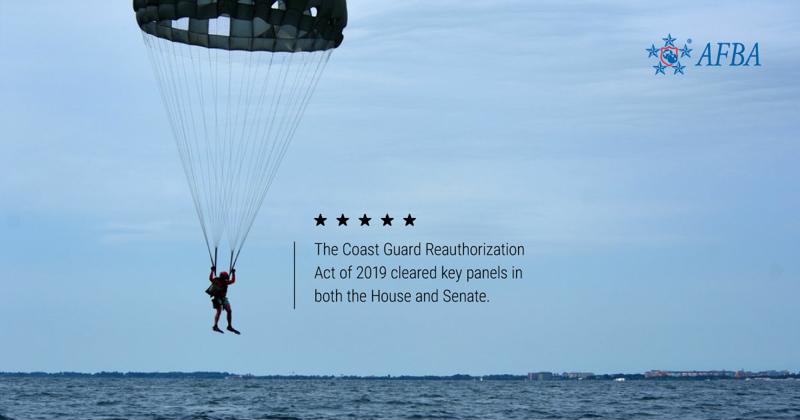
The legislation is well on its way to passing through Congress, having cleared key panels in both the House and the Senate with bipartisan support. The House Transportation and Infrastructure Committee had passed the reauthorization act near the end of June. At that time, Committee Chair Rep. Peter DeFazio (D-OR) hailed it as crucial to protecting both the men and women of the Coast Guard and recognizing their sacrifice.
"This legislation ensures our Coasties can continue carrying out their important work to secure our waterways and keep our communities safe," DeFazio said. "In addition, I am proud to have added an amendment which guarantees that members of the Coast Guard are paid on time and in full, even in the event of another senseless government shutdown."
On July 31 the Senate Committee on Commerce, Science, and Transportation approved the Coast Guard Reauthorization Act of 2019.
"I'm honored to have led the effort on this year's Coast Guard reauthorization, supporting members of the fifth branch of our military who are far too often overlooked or forgotten," said Dan Sullivan (R-AK). "With this legislation, we will ensure that Coast Guardsmen never again are risking their lives and serving without pay – as they were during the partial government shutdown earlier this year."
The full House and Senate will need to vote on and pass the act before it can be sent to the president and signed.
42,000 went without pay last time
The unique circumstances of the Coast Guard being part of the Department of Homeland Security — instead of Defense, like the other four branches of the military — led to it being affected by the shutdown. During those 35 days, 42,000 missed a paycheck, including active duty members, reservists and retirees, according to NBC news. The lapse negatively affected thousands who had families to support and payments to make, like those for mortgage or credit cards. The Coast Guard even provided its members with a financial management tip list.
The legislation is hugely important not just for members themselves, but for national security and the efficacy of the Coast Guard. According to a report from The Wall Street Journal, the Coast Guard took time to recover after the shutdown delayed crucial maintenance and supply replenishment.
The Marines are heralded in the U.S. as some of nation's most skilled and elite warriors, an identity known around the world. Part of that renowned fighting force is the Marine Corps Reserve, a group of service members ready to answer the call of duty whenever it comes. With roots dating back to World War I, the Marine Corps Reserve — also known as the Marine Forces Reserve, or MARFORRES — has a long tradition of excellence and bravery in the armed conflicts America has been a part of, as well in other operational duties.
Aug. 29, 2019, marks the 103rd birthday of the Marine Corps Reserve, an observance and celebration of the men and women who stand at the ready as part of reserve forces. Here's more information about the history and purpose of the MARFORRES.
Contributions in WWI and beyond
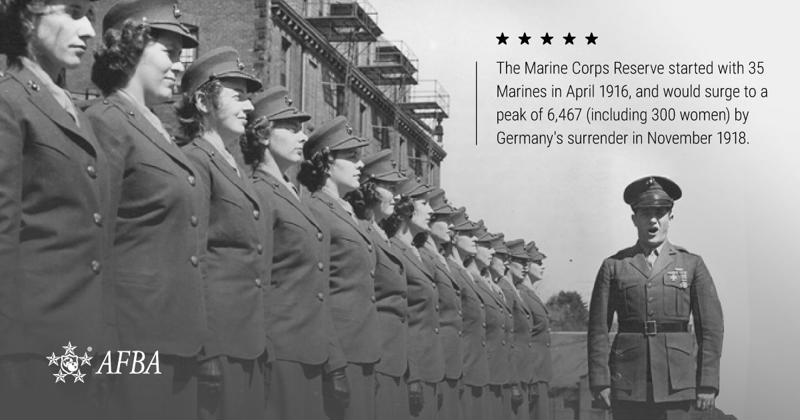
According to the Marine Corps, the need for reserves was an issue as early as the Civil War. However, it was not until Woodrow Wilson signed the Naval Appropriations Act of 1916 was such forces were created — and not a moment too soon, as American would join World War I a year later. The Marine Corps Reserve started with 35 Marines on April 1, 1916, and would surge to a peak of 6,467 (including 300 women) by Germany's surrender in November 1918.
The purpose of the MARFORRES is to augment and enhance Marine forces by providing a group of fully trained individuals who can be mobilized for war, national emergencies and contingency operations. This responsive nature to the needs of the nation were on display soon after WWI, when the thousands of Marine reservists demobilized and reentered civilian life. While MARFORRES had fallen into inactivity in the years after, it was quickly rebuilt, growing to more than 10,000 reservists by 1930. Those reserve forces would soon be called on during World War II: According to the Marine Corp, of the nearly 590,000 Marines who served in the war, 70 percent were estimated to be reservists. Whether ace fighter pilots or reporters on the frontlines, reserve forces would earn honors and distinction for their service and importance.
After the war wind-down, the Marine Corps Reserve would reach some 128,000 personnel on the eve of the Korean War, which many participated in. Fast forward to now, and the reserve forces remain among the most crucial cogs to the American armed forces after legislation that has modernized and updated the Marine Corps Reserve for today's military needs. Currently, it is split in two units: the 38,000-strong Marine Corps Select Reserve, and the Individual Ready Reserve.
Fighting modern threats
Today, the Marine Corps Reserve is active in addressing the many global threats the U.S. faces today, including serving in Iraq and Afghanistan, as well as other counter-terror combat operations. Providing peacetime aid is a large focus for the reserve forces, who assist in national and state emergencies. Also, the Marine Corps Reserve is made of diverse Americans. According to the Marine Corps, "their experience is extensive and includes occupations such as police officers, fire fighters, federal agents, mechanics, city planners, politicians, truck drivers, information technology and cyber professionals, carpenters, electricians, and business owners. The depth and diversity of experience is a force enabler that adds enormous value to the modern battlefield."
Celebrating MARFORRES
The Marine Corps Reserve birthday may not show up on every calendar, but it's important to remember and honor the sacrifice and service of those who have been part of the reserve forces. In fact, the occasion is often an event observed within the Marines, not commonly with public displays. However, you can opt to fly a Marines flag on Aug. 29 or undertake other activities.
The story of American paratroopers is deeply woven into the fabric of the nation's military history and identity. The sight alone of these airborne armed forces inspires awe, and the honorable service of these men and women over 70 years of parachuting has created a tradition of excellence that has become synonymous with the paratrooper divisions within the Army, as well as the greater military.
That's why every Aug. 16 is celebrated as National Airborne Day. This moment of reflection gives us a way to remember and recognize the valor and effort displayed paratrooper forces. They have demonstrated courage and commitment since the first experimental jump in 1940 through the many armed conflicts the U.S. has engaged in since. After all, it takes a lot of self-determination to fling yourself out of a moving plane a thousand feet up in the air.
Here's more information about the history of paratroopers, National Airborne day, and how the observance is celebrated.
The first jump in August 1940
As the story goes, the idea to parachute troops into combat operations was first conceived by Brigadier General William Mitchell after World War I concluded. Regarded as the father of the U.S. Air Force, he focused on the advantage of dropping elite ground forces behind enemy lines. By 1940, World War II had broken out, and though the U.S. was not yet involved, it put into motion the paratrooper initiative by authorizing the Army Parachute Test Platoon that summer. On Aug. 16, 1940, 48 soldiers from the 29th Infantry Regiment jumped from a Douglas B-18 over Lawson Army Airfield at Fort Benning in Georgia.
Service in WWII and beyond
American paratroopers have become among the most definitive images associated with WWII. Along with Allied forces that stormed the beaches on D-Day, U.S. parachuting forces were critical to the success of the operation, and would go on to fight in the Battle of the Bulge. However, the first combat jumps took place over North Africa in November 1942, when members of the 2nd Battalion, 503rd Parachute Infantry Regiment, leapt from a C-47.
Paratrooper forces would then go on to serve in various conflicts and military operations including Korea, Vietnam, Grenada, Panama, Somalia, the Balkans, Afghanistan and Iraq. They have also participated in peace-keeping missions in Lebanon, the Dominican Republic, and Kosovo.
The 'Screaming Eagles'
Today, paratroopers comprise some of the most recognizable divisions in the Army, most notably the 101st Airborne, otherwise known as the Screaming Eagles. But the 101st is far from alone in representing Army paratroopers, which also include the 11th, 13th, 17th, 80th, 82nd (known as "America's Guard of Honor") and 108th Airborne Divisions. Paratroopers also make up the Army's XVIII Airborne Corps and the 75th Infantry (Ranger) Regiment. Airborne-trained troops are also found in the Navy SEALs and other Special Forces units, as well as the Marines and Air Force.
Airborne Day created by G.W. Bush
Aug. 16 was first proclaimed National Airborne Day by President George W. Bush in 2002, though it would take until 2009 for a Senate resolution to recognize the observance.
"Airborne combat continues to be driven by the bravery and daring spirit of sky soldiers. Often called into action with little notice, these forces have earned an enduring reputation for dedication, excellence, and honor. As we face the challenges of a new era, I encourage all people to recognize the contributions of these courageous soldiers to our nation and the world," Bush wrote in the official proclamation.
Now, many events are held at military bases and other locales around the country that display that technique and skill of these "sky soldiers." The Army's Golden Knights are well-known, while the Special Operations Command Parachute Team, the Black Daggers, also dazzle on-lookers from the ground.
As we celebrate National Airborne Day this Aug. 16, take time to reflect on the service and sacrifice of these brave parachuting forces.
The Purple Heart is among America’s most honored and recognizable distinctions. Awarded to members of the Armed Forces who have been killed or injured in battle, the Purple Heart is given in gratitude for the sacrifice and courage displayed by those who have earned it.
The medal has a long history, rooted in the Revolutionary War, and is notable for many reasons, such as the fact it can be awarded multiple times. Changes in criteria have also occurred, but the stunning and evocative visual imagery of the medal has always been a constant.
Aug. 7 is Purple Heart Day, and 2019 will mark the 237th anniversary of the medal’s birth. In observance of that fact and in respect for those who have earned the medal, let’s explore the history of the Purple Heart and the courageous examples set by our armed forces members.
 “The appearance of U.S. Department of Defense (DoD) visual information does not imply or constitute DoD endorsement.”
Created by Washington, revived by MacArthur
The Purple Heart is America’s oldest military award, despite falling into disuse for more than a century. In 1782, the Continental Congress had halted promotions and commissions due to lack of funds, leading General George Washington to create the Badge of Military Merit as a alternative to recognize merit displayed by soldiers.
“The General ever desirous to cherish virtuous ambition in his soldiers, as well as to foster and encourage every species of Military merit, directs that whenever any singularly meritorious action is performed, the author of it shall be permitted to wear on his facings over the left breast, the figure of a heart in purple cloth, or silk, edged with narrow lace or binding,” Washington wrote in the order that established the medal and described its physical construction. A privilege of receiving this medal was enlisted men being able to pass sentries as if they were commissioned officers.
However, the Badge of Military Merit was only awarded to three participants of the Revolutionary War. It went unused until 1932, when then Army Chief of Staff General Douglas MacArthur announced the reviving of the medal in honor of Washington’s 200th birthday. MacArthur worked with the Washington Commission of Fine Arts and Elizabeth Will, a heraldry specialist in the Army’s Office of the Quartermaster General to style the medal along the lines of Washington’s description.

Reforms to eligibility
Until 1942, the Purple Heart had been a distinction exclusive to the Army. It was not until then that President Franklin D. Roosevelt authorized Navy service personnel, which included Marines and Coast Guard, to receive the award. That included members who “are wounded in action against an enemy of the United States, or as a result of an act of such enemy, provided such would necessitate treatment by a medical officer,” according to the Department of Veterans Affairs.
But that wouldn’t be the end to reforms that broadened eligibility for the Purple Heart. President John F. Kennedy in 1962 amended standards to include “any civilian national of the United States, who while serving under competent authority in any capacity with an armed force…, has been, or may hereafter be, wounded” and the posthumous awarding of the medal. The medal would later become specific to the Armed Forces.
1.8 million awarded
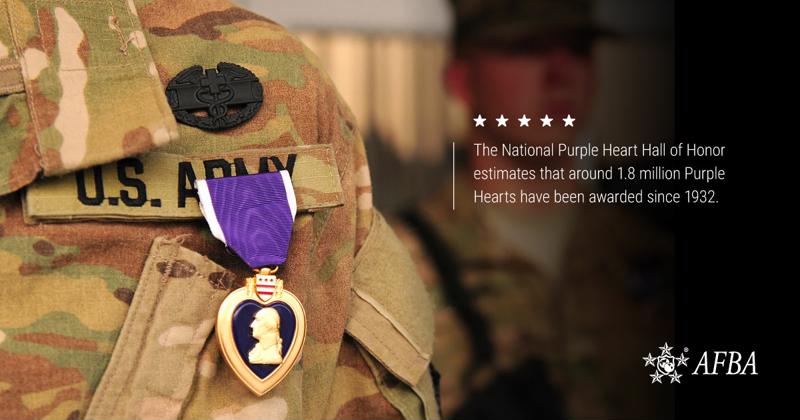
While there is no official record, the National Purple Heart Hall of Honor says current estimates are that around 1.8 million Purple Hearts have been awarded since the 1932 resumption. Most recently, in 2015, the eligibility criteria were expanded to include those who were killed or wounded as part of certain instances of domestic terrorism.
Aug. 7 is a date to remember the many ways in which American Armed Forces members consistently prove to be heroes in combat or protection of their fellow man. This year, take time to recognize the 234th anniversary of the Purple Heart and the accomplishments of hose who have earned it.
One of the five service branches of the U.S. Armed Forces, the Coast Guard plays a vital role in patrolling the country's coasts and waterways. Now more than two centuries old, the Coast Guard has a storied and rich history in the American military. And while it is the smallest of the five branches, it has an outsized role in advancing and protecting U.S. public, environmental and economic maritime interests.
In recognition of the service the Coast Guard and its members have rendered, every August 4 is celebrated as the Coast Guard's birthday. Now turning 229, one could hardly notice its age, as the Coast Guard continues to become more technologically advanced and responsive to the call of its country.
So on Sunday, Aug. 4, 2019 remember all the Coast Guard has given, and celebrate its continued achievement as the oldest continuous sea-going service in the United States.
10 ships started it all
The Coast Guard's age puts it on par with the Army, which was established even before the Declaration of Independence was signed. The Revenue-Marine were commissioned on Aug. 4, 1790 under the Tariff Act, which was signed by President George Washington. This unit, which would go on to become the Coast Guard, was initially made of 10 ships, and was brought into being with the support of the nation's first Secretary of the Treasury, Alexander Hamilton.
Ten cutters, a type of sea vessel, were created and its crews were tasked with the enforcement of tariff laws, prevention of smuggling and protection of federal tax collectors. Added responsibilities were taken on in short order, including combating piracy, conducting rescue operations and ice-breaking missions, to name a few. These varied law enforcement, military and humanitarian duties serve as the basis for the three mandates of the Coast Guard:
- Safety.
- Security.
- Stewardship.
In time, the Revenue-Marine would expand and grow into the Revenue Cutter Service, and in 1915 was merged with the U.S. Life-Saving Service. The resulting entity was renamed the Coast Guard, and it continued to acquire new responsibilities, like oversight of the country's lighthouses and marine inspection and navigation. Now, the Coast Guard seizes a drug-smuggling boat every five days, saves thousands of lives every year, and assists 193,938 tons of shipping daily during Great Lakes ice season.
More facts about the Coast Guard
There's a lot to be accomplished in 229 years, and the Coast Guard has done quite a bit, including:
- Serving in 17 wars and conflicts in U.S. history. During wartime the Coast Guard can operate independent mission or serve as part of the Navy.
- Being the only of the five branches to be placed under the Department of Homeland Security.
- Patrolling more than 4.5 million square miles of Exclusive Economic Zones, as well as providing services in international waters.
- Operating its own anti-terror team, The Maritime Safety and Security Team. According to the USO, it is the only special operations force that can arrest submerged SCUBA divers.
- Having Sinbad, a dog that served aboard the USCGC George W. Campbell in World War II, as its mascot. Sinbad provided company to troops, while also being onboard for anti-submarine confict.
How you can celebrate the Coast Guard's birthday
In lieu of trying to send a Happy Birthday card to the Coast Guard itself, take time to recognize and celebrate the service of its members:
- Participate in or organize a local event that can help educate children on the Coast Guard history or hear active duty members or veterans speak.
- Offer a special discount on Aug. 4 if you run a business for Coast Guard members and veterans.
- Visit memorials or other locations to pay respects for the fallen and recognize their sacrifice.
The Coast Guard is turning 229 on Aug. 4, 2019 — and will continue to be in the future an integral and capable branch of our armed forces.
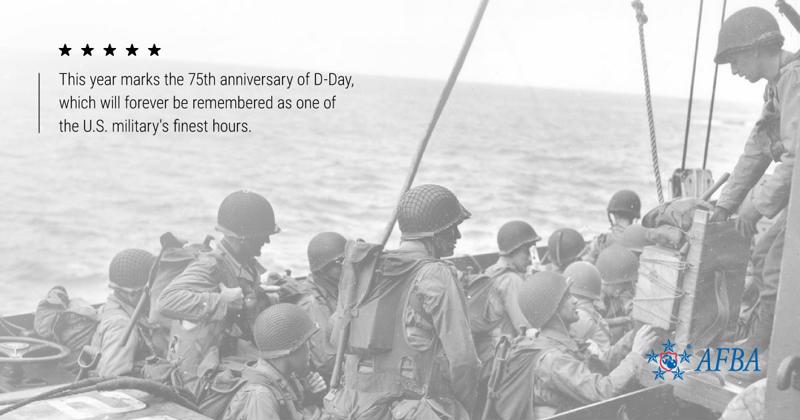
On Tuesday, June 6, 1944, the Allied forces of World War II landed on the beaches of Normandy, with over 160,000 men participating in history's largest seaborne invasion. By the end of D-Day, none of the assault forces had secured their first-day objectives, and an estimated 10,000 Allied soldiers were killed, wounded or missing in action, including 6,603 American casualties.
Yet over the course of the following days, the Allies gradually expanded their foothold, and began the liberation of German-occupied France, and eventually Europe, from Nazi control.
Though historians still debate what the "D" stood for, there is no disputing the legacy of D-Day, which will forever be remembered as one of the U.S. military's finest hours. And this year, as that fateful day turns 75 years old, several special ceremonies and events have been planned to commemorate the heroism displayed on the beaches of Normandy all those years ago.
D-Day observances planned for the 75th anniversary
The small community of Bedford, Virginia, lost 20 of the 32 sons it sent to the invasion of Normandy, earning the town the tragic yet honorable distinction of sustaining the highest per capita D-Day losses of any American city. In 2001, Bedford became the site of the National D-Day Memorial, which this year will observe the 75th Anniversary by hosting six days of ceremonies, displays, interviews and more, beginning June 4 and concluding on June 9.
Included in the schedule of events is an aerial tribute to veterans on the morning of June 6, followed by a commemorative observance titled "The Final Salute," which organizers expect will represent the last large gathering of D-Day veterans around the globe. The itinerary for that Thursday also includes World War II reenactments, a USO show and a free screening of "Saving Private Ryan," which memorably and thrillingly depicts the U.S. forces landing at Omaha Beach.
Other commemorative events will be held on the day of the 75th anniversary in Alexandria, Virginia; Louisville, Kentucky and Wheaton, Illinois, according to this list of D-Day observances being held throughout the world.
Each year, thousands of people visit Normandy to reflect on the acts of sacrifice that took place there more than seven decades ago. And for the 75th anniversary, one very special visitor will be making a return trip of sorts.
In 2015, a derelict airplane was discovered in a boneyard in Wisconsin, and aviation historians determined it was actually the plane that led the D-Day invasion. Donors were able to raise hundreds of thousands of dollars for the plane's restoration, and by 2018, it was once again in flying condition.
And on June 5, the historic Dakota C-47 will meet up with a dozen other European Dakotas to form a "D-Day Squadron" that will recreate the start of Normandy invasion by crossing the English Channel, according to the New York Times.
"That's why we're doing this mission," said Andy Maag, who is piloting the 75-year-old C-47. "We're bringing history to life."
A push to extend more health benefits to "Blue Water" Navy veterans of the Vietnam War appears to be gaining momentum.
Members of the House recently voted to make permanent a court ruling that grants benefits to roughly 90,000 sailors who claim to have been exposed to Agent Orange in Vietnam, advancing the legislation to the Senate and encouraging advocates who have long fought for these protections.
Blue Water Navy Vietnam Veterans Act would alter VA policy
The infamous Agent Orange is an herbicide that was widely used as part of the U.S. military's "Operation Ranch Hand," which lasted from 1962 until 1971. The operation's objective was to spray chemicals that would deprive the Viet Cong of food and vegetation cover, but the toxicity of the herbicide had the unintended consequence of causing significant health problems for the many individuals who were exposed to it.
It is the Department of Veterans Affairs' current position that the vets who served on open sea ships off the shores of Vietnam, often referred to as "Blue Water Veterans," were not exposed to Agent Orange since they never set foot on the Indochina Peninsula. As a result, the VA requires that these Blue Water veterans "show on a factual basis" that they were actually exposed to herbicides during their military service in order to receive disability compensation for diseases related to Agent Orange.
However, veterans advocates have long maintained that the burden of proof should not be on those who served, and many lawmakers are inclined to agree.
"I've no way to prove where I walked 40 years ago," said ranking Veterans Affairs Committee member Rep. Phil Roe, R-Tenn., who served near the Korean demilitarized zone.
This proposed legislative fix was primarily triggered by a January Federal Circuit decision in the case of Procopio v. Wilkie, which ruled that Blue Water veterans were, in fact, entitled to a presumption of benefits under the Agent Orange Act of 1991, vindicating former sailors who fought for years to challenge the VA's decision to limit the presumption standard only to those soldiers who had "boots on the ground." It appears unlikely that the VA will challenge the court's decision, according to Bloomberg Government, which is why some in Congress are pushing to officially codify and fund the expansion of benefits.
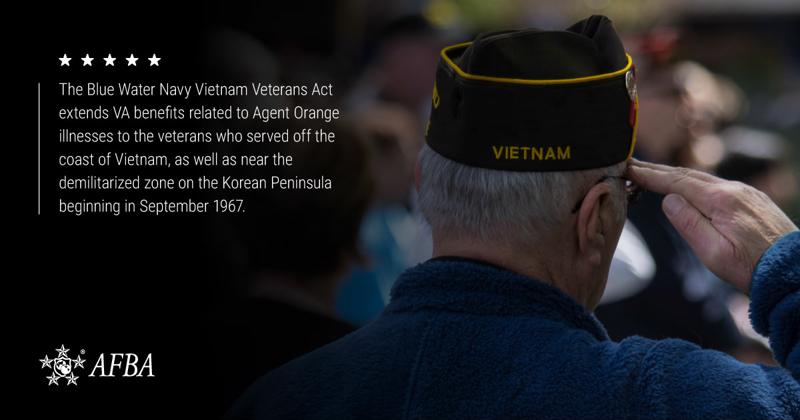
On May 14, 2019, House members voted to pass the Blue Water Navy Vietnam Veterans Act, which extends access to VA benefits related to Agent Orange illnesses to the sailors who served off the coast of Vietnam, as well as veterans who served near the demilitarized zone on the Korean Peninsula beginning in September 1967. If passed, the bill would also require the VA to identify American military bases in Thailand where Agent Orange was used.
House Veterans Affairs Committee chairman Rep. Mark Takano and Rep. Roe have said that they have included a funding plan that will cover the cost of extending new benefits to veterans for the treatment of Agent Orange illnesses.
"Congress has failed our Blue Water Navy veterans – plain and simple," said Rep. Mark Takano. "It was unjust then and it is unjust now. But today we have an opportunity to right this wrong. Congress didn't find the resolve to act until 1991 and it left out key groups exposed to agent orange… effectively denying their suffering that was a direct result of their service. This bill is the quickest and surest way to deliver benefits to these veterans."
Supporters in the House are now asking their colleagues in the Senate to take up and pass the legislation, as are veteran advocates who are also championing the bill.
"For decades, tens of thousands of veterans, their families and survivors have been denied their earned benefits," leaders of veterans service organizations wrote in a letter to Takano and Roe, according to ConnectingVets.com. "While it is long past due, it is time that we correct the injustice done to Blue Water Navy veterans and provide protection of the Procopio decision by passing H.R. 299."