
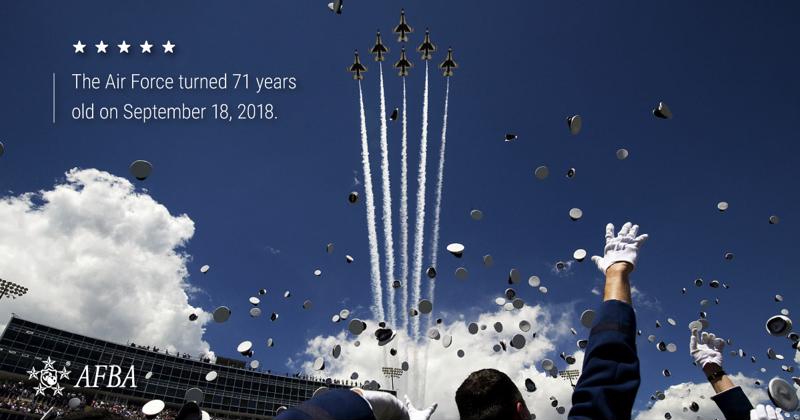
The U.S. Air Force became a distinct branch of the military on Sept. 18, 1947. Yet its roots began decades beforehand. Throughout its history of 71 years, the Air Force has been a remarkable source of innovation and inspiration.
Here, we'll take a look at the branch's history in celebration of the date it was started.
A brief history of the Air Force
While the Air Force didn't become an official military department until after World War II, aviation emerged as a military interest decades earlier. The first group to arise from this interest was the Army Signal Corps Aeronautical Division, which was created Aug. 1, 1907. This organization was developed to oversee anything related to air machines, military ballooning and other related matters.
The Signal Corps began testing the first military airplane at Fort Myers, Florida. One of its original flights ended in disaster; Lt. Thomas E. Selfridge, who was flying with Orville Wright, died during a crash on Sept. 9, 1908. Historical records consider Selfridge the first military aviation casualty, per Military.com.
However, on Aug. 2, 1909, the Army formally accepted what it called "Airplane No. 1."
Still, military aviators didn't serve in combat until around 1913. Early that year, servicemembers training in Augusta, Georgia, and Palm Beach, Florida, were ordered to take part in 2nd Division maneuvers. They were sent to Galveston, Texas on March 3 as the 1st Provisional Aero Squadron, led by Capt. Charles DeF. Chandler.
The squadron was the first military unit solely dedicated to aviation, and servicemembers began flying a few days later. It was also the Army's first air combat unit, and it's still active today.
Military aviators during wartime
The 1st Aero Squadron was the U.S. Army's air division during World War 1. By December 1915, the unit had 224 enlisted men, 44 officers and 23 planes, according to Military.com. This was only a fraction of the air power held by European countries, and the discrepancy forced the U.S. to devote more attention to aviation.
However, the U.S. may have been a bit overzealous with its response. At the time, all of the military's aviation power consisted of 24 squadrons, operating under different organizations.
When World War 1 broke out, the U.S. transferred aviation from the Signal Corps to two other agencies. Having so many different groups made it difficult to coordinate them all.
Today's Air Force
The National Security Act of 1947 restructured the way the U.S. government approached aviation and military endeavors. The act created the National Military Establishment, which was later renamed the Department of Defense. This organization consisted of the Army, the Marine Corps, the Navy and the new and improved Air Force.
It was a long time coming, as aviation in the military had been through six different iterations:
- Aug. 1, 1907 to July 18, 1914: Signal Corps Aeronautical Division.
- July 18, 1914 to May 20, 1918: Signal Corps Aviation Section.
- May 20, 1918 to May 24, 1918: Division of Military Aeronautics.
- May 24, 1918 to July 2, 1926: U.S. Army Air Service.
- July 2, 1926 to June 20, 1941: U.S. Army Air Corps.
- June 20, 1941 to Sept. 17, 1947: U.S. Army Air Forces.
- Sept. 18, 1947 to present: Air Force.
The fact that the branch has lasted this long in its current form is encouraging. Currently, the Air Force has 320,923 servicemembers on active duty, 62,688 officers and 258,235 enlisted, per the Air Force's Personnel Center. As part of the U.S. military, it's one of the strongest forces in the world.

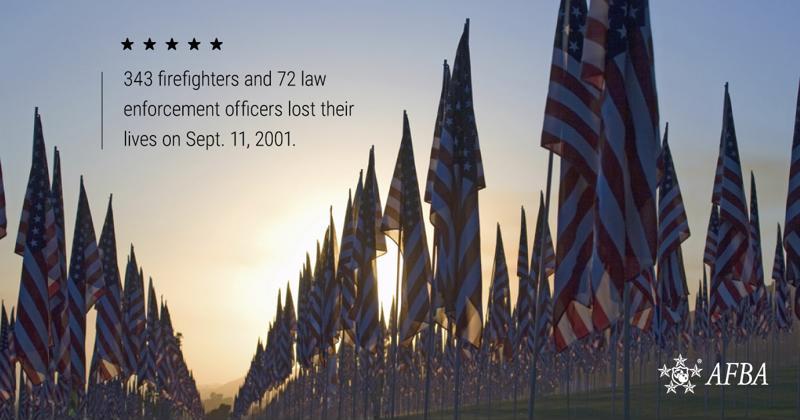
Sept. 11, 2001 was one of the most fateful days in recent history for the U.S. On that date, the terrorist group al-Qaeda launched a series of four coordinated attacks on American soil. Per statistics from CNN, the attacks ended the lives of 2,977 people in Washington, DC, New York City and an area near Shanksville, PA. Additionally, more than 6,000 others were injured during the event. 9/11 was also noted as the deadliest day for first responders, as 343 firefighters and 72 law enforcement officers lost their lives trying to help others.
The event drastically affected the nation, directly leading to the creation of the Department of Homeland Security and a $40 billion anti-terrorism package. But 9/11's effects weren't just of a macro size. Many individuals were directly affected, and communities both big and small came together to honor the dead and celebrate those who rushed to provide aid to others.
Those celebrations continue across the country to this day. Cities big and small are holding charity walks, dinners and similar events to raise money for first responders in the name of that fateful day.
Rock Island, IL, holding a walk to remember
The Rock Island military community is sponsoring a walk to remember those who lost their lives during the terrorist attacks, according to the Quad-City Times. Each participant will hold a flag representing the life of a civilian, first responder or servicemember who died that day. They will walk 2.5 miles to a Field of Honor, where they will place the flags.
"It is our sincere desire that this remembrance walk evokes a new sense of re-commitment to the task at hand," said a news release.
Pasadena, TX, raises funds for first responders
According to The Houston Chronicle, the city of Pasadena is holding its own fundraiser to benefit local first responders. The event includes singing and music performances from police and firefighters, plus a 9/11 reenactment by actors from the Pasadena Little Theater. Eight performers will portray the 26 characters in the docudrama "110 stories."
"I had been looking for something to do around 9/11 to pay tribute to first responders," said Gregory R. Brown, treasurer of the theater, to The Houston Chronicle. "Last December, I visited the (911 Memorial and Museum in New York City), and I found this script online in January. I was so moved that I brought it to the board in the hopes of presenting it as a way to give back to the first responders in the community we are a part of."
Ticket proceeds will go to the Pasadena Citizen Police Academy Alumni and the Pasadena Volunteer Fireman's Association.
The Travis Manion Foundation sponsors 9/11 Heroes Runs
Runners and walkers across the nation have organized 9/11 Heroes Runs in the name of 1st Lt. Travis Manion, a young man who was killed in action during his tour in Iraq. Manion's unit was ambushed while searching a suspected insurgent house, and Manion bravely sacrificed himself drawing enemy fire. His strength of character allowed the rest of his unit to survive. He was posthumously awarded the Silver Star and the Bronze Star with Valor, and his actions (and friendship with another servicemember) were memorialized in the book "Brothers Forever."
The first 9/11 Heroes Run was a small memorial created by the Travis Manion Foundation, but it quickly spread into a nationwide event. Runs are currently scheduled in areas such as Houston, Philadelphia, Virginia Beach, San Diego and more.
Remembering 9/11
These are just a small selection of the various memorial events taking place across the country this September. Given the severity of the 9/11 attacks and the effects they had on the nation, it's safe to say that such services will continue for years to come.

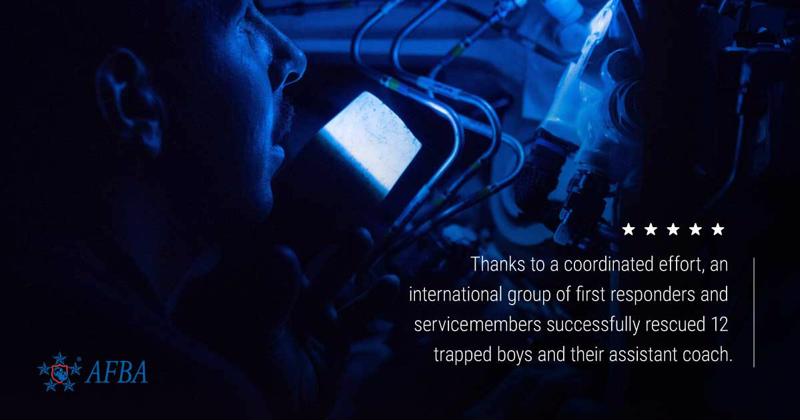
The Thai cave rescue of early July 2018 was an incredible tale of tragedy avoided. What could have been a disastrous situation became a successful recovery of 12 teenage boys and their 25-year-old assistant coach. This incredible ordeal highlights how complicated the work of first responders and expert servicemembers can be.
Finding the trapped team
On June 23, 12 members of a junior soccer team went to explore the Tham Luang Nang Non cave after practice with their assistant coach. Heavy rains partially flooded the cave shortly after, trapping the group inside. Although the boys were declared missing and the head coach discovered their abandoned belongings near the cave's entrance that same day, the rising water and strong currents made it difficult for rescuers to help. It was more than a week before initial contact was finally made.
The rescue expanded into a massive operation that received international attention and support. Thai Navy SEALs were the first on the scene, and they were quickly supported by divers from the British Cave Rescue Council, open water divers, the U.S. Air Force, a team of Specialist Response Group divers from the Australian Federal Police and divers from the Beijing Peaceland Foundation. Even sniffer dogs and drones were used to locate the boys, looking for openings above ground.
The search had to be put on hold multiple times due to continuous rain and flooding. Finally, the group was discovered on July 2, but the rescue's problems didn't cease. The boys and their coach were about 2.5 miles from the cave's entrance, and divers had to figure out how to rescue them through areas with strong currents, low visibility and narrow passages. If the boys panicked on their journey out, they could have died.
The next day, three Thai Navy SEALs joined the stranded group. A doctor, tasked with evaluating the boys and helping keep their spirits up, was among them. Yet, it was still a few days before rescuers could begin removing the team. During this time, on July 5, a Thai Navy SEAL named Saman Kunan died during a mission to provide oxygen to the stranded group. He was the only fatality of the operation.
Major challenges to rescue
Rescuers had to deal with several factors complicating their rescue mission, including:
- Consistent flooding.
- Falling oxygen levels.
- A large group of boys, many who couldn't swim, exhausted by the ordeal.
"The cave was dry when we arrived, and within an hour and half it had already filled up by 2 to 3 feet and we were being pushed out," said Derek Anderson, a 32-year-old U.S. Air Force rescue specialist, to Military.com. "That was just in the very beginning of the cave and at that point we realized this problem is going to be much more complex than we thought."
Because of the constant rains and lack of oxygen, waiting until the flooding season was over to rescue the boys wasn't an option. Instead, on July 8, 18 rescue divers (consisting of 5 Thai Navy SEALs and 13 international supporters) went into the cave, each tasked with rescuing one boy. The divers were equipped with hooded wetsuits, positive pressure face masks, bungee cords and other materials to keep the boys as bundled and close as possible so divers could keep control. The last person in the cave, the assistant coach, was rescued July 10.
Servicemembers and first responders pull off a difficult operation
The team was driven to the hospital in emergency vehicles and given anti-anxiety medication upon rescue. It was only thanks to the dedicated work of trained specialists.
"The world just needs to know that what was accomplished was a once in a lifetime rescue that I think has never been done before," said Anderson. "It's important to realize how complex and how many pieces of this puzzle had to come together."
The Navy is taking a comprehensive approach to recruit and retain servicemembers during a time when the U.S. economy is doing exceptionally well. Unemployment is the lowest it's been in 18 years, which should be good news for recruiting efforts. In truth, however, this means the Navy faces stiff competition from other military branches and the private sector. What's more, interest in joining the military usually drops as the economy improves. Not only are qualified individuals choosing jobs, but parents push students to go to college rather than enlist.
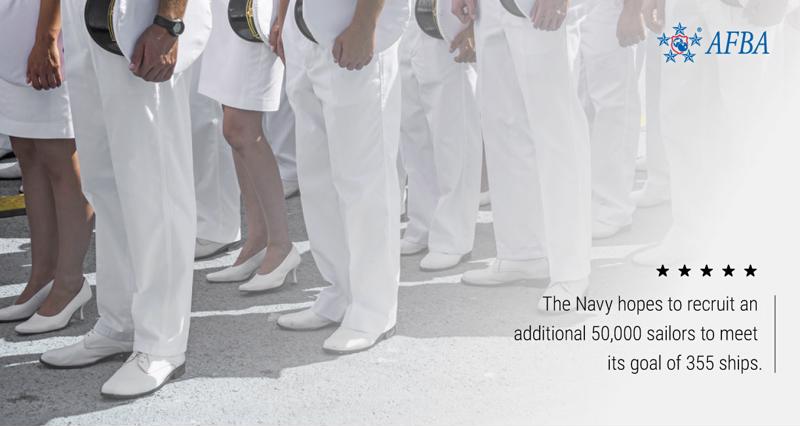
Finally, more than 70 percent of Americans of prime recruiting age can't serve due to obesity, criminal records or a lack of high school diploma or GED. Combined, these circumstances spell trouble for the Navy. The military branch is about 11,000 sailors short of what it needs to man its current fleet, and it will need about 50,000 more to meet its goal of 355 fully crewed ships.
According to an article from Military.com, Navy Secretary Richard Spencer expressed his concerns over the state of the branch's recruitment efforts during the Naval War College's annual two-day Current Strategy Forum.
"As the economy improves, we compete," said Spencer, per the article. "The game is now in our court to do the best we can to have the tools that we need to recruit, train and retain the best that our country has to offer."
Strategies to boost Navy recruitment efforts
President Donald Trump requested $686.1 billion for the military in his budget proposal for next year. The Navy should get a portion of that, and many funds will likely go toward recruiting.
The Navy also announced a new program that would allow sailors who leave to rapidly reenlist in a few years. Further, as the U.S. Naval Institute reported, the military branch increased the pace of its sea-going apprentice program: the long-running Professional Apprenticeship Career Track (PACT). Now, new sailors sign a three-year contract instead of a four-year enlistment. This gives them an idea of the various Navy jobs available and puts them on the path to a career sooner. This strategy boosts retention and encourages sailors to reenlist.
The goal of this change to PACT is to better match the wishes of new sailors with the needs of the military, according to Navy Branch Head for Enlisted Plans and Policy, Capt. Mery-Angela Katson. New sailors will take jobs at sea and work alongside other, trained servicemembers in one of three basic career paths: surface warfare, engineering or aviation.
"It's a way to give sailors the ability to look at jobs in these tracks and then give them a specific skills training pipeline to become rated sailors and continue on in that path through advancement and a career in the Navy," Katson said to USNI News.
Finally, the Navy is revising its typical recruitment strategies. According to Military.com, it's considering hiring private-sector professionals who are in the middle of their careers. Per Secretary Spencer, this strategy would help the military find and recruit top talent in a competitive market.
Additionally, per an NPR broadcast, the military branch is creating ads aimed at centennials, who are described as members of the first generation born with access to the internet. These ads are an attempt to dispel the notion that the military is the last hope for young people with nowhere else to go.
Combined, these strategies should increase the number of new sailors recruited into the Navy and improve retention numbers. Hopefully, the Navy will have no trouble meeting its manpower goals over the next few years.
Various branches of the military have seen numerous aviation crashes – some of which have been fatal – over the past few years. These accidents represent a disturbing trend that servicemembers and Congress are anxiously trying to solve.
Just this past May, a Lockheed WC-130H transport aircraft crashed shortly after departing the Savannah Air National Guard Base, killing all nine members of the Puerto Rico Air National Guard on board. In March, two Navy aviators died after their FA-18 fighter jet crashed near Key West, Florida, CNN reported. So far this fiscal year, 12 accidents (consisting of 11 crashes and one incident on the ground) have claimed the lives of 35 servicemembers, tying the start of 2018 with 2016's total number of aviator deaths.
Unfortunately, these issues have lingered for years, and some connect them to the 2013 congressional budget cuts, per Military Times.
"We are reaping the benefits – or the tragedies – that we got into back in sequestration," said retired Air Force General Herbert Carlisle, according to the publication.
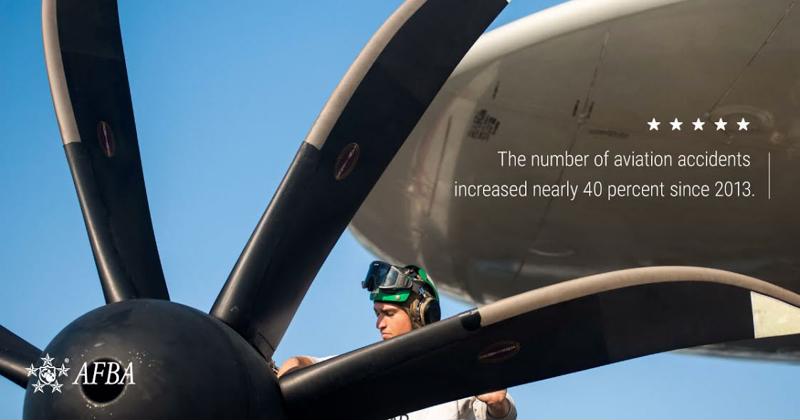
According to data Military Times obtained through multiple Freedom of Information requests, the number of aviation accidents increased by nearly 40 percent since 2013. Since 2011, more than 7,500 incidents ranging from Class A through Class C have occurred.
Various departments taking action to address crashes
Despite the data, the Department of Defense has clarified that these incidents shouldn't be considered a crisis. Yet, many military branches are investigating the cause of these accidents, although they echo the DoD's statement. For example, General Ellen Pawlikowski, head of the Air Force Materiel Command, recently sent a memo telling its safety organizations to review all aircrafts by the middle of July, according to Air Force Times.
"Take another look at that data from a different angle and see if there is anything that we are missing in there that would help us to predict what might be the next mishap," she said to reporters, according to the publication. "I think how the Air Force has approached this is not to panic. We don't consider it a crisis, but we have elevated [interest] in making sure that we aren't missing anything and that we really do empower the airmen to make sure that safety is always first."
Pawlikowski also objected to the idea that the crashes are directly related to the 2013 budget cuts. She said that instead of operating an aircraft in need of maintenance – a difficult task when money is tight – the Air Force would simply ground the plane to protect servicemembers.
Additionally, Air Force Chief of Staff Gen. Dave Goldfein ordered all flying and maintenance wings to participate in a one-day safety stand down, according to a separate Military Times article. Active-duty units had a deadline of May 21 to conduct their review, while Guard and Reserve have until June 25.
That said, Congress might soon push the military to do more in its investigation over the coming years. Democratic Rep. Adam Smith of Washington, ranking member of the House Armed Services Committee, introduced legislation early May that would create an independent panel tasked with examining the string of crashes. Titled the National Commission on Military Aviation Safety, the panel would consist of eight people who would look into the possible causes of these incidents and, if necessary, recommend any modifications to training, maintenance, safety or other policies. Their first report would be due Feb. 1, 2020. Panelists would be appointed by the president and certain members of Congress.
National Maritime Day, which falls on May 22 each year, was officially declared to commemorate the first successful passage of a steamship from the U.S. to England. Yet, the holiday incorporates so much more than that in these modern times. It celebrates the sacrifices that merchant marines made during World War II and the benefits that American ports bring to the economy.
The U.S.S. Savannah: The first steamship to cross the Atlantic
On May 22, 1819, a steamship left from its home port in Savannah, GA, headed to Liverpool, England. The ship reached its destination in 29 days and four hours, according to the Maritime Administration, part of the U.S. Department of Transportation. Although the ship's sails did the majority of the work, the steam engine had no failures, and the successful voyage launched a new era of U.S. technological leadership and showed the world the power of steam.
Congress declared May 22 National Maritime Day via a joint resolution passed May 20, 1933.
" … the President is authorized and requested annually to issue a proclamation calling upon the people of the United States to observe such National Maritime Day by displaying the flag at their homes or other suitable places and Government officials to display the flag on all Government buildings on May 22 of each year," the resolution read in part.
President Donald Trump upheld this request in 2017, asking for U.S. citizens to fly the flag and for boats to dress ship. It's likely he will do the same this year.

Merchant marines during World War II
U.S. shipyards and merchant marines were integral to the Allies' World War II victory. They were the first to enter the war, as their ships were captured or sunk before the U.S. officially entered the conflict. They were also the last to return, using their ships to bring servicemembers home.
Merchant ships were the only way the U.S. Armed Forces could fight in Europe, as they were needed to carry supplies ranging from food to tanks. As such, these marines sailed across the three major oceans and the Arctic Circle. They carried nearly 270 billion tons of cargo during the war, averaging a delivery rate of 17 million pounds an hour in 1945.
For all their valor, merchant marines also sacrificed much during the war. Nearly one in 30 didn't return home, and the marines suffered the highest casualty rate of all U.S. military branches. Over 6,000 sailors and more than 700 ships were lost in the war.
Unfortunately, the survivors weren't given veterans benefits at the time, nor were the dead recognized for their service. For years, merchant marines were excluded from all celebrations commemorating the Armed Forces. Finally, the group won some veterans' rights and privileges after a long court battle that ended January 19, 1988. They gained additional rights 10 years later during a congressional ceremony recognizing Persian Gulf War veterans. Merchant marines were also commemorated at various national monuments, including the U.S. Navy Memorial and the World War II Memorial, both in Washington, D.C. The flags at the latter display the seals of the five services of the military: the Army, the Navy, the Marine Corps, the Coast Guard, the Army Air Corps and the Merchant Marines.
Celebrating National Maritime Day
The holiday is celebrated in many ways across the nation. As Maritime Executive noted, May 22 is not just a time to think of the history of the merchant marines but also to recognize how the nation's ports bring jobs and economic development.
"America's seaports support 23.1 million jobs, annually generate more than $321 billion in federal, state and local taxes, account for over a quarter of the U.S. economy and handle more than 2.2 billion metric tons of international and domestic cargo," said Kurt Nagle, president and CEO of the American Association of Port Authorities, to the publication. "From these statistics alone, it's clear that ports play a vital role in supporting our national economy, jobs, tax resources and their communities."
This year, Americans can acknowledge this day of remembrance by flying the flag, attending local events and learning more about the history of maritime merchants during World War II.
Armed Forces Day is fast approaching. It's celebrated on the third Saturday in May, a month filled with holidays dedicated to various servicemembers: Military Appreciation Month, Memorial Day, Victory in Europe Day, Military Spouse Appreciation Day and more. Celebrations are typically local and include parades, social events and sometimes sales. This year, Armed Forces Day falls on May 19.
Armed Forces Day celebrates a significant event in history: the unification of the separate branches of the military. Before the end of World War II, the War Department and the Naval Department acted separately, and the secretary of each organization reported directly to the president.
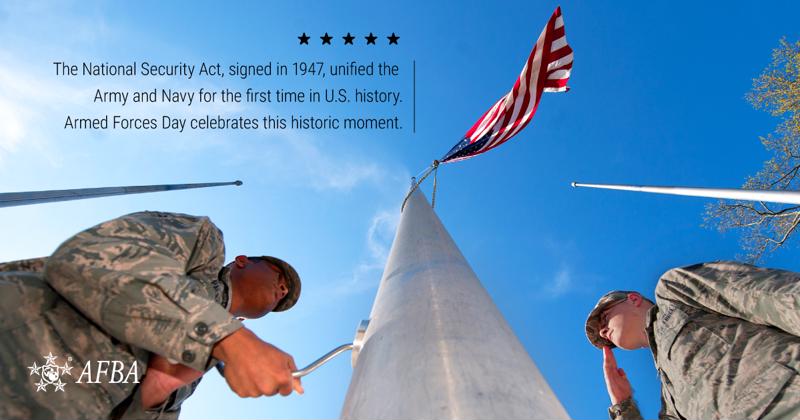
At the end of the war, President Harry Truman proposed a unified department to handle all aspects of national defense, believing this would cut back on wasteful spending and encourage interdepartmental collaboration. He signed the National Security Act in 1947, creating the National Military Establishment to unite the Army and Navy. In addition, the law created the U.S. Air Force (which had been known as the Army Air Forces), the Central Intelligence Agency, the National Security Council, the National Security Resources Board and the Joint Chiefs of Staff.
In charge of the National Military Establishment was a single Secretary of Defense. The establishment was then renamed the Department of Defense on August 10, 1949.
That same year, Defense Secretary Louis Johnson announced the creation of Armed Forces Day to replace separate celebrations for the Army, Navy and Air Force. This goal wasn't exactly achieved, as each branch of the military still has its own day of recognition. That said, Armed Forces Day remains an opportunity for all servicemembers and civilians to celebrate the role of the military in upholding the American way of life.
Secretary Johnson had the support of President Truman, per the Department of Defense, speaking on the holiday during his Presidential Proclamation on Feb. 27, 1950.
"Armed Forces Day, Saturday, May 20, 1950, marks the first combined demonstration by America's defense team of its progress, under the National Security Act, towards the goal of readiness for any eventuality," he said, according to the DoD. "It is the first parade of preparedness by the unified forces of our land, sea, and air defense."
Despite being held in such high regard, Armed Forces Day didn't become a national holiday until President John F. Kennedy declared it so in 1961.
Celebrating Armed Forces Day
The first holiday in 1950 had air shows, receptions, open houses and parades. It was also celebrated internationally; servicemembers in Berlin had their own festivities. Every year has a theme, and the first was "Teamed for Defense" to express the unification of all military forces. This first holiday was also an opportunity for civilians to learn more about the goals and achievements of the military.
Other themes for Armed Forces Day include:
- Freedom.
- Patriotism.
- Liberty.
- Freedom Through Unity.
- Guardians of Peace.
- Appreciation of a Nation.
- Arsenal of Freedom and Democracy.
- Deter if Possible, Fight if Necessary.
- Lasting Peace.
- Dedication and Devotions.
This year's theme is "All Across America," per the DoD, showcasing the ways servicemembers work for civilians while on American soil. The theme coincides with the department's This Is Your Military initiative and #KnowYourMil hashtag, which aim to display the positive truth of military life.
This Armed Forces Day, let's take time to celebrate the unified military and all the ways servicemembers have protected American freedoms. Civilians can share personal stories of the servicemembers and veterans in their lives on social media by contributing to the #KnowYourMil campaign.
The Army Basic Training course is being revamped due to what military leaders say is a lack of readiness and discipline. The new course is designed to produce soldiers who are more physically fit, more diligent and are better motivated overall.
Officers identify issues with emerging recruits
A poll of more than 27,000 warrant officers, noncommissioned officers and others ranging in rank from second lieutenant to colonel were ask to identify deficiencies they saw among the service's newest soldiers, according to Stars and Stripes. The resounding primary concern was a lack of discipline. Officers saw that many of the soldiers had issues following orders and seemed to lack respect for their superiors. Unkempt uniforms and late arrival were also common problems, indicating poor work ethic.
The revised Army Basic Training will focus on two goals: promoting Army values and producing graduates with better physical fitness.
In terms of the first focus, the fact that the U.S. was engaged in two ground wars over the past 20 years caused several long-standing traditions to fall by the wayside. Routines such as shoe shining were dropped in favor of preparing servicemembers for combat.
Now, some of those traditions will be incorporated into the revised training program. Recruits will have bunk inspections once again, and ceremony participation will increase. Recruits will also be tested on army history.
According to Maj. Gen. Malcolm Frost, the historical focus was included to teach trainees military values through lessons on America's most pivotal battles. The lessons will revolve around the actions of individual servicemembers to show recruits "what it means to be a U.S. army soldier," according to Stars and Stripes.
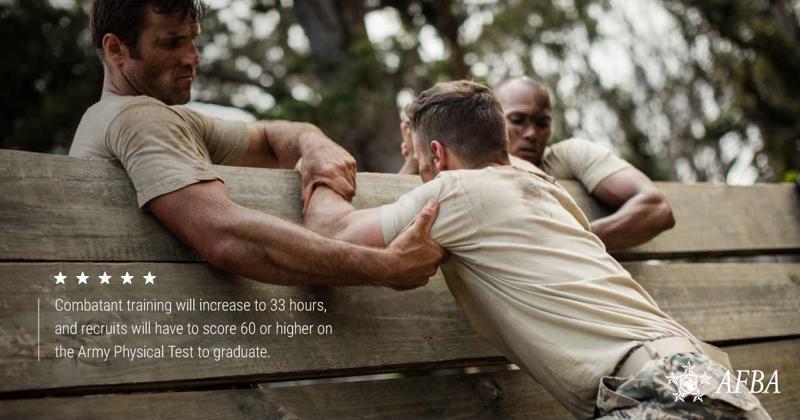
Additionally, recruits will go through physical training exercises designed to better reflect encounters they may have in the field. As part of this effort, combatant training will increase from 22 to 33 hours, and they will practice shooting rifles with only iron sights. Trainees will also be taught important, non-combative skills like arm signal communication and first aid.
The training comes with a new final exercise, known as The Forge, which has a time limit of 81 hours. Trainees will traverse 40 miles of road with various tasks arranged along the way. These vary from night infiltration, medical evaluation and missions to supply troops to patrols and obstacle courses.
The recruits will be held to higher physical fitness standards in order to graduate. They'll need to score 60 or higher in the three categories of the Army Physical Fitness test – sit ups, push ups and a two-mile run – rather than 50.
That said, the revised program doesn't just add; it also reduces or eliminates unnecessary training features. One example would be hand grenade competency, which will no longer be a graduation requirement, according to Military.com. Recruits will still be trained in hand grenade use, however.
"What we have found is it is taking far, far too much time," Frost said, according to the website. "It's taking three to four times as much time … just to qualify folks on the hand grenade course than we had designated…"

Launching the full program
Military officials plan to fully roll out the training course by the end of the fiscal year. Recruits at Fort Jackson in South Carolina have already undergone test versions of the program to great success, according to the Army Times.
"They're more resilient," Sgt. 1st Class Heidi Dougherty, a senior drill sergeant, said of the new recruits to the publication. "They're mentally tougher, physically tougher."
Not only is the revised training producing better servicemembers, but the significant accomplishment instill a sense of pride in the recruits.
"A year and a half ago [training] wasn't very mission-oriented," Fort Jackson Commander Maj. Gen. Pete Johnson told the Army Times. "It was essentially one mission: it was occupy a defense and dig a foxhole to standard. It would take 36 hours of four days, and there was no real sense of achievement at the end of it."
The Fort Jackson results are clearly encouraging, and one can only hope all recruits who undergo the new process will emerge with the same promise.
The past few years have seen many notable firsts for women in the military. In 2017, an anonymous female Marine became the first woman to complete the Infantry Officer Course. In 2016, Air Force Gen. Lori Robinson became the highest ranking woman in history when she led U.S. Northern Command. That same year was the first time female sailors deployed on submarines.
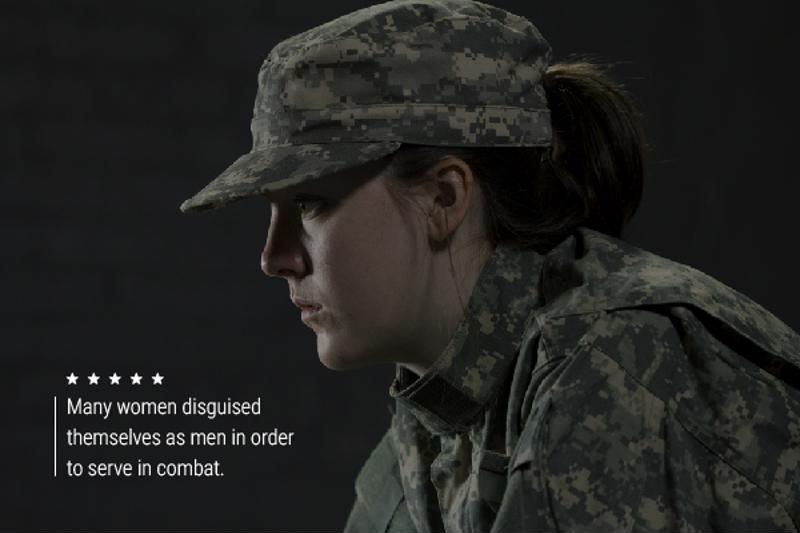
Despite these firsts happening so recently, women have participated in the military since the Revolutionary War. They acted as more than nurses; some were spies, and others served in combat (though they had to disguise themselves as men). Here is a brief overview into the ways women worked in the military during the country's formative years:
Women in the Revolutionary War
During this time, women served in the Army as cooks, seamstresses and nurses. In fact, George Washington – then commander-in-chief of the Continental Army – asked that Congress provide one nurse for every ten sick or injured servicemen, according to the Army's website.
That said, some women acted as spies, transporting messages and contraband and notifying troops of any British movement on their properties. One woman by the name of Nancy Morgan Hart used her masculine looks to her advantage; she disguised herself as a mentally distressed man and entered British camps in Augusta, Georgia. Another woman, Deborah Sampson, disguised herself as a man named Robert Shirtliffe and enlisted in the Army, where her sex wasn't discovered until she was wounded in combat. Sampson was discharged, but her service was recognized after her death when Congress allowed her husband to receive a widow's pension.
Women in the Civil War
Women's positions only expanded during the Civil War – more than 400 disguised themselves as men in order to enlist the the Union and Confederate armies. Yet this period was notable for another reason. Dr. Mary Walker, an assistant surgeon who served for the Union in 1862 and 1863, was the first and only woman to receive the Medal of Honor.
Her journey to this distinction wasn't easy, however. Walker was rejected when she first tried to get a job as an Army surgeon, so she was forced to work as an unpaid volunteer wherever necessary. Eventually, her office was converted to a hospital, and Walker worked as an unpaid assistant surgeon. To work more efficiently, she traded her women's uniform for a modified version of a man's. Walker also helped create an organization to assist women who visited wounded relatives in Washington.
Walker traveled to various camps during her tenure but was consistently denied a paying job. According to the Association of the United States Army, she was finally appointed as an assistant surgeon in 1863, but she was captured by Confederate forces in April 1864. Because of her attire, Walker's captors deemed she was a spy and imprisoned her for four months. She was released in August as part of an exchange for a captured Confederate surgeon.
After the war, Walker demanded recognition for her service, requesting a promotion to major. While she was denied by the Secretary of War, President Andrew Johnson decided to award her a Medal of Honor.
The future of women in the military
Women in the military have come a long way since these beginnings, yet they still haven't achieved full integration. As citizens, veterans and active-duty military, it is important that we listen to the concerns of our female servicemembers and celebrate their accomplishments.
The Oscars aired this month, and people everywhere were commenting on who won what – and who wore what. At first glance, Hollywood life and military life seem to have nothing in common. However, many actors and actresses have lesser-known pasts as servicemembers. They aren't all action heroes, either. Many are comedians, sitcom stars and voice actors. Here are just four of the many actors and actresses who served their country:

1. Drew Carey
Star of the 1990s sitcom "The Drew Carey Show", former host of the U.S. version of the sketch comedy program "Whose Line Is It Anyway?" and current host of "The Price Is Right", Drew Carey may be one of the more surprising names on this list. Interestingly, his time in the armed forces is what led him to enter the world of comedy – and gave him his signature look of a crew cut and horn-rimmed glasses. He joined the Marine Corps Reserve in 1981 and served for six years. He needed a way to make more money during his tenure, and someone suggested performing standup. According to Military.com, Carey made around $10 per joke back then (he's worth approximately $165 million now).
2. Clark Gable
Unlike most veteran actors, Clark Gable enlisted in the middle of his career. In fact, he starred in his most famous role (Rhett Butler in "Gone with the Wind") three years before entering the Air Force on August 12, 1942. His decision was spawned by grief; Gable decided to enlist after his third wife tragically died in a plane crash. He served in England during WWII and returned to the U.S. in October 1943. Approximately nine months later, he was relieved from active duty and returned to acting.
3. Bea Arthur
Not much is known about Bea Arthur's time in the military. In fact, she previously denied her service during an interview. However, tabloid website The Smoking Gun found and exposed her military records, proving Arthur served in the Marines for 30 months.
Always a trailblazer, Arthur was one of the first members of the Women's Reserve. She started basic training in March 1943 and hoped for an assignment in ground aviation but instead worked as a typist and truck driver. According to her personality appraisal sheet, Arthur acted much like the characters she would play in the future: frank and argumentative.
4. James Earl Jones
One could say James Earl Jones' military career began during his college years. The famous actor attended the University of Michigan as a pre-med major. During his time at school, he enrolled and excelled in ROTC. Jones eventually realized medicine wasn't his passion and switched his major to drama in 1955.
After graduation, while the Korean War gained momentum, Jones was recruited to the Army. He expected to see combat, but his battalion was tasked with building a cold-weather command center in Colorado.
Jones left the military for two primary reasons, according to a separate Military.com article. A superior officer suggested he take a break to decide whether he wanted to stay in the military full time, and Jones figured he could re-enlist if acting didn't pan out as a career. Needless to say, Jones had a very successful acting career and voiced some of the most famous characters in the film industry.