
With PTSD Awareness Day behind us – celebrated in June of each year – it's important to remember that the disorder is present year round for many active-duty military, veterans and first responders. Let's take a deeper dive into what PTSD is and some valuable resources to help alleviate the symptoms.
What is PTSD?
According to the National Institute of Mental Health (NIMH), PTSD is "a disorder that develops in some people who have experienced a shocking, scary, or dangerous event." Symptoms can differ greatly from person to person and last for varying lengths of time. NIMH reports that someone can be diagnosed with the disorder if they exhibit all of these symptoms for at least one month:
- At least one re-experiencing symptom.
- At least one avoidance symptom.
- At least two arousal and reactivity symptoms.
- At least two cognition and mood symptoms.
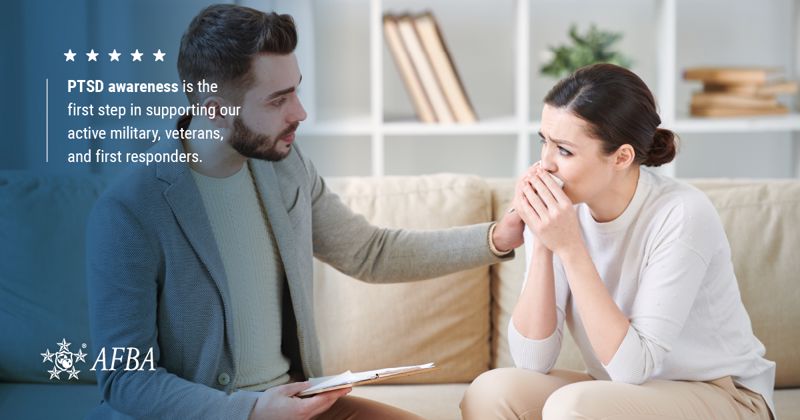
How common is PTSD in Veterans?
While you may think that you do not know anyone who has been affected by PTSD, there is a chance that someone you know has been impacted by the disorder. In fact, 6% of the American population has been diagnosed with PTSD. According to the National Center for PTSD, about "12 million adults in the U.S. have PTSD during any given year."
The U.S. Department of Veterans Affairs (VA) reports that the number of those who have PTSD changes depending on the service era. Here are some of the most common examples:
Operations Iraqi Freedom (OIF) and Enduring Freedom (OEF)
The OIF era began in October 2001 and the OEF era began on March 20, 2003, mainly in response to the terrorist attacks that happened on September 11, 2001. The National Library of Medicine reported that 1.9 million U.S. military members served as a part of the response operation. The VA Department also states that about 20% of those who served in these operations had been diagnosed with PTSD within a year.
Gulf War (Desert Storm)
Operation Desert Storm was the second phase of the Gulf War, according to the US Navy's data. Again, the VA department reports that 12% of those who participated in the full two-year duration of the Gulf War will be diagnosed with PTSD as a result.
Vietnam War
One of the most well-known and deadly conflicts, the Vietnam War resulted in a high number of diagnoses for its veterans. The VA Department estimates that "about 30 out of every 100 (or 30%) of Vietnam Veterans have had PTSD in their lifetime."
Do first responders get PTSD?
Similar to active duty military members and veterans, first responders are routinely exposed to traumatic situations that could result in PTSD, among other mental health concerns. The Substance Abuse and Mental Health Services Administration (SAMHSA) reports that about 1 in 3 first responders are diagnosed with PTSD. This includes firefighters, EMTs, nurses and police officers. Due to their proximity to danger and death, the emotions and stress which they are exposed to often lead to the defined symptoms above and an active diagnosis of posttraumatic stress.
While there are many support services available within the career services sector of these professions, including mandatory therapies and time off, there are a high number of volunteer first responders who either don't quality for these services or who aren't required to attend. If you or a loved one is in a first responder profession, be sure to ask and be aware of the options available for leave of absence, time off, and therapeutic services, all of which can help catch early warning signs of the disorder and even lower the severity of symptoms. Check out the valuable resources below for more information.
Helpful resources
If you or someone you know is experiencing symptoms of PTSD, there are hotlines available that can help you discover your best course of action. The impacts of PTSD can be serious and should not be taken lightly. Seek professional assistance and help remove the stigma by having an open conversation with those involved. Here are some of the best resources:
SAMHSA: Call 1-800-662-HELP
Veterans Crisis Line: 1-800-273-8255, press 1
PTSD Foundation of America: Support groups
CopLine: (Law Enforcement Only): 1-800-267-5463
AllClear Foundation (all First Responders): Text BADGE to 741741 (crisis text line)
Summer is nearly here, and the joys of water activities and cookouts with friends and family are just around the corner. Amidst all of this are the first responders who keep our communities safe. June is known as National Safety Month, a reminder to be aware of how your actions can impact others while off having fun. After a few years that have been difficult for nurses, firefighters, police officers, and EMT responders, it is more important than ever for us to work together to keep each other safe. Let's break down some of the most common summer incidents and how to avoid them.
Car accidents
Whether it is a much-anticipated road trip or packing the car up for a camping trip, there is no doubt you'll be hopping into a motor vehicle at some point this summer. It can be easy to forget how common and dangerous a car accident can be. According to the National Highway Traffic Safety Administration (NHTSA), about 42,915 motor vehicle accidents resulted in fatalities in 2021, 11% of which occurred from June to September. Avoid these common causes of collision:
- Driving under the influence.
- Distracted driving.
- Irresponsible or reckless driving.
Accidental drowning
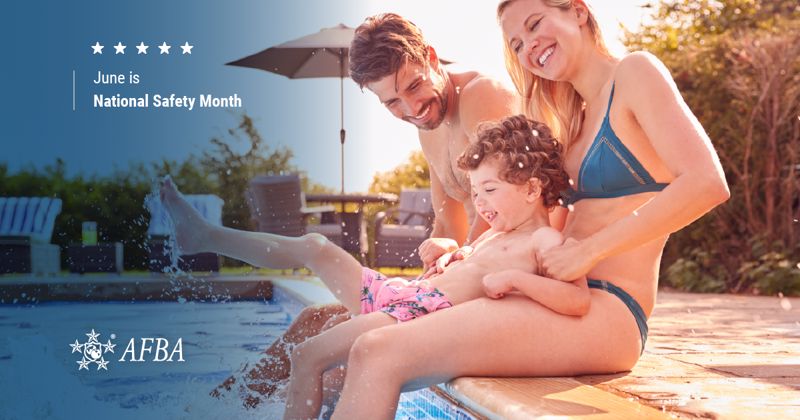
As the weather warms up, people flock to rivers, lakes, pools and water parks. This can be an enjoyable pastime and a great way to cool down while making lasting memories. However, the dangers of accidental drowning are very real and should be taken seriously. Stop Drowning Now reports that there is an average of 320,000 deaths as a result of drowning each year, and have increased since the beginning of the pandemic. In addition, they found that "drowning is the leading cause of unintentional injury-related death for children ages 1-4." Here are some of the most effective ways to prevent drowning:
- Learning to swim.
- Life jackets.
- Know CPR or basic life-saving skills.
- Be watchful.
Fires started by people
According to the USDA, 90% of all wildfires are caused by humans, many of which happen in the summer. This is due to:
- Unattended campfires.
- Discarded cigarettes.
- Fireworks.
- Equipment usage.
This is why it is so important to be mindful and aware of your surroundings. Be sure to completely distinguish campfires and never set off fireworks in a dangerous area. Fires can result in human harm, structure damage and wildland deterioration.
Boating accidents
Boating in the summer is one of the most beloved activities, but it does require an eye for safety. Whether you are setting sail on a lake or an ocean, it is important to know the dangers associated with boating. The Coast Guard reports that the following are some of the most common causes of boating accidents:
- Operator inexperience: Be sure that the operator is capable of operating a boat well.
- Boating too fast: Speeding is very dangerous and can result in a boating accident.
- Not having a lookout: The Coast Guard suggests that every boat has someone who is keeping a lookout for dangers on the horizon.
- Operating while under the influence: Boating while impaired is just as harmful as driving while drunk.
- Poor weather conditions: Boating in a storm or other dangerous weather can be treacherous.
Now you know what to watch out for while you're enjoying the long days of summer. National Safety Month is a great time to become CPR certified or just be more mindful during your warm-weather activities. Your community and first responders will thank you!
May is a month of celebrating first responders. The week of the 15 through the 21 is National Police Week as well as National EMS week. Here, we will go into detail about how to honor the first responders who spend their lives protecting and defending American citizens. National Police and EMS Week is a great chance to show your appreciation and support for every first responder, but especially those who are in the police force and in the emergency medical services.
National Police Week
National Police Week, as detailed by the organizers, "offers honor, remembrance, and peer support, while allowing law enforcement, survivors, and citizens to gather and pay homage to those who gave their lives in the line of duty." There are many events lined up in Washington DC that aim to offer support and a way for survivors to gather together with a common understanding. Here is the schedule as defined by the official website (note that some dates have passed):
- Annual Blue Mass: Tuesday, May 3
- Washington Area Law Enforcement Memorial Service: Monday, May 9
- National Police K-9 Memorial Service: Wednesday, May 11
- Police Unity Tour Arrival Ceremony: Thursday, May 12
- Annual Candlelight Vigil: Friday, May 13
- National Police Survivors Conference and C.O.P.S. Kids/Teens: Saturday, May 14
- Annual National Peace Officers' Memorial Service: Sunday, May 15
May 15 has been dedicated to memorializing police officers since 1962 when President John F. Kennedy signed a proclamation to make it so. Now, the entire week is devoted to honoring the police force and many officers make the journey to Washington, DC to participate in the festivities. According to policeweek.org, there are between 25,000 to 40,000 attendees each year.
National EMS Week
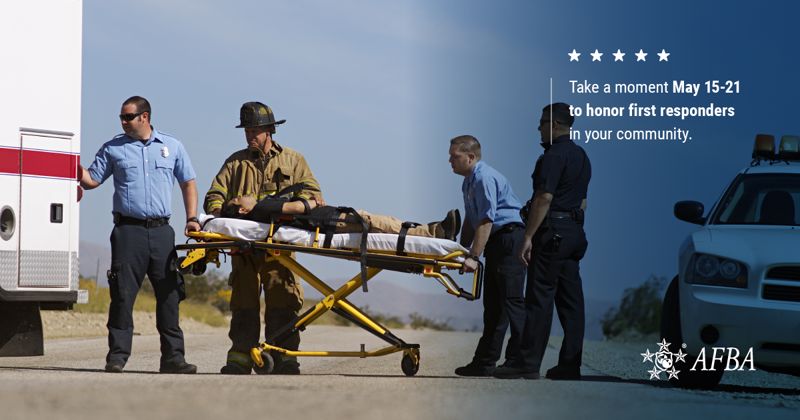
May 15-21, 2022, is the 47th annual National EMS Week. It is a time for people to recognize EMS personnel and for those who have lost people to the profession to connect with each other. National Association of Emergency Medical Technicians (NAEMT) partners with the American College of Emergency Physicians (ACEP) to lead annual EMS Week activities. They have created a theme for every day of the week to enhance awareness and promote safety.
- Sunday – Health, Wellness and Resilience Day
- Monday – EMS Education Day
- Tuesday – Safety Tuesday
- Wednesday – EMS for Children Day
- Thursday – Save-A-Life Day (CPR & Stop the Bleed)
- Friday – EMS Recognition Day
Schools and community groups can use these themes as ideas to celebrate EMS Week. This year, the overall theme is "Rising to the challenge." According to the President of the American
College of Emergency Physicians Gillian Schmitz, "The theme of 'Rising to the Challenge' is particularly meaningful as it reminds our nation that EMS professionals are faced with so many challenges today and they still rise above them. Through it all, EMS continues to respond, support and care for the needs of our communities."
Use this week to thank those who work or have worked on the medical front line. These are people who go to work every day and may find themselves in potentially life-threatening situations, all in the name of serving their communities.
The week of May 15 is to honor and celebrate first responders by participating in the activities surrounding the notable days.
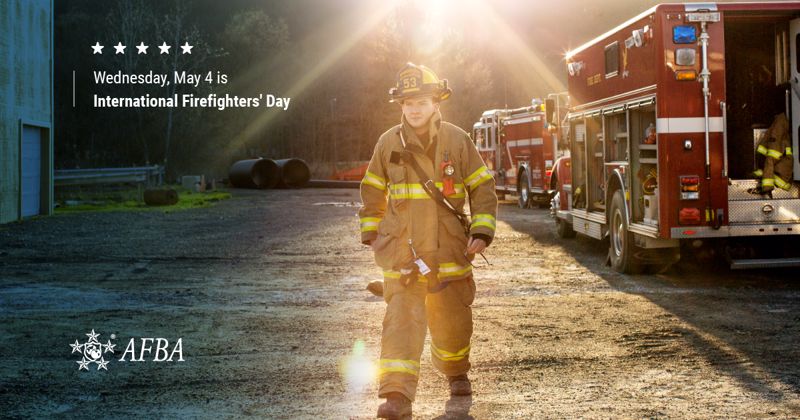
May 4 is International Firefighters Day and a great opportunity to commemorate these first responders for all that they do for their communities. Let's take the time to dive a little deeper into what international firefighters' day is all about and how we can participate in our own ways.
How did International Firefighters Day begin?
International Firefighters Day began in the most humble of ways. Created by the Australian volunteer firefighter JJ Edmondson, the day of remembrance was established after a singular event that prompted her to take action.
On December 2, 1998, a wildfire was raging in Linton, Australia, a town about 93 miles west of Melbourne. The local crew was overwhelmed with the size of the fire and called for backup. One of the teams that came to assist was Geelong West Fire Brigade. Among them were Garry Vredeveldt, Chris Evans, Stuart Davidson, Jason Thomas, and Matthew Armstrong, who lost their lives fighting when their tanker caught fire.
The loss of these five brave men inspired Edmondson "to organize an internationally recognized symbol of support and respect for ALL firefighters and a date for which this could be coordinated worldwide" in 1999.
May 4 was chosen for a specific reason. It is the feast day of St Florian, who is the patron saint of all firefighters. He was the first firefighter of the Roman Empire, renowned for his bravery in his position.
How to recognize International Firefighters Day
The entire purpose of International Firefighters Day is to recognize all the brave individuals who serve their communities. As JJ Edmondson so eloquently puts it,
"The role of a firefighter in today's society – be it urban, rural, natural environment, volunteer, career, industrial, defense force, aviation, motorsport, or other is one of dedication, commitment and sacrifice – no matter what country we reside and work in. In the fire service, we fight together against one common enemy – fire – no matter what country we come from, what uniform we wear or what language we speak."
There are many different ways to celebrate the day, even if it's as simple as thanking a local firefighter.
The sound off
The official website for International Firefighters Day encourages first responders to sound off their sirens for 30 seconds in memory of firefighters who have been lost in the line of duty. The sirens are followed by one minute of silence in respect.
Wear blue and red
It is popular to wear blue and red on May 4 to showcase solidarity with all emergency responders, but especially firefighters. Displaying blue and red ribbons shows gratitude for those who have passed and responders who are still fighting vigilantly to this day. Ensure that the blue ribbon is covering the red one; symbolizing water over fire.
Show appreciation
The general public can celebrate the day by thanking their local fire department for all they do. You can do this by verbally expressing your gratitude or by donating to help support them in their efforts to protect the community. Another great way to show your respect is to be mindful of your actions outdoors by trying your best throughout the year to not contribute to the already high fire hazard that the world faces.
This May 4, take a moment to stop at noon local time for a minute of silence. Firefighters are continuously and bravely protecting us from the danger of fire.
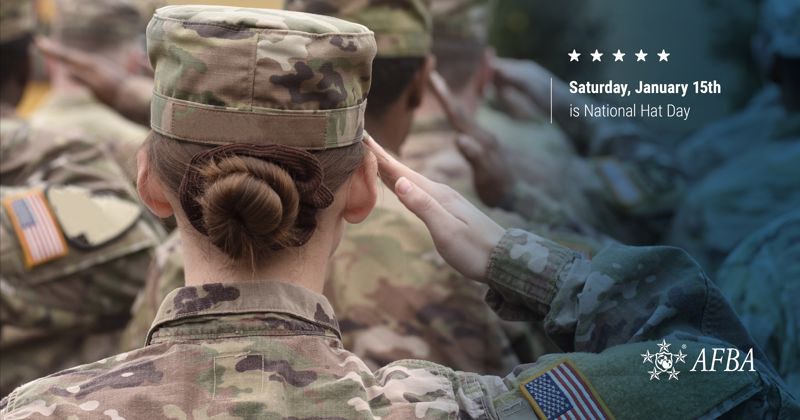
January 15 is National Hat Day, and no one knows the importance of a good hat more than members of the military and first responders. Unlike a run-of-the-mill baseball hat, military hats and those worn by first responders command a certain reverence and value. Just like the rest of a uniform, headgear can let the world know important facts like rank, status or military branch. Let's celebrate National Hat Day by taking a closer look at the history and meaning behind the many unique hats worn by these groups.
Military hats
Many civilians may not know that military members refer to their hats as "covers." In the Army, members wear different berets that have a specific meaning. This tradition dates back to World War ll for the United States, though militaries across the world have been using berets to signify status for centuries. In the U.S. the color of the hat is very meaningful for those in any branch of the military. Here are some examples of different hats and their significance:
- Black berets: This headgear is used in the fancy dress uniform of army members.
- Brown berets: In 2018, the army created a unique hat for members of the Security Force Assistance Command.
- Green berets: Perhaps one of the most well-known styles of berets, green is worn by army members who are special forces soldiers.
In addition to the berets, the army has many other hats, each with its own meaning. Generals have their own caps, depending on rank. These designs have changed over time to reflect the dress of the era. The army is a simple example, but every branch of the military has its own important hats for every rank or service provided.
There are different military uniforms for different occasions. The recognizable Navy cap has different insignias on the visor to signify rank. Captains and commanders have "dark blue cloth, embroidered with two rows of gold oak leaves and acorns." On the other hand, Lieutenant Commanders and lower ranks have a plain visor. There are even different pins that are positioned on the cap depending on rank and occasion.
Military traditions
The U.S. military has its own uniform designers who strive to make uniforms that are practical, modern and effective. Regardless of rank or year, each branch has its own age-old traditions and requirements of its members. For example, when dressed in a formal uniform hat, a member must wear it outside, remove and carry it inside and keep it off in any military aircraft. In addition, service members are not allowed to salute while their hats are off. If a member is attending a funeral in their dress uniform, they must keep their cover the entire time as a sign of respect, whereas a civilian would likely take their hat off.
First responder hats
For firefighters, hats are more than just an accessory. Their helmets are created to protect them from potentially dangerous situations like falling beams, rafters and other debris. In addition, these helmets are usually also equipped with a visor, eye protection, and a light for maximum functionality.
The police force also has a long history of different hats and helmets, but the modern first responder wears different headgear depending on the occasion and rank. Most of the time, police officers wear baseball hats or other casual headgear (depending on location and force) instead of the typical custodian helmet that is worn by officers in the UK.
With its many different customs and traditions, military and first responder headgear are more than just a stylish accessory to the rest of the uniform.
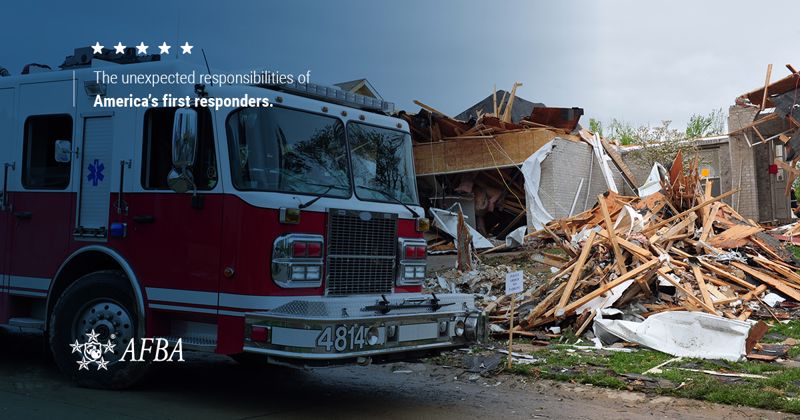
First responders are well known to be the unsung heroes who support their communities by providing important and necessary services. However, first responders occupy many other roles that the general public may not be aware of but are nonetheless valuable. Here are some of the most interesting and unexpected responsibilities of America's first responders:
Disaster response
First responders are commonly thought of as those who respond at the scene of a local crisis, and while that is true, they also play an important role in broader disaster response efforts. In times of national emergency, first responders are there to take care of those who need it the most at the time, no matter where they are. Because they are trained to react with a level head and operate effectively in times of crisis, first responders are the perfect group of people to send to help manage national emergencies.
According to the legal services company US Legal, first responders are a massive part of the response plan. They can help manage "evacuation, rescue, crowd control, and medical attention." Not only do first responders get called on in times of national need, but they are also relied on to prepare their communities for the likelihood of a disaster.
Preparation in schools
Emergency preparation in schools is important in case of natural disasters or other high risk situation. Even something as simple as a fire drill can make a huge difference in a time of need. Sometimes, to add another layer of safety, administrators partner with first responders. When firefighters and police officers build a working relationship with teachers, aids and the members of the school, their response can be more effective in an emergency situation.
First responders can also share important information with administrators and students alike. According to Navigate360, they provide valuable knowledge and help to enhance already existing safety plans for school-wide emergencies. Working with first responders can add a layer of safety and preparedness that will protect the learning environment.
Psychological first aid
First responders are all trained to administer first aid and provide life-saving care, but there is a psychological element that many don't think about. However, first responders do have to consider the mental component of their care and are trained to manage those who may be having an adverse mental reaction to their current situation. For example, if a group of people has just experienced a terrible car accident, there is likely to be a psychological impact as well.
According to FamilyDoctor.org, there is a high chance that a car accident or a circumstance that requires the presence of a first responder will lead to post-traumatic stress disorder (PTSD) in the victim. The EMT or firefighter will need to make sure the people involved are safe and out of harm's way while understanding the victim's fragile mental state.
Community support
First responders are present in every American community, in many ways that are unseen. Recently, North Carolina designated that child protective services workers and adult protective services workers are now emergency first responders. According to a local news source, the law became active in June 2020 and it was created to give the workers more protections and added training. The typical titles and operations that are held by first responders are rapidly changing, as our requirements as a nation shift. In the wake of the global pandemic, we need them more than ever.
After nearly two years of unprecedented changes as a result of the COVID-19 pandemic, some things are finally getting back to normal for Americans. The precautionary measures impacted the general public and changed how military personnel and first responders operated in their daily lives. While the virus is still impacting the economy and most workplaces, the creation of vaccines and a better understanding of how COVID-19 works have helped aid in returning to normal. So what does this mean for active-duty members and first responders?
Military members return to normal
When the COVID-19 pandemic hit America, the Department of Defense (DOD) implemented serious travel restrictions on active duty military members. According to the Chinese government, patient zero was believed to have contracted the virus on November 17, 2019, in Wuhan, China. On Jan. 30, 2020, the DOD U.S. Indo-Pacific Command restricted travel to China and the quarantine requirements and other restrictions just increased from there in order to maintain safety standards. Now, things are far less restrictive than they once were.
On August 25, 2021, the Deputy Secretary of Defense gave "a message to the force, directing secretaries of the military departments to immediately begin full vaccination of all members of the Armed Forces under DOD authority on active duty or in the Ready Reserve, including National Guard, who are not fully vaccinated against COVID-19."
The existence of the vaccine has given more freedom to the U.S. armed forces members and the ability to visit their families and return to normalcy. Some service members are attending support groups in the wake of their homeland COVID-related duties. Travel restrictions have been loosened for those who are vaccinated, leading to more gatherings and less strict quarantine restrictions for active-duty military members. In fact, COVID-19 cases have been improving in some states as compared to early in the pandemic, especially in the Northeast U.S.
First responders seeing some return to normalcy
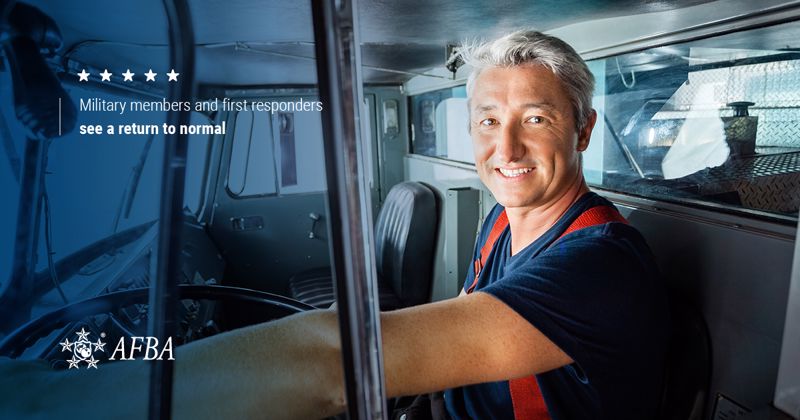
Society has relied on EMS service members and other first responders more than ever during the pandemic, their work more critical than ever in light of the virus. In most states, first responders were given some priority when it came to receiving the vaccine. Similar to the armed forces, first responders have received more freedom as a result of obtaining the vaccine.
The way that first responders do their job has changed, but now they are able to continue doing their jobs and some may say that things are returning to usual life. According to CNBC, health care workers are finding joy in the small things and their 2020 report showed that participating in TikTok challenges and coming together as a community helped boost spirits.
For both the first responder and military communities, having a sense of community is the best way to deal with the stress of the past two years. The CDC lists spending "time outdoors either being physically active or relaxing," and doing "things you enjoy during non-work hours" as a way to cope with difficulties and enhance resilience. Regardless of the community, people have become adept at pushing through the realities of covid and finding joy in the outside/family/etc
More gyms are starting to open and allow group classes, making it easier to blow off steam. Military bases have continued their physical testing requirements and opened up their training facilities. According to the Military Health System, some active-duty service members have been doubling down on their exercise routine in order to promote good mental health.
Time has offered some reprise from the chaos of late 2019 and early 2020. Military members and first responders who have had to adjust their daily work routines are finding comfort in returning to the normalcy of attending events and building a sense of community outside of computer screens.
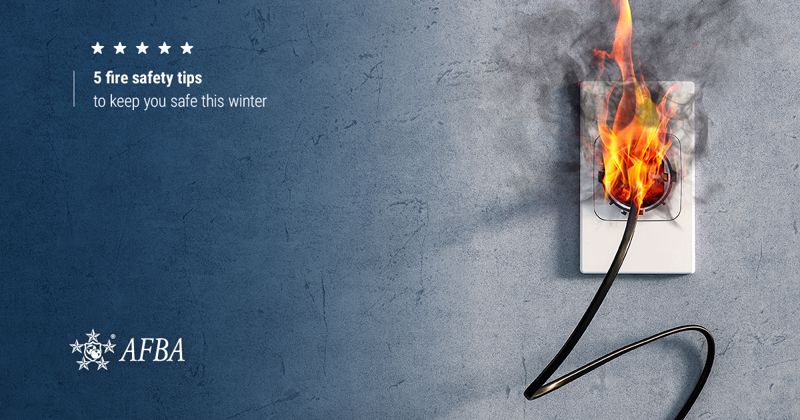
With winter fast approaching, its important to take the opportunity to consider enacting some of these at-home fire safety tips. The past year has been one of the most dangerous in regard to wildfires. The increased number of fires, many of which were preventable, put more firefighter lives at risk and destroyed natural habitats. The National Centers for Environmental Information reports that in 2021 alone, 5,907,288 acres of American land were burned. Let’s take a closer look at a few simple ways to protect yourself and those around you from the dangers of fire.
 The appearance of U.S. Department of Defense (DoD) visual information does not imply or constitute DoD endorsement
1. Manage heat sources
Whether your home has a fireplace, baseboard heaters or you use a space heater, many structure fires are caused by those indoor heat sources. Especially as the colder months approach, keep clothing and other items away from the fire or vents. Make sure that the space heater is placed on a level, non-flammable surface.
2. Invest in a good fire alarm system
According to the San Francisco Fire Department, two-thirds of people who passed away as a result of a fire that was started in the house were asleep when the fire began in 2018. Even if you have a fire alarm system, it is important that you make sure to keep it in top shape and replace any dead batteries.
3. Put out your cigarettes
Cigarettes are among the top causes of fires because they can be extremely dangerous when not disposed of correctly. According to the National Library of Medicine, cigarettes and “smoking cause an estimated 30% of the U.S. and 10% of global fire death burdens.” Make sure that every spark is extinguished in a predetermined area.
4. Mitigate electrical fires
Electrical fires are some of the most dangerous because they can be very explosive and cause not only structural fires but expand into wildfires. Always hire an electrical professional to do all electrical work to prevent damage. Provide some education to your children about how electricity can be dangerous and outlets should not be played with.
5. Put out your outdoor fires
According to the U.S. Department of the Interior, 9 out of 10 wildfires are caused by humans. Here are a few tips that will reduce the likelihood of an accidental fire.
- Build campfires in open areas, away from low-hanging branches.
- Always douse your campfires and ensure they are fully extinguished.
- Consider the environment and conditions before setting off fireworks.
Structure fires can often lead to wildfires; all it takes is a small spark to start a terrible and costly fire. Be careful and, most of all, mindful of the consequences of your actions.
Consider keep these tips in play year-round. While winter brings on the use of space heaters and fireplaces, the potential for fire is everywhere. Stay safe, and remember to thank a firefighter next time you see one.
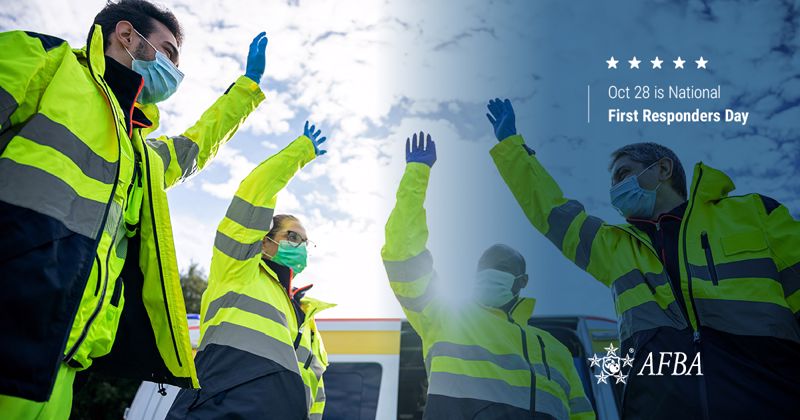
While we should be thanking our firefighters, paramedics and EMTs every day, October 28 is National First Responders Day, which offers a unique opportunity to show our appreciation. These heroic men and women are the first ones on the scene of natural disasters, tragedies and accidents. They devote their lives to making the world a better — and safer — place.
The creation of National First Responders Day
The day of recognition is a relatively new holiday, but it was a long time coming. Congress made October 28 National First Responders Day in 2017, though the first bipartisan resolution passed through the senate in 2019.
At the time, there were about “4.6 million career and volunteer firefighters, police, emergency medical technicians, and paramedic workers serving communities all across the United States,” according to the Department of Homeland Security. Even before the creation of National First Responders Day, Americans knew how valuable and necessary they were.
 “The appearance of U.S. Department of Defense (DoD) visual information does not imply or constitute DoD endorsement.”
First responders in 2020 and 2021
Only a few months after the first holiday, the COVID-19 pandemic would sweep the globe. First responders were the ones who stepped forward when no one else could. It is more important than ever to show support for these front-line workers, over a year into one of the greatest crises of the last decade.
According to The Associated Press, many first responders have lost their lives as a result of the pandemic. Often first on the scene, EMTs and paramedics are exposed to unique situations that increase their likelihood of contraction.
Even outside of the COVID-19 pandemic, natural disasters caused destruction across the U.S., requiring firefighters and other first responders to show up in unprecedented force. According to the U.S. Drought Monitor, about 90% of the land in the Western U.S. is experiencing “moderate to severe drought.”
This has led to a staggering increase in wild fires. The National Interagency Fire Center reports that 12.6 million acres of land were burned in 2020 and 2021. Firefighters from around the nation risked their lives and left their families to protect the environment and American citizens.
Beyond the pervasive fires, the U.S. has faced an increase in floods, droughts, hurricanes, blizzards, earthquakes and other natural disasters. The National Oceanic and Atmospheric Administration’s data shows that there have been 18 weather disasters in 2021, as of October 8.
Recognizing first responders
When National First Responders day was announced, Chairman of the Homeland Security and Governmental Affairs Committee Ron Johnson (R-Wis.) explained the reason for the new day of recognition.
“Our first responders save countless lives every day, and many tragically pay the ultimate price in the line of duty — a sacrifice we should never forget. Designating a day to honor their service and sacrifice is the least we can do to express our gratitude,” he said in a June 7, 2019 press release.
The 116th congress wrote in the act that “During times of national crisis, first responders have consistently been a source of aid, hope, and comfort for all Americans.”
Show your support for America’s brave first responders by thanking them for their service or donating to a first responder charity. Here are a few to choose from:
National First Responders Day is your opportunity to show gratitude and to recognize the professionals who play an important role in ensuring the safety of every American citizen.
First responders like firefighters, emergency medical professionals and police officers devote their lives to their communities. The past few years have displayed that the extreme importance of first responders can not be overstated. First responders come in the form of volunteers, part-time employees and people whose only job is serving their area.
Our nation needs firefighters, law enforcement officers, and EMTs more than ever, but the reality is that there is a shortage of first responders across the country. As of 2020, 60 million Americans are unable to receive emergency help because they live in an area without assistance.
You may want to show your appreciation to the first responders in your community that come to work every day to answer emergencies, but don’t know where to start. Here are three simple ways Americans can thank a hero.
 The appearance of U.S. Department of Defense (DoD) visual information does not imply or constitute DoD endorsement.
1. Offer discounts
According to the U.S. Bureau of Labor Statistics (BLS), the median pay for paramedics and firefighters is $17.62 per hour. The BLS mentions that their work environment is usually very difficult and that they regularly face stressful situations that are even potentially life or death.
Because of their devotion to a job that does not typically yield many monetary rewards, business owners often implement a first responder discount program. This is especially true in the hospitality industry. For example, hotels often have discounts that allow first responders to stay for a cheaper price. The following is a list of a few hotels that first responders can stay at for a discounted rate:
- Best Western: at least 10%.
- Caesars’ Palace: up to 30%.
- Marriott: up to 50%.
- Hilton: up to 25%.
If you own a small business, consider offering a first responder discount. Even something small can mean a lot to these professionals. Aside from helping them save money, it is a gesture that shows recognition of their service.
2. Donate your time or money
When people hear the term “donate,” they often only think of giving money to a charitable organization. Even though monetary donations are always welcome if possible, there are plenty of other ways to give.
Consider donating your time to a local fire department or organization as a volunteer. The shortage of first responders has nearly reached crisis level. This was true even before the international public health disaster of 2020. As a volunteer, you’d be taking some of the burden of labor off of the full-time professionals. In addition, you’ll no doubt learn skills and information that you wouldn’t have otherwise known. Learn how to become a volunteer firefighter or EMT by contacting your local departments.
3. Respect your community
Aside from acting respectfully directly to the first responders themselves, acting responsibly in your everyday life is impactful. For example, about 90% of fires are started by people. American citizens could reduce that number simply by being more aware of their surroundings and the impact of their misplaced campfire. Following fire safety best practices would certainly ease the workload of both urban and rural firefighters.
The same idea applies to driving carefully, staying home when you are sick, and generally considering the impact of your behavior. Inebriated driving is another good example of how your personal choices affect more than just yourself. Even if you would never drive drunk, it’s important to hold your friends and family to the same standard. Aside from the terrible repercussions, you’ll be avoiding using resources for something that was completely preventable.
By following safety guidelines, you are directly reducing any unnecessary burden on the already overworked first responders in your area.