
Every year on the Fourth of July, the United States of America comes together to celebrate the day that our beautiful country declared independence. While the rest of the country lets loose and commemorates Independence Day, first responders nationwide prepare to make sure that American citizens can do so safely. Let’s take a look at how EMTs, firefighters, and hospital workers prepare for the day when more people are likely to visit the emergency room than any other.
EMTs
Regular summertime fun like boating, grilling, and camping are staples of the holiday, but with nearly all 330 million Americans participating in these activities simultaneously, the likelihood of accidents goes up. July 4 and 5 see an average of 45,000 people in emergency rooms across the country, meaning that EMT staff are working overtime to provide emergency medical assistance and to transport patients to the hospital.
Preparation for this year’s Fourth of July celebration is different from previous Independence Day observances. There is anticipation that Americans will heed the advice of President Joe Biden when he encouraged citizens to use the holiday to also commemorate the return to relative normalcy after the coronavirus pandemic. While celebrating the reopening of America is certainly in order, there is a chance that an increase in exciting activities could lead to a higher possibility for accidents.
Police officers
One way that paramedics and other first responders prepare for the increase of activity is by knowing what kind of accidents are most likely to occur. This is especially true for law enforcement officers. A great example of this is intoxicated driving. What was probably a fun party or get-together could turn deadly if someone makes the choice to drive under the influence of alcohol. Independence Day is only rivaled by New Year’s when it comes to car accidents.
About 38% of the total people who passed away on July Fourth and a fifth died due to car crashes where the driver was under the influence of alcohol. Knowing this, preventive measures can be taken, including media campaigns and an increase of police officers patrolling the roads to stop drunk drivers before the accidents happen.
Firefighters
July is one of the hottest national holidays and is known for being celebrated with beautiful fireworks — a combination that is not necessarily ideal when it comes to fire safety. 2020 was notably the second-worst year for wildfires in America in about 60 years, with nearly 10.1 million acres being burned. 2021 has already been uniquely warm and dry, indicating an increased danger for fire hazards. With July Fourth falling in the middle of fire season, firefighters across the nation are prepared for a rise in structure fires as well as wildland fires caused by fireworks and campfires.
In fact, about 19% of fatal fires happen because of careless behavior, and Independence Day is no exception. Because of the high rate of accidental fires in general, it is best to leave the handling of large fireworks to the professionals. In preparation, fire stations and wildland fire teams hire additional staff and deploy extra volunteers to ensure a safe holiday weekend.
 The appearance of U.S. Department of Defense (DoD) visual information does not imply or constitute DoD endorsement.
Summer 2021 has been dubbed “the summer of freedom.” While the Fourth of July is the perfect time to celebrate this, it is important to keep in mind the first responders risking their lives to protect American citizens.
A bill was recently introduced that would give first responders (law enforcement officers, firefighters, Emergency Medical Technicians, paramedics) and teachers access to no down payment options for securing a mortgage. The legislation was introduced by the House of Representatives in May and has been dubbed the HELPER bill, short for Homes for Every Local Protector, Educator, and Responder. The bipartisan HELPER bill is showing support for the community.

This is just one instance of the government reaching out to the people who work every day to make America a better place.
Breaking down HELPER
The national director of Heroes First Home Loans, Samuel Royer, first initiated the HELPER bill. As a former member of the Marine Corps who has benefited from similar legislation created for veterans, Royer looked at this bill as his chance to give back to his community. On may 20th, the HELPER bill was officially introduced by Representatives John Rutherford (R-FL), Al Lawson (D-FL), John Katko (R-NY) and Bonnie Watson Coleman (D-NJ).
The end goal is to give these service workers a leg up in today’s extremely competitive housing market. According to the National Association of Realtors’ Housing Affordability Index, most people have to pay more than 14% of their income in order to satisfy their home payment.
If passed, the HELPER bill would create a one-time-use home loan program that could be used one time under the Federal Housing Administration. Additionally, qualifying people would not need to make a down payment.
This would create opportunities for first responders and teachers that may not otherwise be available. Lastly, HELPER would remove the obligation for a monthly mortgage insurance premium, which is required for all FHA loans.
Government recognition
Teachers add immense value to society just by going to work every day. First responders like EMS personnel also have a low starting pay rate. Despite all this, the federal government has taken action to ensure that those who have chosen such a noble career path are taken care of.
In fact, HELPER is very similar to an already established program called VA Home Loan Program. Through this loan program, United States military veterans can receive benefits which reduce the initial cost of buying a home and can save them up to $90/month in payments. Similar government programs are not uncommon and serve a reminder that the government is grateful for the service of these individuals.
Community recognition
Teachers and first responders directly impact the community they work with and are often held at high personal esteem for their contributions. Despite the discrepancy in financial payment, many who serve find the nature of their work rewarding.
As an example, a survey of 2,000 people showed that 76% say they would gladly pay for a first responder’s meal, if they were out eating and saw one in a restaurant. A bipartisan piece of legislation like the HELPER bill, is a tangible way for a community to show their support.
For some, it might have been easy to take local protectors, educators and responders for granted, but 2020 truly exposed how invaluable they are. The balance of society was held in the palms of doctors, nurses, firefighters and EMT’s. Teachers adapted their entire teaching method and continued working toward a more educated tomorrow. Communities rallied together to support essential workers through classroom funds, in-store discounts and mask drives.
First responders, teachers and health care workers dedicate their lives for the betterment of society. These are people who often live in the communities they serve and the federal government is looking to help those communities show their gratitude by introducing important legislation like the HELPER bill.
Although first responders are not always on the clock, they're always on the job.
Even when they're off duty, these brave men and women will still respond to a crisis to make a meaningful impact in any way they can, no matter where they are. Sometimes, this includes providing life-saving emergency services in the nick of time.
Here we highlight three recent instances where these skilled professionals placed a priority on duty, service and a commitment to their values, even while off the job.
Captain Brad Petty, Chattanooga Fire Department
On a recent drive home following his son's wrestling tournament, Captain Brad Petty noticed a driver suddenly swerve and pull over to the side of the expressway about 34 miles southeast of Nashville, Tennessee. Then, according to the Captain, a person hopped out of the car to flag down someone.
Even with his family in the vehicle with him, Captain Petty knew he had a responsibility to stop and try to help. So he pulled over near the other car, only to discover another person in the passenger seat who was suffering from a gunshot wound to the head.
Captain Petty used his emergency response training by opening the victim's airway and applying pressure to the wound, as his daughter, Hannah Petty, called 911. The Petty family waited with the victim until assistance arrived and she was flown to a hospital in a medical helicopter.
Lieutenant Alex Meron and Paramedic Chelsee Meron, Moore Fire Department
The husband and wife couple of Lt. Alex Meron and Paramedic Chelsee Meron recently returned home from a trip. As they made their way through the Will Rogers World Airport in Oklahoma City, they noticed what they thought at first to be a sleeping man in the baggage claim area. But being the keen-eyed first responders they are, they realized something didn't look right, so the pair decided to check the man's pulse. That's when they discovered he didn't have a pulse.
Immediately, Lt. Meron started administering CPR. Meanwhile, Paramedic Meron darted off to locate the closest Automated External Defibrillator (AED) in the airport.
Thankfully, Lt. Meron's CPR attempts worked, and he was able to resuscitate the man and get his pulse started before the Emergency Medical Services Authority (EMSA) arrived to take the man to the hospital.
Staff Sergeant Jason Mendoza-Anaya, US Air Force
While doing his laundry at a Colorado Springs laundromat in 2020, U.S. Air Force Staff Sgt. Jason Mendoza-Anaya, 21st Force Support Squadron unit training manager, heard a guy scream, start to shake and fall over. The man hit his head on a metal chair as he fell and continued shaking on the ground.
Sgt. Mendoza-Anaya recognized the severity of the incident and rushed to the man's side, who was now bleeding from his head wound and still convulsing. Mendoza-Anaya took charge of the situation, directed another laundromat patron to call 911 and another person to see if the man had any medication for seizures he needed in his bags. Meanwhile, Mendoza-Anaya tried to get a pen or pencil into the man's mouth so he didn't bite his tongue off during the seizure, but it was too late, and blood was pooling out of the man's mouth.
Mendoza-Anaya got the man on his side so the blood would spill out and the man wouldn't choke, and then wrapped his sweater around the man's head so he wouldn't cause more damage if he hit it against the floor.
He continued this until an ambulance with on-duty first responders arrived and took over medical care. After applying a neck brace on the man, he woke up and lived.
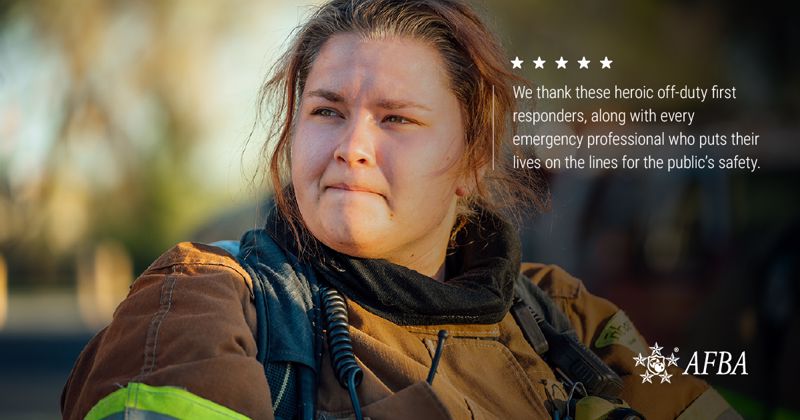
We thank these heroic off-duty first responders, along with every emergency professional who puts their lives on the lines for the public's safety.
Firefighters must meet many unique requirements to successfully complete their duties and capably serve in their roles.
Safely navigating the dangers posed by uncontrolled blazes is perhaps the most visible and serious concern for these first responders. However, the especially important nature of the job means firefighters often follow taxing work schedules, with long shifts and weekly hours frequently exceeding those seen in other careers.
A strong bipartisan effort in Congress is working to address the scheduling demands placed on federal firefighters. These efforts include relaxing rules around trading shifts that could quickly improve work-life balance for these professionals.
Strict schedules for federal firefighters
Federal firefighters work for agencies including the Bureau of Land Management and U.S. Forest Service, along with branches of the U.S. Armed Forces, according to ZipRecruiter. They tend to fight wildfires and blazes in remote areas. Their work often necessitates especially long schedules, frequently clocking in at 24 hours per shift and 72 hours per week.
The demands placed on federal firefighters mean their free time is limited and, therefore, uniquely valuable. However, these firefighters are limited by federal rules around trading shifts to accommodate family obligations and similar needs. Many federal agencies currently avoid shift trading among firefighters because of the complexities that can arise when trades occur across pay periods, which necessitate pay adjustments and, in some cases, the provision of overtime.
Although these firefighters enjoy significant time off between working weeks, as Government Executive reported, they might be forced to miss a variety of personal events and obligations, should one fall during their time on the job.
The Federal Times explained that firefighters working for these government agencies need to use some form of leave to excuse an absence during their scheduled hours, even if they can find a colleague willing to cover that shift. This isn't a concern for municipal and state-level professionals, who already have this additional freedom in scheduling.
A bipartisan push to increase flexibility
A group of five senators, spanning both houses of the federal legislature and both major political parties, reintroduced a bill called the The Federal Firefighter Flexibility and Fairness Act in late March. This piece of legislation would allow federal firefighters to trade shifts without penalty, doing away with the requirement to use some form of leave to facilitate trades and addressing the compensation issues that currently arise.
"It's no secret that wildfires across the West are burning bigger and longer, meaning our federal firefighters work overtime, putting their lives on the line to keep our communities safe," said Sen. Jon Tester of Montana. "This critical bill gives them the flexibility they need to better balance their work and home lives, and it saves taxpayer dollars. Switching shifts is common practice among state and local firefighters — it's only common sense that our federal firefighters are able to do the same."
While the bill still needs to pass through the U.S. Capitol and White House before becoming a law, it has strong support and a strong underlying principle of fairness to first responders on its side.
Two especially large and powerful winter storms swept across large parts of the U.S. in February 2021. The storms' widespread effects had an especially harsh impact in Texas, a state unaccustomed to severe cold, ice and snow. As is so often the case in adverse events, first responders across Texas played a critical role in providing emergency services.
Power outages across the state and broader region affected millions of Texans. By February 12, before the second storm hit, Texas had already suffered more than 1,000 car crashes due to slippery, hazardous roads, according to Dallas-Fort Worth NBC affiliate KXAS.
Time magazine reported that many factors related to the storms, such as rolling blackouts and differences in figures reported by various sources, made it hard to land on the exact number of impacted residents. However, Time offered an educated guess that about 15 million people were without power at various points during and after the storm. The federal government quickly made a Federal Emergency Declaration to facilitate the provision of safe places to shelter and access to basic resources.
With so many dangerous elements in play — cold temperatures, snow and ice on roads and many people without power, heat or access to potable water — emergency responders fielded an incredibly large number of calls for help.
First responders rise to the call of a state in crisis
Dallas-based ABC affiliate WFAA reported that, in the North Texas region, first responders and dispatchers received far more requests for assistance than they had during any other emergency in the previous 10 years. In the city of Wylie, the population of just under 50,000 residents made about 200 calls to first responders on an average day. During the week when the second major winter storm swept across the Lone Star State, that number rose to about 1,200 calls — a staggering 500% increase.
This drastic jump in the need for emergency services is reflected in the selfless actions taken by so many first responders in Texas. In Wylie, Julia Maschmann, an experienced dispatcher, slept in the office, ate in the shared kitchen of the city's Public Safety Building and did her laundry at machines inside the city jail — all so she could stay on the job.
"You don't leave your people, you help your people," Maschmann told WFAA.
KXAN, a Fox affiliate located in Austin, reported that Kevin Horton, a fire specialist with the city's fire department, worked 120 hours in a row during the extended emergency. Overall, Austin's fire department fielded more than 5,500 requests for assistance as the storm hit the area and in its aftermath. That included playing a key role in rescuing thousands of doses of COVID-19 vaccine that could have otherwise spoiled or gone to waste, due to the severe disruption caused by the hazardous conditions.
First responders across the state drew on their knowledge, skills and past experience to respond to calls in uniquely treacherous conditions and organize their available resources in the most efficient manner possible, to provide as much assistance as they could. In terms of experience, past work in colder climates paid off for one fire department. The city of Killeen, in central Texas, had recently hired James C. Kubinski, a veteran Chicago firefighter, as its department chief, according to the Killeen Daily Herald.
"I had experienced the increased call volume and broken water pipes associated with a deep freeze and thaw more than once, so I knew what was going to be coming," Kubinski told the Herald. "There was no hesitation when the captains and battalion chiefs asked for approval to implement a plan they developed that included increased staffing and adding booster trucks as quick response vehicles. Larger fire apparatus were only put on the street for more major incidents."
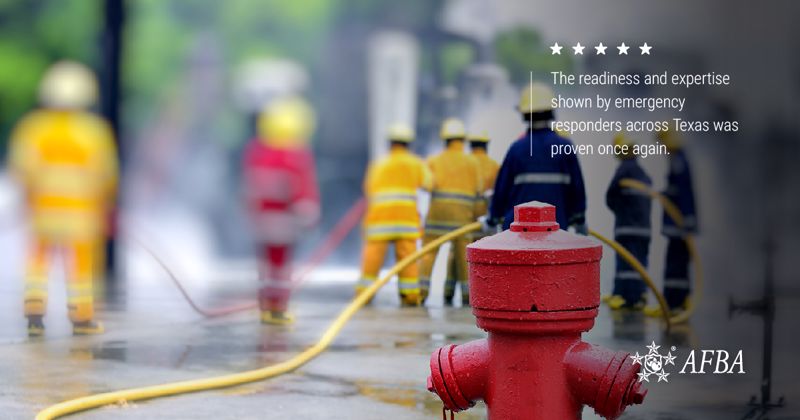
The readiness and expertise shown by emergency responders across Texas was proven once again. These professionals are community heroes and they play absolutely crucial roles in trying times.

As fate would have it, 2020 marked the 100th anniversary of the first certified respirator — as well as a major surge in awareness around this essential piece of protection.
While the COVID-19 pandemic has brought more attention to the value of face coverings in helping reduce disease transmission, various types of personal protective equipment (PPE) have supported health care professionals and emergency responders in the workforce for centuries.
Here is a look at the evolution of these PPE essentials and milestones that have led to advancements that keep the first responder communities safe today.
Early face coverings were intended to offer protection from toxic chemicals
The history of the face mask has its origins in the first century CE, according to the Centers for Disease Control and Prevention (CDC). The Roman philosopher Pliny the Elder relied on animal bladder skins to avoid inhaling toxic minerals like cinnabar that were popular in the decorative arts. Leonardo da Vinci suggested damp cloths for protecting the nose and mouth from similar risks.
It was clear to Bernardino Ramazzini that toxic agents were occupational hazards in need of superior protective equipment to address them. The observations in his 1700 publication, "De Morbis Artificum Diatriba" (Diseases of Workers), made Ramazzini the father of occupational medicine.
Medical discoveries led to improvements in filtration technology
Miasma theory, which incorrectly identified the source of epidemic diseases as odors from rotting organic material, led 17th-century "plague doctors" to wear beak-like masks filled with fragrant herbs. These coverings were intended for protection against the noxious "bad air" that was believed caused disease transmission. Throughout the 18th and 19th centuries, however, researchers made new discoveries about the nature of airborne particles and their impact on respiratory health. A series of particulate respirator designs relied on early filtration systems to keep the nose and mouth safe from smoke and harmful gases.
20th-century crises underscored the need for respiratory protection
As the 20th century unfolded, the population was woefully unprepared for the respiratory risks to come, on the battlefield and on the home front. Aggressive chemical warfare strategies of World War I caused nearly one-third of casualties since troops in combat were not equipped with respirators. As a result, during World War II, servicemembers and civilians were urged to carry and wear gas masks.
In response to high fatality rates among mineworkers and the 1918 influenza pandemic, the newly formed United States Bureau of Mines (USMB) launched the first respirator certification initiative in 1919. The Gibbs respirator — a "closed-circuit self-contained breathing apparatus" — became the first certified model under this program the following year, according to the CDC.
The formation of the Occupational Safety and Health Administration (OSHA) in 1970 transformed earlier respiratory protection recommendations into requirements across industrial settings.
1990s-2010s events led to further PPE research and standardization
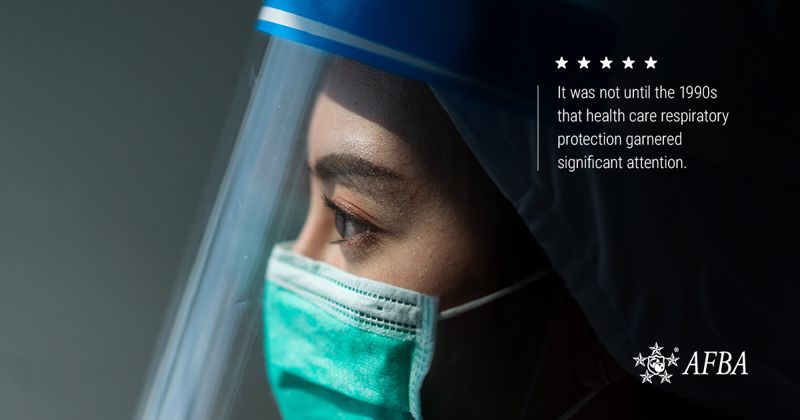
It was not until the 1990s that health care respiratory protection garnered significant attention. A tuberculosis outbreak sparked the adoption of air-purifying respiratory equipment as a safer alternative to surgical masks. The 9/11 attacks also drew attention to other first responders' PPE needs, as firefighters suffered from ineffective respiratory protection during rescue and recovery efforts. By the time the Ebola epidemic reached the U.S. in 2014, emergency response professionals were urged to wear the N95 respirator.
Each of these crises has led to significant scientific advancements, tighter regulations and heightened awareness of the importance of PPE. Researchers continue to make new discoveries amid the COVID-19 pandemic, which will undoubtedly help protect first responders from the respiratory risks of the future.
In recognition of National Mentoring Month this January, we're highlighting how people in first responder professions can make an impact by mentoring young members of the community.
What is National Mentoring Month?
Since 2002, National Mentoring Month has been hosted each January by MENTOR: The National Mentoring Partnership in partnership with the Harvard T.H. Chan School of Public Health. MENTOR is on a mission to "fuel the quality and quantity of mentoring relationships for America's young people and to close the mentoring gap for the one in three young people growing up without this critical support."
The campaign's mission is to raise awareness around the value of high-quality mentoring experiences, particularly for young people. Caring adult mentors have the power to help mentees make responsible decisions and carve out a path for themselves in their communities and future careers.
This year, the chosen theme is Mentoring Amplifies. The month-long observance amplifies the positive impact mentoring can have, and how such experiences can amplify potential, confidence, connections and more for young mentees.
Mentors help tomorrow's leaders lay a solid foundation for the future
According to the National Mentoring Month organizers, young people who have a mentor are 55% more likely to enroll in college, 78% more likely to volunteer in their local communities and 130% more likely to take on leadership positions.
Being able to connect with a committed mentor gives the leaders of the future opportunities to discover new career fields and possibilities. They can also discuss their aspirations and benefit from a support system outside of their school and household.
Real-world heroes can make a difference in young peoples' lives
Many children look up to firefighters, police officers and emergency medical professionals as real-life superheroes. Some even dream about joining these professions when they grow up. As these little dreamers mature into young adults, first responders can make a meaningful and tangible impact through mentorship.
They can talk about and demonstrate the values of helping others and serving the community. They can help young people learn about qualities like courage and selflessness as well as valuable skills like leadership and teamwork.

A glimpse at first responder mentoring in action
The First Responders Explorer Post #58 of Quakertown, Pennsylvania, is just one example of how first responder agencies can add value to the community through mentorship programs.
In partnership with the local school district and Boy Scouts troop, members of the Quakertown police and fire departments and emergency medicine technicians (EMTs) give high school students real-world exposure to each of these three professions. Participants are invited to climb fire truck ladders, view K9 unit demonstrations, tour 911 call centers and forensic labs and listen in on how real calls are received and how EMT teams, firefighters and police officers dispatched.
As explained by the Department of Justice's Community Policing Dispatch newsletter, this experience gives participants in the mentoring program a look at the collaborative and interdisciplinary nature of these departments. Students can cultivate critical thinking and emergency response skills to apply in their own lives. Plus, it helps the mentees understand the difference between the first responders portrayed on TV and the realities of the job and the people who fill these critical roles.
The benefits of mentoring aren't just for kids
Mentoring young people can have a significant impact on the adults who participate in such programs as well. Supporting and encouraging a mentee can bring a sense of personal fulfillment and accomplishment, especially when it's clear the impact those hours and interactions have had on the mentee.
Furthermore, becoming a mentor — whether through a local initiative or a national mentoring organization — opens the door to the wider mentoring community. Connecting with like-minded people who are excited about making a difference in young peoples' lives can be a positive side effect.
Finally, these experiences can also leave mentors more open-minded and empathetic, with a new perspective of the world as seen through their mentee's eyes. Just a few hours per week can make a major difference for both the first responders and the young people they work with.
Around the country, the holiday season is looking different than it has in years past. Up and down shopping districts, the gift-buying rush is tempered by social distancing measures and capacity limits for small retailers. Droves of consumers have chosen to place orders from ecommerce retailers instead, overwhelming delivery service providers. Families and friends are opting for smaller, more intimate gatherings over large celebrations.
However, during the ongoing COVID-19 pandemic, it's not quite so easy for first responder families to wait in line or shop online at their leisure. That's why the First Responder Children's Foundation has launched a Toy Express program to send more than 250,000 free gifts and face masks to children of emergency response workers.
Supporting first responder families through difficult holiday seasons
The First Responders Children's Foundation was established after 9/11, when hundreds of families were faced with the prospect of celebrating Thanksgiving after losing a loved one in the line of duty. The organization arranged a Thanksgiving Day Parade Breakfast for more than 800 children and family members.
As the foundation explains, this "began an annual tradition of welcoming devastated first responder families into a supportive environment to face the challenges of the start of a holiday season without a loved one."
This year, as countless first responders work tirelessly on the front lines of the pandemic, the First Responders Children's Foundation aims to add some comfort and joy to what's sure to be a difficult holiday season.
"Toy Express will help make a happy holiday for the children of our first responders which include nurses, firefighters, police officers, EMTs, paramedics, medical personnel and 911 dispatchers." said the organization's president, Jillian Crane, in a news release. "Our first responders are on the frontlines of the pandemic, and they continue to risk their own health every day in selfless service to their local communities across the country."

More than $1 million worth of toys donated
Although large in-person gatherings are not feasible this year, the First Responders Children's Foundation is still spreading holiday cheer to first responder families. It's all happening through partnerships with toy brands, mask manufacturers, logistics companies and families around the country who have made a donation.
The foundation's Toy Express is fueled by a donation of more than $1 million worth of toys from Mattel, including 5,000 American Girl Dolls, plus products from beloved Mattel brands like Hot Wheels, Barbie dolls and Mega Bloks. Other partners helping provide gifts and masks include Toys for Tots, Hess Toy Truck, Jakks Pacific, MaskUSA.com and Good360.
Logistics and transportation companies including CSX and Total Quality Logistics are also backing the program and helping ensure that the donated toys and masks quickly make their way to children around the country.
Toy Express to distribute gifts across more than 80 cities
The organization is spreading generosity and holiday cheer across 84 cities, partnering with local businesses and community organizers. For instance, in Saugerties, New York, more than 800 bags of toys, along with wrapping paper and donated food items, were passed out to first responder families.
"It wasn't just one or two gifts […] — each child received a bag of toys," said Macy Siracusano, vice president of Sawyer Motors, a business that partnered with the foundation to bring the Toy Express to local families. While children of all ages were welcome, "the intention of this was to help the parents for Christmas morning," Siracusano told a local news outlet.
"I think the way everyone was happy and appreciative, that's what makes it all worthwhile," she added. "It makes us want to do it again and again and again."
Members of the public who are interested in contributing to the toy drive or supporting the nonprofit can visit 1stRCF.org or text "TOY" to 24365.
Around the world on Nov. 25, first responders, humanitarian aid groups and activists come together in recognition of the International Day for the Elimination of Violence Against Women. An important part of this observance is raising awareness about actions that perpetuate violence against women and girls. One of these is human trafficking.
First responders play a vital role in identifying, protecting and supporting human trafficking victims. Let's examine what first responders can do to help stop human trafficking.
Who are the victims?
Due to the illegality of human trafficking, it's difficult to get an accurate number of the number of victims impacted, although experts estimate that between 18,000 and 20,000 people are trafficked into the U.S. each year.
While human trafficking can impact anyone, regardless of age, race, gender identity, sex, ethnicity, nationality, immigration status or socioeconomic class, women are the most common victims. The United Nations Office on Drugs and Crime (UNODC) reported that 71% of human trafficking victims are women and girls, while around 33% are children.

Identifying the signs and alerting authorities
People working on the front lines, such as law enforcement officers, emergency medical technicians (EMTs) or hospital staff, are in a unique position to be able to identify these instances and report them to the proper authorities.
For example, the Department of Homeland Security created the Blue Campaign, an initiative that aims to foster collaboration between first responders and non-government and government entities.
The Blue Campaign noted that, since human trafficking often hides in plain sight, it's important to know how to recognize the signs of a potential victim. While many people might associate trafficking with the sex trade, victims are also forced to work in private residences, on farms, in the hospitality industry and in the health and beauty services industry.
Some red flags to watch for include, but are not limited to:
- Work conditions: A victim of human trafficking may be experiencing verbal or physical abuse from a boss, working excessively with minimum or no pay or living where they work. They might also be forced into illegal work, such as fraudulent activities or commercial sex acts against their will.
- Behavior: A victim may act fearful, agitated, nervous or anxious around a particular person. They might defer answers to this person, or let the other person speak for them.
- Physical state: In addition, a human trafficking victim might show signs of physical or sexual abuse, such as bruises, cuts and other injuries they may not explain. They might also appear malnourished, sleep deprived, lacking medical care or living without essential personal possessions.
Conversely, some signs of a potential trafficking offender include, but are not limited to:
- Restrictions: A trafficker might place severe restrictions and limitations on the actions, movements and personal time of the person they have trafficked. For instance, they might prevent this individual from seeing family or friends, disallow access to a telephone or social media or stopping them from going to their regular work or school.
- Threats: A human trafficking offender might make threatening statements to a victim or constantly keep the victim under a watchful eye.
- Unsafe housing: A trafficker might house their victims in unsafe and unsanitary conditions. This also includes housing a large group of people in one place with poor conditions and limited space.
No single one of these examples represents definitive proof of human trafficking, but these are often common indicators that it is happening. If one of these signs does show up during an ambulance ride, hospital visit or emergency response call, it's important that first responders take a moment to ask follow-up questions and survey the situation more carefully.
If, after more scrutiny, you suspect someone is a victim or a perpetrator of human trafficking, contact the National Human Trafficking Hotline to connect with services and support or to make a report.
With this year's tumultuous employment landscape and renewed emphasis on keeping communities strong, many people are looking for ways to step up and help out or are considering a new career. A promising opportunity to accomplish this could be employment as a first responder.
Recent data from the U.S. Bureau of Labor Statistics (BLS) shows that the number of first responder jobs is expected to grow significantly over the next decade. Collectively, analysts are forecasting roughly 77,900 new career opportunities for this sector, which includes firefighters, police officers, emergency medical technicians (EMTs) and paramedics.
Although local municipal budgets fluctuate with the times — which can impact the bottom line for these sectors — a career as a first responder remains a stable and in-demand job option. There will always be a need for those willing to bravely face emergencies and disasters.
Let's break down how the individual sectors are likely to fare by examining the BLS data with a bit more granularity.
Job outlook for EMTs and paramedics
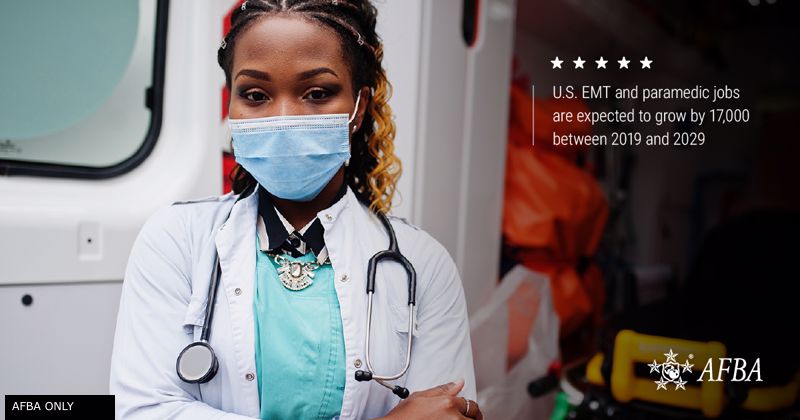
Analysts forecast the number of EMT and paramedic jobs will grow by 17,000 across the U.S. between 2019 and 2029.
With 265,200 jobs as of 2019, this represents a 6% increase over the next decade. Although this might not seem like a big increase, this is faster than the 4% average growth rate across all occupations.
Emergencies like car crashes and natural disasters that require the skills of EMTs and paramedics aren't going to disappear any time soon. Simply put, these jobs are nearly indispensable.
To become an EMT or paramedic requires completion of a post-secondary educational program after high school. While this generally refers to college or university programs, it also covers trade schools and community colleges. Aspiring EMTs and paramedics must then obtain a state license, with the requirements varying from state to state.
Job outlook for firefighters
For firefighters, over the next decade the BLS expects that 20,300 jobs will be added to the current total, which was 335,500 in 2019. Like EMTs and paramedics, this would also account for a jump of 6%, which is faster than the national average.
Those interested in pursuing a career as a firefighter should understand how to go about doing so. While qualifications may vary from one jurisdiction to another, typically individuals need a high school diploma and emergency medical training. Once those requirements are met, the next step is to attend a fire academy to receive proper training and then successfully pass a written and physical test. In many locations, firefighters must also have EMT certification.
Job outlook for police officers
BLS data indicates that police and detective careers are also expected to increase substantially. The next decade should see 40,600 new police and detective jobs to add onto the 813,500 jobs in existence as of 2019. This would represent growth of 5%, which is slightly faster than average.
Continued need for public safety will drive this positive employment change in the coming decade; however, demand will vary by location.
To become a police officer, applicants typically need a high school diploma, although some jurisdictions require a college degree. Applicants must graduate from the local police academy and have on-the-job training before entering the police force.
As we can see, the occupational outlook for first responders remains positive and full of opportunities. Whether you're fresh out of high school or looking for a mid-career change, there will be significant demand for EMTs and paramedics, firefighters and police officers in the coming decade.