
Military service members, firefighters and power industry workers regularly go into the line of duty outfitted in flame-resistant or fire-resistant (FR) clothing. Contractors have embraced innovative textiles to keep uniforms — and the people who wear them — safe. Here is a look at the occupational hazards that necessitate FR clothing and what FR uniforms must do.
Occupational risks
The mission of a firefighter necessitates clothing that can hold up to intense heat and raging flames. FR turnout gear and station wear must reliably offer high levels of thermal protection. But first responders are not the only brave professionals who require carefully engineered protective apparel.
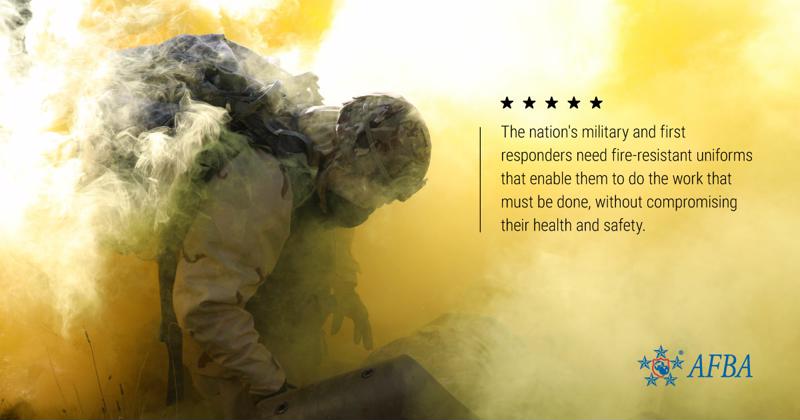
Whether handling ammunition or withstanding enemy fire, the nation's military service members are constantly in harm's way. They need uniforms that enable them to do the work that must be done, without compromising their health and safety.
But, according to FR uniform manufacturer DRIFIRE, unsuitable textiles had been putting service members at risk. In 2007, two Marines were killed during a roadside bombing incident when their undergarments melted onto their skin. These garments were polyester — a plastic material which ignites, melts and drips when exposed to heat. Even when a uniform's outer layers are fire-resistant, improper base layers can still pose serious hazards. DRIFIRE notes that the U.S. Marines approached their company for a safer solution following this incident.
In the electric power industry, FR apparel is just as essential. According to the Occupational Health and Safety Administration (OSHA), the heat of an electric arc can exceed the surface temperature of the sun. Even a split-second blast can cause severe or fatal injuries. Combustible dust, flash fires and other unforeseen accidents mean that workers should be properly dressed at all times.
The role of fire-resistant clothing
Working hand-in-hand with OSHA, the Department of Defense and the National Fire Protection Association, the protective apparel industry has made significant strides since the early 2000s.
Workers facing heat, fire and electrical hazards are now required to wear FR clothing from head to toe, and from their undergarments to their outermost jackets. When layered properly, FR apparel provides a higher level of protection that is greater than what's offered by each individual piece.
For anyone serving in the armed forces, on an emergency response team or in the power industry, specialty clothing made from FR textiles is one important component of the personal protective equipment (PPE) that is worn.
For the greatest protection and comfort in the line of duty, fire-resistant uniforms should be:
- Inherently flame-resistant, meaning that the FR properties will not wash away or wear out. Rather than being finished with an FR treatment, the fibers and weave structure must offer the flame resistance themselves.
- Self-extinguishing to prevent the spread of fire, reduce the risk of burns and give workers time to return to safety.
- No-melt and no-drip to avoid bonding to the skin and causing severe burns.
- Low-smoking and non-toxic to prevent smoke-related injuries as the garment self-extinguishes.
- Slightly loose-fitting (but not excessively baggy) to create an insulating layer of air between each piece of clothing and the skin that helps resist the heat.
- Comprehensive with different pieces that are worn together, from the undergarments, middle layers and outerwear to headgear, additional uniform components and weather-related accessories.
- Moisture-wicking and fast-drying to help regulate body temperatures and keep workers as comfortable as possible in hot, stressful and physically demanding situations.
- Antimicrobial to prevent the growth of bacteria inside the uniform.
- Compliant with industry requirements.
Fibers that are prone to melting and dripping such as polyester, rayon, nylon and acetate are generally not utilized for FR clothing. Although natural fibers like cotton and wool will burn to ash rather than melt, they aren't entirely suitable either as they are not self-extinguishing.
Instead, companies in the protective apparel industry have developed and patented specialty textiles. These consist of a blend of unique fibers and innovative weave structures that meet the many demands of the field and keep service members and industry workers who wear FR clothing safe.

Briefing rooms and patrol cruisers across the U.S. are being upgraded with a new generation of law enforcement technologies. These innovative tools and systems enable first responder agencies to boost the efficiency and effectiveness of their communications, crime prevention measures and community protection.
The sheer power of many of these deep-probing technologies has raised some questions related to safety and transparency. Community stakeholders are eager to know how these advanced data processing systems can be safely used in a way that doesn't infringe on peaceful citizens' rights and privacy. However, when used appropriately, they are already delivering results to law enforcement agencies around the nation.
Here are eight technological advancements police forces are adopting, and how they're using them:
1. Artificial intelligence for predictive policing
Predictive policing, or PredPol, systems rely on algorithmic technologies and advanced mapping capabilities, transforming large amounts of data into useful, real-time insights for patrolling officers. Artificial intelligence and machine learning capabilities allow PredPol to assess where criminal activities are statistically likely to occur. This can empower officers to more proactively patrol communities and position themselves strategically within their beat.
2. Unmanned aerial vehicles
According to Police Chief Magazine, there are roughly 1.1 million drones, or unmanned aerial vehicles (UAV), in the U.S. Nearly 350 police departments are currently taking advantage of their ability to assist in search and rescue operations, gather real-time intelligence from high-risk situations, monitor crowds and add new perspectives during crime scene analysis.
3. Automatic license plate recognition
The automatic license plate recognition (ALPR) technology used by law enforcement agencies is similar to what's used to collect tolls on toll roads. Police departments are now employing ALPR to identify stolen vehicles, monitor roadways for license plates that match up with AMBER Alerts and more.
4. Facial recognition software
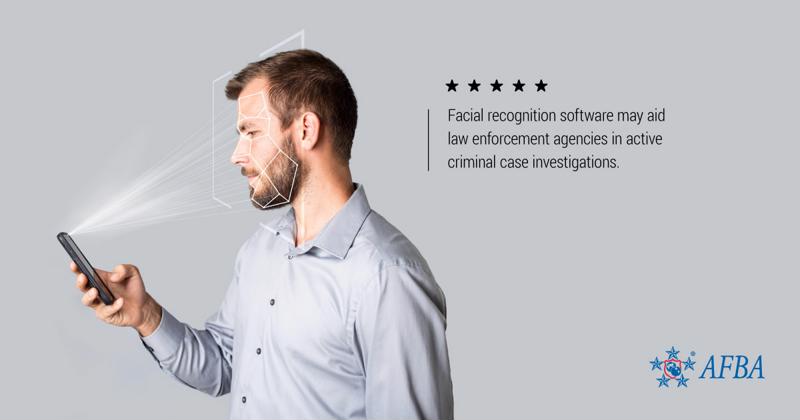
Biometric data and the systems that collect and analyze it, including facial recognition software, poses a variety of privacy concerns when used by government agencies and private companies alike. However, these technologies may offer advantages to law enforcement agencies in target identification, trial evidence and active criminal case investigations, according to the American Bar Association.
5. Gunshot detection systems
Gunfire locators like ShotSpotter use acoustic sensors, artificial intelligence and algorithms to identify the source of live gunfire, according to the Associated Press. The strategically located sensors continually monitor for potential gunshot sounds and triangulate the source so that officers patrolling parts of the community miles away can rush to the scene.
6. Integrated body and dash cameras
Body-worn cameras and police dashcams record on-duty police work through first-person perspectives. New developments in inter-connected camera systems allow for synchronized high-resolution footage and audio recordings across multiple points of view. More accurate data helps clarify incident escalation to protect community members as well as the first responders that wear the body cameras.
7. Rugged mobile computing devices
New field-ready mobile phones, tablets and laptop computers help law enforcement officers streamline communications and access vital information when on-the-move. This new generation of devices offers secure and compliant data storage, durable construction and impressive battery life.
8. IoT-enabled devices
Many of the aforementioned tools and systems connect through the Internet of Things (IoT). Surveillance drones, body cameras, mobile devices, and other sensors, cameras and detection systems can all connect and feed into an advanced system. With this, law enforcement agencies can work not just across their own departments but with community partners to implement crime prevention measures.
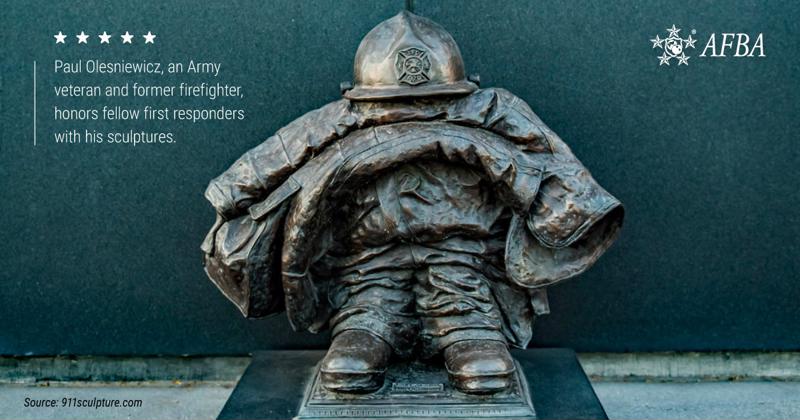
Paul Olesniewicz, an Arizona-based sculpture designer, veteran and former firefighter, has created over 40 memorials honoring first responders and the military.
The sculptor's early career as a servicemember and first responder
Olesniewicz completed his service with the United States Army in 1972. He then returned to his home state of Arizona and began a firefighting career spanning three decades.
"There is an old saying that time flies when you're having fun," Olesniewicz said in an interview with the Professional Firefighters of Arizona Magazine. "Well, I must have had the time of my life, for my 32 years in the fire service seemed to have passed in the blink of an eye — an eye with crows, feet that is,"
Olesniewicz began with the United States Forest Service in Flagstaff, then spent a few years at the William Air Force Base in Mesa as a civilian firefighter where he worked in structural firefighting and crash and rescue. The majority of his fire service career was spent with the Tucson Fire Department.
911 Sculptures unites a passion for firefighting and fine arts
Six years after leaving Army service — and in the midst of his firefighting career, Olesniewicz earned a Bachelor of Fine Arts in sculpture at Northern Arizona University.
It was not until 1994 that he founded his own creative business, 911 Sculptures. Olesniewicz and his team design and create statues honoring first responders including firefighters, EMTs and police officers, as well as members of the military, including those who have made the ultimate sacrifice.
As Olesniewicz says on the business's website, "My goal is to convey the dedication and pride exhibited by firefighters throughout the history of the fire service. I feel extremely fortunate to be able to combine my firefighting experience with my love of art and sculpture."
His work is on display at memorial sites, museums, fire departments and private residences. In 2007, he retired from his firefighting career and began running 911 Sculptures on a full-time basis.
The creative process behind each custom project
To create one of his lifelike statues, Olesniewicz starts with a steel armature and builds out the form using clay. This enables him to achieve an impressive level of detail in the figures' uniforms and expressive faces.
He then takes the full-sized clay sculpture off to a foundry where ceramic molds are created. Molten bronze is carefully poured into the molds. Once cool, the metal pieces are sand-blasted, assembled and welded together. Finally, Olesniewicz applies a patina and protective coat of wax.
Once complete, pieces created by 911 Sculptures are ready to weather the elements and stand as reminders of the daily sacrifices first responders and military members make in service to their community and country.
Olesniewicz works with departments of all sizes across the nation to create custom projects of all scales. One special example is the Tucson Fallen Firefighters Memorial, completed in 2009. This features five life-sized bronze sculptures, including one firefighter wearing full turn-out gear, holding his helmet over his heart. This figure faces a memorial wall engraved with the names of those who lost their lives in the line of duty.
"I like to believe my firefighting background gives me a unique perspective on how important firefighter commemorative and memorial sites are to their communities, departments and their loved ones," Olesniewicz said. "I find it very rewarding to help in my small way to honor our hard-working and brave brothers and sisters. It is the best of both worlds."
Visit the interactive map on the 911 Sculptures website to find Olesniewicz's work at a public site near you.
For the first time in 10 years, U.S. firefighters and fire managers have been mobilized to help Australian first responders battle devastating bushfires. While the American firefighters going to Australia arrived to a warm welcome, the stakes remain high.
Bushfires have blazed across Australia since late 2019
After the hottest, driest year on record, the relentless bushfires have taken a staggering toll on the Australian continent. Since September 2019, at least 27 lives have been taken and at least 2,000 homes have been destroyed.
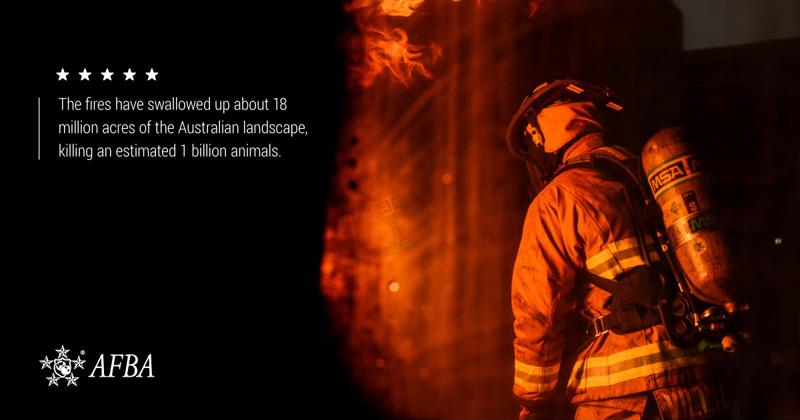
The fires have swallowed up about 18 million acres of the Australian landscape, killing an estimated 1 billion animals and eradicating countless native plants and wildlife habitats, according to NPR. A second surge of flames has even tormented some already scorched towns.
Due to the smoke pollution, residents far from the flames are subject to inhaling the smoke equivalent of 19 cigarettes a day. This has put a strain on emergency health facilities and is likely to cause significant physical and mental health consequences including acute lung and heart conditions as well as post-traumatic stress, The Washington Post reported.
The Australian-American partnership
The Australian Fire and Emergency Service Authorities Council requested assistance in November 2019. As of Jan. 13, 2020, around 160 U.S. fire professionals have since been involved in helping suppress the fires throughout Victoria and New South Wales.
These efforts signal an act of reciprocity. In 2018, 138 firefighters came to the U.S. from Down Under to spend a month getting California's historic wildfires under control. The 2019-2020 mobilization efforts have been coordinated by the Idaho-based National Interagency Fire Center (NIFC). Although the agency hasn't sent American firefighters to Australia since 2010, the relationship has been ongoing for 15 years, CNN reported.
According to the NIFC, additional teams will depart around Jan. 16, 2020 in response to another request. This calls for "Type I Incident Management Teams (IMTs) who specialize in managing wildland fire incidents, and other qualified personnel, such as aircraft managers, firefighting crews and chainsaw operators."
From the California wildfires to the bush
Many of those mobilized in Australia hail from California. The Golden State's fearless first responders possess not only endurance but also the experience necessary to combat complex bushfires. Despite the state and the country being across the globe, both share a similar dry climate with similar vegetation.
Eucalyptus trees in both locations are particularly hazardous; their large leaves can act like fireballs, coming loose and blowing for miles in high winds. (This species was actually brought to California by the Aussies who took part in the Gold Rush of the 1850s.)
Rober Garcia, chief of the Angeles National Forest (ANF), vouched for the expertise of the organization's select 20-person unit, which is scheduled for up to 45 days Down Under.
"They work on engine crews, hot-shot crews, aviation helicopters crews, and they often work in remote places, independently with little support," Garcia told CNN. "They are used to traveling, breaking up into small squads, [and] doing initial attack — meaning attacking fires early before they become a large fire."
Firefighters received a warm welcome in Sydney
Shane Fitzsimmons, the commissioner of the New South Wales Rural Fire Service, tweeted a video (now with over 9.1 million views) documenting the American firefighters' arrival at Sydney International Airport.
According to Fitzsimmons, onlookers "gave a spontaneous and lengthy round of applause, reflecting the gratitude and admiration we all have for their generosity."
Following a single jet lag recovery day, the American first responders underwent operational and safety briefings before joining Australian fire authorities and firefighters out in the bush. While the teams have been hand-selected, many participants volunteered for this assignment.
Jonathan Merager, an American fire prevention technician with 18 years of firefighting experience, was quick to volunteer for the assignment when the opportunity arose.
"Our Australian sisters and brothers have helped us over the years," Merager told the Los Angeles Times. "It seemed natural to reciprocate that assistance."
The state of mental health for first responders is a dire one. In a 2019 article published on the Journal of Emergency Medical Services (JEMS) website, researchers deemed the issue a national crisis, citing the suicide epidemic among firefighters and emergency medical professionals.
Mental health crisis among first responders
Between 2014 and 2017, more first responders died by suicide than by job-related fatalities. The Los Angeles Times reported that at least 115 EMS workers and firefighters took their lives in 2017. According to data from the Centers for Disease Control and Prevention (CDC) cited by JEMS, first responders are at 10-times greater risk of suicidal thoughts or attempts than members of the general public.
In addition to the suicide risk, countless first responders are struggling with a lack of sleep, behavioral disorders and substance abuse as a direct result of the daily traumas they face on the job. The trauma of bearing witness to harrowing incidents of death and loss, and of being unable to save lives in devastating circumstances, undoubtedly takes a toll.
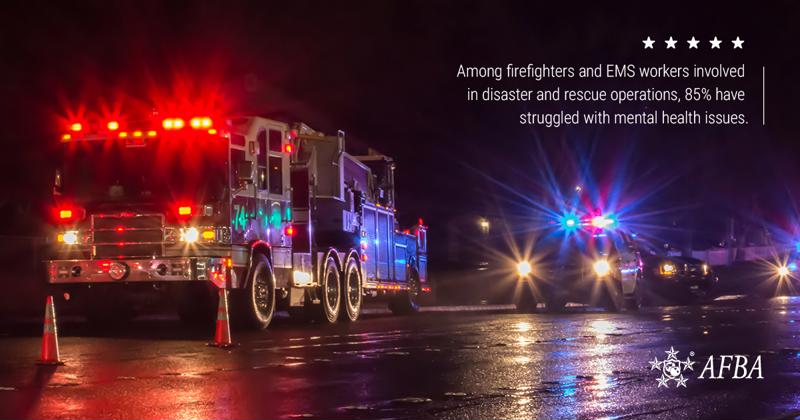
Among firefighters and EMS workers involved in disaster and rescue operations, 85% have struggled with mental health issues and 75% have experienced some symptoms of psychological trauma, according to the National Council for Behavioral Health. And yet, because the mental and emotional scars are often invisible, those suffering are not encouraged to seek help.
Stigmatization and resource limitations in rural communities
Rural areas, in particular, have seen a notable lack of utilization of mental health services, largely due to the stigma surrounding mental and emotional wellness.
"[T]he stigmatization alone has created a boundary between the first responders and the need for mental healthcare," firefighter and clinical psychologist Asa Don Brown, Ph.D., wrote in Psychology Today.
A recent study revealed that nearly half of first responders fear employer retribution for addressing their mental health needs and seeking professional counseling. As such, they deny themselves from accessing services that could make a difference.
Although the U.S. has seen growing mental health awareness in recent years, "awareness does not necessarily translate to action," JEMS authors noted.
Additionally, rural communities face a severe lack of mental health resources. According to the U.S. Health Resources and Services Administration, rural communities comprised over half of the Mental Health Professional Shortage Areas in 2018. Specialist caregivers are quite literally few and far between, making appointments prohibitive due to high costs and lengthy transit times.
A path forward
For rural first responders struggling with mental health, the two main barriers are the lack of mental health resources and the lack of awareness about those resources that are available. As such, mental health professionals and first responder advocates urge rural caregivers and first responder communities to take action.
They recommend that employers pinpoint the barriers preventing emergency workers from accessing the care that they need, and work to eliminate those barriers and bridge the gaps. Because many emergency workers don't know how to begin to seek help, this could involve proactive education initiatives.
Simultaneously, rural communities and employers should work to increase and improve the mental health services available. To make up for the lack of mental health care providers within rural regions, telehealth services can also be adopted. Once again, prioritizing education and giving those in need access to such services is key.
Furthermore, when raising awareness and changing the perception of mental health for first responders, it's important to relay this message: Seeking help is not a sign of weakness but a sign of incredible strength.
After beating back the most devastating and deadly wildfires in California's history over the past two years, first responders haven't had a break.

California wildfires, 2017-2019
In 2017, 1.5 million acres were scorched and over 11,600 properties were destroyed by the most destructive wildfires in California's history up to that time. These records were soon surpassed as flames covered another 1.67 million acres in 2018.
This time last year, first responders in Butte County were working around the clock in an effort to contain the Camp Fire which began on Nov. 8, 2018. It ultimately blazed over 150,000 acres, destroyed nearly 19,000 structures and took 85 lives. The same day the Camp Fire started, the Woolsey Fire began its path across nearly 97,000 acres of Los Angeles and Ventura Counties.
According to the California Department of Forestry and Fire Protection, nearly 200,000 acres have been burned by 6,190 wildfire incidents in 2019.
These include the Tick Fire, which began in L.A. County on Oct. 24 and spread 4,615 acres; the Ventura County Maria Fire, which started on Oct. 31 and covered 9,999 acres; and the Kincade Fire, which began on Oct 23 and scorched 77,758 acres across Sonoma County.
A barrage of smaller fires, dangerously high winds and widespread evacuation orders have demanded nonstop attention from firefighters, police officers and other emergency responders.
Thanks to the tireless efforts of California's first responders, these fires are now 100% contained.
Support and sacrifice
Many celebrities have fled the region, raising awareness about fire safety and recognizing first responders along the way. Actor John Cena, who stars as a firefighter in an upcoming Paramount film, wanted to do more.
In honor of National First Responders Day on Oct. 28, 2019, Cena pledged to donate $500,000 to support the firefighters working tirelessly to keep Californians safe.
"In times like this, when people are giving their lives and working around the clock, what they need from us is resources," Cena said in a video posted to Twitter. "This is the right thing to do, and I'm doing my part to help the cause. I wish everyone the best of luck … you are our heroes."
Cena's half-million-dollar donation has gone to the California Fire Foundation and the Los Angeles Fire Department Foundation.
Actor Matthew McConaughey also stepped in to provide support. Initially scheduled to host an event on National First Responders Day to recognize the efforts of first responders during 2018, McConaughey's plans were interrupted by the most recent wildfires. Instead, he partnered with Operation BBQ Relief and volunteers to serve 800 hot meals to firefighters and other emergency response personnel.
These donations and dinners make a difference, but they can't bring back what's been lost. According to a CNN report, many first responders lost their own homes in 2018 and still reported for duty.
During statewide crises like these, firefighters and police officers get into their uniforms and race back to help out as soon as their immediate family members are safely evacuated. Some continue working even without knowing whether their own homes and families are in danger. When faced with the choice of saving their own belongings or helping their neighboring residents get to safety, they instinctively chose the latter.
"It's my community. It's where I grew up. It's something I absolutely had to do," Colusa Police Department Seargent Jarrod Hughes told CNN reporters last November after losing his home to the Camp Fire. "There was no question about it. It was, get my family to safety so I can get in and get back up there and help everybody else."
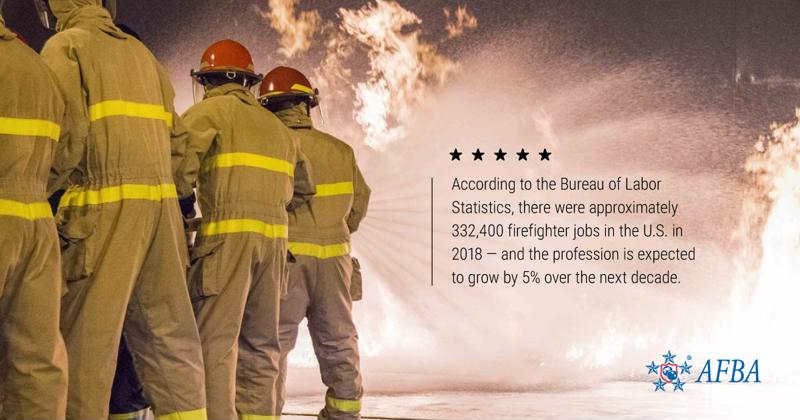
Each and every day, the selfless service of firefighters across the nation helps keep our communities safe. According to the Bureau of Labor Statistics, there were approximately 332,400 firefighter jobs in the U.S. in 2018 — and the profession is expected to grow by 5% over the next decade. If you're ready to join the forces of these courageous first responders, here's your complete guide to becoming a firefighter.
Meeting the basic eligibility requirements
In order to become a firefighter in the U.S., you'll have to be at least 18 years old (or 21 in some municipalities). You'll need to hold a valid driver's license, a high school diploma or GED, and a clean criminal record. Keep in mind that requirements vary across different cities and states. You'll also need to possess a few essential qualities, like the compassion and courage it takes to help others in the face of danger.
Getting involved as a volunteer firefighter
Many career firefighters began as volunteers. While volunteering isn't usually required, it can be an excellent first step. There may opportunities to help your local department with public outreach, assist at the station or go for the occasional ride-along. You'll get to know other career firefighters, familiarize yourself with the day-to-day, and make sure the trade is right for you.
Pursuing the right education
You'll have a lot to learn if you want to become a firefighter. You'll need to know all about the equipment and how fires spread, and you'll have to be up to date on emergency management techniques, local building codes and best practices for educating the public. You can study fire science through a technical college or four-year degree program, although a degree isn't always required. Alternatively, you can attend a local fire academy. The U.S. Fire Administration certifies programs across the U.S. and even offers online courses.
Getting physically fit
The work of a firefighter is strenuous, so you'll need to get into shape. To meet the fitness requirements, focus on building muscular strength and endurance, cardiovascular fitness and a flexible range of motion. You'll likely undertake a conditioning program if you join a fire academy, and you'll prove your readiness by taking the Candidate Physical Ability Test (CPAT).
Earning the necessary certifications
In addition to the CPAT, you'll typically need to be CPR certified. Most fire departments will also require that you become certified as either an emergency medical technician (EMT) or paramedic. You'll also need to become a certified firefighter, which you can either do through your fire academy or through one of the certification courses offered by the National Fire Protection Agency. Veterans are eligible to have their course fees waived.
Acing the application process
Once you're ready to start applying for jobs, you'll have to pass a series of tests in order to get hired. You'll take a written exam, which will test things like your problem-solving and critical thinking abilities, communication skills, memory and interpersonal skills — all things you'll rely on when on the job. Additionally, you'll need to pass physical and psychological screenings as well as a background check and a drug test. Plus, you'll have a few in-person interviews with members of the department.
Once you kick off your career as a firefighter, the journey doesn't stop there. You may eventually advance in the profession, to engineer or lieutenant, and you may have the chance to take on leadership roles on your way to becoming a fire chief.
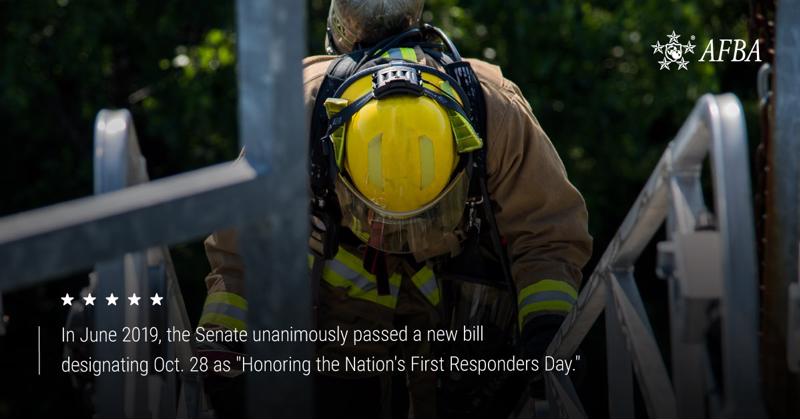
In June 2019, the Senate unanimously passed a new bill designating Oct. 28 as "Honoring the Nation's First Responders Day." On the inaugural occasion of this observance, we recognize the vast number of people who serve in these critical roles to protect communities around the nation.
How many citizens serve as first responders?
In 2003, the Department of Homeland Security defined first responders as "individuals who in the early stages of an incident are responsible for the protection and preservation of life, property, evidence, and the environment, including emergency response providers […], as well as emergency management, public health, clinical care, public works, and other skilled support personnel (such as equipment operators) that provide immediate support services during prevention, response, and recovery operations."
According to a 2015 report by the U.S. Department of Labor, there are approximately 1.2 million people employed as first responders. Many of them are veterans, including 10% of emergency medical technicians (EMTs), 19% of firefighters and 25% of police officers who continue their service in communities across the nation.
Additionally, the American Security Council Foundation estimates that another 62.6 million volunteers operate in first-responder capacities, offering emergency support and disaster recovery aid. The following statistics from the ASCF illustrate just how many people it takes to keep the nation safe from harm and provide emergency aid in times of trouble.
Emergency medical service (EMS) professionals care for patients before they arrive at the hospital, transporting and treating 16 million patients by ambulance each year. Around 890,000 EMS professionals currently serve in the U.S., including about 142,000 paramedics and 600,000 EMTs.
Law enforcement officers patrol local communities, protecting citizens in need and putting a stop to criminal threats and activities. An estimated 800,000 police officers serve throughout the U.S.
Firefighters rush to road incidents, burning buildings and citizens in danger to put out fires, administer rescue operations and provide life support services. Of the 1.3 million firefighters in the U.S., about 31% are career firefighters and 69% are volunteers.
How can we honor first responders?
First responders work long hours, face significant dangers, and risk their lives in service of others. On National First Responders Day, we remember those who have saved lives and those who have lost their own in the line of duty. We thank those who bravely fight to save the people and property impacted by hurricanes, floods, and wildfires. Additionally, we recognize those whose courage, readiness, and day-to-day service too often goes unnoticed.
Communities around the U.S. have erected monuments and memorials, distributed commemorative coins, and organized tributes to thank first responders for their sacrifice and service. On a more personal level, there are plenty of ways to show gratitude to the selfless individuals in our lives and communities.
You can express your support by mailing a thank-you note to a paramedic unit or sending a gift basket to your local fire department. Donate your time or money to a charitable drive or cause hosted by the first responders in your area. Use your online presence to dedicate a few words to our nation's first responders, or simply say "thank you" when you see a police officer at work.
As Sen. Ron Johnson of Wisconsin said in a statement, "Our first responders save countless lives every day, and many tragically pay the ultimate price in the line of duty — a sacrifice we should never forget. Designating a day to honor their service and sacrifice is the least we can do to express our gratitude."
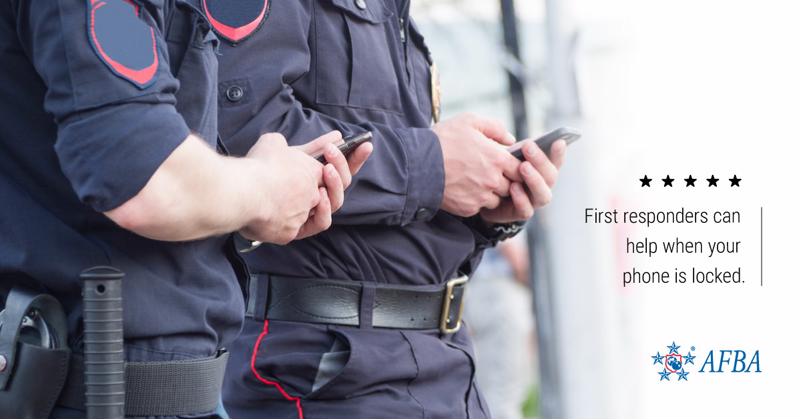
Our smartphones are on us at nearly all times, and they can become crucial devices if an accident or medical emergency strikes. However, if you're not able to call 911 yourself, a first responder can use your phone even if it's in lock mode to contact your family or physician, as well as review any necessary emergency information.
But first responders can only help in such a way if you have that information pre-programmed into your phone. Smartphone technology makes doing this easy. Taking just a little time to add or update your information may make all the difference if you react to a medication, are involved in an accident or otherwise need help and you're indisposed. Just be aware that depending on what phone you have, the process for inputting your information may be different.
iPhone
The first thing you should do with your iPhone is set up your Medical ID. Your Medical ID will display on the lock screen if first responders find your phone and don't have the passcode. You can use this function to bring attention to any allergies, prescriptions or conditions, as well as who to contact. Setting up your Medical ID is a 5-step process:
- Open the Health app, clicking the Medical ID tab.
- Tap Edit (and If asked, tap Edit Medical ID).
- Tap Show When Locked to make your Medical ID available while the phone is locked.
- Enter personal information like your birth date, height, and blood type.
- Tap Done.
One of the most helpful features iPhones sport is Emergency SOS. For iPhones 8 and later, users can press and hold on both the side button and either volume button until it brings up the Emergency SOS slider. Your phone will automatically call emergency services if you drag the slider, or after a 10-second countdown if you continue to hold the buttons. Whenever you make a call with Emergency SOS, your emergency contacts will be notified of the action.
Android
If you have a phone that runs the Android operating system, the process of adding information is generally as simple. Phone owners can enter the same type of personal, contact and medication information to be displayed on the lock screen. To do so for Google's Pixel phone, for example, you would:
- Open the phone's Settings app.
- Tap About phone and then tap Emergency information.
- Enter the info you want to share.
- For medical info, tap Edit information.
- For emergency contacts, tap Add contact.
You can also add a short message to the lock screen, which may be able to direct first responders on who to call first, or provide them with key insight about yourself.
Samsung
While Samsung phones do use Android, the steps to configuring your emergency information are a bit different. Users go through the Contacts app: Update your own contact profile first, as there's a place for entering medical information. This should be at the bottom of the profile page, just tap Save when you're done. Navigate back to the main contacts page and select Group, then find one labeled "ICE – Emergency Contacts." ICE stands for in case of emergency, so add people who should be contacted if first responders use your phone.
Everything else
In case you a phone not represented above, it might take a little tinkering with your phone's settings, or creative use of apps. While your phone may be different than the above, looking for the same words and prompts might direct you to a solution. Individual contact cards, for instance, may have a button to select them as an emergency contact. If you want to make essential medical information front and center, but don't know how to do so through the phone's settings, use a note-taking app. Screenshot whatever notes you take on blood type, medication, allergies or conditions, and then set that as your phone's background and lock screen.
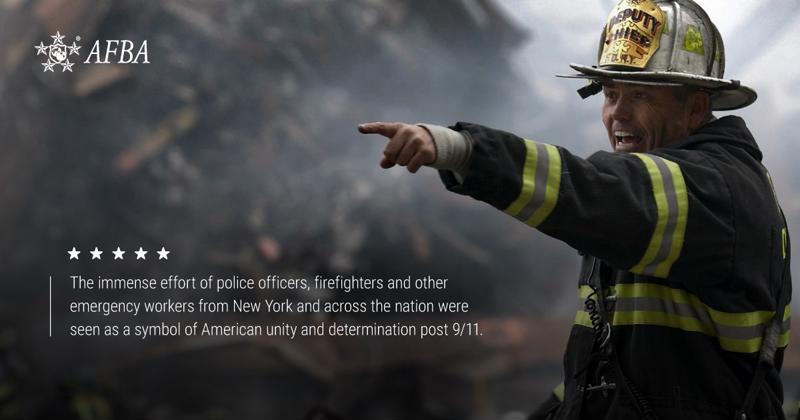
First responders worked tirelessly in the immediate aftermath of the 9/11 terror attacks, as well as for months after. The immense effort of police officers, firefighters and other emergency workers from New York and across the nation was often seen as a symbol of American unity and determination. Yet those same first responders who risked everything to help were themselves at risk of losing government support in meeting health care bills stemming from their relief work.
The September 11th Victim Compensation Fund (VCF) was set to expire in 2020, but has now been extended permanently thanks to a long, emotional campaign by first responders, families and media.
VCF reopened in 2011 to help pay for medical bills
The VCF was initially active between 2001 to 2003, processing claims of injury and death related to the 9/11 attacks. By mid-June 2004, the fund had closed, after about $38 billion in aid had been paid out, according to CNN. However, it wasn't until the next decade when action was taken to reopen the fund in light of the emergence of chronic conditions and terminal illness among first responders. Working in the rubble would have a significant impact on the health of first responders, who now have a higher risk of heart disease, the New York Post says. Cardiovascular disease and cancer would go on to claim the lives of many 9/11 emergency workers, while others would need to pay bills for their care.
In 2011, President Barack Obama signed legislation reactivating the VCF, known as the James Zadroga 9/11 Health and Compensation Act, expanding it to include health care coverage and compensation to first responders and individuals who have developed 9/11-related health problems.
Legislation avoided the fund expiring
According to ABC, since being reopened in 2011, the Congressional Budget Office estimated the fund had paid awards to around 22,400 people at a value of about $5.2 billion by 2019, while claims related to cancer had risen to 45% of all awards. In February of 2019, a warning bell was sounded: The special master in charge of managing the fund said payments would have to be reduced by half, and some by 70 percent because $5 billion of the $7.4 billion allocated for 2015-2020 had been spent, The New York Times reported.
Without further action from Washington, D.C. the fund would expire, and thousands of people would lose key government care. This triggered a reaction across the country, from first responders and their families, to civic organizations and media personalities. Jon Stewart, former host of "The Daily Show," would become a much-heard voice of the campaign to extend the fund, regularly demonstrating with first responders, as well as making an emotional speech to Congress.
Their appeal was ultimately successful, as the Senate voted 97-2 to extend the fund for the next 73 years. More than $10 billion has been set aside for awards during the first decade after reauthorization. President Donald Trump signed the bill surrounded by first responders.
"In the wake of the Sept. 11 attacks, courageous Americans raced into smoke, fire and debris in lower Manhattan, the Pentagon and a field in Shanksville, Pennsylvania. The whole world witnessed the might and resilience of our nation in the extraordinary men and women of the New York Fire Department and the New York Police Department, selfless patriots of unmatched character and devotion," Trump, who lived in Manhattan during the attacks, said. "I grew up with them so I can tell you that's absolutely true."
Now, Stewart and others are joining to help educate first responders and others about their eligibility to submit a claim.