
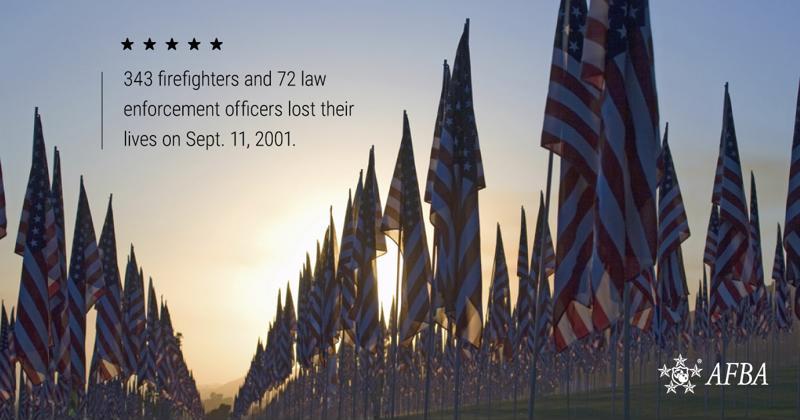
Sept. 11, 2001 was one of the most fateful days in recent history for the U.S. On that date, the terrorist group al-Qaeda launched a series of four coordinated attacks on American soil. Per statistics from CNN, the attacks ended the lives of 2,977 people in Washington, DC, New York City and an area near Shanksville, PA. Additionally, more than 6,000 others were injured during the event. 9/11 was also noted as the deadliest day for first responders, as 343 firefighters and 72 law enforcement officers lost their lives trying to help others.
The event drastically affected the nation, directly leading to the creation of the Department of Homeland Security and a $40 billion anti-terrorism package. But 9/11's effects weren't just of a macro size. Many individuals were directly affected, and communities both big and small came together to honor the dead and celebrate those who rushed to provide aid to others.
Those celebrations continue across the country to this day. Cities big and small are holding charity walks, dinners and similar events to raise money for first responders in the name of that fateful day.
Rock Island, IL, holding a walk to remember
The Rock Island military community is sponsoring a walk to remember those who lost their lives during the terrorist attacks, according to the Quad-City Times. Each participant will hold a flag representing the life of a civilian, first responder or servicemember who died that day. They will walk 2.5 miles to a Field of Honor, where they will place the flags.
"It is our sincere desire that this remembrance walk evokes a new sense of re-commitment to the task at hand," said a news release.
Pasadena, TX, raises funds for first responders
According to The Houston Chronicle, the city of Pasadena is holding its own fundraiser to benefit local first responders. The event includes singing and music performances from police and firefighters, plus a 9/11 reenactment by actors from the Pasadena Little Theater. Eight performers will portray the 26 characters in the docudrama "110 stories."
"I had been looking for something to do around 9/11 to pay tribute to first responders," said Gregory R. Brown, treasurer of the theater, to The Houston Chronicle. "Last December, I visited the (911 Memorial and Museum in New York City), and I found this script online in January. I was so moved that I brought it to the board in the hopes of presenting it as a way to give back to the first responders in the community we are a part of."
Ticket proceeds will go to the Pasadena Citizen Police Academy Alumni and the Pasadena Volunteer Fireman's Association.
The Travis Manion Foundation sponsors 9/11 Heroes Runs
Runners and walkers across the nation have organized 9/11 Heroes Runs in the name of 1st Lt. Travis Manion, a young man who was killed in action during his tour in Iraq. Manion's unit was ambushed while searching a suspected insurgent house, and Manion bravely sacrificed himself drawing enemy fire. His strength of character allowed the rest of his unit to survive. He was posthumously awarded the Silver Star and the Bronze Star with Valor, and his actions (and friendship with another servicemember) were memorialized in the book "Brothers Forever."
The first 9/11 Heroes Run was a small memorial created by the Travis Manion Foundation, but it quickly spread into a nationwide event. Runs are currently scheduled in areas such as Houston, Philadelphia, Virginia Beach, San Diego and more.
Remembering 9/11
These are just a small selection of the various memorial events taking place across the country this September. Given the severity of the 9/11 attacks and the effects they had on the nation, it's safe to say that such services will continue for years to come.

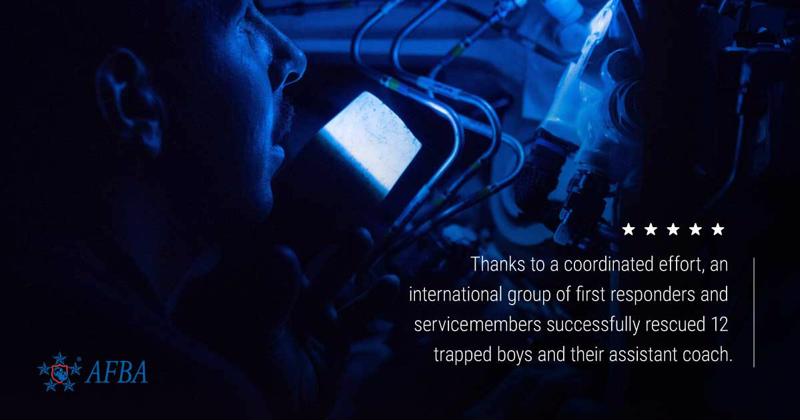
The Thai cave rescue of early July 2018 was an incredible tale of tragedy avoided. What could have been a disastrous situation became a successful recovery of 12 teenage boys and their 25-year-old assistant coach. This incredible ordeal highlights how complicated the work of first responders and expert servicemembers can be.
Finding the trapped team
On June 23, 12 members of a junior soccer team went to explore the Tham Luang Nang Non cave after practice with their assistant coach. Heavy rains partially flooded the cave shortly after, trapping the group inside. Although the boys were declared missing and the head coach discovered their abandoned belongings near the cave's entrance that same day, the rising water and strong currents made it difficult for rescuers to help. It was more than a week before initial contact was finally made.
The rescue expanded into a massive operation that received international attention and support. Thai Navy SEALs were the first on the scene, and they were quickly supported by divers from the British Cave Rescue Council, open water divers, the U.S. Air Force, a team of Specialist Response Group divers from the Australian Federal Police and divers from the Beijing Peaceland Foundation. Even sniffer dogs and drones were used to locate the boys, looking for openings above ground.
The search had to be put on hold multiple times due to continuous rain and flooding. Finally, the group was discovered on July 2, but the rescue's problems didn't cease. The boys and their coach were about 2.5 miles from the cave's entrance, and divers had to figure out how to rescue them through areas with strong currents, low visibility and narrow passages. If the boys panicked on their journey out, they could have died.
The next day, three Thai Navy SEALs joined the stranded group. A doctor, tasked with evaluating the boys and helping keep their spirits up, was among them. Yet, it was still a few days before rescuers could begin removing the team. During this time, on July 5, a Thai Navy SEAL named Saman Kunan died during a mission to provide oxygen to the stranded group. He was the only fatality of the operation.
Major challenges to rescue
Rescuers had to deal with several factors complicating their rescue mission, including:
- Consistent flooding.
- Falling oxygen levels.
- A large group of boys, many who couldn't swim, exhausted by the ordeal.
"The cave was dry when we arrived, and within an hour and half it had already filled up by 2 to 3 feet and we were being pushed out," said Derek Anderson, a 32-year-old U.S. Air Force rescue specialist, to Military.com. "That was just in the very beginning of the cave and at that point we realized this problem is going to be much more complex than we thought."
Because of the constant rains and lack of oxygen, waiting until the flooding season was over to rescue the boys wasn't an option. Instead, on July 8, 18 rescue divers (consisting of 5 Thai Navy SEALs and 13 international supporters) went into the cave, each tasked with rescuing one boy. The divers were equipped with hooded wetsuits, positive pressure face masks, bungee cords and other materials to keep the boys as bundled and close as possible so divers could keep control. The last person in the cave, the assistant coach, was rescued July 10.
Servicemembers and first responders pull off a difficult operation
The team was driven to the hospital in emergency vehicles and given anti-anxiety medication upon rescue. It was only thanks to the dedicated work of trained specialists.
"The world just needs to know that what was accomplished was a once in a lifetime rescue that I think has never been done before," said Anderson. "It's important to realize how complex and how many pieces of this puzzle had to come together."
The 911 emergency response system is one of the country's most vital communication tools, yet it's notoriously outdated. One of the primary issues is that, thanks to the prevalence of cell phones, first responders can have a difficult time locating callers.
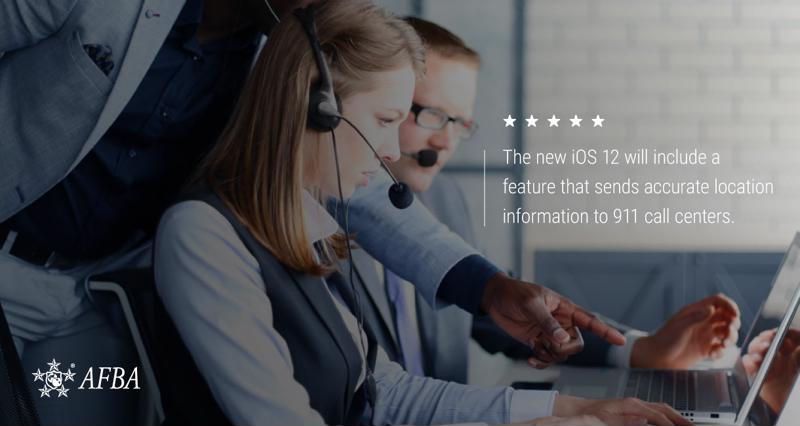
Apple hopes to help solve that problem with its latest mobile operating system update. Per a company press release, iOS 12 will allow iPhone users to automatically send accurate, secure location data to 911 operators.
Apple updates old tech to help first responders
The iOS update relies on technology Apple first launched in 2015. HELO, which stands for Hybridized Emergency Location, estimates a mobile 911 caller's location using cell towers and on-device data sources such as GPS and WiFi access points. iOS 12 will work with RapidSOS, an emergency technology company, to share HELO location information with 911 call centers.
"911 telecommunicators do extraordinary work managing millions of emergencies with little more than a voice connection," RapidSOS CEO Michael Martin said in the press release. "We are excited to work with Apple to provide first responders a new path for accurate, device-based caller location using transformative Next Generation 911 technology."
The data, which will only be available for emergencies, will be sent using RapidSOS's data pipeline. This pipeline will send HELO data quickly and securely.
An emergency system that failed to keep up with the times
This can and has led to deadly results. In 2014, a woman named Shanell Anderson called 911 after losing control of her SUV and crashing into a pond. Anderson drowned after a dispatcher couldn't locate her, despite Anderson stating exactly where she was. The dispatcher tried everything she could, but Anderson's cell phone call was routed through the nearest tower to a neighboring county's 911 system, which didn't have the woman's location on their maps.
While that incident was caused by cell tower routing issues, even using a phone's location data doesn't always provide accurate results. As The Atlantic reported, Julius Genachowski, former chairman of the Federal Communications Commission, once toured a 911 call center in Fairfax, Virginia. Genachowski tested the system by calling 911 on his cell phone while still inside the call center. Once connected, a dispatcher asked for permission to locate Genachowski using his phone's GPS. He consented, but the location data said that he was at a Costco half a mile away from the center.
Cell phones make locating 911 callers surprisingly difficult. When people relied on landlines, dispatchers could look up the caller's billing address or search a database of every phone number in their area with a matching street address. A cell phone's billing address doesn't necessarily indicate where the call is coming from. What's more, cell towers are easily overloaded, meaning one call could be rerouted to a tower farther away. A phone's GPS service helps, but it works best when the feature has been turned on for hours, allowing satellites to better detect its location.
The FCC has attempted to modernize the emergency call system, but it's still far behind the times. This is very unfortunate as, according to Pew Research Center, 95 percent of Americans have a mobile phone. This means an increasing number of 911 calls are likely coming from cell phones rather than landlines.
Updates like Apple's will hopefully help solve the 911 caller location issue. Other communications companies may want to take note.
"This new functionality is an example of how companies and first responders can use technology to dramatically improve public safety," former FCC chairman Tom Wheeler said in the Apple press release. "Lives will be saved thanks to this effort by Apple and RapidSOS."
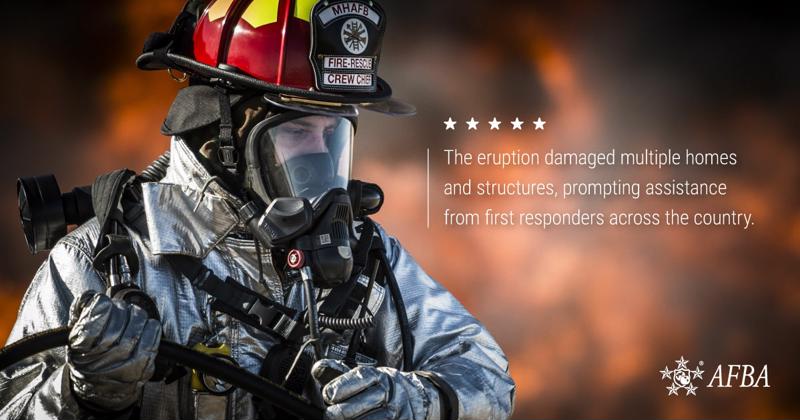
On May 3, 2018, a volcanic event known as the 2018 lower Puna eruption occurred on Kilauea volcano's East Rift Zone on Hawaii's Big Island. Earthquakes caused cracks in the roads, leading to lava foundations up to 300 feet high and destroyed homes in the Leilani Estates subdivision. Nearly 2000 residents were forced to evacuate, and the Puna Geothermal Venture, which provides electricity for a significant part of the island, was forced to shut down and later damaged. This event is part of the larger, long-term Kilauea eruption that began Jan. 3, 1983.
As part of the efforts to minimize the volcano's damage and destruction, first responders from around the nation made their way to Hawaii. A CBS News affiliate from Greensboro, North Carolina, covered a story about a group of local first responders leaving for the island at the end of May. Ten of the state's fire service officials and emergency managers made their way to an emergency operations center in Hilo, Hawaii. There, they assisted an incident management team and the Hawaii County Civil Defense agency for 14 days before returning home.
Another group of responders came from Oregon and southwest Washington, per an NBC News affiliate. They're assisting local authorities by erecting disaster relief shelters and providing food, water and mental health services. One, a former Southern California firefighter and current Red Cross volunteer, noted how the unpredictability of the volcano makes operations difficult.
"It's slow and it's unpredictable," said volunteer Jerry Hall to the news station. "Tornadoes and hurricanes…you pretty much know what to expect as it happens. This is ongoing and the lava is changing directions all the time and changing areas. So, it's a lot of uncertainty for the people who live here."
Hall's statements were echoed by Cowlitz 2 Battalion Chief Joe Tone of Washington state.
"A few days in, I realized the severity as far as danger to myself and the other guys because (the lava) is so unpredictable," Tone said to The Daily News Online.
He went on to explain how, even though the fissures are all erupting on a single line, it's difficult to predict exactly where the next one will occur. But aside from trying to predict where the next event will happen, rescue workers must also assist the people who live in existing danger areas. Tone recalled seeing 20 homes in a single neighborhood destroyed. Some were overcome by flowing lava, others fell into the opening fissures and more caught fire from flying sparks.
Unfortunately, the lava isn't the only hazard of the ongoing eruptions. Thousands of people's lives were jeopardized by the toxic gases released by the volcano. So, in addition to physically rescuing trapped civilians, setting up shelters and transporting people to safety, first responders such as Tone also needed to monitor the island's air quality and chart where the gasses might spread next. Given the volcano's unpredictability and the natural movements of wind, this couldn't have been an easy task.
Tone and other first responders also worked to remove hazardous chemicals from the nearby geothermal plant, preventing a possible explosion that had a potential blast radius of half a mile. Thanks to their efforts, such risk was eliminated.
The damage from Kilauea
According to Reuters, this volcanic eruption is the most destructive since that of Mount St. Helens in 1980, with over nine square miles of the Big Island covered in lava. Estimates on the number of destroyed homes range from 455 to 600; regardless of the actual number, it is the greatest quantity of homes destroyed by the volcano in such a short time.

Minnesota legislators recently passed a bill that greatly benefits first responders. As a local Fox News affiliate reported, first responders such as police, firefighters, paramedics and corrections officers are no longer required to prove what events caused their employment-related post-traumatic stress disorder in order to receive worker's compensation.
This bill can do much to help first responders get the care they need. Consider the story of Brian Cristofono, a firefighter who suffered from job-related nightmares and panic attacks. According to an NBC station from Minneapolis, Cristofono became irritable, started drinking and his marriage ultimately fell apart. The firefighter also saw three coworkers succumb to suicidal thoughts and thought about taking his own life.
Luckily, Cristofono was able to get help – a psychologist diagnosed him with PTSD and drafted a list of events believed to have caused the condition. Creating this list couldn't have been easy, as PTSD symptoms can manifest months or years after the trigger event occurred. Cristofono used his diagnosis to apply for worker's comp, but his claim was denied.
"There was no physical injury associated with any of those calls," Cristofono told the news station, relaying the response he received from the city. "So it could not be PTSD."
The burden of proof is now shifted thanks to this bill, and PTSD is now an assumed side effect of being a first responder. This news comes just in time for National PTSD Awareness Month.
PTSD among first responders and veterans
The Mayo Clinic defines PTSD as a mental health condition resulting from experiencing or witnessing a terrifying event. The disorder is difficult to cope with, especially if it's left untreated. Symptoms include nightmares, uncontrollable thoughts, flashbacks and severe anxiety.
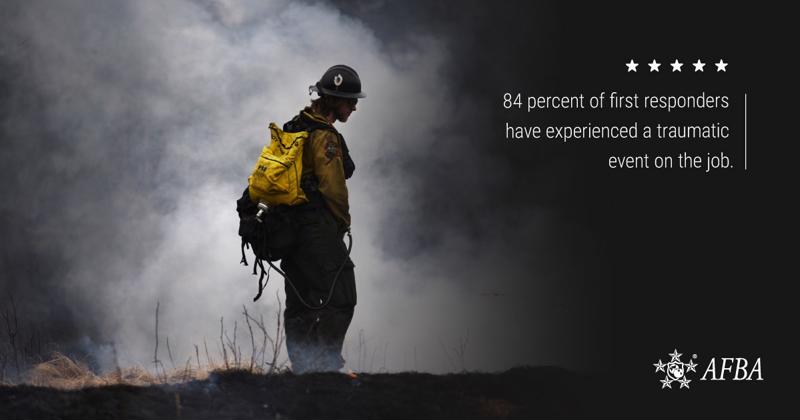
Some occupations are more prone to possible PTSD than others – particularly military and first responder roles. A 2017 survey from the University of Phoenix found 84 percent of police officers, firefighters, EMTs, paramedics and nurses have suffered symptoms related to mental health issues. Furthermore, 84 percent have experienced a traumatic event on the job, but only 34 percent were diagnosed with a mental health disorder. This isn't to say that traumatic experiences only affect a small percentage; it's more likely that people have PTSD but aren't diagnosed.
Why might this be true? Unfortunately, there remains a pervasive stigma against mental health services, especially among first responders. Seventy-four percent of survey respondents said they have therapy, counseling and similar opportunities available, but only 39 percent actively sought them out. Reasons for avoiding such services included fears that supervisors would treat them differently, that coworkers would perceive them as weak and that they'd be passed over for promotions.
Such stigmas are, in part, why Congress named June 27 PTSD Awareness Day back in 2010. What's more, the Senate designated all of June as PTSD Awareness Month just four years later in 2014.
The goal of these measures, according to the Department of Veterans Affairs, is to promote awareness of PTSD and its effective treatments. The VA provides many helpful aids to assist veterans and their families in understanding PTSD and seeking help, and first responders may benefit from these resources as well.
One booklet, titled "Understanding PTSD and PTSD Treatment," helps you define PTSD, lists possible PTSD-causing traumatic events, describes various symptoms and answers common questions about treatment. Another tool, the PTSD Treatment Decision Aid, helps you make the best choices for your life and health when addressing your condition.
If you suspect yourself or someone you love suffers from PTSD, talk to your doctor or a mental health professional. If you don't yet have a counselor, look for one who specializes in PTSD. Reach out to loved ones, and call the National Suicide Prevention Lifeline (1-800-273-8255) if you're having suicidal thoughts.
In response to another U.S. shooting, this time on the campus of a major tech company, Silicon Valley banded together to support the first responders of San Bruno, California.
On April 3, 2018, a shooting occurred at the YouTube headquarters in San Bruno. The suspect entered through a parking garage and opened fire on an outdoor patio with a semi-automatic pistol. Three people were wounded, one critically, before the suspect turned the gun on herself.
The female shooter was Nasim Najafi Aghdam, a YouTuber who was unhappy with the company's policies and procedures. According to her videos and website, Aghdam claimed YouTube demonetized her videos and prevented her from getting views.
YouTube's response was quick, with CEO Susan Wojcicki immediately releasing a statement on Twitter.
"There are no words to describe how horrible it was to have an active shooter @YouTube today," she wrote. "Our deepest gratitude to law enforcement & first responders for their rapid response. Our hearts go out to all those injured & impacted today. We will come together to heal as a family."
Responding with more than words
But, words on Twitter wasn't the end of it; these companies are putting their money where their mouths are. According to the Silicon Valley Business Journal, Google and YouTube employees donated money to San Bruno first responder training efforts. In fact, although Google encouraged its employees to take some days off to recover from the incident, more than 800 of the company's employees from across the globe donated $90,000 within the first two days. Google also matched its employee donations with a $100,000 grant to the San Bruno Community Foundation.
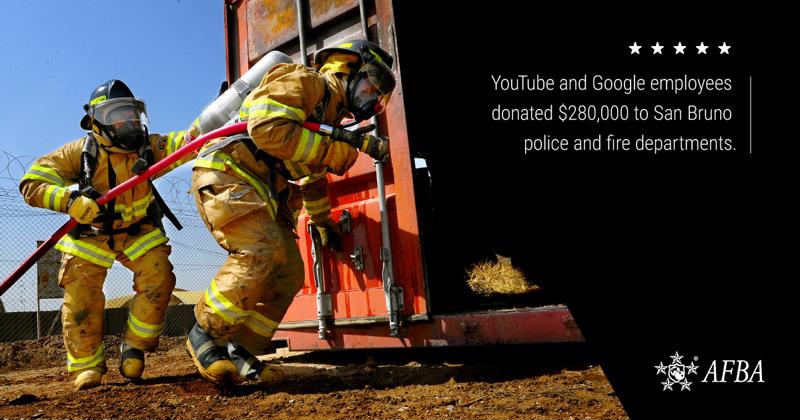
Collectively, the two tech companies donated more than $280,000 to San Bruno police and fire departments. Indeed, it was the skills of these first responders that kept the building safe.
Police arrived within minutes of the first 911 calls, per the Silicon Valley Business Journal. They evacuated the building and searched the premises. An estimated 300 first responders came to the scene. The San Bruno officers received assistance from departments from Daly City, South San Francisco, San Mateo, Redwood City, Burlingame and the county sheriff's office.
"We are grateful to our police and fire departments for their swift and thoughtful response in the face of tragedy in San Bruno, and to Google.org and the entire Google and YouTube community for partnering with the foundation to strengthen first responder prevention and preparedness efforts in our community," said Nancy Kraus, president of the San Bruno Community Foundation, in a press release. "The Google/YouTube donations will support programs that help ensure that San Bruno's first responders will be ready and prepared to act in future public safety incidents."
With this donation, the city's officers will be able to continue their exemplary responses to disastrous events.
Clothes say a lot about who we are and display our profession to the world. In times of crisis, they help us identify the people in charge of rescue – the police, EMTs and firefighters who will lead us to safety. These jobs come with iconic uniforms, allowing anyone and everyone to know who they are and what their purpose is.
Clothes are also designed to protect our first responders. The suits that firefighters wear are built to withstand heat, smoke and flame, while police officers often don bulletproof vests, and EMT gear is made to help professionals tend to the wounded. Now, some companies are adding technology to make these uniforms even safer.
Nokia builds a smart jacket
Finnish telecommunications company Nokia, maker of the famously indestructible phones, recently unveiled a new concept it is working on: a versatile jacket enhanced with wearable technology designed specifically for first responders. Titled the CHASE (connected health and safety equipment) LifeTech FR (first responders) jacket, the garment would be suitable for a variety of professions, including EMS/EMT, firefighters and police.
The CHASE LifeTech FR jacket was designed in collaboration with Czech software developer GINA and South Korean fashion brand Kolon. It was created to be both stylish and versatile, and its structure mimics jackets seen on the runway, according to Engadget reviewer Edgar Alvarez. That said, its florescent yellow coloring makes it easily identifiable to other responders as well as civilians. In addition, the jacket has wide reflective strips for increased visibility, and the material it's made from is both breathable and waterproof.
However, it's the wearable tech that makes this jacket truly revolutionary. The CHASE LifeTech FR comes with a number of modular sensors designed to monitor metrics such as heart rate, temperature, location and locomotion. These modules are housed in secure pockets, meaning they can easily be swapped out depending on the wearer's need. As Alvarez pointed out, police and firefighters could wear the exact same jacket, but the former would equip theirs with body cameras and the latter with temperature sensors.
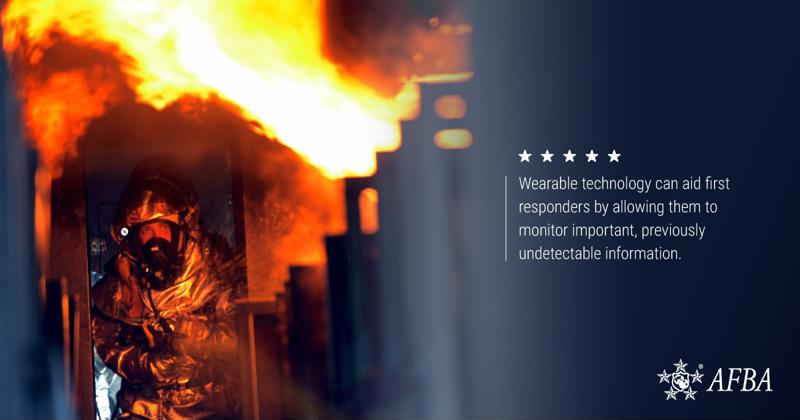
The data collected from these wearables is sent back to GINA and processed in real time, allowing all associated persons to keep track of individual responders. This would bring unmeasurable safety benefits; for instance, monitors could check a responder's breathing and heart rate and warn the individual before he or she undergoes too much physical stress. In addition, GPS monitors could help first responders locate each other if one needs assistance or help groups find a missing person.
While the jacket is still a concept for now, Nokia and Kolon plan to release a full version within the next 12 to 18 months.
Wearables in the working world
Incorporating technology into clothing and accessories isn't new – think of Fitbits and Apple Watches – but the industry is heading in a way many didn't expect. Instead of being dominated by consumers, wearables are quickly attracting the interest of businesses. Much of this interest was driven by manufacturing and mining, which are both extremely dangerous professions.
That said, and as Nokia revealed, wearables can be of great use to first responders. The technology can notice tiny details – both environmental and internal – that responders can't keep track of.
By expanding on this idea even further, wearables within EMT gear can keep civilians and first responders connected 24/7, allowing people to call for help whenever necessary. Chinese tech company ZTE is already working on such a product, according to Digital Trends. Such technology would greatly improve upon current 911 systems, which are limited by poor infrastructure and lack of GPS capabilities.
As wearable technology grows more advanced, we can only imagine what new developments it will bring for first responders.
The school shooting at Marjory Stoneman Douglas High School in Parkland, Florida, once again thrust the work of first responders into the spotlight. On February 14, a former student entered the school and shot 34 people – 17 of them fatally. Still, many people at the school during the attack were lucky, surviving due to the quick thinking of their fellow students, staff and the first responders who rushed to the scene.
One such lucky survivor was Madeleine Wilford, known to her friends as Maddy. Wilford suffered multiple gunshot wounds during the attack and likely would have died were it not for first responder Lt. Laz Ojeda.
The situation was dire; Wilford's gunshot wounds were incredibly severe, her lung had collapsed and she was in danger of drowning in her own blood. Three officers had to seal her chest and move her to a patient transport area, where Lt. Ojeda came upon her.
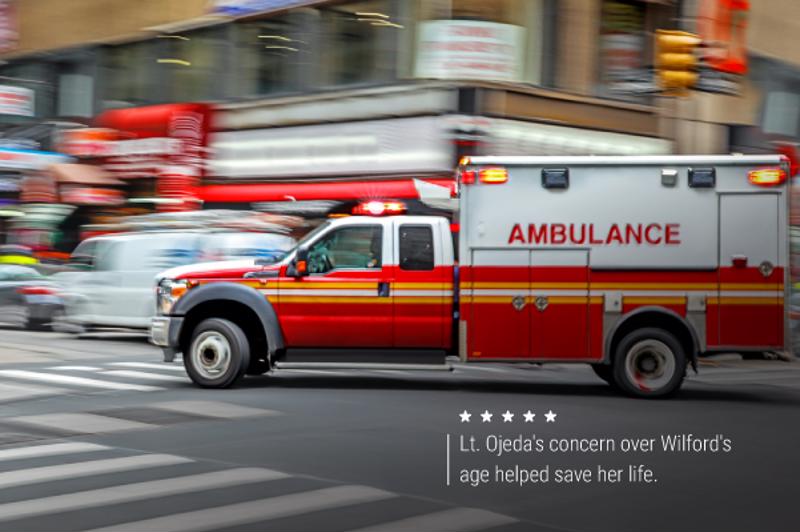
Ojeda had two options. The first was to follow policy regarding child patients. This idea gave him pause. The earlier officers estimated Wilford was 15, and protocol dictated all child patients would be sent to a hospital 30 miles away from the scene. Ojeda had doubts about her estimated age.
His second option was to take her to Broward Health North, a facility focused on urgent care that was only 12 miles away. Ojeda had to decide fast, so he shook her to see if she would respond. Wilford became alert on Ojeda's second try, telling him she was 17 and confirming his suspicions. Per The Washington Post, he took her to the closest hospital, where she underwent several surgeries that took 40 hours in total.
"She is very lucky," trauma surgeon Igor Nichiporenko told reporters during the press conference, according to The Washington Post. "Because we're talking about large-caliber bullets penetrating through the chest and the abdomen."
As the New York Times detailed, 555 mass shootings have occurred in the U.S. since June 12, 2016. That night, a gunman opened fire in nightclub in Orlando, taking the lives of 49 people. It was America's deadliest shooting at the time, only to be eclipsed just over a year later when, on Oct. 1, 2017, another shooter attacked a music festival in Las Vegas. This catastrophe left 59 dead and at least 527 injured.
First responders are always on the front lines of such events, valiantly working amidst the chaos to save as many lives as they can. As we commend their bravery, it is important to listen to what they have to say.
Shootings take an emotional toll on first responders
The people who respond to mass shootings are some of the bravest and most resilient individuals on Earth. They're the only ones equipped to save countless lives during disastrous events, and they must think and act quickly in order to rescue as many as they can.
That said, they're also exposed to untold horrors as they carry out their duties. Even a successful rescue doesn't guarantee a life saved, as Paul Brunner, an EMS volunteer in La Vernia, Texas, explained to a local NBC news affiliate.
"Reports of the ones that we were able to treat, move, and transport, and didn't make it, are very difficult to deal with," he said, speaking of the aftermath of the Sutherland Springs shooting.
According to a separate news organization, an ABC affiliate, responders had to return later in the evening to collect the bodies of the people who didn't survive the attack. The process took more than three hours, but responders returned to the church as a group later in the week. According to their statements, being in the church again gave them a sense of closure.
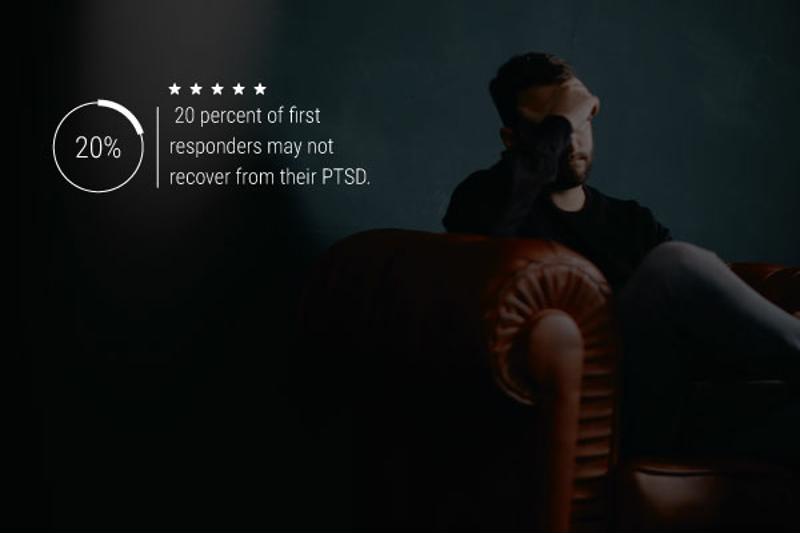
Responders to the Las Vegas shooting felt similarly when it came to the stress of helping people during and after the event. In fact, the effects of such tragedies last longer than we might think. According to NBC News, 20 percent of the first responders who helped during Las Vegas (and likely other events) may not recover from the post traumatic stress disorder caused by such experiences.
PTSD symptoms include nightmares, insomnia, memory problems, paranoia and flashbacks. If these symptoms persist, it will affect the ability of first responders to complete their jobs later in their careers.
"Employees are going through a range of emotions, including anger and fear," Glen Simpson, an advanced emergency medical technician who assisted during the Oct. 1 shooting, told NBC News.
Understanding first responders in their own words
Written news reports can only describe so much; indeed, video is often better for conveying complex emotions to a widespread audience.
To help people understand the role of a first responder, director Kim A. Snyder created a three-part docuseries called "We Are All Newtown," referencing the tragic shooting that claimed the lives of 20 children and six adult educational staff, as well as that of the shooter and his mother.
As The Atlantic detailed, the series follows doctors who have responded to mass shooting events to gain their perspective on the intersection between gun violence and public health.
"They are the ones who spend sleepless nights replaying moments of trying to stop bleeds and informing loved ones in waiting rooms about the suicides, homicides, and mass shootings that make up the nearly 34,000 gun deaths each year," Snyder told The Atlantic.
Hopefully there will never be another mass shooting, but in the event of such a catastrophe, it's important to listen to first responders as we commend them for their service.
The opioid epidemic remains one of the most pervasive medical crises in the U.S. According to the American Society of Addiction Medicine, opioids are responsible for the majority of drug overdose deaths in the nation. In 2015 alone, heroin overdoses claimed 12,990 lives, while prescription pain relievers claimed 20,101. The total number of deaths from opioids is surely higher, given that these statistics don't account for fentanyl or Carfentanil, two extremely dangerous drugs that are driving the crisis.
As a result, first responders have been put on the frontline of this battle, responding to overdose calls en masse and saving countless lives with the overdose-reversal drug naloxone. Some responders are even working to expand addiction treatment services in their local communities.
Take Nashua, New Hampshire, for example. As the Huffington Post detailed, members of the city's local fire department created a program called Safe Stations to get opioid addicts the help they need before they overdose. An addict can show up at a firehouse unannounced and ask for help, and firefighters on duty will dispose of any drugs on the person, take vital signs, see to his or her immediate needs and arrange for treatment. The program is designed to create a space where addicts feel safe rather than judged to better encourage people to make use of the service.
"Immediately six or seven firefighters came to my aid," said a patient only identified as Brian during a public forum where he described his experience with Safe Stations, the Huffington Post reported. "I showed up at the safe station and they immediately took my vital signs. I even hugged all the firefighters because I didn't know what to do."
That said, while firefighters and first responders can be considered heroes of the epidemic, they also put themselves at risk of a threat many people don't consider: an accidental overdose.
The DEA warns responders of contact with opioids
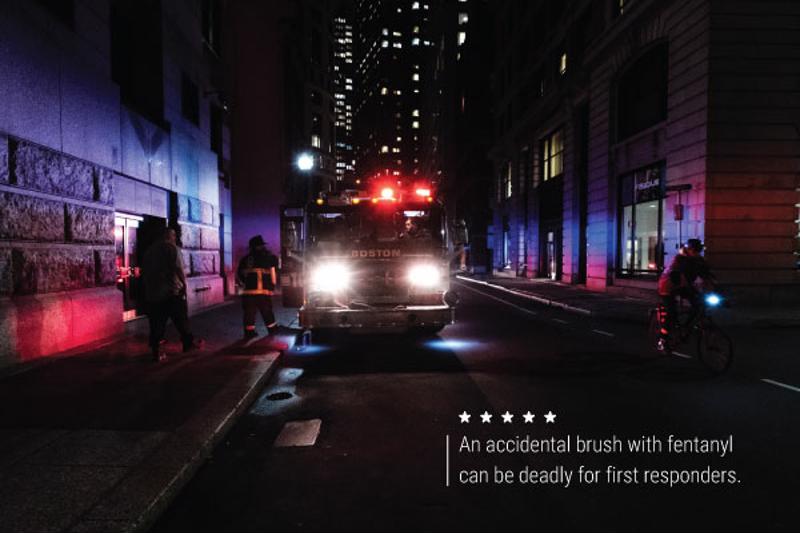
As first responders arrive to treat overdose patients, they risk coming into contact with the drugs themselves. Highly potent synthetic opioids like fentanyl and Carfentanil can be transmitted through the skin, and even a small amount can trigger a fatal overdose. In fact, 2 or 3 milligrams of fentanyl – the equivalent of five grains of table salt – can lead to respiratory depression or arrest, cardiac arrest and death. This means that a responder could die simply by brushing a bit of powder on a his or her uniform.
This is almost what happened to Officer Chris Green of East Liverpool, Ohio, CNN reported. He brushed some powder off of his uniform after a drug bust, then began feeling the effects of an overdose. Green, like many others, made a full recovery, but the threat of death is still incredibly real.
The danger is so great that the U.S. Drug Enforcement Administration issued a synthetic opioid briefing guide to the nation's first responders in June 2017, detailing best practices for safety. It advises responders to take the following precautions when encountering an area where fentanyl may be present:
- Wear personal protective equipment such as coveralls, gloves, eye protection and dust masks.
- Carry naloxone injectors on their persons.
- Contact the nearest DEA office or request the help of HAZMAT officials if they suspect a substance contains opioids.
As we thank first responders for saving the lives of countless opioid patients, we must also recognize the incredible danger they put themselves in.