
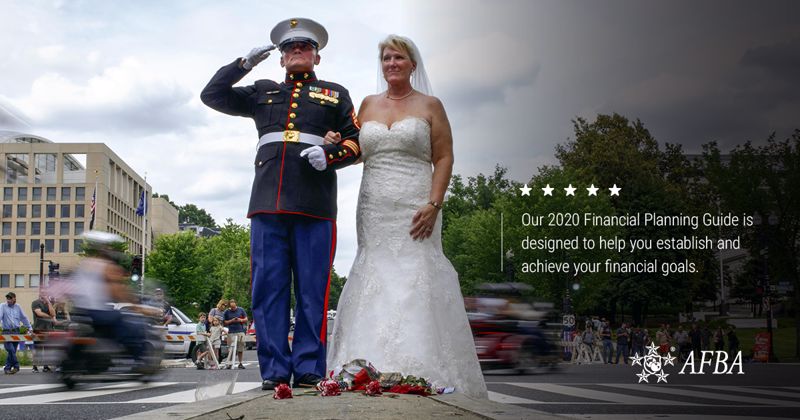
Engaged couples have a lot to plan and prepare. Wedding day logistics can be even more complicated when one partner has a demanding career with the military or an emergency response agency.
But the day you tie the knot is just that — one day. Afterward, other important life planning matters like financial management will require the same level of organization and attention to detail in order to keep you on solid ground for years to come.
When it comes to managing your finances after getting married, you'll have three options to consider, each with its own pros and cons.
1. Combining all finances
In a marriage, two become one. For some newlyweds, two (or more) bank accounts are united as well. Given the pace at which bills are paid, groceries are purchased and savings are bolstered, there are quite a few advantages to operating the household budget from joint accounts. Combining finances creates greater transparency and easier access to funds for both parties, helping facilitate better communication and budget tracking.
As paychecks and financial obligations fluctuate, couples who follow this approach don't need to make dramatic shifts in how they divide up their income or responsibilities. Plus, with two pairs of eyes actively monitoring an account, budgeting mistakes are less likely to happen. Couples who are on the same page can also grow together while jointly working toward important financial goals.
The downside is that this total transparency can create a perceived loss of financial independence, and it doesn't always allow for differing opinions and spending habits. It can cause resentment or even prompt secrecy.
A recent poll found 44% of people in a partnership were either harboring a secret account, dealing with hidden debt or covering up spending habits their significant others would disapprove of. However, 57% of people believe financial infidelity to be as bad as, or worse than, unfaithfulness.
2. Keeping everything separate
Many partners agree to keep accounts and individual financial matters to themselves. This helps each person maintain a desired level of financial independence. If both parties communicate frequently to reconcile accounts and accomplish shared goals, a separate system can work well.
However, this approach doesn't remove the emotional aspect of money management from a committed relationship. Keeping separate accounts and responsibilities can create a sense of imbalance. For instance, if one partner pays most of the bills while the other spends a little too freely, credit card bills and emotions can run high.
Also, dividing the household's budget and obligations in two can complicate even the simplest transactions. Everything from buying groceries and gifts to financing a vacation can create stress if spouses don't have a solid plan in place. In an emergency, accessing the other partner's personal accounts can be a complicated process.
3. Taking a hybrid approach
Given the pros and cons of both of these financial management strategies, many couples choose a blended model. This might involve keeping personal accounts for discretionary spending but combining most income into a joint account to cover household expenses. Each partner could also contribute to their own personal savings in addition to a shared savings account.
The best approach to managing finances after getting married is one that you can agree on together. Whichever strategy you choose, honesty and good communication will help make your money management more successful. Ultimately, having someone by your side when working toward individual and shared financial goals is something to love and cherish.
Not sure where to start? Download AFBA's 2020 Financial Planning Guide for our best-in-class collection of resources — from budgeting worksheets to military benefits information — designed to help you more easily establish and achieve your financial goals.

Produced by the Association of the United States Army (AUSA), a graphic novel series titled "Medal of Honor" illustrates the true stories of the real-life action heroes who have been awarded the U.S. military's highest and most prestigious award.
AUSA's 'Medal of Honor'
The medal itself recognizes those who have distinguished themselves by valiant action against enemy forces.
Part of AUSA's Book Program, the graphic novel project strives to make these remarkable stories of valor accessible to new audiences in a new medium.
Legendary comic book artists and writers helped bring these stories to life. Each episode is illustrated with vivid frames and action-packed plotlines summarizing true events on battlefields around the world and throughout history.
Available as free PDFs, the first four issues can be read online or downloaded and shared. They were also bound in a free compendium at AUSA's annual conference in October 2019.
Alvin York
The first issue in the series honors WWI hero Corp. Alvin York, the most decorated veteran of WWI.
On Oct. 8, 1918, during the Meuse-Argonne campaign, much of York's platoon was brought down German machine gunfire behind enemy lines. York quickly assumed command of his unit. His seven surviving soldiers took a defensive stance, guarding their German captives.
Meanwhile, York led a decisive solo attack against the machine gun nest. With no time to reload his rifle, the Tennessee sharpshooter switched to his pistol, leaving few survivors. His fearless advance led 132 enemy soldiers to surrender.
Roy Benavidez
The second issue recounts the herculean efforts of Special Forces Staff Sgt. Roy Benavidez.
On May 2, 1968, Benavidez survived countless injuries on his way to rescue a dozen members of a reconnaissance team trapped by the North Vietnamese infantry. After racing across 75 yards of open fire to provide medical aid to the wounded soldiers, he went back again to assist those wounded by the crashed rescue helicopter.
Once another helicopter evacuated the group, Benavidez was placed in a body bag; he had lost so much blood the medics assumed him to be dead. However, his determination that day saved his own life and those of eight other soldiers, making him a Green Beret legend.
Audie Murphy
The third issue in the series highlights the most highly decorated U.S. soldier, 2nd Lt. Audie Murphy.
Murphy single-handedly held off six Nazi tanks in Holtzwirh, France on Jan. 26, 1945. For over an hour, he resisted waves of infantry assault from a disabled American destroyer tank with flames and smoke billowing out of it.
As the enemy closed in on his position, the 5-foot-5-inch, 110-pound Texan maintained communication with his men, coordinating artillery missions while taking down as many Nazis as possible. After using up all of his ammunition, Murphy returned to his unit to launch a triumphant counterassault.
Sal Giunta
The fourth issue honors Spc. Sal Giunta, the first living Medal of Honor recipient since the Vietnam War.
Under the cover of night in Afghanistan's Kkorengal Valley, Giunta's platoon was ambushed by Taliban enemies on Oct. 25, 2007. The Iowa-born soldier advanced into the line of rifle fire and rocket-propelled grenades to drag one of his own men to safety. "There were more bullets in the air than stars in the sky," he remembered in an interview.
Refusing to leave anyone behind, Giunta then rescued another from the arms of two Taliban attackers. His heroic deeds turned the tables so that American gunships could close in on the enemy.
Future issues
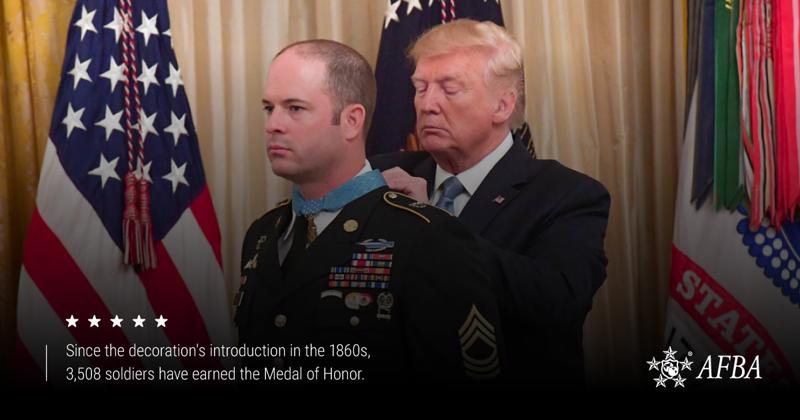
Since the decoration's introduction in the 1860s, 3,508 soldiers have earned the Medal of Honor. There are thousands of equally remarkable stories to share — and AUSA plans to bring more to the forefront in 2020.
Until then, military families and comic-book lovers can read Issues 1 through 4 for free on AUSA's website.
American families will gather around the dinner table to celebrate Thanksgiving on Nov. 28, 2019. Meanwhile, many of the 1.4 million servicemembers currently on active duty won't be able to enjoy the comforts of home.
This year, we give thanks to the brave servicemen and women who protect our country on Thanksgiving Day and every day.
Thanksgiving traditions
Over the years, military members have celebrated Thanksgiving in a variety of ways.
President George Washington instituted a "day of public thanksgiving" on Oct. 3, 1789. Similar days were observed during the Revolutionary and Civil Wars, but the holiday as we know it wasn't instituted until 1863.
President Lincoln's Thanksgiving Proclamation made it clear that those at home and abroad are welcome to take part: "I do therefore invite my fellow citizens in every part of the United States, and also those who are at sea and those who are sojourning in foreign lands, to set apart and observe the last Thursday of November next, as a day of Thanksgiving and Praise."
During World War I, service organizations arranged Thanksgiving banquets, football games, and entertainment for military personnel to enjoy. After Armistice Day, those deployed in France enjoyed a distinctly American meal with French families.
From World War II onward, fall feast ingredients have been shipped or sourced locally so that military units around the world can observe and enjoy the holiday — even when such logistics seem impossible.
In November 1944, 1.6 tons of fresh turkey were plated up for Soldiers fighting in the European Theater of Operations. During Operation Desert Storm in 1990, President George H.W. Bush, sat down to Thanksgiving dinner with the troops stationed in Saudi Arabia.
It's now a military tradition that senior leaders dish out the Thanksgiving meal, when and wherever possible. Following a series of standardized recipes, each branch hosts Thanksgiving feasts on-base where the menu includes L-161-00 (roast turkey), I-013-00 (pumpkin pie) and Q-069-02 (marshmallow sweet potatoes). Veterans and guests are typically welcome to join.
Alternatively, servicemembers may sit down for a meal with a local family and share their beloved American customs wherever they are.
What you can do this Thanksgiving
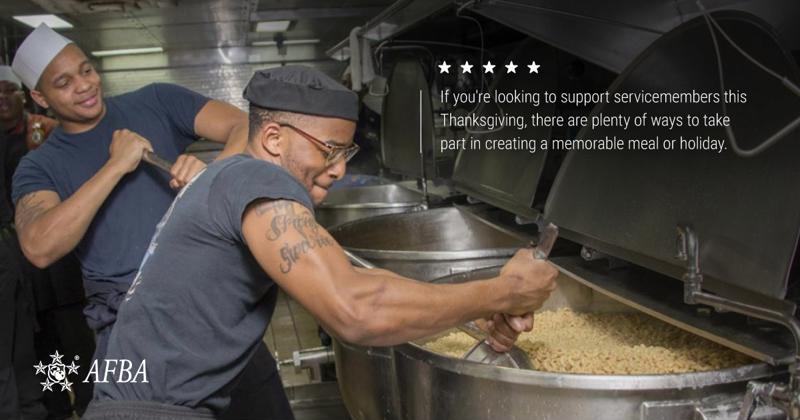
If you're looking to support servicemembers this Thanksgiving, know that there are plenty of ways to take part in creating a memorable meal or holiday.
Invite any servicemembers you know to join you for Thanksgiving dinner, or join an "adopt a servicemember" program to host someone in your area. Connect with the Morale, Welfare and Recreation (MWR) office at a nearby base or reach out to the USO or the Armed Services YMCA to learn about holiday programs and opportunities to give back.
In a story for Military.com, one military spouse wrote, "the inherent stress of inviting more than 40 soldiers … who were unable to travel home was more than balanced by the laughter and gratitude they shared with us."
This Thanksgiving, active-duty servicemembers will be thinking of nearly 2 million family members back home. Holidays can be difficult during a loved one's deployment, so extend some warmth and welcome a military family into your home.
Operation We Are Here publishes a list of locations opening their doors to military families for Thanksgiving dinner — see if you can volunteer to serve up turkey, stuffing and pie.
You can also support servicemembers abroad. Send a Thanksgiving card or care package to servicemen and women overseas or donate goods to a charitable organization that's arranging holiday shipments.
Finally, remember to include the brave men and women of the armed forces in your thankful thoughts this year.
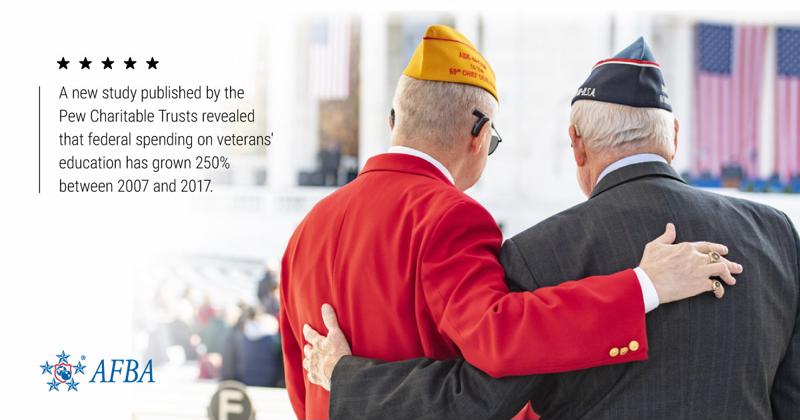
A new study published by the Pew Charitable Trusts revealed that federal spending on veterans' education has grown 250% in 10 years' time.
Titled "Two Decades of Change in Federal and State Higher Education Funding," the Pew study detailed the decrease in state support and the concurrent increase in federal higher education support.
In 2017, the government dedicated $13.6 billion to veterans' education benefits. The third-largest category of contribution behind financial aid grants and research funding, veterans' education amounted to about 18% of all federal higher education support.
That was a significant departure from where things stood a decade prior. In 2007, the U.S. government dedicated only $3.9 billion to veterans' education.
"Between 2007 and 2017, federal spending on veterans' higher education benefits grew nearly 250 percent, in inflation-adjusted terms, primarily because of the Post-9/11 GI Bill," the Pew study explained. "Other veterans' education support programs shrank over the past decade."
Indeed, other veterans' education initiatives — including the Survivors' and Dependents' Educational Assistance (DEA) program, the Vocational Rehabilitation and Employment (VR&E) program, and the Montgomery GI Bills — have been cut back. Spending on these programs, and others, shrunk by about 48% to $2.4 billion in 2017.
It's the Post-9/11 GI Bill that has been single-handedly driving the change.
Veterans' education and the Post-9/11 GI Bill
Of the $13.6 billion allocated to veterans' education in 2017, $11 billion came from the Post-9/11 GI Bill.
Approved by President George W. Bush, the Post-9/11 Veterans Educational Assistance Act of 2008 extended GI Bill eligibility and educational benefits to those who have served since September 2001.
The bill was designed to cover many of the expenses that veterans and their families incur when pursuing higher education or vocational training. It funds up to three years of tuition and fees with an annual stipend for textbooks and supplies. It also covers certification test fees, plus a housing allowance with possible relocation assistance
For public universities, all tuition and fees are covered at in-state rates. A set amount is available for private institutions as well; it's capped at roughly $24,500 for the 2019-2010 academic year, although this figure increases each year.
According to the 2019 Pew study, most of the bill's beneficiaries choose to attend private colleges and universities. Of the veterans and service members financing their education through the Post-9/11 GI Bill, roughly one-third attend private nonprofit schools, one-third attend private for-profit institutions and one-third enroll in public schools.
More changes are coming with the Harry W. Colmery Veterans Educational Assistance Act, known as the Forever GI Bill, which was signed by President Donald Trump in 2017. This program expands eligibility even further with a few other modifications and added benefits, including more support for science, technology, engineering and math (STEM) education and the elimination of some benefit-related expiration dates.
How to apply for benefits
To qualify for the Post-9/11 GI Bill, veterans and active-duty service members, including reservists, must have served for at least 90 days in total since Sept. 10, 2001. Those who served for 30 continuous days before being discharged on the basis of a service-related disability during this timeframe are also eligible.
Some veterans and service members are also eligible to transfer these benefits to a dependent such as a child or spouse.
Eligible individuals may apply online or call 1-888-GI BILL-1 (1-888-442-4551) to request an application by mail. It's also possible to apply at one of the three VA regional offices that handle GI Bill claims. At many schools, VA Certifying Officials are available to help within the financial aid or registrar's office.
Michigan business owner Meredith Rogan has found a creative way to support service members.
"When we [would] do the pledge of allegiance or sing the national anthem and there were vets in the audience," she remembered, "I would look at them in awe, like they did something I know I can't do. And I have always been looking for something to do to give back to them."
Rogan co-owns Joy Abendmode Bridal Boutique with her sister Diana in Royal Oak, Michigan. This November, the salon is partnering with Brides Across America (BAA) to give free wedding dresses to military and first responder brides.
"If you are a first responder, if you are a veteran and if you are a spouse of one of these people you are important, and we think that we think that deserves recognition," Rogan said in a local news interview.
Operation Wedding Gown
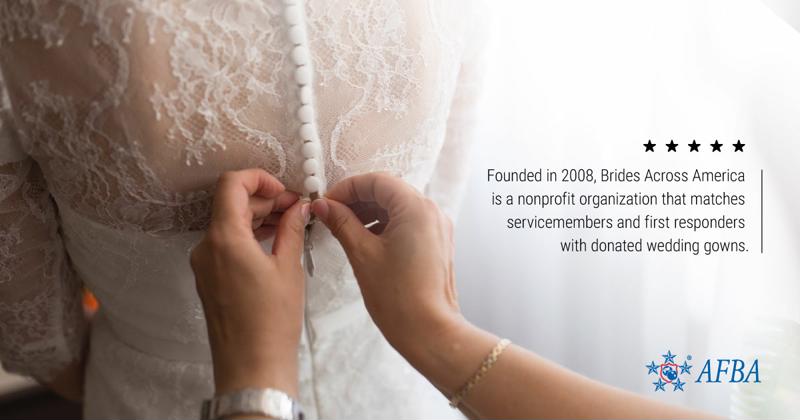
Founded in 2008, Brides Across America is a nonprofit organization that hosts dozens of "Operation Wedding Gown" events across the country. So far, BAA has matched up 24,000 brides with donated wedding dresses and arranged free weddings for 22 couples.
To participate, either the brides or their fiancés must be military service members, veterans or first responders. BAA caters to those planning weddings within the next year and a half. They also work with couples who were legally married in civil ceremonies and are now planning formal celebrations.
At Operation Wedding Gown events, dresses are available on a first-come, first-served basis. A variety of styles and sizes are available thanks to donations from retailers, designers and individual sponsors, but the boutiques do all they can to help brides find gowns they love.
In July 2019, Something New Boutique in Colorado Springs, Colorado, gave away some 30 wedding gowns valued at $1,000 to $4,000 while Ashley Grace Bridal in Lynchburg, Virginia, had 70 gowns available during their July giveaway.
Military and first responder brides get the VIP treatment
Vera Wang, wedding dress designer to the stars, partnered with BAA on her namesake brand's 30th anniversary in fall 2019. She styled 10 couples and their wedding parties in Vera Wang attire — and gifted the couples jewelry, stationery and bedding from the brand's various product lines.
The designer personally attended all of the fittings and gave brides the full VIP treatment. In interviews with WWD, brides called the experience "surreal" while BAA founder Heidi Janson considered the collaboration "a dream come true, a fairy tale."
"Many military women lose their femininity being consumed by their careers," one giveaway winner's submission noted. "I want her to see that she should be just as passionate about herself as she is with keeping our country safe."
How to partner or participate with Brides Across America
BAA's Operation Wedding Gown giveaway events are held in July and November in honor of Independence Day and Veterans Day, respectively. BAA also hosts events on the first Friday of every month at its headquarters in Andover, Massachusetts.
To participate, couples can find local events and register through BAA's website. The boutiques ask to see proof of service and identification and will then assist brides in choosing a dress from the available selection. There is a tax-deductible registration fee to cover administrative expenses and costs of the event, and dress alterations are covered by the brides themselves.
For those looking to give back, there are a few ways to get involved with Brides Across America. Individuals can donate new and used wedding gowns as long as they're in good condition. BAA also accepts donated rings and jewelry, veils, wedding favors, gift cards and other special occasion gowns. Bridal salons can register to host future events, as well.
Joy Abendmode Bridal Boutique is currently gearing up for three days of appointments with military and first responder brides. "They served us; it's time for us to serve them," Rogan explained.
This year, Columbus Day falls on Oct. 14, 2019. However, many states and municipalities across the U.S. recognize the holiday as Indigenous Peoples' Day. The revised name indicates that many citizens wish to change who they honor and remember on this occasion.
What happened in 1492?
The Italian explorer Christopher Columbus is typically credited with discovering America during his famous 1492 voyage across the Atlantic, which was sponsored by Spanish monarchs. Yet the stories about the famous man who "sailed the ocean blue in 1492" contain some myths alongside the facts.
Those in favor of renaming the holiday point out that Columbus never actually landed in what is now the continental U.S. On Oct. 12, 1492, his crew set foot in the Bahamas, then made their way to Central America, South America and a few Caribbean islands.
Columbus was certainly not the first man to sail from the Old World to the New. The Norse explorer Leif Erickson serendipitously reached the Americas by way of modern-day Canada around the year 1000. But European colonization of the Americas didn't begin until some 500 years later, after tales about Columbus' experiences circulated throughout Europe.
Moreover, an estimated 10 million indigenous people already inhabited the continent at the time. By changing the holiday's name from Columbus Day to Indigenous Peoples' Day, citizens have the opportunity to formally acknowledge and honor the First Peoples.
"There is power in a name and in who we choose to honor," Maine Governor Janet Mills said when the state renamed the holiday in April 2019. "Today, we take another step in healing the divisions of the past, in fostering inclusiveness, in telling a fuller, deeper history, and in bringing the State and Maine's tribal communities together to build a future shaped by mutual trust and respect."
Which states observe Indigenous Peoples' Day?
U.S. citizens first observed Columbus Day on Oct. 12, 1792, on the 300th anniversary of the voyage. In 1934, it was deemed a federal holiday by President Franklin Roosevelt and became an occasion for celebrating Italian-American heritage. Businesses and government offices around the country typically close for the day, but states and cities aren't required to observe the holiday.
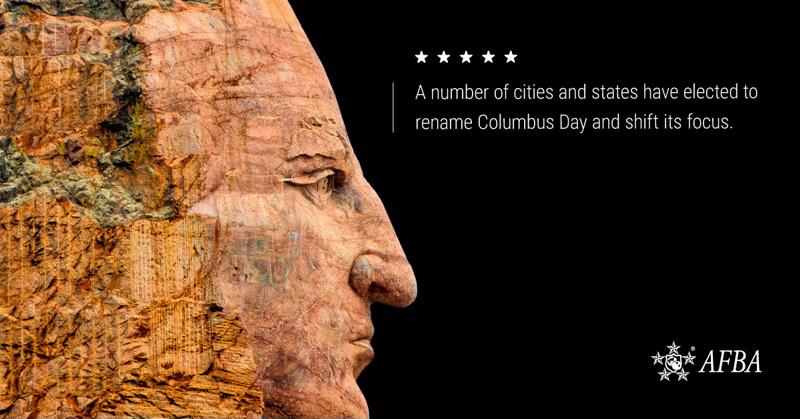
As a result of its controversial history and contested significance, a number of cities and states have elected to rename the holiday and shift its focus.
South Dakota began calling it Native American Day back in 1989 while Berkeley, Calif. held its first Indigenous People's Day in 1992. Alabama jointly honors Columbus Day and American Indian Heritage Day, while Nevada observes Aug. 9th as International Day of the World's Indigenous Peoples, a holiday which was instituted by the U.N. in 1994.
In Alaska, Indigenous Peoples' Day was celebrated twice before it was signed into law in 2017. "This official recognition is just one way we as a state can acknowledge and celebrate the contributions made by First Peoples throughout the history of this land," Bill Walker, Alaska's then-governor, said in a statement.
Vermont, Oregon, Minnesota, New Mexico, Maine and Louisiana have also followed suit, along with over 130 towns and cities; the numbers grow each year.
Still, at the federal level, it remains Columbus Day. In a 2018 statement issued by the White House, President Donald Trump proclaimed, "On Columbus Day, we commemorate the achievements of this skilled Italian explorer and recognize his courage, will power, and ambition — all values we cherish as Americans." The statement continued to "acknowledge the important contributions of Italian Americans to our country's culture, business, and civic life," reflecting the original intent of the holiday.
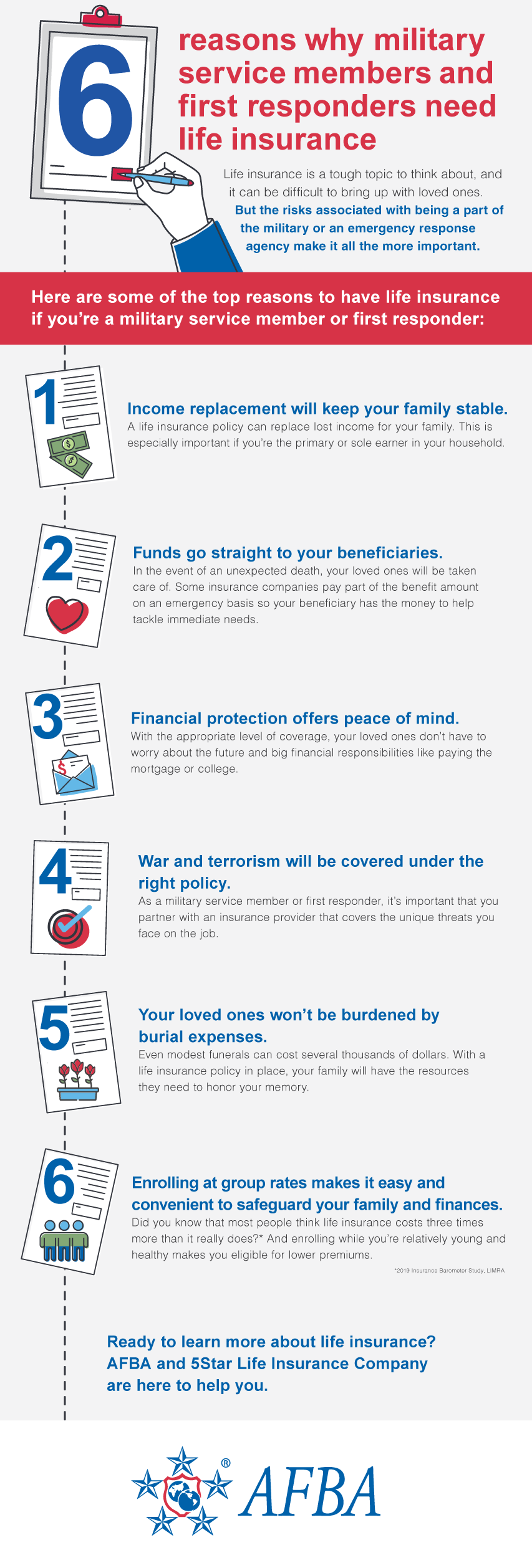
For those in the Armed Forces, protecting their country is the priority. But that's on the job: When at home, those same servicemembers strive to protect and provide for their families. You want to make sure that your family is taken care of should the worst happen, but that can be difficult without life insurance.
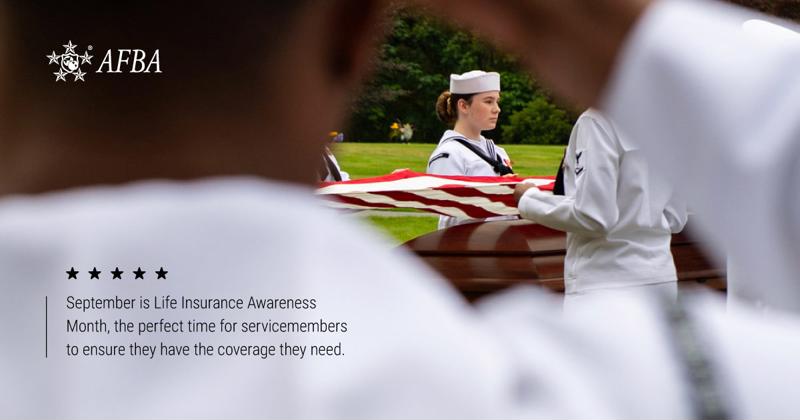
Life insurance can seem like a complicated product, but it's essential to ensuring peace of mind in the most difficult of times. If your family happens to lose your income, how would they meet obligations like mortgage payments and debts? If you have a life insurance policy, your family will enjoy a degree of protection against such costs. To help educate the public, September is Life Insurance Awareness month. Here are a couple facts you need to know.
What is life insurance?
Like other forms of insurance, life insurance protects policyholders against damages and losses. In this context, should you pass unexpectedly, your family will have a fall-back in the death benefit life insurance pays. You can take out a certain amount of coverage (whether $25,000 or $250,000) that will help your family maintain financial stability when they need it most. The advantage is the death benefit is often paid out to your family, or other designated beneficiaries, free of income tax.
What types of life insurance exist?
Life insurance products break down into two main groups: term and whole. Term life insurance policies are active for a set number of years, like 15 or 30 years. Your family will be covered during that time, but once the term expires, so does coverage. Many families utilize term plans for household planning for near-term needs, in addition to creating a financial backstop. Term life policies often feature variable rates and the ability to convert coverage to a permanent option.
On the other hand is whole life insurance. These policies grant a lifetime of coverage with the first payment. As long as you meet premiums, your family will benefit from coverage that won't expire. Another key advantage is cash value. With whole life policies, a portion of the premium you pay each month is diverted toward a fund that you can draw from and pay back, or take loans against. Cash value builds with each premium, but just be aware that any amount you take out will be deducted from the eventual payout your beneficiaries receive.
Why take out life insurance?
The overarching reason why many families obtain life insurance is to provide a financial buttress against uncertainty or costs. For instance, funeral expenses are a major outlay, but life insurance often addresses those costs directly as part of the policy. When you sit down to research policies, consider what life insurance can be used toward, including:
- Mortgage payment: If you have 10 years left on your mortgage, you may want to take out a term life policy of the same length to ensure paying it off stays on track.
- Personal debts: Your family may be held for any personal debts you held. Life insurance protects them against those costs.
- Higher education: Tuition and housing take a major chunk out of household budgets, but a policy will make sure such costs are met and degrees can be obtained even if your income is lost.
- Medical bills: Many policies will have an option to pay out living benefits for chronic or terminal illnesses, which can decrease your costs.
Learn more during September
If you are interested in more about life insurance and how it can help your family, consider getting involved this September. Education events and financial literacy seminars are taking place all over the country during Life Insurance Awareness Month, so check out what's happening your area.
Posttraumatic stress disorder, also known as PTSD, is a mental disorder that can develop after someone has been forced to experience a traumatic event, such as the conditions of battle and warfare. Although a psychological condition, there are severe physical risks associated with PTSD, as sufferers are at a heightened risk of self-harm and suicide.
Good mental health has always been one of the first casualties of war, but society's understanding of PTSD has changed considerably over the years. In World War I, soldiers suffering from various nervous and mental symptoms were said to be suffering from "shell shock." In World War II, the diagnosis was changed to "combat stress fatigue."
PTSD became an official psychiatric diagnosis in 1980, which was strongly influenced by the experiences and conditions of U.S. military veterans of the Vietnam War. A study conducted in the late 80s determined 15% of Vietnam veterans were suffering from PTSD, and today the VA estimates that 30% of Vietnam vets have had PTSD at some point in their lifetime.
About 12% of Gulf War veterans have PTSD, while somewhere between 11 and 20% of soldiers who fought in Operations Iraqi Freedom and Enduring Freedom are estimated to be afflicted with the condition.
These numbers are alarming, and speak to the importance of providing mental health resources to our nation's soldiers. And on June 27, advocates are especially emphatic in making that point.
How to advance the cause of PTSD awareness
PTSD Awareness Day can trace its origins back to the tragedy of Staff Sergeant Joe Biel, a North Dakota National Guard member who took his own life in 2007 following two tours in Iraq. SSgt. Biel, who suffered from PTSD, committed suicide after his return from duty to his home state.
In 2010, Senator Kent Conrad led the effort to get official recognition of PTSD via a "day of awareness," and SSgt. Biel's birthday, June 27, was chosen as the official PTSD Awareness Day, according to Military Benefits. In 2014, the Senate expounded upon the annual observance by designating the full month of June as National PTSD Awareness Month.
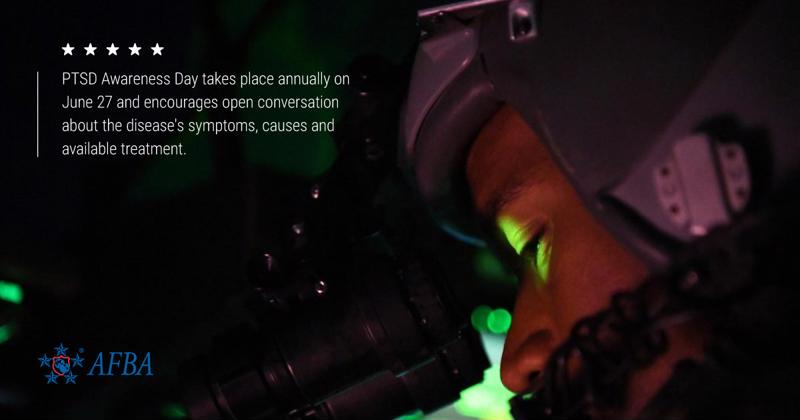
Today, individuals primarily observe PTSD Awareness Day by encouraging open conversations about the disorder, with frank and informative discussions of its causes, symptoms and available treatment methods. Despite the fact that it has been an official medical diagnosis for nearly four decades, PTSD is still frequently misunderstood, particularly by those who have only seen it portrayed in movies and other pop culture dramatizations.
To aid in this effort, the Department of Defense publishes circulars, articles and other materials designed to better educate and inform military members and their families about PTSD. Furthermore, the VA's website has lots of articles and resources dedicated to PTSD, and when retiring military members fill out their VA claim forms, there is an option to be evaluated for PTSD.
If you or someone you know is potentially suffering from PTSD, it's important to look for the warning signs. Though not always the case, common non-specific symptoms include irritability, depression and, particularly prevalent in veterans and active military members with the condition, something known as "hypervigilance" or "hyperarousal." Repeatedly experiencing a traumatic event through flashbacks, nightmares and persistent memories is another symptom of PTSD. The biggest red flag is suicidal ideation, and anyone experiencing such thoughts should immediately seek help.
The mental scars accrued in combat are often far more difficult to heal than the physical wounds, but there is always hope for recovery. PTSD Awareness Month is the perfect time to make sure that message reaches everyone who needs to hear it.
June 14, 2019 represents both the 244th birthday of the U.S. Army, and the 242nd birthday of the U.S. flag.
The Second Continental Congress officially adopted the original flag of the United States on June 14, 1777, exactly two years after the Congress created the Continental Army to fight Great Britain in the Revolutionary War.
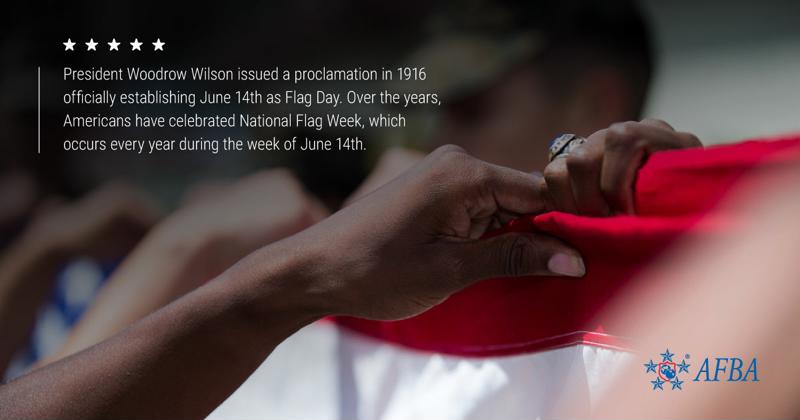
President Woodrow Wilson issued a proclamation in 1916 officially establishing June 14th as Flag Day, and thirty years later, National Flag Day was established by an Act of Congress. Though not a federal holiday, Americans continue to observe the creation of the Stars and Stripes, and over the years, this has led to the celebration of National Flag Week, which occurs every year during the week of June 14th.
In 2019, June 14th falls on a Friday, and National Flag Week runs from June 9th to 15th.
History of the U.S. flag and National Flag Week
The Flag Resolution passed by Congress in 1777 specified that "the flag of the thirteen United States be thirteen stripes, alternate red and white; that the union be thirteen stars, white in a blue field, representing a new constellation."
No arrangement of the stars was specified, so the maker of the flag was left to decide how to orient them, with some choosing to place the stars in a row and others opting for a circular layout that is today recognized as the "Betsy Ross design."
According to Military Benefits, American troops first carried the flag into war three months after the resolution at the Battle of the Brandywine. A year later, U.S. forces took over a British fort, marking the first time that the flag was hoisted over a vanquished foe.
However, the idea of devoting a day of celebration to the flag did not start to gain traction until over a century later.
It was in 1886 that Bernard J. Cigrand, a grade school teacher in Waubeka, Wisconsin, made his first public proposal for an annual observance of the birth of the flag. Cigrand's advocacy led to some of the first June 14th Flag Day celebrations.
President Harry S. Truman signed legislation in 1949 that designated June 14th as Flag Day and the week surrounding it as National Flag Week. In 2004, Congress voted unanimously to recognize Flag Day as having originated in Ozaukee County, Waubeka, Wisconsin.
Every year, National Flag Week begins with the sitting President making a proclamation declaring the week of June 14 as the official observance of the holiday and directing government officials to display the flag in government offices. The Presidential Proclamation also requests that U.S. citizens participate by flying the flag at residences and local businesses.
Celebrating National Flag Week can be as easy as hoisting Old Glory at your home or workplace, though there may also be parades or other celebratory events happening in your local community.
Fairfield, Washington claims to be home to the oldest continuing Flag Day parade, having held a parade every year since 1910, and celebrating the centennial of the parade in 2010. Appleton, Wisconsin, has held its own National Flag Day parade since 1950, and Quincy, Massachusetts, has had a similarly long-running parade since 1952.
When privately observing National Flag Week, you should be sure to follow proper flag etiquette. The Flag Code formalizes many traditions, including making sure that no part of the flag touches the ground or any other object when being lowered, as well as neatly and ceremoniously folding and storing the flag. There are also special rules for how the flag should be displayed indoors and outdoors.
With National Flag Day and the U.S. Army birthday both taking place on June 14th, there is no shortage of anniversaries for patriotic Americans to celebrate this time of year.