
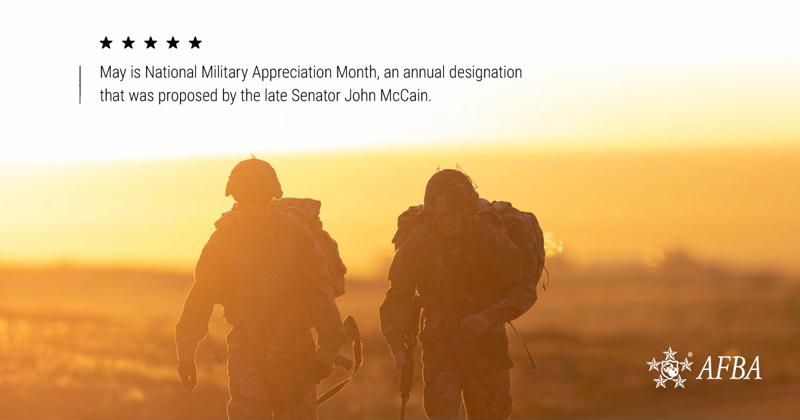
In 1999, the late Senator John McCain, himself a former naval pilot and prisoner of war in Vietnam, introduced legislation to designate the month of May as National Military Appreciation Month. Each and every year for the past two decades, the Senate and House of Representatives have adopted resolutions urging the President to issue a proclamation that calls on the people of the United States to recognize and honor U.S. service members as "an act of national unity."
There are a variety of ways for ordinary Americans to heed this call and pay tribute to the brave men and women who serve our country at home and abroad. From recognizing the many national days of observance that take place throughout the month, to performing individual acts of kindness for service members, here are some of the best ways to demonstrate your gratitude this National Military Appreciation Month.
National observances during National Military Appreciation Month
NMAM kicks off each year on May 1 with Loyalty Day, a special day set aside "for the reaffirmation of loyalty to the United States and for the recognition of the heritage of American freedom." First celebrated in 1921, Loyalty Day was made an official recurring holiday by Congress in 1958, and has been recognized with an official proclamation every year by every president since Dwight Eisenhower.
Every May also presents the opportunity to commemorate Victory in Europe Day, which occurred on May 8, 1945, and represented the end of World War II in Europe. This year, VE Day will fall on Wednesday, May 8, and will mark the 74th anniversary of Germany's unconditional surrender to America and the allied forces.
VE Day is shortly followed by Military Spouse Appreciation Day, which traditionally occurs on the Friday before Mother's Day. On May 10, 2019, Americans will honor military spouses with appropriate ceremonies and activities, and recognize the crucial part that military families have to play in strengthening our Armed Forces.
Celebrated the third Saturday in May every year, and this year on May 18, Armed Forces Day is a time reserved for citizens to come together and thank our military members for their service. This holiday celebrates every member of every branch of the U.S. military: the Army, Navy, Air Force, Marines and Coast Guard.
The last Monday of May is reserved for Memorial Day, a federal holiday meant to commemorate the men and women who died while in military service. This year, Memorial Day falls on May 27, 2019, and events are scheduled to take place throughout the country, with military parades happening in many cities and towns.
How to demonstrate your gratitude this May
There are many individual gestures you can make during NMAM, either in conjunction with one of the individual national observances, or simply as a random act of gratitude.
If there is a specific service member or military family in your life, you can let them know you appreciate their sacrifices with a gift, a thank you card or simply by taking the time to tell them. Offering to cook dinner for a military family or handle their chores on Military Spouse Appreciation Day is a good way to show you care. Similarly, calling and thanking a service member on May 18 is a great way to truly celebrate Armed Forces Day.
If you would like to reach out to service members you are not personally acquainted with, remember that a care package is always welcome. Operation Support Our Troops America has a program that ships boxes full of comfort items to men and women serving abroad, and you can find ways to donate, volunteer or join the mission on their website.
You can also do it on your own. The U.S. Postal Service offers a free "Military Care Kit" with all of the necessary supplies for sending packages overseas, including boxes, packing tape and customs forms. Get your free kit shipped to you by visiting the USPS website.
The brave men and women of the U.S. Armed Forces protect our nation day in and day out, and are deserving of our respect and thanks all year long. But National Military Appreciation Month should inspire us to make a special effort to show our appreciation and display conspicuous acts of gratitude.

April is designated the Month of the Military Child, a time for recognizing and paying tribute to the youngest soldiers fighting the war at home. Though the sacrifices of military members and their families are always worth valorizing, this month is set aside for focusing specifically on the experiences of the dependent children of military members serving at home and overseas.
Whether living the life of a "military brat" and bouncing from town to town or country to country, or having to live without a deployed parent for months at a time, military children have unique and often trying experiences that their civilian counterparts likely could never relate to.
Month of the Military Child 2019 is sponsored by the Department of Defense Military Community and Family Policy and supported by many other organizations, including the Department of Defense Education Activity.
Celebrate Purple Up! For Military Kids Day
Each April, DoDEA communities around the world celebrate the Month of the Military Child with Purple Up! For Military Kids Day, in which participants wear purple to show their support and appreciation of military children. The symbolism of that color is meant to convey that all branches of the military are supported, as it combines Air Force blue, Army green, Navy blue, Marine red and Coast Guard blue into a purple shade.
According to the agency's website, this year's Purple Up! celebrations will take place from April 8 through 12 at DoDEA Americas schools, and on April 17 at DoDEA Europe and Pacific schools.
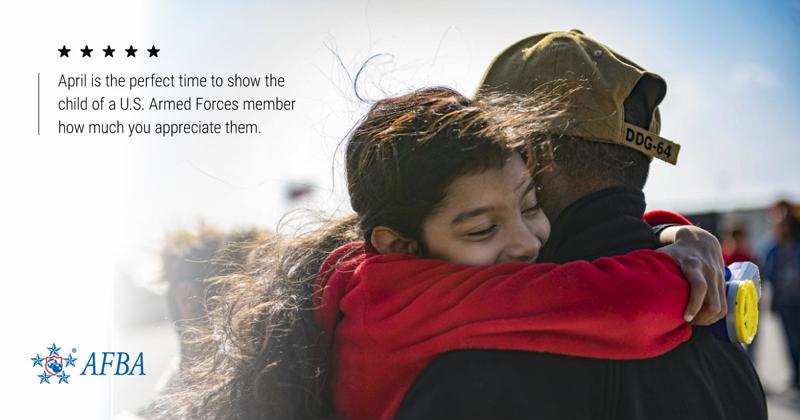
You can celebrate Purple Up! in your own community by, of course, wearing purple, but also by encouraging others to participate, as well. Ask schools and teachers to recognize the event, and see if you can get local businesses and officials to wear purple, as well.
Other Month of the Military Child 2019 events in April
Like many similar celebrations that focus on military recognition, the Month Of The Military Child tends to be observed within military communities, often with parades, fairs, seminars and special events. There are, however, some communities, schools and organizations outside of military bases that participate as well.
Some military-related private organizations use April as an opportunity to tout some of their year-round programs. The Military Child Education Coalition, for example, will emphasize its stated goal of ensuring "inclusive, quality educational opportunities for all military-connected children affected by mobility, transition, deployments and family separation."
The group offers student-led "Student 2 Student" programs, as well as a "Parent To Parent" version year-round, and during the month of April, provides Month Of The Military Child downloadable toolkits and other resources.
Throughout the month, there are also the usual military base-level events, ceremonies, contests and special nights celebrating military families and their children. Because so many of these events are sponsored by military communities, those looking for ways to get involved in the celebrations should search for events with the base Public Affairs office, Military Family Readiness Centers, Department of Defense Dependent School admin offices and on-base Child Development Centers. The Military Times also recommends checking for activities listed at Morale Welfare and Recreation Centers in military installations both at home and abroad.
Whether you simply "purple up" your wardrobe, participate in a celebratory event or do something special for the military child in your life, this month is the perfect time to show the son or daughter of a U.S. Armed Forces member how much you appreciate them.
The United Service Organizations will be celebrating its 78th birthday on Monday, Feb. 4, 2019.
Better known as the USO, the private, not-for-profit organization works in cooperation with the Department of Defense to provide live entertainment and other services to members of the United States military and their families.
Born in 1941, the USO claims six different parents—the Salvation Army, the YMCA, the YWCA, Catholic Community Services, National Travelers Aid Association and the National Jewish Welfare Board. President Franklin D. Roosevelt asked the six agencies to combine their resources to boost the morale of troops fighting in World War II.
Although congressionally chartered, the USO is not a government agency, and has relied on charitable donations and the efforts of tens of thousands of volunteers for all of its nearly eight decades of history.
A new organization gives Hope to America's heroes
After being formed in 1941, the USO quickly became known for its live performances, which began with stateside military theaters spread throughout the country, and soon led to Hollywood stars heading overseas to entertain the troops.
Of those stars, the one most closely associated with the organization was comedian Bob Hope, who performed his first USO show only three months after its founding. Hope went on to entertain troops for the next 50 years, making his last trip overseas in 1990 during the Gulf War.
In 1997, the U.S. Congress declared Bob Hope the "first and only honorary veteran of the U.S. armed forces," in recognition of his half a century of entertaining those serving in the nation's wars. The USO Center at the Los Angeles International Airport also bears his name.
Of course, no one could have originally imagined that Hope would eventually develop such a lengthy tenure as an ambassador for the USO—especially since the organization originally disbanded in 1947, after the Axis powers surrendered and ended WWII.
But in 1949, with America at the beginning of what would eventually become a lengthy Cold War, the USO's six original founding organizations decided to revive the agency. But due to funding issues, it wasn't until the Korean War began that the USO was back entertaining troops overseas, and the Defense Department earmarked $13 million for the organization's operations.
Yet the agency dealt with similar funding issues after the war concluded, and became dormant once more, remaining inactive until the U.S. entered the conflict in Vietnam.
Eventually, the USO received a government charter, and the organization also began placing more emphasis on improving the lives of military families, while still providing entertainment to soldiers as well.
Over 35 million troops served
Today the USO claims over 200 locations spread across 14 countries, including America, where it has a presence in 27 states. Over 30,000 volunteers help the organization realize its mission, as do the many musicians and entertainers who continue to perform live shows for military service members.
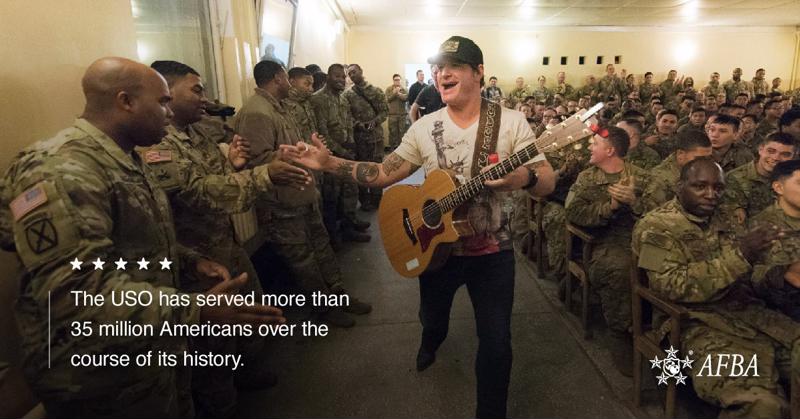
In 2016, during a gala event to celebrate the USO's 75th birthday, retired Army Gen. George W. Casey Jr. estimated that the USO had served more than 35 million Americans over the course of its history, according to The Providence Journal.
That service continues to take many forms, including family counseling for military members returning home from deployment, services for troops at airports as they travel to and from duty overseas and various programs that allow those deployed overseas to connect with their families stateside
As mentioned, the USO is a charity organization with a small paid staff, which relies on volunteers and charitable donations. To give the USO a birthday gift, head to their donation page and show your support.

Late last year, just days before breaking for the holidays, the 115th United States Congress managed to pass two pieces of legislation aimed at improving education benefits for members of the military transitioning into civilian life.
The Forever GI Bill Housing Payment Fulfillment Act, which was designed to correct mistakes made by the Department of Veterans Affairs that led to delayed and inaccurate payments for thousands of Post-9/11 GI Bill users, passed both houses with unanimous consent. Further bipartisan support was shown for the Veterans Benefits and Transition Act, which had a similar goal of protecting student veterans, as well as easing voting rules for military spouses and expanding burial benefits for military families, among other provisions.
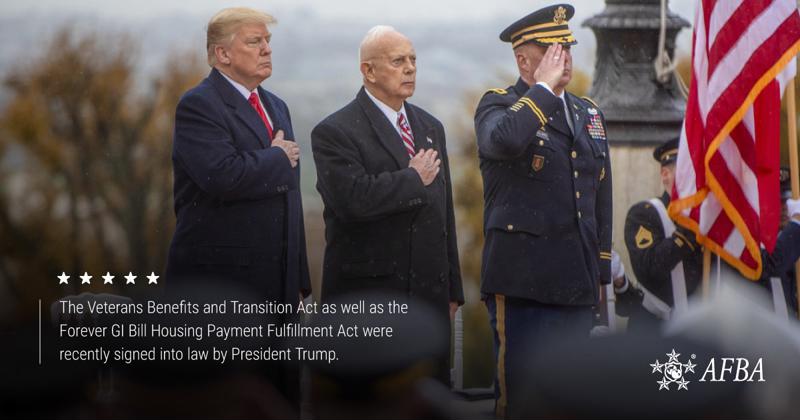
President Donald Trump has since signed both bills into law. Here's what the new legislation will mean for military members and veterans moving forward.
GI Bill students underpaid due to VA errors to receive reimbursement
The first bill pertains to those taking college classes or getting on-the-job training through the Post-9/11 GI Bill, which provides up to 36 months of education benefits to qualifying veterans or active duty military members with at least 90 days of aggregate active duty service after Sept. 10, 2001.
Veterans were previously required to use these education benefits within 15 years of completing their service, yet that deadline was erased with the creation of the Forever GI Bill. Unfortunately, a Forever GI Bill provision that changed the way housing stipends are calculated was not implemented on time due to major technology failures at the Department of Veterans Affairs, which led to many students being underpaid, according to Military Times.
Not only did some students struggle to pay their rent or mortgage bills as a result, but many were also hit by late fees for tuition that the VA also failed to pay on time.
The Forever GI Bill Housing Payment Fulfillment Act of 2018 holds the VA accountable for retroactively fixing inaccurate payments and reimbursing affected students, while also barring schools from the practice of charging GI Bill students for tuition payments that are delayed through no fault of their own.
"For many student veterans, every dime counts," said Sen. Brian Schatz, D-Hawaii, who co-sponsored the bill. "That's why the VA needs to get this right and pay student veterans the full amount of money they were promised. I'm glad that my colleagues in the Senate saw how important this issue is, and I hope this bill stays on the fast track to becoming law, so we can make this right for our veterans."
More benefits for student, transitioning and homeless veterans
These student veterans protections are complemented by a provision in the new Veterans Benefits and Transition Act of 2018, which requires the Department of Veterans Affairs to provide GI Bill users with electronic proof that they will be receiving housing payments from the VA.
The new requirement will enable students to prove to landlords their ability to pay for housing even if they are a full-time student without active employment. The new law also enables the spouse of a service member who dies on active duty to terminate a residential lease without penalty for up to one year after the death.
In addition to students, transitioning service members and homeless veterans are also set to receive greater assistance acclimating to life on the homefront, thanks to the new law.
The VA is now required to contract with a non-federal entity to identify and post a list of programs and organizations that can help service members transition out of the military.
Another provision gives homeless veterans up to 60 days after moving into housing to apply for employment assistance under the federal Homeless Veterans' Reintegration Program. Previously, only veterans living on the streets or in a shelter were eligible for assistance.
The spouses and family members of U.S. military members are also impacted by the new legislation, according to Air Force Times.
Military spouses are now allowed to use the same residence as their active-duty spouse for state and local voting purposes, whether or not they meet the residency requirements of a state on their own merits.
The law also extends veteran burial rights to the spouses and children of active-duty service members, even if they pass away before the military member. Previously, being buried in veteran cemeteries required approval from the VA.
We're often told around this time of year that it feels better to give than to receive, and that's especially true when the recipients of your generosity are those who have sacrificed the most for our country.
If you are a servicemember, you don't get to enjoy the kind of "Christmas bonuses" that many civilians see showing up in their paychecks during this season. Yet many military families badly need such a boost, especially when trying to purchase presents for their children on an already tight budget.
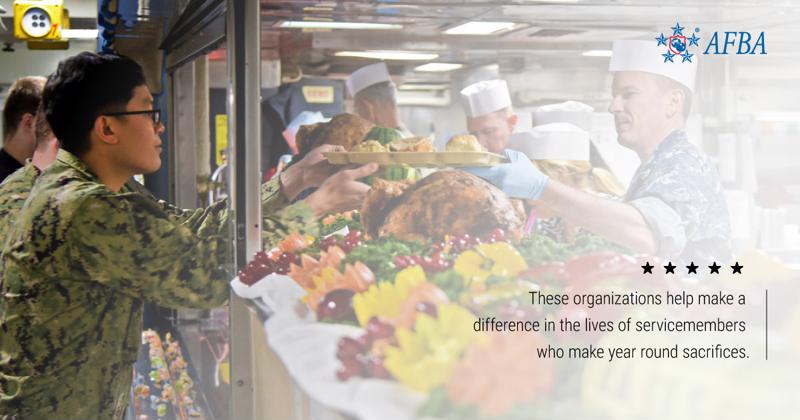
Fortunately, if you have a little money and kindness to spare, you can help make a difference in the lives of those who make year round sacrifices for all of us. Here are a few organizations that will help you have an impact:
Full Circle Home
Founded in 2007, Full Circle Home seeks to provide a link between deployed service members and their loved ones at home or on base. In a little over a decade, the organization has assisted over 21,000 troops in sending holiday gifts and love notes to their partners on the homefront. If you donate, you can help provide that connection between heroes serving overseas and their stateside significant others.
Pay Away the Layaway
Since 2011, Pay Away the Layaway has gone to cities across the country during both the back-to-school and holiday seasons to pay off the balances of families buying classroom supplies and Christmas gifts on layaway. Those interested in helping can become a "Layaway Angel" by making a donation to the nonprofit, or going directly to the layaway counter at their local Kmart, Walmart or Burlington Coat Factory and paying down a family's debt.
Right now, Military Benefits has partnered with Pay Away the Layaway to raise funds specifically for military families struggling to afford toys and other holiday gifts. You can donate here to help them meet their $5,000 goal.
Operation Christmas Spirit
Operation Help A Hero is an all-volunteer charity that seeks to support military units and families as they deal with difficulties related to the various stages of service, from preparing for separation, to deployment and the eventual transition back to the U.S.
Each year, the organization launches Operation Christmas Spirit, which has been showering military families with holiday gratitude for the last 16 years. There are many ways to help out, from hosting a toy drive to collecting gift cards to simply donating online and letting other volunteers do the holiday shopping.
If you'd like to get really involved, you can even "adopt" a military family and do their shopping for them. This late into the season, Operation Christmas Spirit encourages people to donate money instead, but if family adoption interests you, it's something to keep in mind for next year.
Operation Holiday Joy
The Armed Services YMCA is one of the best-rated charities in America, having been recognized by both Charity Navigator and Independent Charities of America. So you can be confident when the ASYMCA promises that 100 percent of your donation to their Operation Holiday Joy program will go directly to providing food and toys to deserving military families, as long as you check a box on your donation form requesting that they cover the processing costs.
For the last 14 years, Operation Holiday Joy has managed to raise more than $1.5 million, which has been used to purchase over 320,000 toys and in more than 25,000 baskets of food delivered to deserving military families on Thanksgiving and Christmas.
Thanksgiving is considered the kickoff of the holiday shopping season, and so far, it has succeeded in kicking off no less than three different unofficial retail holidays observed over a span of four days.
First there was Black Friday, the day after Thanksgiving, celebrated with massively popular "doorbuster deals," which enable companies to turn a profit and move from being "in the red" to "in the black." Then that gave way to Cyber Monday, in which e-commerce stores offered deep discounts to online shoppers. Feeling left out, mom-and-pop shops tried to lure customers away from big corporations by offering them Small Business Saturday specials, which occurred in between Black Friday and Cyber Monday.
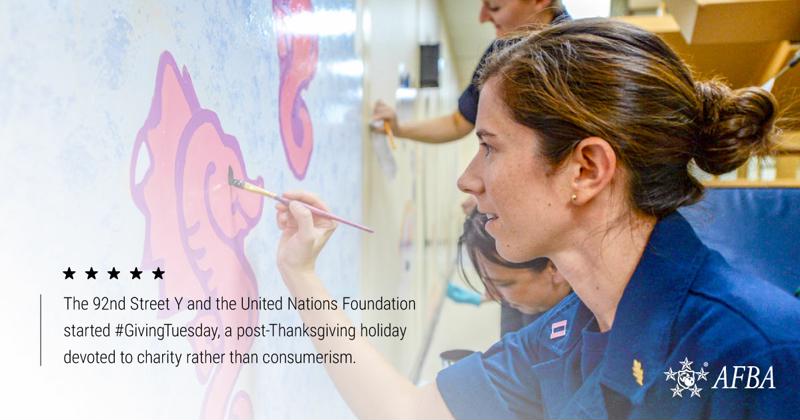
Lastly, in 2012, the 92nd Street Y and the United Nations Foundation started #GivingTuesday, the one post-Thanksgiving holiday devoted to charity rather than consumerism.
This year, Giving Tuesday will fall on November 27. There are many deserving nonprofits to which you can donate your time or money, but if you would like to give back to those who have given the most, here are some great ways to support veterans and military families this holiday season.
Homes For Our Troops
Homes For Our Troops is a private nonprofit devoted to building custom-made homes for injured post-9/11 veterans, many of whom suffer from partial or full paralysis and require specially designed homes to grant them full independence and mobility. This year, the organization is setting a #GivingTuesday fundraising goal of $150,000. You can help the nonprofit hit that goal by donating directly, and by sharing their #GivingTuesday video on social media channels like Facebook. And if you really want a concrete way to get involved, you can learn how to attend a build event and help welcome a family into their new, mortgage-free home.
Intrepid Fallen Heroes Fund
Many soldiers carry home wounds that aren't physical. Fortunately, there are resources available to them as well, including the Intrepid Fallen Heroes Fund, which serves United States military personnel experiencing Traumatic Brain Injury and Post-Traumatic Stress. The IFHF builds world-class advanced treatment centers that provide servicemembers with the best available TBI and PTS care. If you decide to get involved, you can feel good knowing that 100 percent of of every dollar donated from the public goes directly to funding programs.
Armed Services YMCA
For over 150 years, the Armed Services YMCA has provided servicemembers and their families with a place to turn for everything from recreational events to housing and educational programs. Low to no-cost childcare, hospital assistance, counseling, emergency food and clothing assistance are among the services that this top-rated charity provides to military families. You can help out by donating or volunteering at one of the Armed Services YMCA's 34 branch and affiliate locations.
USO
Closely associated with comedian Bob Hope, who in 1997 was named the "first and only honorary veteran of the U.S. armed forces" by Congress for his decades of performing for the troops, the United Service Organizations is a nonprofit that provides live entertainment to Armed Forces members and their families. The comedy shows and concerts put on by the organization help lift the spirits of those who serve. And despite being congressionally-chartered, the USO is not a government agency, and so relies on donations from supporters.
Toys for Tots
While not a charity that necessarily benefits veterans or military families directly, Toys for Tots is a program that is run by the United States Marine Corps Reserve. Founded in 1947 by reservist Major Bill Hendricks, Toys for Tots is dedicated to providing gifts to children whose families are struggling financially during the holiday season. All you need to give is a new, unwrapped toy, making this a fun and affordable way to contribute to a proud, 70-year-old military tradition.
Whether you have the skills that could help build a house for a wounded warrior, the funds that could help treat a veteran's physical or mental war injuries or simply a new toy that could help the Marines' mission to provide gifts to the underprivileged, there are many ways to contribute to the cause this Giving Tuesday.
The first Military Family Month was observed in 1993, with President Bill Clinton issuing a presidential proclamation that established National Military Families Recognition Day the following year. Since then, subsequent decrees and congressional resolutions have continued to designate November as Military Family Month.
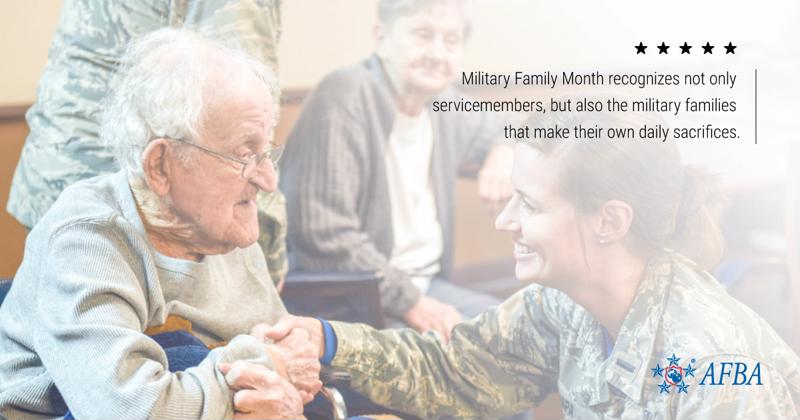
As the name implies, it is a time for recognizing not just those who have served, but also the military families that make their own daily sacrifices, which range from frequently moving to new cities to managing a household solo while a spouse is deployed.
If you belong to a military family, hopefully you have received additional support and gratitude during past Novembers. You may also be in a unique position where you are familiar with one or more military families that are going through a particularly stressful time. You likely know better than most what they are going through and what would best help them, but if you are looking for creative ways to show you care during this month, here are some ways to thank servicemembers and their loved ones during National Military Family Month:
Volunteer your time and energy
Know someone who has a packed schedule? Sacrifice some of your time so that they can have more of their own. Something as simple as babysitting kids so that a military mom has a night to herself can be huge. You could also get a bit more involved by cooking meals for harried military families, offering to handle errands like grocery shopping or taking care of the yardwork.
Plant an anonymous care package
Perhaps you want your goodwill gesture to pack more of a surprise. Military.com recommends leaving an anonymous care package on the doorstep of a military family, ringing the doorbell and fleeing before your largesse is discovered. Maybe you decide to fill your box with fun little gifts for every member of the family, or maybe you choose to pamper one parent in particular with little indulgences and a day pass to a relaxing spa or sauna. Either way, a random and anonymous present arriving out of the blue will show a military family know that their service is appreciated.
Join them in their own efforts to give back
Military families are very familiar with the concept of service, and as such, many have their own charitable passion projects. You can share their care by volunteering alongside them at whatever service organization they hold dear, whether it involves serving Thanksgiving dinner at a food pantry or helping to save lives at a Red Cross location. Helping out kills two birds with one stone, as you get to perform an act of service while also showing a military family that you care about their interests.
Make them aware of the many benefits available to military families
One easy but effective way to help out is simply to direct a military family towards the many benefits and services that are available to them. Operation Kid Comfort provides free photo transfer quilts to the children of deployed servicemen and women, the YMCA's military outreach program grants eligible military families free Y membership and companies like Sears and Home Depot offer significant discounts and gift cards to those who serve. Every military family should be able to take advantage of at least some of these benefits, so be sure to spread the word this season.
Showing your appreciation during Military Family Month doesn't require grand gestures. Something as small as providing an ear to bend or shoulder to lean on can mean more to someone than you may realize. And you can also feel free to perform such everyday acts of kindness throughout the year, and not just during Military Family Month in November.
If you’ve spent enough time in the military, you’re probably used to moving from one duty station to another—not to mention taking some extended trips overseas. But once you’ve moved on from your active duty military career and are finally getting to decide for yourself where to go, which location should you choose?
That’s the question a new report from Military Times attempted to answer. The magazine evaluated over 599 American cities based on: employment and population figures obtained from the 2016 Census; military installation locations documented in a Defense Department report; VA health and benefits information taken from the Veterans Affairs website; FBI crime reports; school ratings and area health data drawn from a variety of sources. After synthesizing all of that information, the publication came up with a list of the six best places for veterans to live.
 Colorado Springs, Colorado is one of six best places for veterans to live.
The best big cities for veterans
Among the 83 large cities—defined as those with populations exceeding 250,000—that were examined, there were three cited as particular standouts.
Taking the top spot was Colorado Springs, Colorado, which was also just named “the most desirable place to live” by a 2018 U.S. News and World Report. While U.S. News praised the city’s easy access to mountain hiking and nearby resort skiing, Military Times cited the over 10,000 servicemembers and 53,000 veterans living there, as well as the large number of veteran service organizations present.
The sunny waterfront town of Virginia Beach, where veterans make up 17 percent of the population and earn more on average than nonveterans, was next on the list. Rounding out the top three was San Antonio, the historic home of the Alamo and the current home of Joint Base San Antonio. Last year, the populous Texas city actually trademarked itself as “Military City USA.”
The best medium-sized cities for veterans
Service members who don’t love the overwhelming feel of big cities or the slower pace of life in small towns may feel “just right” in the best cities for veterans with populations of at least 100,000 but fewer than 250,000.
Two of the top cities sit across the river from Washington, D.C. – Alexandria and Arlington, Virginia. The former boasts an unemployment rate for veterans and civilians below the national average, while the latter owes its spot to the Pentagon, the Iwo Jima Memorial and a fantastic area health rating.
Another mid-sized highlight is Olathe, Kansas, where veteran growth has outpaced overall growth by 17 percent to 5 percent, driven in part by the convenience of 16 nearby VA health centers.
The best small cities for veterans
With a population of 95,000, Portsmouth, Virginia, may be a small city, but it is located next to the world’s largest naval base, Naval Station Norfolk. It’s also near 11 Veterans Affairs facilities and 10 military installations, and on average, former servicemembers make nearly double the salaries of nonveterans.
The Baltimore suburb of Glen Burnie, Maryland, is another diamond in the rough. The town of 69,500 boasts 26 VA health facilities within 25 miles, and although the unemployment rate is 7 percent higher than the national average, veterans make almost $20,000 more a year than nonveterans do.
New Braunfels, Texas, completes the list, thanks largely to having some of the best-rated schools around. With a population under 80,000, available housing, a good economy and small-town charm to spare, this is a great place to raise a family.
Whether you are looking to settle down in a sleepy little town, experience the bright lights of the big city, or do anything in between, there are plenty of great locales ideally suited to veterans excited to start living their life after the military.
In 2013, President Obama issued a proclamation officially recognizing November as Military Family Appreciation Month, marking it as a time to for the country to "celebrate the families who make daily sacrifices to keep our Nation whole."
Though it is far from the largest sacrifice they are asked to make, frequently having to relocate from one duty station to another can be a huge disruption in the lives of military families. Fortunately, there are cures for some of the headaches caused by moving.
If you move to a new location and your household goods aren't delivered on time, you can file an inconvenience claim with your transportation service provider (TSP) to get reimbursed for any out-of-pocket expenses you incurred while waiting for your stuff to show up. To ensure you're protected, though, it's essential to know which goods and services are eligible for coverage, and how you can file a claim.

What items are covered by inconvenience claims?
Inconvenience claims are simply a way to cover any personal expenditures you may have as a direct result of your TSP missing the required delivery date. That means if your bed hasn't shown up yet and you don't feel like subjecting your family to army cots, you can rent a bed or air mattress for the time being, and then submit your receipts to the TSP for a full refund.
Other types of rental furniture that can be covered by inconvenience claims include cribs, chairs, sofas, tables, appliances and one television per household.
Certain purchases are also covered. Any sheets, towels, paper plates, napkins, disposable cutlery or pots and pans you are forced to buy while waiting for your own stuff to arrive can be reimbursed, as long as you remember to save the receipts.
And if renting furniture and purchasing new cookware seems like too much of a hassle, you can potentially get your hotel bills and Chinese takeout paid for, as lodging and meals are also covered, provided they meet certain requirements.
What items aren't covered?
"The maximum liability for lodging and meal expenses cannot exceed the DoD's daily lodging and meal per diem rate."
According to the Department of Defense's official customer moving portal, items expressly excluded from inconvenience claims include groceries and meals if a customer is in a residence, cleaning supplies, toiletries and cosmetics, snacks, military attire and personal clothing, school supplies, toys and any alcohol or drugs. Also, while "laundry service" is covered, dry cleaning is not. And any expenses that occur before the delivery date or out of the local area are also ineligible.
Additionally, the DoD requires that all expenses claimed "must be reasonable," and be directly related to "a definite hardship" caused by the delay in delivery. So while lodging expenses would be covered, a stay in the Plaza Hotel's honeymoon suite would not be. Similarly, although any necessary furniture rental should be eligible for reimbursement, this is sadly not your chance to freely relax on a $5,000 Eames Lounge Chair and Ottoman. The same goes for any purchases, with the DoD specifically singling out Wal-Mart, Target and the Army and Air Force Exchange Service as "reasonable" retailers.
To put an even finer point on it, the maximum liability for lodging and meal expenses cannot exceed the daily lodging and meal per diem rate, which can be found at the DoD's Travel and Per Diem website. For families, per diems are also based on the number of dependents, and while spouses are expected to share one room in a hotel, children or other dependents may be able to get their own rooms. However, any additional rooms must be pre-approved and authorized in writing by the TSP.
How do you file an inconvenience claim?
Inconvenience claims are handled not by the Department of Defense, but by the transportation service provider that was awarded your shipment. As such, you need to file directly with the claim department of your moving company.
Make sure you know your actual moving company—because TSPs frequently subcontract things like pickup and delivery, it's not necessarily the name you see on the truck. TSPs will typically send you an email with contact information when the shipment is first awarded, so hold onto that info. And because inconvenience claims are not a standardized procedure, you'll need to reach out directly to your moving company to find out how to proceed.
Military Times also notes that the best point of contact for servicemembers with moving-related problems is the personal property/transportation management office at their installation. Contact the office at the current location if you have issues related to pickup and packing, and get in touch with the office at your new location if there are problems settling in.
Move.mil is also a great resource for claim forms and other information, and the military relief society can potentially assist individuals and families experiencing a financial strain.
Nothing can completely alleviate the stress that comes from moving, but understanding how inconvenience claims work can help provide some peace of mind during a turbulent time.
Valentine's Day is fast approaching. No doubt you've noticed all the heart decorations, fancy boxes of chocolate and displays of roses in practically every store. If you or your loved one is stationed overseas, however, this holiday is more bittersweet than romantic.
Luckily, there are ways you and your loved one can celebrate the holiday despite living so far apart. Here are five tips for celebrating Valentine's Day during deployment:

1. Create a handmade card for your loved one
Nothing says "I love you" more than the personal touch of something handmade. A crafted valentine will mean much more to your loved one than something bought from Target or Walgreens. Possible materials for your project include:
- Cardstock (much sturdier and sleeker than construction paper).
- A bone folder (for a crisp, professional-looking folded edge).
- An Xacto knife (makes cutting curves much easier).
- Stencils or a calligraphy pen (for crisp lettering).
Additionally, there are many online resources, including DIY and crafting blogs, to help you create a professional-looking valentine.
2. Hold an unboxing Skype session
If you and your sweetheart plan to send packages or gifts to each other, schedule a time to meet on Skype, FaceTime or another video conference platform. Save your presents for your virtual date, then open them in front of each other. This way, the two of you can share the magical moment of seeing a gift for the first time, in real time.
3. Host a Gal/Palentine's party for other military spouses
It may be next to impossible to get ahold of your loved one on February 14. In that case, spend time with your friends or associates who are in a similar situation. Host an outing or dinner for people whose loved ones are also deployed servicemembers. You can simply meet up at a bar after work or arrange an elaborate weekend potluck.
Though the mood of the event won't necessarily be romantic, it'll be a great chance for everyone to talk about their thoughts and feelings in regard to being apart from the person they love. Having a deployed spouse or significant other is a unique struggle, and it's good to express these feelings with people who truly understand.
4. Get active
Sometimes, Valentine's Day is the absolute last thing you want to think about. After all, you may tell yourself, what's the point of acknowledging the holiday if you can't be with the person you love?
If you feel this way, spend February 14 exploring a new or favorite physical activity. Sign up for a high-intensity workout like spinning, rebounding or weightlifting. Alternatively, you can take a relaxing walk around a local park. The goal here is to stave off a holiday-induced depression by getting your heart rate up and your endorphins flowing. Even just leaving the house can lift your spirits a bit.
5. Spend the holiday with your children
Valentine's Day isn't just about romantic love; it's also about family relationships. If you're a parent, spend today celebrating in the love of your children. Arrange a special treat for them – cupcakes, a trip to the movies, or a video conference with their deployed parent. Take them out to their favorite restaurant, buy them chocolates or let them stay up a bit past their bedtime.
At some point, you can have a conversation about the parent overseas. Kids often don't have the words to express their complex emotions, but talking with you can help them process what they're feeling.
Keeping love alive despite the distance
Being separated from a loved one is incredibly difficult, but there are still ways to keep your relationship healthy. Use any of these five tips to celebrate the year's most romantic holiday with your significant other, your friends or your children.