
Between 11 and 20 percent of the service members who participated in Operations Enduring Freedom and Iraqi Freedom suffer from post-traumatic stress disorder, according to the National Center for PTSD. These troubled service members cope with the disorder in a variety of ways. Some immerse themselves in the creative process or take their minds off painful memories by engaging in vigorous exercise. Others turn to four-legged companions for comfort.
In the months and years since service members started returning from conflicts in the Middle East, pet therapy organizations have sprung up across the country, helping combat veterans connect with service animals that offer support during the occasionally turbulent moments that can arise in life after service.
K9s For Warriors is one of these groups, Parade reported. Shari Duval founded the Ponte Vedra, Florida-based organization in March 2011 after learning that her son, a contract bomb dog handler for the Department of Defense, suffered from PTSD – the result of two tours in Iraq.
In the years since, K9s For Warriors has provided approximately 263 service dogs to veterans in need, including former Air Force officer LaWanna Viers. She, like many of her fellow service members, returned home from Iraq with PTSD. After months of anxiety and insomnia, Viers reached out to K9s For Warriors and was presented with a female bulldog-boxer mix named Corey. The effect was immediate.
"The day that I got [Corey], I felt this sense of calm come over me," Viers recalled in an interview with Parade. "When I saw her eyes, I knew everything was going to be OK."
Now, the 25-year Air Force veteran can enjoy carefree moments with her husband and children and navigate large crowds and tense situations, knowing Corey is prepared to act should she show signs of anxiety.
"She can tell when I am anxious or having a panic attack. She'll pull me to a quiet place and then block me from people," Viers explained.

Of course, canines like Corey aren't naturally equipped to shepherd their owners away from despair. These animals undergo extensive training and learn to pinpoint the emotional and physical cues that signal anxiety in humans. The trainers at K9s For Warriors work with veterans and their service animals for months to help cultivate deep bonds between them.
The organization hosts five participants at time, leading them and their assigned dogs through 120 hours of tailored training. Approximately 90 percent of the veterans who graduate the program return regularly to recertify their animals and brush up on new handling techniques.
At K9s For Warriors, most of the assigned canines are rescues. In fact, the group has saved more than 300 dogs since its launch in 2011.
Despite the obvious benefits of service dogs, most therapists believe they do little to treat individuals with PTSD, The New York Times reported. Most advise sufferers to continue therapy even after obtaining these animals.
Still, the Veterans Administration recommends them, especially for former service members who may need physical assistance. And, as long as veterans like Viers continue to see results, it will likely continue to do so.
Ivy League colleges are notoriously selective. The institutions in this illustrious group maintained a collective acceptance rate of just over 8 percent for the class of 2020, according to Business Insider. In four years, an estimated 23,129 Americans will depart elite Ivies with undergraduate degrees. Unfortunately, very few will of these graduates will be veterans, The Associated Press reported.
Currently, 117 former service members are enrolled in undergraduate courses at Brown University, Cornell University, Dartmouth College, Harvard University, the University of Pennsylvania, Princeton University and Yale University. Columbia University in New York is the outlier among its fellow Ivies, hosting hundreds of veterans in its School of General Studies, which was established in 1947 for the expressed purpose of educating the millions of service members who returned home after the conclusion of World War II.
Still, veterans are not well represented in these top-tier institutions, a fact that troubles many inside and outside the military community.
"If we deny veterans the opportunity to go to these schools, not only do we deny them the same opportunity that others have, but we don't give our future leaders a chance to meet them," Peter Kiernan, a Marine veteran studying at Columbia, told The AP. "They don't get a chance to learn what it was like on the ground in Afghanistan or what combat is really like. These are important lessons that make them better leaders."

This is an especially serious concern considering historical declines in enlistment, which have left American legislative bodies nearly devoid of veteran voices. Only 102 former service members fill the 535 seats in Congress, according to the Congressional Research Center. Next year, this number is expected to fall, matching a decades-long trend.
This not only leaves the millions of veterans in U.S. without representation in the halls of power but also threatens national security, as legislators with no military experience attempt to craft legislation that dictates use of force, here and abroad.
Internal organizations at Ivies across the country are attempting to address the issue of veteran enrollment. For instance, Undergraduate Veterans Association of Cornell University is working to change how school administrators, instructors and students see veterans.
"We're not a bunch of knuckle draggers, so to speak," said Seamus Murphy, founding president of the organization, told The AP. "We're very well-rounded adult learners, with a different experience than the average student. We can bring a lot to the classroom and we can bring a lot to the university."
Some elite institutions have recognized the problem and are working to develop solutions. In 2014, Dartmouth collaborated with the Posse Organization, a nonprofit that helps identify qualified yet unique students in need of support, to recruit gifted veterans with their sights set on Ivy League institutions.
Veterans already enrolled at such schools are offering assistance as well. Michael Zaskey, a former soldier and neuroscience major at Brown University, works with his admissions office to reach out to fellow service members in search of high-level educational opportunities.
"We're trying to get vets to think more about the Ivies and we're trying to get the Ivies to think more about vets," he told The AP.
The federal government has also aided in this effort. The Post-9/11 G.I. Bill, passed in 2007, initiated the Yellow Ribbon Program, which allows expensive private colleges such as Columbia to partner with the Department of Defense to fund classes for veterans, The New York Times reported. This has made Ivies more accessible for former service members in search of elite educations.
Still, top-tier colleges must work harder to connect with veterans so they can share their experiences with others and enrich the institutions they attend.
On Oct. 21, Michigan Sen. Gary Peters, a Democrat, distributed commemorative lapel pins to more than 100 Vietnam War veterans at the the U.S. Army TACOM Life Cycle Management Command headquarters in Detroit, the Detroit Free Press reported. The ceremony was the result of a national campaign to honor those who served in the conflict, which began in 1955 and lasted until April 30, 1975 when Saigon, the former capital of South Vietnam, fell to North Vietnamese forces.
“You have all made great sacrifices on behalf of your country,” Peters told attendees during the ceremony. “Your country is sincerely grateful for all you did.”
Over 58,000 American service members died in the war, according to data from the National Archives. The millions of survivors who poured back into the U.S. as the conflict came to close – many suffering from serious physical and psychological wounds – were not welcomed with open arms. By 1969, only 39 percent of Americans supported the country’s involvement in Vietnam, The New York Times reported. This meant many returning veterans faced outright hostility from war-weary civilians.
“There are more than 6.2 million Vietnam veterans in the U.S.”
“The Vietnam veterans were really not welcomed home. They were spat upon, called baby-killers,” Bruce Campbell, a Navy veteran who served during the Vietnam War and received a pin at the Oct. 21 ceremony, told the Detroit Free Press. “Many Vietnam veterans just clammed up. For 20-30 years, Vietnam veterans simply kept to themselves, kept the hurt.”
However, in recent years, government agencies and nonprofit groups have worked to bring these service members out of the shadows and thank them for their sacrifice. On May 25, 2012, President Obama issued a presidential proclamation that established a long-term national campaign to honor veterans of the Vietnam War. The Department of Veterans Affairs kicked off the initiative on Memorial Day that year, over 50 years after the last U.S. military personnel departed from Saigon. It is scheduled to continue through Nov. 11, 2025.
The campaign has inspired thousands of events across the country, including Peters’ Oct. 21 ceremony. As he passed out pins, the senator took time to meet with the attendees, praising them for their service and highlighting the many things Vietnam veterans have done to help their fellow service members. Peters specifically discussed how many had gone on to start key veteran advocacy organizations and bring to light essential issues such as the prevalence of post-traumatic stress disorder among those who have experience combat.
Earlier this month, the Michigan lawmaker tackled this very issue, co-sponsoring the No Veterans Crisis Line Call Should Go Unanswered Act, which would earmark federal funds for improving the VA’s troubled Veterans Crisis Line.
Today, there are more than 6.2 million Vietnam veterans in the U.S., according to the Census Bureau. Michigan is home to just over 242,000, the National Center for Veterans Analysis and Statistics found.
In the aftermath of Hurricane Matthew, the Category 5 storm that last month wrought havoc across the Western Atlantic, a number of disaster relief organizations mobilized to assist those affected. Along with the American Red Cross and others, one battle-tested veterans group has also entered the fray, CNBC reported.
Last week, members of Team Rubicon, an international nonprofit dedicated to helping in times of crisis, deployed rapid response personnel to Haiti to assist with on-the-ground rebuilding efforts. Those familiar with the growing organization know this isn't its first encounter with disaster or the impoverished nation of Haiti. In fact, the country was the impetus for the establishment of Team Rubicon.

In January 2010, Marine veteran and Team Rubicon CEO Jake Woods watched as a massive 7.0 magnitude earthquake rocked Haiti. Woods sprung into action almost immediately, penning a Facebook post expressing his intention to travel to the island to help, CNN reported. He bookended his message with challenge to fellow service members: "Who's in?"
His friend William McNulty, also a Marine veteran, answered the call, along with more than 60 other volunteers. Within weeks of the disaster, Wood, McNulty and a team of discharged military personnel were in Haiti constructing hospital tents and transporting injured residents to nearby hospitals.
"We realized we were more effective than many organizations that were down there with us," Wood told the news organization. "We also realized that most organizations weren't engaging vets on their own. So we said, 'Let's try to improve this.'"
After returning from Haiti, Wood, an aspiring business student, went to work legitimizing the organization, sourcing more volunteers and looking for new missions. Team Rubicon personnel soon found work in Burma, Chile, Pakistan and South Sudan, The New York Times reported. The nonprofit also lent a hand after tornadoes devastated Joplin, Missouri in 2011 and Hurricane Sandy invaded New Jersey and New York a year later.
Now, Team Rubicon boasts over 40,000 volunteers and operates an international division based in the U.K. Approximately 80 percent of its members are veterans, most of whom benefit personally from the work. The organization has proved vital for former military personnel searching for a renewed sense of purpose in life after service.
"We're giving them a reason to come together … and that community lasts long after the mission," Wood explained in an interview with CNN. "Right now, Team Rubicon is focused on how we can … get them involved in as many ways as possible."
In the coming years, Team Rubicon will work to add new members to its ranks and offer more domestic disaster relief services. The organization is looking to raise $10 million by the end of 2016, most of which will go toward meeting these goals.
Wood expects Team Rubicon volunteers to pour into Haiti over the next week and assist anywhere they are needed.
The Wisconsin Department of Veterans Affairs has introduced a new program to address rising suicide rates among former military personnel, the Associated Press reported. With the measure – called the Zero Veteran Suicide Initiative – state officials hope to equip the families and friends of discharged service members with the education and resources they need to help loved ones deal with combat-related psychological problems.
WDVA Secretary John Scocos announced the program October 14 at the WDVA Mental Health Summit and Veterans Stakeholders Symposium in Milwaukee, according to a news release.
"Experts in the field believe suicide is a disease that is preventable," Scocos explained. "It makes sense to step up suicide prevention efforts for veterans, in particular. This includes training non-medical people to recognize signs of suicide, how to persuade veterans to seek help and then where to refer a veteran for assistance."
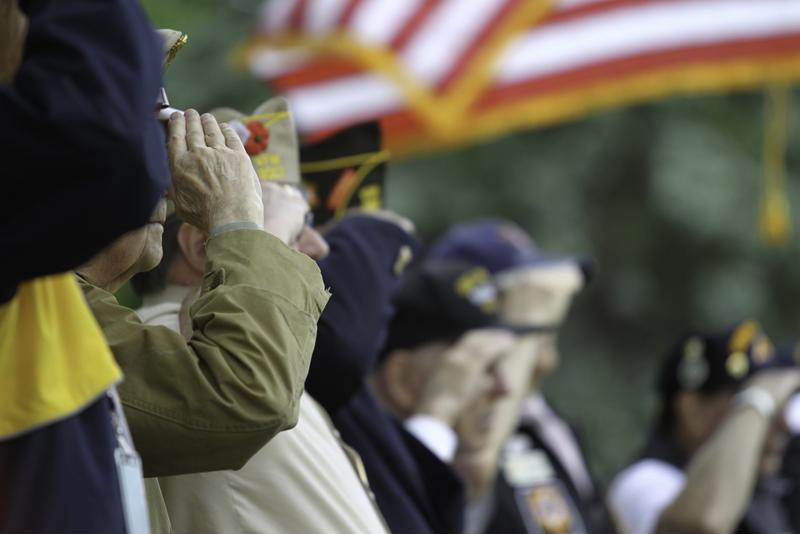
Veteran suicide rates have risen drastically over the past 15 years, The New York Times reported. Since 2001, the suicide rate for former service members with access to VA resources has risen by 8.8 percent, according to recent research from the Department of Veterans Affairs. Over the same span, the suicide rate for those without access to the VA has increased by more than 32 percent. In total, veterans account for roughly 18 percent of all reported suicides in the U.S.
The VA compiled this data, released in July, using records for over 55 million veterans.
The agency and affiliated state organizations have attempted to address the issue by introducing new treatments for post-traumatic stress disorder and the other psychological disorders that often lead former service members to take their own lives. While some of these new techniques are effective, many veterans – especially those who served in particularly intense combat zones – have turned to family, friends and fellow military personnel for support.
The Zero Veteran Suicide Initiative builds off this strategy, offering participants the opportunity to learn therapeutic skills that are useful in moments in crisis. The WDVA provides this training through the QPR Institute, an independent training organization that promotes a suicide prevention technique called Question, Persuade and Refer. With this approach, an individual party to a veteran in crisis can offer immediate, impactful assistance.
However, QPR is not a counseling or long-term treatment technique. The institute advises those administering QPR to contact medical professionals soon after offering help.
Currently, about 413,000 veterans live in Wisconsin. Unfortunately, this group accounts for 17 percent of all suicides in the state. Scocos and his colleagues at the WDVA believe the Zero Veteran Suicide Initiative will help reduce this number.
"Veterans who have served our country deserve the best of care, including counseling or treatment for those who are considering ending their own lives," He concluded at the event in Milwaukee. "This initiative will help us to train individuals to identify veterans who may be contemplating suicide. Our goal is to completely prevent the terrible tragedy that is suicide."
Sens. Gary Peters, D-M.I., and John Thune, R-S.C., have introduced new legislation meant to improve the Veterans Crisis Hotline, according to a news release. The bill – officially called the No Veterans Crisis Line Call Should Go Unanswered Act – would require the Department of Veterans Affairs to develop a strategy to improve its 24-hour hotline and staff enough personnel to ensure that every veteran who uses the service can speak with a trained human operator.
"Our veterans put their lives on the line in service to our country, and they should never have a call for help go unanswered," Peters said in the release. "When an estimated 22 veterans commit suicide every day, the Veterans Crisis Line can be a critical, lifesaving tool for veterans in crisis. I'm proud to cosponsor this bipartisan legislation that will help ensure the Veterans Crisis Line has the staff and resources to assist every veteran who reaches out for support."
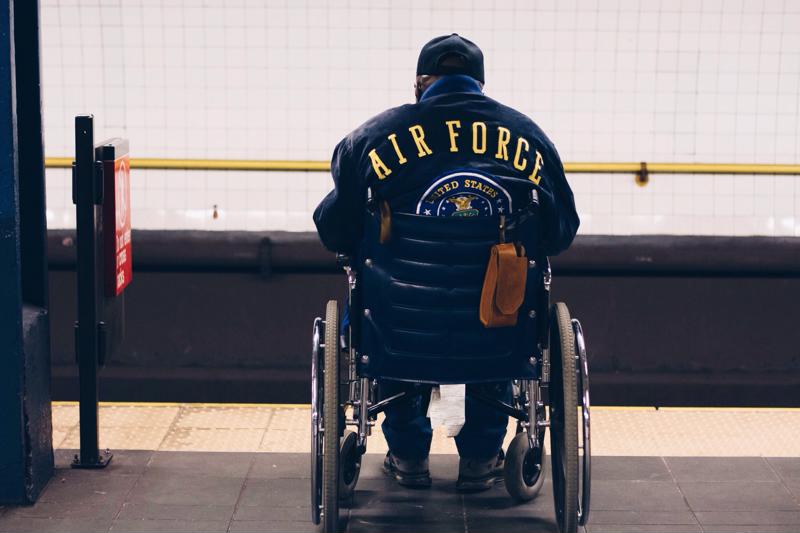
The VA launched the Veterans Crisis Hotline in 2007. In the years since, more than 2.5 million former service members have called, instant messaged or texted the staffers who work the line. However, the service has recently come under fire from watchdog and veterans groups.
Last year, investigators from the VA Office of Inspector General Office of Healthcare Inspections discovered that calls made to the hotline went to voicemail, Military Times reported. Further inquiries revealed that officials managing the hotline were outsourcing its activities to untrained contractors during peak times, resulting in inadequate service. At least 24 veterans were directly impacted.
In February, the OIG offered a number of recommendations for improving the hotline, including:
- Hiring more staff to handle higher call volumes.
- Instituting more effective call-tracking processes.
- Establishing quality assurance programs for contractors.
Officials agreed to implement these changes by September 30. The VA also rearranged its organizational hierarchy to fit the hotline under its Member Services division, which manages interactions between veterans and agency programs, and named Gregory Hughes director.
Ultimately, these changes achieved little. By May, contractors were still handling more than 35 percent of calls. And major internal issues had boiled over, with some staff simply neglecting their posts.
"We have some truly outstanding staff here who are very committed to their positions. These staff are routinely handling 15 to 20 calls daily and the quality of their calls [is] excellent," Hughes wrote in an email. "We have other staff that are taking 1-5 calls a day and this cannot continue … what we have seen is that there are staff who spend very little time on the phone or engaged in assigned productive activity."
Hughes resigned his post in June.
With this latest legislation, Peters and Thune hope to tackle the problems plaguing the Veterans Crisis Hotline in a meaningful way. However, even if the bill ultimately passes, an uphill battle lies ahead. Call volumes continue to increase every year, requiring more financial resources and staff. Today, the hotline receives 50 times the number of calls it did in 2007, the Associated Press reported.
Last month, President Obama signed into law legislation giving the Department of Veterans Affairs permission to cover in vitro fertilization treatments and the cost of adoption for former service members with combat-related fertility issues, The Washington Post reported.
"Our goal is to restore, to the greatest extent possible, the physical and mental capabilities of veterans with service-connected injuries. The provision of assisted reproductive technologies would do that," Walinda West, spokesperson for the VA, said in a statement to the newspaper. "It is important that we fully understand the needs of our veteran population, and fully incorporate the major scientific advances available today that can allow them to live a full life."
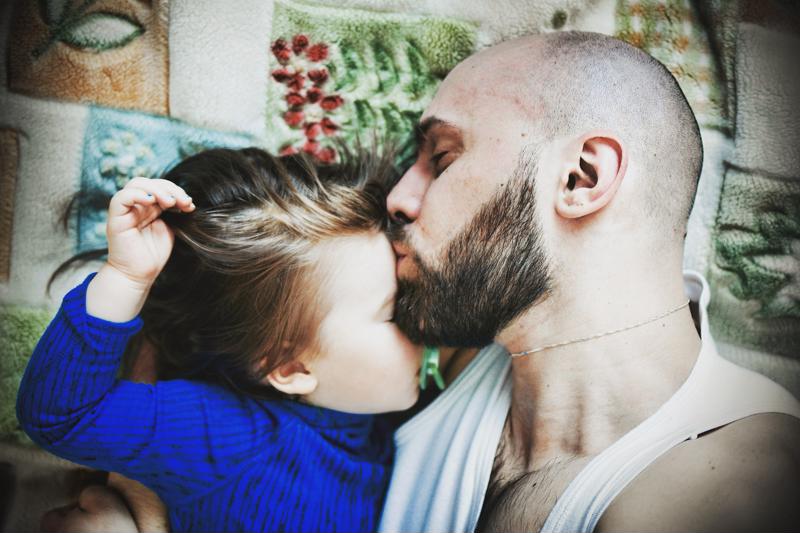
The Veterans Health Care Act, passed in 1992, prohibited the agency from covering IVF treatments, according to NPR. Proponents of the ban argued these procedures often involved the destruction of viable human embryos and therefore should not be paid for with federal funds.
In the years since, veterans with fertility issues have been forced to foot the bill for their own IVF procedures, which cost as much as $12,000 per cycle. Additionally, military families usually pay for multiple cycles, as most women must undergo several treatments before fertilization takes place, The Wall Street Journal reported.
Clinics offer discounts but, for most former service members, this simply isn't enough, leading many to give up on dreams of having children.
Army veteran Matt Keil and his wife Tracy nearly joined this group. In 2007, Keil was wounded in Iraq. A round from a sniper traveled through the his right shoulder and nicked his spine, leaving him paralyzed from the neck down. One year later, the couple decided they wanted to have children and needed IVF treatments to make it happen. They soon discovered that the VA could not cover the procedure.
"This is a direct result of a combat injury," Tracy Keil explained in an interview with NPR. "Don't tell me that his service wasn't good enough for us to have a chance at a family. Because we've already lost so much. I just want to have a family with the man that I love and please don't make this any worse than it already has to be."
Eventually, a local VFW branch located near their home in Parker, Colorado stepped in and helped raise money needed to cover the procedure. In November 2010, the couple welcomed twins.
Unfortunately, many veterans of the wars in Afghanistan and Iraq aren't so lucky. As of February 2016, an estimated 1,400 service members have returned home with injuries to their reproductive organs. An even larger number have come home with severe spinal injuries like Keil's. The Veterans Health Care Act essentially prevents many of these veterans from starting families.
The new law will hopefully give service members suffering from fertility issues the opportunity to have children. However, there are still roadblocks ahead. Though both houses of Congress passed the bill, it did not receive permanent funding. Additionally, the legislation does not actually repeal the Veterans Health Care Act. It only provides the VA with a workaround that allows it to earmark existing funds for IVF treatments and adoption services.
Proponents must still find long-term funding and ultimately remove the ban.
Veterans have to deal with unique physical and mental stresses as a consequence of their demanding roles. The extent of the issue becomes more obvious with the release of every study on health and the military. That said, knowing about these problems is much better than letting them go unseen, and thus the wave of disclosures and increased focus on detection and prevention is a welcome development.
According to HealthDay News, one of the prominent challenges facing service members is troubled sleep. A good night's rest is vital to maintain overall well-being, but that can be an unreachable goal for some veterans, at least without treatment. As with all recurring issues affecting military personnel, the quality of their sleep is worth continued focus.
New report highlights sleep issues
The news service reported that the American Academy of Sleep Medicine carried out the study. The research covered 11 years, and the many veterans receiving health care from the Veterans Health Administration were the subjects. Over 9.7 million cases were studied, leaving the researchers with a huge pool of data. They concluded that veterans are six times more likely than members of the population at large to possess sleep disorders.
While the survey did not stipulate that post-traumatic stress disorder contributes to sleep problems, HealthDay reported that the researchers did find disorders were far more common among veterans afflicted with this condition.
"Veterans with PTSD had a very high sleep disorder prevalence of 16 percent, the highest among the various health conditions or other population characteristics that we examined," said James Burch, author of the study, according to the news provider.

The breakdown of disorders observed showed that there is no one sleep problem afflicting veterans. Instead, they can expect to face everything from insomnia to sleep apnea. HealthDay explained that chronic conditions not tied to sleep do tend to coincide with increased sleeping problems. The researchers stated that based on what they observed during the study period, veterans' sleep should be more carefully managed.
Mental health programs increasing
The suggestion that physical problems such as sleep disorders are tied to mental health outcomes puts more importance than ever on efforts to help veterans suffering from the effects of stress and trauma. Fortunately, many across the country are launching programs to do just this. Texas lawmakers Jose Rodriguez, Joe Moody and Cesar Blanco recently penned an El Paso Times column explaining their state's recent initiative to set up a center that will assist the service member community. It could serve as a model for similar project in other states.
The authors noted that the Texas Veterans + Family Alliance will now respond to mental health issues with the support of members of local communities. One of the program's signature features is a course that will equip veterans and their family members with mental health first aid, procedures that can help when conditions become unbearable. The training centers on issues that veterans frequently deal with, meaning that it will be highly relevant to the types of situations many service members encounter. Such training may create a more hospitable environment when military personnel come home.
It's always heartening when protection and support for active duty service members and veterans are added to state and federal laws. These regulations show that lawmakers are aware of the issues that affect today's military personnel and are doing something to help.
The challenges that come with serving and coming home from active duty are well known and documented, and this means there is plenty of scope to take action and step up aid at both state and national levels. The United States prides itself on being a country that looks after its veterans and current military members, and a few recent laws should help it live up to that promise.
Two new bills in Massachusetts
As the Eagle-Tribune recently reported, Massachusetts has recently passed not one, but two laws designed to help with everyday needs faced by military members in the state. The first piece of legislation eliminates state excise tax on vehicles. The bill was sponsored by state Representative Diana DiZoglio, who heard from a constituent that when military members are on active duty, their vehicles rack up high tax bills back home. Creating the new exception allows a little more financial peace of mind for service personnel.
The news provider reported the bill has now become a law after getting the approval of Governor Charlie Baker, and applies to members of the military deployed outside of Massachusetts over a period of six months or more. The fact that the new law deals with a single tax shows that it was conceived and passed with a specific problem in mind.

As for the second new military-focused bill, the Eagle-Tribune explained it is a wide-ranging bill seeking better conditions for veterans. It will achieve this end by authorizing the creation of a commission. The new body is meant to investigate pressing matters for returning service personnel, such as the risks of suffering from depression, anxiety or post-traumatic stress disorder. Broader topic areas to be addressed by the committee include the transition process from active duty soldier to civilian, with all the challenges that entails.
Medical records fees waived in Rhode Island
Rhode Island newspaper The Breeze recently explained that the state has just passed its own piece of practical, veteran-friendly legislation. The Rhode Island bill is designed to ensure that veterans applying for benefits do not need to pay money to access their medical records. One of the bill's sponsors, state Senator Donna Nesselbush, explained that the law is meant to create a clear pathway to benefits, a much-needed consideration when individuals return home with pressing medical needs.
The news provider laid out the fees covered by the law, including processing, retrieval and copying fees as well as postage. Language in the legislation also insists that agencies process requests quickly – within 30 days of submission. This is yet another bill that has a narrow scope but could be a huge help for the many veterans returning to their communities and applying for valuable medical services that can improve their quality of life.
Returning from active duty in the armed forces is a major transition, and veterans will have to take stock and decide what to do next. This might involve going back to school and receiving either a bachelor's or advanced degree – which could be a ticket to better employment and drastically improved quality of life.
Of course, getting back into the education pipeline is not automatic – in some cases, it's not even easy. This is why it's fortunate that some schools and programs have begun taking up the slack, making special efforts to get veterans involved, helping them on the way to valuable degrees.
Grant for veteran center in Illinois
The Northwest Herald highlighted one example of a program on campus meant to help veterans perform the day-to-day tasks they must handle to secure an education. At McHenry County College, the campus veteran center sees 300 visits a month by students who have served in the military. Now, the building is set for a major upgrade, after a Veterans Center Initiative Award, initiated by the Home Depot Foundation and Student Veterans of America.
The money will improve a campus amenity that provides vital services for the veterans who attend MCC, with the news provider explaining that the center is used for registration aid, mentoring, housing help and preparing Veterans Assistance Commission claims. Both the existence of this space and the focus on its improvement could serve as positive examples at other schools that attract significant numbers of former military personnel as students.
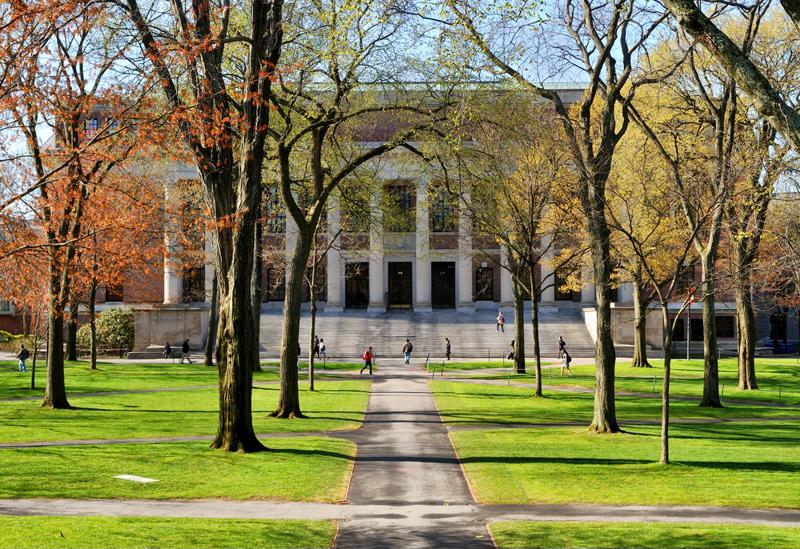
The Northwest Herald also shared some facts regarding why it's so important to prioritize veteran education, namely that returning combat personnel between the ages of 19 and 34 can use secondary education to re-integrate into civilian life. If individuals return from the military but receive no support afterwards, the journey from solider to community member could be difficult to navigate. Schools with dedicated programs and spaces to accommodate veteran needs ease that process.
Representative on campus in Michigan
The above example focused on a physical space where veterans can get help with their unique questions and needs. Another recent report, this one from Michigan's The Oakland Press, involves a person who works with people to ensure service members succeed as students. The news provider specified that Oakland University, in Oakland, Michigan, will now have a veteran resource representative on campus as a full-time employee. The representative's daily tasks include liaising with Student Veterans of America and meeting individually with veteran students.
The Oakland Press also explained that the new role will be an advocate for military-affiliated pupils, whether dealing with the school or the community at large. Having someone there to create positive connections between veterans and the civilian organizations around them could make the transition from military to home front life easier.
The news provider specified that OU is currently host to over 300 veteran students, meaning having a dedicated official is a relevant choice. Some of the support for the new hire comes from an outside program – the Michigan Veterans Education Initiative. Such organizations are helping colleges become havens for veterans as they learn new skills.