
A push to extend more health benefits to "Blue Water" Navy veterans of the Vietnam War appears to be gaining momentum.
Members of the House recently voted to make permanent a court ruling that grants benefits to roughly 90,000 sailors who claim to have been exposed to Agent Orange in Vietnam, advancing the legislation to the Senate and encouraging advocates who have long fought for these protections.
Blue Water Navy Vietnam Veterans Act would alter VA policy
The infamous Agent Orange is an herbicide that was widely used as part of the U.S. military's "Operation Ranch Hand," which lasted from 1962 until 1971. The operation's objective was to spray chemicals that would deprive the Viet Cong of food and vegetation cover, but the toxicity of the herbicide had the unintended consequence of causing significant health problems for the many individuals who were exposed to it.
It is the Department of Veterans Affairs' current position that the vets who served on open sea ships off the shores of Vietnam, often referred to as "Blue Water Veterans," were not exposed to Agent Orange since they never set foot on the Indochina Peninsula. As a result, the VA requires that these Blue Water veterans "show on a factual basis" that they were actually exposed to herbicides during their military service in order to receive disability compensation for diseases related to Agent Orange.
However, veterans advocates have long maintained that the burden of proof should not be on those who served, and many lawmakers are inclined to agree.
"I've no way to prove where I walked 40 years ago," said ranking Veterans Affairs Committee member Rep. Phil Roe, R-Tenn., who served near the Korean demilitarized zone.
This proposed legislative fix was primarily triggered by a January Federal Circuit decision in the case of Procopio v. Wilkie, which ruled that Blue Water veterans were, in fact, entitled to a presumption of benefits under the Agent Orange Act of 1991, vindicating former sailors who fought for years to challenge the VA's decision to limit the presumption standard only to those soldiers who had "boots on the ground." It appears unlikely that the VA will challenge the court's decision, according to Bloomberg Government, which is why some in Congress are pushing to officially codify and fund the expansion of benefits.
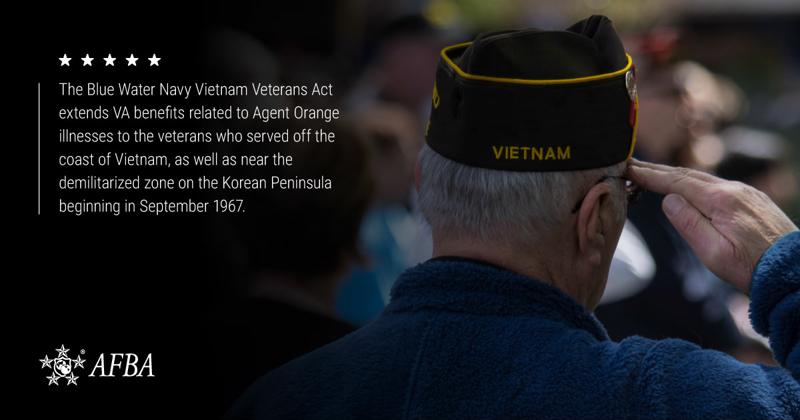
On May 14, 2019, House members voted to pass the Blue Water Navy Vietnam Veterans Act, which extends access to VA benefits related to Agent Orange illnesses to the sailors who served off the coast of Vietnam, as well as veterans who served near the demilitarized zone on the Korean Peninsula beginning in September 1967. If passed, the bill would also require the VA to identify American military bases in Thailand where Agent Orange was used.
House Veterans Affairs Committee chairman Rep. Mark Takano and Rep. Roe have said that they have included a funding plan that will cover the cost of extending new benefits to veterans for the treatment of Agent Orange illnesses.
"Congress has failed our Blue Water Navy veterans – plain and simple," said Rep. Mark Takano. "It was unjust then and it is unjust now. But today we have an opportunity to right this wrong. Congress didn't find the resolve to act until 1991 and it left out key groups exposed to agent orange… effectively denying their suffering that was a direct result of their service. This bill is the quickest and surest way to deliver benefits to these veterans."
Supporters in the House are now asking their colleagues in the Senate to take up and pass the legislation, as are veteran advocates who are also championing the bill.
"For decades, tens of thousands of veterans, their families and survivors have been denied their earned benefits," leaders of veterans service organizations wrote in a letter to Takano and Roe, according to ConnectingVets.com. "While it is long past due, it is time that we correct the injustice done to Blue Water Navy veterans and provide protection of the Procopio decision by passing H.R. 299."

In 1999, the late Senator John McCain, himself a former naval pilot and prisoner of war in Vietnam, introduced legislation to designate the month of May as National Military Appreciation Month. Each and every year for the past two decades, the Senate and House of Representatives have adopted resolutions urging the President to issue a proclamation that calls on the people of the United States to recognize and honor U.S. service members as "an act of national unity."
There are a variety of ways for ordinary Americans to heed this call and pay tribute to the brave men and women who serve our country at home and abroad. From recognizing the many national days of observance that take place throughout the month, to performing individual acts of kindness for service members, here are some of the best ways to demonstrate your gratitude this National Military Appreciation Month.
National observances during National Military Appreciation Month
NMAM kicks off each year on May 1 with Loyalty Day, a special day set aside "for the reaffirmation of loyalty to the United States and for the recognition of the heritage of American freedom." First celebrated in 1921, Loyalty Day was made an official recurring holiday by Congress in 1958, and has been recognized with an official proclamation every year by every president since Dwight Eisenhower.
Every May also presents the opportunity to commemorate Victory in Europe Day, which occurred on May 8, 1945, and represented the end of World War II in Europe. This year, VE Day will fall on Wednesday, May 8, and will mark the 74th anniversary of Germany's unconditional surrender to America and the allied forces.
VE Day is shortly followed by Military Spouse Appreciation Day, which traditionally occurs on the Friday before Mother's Day. On May 10, 2019, Americans will honor military spouses with appropriate ceremonies and activities, and recognize the crucial part that military families have to play in strengthening our Armed Forces.
Celebrated the third Saturday in May every year, and this year on May 18, Armed Forces Day is a time reserved for citizens to come together and thank our military members for their service. This holiday celebrates every member of every branch of the U.S. military: the Army, Navy, Air Force, Marines and Coast Guard.
The last Monday of May is reserved for Memorial Day, a federal holiday meant to commemorate the men and women who died while in military service. This year, Memorial Day falls on May 27, 2019, and events are scheduled to take place throughout the country, with military parades happening in many cities and towns.
How to demonstrate your gratitude this May
There are many individual gestures you can make during NMAM, either in conjunction with one of the individual national observances, or simply as a random act of gratitude.
If there is a specific service member or military family in your life, you can let them know you appreciate their sacrifices with a gift, a thank you card or simply by taking the time to tell them. Offering to cook dinner for a military family or handle their chores on Military Spouse Appreciation Day is a good way to show you care. Similarly, calling and thanking a service member on May 18 is a great way to truly celebrate Armed Forces Day.
If you would like to reach out to service members you are not personally acquainted with, remember that a care package is always welcome. Operation Support Our Troops America has a program that ships boxes full of comfort items to men and women serving abroad, and you can find ways to donate, volunteer or join the mission on their website.
You can also do it on your own. The U.S. Postal Service offers a free "Military Care Kit" with all of the necessary supplies for sending packages overseas, including boxes, packing tape and customs forms. Get your free kit shipped to you by visiting the USPS website.
The brave men and women of the U.S. Armed Forces protect our nation day in and day out, and are deserving of our respect and thanks all year long. But National Military Appreciation Month should inspire us to make a special effort to show our appreciation and display conspicuous acts of gratitude.
Members of the U.S. Armed Forces bravely put their lives on the line for their country, regularly putting themselves at risk of both physical and mental injuries that can create lifelong scars. Some of these occupational hazards are obvious, while others are lesser known and cry out for more attention.
A 2016 United Health Foundation survey of one million veterans and civilians found that the former group was more likely than the latter to contract arthritis (25 percent for vets compared to 23 percent for civilians), cardiovascular disease (10 percent versus 7 percent), cancers (11 percent versus 10 percent) and illnesses that leave them functionally impaired (26 percent versus 21 percent).
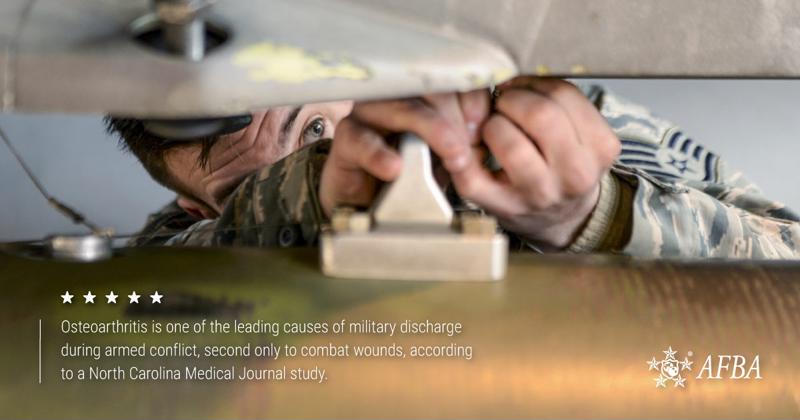
Along those same lines, a North Carolina Medical Journal study concluded that osteoarthritis is one of the leading causes of military discharge during armed conflict, second only to combat wounds.
With more active-duty personnel and veterans developing arthritis as a result of their service, advocates are now asking Congress to increase funding for more research into potential methods for combating the disease.
ACR lobbying CDMRP to designate arthritis a research subject
In total, arthritis encompasses more than 100 diseases, including both degenerative and inflammatory varieties. The inflammatory forms typically involve immune-system disorders like lupus or rheumatoid arthritis.
Considering the types of physical activity mandated by military life, no one should be too surprised by the sheer prevalence of the disease among those who serve. The most susceptible service members are those who suffer knee injuries while deployed, with one recent study showing that one in five military members with a knee injury develop radiographic arthritis before the age of 30, cutting short the careers of many heroes still in the prime of their life.
"[Young veterans with arthritis] will be looking at a knee replacement in their early 40s versus a peer in the civilian world that may not have been subjected to a mechanical injury getting a knee replacement in their 60s or 70s," Dr. Colin Edgerton, chair of the American College of Rheumatology's Committee on Rheumatological Care, told the Military Times.
A former Army rheumatologist, Dr. Edgerton spent his time in the military treating soldiers with musculoskeletal disorders and, as part of his duties, had to judge whether those with arthritis needed to be medically discharged. Witnessing first-hand the impact the disease had on service members' lives and careers turned Dr. Edgerton into a fierce advocate for arthritis prevention.
"It's about stopping those injuries before they occur so that that person is not looking at early joint replacement surgery and disability at a point in life where they otherwise would not have had that," he said.
Dr. Edgerton and the American College of Rheumatology are hoping legislators will fund research that may uncover new methods of prevention and treatment. More specifically, they're hoping to have arthritis listed as a "line item" in the Congressionally Directed Medical Research Programs budget for fiscal-year 2020, which would mark the disease as a research subject worthy of sharper focus and increased funding.
"If there was a dedicated line in that research budget for arthritis, that would go a long way toward establishing kind of a sustainable focus on arthritis, since it is such a high-impact disease in the military population," Dr. Edgerton stressed.
Arthritis was previously listed as an area of interest in the Army's 2018 Medical Research and Material Command program, but only received roughly $6 million in research funding. By contrast, in 2019 the CDMRP allocated $130 million for breast cancer research.
Though the Congressional Arthritis Caucus made a failed attempt to have the disease included as a line item in the 2019 CDMRP, Dr. Edgerton hopes 2020 will be the year Congress finally funds research into this career-killing and life-altering ailment.
"Just three years ago we kind of recognized that this is something that needed to be done and each year we … get more support," he noted optimistically. "So we hope this is the year that we actually get it done."
April is designated the Month of the Military Child, a time for recognizing and paying tribute to the youngest soldiers fighting the war at home. Though the sacrifices of military members and their families are always worth valorizing, this month is set aside for focusing specifically on the experiences of the dependent children of military members serving at home and overseas.
Whether living the life of a "military brat" and bouncing from town to town or country to country, or having to live without a deployed parent for months at a time, military children have unique and often trying experiences that their civilian counterparts likely could never relate to.
Month of the Military Child 2019 is sponsored by the Department of Defense Military Community and Family Policy and supported by many other organizations, including the Department of Defense Education Activity.
Celebrate Purple Up! For Military Kids Day
Each April, DoDEA communities around the world celebrate the Month of the Military Child with Purple Up! For Military Kids Day, in which participants wear purple to show their support and appreciation of military children. The symbolism of that color is meant to convey that all branches of the military are supported, as it combines Air Force blue, Army green, Navy blue, Marine red and Coast Guard blue into a purple shade.
According to the agency's website, this year's Purple Up! celebrations will take place from April 8 through 12 at DoDEA Americas schools, and on April 17 at DoDEA Europe and Pacific schools.
You can celebrate Purple Up! in your own community by, of course, wearing purple, but also by encouraging others to participate, as well. Ask schools and teachers to recognize the event, and see if you can get local businesses and officials to wear purple, as well.
Other Month of the Military Child 2019 events in April
Like many similar celebrations that focus on military recognition, the Month Of The Military Child tends to be observed within military communities, often with parades, fairs, seminars and special events. There are, however, some communities, schools and organizations outside of military bases that participate as well.
Some military-related private organizations use April as an opportunity to tout some of their year-round programs. The Military Child Education Coalition, for example, will emphasize its stated goal of ensuring "inclusive, quality educational opportunities for all military-connected children affected by mobility, transition, deployments and family separation."
The group offers student-led "Student 2 Student" programs, as well as a "Parent To Parent" version year-round, and during the month of April, provides Month Of The Military Child downloadable toolkits and other resources.
Throughout the month, there are also the usual military base-level events, ceremonies, contests and special nights celebrating military families and their children. Because so many of these events are sponsored by military communities, those looking for ways to get involved in the celebrations should search for events with the base Public Affairs office, Military Family Readiness Centers, Department of Defense Dependent School admin offices and on-base Child Development Centers. The Military Times also recommends checking for activities listed at Morale Welfare and Recreation Centers in military installations both at home and abroad.
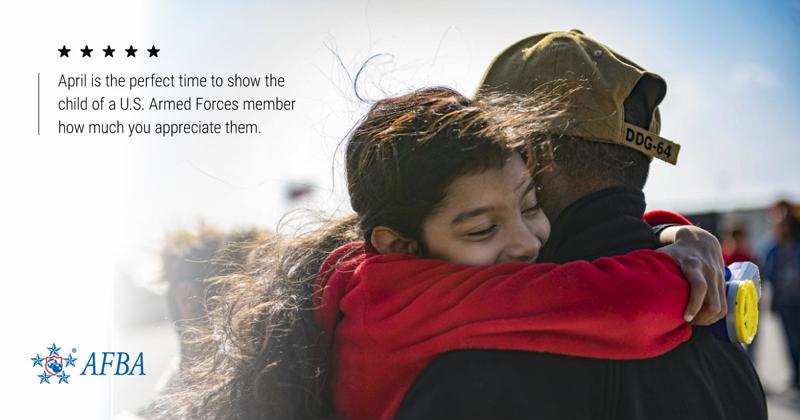
Whether you simply "purple up" your wardrobe, participate in a celebratory event or do something special for the military child in your life, this month is the perfect time to show the son or daughter of a U.S. Armed Forces member how much you appreciate them.
In 2011, the U.S. Department of Veterans Affairs surveyed U.S. veterans and found that a third of them were interested in childcare services, and more than one in ten said they had canceled or rescheduled at least one VA appointment due to lack of childcare. In response, the VA initiated a pilot program that set up three child care centers with free drop-in services for veterans with children.
Because the pilot was set to expire after one year, Congress had to reauthorize it four times since it first launched. However, it now appears likely that the program will finally become permanent, after the U.S. House of Representatives recently passed legislation that would provide free child care for certain veterans at VA facilities nationwide.
Bill would help veterans with issues requiring intensive and recurring treatment
The Veterans' Access to Child Care Act, H.R. 840, would provide free child care to veterans who are seeking help from the VA for certain intensive and recurring medical and mental health care issues, such as treatment for cancer or therapy for post-traumatic stress disorder. The law would expand and make permanent the 2011 pilot program, which has grown from three to five locations in the last few years.
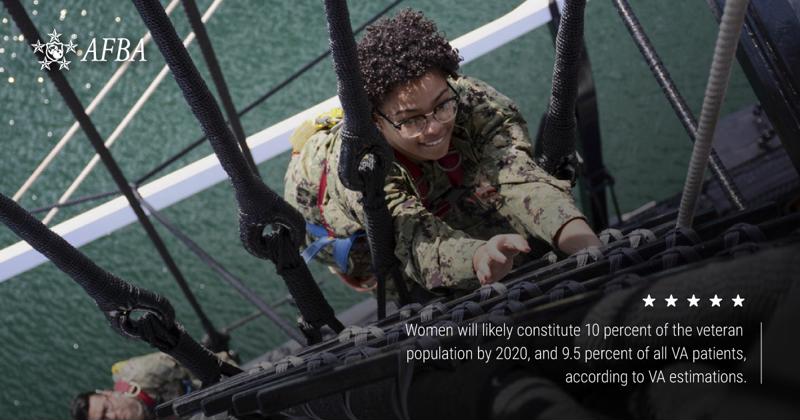
In 2015, the VA estimated that more than 10,000 children had received free daycare in the first four years of the program's existence, with women veterans taking advantage of the program in significantly higher numbers than their male counterparts, according to Stars and Stripes. This was part of the VA's justification for starting the pilot, based on their estimation that women would constitute 10 percent of the veteran population by 2020, and 9.5 percent of all VA patients.
The legislation requires the VA to either provide child care on site, provide veterans with a stipend for the full cost of child care at licensed facilities, directly pay the facilities or collaborate with other agencies. The bill would also extend to grandparents and other primary caretakers.
"We made a promise that our veterans will get the care they've earned," Rep. Julia Brownley of California told the Military Times. "We can't put insurmountable roadblocks in front of their ability to receive that care."
Brownley introduced the legislation, and said that the VA secretary will ultimately determine which veterans are eligible for the program, but the intent is to help those with serious health care problems that require
"For example, a veteran who is undergoing cancer treatment cannot afford to miss medical appointments – and may need a safe place to leave their young child while they receive chemotherapy or radiation therapy," said Rep. Brownley. "Likewise, veterans who have regular mental healthcare appointments may need assistance with child care, because it would be inappropriate for young children to be present for tough conversations with a therapist."
The bill still needs to pass the Senate before it can be signed into law, but it appears to have broad bipartisan support.
Every year on March 25, the United States of America observes National Medal of Honor Day, a time for remembering and honoring those who have earned the highest and most prestigious personal military decoration that may be awarded to U.S. military service members for acts of valor.
According to the Department of Veterans Affairs, the Medal of Honor is awarded to military members who have distinguished themselves "conspicuously by gallantry and intrepidity" that went above and beyond the call of duty.
All five branches of the military are eligible for the honor, though there are only three versions of the medal: one each for the Army, Air Force and Navy, with personnel of the Marine Corps and Coast Guard able to receive the Navy version.
To understand the significance of the MOH, as well as the reasoning behind its annual holiday on March 25, it helps to educate yourself on the history of this incomparable honor.
Over 150 years of recognizing our nation's finest
Though there were several precursors to the MOH, including the George Washington's Badge of Military Merit and a Fidelity Medallion presented to three persons who helped capture a spy associated with Benedict Arnold in the 1700s, it was not until 1862 that the Navy Medal of Honor was created, quickly followed by the Army Medal of Honor, according to the Congressional Medal of Honor Society. The Air Force did not design its own MOH until 1963, over a century later.
On April 11, 1862, a group of Union soldiers led by civilian spy James J. Andrews boarded the train General disguised as a group of new recruits traveling north from Georgia to join the Confederate army. During a breakfast stop, Andrews' Raiders uncoupled the passenger cars and took off with the General, traveling seventy miles on the Western and Atlantic Railway, along the way cutting telegraph wire, uprooting railroad tracks and setting bridges on fire, according to the National Archives.
The group was eventually captured and Andrews was executed by the Confederacy, along with seven of his fellow Raiders. Twelve remaining members of the group were taken prisoner, six of whom were exchanged within a year.
On March 25, 1863, those six exchanged soldiers were summoned to the secretary of war's office, where Edwin M. Stanton greeted them as heroes and surprised them with medallions.
"Congress has by a recent law ordered medals to be prepared… and your party shall have the first," Stanton said upon presenting the first ever Medals of Honor.
Then and now
In the 156 years since that initial ceremony, there have been more than 3,500 Medals of Honor awarded to America's bravest soldiers, sailors, airmen, marines and coast guardsmen. Among the thousands honored, there are currently 72 living recipients of the MOH. Ranging in age from 29 to 98, the list of living recipients includes four heroes who earned their Medals of Honor in World War II, five who fought in the Korean War, 50 in the Vietnam War, and 13 in the War in Afghanistan.
In 2016, Congress authorized the VA's National Cemetery Administration to issue, upon request, a medallion, headstone or marker signifying a Veteran as a recipient of the Medal of Honor. Two years later, during a private ceremony at West Grove Cemetery in Lexington, Mississippi, the first Medal of Honor Medallion was placed upon the private headstone of Pfc. Milton L. Olive III, a decorated war hero who fought in Vietnam.
"Private First Class Olive was posthumously awarded a Medal of Honor for his service during the Vietnam War after he heroically used his body to cover a grenade to save the lives of his fellow soldiers," said VA Secretary Robert Wilkie. "The Medal of Honor Medallion illustrates VA's commitment to ensuring all who see this symbol will know of the courageous sacrifice of our nation's distinguished service members."
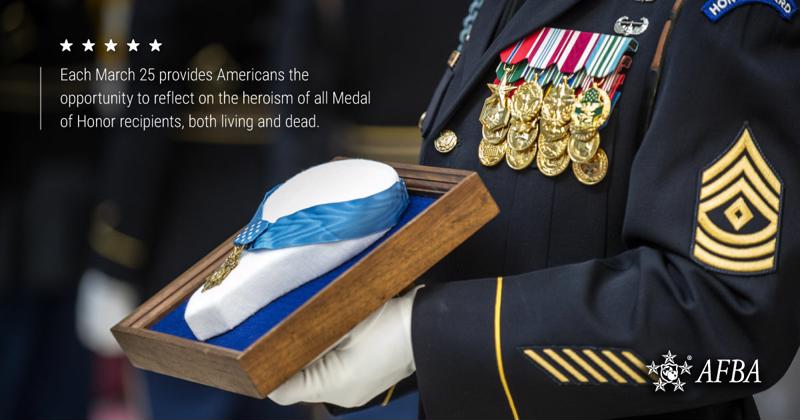
Each March 25 provides Americans the opportunity to reflect on the heroism of all Medal of Honor recipients, both living and dead.
March marks Women's History Month, a 31-day observance of female contributions made throughout history and in contemporary society.
The month-long celebration can trace its own history back to the very first National Woman's Day, organized by the Socialist Party of America and held in New York City on Feb. 28, 1909 – a full nine years before American women achieved the right to vote.
On March 19, 1911, the first-ever International Women's Day was celebrated by over a million people in Austria, Denmark, Germany and Switzerland, many of whom held demonstrations demanding suffrage and an end to employment sex discrimination. In 1917, after women in Soviet Russia earned the right to vote, March 8 became a national holiday there. International Women's Day was primarily observed in socialist and communist countries, until being taken up by the feminist movement in the late 1960s, and in 1975 the United Nations began celebrating the day.
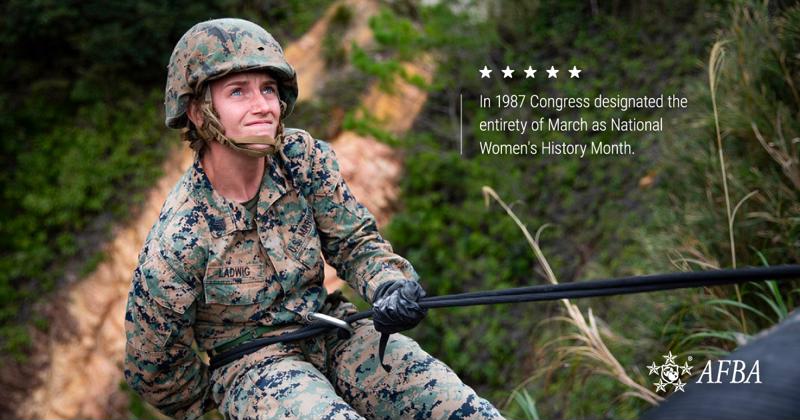
In 1980, President Jimmy Carter issued a presidential proclamation declaring the week of March 8 as National Women's History Week, and in 1987 Congress designated the entirety of March as National Women's History Month.
Today Women's History Month provides an occasion to honor women who have broken glass ceilings and claimed major achievements in a variety of fields, including the United States military.
A decorated history of women in the military
Today there are over 216,000 women serving in the United States Army, Air Force, Marine Corps and Navy, accounting for over 16 percent of the total number of officers and enlisted personnel.
Women also now comprise 10 percent of the total U.S. veteran population, and represent 20 percent of veterans under the age of 35, according to the Department of Labor.
The very first woman to serve in the American military was Deborah Sampson, who in 1782 enlisted in the Continental Army under a man's name to fight in the Revolutionary War. At one point, she removed a musket ball from her own thigh so that her true gender would not be revealed in surgery. Once her identity was discovered, Sampson was honorably discharged, and her husband received a military widow's pension in 1832, according to The New York Times.
Female enlistees disguised themselves as men during the Mexican-American War and Civil War as well, though most women served as nurses during this period of American history. Most notably, Dr. Mary Walker acted as a surgeon for Union troops, and was held by the Confederacy as a prisoner of war after she crossed enemy lines to treat wounded civilians. To this day, she is the only woman to ever receive the Medal of Honor.
In the early part of the 20th century, Congress created the Army Nurse Corps and the Navy Nurse Corps. Though they did not possess military rank, nor were they entitled to the same pay or Veterans' Benefits as men, over 21,000 of these nurses served military hospitals both at home and overseas during World War I.
In WWII, roughly 400,000 women served in noncombatant roles, including as nurses, mechanics, clerks, pilots and ambulance drivers. Hundreds more acted as field intelligence agents in the OSS, 88 were taken as POWs and 16 were killed in action, according to Task and Purpose.
In 1948, the Women's Armed Service Integration Act enabled women to become permanent members of the military, rather than only serve during wartime. There was a female presence in America's subsequent wars, with 50,000 women participating in Korea, many as nurses in M.A.S.H. units, and 11,000 deployed to Vietnam, where Commander Elizabeth Barrett became the first woman to hold a command in a combat zone.
Congress authorized women to fly in combat missions and serve on combat ships in 1991 and 1993, and the first female fighter pilots flew combat missions in Iraq in 1998, the same year that Captain Kathleen McGrath became the first woman to command a U.S. Navy warship.
The 21st century has been filled with even more landmarks, including Col. Linda McTague becoming the first woman to command a U.S. Air Force fighter squadron in 2004 and Army Gen. Ann Dunwoody becoming the first woman to achieve four-star officer rank in 2008.
In 2016, the Department of Defense opened all combat jobs to women, without exception, paving the way for even greater female military heroics now and in the future. The following year, the first woman graduated from the U.S. Marine Corps infantry officer course. Though the female lieutenant requested that her name not be released, the Marines did put out a video that showed her training for her milestone achievement.
This Women's History Month is a great time for all Americans to reflect upon the rich history of women in the military, while also thanking current female officers and enlistees for their service.
On Wednesday, March 13, patriots and dog lovers alike can join together in saluting our nation's four-legged heroes for National K9 Veterans Day.
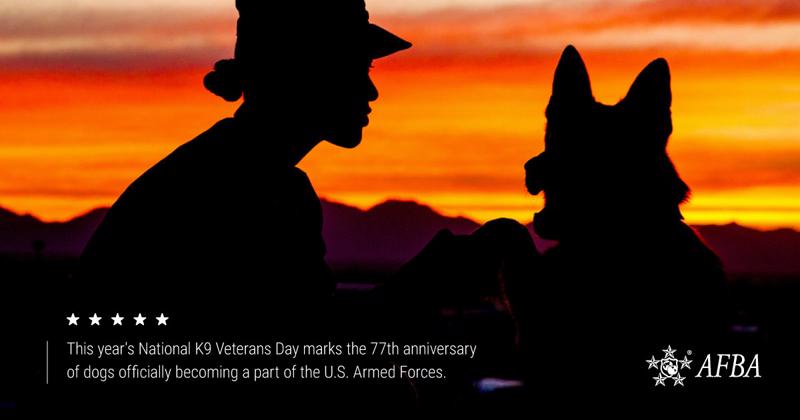
This year's holiday will commemorate the 77th anniversary of dogs officially becoming a part of the U.S. Armed Forces. According to Military.com, it was on March 13, 1942, that the Army first began training for its new War Dog Program, known also as the "K-9 Corps."
The United States Postal Service is among those paying tribute, having recently announced a new booklet of 20 stamps that "honors the nation's brave and loyal military working dogs."
According to the USPS, each block of four stamps features one stamp each of the four breeds chosen for inclusion in the booklet: German shepherd, Labrador retriever, Belgian Malinois and Dutch shepherd.
The patriotic stamps were designed by art director Greg Breeding, and created by the Los Angeles-based DKNG Studios. The stylized digital images feature red, white, blue and gold coloring, along with illustrations of dogs wearing tactical service vests. In the background of each stamp is the detail of a white star. A full white star on a gold background also appears on the center of each block.
Though an official release date for the military dog stamps has not yet been revealed, the Postal Service did promise that more details on dates and locations for the first-day-of-issue ceremonies would be forthcoming.
A distinguished breed of service
Though the K-9 Corps dates back to WWII, military dogs have been serving in the U.S. military since World War I. The most famous canine veteran of the Great War was a Staffordshire terrier mix named Stubby, who saved many sleeping soldiers by barking and waking them during a German mustard gas attack. According to History.com, Stubby went on to serve in 17 battles and survive at least two major injuries, including shrapnel in his chest and leg, before becoming the first dog to be given the rank of Sergeant in the U.S. Armed Forces.
When Sergeant Stubby died in his sleep at the age of 10 in 1926, his remains were gifted to the Smithsonian Institution where they continue to be displayed today.
Examples of canine heroism can be found in more recent conflicts, as well. Just this past November, an Army Ranger dog named Maiko was killed in action during a skirmish in Afghanistan, according to Stars and Stripes. The 7-year-old military working dog was leading Rangers into a compound when he was fired upon by a militant, revealing the militant's position and saving the lives of other soldiers, who then targeted that position.
There is a memorial in Holmdel, New Jersey, that recognizes such sacrifices. Although the War Dog Memorial was originally built to remember only those dogs that served in Vietnam, it now honors all dogs that have served in the United States military.
Today an estimated 2,300 military working dogs serve on U.S. bases worldwide, performing dangerous tasks alongside their human counterparts. These canine warriors often use their noses and smaller sizes to engage in search and rescue missions that more traditional service members are less equipped to complete.
"These military dogs, and search-and-rescue dogs, are putting themselves on the line. They're out in the front lines," Diane Whetsel, head of the Sage Foundation that works to help fund medical services for military dogs, told CNN.
While it may be true that "all dogs go to heaven," surely a special place there is reserved for all of the pups that we remember and pay tribute to on National K9 Veterans Day.
Veterans often have a difficult time finding jobs after leaving the military for a variety of reasons, ranging from employers with unconscious hiring biases to soldiers themselves having skill sets that do not easily translate to the civilian workforce. One potential career path that would provide veterans with the ability to continue doing meaningful work is the role of educator.
For over 25 years, the Troops to Teachers Program has enabled military members with a baccalaureate degree or higher to complete a teaching certification process and become an academic subject teacher for kindergarten through twelfth grade.
Military members who wish to use their unique experiences and knowledge to transform young lives can do so through TTT, and they can even get started while still on active duty.

How to transition to teaching through TTT
All current and former members of the U.S. Armed Forces interested in a career in teaching can receive counseling, referrals and job assistance through TTT.
Though a bachelor's degree or higher is required to teach elementary or secondary school, becoming a vocational or technical instructor requires only the equivalent of one year of college and six years work experience in the technical or vocational field in which you wish to teach.
Those who qualify and choose to participate in TTT can receive stipends of up to $5,000 to defray the cost of teacher certification training. There are also bonuses of up to $10,000 available to those who teach in high-needs schools. In order to receive a stipend or bonus, a program participant must commit to teaching for at least three years at targeted schools, typically located in low-income areas.
It's important to keep in mind that Troops to Teachers is not a teacher certification program itself, but rather a program that works through a network of state offices to provide participants with certification counseling, certification tuition funds and referrals for employment leads.
Participants can use an Alternative Certification Program or University Teacher Preparation Program to complete their certification. According to The Balance, those stationed in Europe would likely benefit the most from ACP, since it allows individuals to complete their teaching certification through online courses.
There are 31 state TTT offices operating across the country, providing placement assistance for the more than 50 states and territories that are part of the program. These offices will help military members with state certification requirements, though participants can also use the TTT website to speak with representatives and receive alternative certification information.
A history of serving in uniform and in the classroom
The Troops to Teachers program began in 1993, as a response to the military downsizing of the early nineties and a way to transition service members to a rewarding and vital teaching career. In the last 26 years, more than 20,000 veterans have made their way from the military to the classroom, becoming teachers and establishing the program's credibility and reputation through their impressive performances in the classroom.
"School systems are finding former military members to be very valuable assets," John Gantz, director of the TTT program, told The Balance. "They bring leadership skills, a concern for their students [similar to their troops] and a lot of experience to the classroom."
Over the course of the program, schools have also noticed a higher retention rate from former military members than from teachers who just finished college.
Service members who would like to learn more about the Troops to Teachers Program can obtain more information from their state TTT office, or by visiting www.ProudToServeAgain.com.
On Tuesday, Feb. 19, 2019, the United States Coast Guard Reserve will celebrate its 78th year of being "Semper Paratus," or "Always Ready."
Though still a spring chicken compared to the Coast Guard, which was itself formed in 1790 as one of America's five armed forces, the Coast Guard Reserve's nearly eight decades of history is worth reflecting upon.
From World War II to today, reservists have served our nation proudly, responding to foreign enemies as well as natural disasters. Here is a look back at the rich heritage that many will be observing this Tuesday.

USCG Reserve created just in time to serve in WWII
The U.S. Coast Guard Reserve actually traces its beginnings back to the signing into law of the Coast Guard Reserve Act on June 23, 1939, which created a non-military reserve service made up of volunteer boat owners and yachtsmen, performing the types of tasks handled by today's Auxiliary.
It was not until the Auxiliary and Reserve Act of 1941 was signed into law on Feb. 19, 1941, that the two organizations became separate entities, which is why the Reserve celebrates the 19th as its birthday. The legislation designated the Coast Guard Reserve as a military branch of the Active service, and turned the civilian volunteers into the Auxiliary, creating a separation that still exists to this day.
The service's birth couldn't have come at a more opportune time, as America entered into World War II later that year after the Japanese bombed the American fleet in Pearl Harbor on December 7, 1941. The Active Duty "regular reservists" ended up serving side by side with their regular Coast Guard shipmates in all phases of wartime operations, with their heroics on display in locations ranging from Iwo Jima to Normandy.
According to the Reserve, there were 6,800 Reserve Officers, 300 Reserve Warrant Officers and over 135,200 Reserve enlisted by the end of the war, outnumbering the regular Coast Guard by a ratio of five to one.
Evolving roles in the years that followed
After the conclusion of WWII, the Reserve was disbanded, with all of the regular and Temporary Reservists returning to their civilian status.
This remained the case for several years, until a 1948 executive order from President Truman ordered all five branches to "stimulate, enlarge and train" their respective Reserve components. The following year, the first federal funding was finally approved for Coast Guard Reserve units, and in 1950, hundreds of Coast Guard Reservists volunteered for Active Duty in the first year of the Korean War.
During the early phase of the Vietnam War, the Coast Guard Reserve hit peak recruitment numbers, with more than 18,000 members recorded in 1965. Yet numbers dwindled as the conflict wound down, and there was again discussion of disbanding the Reserve, according to Military Benefits.
But in October of 1972, Congress tasked the Coast Guard Reserve with a new mission when it authorized the involuntary call up of Coast Guard Reservists for peacetime assistance. Since then, the Reserve has responded to numerous accidents and natural disasters, including the Mississippi, Ohio and Red River floods, the 1980 Mariel Boatlift, as well as multiple vessel explosions, sinkings and airplane crashes.
More recently, Reservists supported rescue and recovery operations related to the earthquake in Haiti and helped out in the aftermath of the Deepwater Horizon oil spill in 2010, and participated in the recovery efforts following Superstorm Sandy in 2012.
Today, as it enters its 78th year, the United States Coast Guard Reserve continues to uphold its Semper Paratus pledge, promising to be always ready, whether at home or overseas, and whether man-made or natural.