
In 2013, President Obama issued a proclamation officially recognizing November as Military Family Appreciation Month, marking it as a time to for the country to "celebrate the families who make daily sacrifices to keep our Nation whole."
Though it is far from the largest sacrifice they are asked to make, frequently having to relocate from one duty station to another can be a huge disruption in the lives of military families. Fortunately, there are cures for some of the headaches caused by moving.
If you move to a new location and your household goods aren't delivered on time, you can file an inconvenience claim with your transportation service provider (TSP) to get reimbursed for any out-of-pocket expenses you incurred while waiting for your stuff to show up. To ensure you're protected, though, it's essential to know which goods and services are eligible for coverage, and how you can file a claim.

What items are covered by inconvenience claims?
Inconvenience claims are simply a way to cover any personal expenditures you may have as a direct result of your TSP missing the required delivery date. That means if your bed hasn't shown up yet and you don't feel like subjecting your family to army cots, you can rent a bed or air mattress for the time being, and then submit your receipts to the TSP for a full refund.
Other types of rental furniture that can be covered by inconvenience claims include cribs, chairs, sofas, tables, appliances and one television per household.
Certain purchases are also covered. Any sheets, towels, paper plates, napkins, disposable cutlery or pots and pans you are forced to buy while waiting for your own stuff to arrive can be reimbursed, as long as you remember to save the receipts.
And if renting furniture and purchasing new cookware seems like too much of a hassle, you can potentially get your hotel bills and Chinese takeout paid for, as lodging and meals are also covered, provided they meet certain requirements.
What items aren't covered?
"The maximum liability for lodging and meal expenses cannot exceed the DoD's daily lodging and meal per diem rate."
According to the Department of Defense's official customer moving portal, items expressly excluded from inconvenience claims include groceries and meals if a customer is in a residence, cleaning supplies, toiletries and cosmetics, snacks, military attire and personal clothing, school supplies, toys and any alcohol or drugs. Also, while "laundry service" is covered, dry cleaning is not. And any expenses that occur before the delivery date or out of the local area are also ineligible.
Additionally, the DoD requires that all expenses claimed "must be reasonable," and be directly related to "a definite hardship" caused by the delay in delivery. So while lodging expenses would be covered, a stay in the Plaza Hotel's honeymoon suite would not be. Similarly, although any necessary furniture rental should be eligible for reimbursement, this is sadly not your chance to freely relax on a $5,000 Eames Lounge Chair and Ottoman. The same goes for any purchases, with the DoD specifically singling out Wal-Mart, Target and the Army and Air Force Exchange Service as "reasonable" retailers.
To put an even finer point on it, the maximum liability for lodging and meal expenses cannot exceed the daily lodging and meal per diem rate, which can be found at the DoD's Travel and Per Diem website. For families, per diems are also based on the number of dependents, and while spouses are expected to share one room in a hotel, children or other dependents may be able to get their own rooms. However, any additional rooms must be pre-approved and authorized in writing by the TSP.
How do you file an inconvenience claim?
Inconvenience claims are handled not by the Department of Defense, but by the transportation service provider that was awarded your shipment. As such, you need to file directly with the claim department of your moving company.
Make sure you know your actual moving company—because TSPs frequently subcontract things like pickup and delivery, it's not necessarily the name you see on the truck. TSPs will typically send you an email with contact information when the shipment is first awarded, so hold onto that info. And because inconvenience claims are not a standardized procedure, you'll need to reach out directly to your moving company to find out how to proceed.
Military Times also notes that the best point of contact for servicemembers with moving-related problems is the personal property/transportation management office at their installation. Contact the office at the current location if you have issues related to pickup and packing, and get in touch with the office at your new location if there are problems settling in.
Move.mil is also a great resource for claim forms and other information, and the military relief society can potentially assist individuals and families experiencing a financial strain.
Nothing can completely alleviate the stress that comes from moving, but understanding how inconvenience claims work can help provide some peace of mind during a turbulent time.

When servicemembers transition to civilian status, they must deliver their medical records from the Department of Defense to the Department of Veterans Affairs. Currently, no solution exists to seamlessly transfer this information – a fact that has vexed both the Pentagon and the VA. Because the two medical systems are incompatible with one another, it's possible that important information gets lost in the shuffle.
To remedy this situation, the VA is now undertaking the largest transition to electronic health records ever attempted in the U.S. Its goal is to create a system compatible with the Pentagon's.
Creating a new EHR system: A process that's taken decades
Lawmakers have pressed both organizations to create compatible EHR systems since at least 2000, according to Military.com. The VA has attempted this process many times, but each trial ended in costly failure.
The latest attempt was an integrated electronic health record (iEHR) system known as the Veterans Information Systems and Technology Architecture Evolution, or VistA Evolution. However, a 2017 audit from the nonpartisan Government Accountability Office found the VA spent about $1.1 billion between 2011 and 2016 on this project.
Despite the significant investment, former VA Secretary Dr. David Shulkin determined VistA wasn't achieving its goals and needed replacement. Before he was removed by President Donald Trump, Shulkin began looking into off-the-shelf solutions, eventually settling on health information technology provider Cerner Corp. of Kansas City, Missouri.
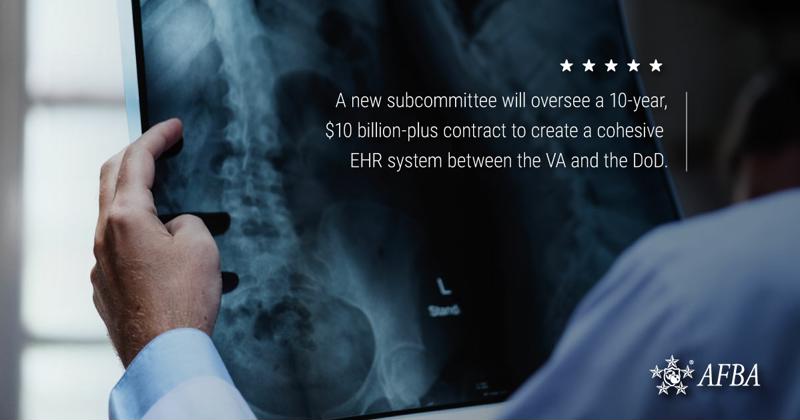
Though Shulkin was never able to complete a deal with Cerner, his replacement, acting VA Secretary Robert Wilkie, awarded Cerner a 10-year, $10 billion contract. Additional costs could drive these expenses up to $16 billion.
Monitoring the EHR process
Such an expensive project requires immense oversight to ensure funds are being allocated efficiently – something members of Congress know all too well.
"As the department embarks on the nation's largest overhaul, it is critical that we ensure veterans and taxpayers are protected throughout the transition," said Chairman of the House Veterans' Affairs Committee Rep. Phil Roe, R-TN, in a statement, per Military.com. "I know how much potential there is for a project like this to be a costly disruption. Congress has a duty to conduct rigorous oversight every step of the way."
To maintain this efficiency and transparency, the House created the new Subcommittee on Technology Modernization. One of five such bodies within the House Veterans' Affairs Committee, this new group is tasked solely with overseeing the new EHR implementation.
It's not the only new group doing so, however. Now that the Cerner deal is in place, the DoD, the VA and the IPO are working to establish joint modernization governance bodies. These interdepartmental groups will improve interagency communication, promote sharing of resources and create a more collaborative decision-making process, according to EHR Intelligence.
"If successful, it will be one of the lynchpins of a more responsive, agile, and efficient VA," said Subcommittee on Technology Modernization Chairman Rep. Jim Banks, R-IN, per EHR Intelligence. "If mismanaged, I fear a daunting and disappointing setback."
Given the amount of money involved, along with a history of failed attempts, it's safe to say that many different parties concerned with veterans' affairs, the DoD and government spending will watch this EHR project closely as it develops. If successful, the new technology will give servicemembers and veterans piece of mind, as they can rest assured that their health records will remain complete as they transition.
September is National Suicide Prevention Month, a time for mental health providers, advocates, survivors and allies to promote suicide prevention awareness. This idea encompasses everything from reducing mental health stigma, promoting treatment and supporting intervention strategies.
Suicide in America
According to the Centers for Disease Control and Prevention, suicide is one of the leading causes of death in the U.S. Rates have increased by more than 30 percent since 1999. In fact, Nevada was the only state to see a decrease in suicides during this time period.
Suicide isn't just a mental health issue. Per the CDC, other contributing factors include relationship issues, substance abuse, stress and more. Yet it's important to understand how depression, anxiety and other emotional or behavioral issues contribute to such tragic circumstances. Rates of suicide may finally decrease if the stigma around mental health care disappears for good.
Events like Suicide Prevention Month – as well as Suicide Prevention Day and Suicide Prevention Week – were created to reduce this stigma and offer support to those who may be suffering.
Veteran suicide statistics
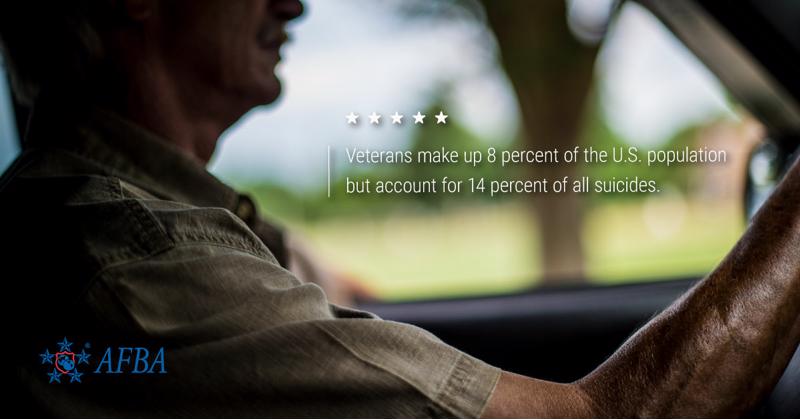
Unfortunately, veterans are more likely to die by suicide than the general population. A report from the Department of Veterans Affairs found that although retired servicemembers make up 8 percent of people in America, they account for 14 percent of all suicides. Overall, nearly 21 veterans die by suicide every day, which translates to a rate that's 2.1 times higher than that of nonveteran adults.
There are numerous possibilities for why veteran suicide rates are higher than civilians'. One study, published in the Journal of the American Medical Association's JAMA Psychiatry, found timing may have an effect. Researchers found that veterans who had little down time between deployment or who were initially deployed within the first year of service were at higher risk of suicide.
Trauma and post-traumatic stress disorder are also culprits that may affect veterans more strongly than the general population. As the VA noted, veterans who suffer combat trauma, especially multiple wounds and/or hospitalizations, are at a high risk of suicide. The more times the person was subjected to trauma, the greater that risk increased. Similarly, one study found that PTSD and suicide had a strong correlation – more so than other anxiety disorders.
Resources for friends and family
The VA understands that suicide is a serious problem affecting veterans and servicemembers, and the department knows it's in a position to help. Veterans who receive mental health assistance through the VA are less likely to commit suicide than those who do not.
In 2007, the VA launched the Veterans Crisis Line to help veterans, servicemembers and their loved ones who may be having mental health issues or suicidal thoughts. The Crisis Line offers 24/7 support, 365 days a year, even if the caller isn't registered with the VA or enrolled in its health care services.
Friends and loved ones should keep an eye out and look for signs of crisis among the veterans in their lives. Vets themselves should also look for these red flags so they can take themselves to treatment. Signs of possible self harm include:
- Continuous sadness or depression.
- Feelings of hopelessness.
- Agitation or mood swings.
- Sleeplessness.
- Excessive guilt, shame or sense of failure.
- Rage.
- Substance abuse.
- Neglecting personal care.
- Withdrawing from friends and family.
- Giving away cherished possessions.
The Crisis Line, in collaboration with the VA and the American Foundation for Suicide Prevention, also created a handy tool called the Veterans Self-Check Quiz to help former servicemembers determine if they need treatment. Users can decide what to do after they take the assessment, whether that would be chatting with a responder, getting a referral for an in-person visit or nothing at all.
While suicide and mental health issues affect veterans at a higher rate than the rest of the population, it's important to remember that help is available. National Suicide Prevention Month is the time for veterans, servicemembers and their families to spread awareness and end stigma once and for all.
The Department of Defense announced that veterans and servicemembers will be limited in their ability to transfer their post-9/11 GI Bill benefits starting July 12, 2019, Military.com reported. Those with more than 16 years of service will no longer be able to transfer their benefits to a spouse or child. The goal of this upcoming change is to increase military retention.
"After a thorough review of the policy, we saw a need to focus on retention in a time of increased growth of the armed forces," said Stephanie Miller, director of accessions policy in the Office of the Secretary of Defense, in a statement, per Military.com. "This change continues to allow career service members that earned this benefit to share it with their family members while they continue to serve."

The GI Bill: A tool, not an entitlement
The post-9/11 bill offered educational benefits to military volunteers in areas of sustained conflict such as Iraq and Afghanistan. Under the bill, active-duty servicemembers and veterans were eligible for funding to cover in-state tuition and fees at public colleges and universities along with a monthly allowance for housing. They could also transfer these benefits to their spouse or children, assuming they served when the bill started or enrolled after.
This educational benefit is authorized by law, but the Pentagon decides how it's implemented. Previously, the only requirement was six years of service and commitment to an additional four. Those who planned to serve but were barred from completing their time – for instance, due to an injury or medical discharge – were still eligible for the transfer.
Now, all servicemembers must be cleared to serve for an additional four years when they choose to transfer their GI benefits. This aligns the policy with a 2015 report clarifying the bill as a retention tool, not an entitlement. The department will track the change's effectiveness, monitoring recruit quality and retention metrics, and may make additional alterations in the coming years.
Veterans groups have different reactions
Some advocates understand the change to the bill, while others are strongly against it. The American Legion falls in the latter category, announcing it is "100 percent" opposed.
"We understand the minimum time in service for transferability for retention purposes," said the Legion's Director of Media Relations Joseph Plenzler, according to Stars and Stripes. "But the 16-year cap on the transferability significantly limits a veteran's ability to execute the full economic potential of that benefit in a way that best suits the veteran and his or her family."
The National Military Family Association expressed disappointment but also seemed to understand. The association's Deputy Director of Government Relations, Eileen Huck, noted that many servicemembers and their families were upset by the news but acknowledged that the bill has always been a tool for retention. Meanwhile, the Veterans of Foreign Wars announced it wasn't against the change but urges veterans to transfer their benefits as soon as possible.

Cancer is still one of the most complicated diseases health care researchers all over the world struggle to cure. This devastating illness can take a particular toll on former servicemembers. The U.S. Veterans Administration records nearly 50,000 incidents of cancer every year, per a report from the Durham Veterans Affairs Health Care System in Durham, NC.
That said, the rate of cancer-related deaths among the U.S. population as a whole is declining steadily, according to the American Cancer Society, falling 26 percent from its highest in 1991. Similarly, cancer diagnoses fell about 2 percent per year in men over the past decade (rates remained the same for women, however). These declining rates are the result of fewer people choosing to smoke and earlier detection.
Still, over 4,700 people are diagnosed with cancer every day. Innovative treatments are absolutely necessary to continue this rate of decline, especially among the veteran population. The VA already conducts cancer research, but it has problems combining its findings with external sources, according to the Military Times.
Thankfully, a new partnership may correct that problem.

Addressing cancer among veterans
The VA and the National Cancer Institute, part of the National Institutes of Health, are working together to help veterans with cancer access new treatments and experimental trials. By working together, the two hope to both improve outcomes for veterans and contribute to overall cancer research.
The partnership is named the NCI and VA Interagency Group to Accelerate Trials Enrollment (NAVIGATE) and will help veterans access the NCI's national clinical trials network and the CNI Community Oncology research program. Per a press release from the NIH, NAVIGATE launched at 12 VA sites across the country:
- West Haven, CT.
- Bronx, NY.
- Durham, NC.
- Atlanta, GA.
- Charleston, SC.
- Hines, IL.
- Minneapolis, MN.
- San Antonio, TX.
- Denver, CO.
- Portland, OR.
- Palo Alto, CA.
- Long Beach, CA.
"NAVIGATE is an opportunity for VA and NCI to partner at the national level to make clinical trials more accessible to veterans," said deputy director for NCI Clinical and Translational Research James Doroshow, M.D., in the NIH press release. "This agreement will not only provide veterans greater access to NCI clinical trials, it will enhance accrual to NCTN and NCORP trials, resulting in more timely completion of these studies. This interagency collaboration will also work to help veterans overcome barriers they've faced trying to access clinical trials as part of their cancer care."
Both the VA and the NCI will manage NAVIGATE together for up to three years. During that time, the 12 initial sites will share their knowledge and outline best practices so other VA operations can work with veteran patients to enroll them in clinical trials. Eventually, the two government groups hope the partnership will continue bringing opportunities to veterans and highlighting the unique challenges they face even after NAVIGATE ends.
Given that veterans may have been exposed to various cancer-causing agents during their time serving, this partnership is all too necessary. Hopefully the research will help veterans get the care they need and offer promising results for patients across the country.
Do you know what type of compensation you're eligible for as an active-duty servicemember? There are many possibilities based on your experience, assignments, location and more. Here, we'll break down the different kinds of military pay to help you get started on your financial planning for the future
Active duty basic pay
This is the primary form of income for active duty servicemembers and is similar to a civilian's paycheck. The government sends checks for basic pay every month, and servicemembers can expect an annual increase if approved by Congress. This is similar to a tenure-based raise or benefits increase that must be approved by upper management. This year, servicemembers saw their basic pay increase by 2.4 percent as of their Jan. 12 paycheck.

Other types of pay and allowances
Servicemembers often get other forms of compensation depending on various factors, including but not limited to:
- Professional skills.
- Area of assignment.
- Marital status.
- Types of duties performed.
It must be noted that the military provides general categories for two types of compensation:
Pay
Pay is generally subject to taxes and included in the taxable income reported to state and federal governments.
- Assignment Incentive Pay (AIP): Those who serve under unusual circumstances – such as involuntarily extended stay in Iraq, Afghanistan and even South Korea – may get financial compensation for their trouble.
- Career sea pay: Granted to active-duty sailors who have spent at least three years at sea. Amounts are based on the person's rank, and an additional $100 per month is granted for each subsequent month.
- Diving pay: Officers whose duties involve diving can receive up to $240 per month. Enlisted members with similar duties may receive up to $340 per month.
- Enlistment and reenlistment bonus: Those who initially enlist or extend their period of active duty are eligible for an Enlistment or Reenlistment bonus. The amount varies by skills and department but can be as much as $40,000.
- Foreign language proficiency pay: Those who maintain proficiency in certain languages (chosen by military departments) may receive a monthly payment of up to $1,000.
- Hardship duty pay (HDP): HDP-L payments, ranging from $50 to $150 are for officers and personnel serving in designated locations. HDP-M payments are for performing designated missions that involve recovering the remains of U.S. servicemembers.
- Hazardous duty incentive pay: Members who work in certain hazardous situations – including demolition, working with toxic fuel, flight deck operations and more – are authorized to receive $150 per month.
- Hostile fire and imminent danger pay: Servicemembers working in imminent danger zones are authorized to receive a $225 monthly payment.
- Involuntary separation pay: Members who are involuntarily and temporarily unable to serve (for reasons other than misconduct) and have served at least six – but no more than 20 years – of active duty are eligible for a special lump-sum.
- Medical pay: Medical specialists (doctors, dentists, nurses, pharmacist, physical therapists, radiation specialists, optometrists and others) are entitled to a variety of special pays.
- Special duty assignment pay: Servicemembers who perform duties with a high level of responsibility or that are extremely difficult can get a monthly payment ranging from $75 to $450.
Allowance
Allowance is not subject to taxation and not included in annual taxable income.
- Basic allowance for housing (BAH): Members not assigned to government quarters get a monthly allowance calculated to equalize out-of-pocket housing expenses, regardless of location. By 2019, members should only have to pay 5 percent of such costs from their own funds.
- Basic Allowance for Subsistence (BAS): Each month, officers get $254.39 and enlisted members authorized to mess separately get $369.39 to offset the cost of meals.
- Clothing Allowance: Officers get an initial uniform allowance, payable only once. Clothing replacement allowances are granted to members who must either wear civilian-type or special military clothing.
- Cost of living allowance for the continental United States (CONUS COLA): Servicemembers living in designated high-cost areas within the U.S. receive an allowance to offset non-housing costs. Most payments range from $20 to $300; sums are based on rank, dependent status, location and years of service.
- Dislocation allowance (DLA): Active-duty personnel dealing with a permanent change of station may have some of their moving expenses reimbursed. The amount depends on the member's grade and whether they have dependents.
- Family separation allowances (FSA): Only members with dependents may receive this allowance. There are three types: FSA-R (when dependents don't live nearby and the government won't expense their transportation), FSA-S (when the member is aboard a ship that is continuously away from more than 30 days) and FSA-T (when the member is on TDY or away from the permanent duty station for over 30 days).
- Overseas station allowances: This series of payments helps offset the costs for food, lodging and similar expenses when servicemembers are assigned outside the U.S. It consists of four components: cost of living allowance, overseas housing allowance, temporary lodging allowance and interim housing allowance.
- Temporary lodging expense (TLE): If a servicemember and/or dependents must stay in temporary lodgings while moving because of a permanent change of station, TLE partially offsets this cost and meal expenses.
Understanding your pay and allowances is the first step toward planning for your financial future. Armed Forces Benefit Association can help you with the rest.
Dogs are loyal, intelligent and devoted to their families, so it's no wonder these pets are chosen to help people with physical disabilities and chronic mental health issues. Many veterans use dogs to help them adjust to combat-related ailments. However, getting a service dog and understanding what the VA will cover can be complicated. This guide will help veterans understand how to get their own service animal and what the VA does to support dogs as a mental health treatment.
The VA and service dogs
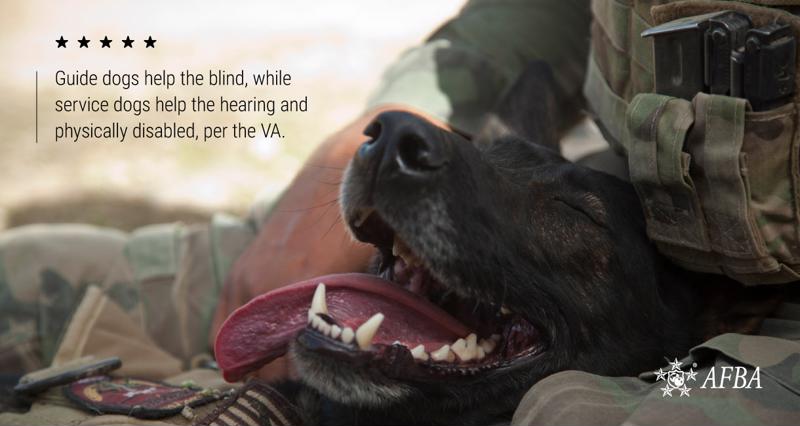
The VA classifies dogs into two types:
- Guide dogs assist blind veterans.
- Service dogs assist veterans with a physical or severe to profound hearing impairment.
Vets who enroll in VA healthcare may be eligible for either type depending on their condition. That said, the government doesn't provide a dog to everyone who asks. Veterans must demonstrate a medical need, as evaluated by a physician, for a guide or service animal. The process summarized looks like this:
- A vision, hearing or physically impaired veteran talks to their primary care provider, who refers the veteran to a specialist.
- A VA medical team conducts a complete evaluation to see if a dog is the best type of treatment for the veteran.
Additionally, the VA doesn't provide service or guide dogs itself. Rather, it works with accredited non-VA agencies — organizations that specialize in training service animals. Veterans will go through an educational process to learn how to communicate with their service dog, after which the canine will become the veteran's property.
That said, the VA does pay for veterinary care — though not other expenses like food, grooming and boarding — through VA Prosthetics and Sensory Aids.
Service dogs and mental health
Currently, the VA doesn't provide service dog assistance for veterans with post-traumatic stress disorder or other mental health issues. This type of help is offered by independent veterans groups and nonprofits. Advocates are pushing for VA-funded mental health service dogs, and their efforts might pay off in the next few years.
Many individual success stories show the positive effects service dogs have. For example, a study from Purdue University found both current servicemembers and veterans with a trained service dog showed significantly lower signs of PTSD and related symptoms such as social isolation, absenteeism and depression. They also displayed higher signs of psychological well-being like social functioning and quality of life.
However, as the study's author noted in a conversation with The Washington Post, this research is still preliminary. The VA also wants to be certain that service dogs truly help veterans from a mental health perspective. If benefits are clinically proven, the VA wants to create a thoroughly researched checklist of what skills these animals should learn before considering paying for their care.
To that end, the government is currently conducting a $12 million, multi-year study on the benefits of mental health service dogs. Originally, this research drew a lot of criticism. Per The Washington Post, the dogs were provided by contracted groups, and some of the animals bit participants' children. The animal trainers also potentially biased veteran opinions (and thus the outcome of the study) by saying how helpful the dogs could be. The study has since been redesigned to include VA-hired trainers and a control group of veterans with emotional support dogs. The initial results are expected in 2019.
That said, the VA also launched a service dog pilot program limited to 100 veterans, according to Military.com.
"I've seen the impact that these dogs can have on veterans and so I'm a believer," VA Secretary David Shulkin said of the pilot, per Military.com. "I don't want to wait until the research is there. If there's something that can help our veterans, we want to be pursuing it."
If results from the pilot program and study are positive, veterans may be able to receive VA assistance for their service dogs within the next few years.
Veterans advocates unveiled a new mantra on June 14. Named the Veteran's Creed, it was designed to promote camaraderie and public service among former servicemembers and help them adjust to civilian life.
Many veterans feel disconnected from their communities and their fellow servicemembers after leaving the military. Pew Research found that 27 percent of veterans have a hard time returning to civilian life. That number increases to 44 percent when focusing solely on those who have served since Sept. 11, 2001. Researchers wanted to know why only a certain subset of veterans had such difficulties, so they used a statistical technique called logistical regression to discover six variables that led to difficult reentry, listed below:
- Having an emotionally traumatic experience while serving.
- Suffering a serious service-related injury.
- Serving in a combat zone.
- Knowing someone who was killed or injured.
- Served during the post-9/11 period while married.
- Served during the post-9/11 period and didn't attend religious services after retirement.
This struggle may be part of the reason why approximately 22 veterans commit suicide every day. The Creed will hopefully remind veterans of the good they've done and can do, helping them create communities with one another and better adjust to life outside the military.
"It can serve as a unifying concept to remind veterans of the value of their military service, to inspire veterans to continue to serve and lead at local, state and national levels, and to push them to continue to excel," said retired Gen. George Casey, one of the leaders of the Creed discussions, to Military Times.
Many groups supporting veterans
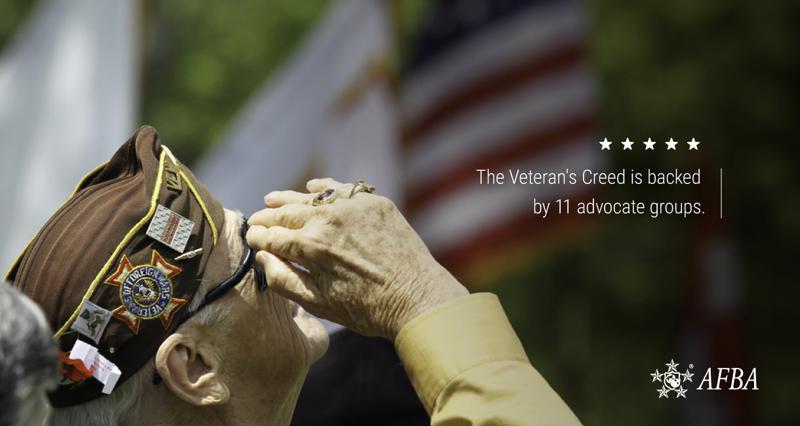
The Veteran's Creed is backed by several advocate groups, including Veterans of Foreign Wars, Disabled American Veterans, Iraq and Afghanistan Veterans of America, Wounded Warrior Project and The Military Order of the Purple Heart. The latter published a press release noting that each element of the Creed is rooted in military tenets, the missions of the participating organizations and the altruism shared by many veterans. The Creed should also remind American civilians that the values veterans learned while serving (teamwork, integrity, leadership and selfless service) can benefit the entire country.
The Veteran's Creed reads:
- I am an American Veteran.
- I proudly served my country.
- I live the values I learned in the military.
- I continue to serve my community, my country and my fellow veterans.
- I maintain my physical and mental discipline.
- I continue to lead and improve.
- I make a difference.
- I honor and remember my fallen comrades.
Per Military.com, the Creed was officially adopted at a Flag Day event at the Reserve Officers Association. It is the result of many discussions that began last fall at Georgetown University.
"In the Army I lived both the Soldier's Creed and the NCO Creed," John Towles, Director of National Security and Foreign Affairs for the Veterans of Foreign Wars told Military.com. "As veterans, we must realize that our service does not stop simply because we take off the uniform. Many of us struggle to find our place once we leave the military, but now we have a new set of watchwords to guide and remind our brothers and our sisters in arms that our mission is far from over."
While these words may not be enough to prevent every single veteran suicide in future years, they're certainly a good first step toward building community among former servicemembers. Hopefully, with these words in their hearts, veterans will have an easier time transitioning to civilian life.
Richard Overton celebrated his 112th birthday on May 11, 2018. This in itself is remarkable, but Overton is more than one of the oldest men in the world. He's also America's oldest living veteran.
The birthday celebration started a month earlier, after Overton spoke with Austin businessman Robert F. Smith. The centenarian mentioned that he wanted to see the recently opened National Museum of African American History and Culture in Washington, D.C. Smith, who had donated approximately $20 million to the museum, flew Overton to visit on a private jet. There, Overton was greeted by former secretary of state Colin Powell and treated to a private tour.
A life of experience
Many people never fly privately in their lifetimes, let alone get to avoid the crowds at a Smithsonian museum. Yet, Overton's done a lot more in life than most. He's visited the White House several times and met numerous people of influence, including comedian Steve Harvey and former president Barack Obama.
The secret to his age? Overton credits his love of cigars, whiskey, coffee, fried catfish and butter pecan ice cream. He also refuses to think about death.
"I don't think about [dying]," he said on the TODAY Show in 2014, according to an NBC News article. "You can't do anything about that. It's going to come, whether you want it or not. I just think about living."
Overton celebrated his 112th birthday proper with a block party. The event wasn't unusual; he lives on a street in East Austin, Texas, named after him, and people often visit after hearing his story. The frequent guests don't seem to bother him.
Buying it in the 1940s for $4,500, Overton's lived in his home for more than 70 years. Per USA Today, his home underwent several repairs provided by Austin Energy, Home Depot and Meals on Wheels to make his home more accessible, adding heat and air conditioning, fixing the plumbing and wiring, and bringing the house up to code.
As for his daily life, Overton's various family members help him often. Additionally, thanks to online fundraising, he's able to live independently with round-the-clock health care. Overton is surprisingly mobile for a man in his second century of life. Per the NBC article, he was still driving and tending to his lawn at age 109. His veteran's benefits would allow him to stay in an assisted-living facility, but Volma Overton, his 70-year-old cousin and caregiver, thinks the experience would be bad for him.
"His front porch is his everything," Ms. Overton told the Washington Post. "It's his throne. He's outlived almost everybody in his family."

A family legacy
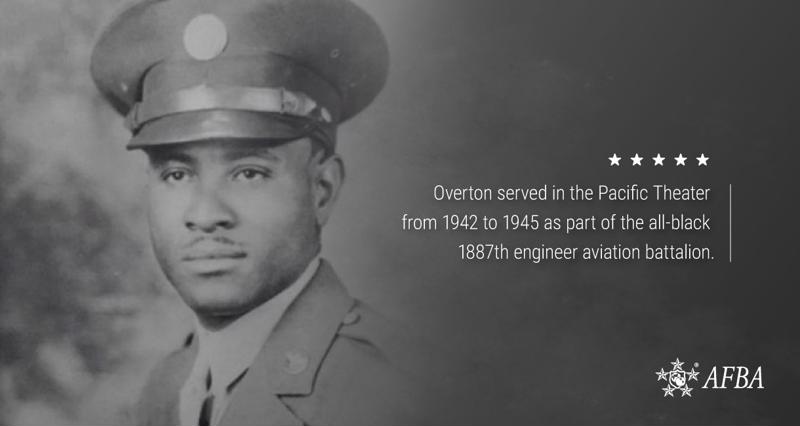
Overton's grandfather was a slave in Tennessee. After receiving his freedom, he moved to Texas to set roots. Overton himself was born May 11, 1906 in Bastrop County, Texas. He forwent college to join the U.S. Army at Fort Sam Houston, Texas. He served in the Pacific Theater from 1942 to 1945 as part of the all-black 1887th engineer aviation battalion. As part of his service, Overton was stationed in Palau, Guam, Iwo Jima and Okinawa.
Overton retired in 1945 as a corporal technician fifth grade. He received the Expert Rifle Marksmanship Badge, a Meritorious Unit Commendation and the American Campaign Medal, among other distinctions.
Yet it wasn't until 2013 that Overton gained a bit of fame. Two East Austin filmmakers, Matt Cooper and Rocky Conly, began filming a documentary about his day-to-day life. Overton quickly became a nationwide sensation, and he plans to keep living with the same jovial attitude.
Minnesota legislators recently passed a bill that greatly benefits first responders. As a local Fox News affiliate reported, first responders such as police, firefighters, paramedics and corrections officers are no longer required to prove what events caused their employment-related post-traumatic stress disorder in order to receive worker's compensation.
This bill can do much to help first responders get the care they need. Consider the story of Brian Cristofono, a firefighter who suffered from job-related nightmares and panic attacks. According to an NBC station from Minneapolis, Cristofono became irritable, started drinking and his marriage ultimately fell apart. The firefighter also saw three coworkers succumb to suicidal thoughts and thought about taking his own life.
Luckily, Cristofono was able to get help – a psychologist diagnosed him with PTSD and drafted a list of events believed to have caused the condition. Creating this list couldn't have been easy, as PTSD symptoms can manifest months or years after the trigger event occurred. Cristofono used his diagnosis to apply for worker's comp, but his claim was denied.
"There was no physical injury associated with any of those calls," Cristofono told the news station, relaying the response he received from the city. "So it could not be PTSD."
The burden of proof is now shifted thanks to this bill, and PTSD is now an assumed side effect of being a first responder. This news comes just in time for National PTSD Awareness Month.
PTSD among first responders and veterans
The Mayo Clinic defines PTSD as a mental health condition resulting from experiencing or witnessing a terrifying event. The disorder is difficult to cope with, especially if it's left untreated. Symptoms include nightmares, uncontrollable thoughts, flashbacks and severe anxiety.
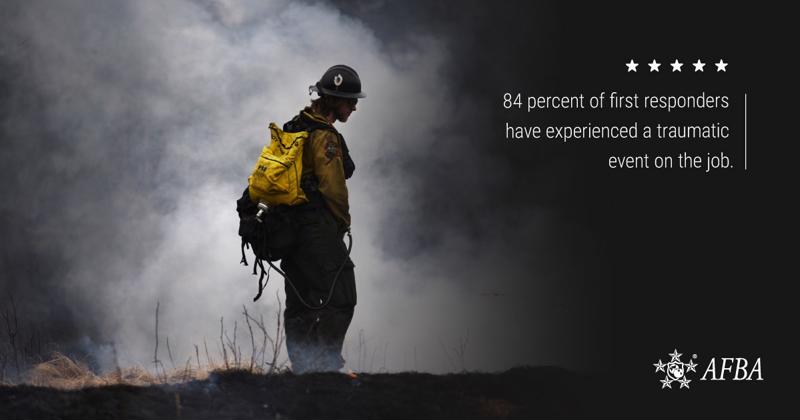
Some occupations are more prone to possible PTSD than others – particularly military and first responder roles. A 2017 survey from the University of Phoenix found 84 percent of police officers, firefighters, EMTs, paramedics and nurses have suffered symptoms related to mental health issues. Furthermore, 84 percent have experienced a traumatic event on the job, but only 34 percent were diagnosed with a mental health disorder. This isn't to say that traumatic experiences only affect a small percentage; it's more likely that people have PTSD but aren't diagnosed.
Why might this be true? Unfortunately, there remains a pervasive stigma against mental health services, especially among first responders. Seventy-four percent of survey respondents said they have therapy, counseling and similar opportunities available, but only 39 percent actively sought them out. Reasons for avoiding such services included fears that supervisors would treat them differently, that coworkers would perceive them as weak and that they'd be passed over for promotions.
Such stigmas are, in part, why Congress named June 27 PTSD Awareness Day back in 2010. What's more, the Senate designated all of June as PTSD Awareness Month just four years later in 2014.
The goal of these measures, according to the Department of Veterans Affairs, is to promote awareness of PTSD and its effective treatments. The VA provides many helpful aids to assist veterans and their families in understanding PTSD and seeking help, and first responders may benefit from these resources as well.
One booklet, titled "Understanding PTSD and PTSD Treatment," helps you define PTSD, lists possible PTSD-causing traumatic events, describes various symptoms and answers common questions about treatment. Another tool, the PTSD Treatment Decision Aid, helps you make the best choices for your life and health when addressing your condition.
If you suspect yourself or someone you love suffers from PTSD, talk to your doctor or a mental health professional. If you don't yet have a counselor, look for one who specializes in PTSD. Reach out to loved ones, and call the National Suicide Prevention Lifeline (1-800-273-8255) if you're having suicidal thoughts.