
Honoring and publicly acknowledging veterans who served decades ago also lets those individuals know they and their contributions to the country are not forgotten. This process may prove especially important for veterans who served in the Vietnam War, due to that conflict's controversial reception at the time and mixed legacy since. Now that decades have passed since the war, those who served are growing older – but it's not too late to ensure they are celebrated and remembered by the government and public.
"The process is meant to ensure the public has access to photos of every American veteran of the Vietnam War."
Online project gets 50,000th photo
One of the most memorable and dynamic veterans memorials, the Vietnam Veterans Memorial in Washington, D.C., is celebrating its 35th anniversary. The memorial fund that maintains the installation recently announced that its online companion program, the Wall of Faces, has collected its 50,000th image. The process is meant to ensure the public has access to photos of every American veteran of the Vietnam War, as another way to ensure their service and sacrifices are not forgotten. The Wall of Faces has been collecting pictures since 2009.
Former Secretary of Defense Chuck Hagel, who is heading up the 35th-anniversary commemoration for the memorial, urged members of the public to come forward with pictures of Vietnam veterans who are not yet represented in the Wall of Faces. He expressed hope that the collection could be completed by the end of 2017, and explained that it's especially important to collect the images of those who died during the war, to make sure their memory lives on.
Veterans groups around the country have been active in finding pictures for the Wall of Faces. The Vietnam Veterans Memorial Fund announced that the 50,000th picture for the virtual wall came from VVA Chapter 1036, based in Florida. That chapter has been actively seeking out photos over the past year. The milestone photo is of local Bobby Joe Quinn of Morristown, Tennessee.
Pinning ceremony honors vets
While lasting archives such as the Wall of Faces and the physical memorial in Washington, D.C., help the world remember the Vietnam War, there is also value in events that directly reach out to the veterans themselves. This is where pinning ceremonies come in, with individuals across the country thanked for their service in person and receiving a commemorative pin. The Daily Commercial in Lake County, Wisconsin, reported on one such gathering. At AMVETS Post 2006 in Leesburg, Wisconsin, approximately 180 vets received the pins, which are being given as a 50-year remembrance of the war.
The news provider noted that the pinning campaign is being carried out following President Barack Obama's 2012 presidential proclamation authorizing honors for every living veteran who served from Nov. 1, 1955, to May 15, 1975. At the Leesburg ceremony, speakers included Mayor Bob Bone, who thanked veterans for their efforts, and retired Army Command Sgt. Major Jimmie W. Spencer, who stated that the troubles that characterized the Vietnam War era must never be allowed to return.
Although many of them were ignored or vilified in their own time, Vietnam veterans have recently been able to find public support from various local and national programs. The aforementioned are just two examples of this phenomenon.
The opportunity frequently arises to honor veterans from conflicts that took place decades ago. While at first glance it may seem strange to bestow honors on individuals who served 50 years ago or more, these thank-yous remain relevant and appreciated. Service members who have taken risks and made sacrifices for the sake of their country still merit attention and praise for their actions all these years later, especially if the honors given are those that, for whatever reason, were skipped over at the time.
Programs to award veterans can take many forms, some based on which branch of the military individuals belonged to or the conflict in which they participated, others predicated on where the recipients dwell now.
Honoring the OSS
During World War II, the Office of Strategic Services was a vital piece of the intelligence network of the Allies' war effort. Now, 60 years later, those who served in the OSS will receive recognition for their activities. According to Military Times, a bill to award the Congressional Gold Medal to OSS veterans has now been signed by President Barack Obama, after spending the year passing through both chambers of Congress. The passage of the measure is the culmination of a long campaign to receive particular recognition for the role played by America's World War II spy corps.
The source noted that the bill received support from the OSS Society, a group based in Virginia, along with surviving veterans of the service. The OSS, set up by Gen. William Donovan, carried out daring operations behind enemy lines during the war. OSS officers were responsible for coordinating resistance efforts in Axis-held territories and gathering intelligence in both the European and Asian theaters of war.
Vets receiving care get honors
While the aforementioned act hands out recognition based on veterans' military roles, other programs are being organized by locality. Nevada Fox affiliate KRXI recently highlighted such a program in Nevada. In a series of services across the state, Governor Brian Sandoval has been bestowing honors on veterans who are living in care facilities across the state. The program, Veterans In Care, has thus far identified and offered recognition to more than 500 veterans.
The news source explained that the program's most recent ceremony was held at Five Star Premier care home in Reno. Among the several dozen veterans to receive recognition from the state government was Margaret Allen. At 107 years of age, Allen is one of the oldest living U.S. vets. At the event, the retired service members were given certificates of appreciation from the state and pins to commemorate their service.
It's never too late
As the veterans who served in World War II and the Korean War age, it's important to acknowledge their contributions. Ceremonies conferring honors are good ways to remind these vets that their communities remember all they've given and thank them. Putting such recognition off presents problems, as eventually, it will be too late. Treating yesterday's military personnel well also sets a good precedent, implying that once today's service members have retired and grown older, the country will remember and honor them as well.
Former service members suffering from the physical and psychological effects of warfare have long looked to service animals for comfort and support. While most veterans work with trained mammals such as dogs, others bond with less common creatures, according to Today.
Christopher Driggins, founder of the Vancouver, Washington-based nonprofit Parrots for Patriots, pairs veterans dealing with post-traumatic stress disorder and other conditions with abandoned birds. These animals help normalize the lives of their owners, lending the structure and support veterans need to truly address serious war wounds within.
"With PTSD or any other type of mental disorder, your life is a little confused," Driggins explained. "Birds demand normalcy, and certain birds are very needy. They help you fall into a pattern – get up at this time, give me a treat at this time, give me TLC. Then you find yourself in a normal routine again. You don't have those restless nights where you're up all night worrying."
Bringing birds to the fore
Driggins, an Army veteran and president of the Northwest Bird Rescue in Vancouver, founded Parrots for Patriots back in 2015, The Oregonian reported. After coming across so many homeless animals and speaking with fellow former service members, Driggins decided to address two problems with one solution. Now, veterans across the country can apply to adopt a bird. Various sponsors, including the Department of Veterans Affairs, absorb a portion of the adoption costs. Applicants are responsible for picking up the remaining amount and paying a $25 processing fee. Those who pass the evaluation process must agree to take bird caretaking classes at the Exotic Bird Rescue of Oregon in Portland.
The program is open to all veterans, including those who have been dishonorably discharged.

Promoting new methods
Driggins' avian-based therapeutic techniques aren't unheard of, according to the Los Angeles Times. In fact, the VA facility located in West Los Angeles hosts an extensive exotic bird facility that is home to dozens of parrots. The birds housed at the site, called the Serenity Park Parrot Sanctuary, are used for the VA Medical Center's Feathered Friends initiative, a therapy program helps veterans work through their problems by learning about and caring for the animals. Matthew Simmons, a Navy veteran and director of operations for Serenity Park, helps participants cycle through the program. He believes the parrots help struggling former service members reconnect with nature and peacefully sort through their troubles.
"Anger and resentment are not going to solve this problem," Simmons told the Times. "Clinical diagnosis will solve some. But what it is, is it's an inside job, and we've got to give them the tools to heal internally … outside the brick and mortar."
Making the right connection
Further north, Driggins takes the same approach, uniting veterans with animals that may help them rebuild from the inside out. Many applicants have experience with other types of service animals but turn to parrots in an effort to achieve emotional stability. While dogs and other mammals act as loving partners, most tend to live shorter lives, meaning owners must deal with the troubling emotions that come along with the passing of one or more companions.
Air Force veteran Paul Thomas owned other service animals before signing up with Parrots for Patriots. Now, he takes care of a 21-year-old African gray parrot named Sabrina, who, like most aves, has a life span of up to 80 years.
"The ongoing traumatic experience can carry a weight," he said in an interview with The Oregonian. "The concept of having an animal that's going to be with you literally your entire life is a good, positive thing."
Like dogs and other mammals, birds like Sabrina are adept at unpacking human emotions and know exactly when to offer support.
"They read us like we read books. If you're nervous, they're nervous. If you're afraid, they're afraid. You really have to be in control of your emotional state before interacting with them," Thomas told the newspaper.
As Parrots for Patriots continues to grow, more veterans will gain access to special animals with the power to mitigate the long-lasting psychological symptoms of war.
When veterans return home from active duty, it's important to ensure they have access to services that will help them transition into the worlds of employment or academia. Fortunately, many organizations exist around the country to help vets with this transition, including those who find their calling is creating works of art. When veterans return from military service with inspiration, it can lead to breathtaking contributions to many different artistic mediums, and groups that feature their works can enable and fuel further creative expression.
"The show could act as inspiration to other veterans."
New exhibit in Lincoln
Gallery 9, an art cooperative in Lincoln, Nebraska, recently premiered a veterans-only show to demonstrate the ways ex-military artists in the area are expressing themselves. According to the Lincoln Journal Star, the idea came from a member of the co-op, Bruce Thiel, who also works for the Veterans Association for the region. He explained that the show could act as inspiration, with veterans coming in to see what fellow service members have created and perhaps deciding to take up art themselves.
Some of the artists whose works are on display at Gallery 9 gathered fuel for their pieces while serving. The news provider gave the example of Bryon Line, who gave up painting during a long military career but returned to it afterward, sometimes including imagery from his Army years, notably parachutes descending from a plane.
Thiel noted to the Journal Star, however, that a direct military influence on the work is not a prerequisite to be a part of the show. Some artists, such as Navy veteran Jeff Wild, keep their artistic careers and their service time separate. Thiel noted that the lineup of artists shows veterans have a variety of perspectives. Some, such as wounded Air Force vet Shaw McLoed, have used their work as a type of therapy.
Creative arts festival in Fargo
In Fargo, North Dakota, area veterans will compete across multiple disciplines in an art contest as part of a creative festival. According to The Forum of Fargo-Moorehead, the winners will become the area's representatives in a national contest held by the VA this fall. Everything from glasswork and pottery to drawing with pastels and jewelry creation will be judged by local artists. Of course, competition isn't the only thing on the agenda. The event is also a community gathering celebrating local veteran creativity, and will be open to the public in mid-February.
Whether at a gallery as in Lincoln, or with the direct involvement of the VA, as is occurring in Fargo, veterans art is seeing support by various groups around the country. This is an encouraging trend, as one of the most important elements of welcoming vets back into civilian society is ensuring they don't become isolated. Hearing what these individuals have to say as artists, whether the work is inspired by their time in the service or not, is a valuable form of connection. There are numerous skilled creators among the ranks of veterans, and there is much to learn from discovering their work.
One of the big issues that many veterans face after they leave the service is that they sometimes have difficulty finding work. This issue can create myriad problems for anyone, let alone vets who may not have enough experience in civilian life, or could have mental or physical problems that further hamper their chances. With this in mind, more is now being done on the part of many organizations – including those within the government – to improve veterans' work prospects.
This is especially true in the state of Florida, where one lawmaker recently filed a bill in the state legislature to help ensure vets have ample access to employment opportunities in the Sunshine State, according to a report from the Miami Herald. Specifically, SB 152 would extend sizable grants – totaling $10 million over a period of several years – to small businesses that hire veterans, in particular.

A closer look at the proposal
Specifically, the distributed grants could total as much as $900,000 per year, the report said. Under the program, small businesses would receive $3,000 for hiring a veteran and $5,000 for hiring a veteran with disabilities. The group Florida Is For Veterans would administer these grants.
No small business would be able to receive more than $25,000 in grants in any given year, the report said. The bill, advanced by state Sen. Rene Garcia – a Republican representing Hialeah – will not be voted on until the Florida Senate opens its next legislative session in early 2017.
Other efforts underway
Meanwhile, while it's certainly a good idea to encourage companies to hire veterans, it's also important to make sure former service members have all the skills necessary to enter the workforce and have that transition be as smooth as possible, according to a report from the Lakeland Ledger. That includes everything from the training they will need to actually perform jobs in their fields of interest to something as simple as putting together a resume and learning basic job interview skills.
To that end, Lakeland resident Susannah Wesley-Ahlschwede recently started a nonprofit called Battlefield to Boardroom, which provides many of these necessary services to vets in the area at no cost, the report said. The organization only began in May and has assisted 74 veterans so far. Of that group, nearly half already have jobs as a direct result of the assistance they received. Vets who have gone through the program say it's a real difference-maker in their job searches.
"This is so good because it's really needed," Adam Winchester, a local veteran who now serves on the board for Battlefield to Boardroom, told the newspaper. "I have known so many guys who thought they were going to get out and get great jobs but couldn't because their resumes weren't strong enough."
Often, the process starts with vets just writing down the skills they acquired during their military service and the kinds of jobs they did, the report said. Then, the organization works to find local job openings that line up with those needs.
This kind of service is crucial because many younger veterans, in particular, can struggle to find work, the report said. The most recent data shows that vets who served after 2001 have an unemployment rate of 5.8 percent, significantly higher than the national average. That leaves about 150,000 without jobs but actively looking for work, while many more have likely just given up the search.
Veterans often prove to be dedicated and fastidious workers who stand out among their peers, so all it may take is a little encouragement for businesses and assistance for the former service members themselves to make successful, lasting job connections.
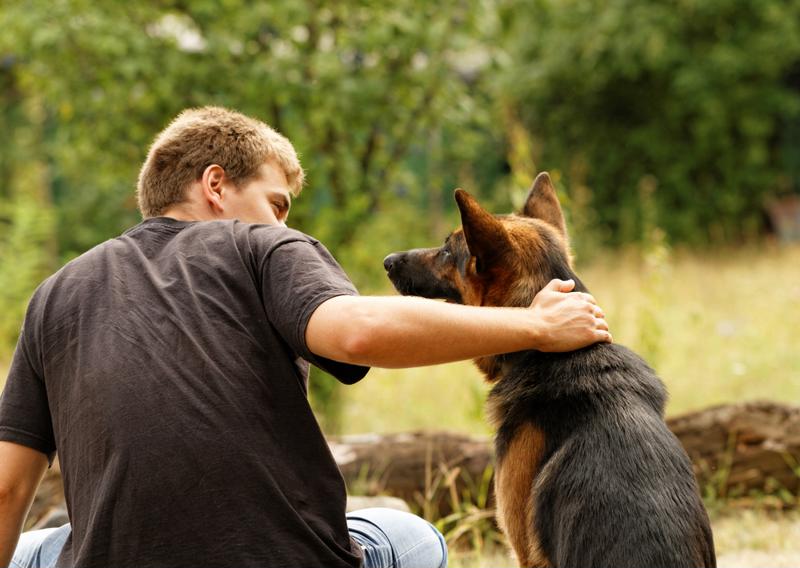
Numerous studies have shown that veterans struggling with a number of physical or mental health issues tend to do better in their everyday lives with the help of service animals. To that end, greater efforts are now being undertaken all over the country to connect vets with dogs and other creatures to help them navigate any given day. The stakes here are quite high, because while many people aim to help vets in any way they can, it's not always easy to actually connect them with these sometimes life-saving animals.
Often, a properly trained service animal can cost a vet thousands of dollars or more, and while the help these creatures provide is priceless at the end of the day, putting together that kind of money isn't always easy, according to a report from the Independent Journal Review. As a result, federal lawmakers and a handful of veterans are working to pass the Puppies Assisting Wounded Service Members (or PAWS) Act, and things seem to be going well early in the legislative process.
Easy to get onboard
Most lawmakers are willing to help out vets legislatively whenever they can, and when they can put a face – or in this case, faces – to the cause, it becomes even easier to pitch financial assistance for vets who need service animals, the report said. That's where Cole Lyle – who had depression and anxiety when he left the Marines in 2011 – and his service dog Kaya come in. They've been making the rounds on Capitol Hill in support of PAWS for some time, and lawmakers have been eager to meet with them.
"Service dogs are not supposed to be petted, but one day a member called me into his office," Lyle told the site. "He told me, 'I already read your bill so you don't have to pitch me. I just want to cuddle with your dog.' Apparently he was having a stressful day. It just speaks to the power of service animals."
Lyle recently graduated from Texas A&M University with a degree in political science and says he couldn't have done it without Kaya, the report said. Now he's turning his attention to law school and living in Washington, D.C., and hopes they can get the PAWS Act passed so more vets can enjoy the same benefits.
Help from the private sector
In the meantime, many who have nothing to do with the legislative process are still working to help vets find service animals who can provide them with a calming presence on a daily basis, according to the Hagerstown Herald-Mail. In Greencastle, Pennsylvania, a professional dog trainer was approached by the Franklin County Veterans Affairs Office a few years ago and asked to help train dogs to work with vets suffering from mental issues as a result of their service. It was an easy decision.
"Utilizing (the dogs) to a greater potential really makes the dog a happier dog – they're working, they're happy, and they're enabling this veteran to have a better life," Helen Carlson, who runs the Good Dog Training School, told the newspaper. "The combination just fuels me."
In a little more than a year and a half, Carlson has successfully trained two dogs and placed them with local vets, the report said. The dogs are trained to do everything from simply being that calming presence to turning lights on and off, picking up items and opening doors. The program pairs vets with dogs and walks them through an 11-week training course, and Carlson also cares for a number of dogs herself.
These kinds of efforts can really pay off in the long run, but it's vital that work continues to expand veterans' access to affordable service animals.
There have been plenty of headlines in recent years about the ways in which health care systems – both public and private – sometimes fail veterans and their families. The good news, though, is that with increased visibility of these issues comes a stronger push to fix the problems former service members face in getting the care they need. And while that might not provide much relief right now, the ability to get those wheels in motion could pay off considerably down the road.
One such issue that recently began to gain attention in the Midwest is in Sioux Falls, South Dakota, where an elderly veteran who needed to go to the hospital was taken by ambulance to a non-VA care center, according to a report from the Sioux Falls Argus Leader. The portion of the bill that came from that hospital stay and wasn't covered by Medicare Part A came to nearly $10,000 and needed the VA to either approve or deny its coverage of those costs so his family could move forward.
That has yet to happen, despite the fact that the vet is now in hospice care, the report said. As a result, it may be difficult for his family to proceed with other issues they need to address.
A common problem
Unfortunately, long delays in getting VA approval for non-VA care when they have another insurer are well known among vets across the country, the report said. Hundreds of thousands have been left in the lurch over the years, and federal lawmakers have worked to draw attention to the issue. U.S. Senators Mike Rounds and Amy Klobuchar – a South Dakota Republican and Minnesota Democrat, respectively – have asked the VA to hurry this process along and resolve lingering financial problems for many veterans nationwide.
This comes in the wake of a ruling from the U.S. Court of Appeals for Veterans Claims made back in April, which said the VA should have to take care of vets' bills when another insurer is involved, the report said. However, the VA is appealing that ruling.
Other VA issues
Meanwhile, the VA is no stranger to controversial issues stemming from to how it handles veteran care and related issues, as evidenced by a recent investigation from USA Today. Specifically, the investigation turned up internal ratings for VA care centers across the country, which previously hadn't been shared with the public. As a result of the investigation, the VA moved to publish that data on its website so that people could more carefully evaluate the quality of care they might be able to receive in their regions.
"120 of the 146 medical centers saw some improvement."
"I am glad to see these ratings finally made public," U.S. Rep. Martha Roby, an Alabama Republican who has been pushing for the disclosures, told the newspaper. "This not only helps veterans know basic information about their health care options, it allows stakeholders in the community and members of Congress to demand better of the VA when improvement is needed."
The good news for veterans at this time is that greater publicity of the VA's struggles with quality of care seems to be pushing hospitals in the right direction, the report said. In all, 120 of the 146 medical centers listed – more than 82 percent – saw at least some improvement in their ratings from 2015 to 2016. Meanwhile, only five posted declines in quality of care during that same period.
But despite these improvements, federal lawmakers say they want even more transparency from the VA and pledge to work toward new ways for veterans to get as much information and high-quality care as possible, the report said.
Moving in the right direction
The good news is that veterans' feelings seem to match internal VA metrics for measuring quality of care, according to the Harvard Business Review. A recent poll found that 3 in 4 veterans say they get effective care and service from the VA, up from fewer than 2 in 3 a year ago, and organization officials say a big part of that improvement has come as a result of inward focus. The VA now works with medical professionals both from within and outside the military as a means of getting a more holistic view of how best to treat the nation's service members, which particularly helped to identify inefficiencies with previous systems.
Further, one of the big complaints about the VA was always that it was a little too rigid in how it dealt with veterans who needed care, the report said. Now, leaders say the organization is far more focused on principle. VA employees say they feel they have greater agency to achieve various goals they might not have if they were strictly adhering to rules and regulations.
Veterans who regularly tap VA services for their various health issues may see the improvements mentioned above slowly but surely, and that can provide some necessary peace of mind as they pursue a happy, healthy civilian life.
While the organizations, systems and legal frameworks available to veterans are far from perfect, there has been recent progress in several relevant areas. One improvement has been the increasing understanding of post-traumatic stress disorder and the greater number of solutions put into place to address it among veterans. Nonprofits and government agencies at all levels have taken divergent approaches to assist vets struggling with PTSD. Some of the latest breakthroughs have come in the form of new legal protections directly dealing with stress in the military.
Spending authorization bill addresses PTSD, other mental traumas
The recent National Defense Authorization Act conference report included a bipartisan bill designed to assist veterans with metal traumas, including PTSD. The piece of legislation was put forward by senators Gary Peters, Steve Daines, Thom Tillis and Kirsten Gillibrand, according to The Oakland Press. It ensures that when service members leave the military with a less than honorable discharge caused by mental trauma, there are structures in place to assist them. Disorders left untreated can become even worse for their sufferers, making such legislation vital.
"Discharges may sometimes be directly caused by the symptoms of mental trauma."
Less than honorable discharges typically cause veterans to become exempt from many benefits which take effect after their service. The news source noted that the behavioral issues that lead to such discharges can be minor, and may sometimes be directly caused by the symptoms of mental trauma. In such cases, it's clear that veterans need help and assistance, rather than a severed connection to further government programs.
"This legislation will give our brave men and women who are suffering from the invisible wounds of war an opportunity to access the benefits they've earned through their service," Sen. Peters said, according to the source. He praised President Barack Obama for signing the bill into law.
Sen. Peters is himself a former U.S. Navy Reserve lieutenant commander. He restated his efforts to ensure veterans have help from the federal government as they transition into civilian situations. Those with traumatic brain injuries, PTSD, or any mental conditions brought on by trauma, will stand a better chance of making that move due to the passage of the recent amendment.
More specialized assistance needed
While the aforementioned bill and others like it will undoubtedly help some veterans, there's always more to do in the fight against trauma-related disorders. According to Idaho news channel KIDK, there is a need to focus on mental health services specifically for female veterans. With more women serving in the military than ever before, it stands to reason that they are being increasingly affected by the issues that can harm service members.
Army veteran Kelly Thompson told the news source that more specialized offerings are necessary, as female veterans sometimes feel hesitant to speak out about their experiences, especially if they are related to sexual harassment or assault. KIDK noted that the Female Veteran Suicide Act, signed into law by President Obama in June, tasks the Department of Veterans Affairs with investigating new ways to ensure female veterans receive the help they need. The suicide rate among female vets is six times that of women who have never served, and demands immediate attention.
When veterans get home from serving their country, many have a number of options available to them. And while some take job offers straight away and others choose to start their own businesses, a healthy portion instead decide to head to a college campus in pursuit of a degree. However, some of them may have a difficult time adjusting to the difference between military rigor and civilian life, and therefore need a helping hand to re-acclimate themselves. Fortunately, many colleges and communities are now investing in counseling and other mental health services to specifically serve these veteran students.
Experts generally agree – and there's also plenty of anecdotal evidence to suggest it as well – that it's not always easy for veterans to make that transition without help, according to a report from the Military Times. As a consequence, more schools are recognizing this issue and devoting significant resources to helping vets feel connected to their classmates and communities.
How they do it
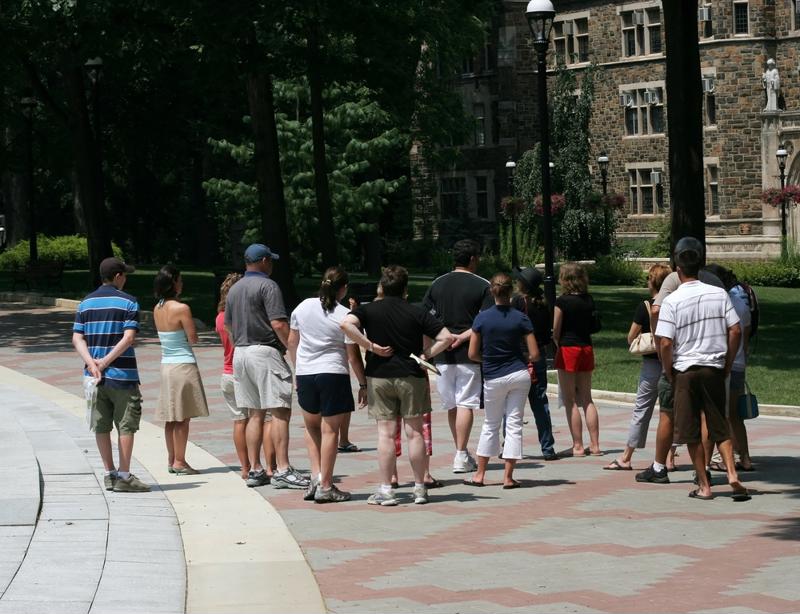
The first step most colleges take when it comes to making campus veteran-friendly is to reach out to vets to talk to them about their options for assistance soon after they first apply, the report said. That way, the former service members will often be able to weigh how best to proceed even before they arrive on campus. And once they do, veterans attending some schools may find their new communities have also developed veteran-specific orientation programs to better familiarize them with campus life.
"Most colleges reach out to vets soon after they first apply."
Next, it's vital for various veteran support services to coordinate carefully throughout the year so that they catch any problems veterans may encounter before they become significant issues, and work together to support former service members through any difficulties they may have. That can include working with professors to adjust exam times and class scheduling to better accommodate each veteran's specific needs. In the end, everyone on campus wants to see veterans succeed, so this level of coordination is typically undertaken enthusiastically.
"To come on campus in your mid-20s after having served, having nothing in common with your peers, it tends to generate feelings of separation," Retired Army Lt. Col. John Bechtol, who now serves as assistant dean of students for veterans' services at the University of Wisconsin's Madison campus, told the publication. "Even beyond considerations of post-traumatic stress and other mental health issues, there's often just this sense of loneliness, a feeling of being disconnected from their classmates."
Other forms of outreach
Of course, help in the classroom is often easy to coordinate, but if vets don't feel like they fit in, that can present its own challenges, according to Tulsa, Oklahoma, television station News On 6. And at the University of Tulsa, the school recently received a grant to deal with these issues specifically. The money went toward new appliances, flooring, and paint for the school's Student Veterans Center, and crews – which included campus veterans – worked hard to get the job done quickly.
The recently completed renovations on the center allow former service members – many of whom are several years older than the majority of their classmates – to connect with fellow students who also served and potentially foster a small community that can rely on each other in addition to school-provided services, the report said. But the building will also be home to counseling and career services specifically aimed at vets, so it becomes something of a one-stop shop.
"Outreach from other local veterans' organizations can still be a huge help."
Off-campus help
Finally, outreach from other local veterans' organizations that aren't specifically college-focused can still be a huge help to service members who are just getting home from duty, according to The Leader of the Wildwoods. Organizations such as the American Legion can help connect vets of all ages with access to all the benefits that are rightly due to them, which isn't always easy. This can be especially true when it comes to the kind of health care more recent veterans may need on an ongoing basis.
"VA members have come down to help maximize benefits, and to promote community-based health care," Michael Francis, veterans liaison for U.S. Rep. Frank LoBiondo, told the newspaper at a recent VA event. "We're trying to maximize the health care the veterans are getting already."
One of the newer VA offerings that is catching on with vets regardless of their backgrounds is the telemedicine option that can help eliminate wait times for care at VA facilities, the report said. While some may not be totally comfortable with the idea, those who have used it say it's just another resource that can go a long way toward helping vets deal with whatever issues they may be dealing with.
For years, there has been a commitment at nearly all levels of government to get homeless veterans off the streets and into stable housing situations. Through a number of different efforts, some cities – and even entire states – have successfully whittled the number of homeless former service members down to zero, and others continue to diligently work toward that goal in many areas across the country, often with the help of the private sector as well.
One place where a nonprofit is working in conjunction with local officials to eliminate the scourge of veteran homelessness is Milwaukee, where the Milwaukee Homeless Veterans Initiative helped close to 350 vets get some sort of housing last year alone, and is on track to hit that number again this year, according to a report from Wisconsin Public Radio. However, the organization says it is overwhelmed because there are just so many homeless vets in the area, and many of them just can't check all the boxes when it comes to government efforts to put them into housing.
What can go wrong?
There may be many reasons why homeless vets may struggle to find government-provided assistance in dealing with their housing issues, the report said. For instance, those who lose jobs unexpectedly can quickly find themselves on the street again, and if they are victims of domestic violence that can raise a number of problems as well. There's also a general shortage of housing options for many of them because some landlords are wary of giving discounted rates to those who had previously been homeless, an unfortunate but all too common stigma. To that end, the city of Milwaukee recently donated $5,000 worth of mattresses and other bedding to the organization.
"So many veterans fall through the cracks. Not everybody has access to the same thing," Kirsten Sobieski, executive director of the Milwaukee Homeless Veterans Initiative, told the station. "So even though there are programs in place for veterans to receive vouchers for housing, a lot of them we're serving are not eligible for vouchers. So many of them are sleeping in cars. So many of them are staying out of the public places where people tend to see homeless individuals during the day and in the evening. There's a pride factor. A lot people that are homeless do not want people to know that."
Regions relying on federal dollars
Meanwhile, in Oregon, the U.S. Department of Housing and Urban Development recently announced that it would provide nearly $35 million in assistance to 130 Oregon-based efforts to reduce homelessness in general, according to the Bend Bulletin. Included in that money is about $27,000 earmarked for the Central Oregon Veterans Outreach, with the specific goal of helping disabled vets with a history of regularly becoming homeless into more stable and hopefully permanent housing situations. Likewise, another $14,000 will go toward helping veterans who have children.
The organizations in question will not receive this funding until July 1, 2017, and a large portion of the total $34.7 million will be directed to solving homelessness issues in Portland, specifically, the report said. The reason why that's the case is simple enough: Larger cities tend to likewise have larger homeless populations that need assistance.
"Unfortunately, many homeless vets say they don't want a hand out."
Florida's efforts paying off
Finally, a private effort in Florida is starting to pay dividends alongside government-run services, according to a report from Palm Beach television station WPTV. In Palm Beach and Indian River Counties alone, there are about 200 homeless veterans living on the streets, so the Stand Down House in Lake Worth is working with the West Palm Beach VA Hospital to address the issues those former service members face on an ongoing basis. Stand Down House relies heavily on private donations, while the VA hospital obviously receives its funding from the federal government.
One of the big issues relates to the pride factor mentioned above: Unfortunately, many homeless vets say they don't want a hand out and want to try to work through their issues on their own, the report said. However, those who rely on private and public assistance tend to get up on their feet a lot more quickly. Even that level of basic stability is a big help for many vets on their path to get off the streets.
"I never wanted to exploit the name veteran. So I was always scared to say, 'I need help, I'm a veteran.' That just doesn't sound right to me," Kandyss Touchstone, an Air Force veteran who now receives assistance from local providers, told the station. "I can plan ahead now instead of just for today and I know where I'm going now versus I didn't know where I was going before."
Any organizations trying to assist homeless veterans can provide a world of good for them. As a result, experts generally hope that more local, state, and federal efforts will come along in the near future to further those efforts.