
One of the biggest issues many veterans face when they return home from service, and sometimes for a while afterward, is that it's not always easy to find a steady job. Fortunately, many companies now look to focus their hiring efforts specifically on veterans, and organizations also exist to help organize events at which vets can find work.
For instance, the U.S. Congressional delegation representing Delaware recently set up a pair of job fairs for veterans at Wilmington University in Dover, according to the Middletown Transcript. In all, 40 employers, including private enterprises and state and federal agencies, were in attendance. The event drew 50 vets and active military personnel with polished resumes, and another was scheduled for nearby Middletown, Delaware, a few days later.

Why is this important?
One of the problems former service members face when they try to find work is unfair stigmas about their applicable work experience and other issues common among veterans, the report said. However, anyone who has been in any branch of the military for a number of years has probably cultivated several highly valuable qualities – from intangibles such as leadership and teamwork to clear on-the-job skills – that put these individuals in a great position to contribute for any employer.
"Veterans have tremendous skills that can be used in almost any capacity," retired U.S. Air Force Col. Ron Sarg, chairman of the Delaware Commission of Veterans Affairs, told the newspaper. "Veterans know how to work as a team, and they know how to work independently. They can easily identify with any company's objectives."
Going high tech
In addition, efforts are also underway to help train veterans for jobs that already relate to the skills they've developed, if not their real-world experience, according to the Providence Journal. The U.S. Department of Homeland Security recently partnered with Hire Our Heroes to offer free cybersecurity training classes that can prepare former service members for careers in IT. The Veterans Cybersecurity Training and Education Guide offered by DHS can help vets determine how prepared they are to begin this training, and once they are ready, up to 800 hours of courses are available for free online. About 100,000 vets have used the program so far.
This kind of job opportunity may be crucial for veterans because IT security plays into strengths they likely developed in the military, such as critical thinking and analytical examination of a potential problem, the report said. Moreover, IT security jobs generally pay quite well, with such a position currently carrying an average annual salary of about $116,000.
It shouldn't be incumbent upon veterans to show why such a relationship can be mutually beneficial, but if organizations can make those strides on their behalf, that's vital to ensuring veterans' future prosperity. However, when job fairs and other hiring events take place, veterans should have a resume ready to go so they can seize the opportunities that might be available to them based on their skillsets.
The health risks and challenges facing veterans demand attention from the medical establishment. These are individuals who have given years of their lives for their country, risking extraordinary harm, so it is important that their physical and mental health alike receive attention and are not pushed aside. According to the Providence Journal, some important medical research is being helped along by veterans themselves, who have volunteered their genomic information for a database being run by the Department of Veterans Affairs. The Million Veteran Program aims to create a huge genetic database to unlock new health information and help formulate treatments.
Over 500,000 have enrolled
Gathering complete genomic data from blood samples and creating a huge database could be very helpful in identifying causes of and cures for serious medical conditions. To this end, the VA is seeking volunteers to become part of the Million Veteran Program and, the Providence Journal reported, has been very successful in its mission.
More than 500,000 individuals have joined the testing pool, which is currently the largest database of its kind. The program has been underway for five years now. In addition to logging genomic data, veterans respond to surveys about their health and their experiences during and after their military service. Between these answers and the hard data encoded in the blood samples, scientists have plenty to work with.
The news provider explained that many of the ailments studied by researchers working with the program are those that directly affect veterans more frequently than other populations. For instance, blood pressure issues, tinnitus and cancer strains common to service members are all subjects of study. By donating their time and the records of their genetic information, veterans are aiding in research that could be hugely relevant to their quality of life.
"We believe MVP will accelerate our understanding of disease detection, progression, prevention and treatment by combining this rich clinical, environmental and genomic data," said VA Undersecretary for Health Dr. David Shulkin, according to the Providence Journal. "MVP will allow the nation's top researchers to perform the most cutting edge science to treat some of the nation's most troubling diseases."
New approaches to veteran health care
Intensive research into health conditions that affect veterans is only one component of treating these issues. High-quality care facilities and programs are also needed to put the results of that research into practice. Health Data Management recently spotlighted an increasing focus on telemedicine among VA providers, in an attempt to see more patients without physical hospital visits.
The news provider explained that the VA is one of the most noted and advanced telemedicine users among all medical systems, with the programs being especially helpful when dealing with individuals who live in rural areas, far away from the nearest hospital. Travel time can be eliminated when experts use video technology to see what is going on at satellite clinics, or even in patients' own homes. In 2015, 677,000 veterans used telemedicine systems to converse with doctors. That impressive total accounted for 12 percent of all veterans in the country.
Creating adequate accommodations for homeless veterans is an urgent priority for communities around the country. It's shocking to think that individuals who have given so much for their country could end up in such a desperate situation. Fortunately, there are efforts underway to end or drastically reduce veteran homelessness. Each region has its own particular needs, and as such these programs will differ geographically, but the goal remains the same. Whatever the rate of homelessness amongst veterans is in a particular town or city, anything over zero is too high.
Austin programs certified as successes
When a city creates enough housing to get every one of its homeless veterans off the streets, it is a momentous occasion. According to the Austin American-Statesman, that milestone recently passed in Austin, Texas. The capital is now the third city in its state to earn federal certification of a zero homelessness rate among veterans. The source specified that the figure does not indicate that no veteran will ever become homeless in Austin, rather that the city has enough housing to offer these individuals places to stay if and when they lose their current accommodations.
The news provider explained that there are two main programs at work in Austin. The city has received 454 vouchers from the Housing and Urban Development department and implemented Supportive Housing, offered by the Veterans Administration. The city had to apply for fewer vouchers than Houston and San Antonio, the other two Texas cities that received certification of net zero veteran homelessness. Houston had a particularly hard time housing its vet population, needing 1,127 vouchers.
Cities ending veteran homelessness are seen as taking an important first step toward getting quality of life back on track for their military populations. The American-Statesman spoke with U.S. Housing and Urban Development Secretary Julian Castro, who explained that other efforts to integrate individuals back into civilian society all flow from housing. If people have a solid place to live, other efforts such as health care and social programs can be implemented. Voucher systems have kick-started this process of housing.
New Jersey cities step up efforts
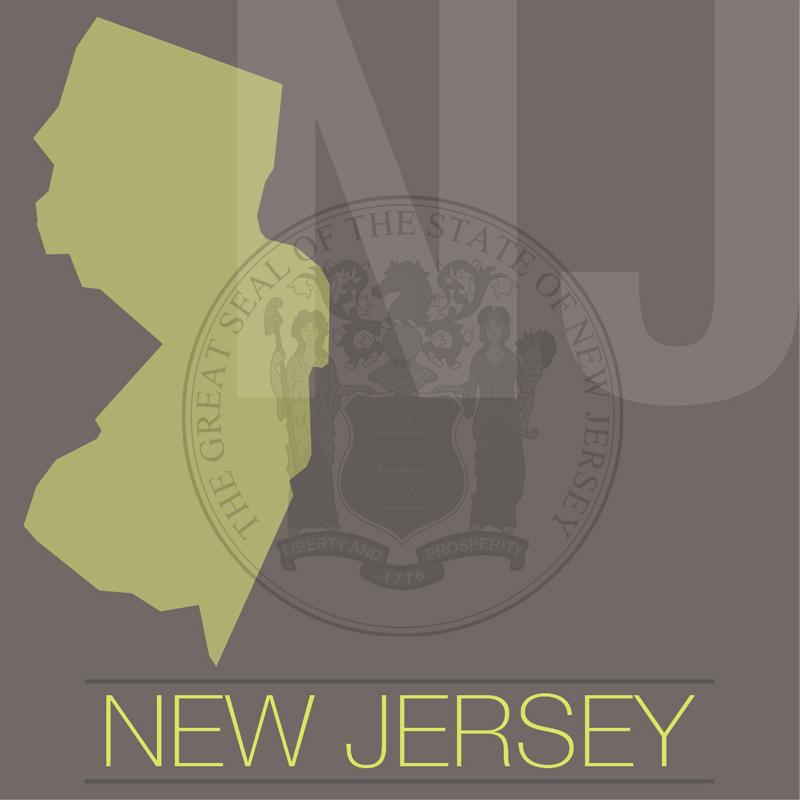
New Jersey radio station NJ 101.5 explained that the city of Brick has recently signed a pledge to eliminate veteran homelessness, along with numerous other leaders in counties, cities and towns all over the state. Bergen County has shown the way, with its rate of zero being certified by the federal government early in August. If other communities can equal this feat, the results for the state will be highly positive – according to recent data, 556 vets are still homeless in New Jersey.
The news provider added that Brick Mayor John Ducey is interested in creating 40 housing units for veterans. Getting the complex built, however, may take some doing – current state laws do not allow counties to fund developments that are just for vets. Previous results in the Garden State have been positive, with 1,838 homeless vets receiving homes between July 2015 and 2016.
There are few professions more strenuous than serving in the armed forces. Therefore, when veterans return home, it's only right that groups exist to help them deal with the burdens they have acquired during their time fulfilling their duties. These helpful programs can take many forms, and because individuals and their circumstances differ so much from one case to another, this diversity of approach makes sense. The only wrong answer would be to do nothing for veterans who need assistance getting their lives back on track and accomplishing the difficult transition from the rigors of active duty to civilian life.
Healing with horses
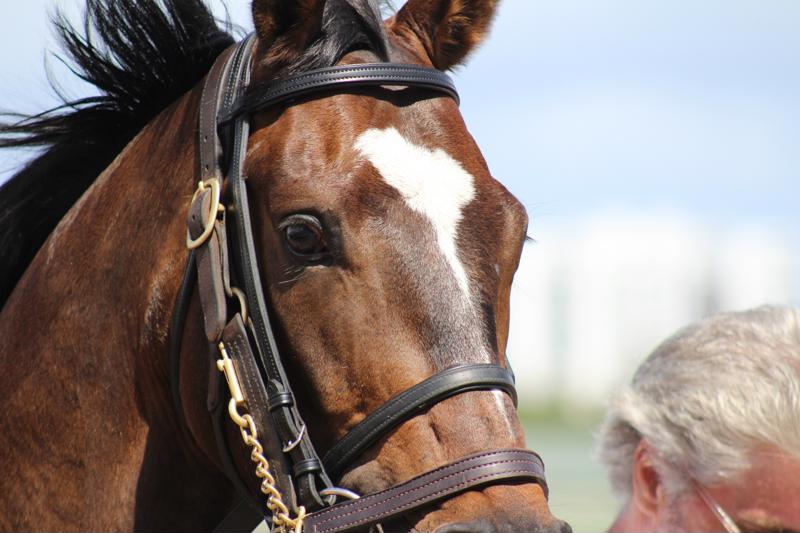
Sometimes, spending time in the company of horses can have the healing effects veterans need. Idaho news provider the Times-News recently profiled Horse Therapy, a group that offers free sessions to veterans to help with mental health issues. The organization earns its funds through a thrift store, which opened in March to support veterans programs and allow them to be offered without cost.
According to the Times-News, Horse Therapy began with a program to help troubled young people but expanded its mission to assist local veterans. It combines equine therapy with modern techniques that scan activity in the brain and generate soothing tones to counteract aggravation. By helping patients meditate and relax, the sounds are being used to assist veterans dealing with post-traumatic stress disorder. Symptoms such as anxiety attacks can be extremely disruptive in day-to-day life, highlighting the importance of seeking out treatment.
Programs around the country
The Idaho-based program above is far from the only organization committed to using horses as therapy animals. The Associated Press profiled another such group, the Right Path Riding Academy. That organization, based in Drumwright, Oklahoma, received a grant from the Disabled Veterans National Foundation to keep its Hooves on the Ground classes for veterans going.
When veterans come to Right Path, they learn the basics of horsemanship. Over the course of the program, the horses can have a healing presence, helping participants come out of their shells and engage with others more. For those suffering from PTSD and other afflictions, that transformation is particularly important and potentially life-saving.
A third such equine therapy organization exists in the towns of Harvard and Poplar Grove in Illinois. BraveHearts bears the distinction of being America's largest horsemanship group catering to veterans, the Northwest Herald reported. It is a pioneering organization in the field of equine therapy, with some of its work being adapted into curricula by the Professional Association for Therapeutic Horsemanship International.
Paddy McKevitt, director of operations at BraveHearts, told the news provider that the healing that occurs in participants does not occur at a uniform speed. While everyone reacts to the horses differently, however, the results have been positive and encouraging, with trust and communication emerging and lives being changed for the better. One veteran, Mitchell Hedlund, told the Northwest Herald that without the help offered by the program, he believes he would be one of the many veterans to fall victim to suicide. Working with horses literally saved him.
Running across the country is a difficult task for anyone to complete, let alone a 93-year-old service veteran. However, that's just what World War II vet Ernie Andrus did over the course of three years, starting in San Diego and concluding his journey in St. Simon's Island, Georgia.
Andrus, who served as a pharmacist's mate in the 1940s, ran to raise money for the upkeep of a WWII-era amphibious tank-landing ship known as the LST 325, which is currently housed in Indiana, according to a report from the San Diego Union-Tribune. The hope was to gather enough money to send it back to France for the 75th anniversary of D-Day in 2020. The run took three years and covered more than 2,600 miles.
An inspirational journey
An estimated 200-plus people greeted the vet in Georgia, and since he began his journey, he's run with potentially thousands more, according to a report from Georgia television station WTOC. Andrus is the oldest person in U.S. history to run the breadth of the country.
He ran three days a week over the course of his journey and inspired many along the way, the report said. He told the station he got the idea when he received plenty of local news attention for running in a relay race about five years ago.
"If an 88-year-old man gets this much attention in a relay race, how about a 90-year-old running coast to coast? So I decided right there, I'm gonna do it," Andrus told the station.
What's the takeaway?
Many Americans should take to heart the fact that Andrus ran to raise money for a cherished piece of military history. Veterans do plenty to help each other and their communities on a regular basis, and acknowledging those efforts is vital.
Seeing parades and other events that honor veterans is a common occurrence, but that shouldn't diminish the importance of these gatherings. Publicly celebrating military personnel is a great way to show that their commitment and sacrifice for their country is appreciated. People from all walks of life can take part in these celebrations, bringing communities together to salute the heroes in their midst.
Communities can host these events, and they can be organized around patriotic holidays or become local traditions in themselves. There's plenty of room for variation, and every town or city can salute its veterans in its own way. Here are two recent examples of this type of celebration in action:
Iowa State Fair parade salutes all military branches
The Des Moines Register recently reported from the Iowa State Fair, where a massive parade contained groups honoring veterans from many different branches of the military. The parade consisted of military bands and color guards, as well as delegations from Iowa Veterans of Foreign Wars chapters. Eight members of the Paralyzed Veterans of America joined the parade in wheelchairs, drawing applause from a crowd eager to thank them for their service.
The news provider noted that the Iowa State Fair is generally very supportive of the U.S. military. In fact, even when it shut down for four years during World War II, the grounds ended up helping the war effort, acting as a supply depot for the Army. These days, the annual parade follows the outer edge of the Iowa State Fair and lasts over an hour. The fair is a place where veterans often receive spontaneous thanks for their contributions.
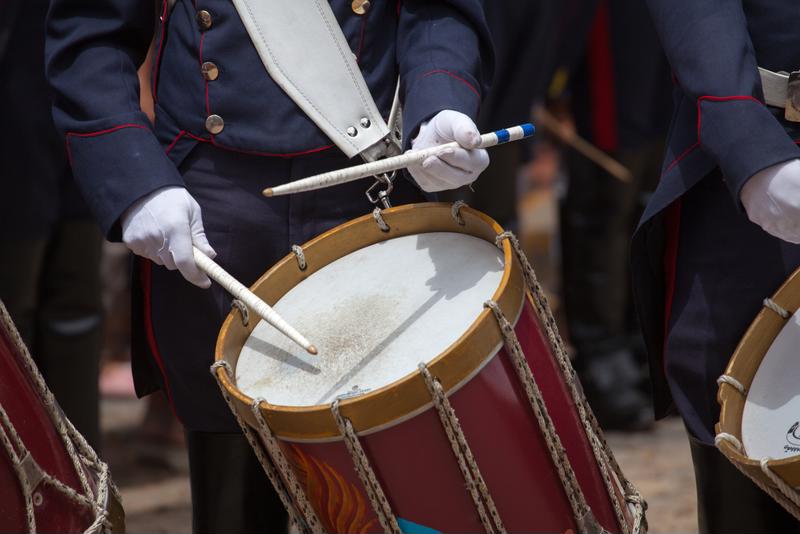
As far as events to honor vets go, this is a large-scale display. The Register noted that in addition to the color guards, bands and veterans organizations, many types of vehicles and horseback riders participate, as well as volunteers holding a massive U.S. flag – 20 feet by 38 feet. These patriotic displays should serve to reassure veterans that their contributions are close to people's hearts.
Communities of all sizes
While the Iowa State Fair is a major example of a parade to honor service members, these types of events can be held in small towns and cities with a great deal of success. The Post-Journal in Jamestown, New York, recently reported that the neighboring community of Randolph has held its first parade for Randolph Veterans Appreciation Day.
The news source explained that the gathering saw participation from veterans of conflicts from World War II to Iraq. The event concluded with a ceremony to honor the vets at the town's fire hall and was declared a success by organizers. Due to this positive reception in the parade's first year, it will soon become an annual event – Randolph aims to hold a second Veterans Appreciation Day next August. It's a positive sign that no matter the size of the community, chances are there are veterans living there, as well as groups and individuals ready to salute them.
Over the past few years, cities, states, and even the federal government have devoted a lot of energy and resources to reducing veteran homelessness. And though those efforts have fallen short of their stated goal of all but eliminating the problem, there are still hundreds of thousands of veterans now in more stable living conditions than they experienced before. Furthermore, experts are getting more creative about how they can help even more.
One recent idea that seems to be gaining traction plays on an existing trend in the housing industry in general, according to the Racine Journal Times. "Tiny houses" have grown quite popular, particularly among younger adults, and as the name suggests provides living conditions in very small increments. The way this may work to help homeless veterans would be to build a number of these structures on a plot of land in a sort of "veterans' village" that centralizes assistance and fosters a sense of community among those who are struggling.

A closer look
An organization called Veterans Outreach of Wisconsin has plans to build such a community in Racine, with a goal of creating more permanent housing for homeless vets, the report said. Some vets may find this situation preferable because they will get their own living quarters, and won't have to share a room with anyone. The proposal calls for 15 tiny houses on the property, but has yet to be approved by local authorities.
"[W]e're not just giving them a place to stay, it's not just one thing that we're doing, we're providing the whole package to give them a hand up," Jeff Gustin, co-founder and director of Veterans Outreach, told the newspaper.
Making a dent
Government data shows that over the past year, the number of homeless veterans living on the streets nationwide is down 17.4 percent, a drop of about 8,000 people, according to the Youngstown Vindicator. In the six years since the federal initiative was launched, the number has fallen 58 percent. Meanwhile, two states and 27 major cities now report they have effectively eliminated veteran homelessness within their borders.
The more creative organizations can get when it comes to finding solutions for this problem, the better off both they and the veterans living there will be. Often, all former service members need to get back on the right track in life is a little bit of help initially, and finding ways to provide it is becoming more popular.
Fresh air and physical activity can prove relaxing and invigorating for individuals who face physical and mental difficulties. The great outdoors may, therefore, help veterans coping with the strenuous effects of combat or the shock of returning to civilian life.
There are numerous groups and organizations around the country dedicated to ensuring that when veterans need to get out of cities and towns and experience the calming properties of nature, they will be able to make the trip. These efforts can be key elements in the healing process and steps on the path back to wellness for vets dealing with a variety of challenges.
Grand Canyon outing brings healing
As far as awe-inspiring natural sites go, the Grand Canyon tops them all. As the Pittsburgh Tribune-Review recently reported, Canyon Heroes is a program founded in 2012 to bring vets to the national park to experience the landmark in person. Since its beginnings, it has grown quite popular. Originally, a single veteran made the trip. This year, the party totals 24 and is set to spend seven days experiencing nature and recovering from the mental strain the guests experienced in the military and afterwards.
According to the news source, four therapists will run the event and provide direct aid to the campers. Nine of the 20 vets making the trip this year are women, which organizers said is a new high and a result of the greater number of female service members in all the armed forces. After the trip ends, the therapists will stay in contact with the veterans, studying the effects that spending a full week in the natural surroundings had on the participants' mental health and overall outlook.
A number of organizations fund Canyon Heroes. Donations cover the costs of renting the rafts and the plane tickets that get the veterans from their homes around the country to Las Vegas, where the trip begins. The founder of Canyon Heroes, Margery Hermann, told the Tribune-Review that she has seen improvement in 85-90 percent of participants since the organization began its mission four years ago.
Teamwork through mountain climbing
The Cascades also play host to healing nature outings for vets, with the rugged terrain leading to tough climbs that test individuals' mettle. The Rocky Mountain Collegian, Colorado State University's newspaper, recently focused on one of the school's graduates, Nathan Perrault, who took veterans on a mountain-climbing expedition to Mount Rainier. Perrault, himself a Marine Corps veteran, led the team over 10,000 feet up in a climb that took multiple days.
The news provider explained climbing mountains acts as a form of empowerment for vets who may have difficulties re-integrating with civilian society. Leadership and teamwork are important on the climb, and each individual makes major contributions to getting the group safely to the summit. A nonprofit group called Veterans Expeditions supports the journeys and hopes its trips help participants form strong bonds as they experience nature together. These teamwork-intensive sojourns counter the isolation vets may feel.
Ending veteran homelessness is an effort that has gone all the way to the top, with officials up to and including President Obama committed to ensuring that when soldiers return from duty, they have safe places to live. While it's good to have high-profile projects and initiatives dedicated to housing veterans, it's also important to have local and regional authorities, as well as private organizations, renew their commitment to getting vets off the streets in their own communities. A few of these notable undertakings deserve a spotlight, as they are doing important work to help veterans going through difficult times re-integrate with civilian life.
Hotel renovated into refuge for homeless vets
In Macon, Georgia, an old hotel is being converted in Home Port, a complex of rooms for veterans to stay in, local TV station WMAZ reported. With many vets lacking any place to go, the hotel has already filled 11 rooms and hopes to convert 80 more. It is searching for assistance in finishing the work, hoping that the county commission will fund its continued development. Volunteer work from the public is also welcome. Home Port has already seen good results from the rooms it has been able to offer and hopes the rest will be ready soon.
The partners behind the project are currently able to prepare approximately one room every week for habitation. They are hoping to become faster once they secure the funding they seek. Veterans who already live in the ex-hotel space have found it pivotal in helping them through rough transitional periods, when they may not have anywhere else to go. One resident, Tommy Barron, explained to WMAZ that he can live at Home Port with his dogs, and that the feeling of camaraderie is strong between the vets staying there, fostered by their shared military background.
Mac McAfee, the maintenance manager in charge of converting old hotel rooms into new living spaces, told the news provider that Home Port can provide security in the form of meals or clothing for those who are at their lowest. When vets are suffering through periods of homelessness, organizations such as these can be life-savers.
SA's only shelter for homeless veterans got a special gift helping the city keep its goal of leaving no one behind. https://t.co/ZrzcWtFpoJ
— KENS 5 (@KENS5) August 12, 2016
Donation renews San Antonio shelter
A recent report from San Antonio's KENS highlighted another effort to renovate and improve a specialized space for homeless vets. The American GI Forum's Residential Center for Homeless Veterans houses 140 individuals, and has just received $29,000 from local company Briggs Equipment to ensure its kitchens and outdoor spaces are up to par. The city of San Antonio has demonstrated it is capable of providing homes for its entire homeless veteran population.
Even in a city that is so well prepared, there is a need to keep the shelter open and ready to help. American GI Forum National Veterans Outreach Program President and CEO Carlos Martinez told the news provider that 53 more veterans become homeless each month in the San Antonio area alone. This has turned a shelter that was intended to be temporary into a permanent refuge for those most in need.
Veterans' needs when they return from the military to civilian life can go beyond the obvious. Organizations hoping to help military personnel re-integrate into their communities can find plenty of niches where assistance would make a major difference – for instance, legal services could be inaccessible to veterans for reasons of time or money. Fortunately, organizations do exist to offer legal help to veterans and guide them safely through the challenges they may face.
Houston Bar actively helping vets.
Filing claims and having them approved can be a long and complex process, one that may require more time and money than veterans can summon without help. According to Houston Public Media, this is why lawyers' organizations such as the Houston Bar Association offer free legal advice and assistance clinics for veterans. Attorney Kevin Clark explained that he feels a sense of duty to help service members, and that has encouraged him to donate his time and expertise.
The kinds of cases solved by the legal helpers vary widely. The news provider gave examples including lawsuits over housing code violations, domestic cases and benefits claims. Individuals struggling with the challenges of leaving the military may lack the time and money to win their cases, even when they are in the right. This is why the free legal clinic is such a helpful option. The number of individuals served over its eight years in existence – 14,000 – is a clear indicator that the program appeals to a wide variety of veterans.
As with many plans established to assist vets with everyday needs, the legal clinics are made possible by outstanding efforts by volunteers. Houston Public Media reported that the Houston Bar's program has called on services from over 500 attorneys. By donating their time, these individuals closed more than 1,000 cases in the course of a year. These lawyers have provided more than 15,000 hours of legal services, making a big difference in the lives of local veterans. Having someone step in to assist with a case can lift a huge weight from a vet's shoulders.
ABA's Veterans Legal Services Initiative aims to create online resource, mobilize lawyers https://t.co/E7guqP5m4F pic.twitter.com/pQPdD4mj5N
— ABA Journal (@ABAJournal) August 10, 2016
National effort ramps up
The Houston Bar isn't the only part of the Bar Association making moves to help vets. According to the American Bar Association's official outlet, the ABA Journal, the organization's president Linda Klein has committed to new programs that will further solidify services for military members. A 20-person commission will decide which services will be added as part of the ABA Veterans Legal Services Initiative. The news provider reported that a new online portal and partnerships between lawyers and the medical community could be in the pipeline.
In addition to the above ideas, the Veterans Legal Services Initiative may include a new proposal for local bar associations and legal schools. Under this program, veterans will receive legal services from lawyers who are in training. The young legal professionals will receive valuable experience performing their duties, while the vets get assistance with any pending litigation or claims. Efforts such as these, implemented across the country, could make a huge difference for veteran populations.