
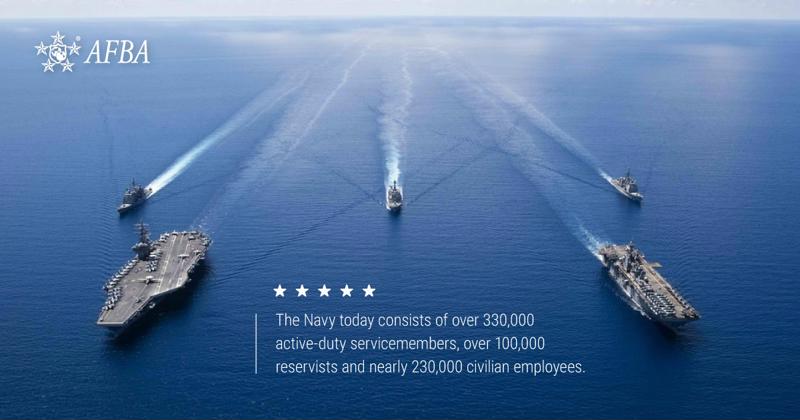
Sunday, Oct. 13, 2019, marks the 244th birthday of the U.S. Navy. Although it began with just two ships and a 160-person crew, the Navy today consists of over 330,000 active-duty service members, over 100,000 reservists and nearly 230,000 civilian employees.
The 244th Navy Birthday and Heritage Week honors well over two centuries of courage, loyalty, sacrifice and service. Additionally, this year's commemoration coincides with a major Naval milestone, the 75th anniversary of the Battle of Leyte Gulf.
The birth and growth of the Navy
The U.S. Navy was born on Oct. 13, 1775, upon the passage of a resolution by the Continental Congress. The Continental Navy, as it was then known, was designed to protect the soon-to-be-independent colonies from British advances at sea.
The second-oldest branch of the military didn't restrict its sights to the seas; naval aviation was introduced in 1910. Since then, a total of 68 aircraft carriers have been commissioned.
In response to the looming shadow of WWI, the U.S. Naval Reserve Force (USNRF) was established on Mar. 3, 1915. Initially composed of a few thousand Naval veterans, it welcomed civilians the following year. By the end of the war, the USNRF consisted of over 245,000 Reserve Sailors, including 12,000 women, which accounted for over half of the Navy. These "citizen sailors" continued to have a significant impact. During WWII, three million members of the USNRF joined over 570,000 active-duty Sailors in the line of duty.
Another enduring example of Navy service and courage is the Naval Special Warfare Unit, which includes the Navy SEALS, short for Sea, Air, and Land teams. Though the unit wasn't established until Jan. 1, 1962, its history reaches back to the various special operations teams formed during WWII.
From D-Day and the attack on Pearl Harbor to operations in Korean, Vietnam, and the Middle East, Sailors and Naval officers have played a central role in defending the nation during the most pivotal moments in history.
"No Higher Honor"
October 2019 marks a significant Naval milestone: the 75th anniversary of the Battle of Leyte Gulf, the largest naval battle of WWII.
In October 1944, during the most dramatic chapter of the Battle of Leyte Gulf, two dozen Japanese vessels made a surprise attack on Allied forces in what became known as the Battle off Samar. While Naval service members heroically defended their fleet, some ships were lost, including the USS Samuel B. Roberts (DE-413). She was later dubbed "the destroyer escort that fought like a battleship" in a Presidential Unit Citation award.
Lieutenant Commander Robert Copeland, the ship's Commanding Officer, later stated that there was "no higher honor" than having commanded such a valiant crew. The theme for the 244th Navy Birthday and Heritage Week is "No Higher Honor" in remembrance of this occasion.
Honoring 244 years of service today
Across centuries of war and peace, Navy sailors, officers, reservists, veterans and civilian members have braved the depths of the sea in submarines and soared through the skies in fighter jets. Through it all, the Navy has held a steadfast presence over land, air, and sea, protecting the seas and shaping the nation's future.
Today, the honorable, unyielding spirit of the Navy can be captured by two phrases: its unofficial motto, "Non sibi sed patriae," meaning "not self but country," and "Forged by the Sea," the branch's current recruiting slogan.
The week-long observance of the Navy's 244th birthday begins on Oct. 7 and continues with the celebratory Navy Birthday Ball on Oct. 12 in Washington, DC.

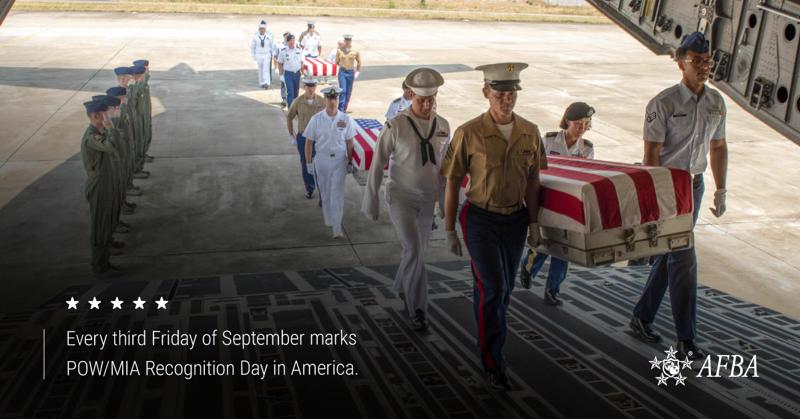
The words "You are not forgotten" are written on the familiar black-and-white POW/MIA flags flown across the country. While former and current prisoners of war and those missing in action are remembered year-round, every third Friday of September marks POW/MIA Recognition Day in America. That date in 2019 will be Sept. 20, a Friday to honor the sacrifice and memory of all POW/MIA servicemembers, as well as their families. Here's more information about the day of remembrance, POW/MIAs and what you can do.
Established in 1979
POW/MIA Recognition Day is not tied to any one armed conflict, but was began after a push by veterans of the Vietnam War. In 1979, Congress passed resolutions making the observance official while President Jimmy Carter issued a proclamation. Subsequent presidents have done the same to commemorate the date and its importance. During the first recognition day, a ceremony was held at the National Cathedral in the District of Columbia, whole other smaller services were held across U.S. military installations and communities. The day was initially held in July, before being moved to the third Friday of September in 1986.
As noted by the Defense POW/MIA Accounting Agency, Americans prisoners of war and unaccounted for date back to the American Revolution, but it took more than 200 years for the country to recognize them. Appreciating the importance of POW/MIA Recognition Day means understanding the sacrifice of those fighting to protect the U.S.. According to the accounting agency,
- More than 82,000 Americans remain missing from WWII (72,669 missing), the Korean War (7,624), the Vietnam War (1,587), the Cold War (126), and the Gulf Wars/other conflicts (6).
- 75% of losses happened in the Indo-Pacific.
- 41,000 of the missing are presumed lost at sea (i.e. ship losses, known aircraft water losses, etc.).
A separate report prepared for Congress in 2005 detailed the number of prisoners of war:
- 130,201 World War II servicemembers were imprisoned; 14,072 them died.
- 7,140 Korean War servicemembers were imprisoned; 2,701 of them died.
- 725 Vietnam War servicemembers were imprisoned; 64 of them died.
- 37 servicemembers were imprisoned during conflicts since 1991, including both Gulf wars; none are still in captivity.
Iconography a big part of recognition
The POW/MIA flag is perhaps one of the more recognized symbols in America today, regularly flown at homes, post offices and VA clinics around the country. The flag itself actually predates POW/MIA Recognition Day. In 1970, the wife of a servicemember declared MIA in the Vietnam War contracted an artist and worked with the National League of POW/MIA Families to create an indelible image that would help create attention for their cause and honor POW/MIAs.
In 1982, it would go onto to become the only other flag to be flown at the White House. President Bill Clinton further elevated the importance of the flag and POW/MIA Recognition by designating the date as one of six when the POW/MIA flag is required to be flown at federal government locations: Armed Forces Day, Memorial Day, Flag Day, Independence Day and Veterans Day are the others.
Posters have been created to mark POW/MIA Recognition Day since at least 1999. These illustrated efforts have also become imagery associated with the day.
How POWs/MIAs are honored
Typically, ceremonies are held at military installations, federal government buildings, war memorials and in communities. The Pentagon holds an annual event, while some veterans groups will hold candlelight vigils and aerial forces fly a missing-man formation. Another form of recognition is the missing-man table. These ritual meals are commonly held on POW/MIA day: A seat and setting is left open for the POW/MIA being remembered. The Defense POW/MIA Accounting Agency has more information and etiquette for how to honor those held prisoner or unaccounted for.
Suicide among veterans and members of the Armed Forces continues to be a concern. As the numbers rise and persist, those across the military community are trying to find solutions that can help those at risk find help. Sometimes that may come through a creative outlet, as Operation Song has showed to be possible.
An organization that has teamed with the Department of Veterans Affairs, Operation Song connections veterans with musicians and songwriters. The aim? To translate pain, anxiety, experiences and suffering into song, and through that process achieve some form of therapeutic relief.
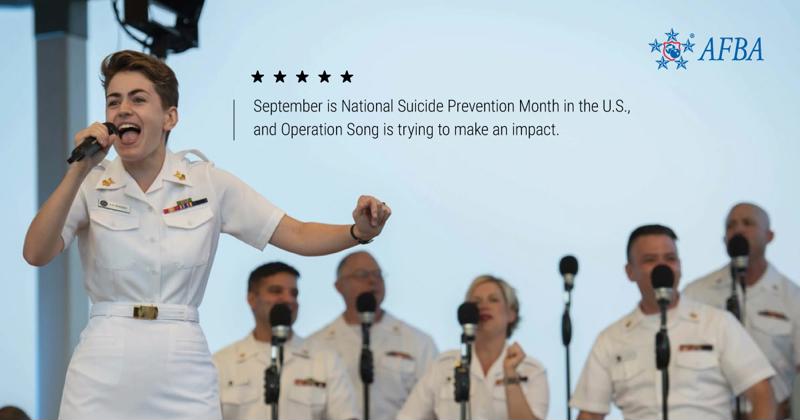
September is National Suicide Prevention Month in the U.S., and it's important to recognize the efforts of Operation Song as it continues to try to help those dealing with dark times.
What is Operation Song?
A nonprofit based in Nashville, Operation Song started in 2012 and has helped write some 700 songs, working with everyone from World War II veterans to those currently serving. Created by Bob Reagan, a Grammy-nominated songwriter, Operation Song has a diverse board of directors, including veterans, professional musicians and other military stakeholders. That makeup reflects the organization's mission to empower those struggling with PTSD, suicidal thoughts or injuries sustained from service by immersing them in the songwriting process. Not only does writing a song help them process emotions or work through thoughts, but the final product can be a cathartic release, as well as a lasting memory.
Reagan started with a single weekly session at a VA center in Murfreesboro, Tennessee, that gathered eight veterans and a musical therapist. The program has since expanded to several regular sessions held throughout Middle Tennessee, as well as retreats where a veteran can be paired one on one with a songwriter. There is zero requirement for veterans to have a previous background in music, all they need is impetus to tell a personal story or honor those they served with.
VA seeks increased collaboration
The success that Operation Song has found with veterans and active duty members has led the VA to expand a partnership with the nonprofit, according to Military.com. Operation Song held a pilot retreat in 2018, and another in the summer of 2019. The results were positive enough to lead the VA to join as co-host of a national workshop and retreat to be held in November 2019.
"VA is always striving to find unique ways to help Veterans build on their military experiences, and music therapy is just one component of VA's robust Recreation Therapy programs, which serve Veterans around the country," said VA Secretary Robert Wilkie in a statement. "Music can provide an outlet for expression of feelings, as well as be an avenue of communication for those who find it difficult to express themselves."
One of the most notable songs that has been produced through Operation Song is "Last Monday in May," whose subject is Memorial Day through the years. The song was a collective effort written by six Iraq, Afghanistan and Vietnam veterans, as has been performed at the Grande Ole Opry in Nashville, as well as at the National Mall for the past five Memorial Days.
While those who want to work with Operation Song must be referred through a VA provider, those who do cannot say enough for what the program did for them.
" … I was in a rough spot before. I had contemplated suicide," Van Booth, a retired infantryman. told the Montrose Press of Colorado. "When I say Operation Song saved my life, that's what I mean."
To learn more about Operation Song, visit its site today. Or, get involved in National Suicide Prevention Month.
For those in the Armed Forces, protecting their country is the priority. But that's on the job: When at home, those same servicemembers strive to protect and provide for their families. You want to make sure that your family is taken care of should the worst happen, but that can be difficult without life insurance.
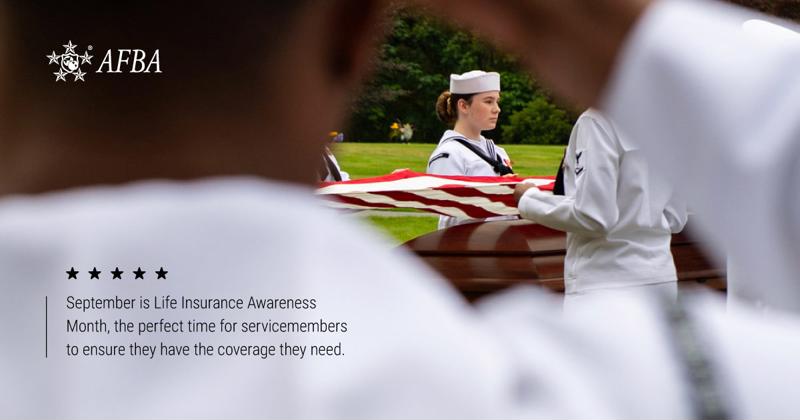
Life insurance can seem like a complicated product, but it's essential to ensuring peace of mind in the most difficult of times. If your family happens to lose your income, how would they meet obligations like mortgage payments and debts? If you have a life insurance policy, your family will enjoy a degree of protection against such costs. To help educate the public, September is Life Insurance Awareness month. Here are a couple facts you need to know.
What is life insurance?
Like other forms of insurance, life insurance protects policyholders against damages and losses. In this context, should you pass unexpectedly, your family will have a fall-back in the death benefit life insurance pays. You can take out a certain amount of coverage (whether $25,000 or $250,000) that will help your family maintain financial stability when they need it most. The advantage is the death benefit is often paid out to your family, or other designated beneficiaries, free of income tax.
What types of life insurance exist?
Life insurance products break down into two main groups: term and whole. Term life insurance policies are active for a set number of years, like 15 or 30 years. Your family will be covered during that time, but once the term expires, so does coverage. Many families utilize term plans for household planning for near-term needs, in addition to creating a financial backstop. Term life policies often feature variable rates and the ability to convert coverage to a permanent option.
On the other hand is whole life insurance. These policies grant a lifetime of coverage with the first payment. As long as you meet premiums, your family will benefit from coverage that won't expire. Another key advantage is cash value. With whole life policies, a portion of the premium you pay each month is diverted toward a fund that you can draw from and pay back, or take loans against. Cash value builds with each premium, but just be aware that any amount you take out will be deducted from the eventual payout your beneficiaries receive.
Why take out life insurance?
The overarching reason why many families obtain life insurance is to provide a financial buttress against uncertainty or costs. For instance, funeral expenses are a major outlay, but life insurance often addresses those costs directly as part of the policy. When you sit down to research policies, consider what life insurance can be used toward, including:
- Mortgage payment: If you have 10 years left on your mortgage, you may want to take out a term life policy of the same length to ensure paying it off stays on track.
- Personal debts: Your family may be held for any personal debts you held. Life insurance protects them against those costs.
- Higher education: Tuition and housing take a major chunk out of household budgets, but a policy will make sure such costs are met and degrees can be obtained even if your income is lost.
- Medical bills: Many policies will have an option to pay out living benefits for chronic or terminal illnesses, which can decrease your costs.
Learn more during September
If you are interested in more about life insurance and how it can help your family, consider getting involved this September. Education events and financial literacy seminars are taking place all over the country during Life Insurance Awareness Month, so check out what's happening your area.
The Marines are heralded in the U.S. as some of nation's most skilled and elite warriors, an identity known around the world. Part of that renowned fighting force is the Marine Corps Reserve, a group of service members ready to answer the call of duty whenever it comes. With roots dating back to World War I, the Marine Corps Reserve — also known as the Marine Forces Reserve, or MARFORRES — has a long tradition of excellence and bravery in the armed conflicts America has been a part of, as well in other operational duties.
Aug. 29, 2019, marks the 103rd birthday of the Marine Corps Reserve, an observance and celebration of the men and women who stand at the ready as part of reserve forces. Here's more information about the history and purpose of the MARFORRES.
Contributions in WWI and beyond
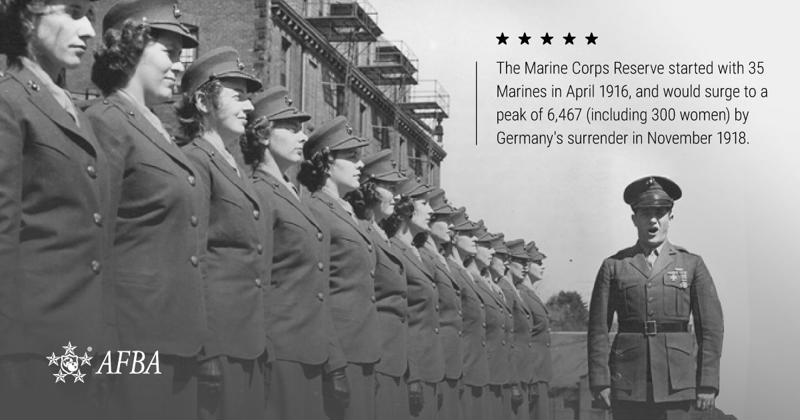
According to the Marine Corps, the need for reserves was an issue as early as the Civil War. However, it was not until Woodrow Wilson signed the Naval Appropriations Act of 1916 was such forces were created — and not a moment too soon, as American would join World War I a year later. The Marine Corps Reserve started with 35 Marines on April 1, 1916, and would surge to a peak of 6,467 (including 300 women) by Germany's surrender in November 1918.
The purpose of the MARFORRES is to augment and enhance Marine forces by providing a group of fully trained individuals who can be mobilized for war, national emergencies and contingency operations. This responsive nature to the needs of the nation were on display soon after WWI, when the thousands of Marine reservists demobilized and reentered civilian life. While MARFORRES had fallen into inactivity in the years after, it was quickly rebuilt, growing to more than 10,000 reservists by 1930. Those reserve forces would soon be called on during World War II: According to the Marine Corp, of the nearly 590,000 Marines who served in the war, 70 percent were estimated to be reservists. Whether ace fighter pilots or reporters on the frontlines, reserve forces would earn honors and distinction for their service and importance.
After the war wind-down, the Marine Corps Reserve would reach some 128,000 personnel on the eve of the Korean War, which many participated in. Fast forward to now, and the reserve forces remain among the most crucial cogs to the American armed forces after legislation that has modernized and updated the Marine Corps Reserve for today's military needs. Currently, it is split in two units: the 38,000-strong Marine Corps Select Reserve, and the Individual Ready Reserve.
Fighting modern threats
Today, the Marine Corps Reserve is active in addressing the many global threats the U.S. faces today, including serving in Iraq and Afghanistan, as well as other counter-terror combat operations. Providing peacetime aid is a large focus for the reserve forces, who assist in national and state emergencies. Also, the Marine Corps Reserve is made of diverse Americans. According to the Marine Corps, "their experience is extensive and includes occupations such as police officers, fire fighters, federal agents, mechanics, city planners, politicians, truck drivers, information technology and cyber professionals, carpenters, electricians, and business owners. The depth and diversity of experience is a force enabler that adds enormous value to the modern battlefield."
Celebrating MARFORRES
The Marine Corps Reserve birthday may not show up on every calendar, but it's important to remember and honor the sacrifice and service of those who have been part of the reserve forces. In fact, the occasion is often an event observed within the Marines, not commonly with public displays. However, you can opt to fly a Marines flag on Aug. 29 or undertake other activities.
Posttraumatic stress disorder, also known as PTSD, is a mental disorder that can develop after someone has been forced to experience a traumatic event, such as the conditions of battle and warfare. Although a psychological condition, there are severe physical risks associated with PTSD, as sufferers are at a heightened risk of self-harm and suicide.
Good mental health has always been one of the first casualties of war, but society's understanding of PTSD has changed considerably over the years. In World War I, soldiers suffering from various nervous and mental symptoms were said to be suffering from "shell shock." In World War II, the diagnosis was changed to "combat stress fatigue."
PTSD became an official psychiatric diagnosis in 1980, which was strongly influenced by the experiences and conditions of U.S. military veterans of the Vietnam War. A study conducted in the late 80s determined 15% of Vietnam veterans were suffering from PTSD, and today the VA estimates that 30% of Vietnam vets have had PTSD at some point in their lifetime.
About 12% of Gulf War veterans have PTSD, while somewhere between 11 and 20% of soldiers who fought in Operations Iraqi Freedom and Enduring Freedom are estimated to be afflicted with the condition.
These numbers are alarming, and speak to the importance of providing mental health resources to our nation's soldiers. And on June 27, advocates are especially emphatic in making that point.
How to advance the cause of PTSD awareness
PTSD Awareness Day can trace its origins back to the tragedy of Staff Sergeant Joe Biel, a North Dakota National Guard member who took his own life in 2007 following two tours in Iraq. SSgt. Biel, who suffered from PTSD, committed suicide after his return from duty to his home state.
In 2010, Senator Kent Conrad led the effort to get official recognition of PTSD via a "day of awareness," and SSgt. Biel's birthday, June 27, was chosen as the official PTSD Awareness Day, according to Military Benefits. In 2014, the Senate expounded upon the annual observance by designating the full month of June as National PTSD Awareness Month.
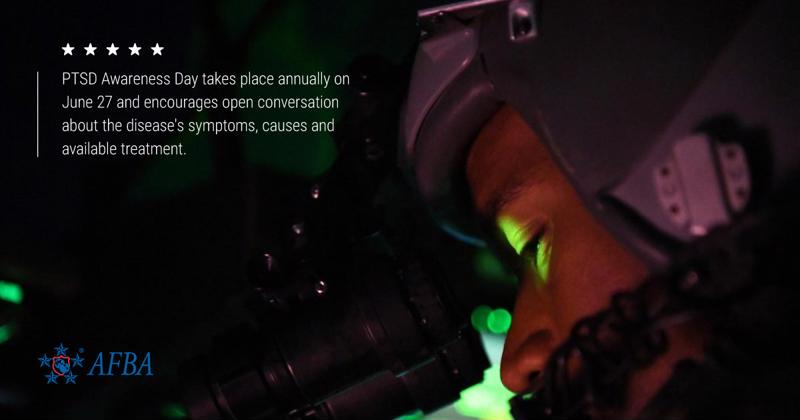
Today, individuals primarily observe PTSD Awareness Day by encouraging open conversations about the disorder, with frank and informative discussions of its causes, symptoms and available treatment methods. Despite the fact that it has been an official medical diagnosis for nearly four decades, PTSD is still frequently misunderstood, particularly by those who have only seen it portrayed in movies and other pop culture dramatizations.
To aid in this effort, the Department of Defense publishes circulars, articles and other materials designed to better educate and inform military members and their families about PTSD. Furthermore, the VA's website has lots of articles and resources dedicated to PTSD, and when retiring military members fill out their VA claim forms, there is an option to be evaluated for PTSD.
If you or someone you know is potentially suffering from PTSD, it's important to look for the warning signs. Though not always the case, common non-specific symptoms include irritability, depression and, particularly prevalent in veterans and active military members with the condition, something known as "hypervigilance" or "hyperarousal." Repeatedly experiencing a traumatic event through flashbacks, nightmares and persistent memories is another symptom of PTSD. The biggest red flag is suicidal ideation, and anyone experiencing such thoughts should immediately seek help.
The mental scars accrued in combat are often far more difficult to heal than the physical wounds, but there is always hope for recovery. PTSD Awareness Month is the perfect time to make sure that message reaches everyone who needs to hear it.
This year, the United States Coast Guard Auxiliary celebrates a major milestone with its 80th anniversary on Sunday, June 23, 2019.
In the last eight decades, Auxiliarists have grown to become a vital component of the U.S. Coast Guard, and today the USCG Aux boasts 26,000 serving out nation in 825 local units with 1,800 vessels and 160 aircraft in between them.
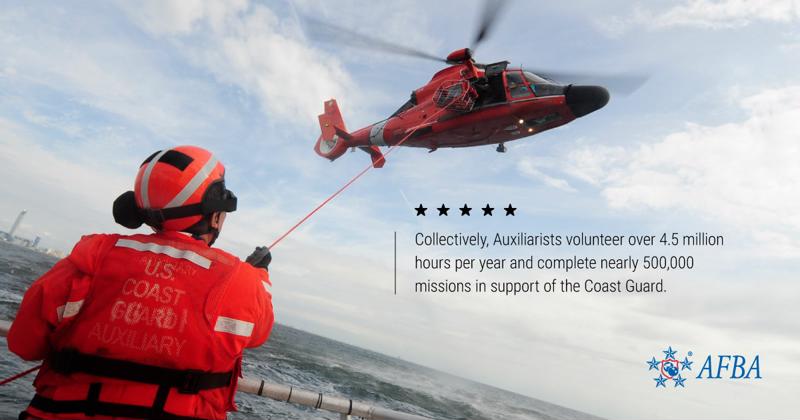
Collectively, Auxiliarists volunteer over 4.5 million hours per year and complete nearly 500,000 missions in support of the Coast Guard, saving approximately 500 lives, assisting 15,000 distressed boaters and conducting over 150,000 safety examinations of recreational vessels.
To understand how the U.S. Coast Guard Auxiliary got its start, and how its role has expanded over the past 80 years, it's helpful to examine the civilian auxiliary's rich history.
Looking back on eight decades of being "Semper Paratus"
What is today the Auxiliary began life as the Coast Guard Reserve, which was authorized by an act of Congress on June 23, 1939. A response to the increase in the number of recreational boaters in America, the move gave the Coast Guard a legislative mandate to use civilian volunteers to promote safety on and over the high seas and the country's navigable waters. At its creation, the Coast Guard Reserve was a non-military service comprised of unpaid, volunteer citizens who owned motorboats or yachts.
Two years later, Congress amended the 1939 act by passing the Auxiliary and Reserve Act of 1941 on Feb. 19. The new legislation designated the Reserve as a military branch of the active service, and designated civilian volunteers as the Auxiliary.
Today, Feb. 19 is formally recognized as the birthday of the Coast Guard Reserve, and June 23 is celebrated as the birth of the Coast Guard Auxiliary.
When America entered World War II, many Auxiliary members became temporary members of the Coast Guard Reserve. As many as 50,000 Auxiliarists joined the war effort, guarding waterfronts, carrying out coastal picket patrols and rescuing survivors from scuttled ships, among many other heroic acts. Many of the Auxiliary members had their private vessels pressed into service, as well.
Once the war was won, Auxiliarists returned to their recreational boating safety duties, which included a renewed interest in safety education. It was in 1952 that the Auxiliary first observed "Safe Boating Week," which has since grown to become an international campaign led by the National Safe Boating Council.
In 1976, a study commissioned by the Coast Guard concluded that the Auxiliary was one of the Guard's, and the country's, greatest assets.
"In summary, we consider the Auxiliary the greatest economical resource readily available to the COGARD," the study's authors wrote. "It performs in an outstanding manner and its personnel are among the most professional group of volunteers in the nation."
Twenty years later, Congress expanded the Auxiliary's role to allow members to assist in any Coast Guard mission, except those that involved direct law enforcement and military operations. This enabled Auxiliarists to begin examining commercial fishing vessels, flying in C-130 aircraft and working in Coast Guard offices, among other new prerogatives.
Today's Auxiliary members also perform free Vessel Safety Checks, teach boating safety to boaters of all ages, perform harbor and pollution patrols and serve an important role in the Coast Guard Search and Rescue team.
As an all-volunteer unit, Auxiliarists are said to save U.S. taxpayers millions of dollars every year through their acts of service, which include lifesaving rescue missions on our nation's waters. As the United States Coast Guard Auxiliary celebrates its 80th birthday, there's never been a better time to thank the tens of thousands of members who help keep our nation and its citizens safe at sea.
June 14, 2019 represents both the 244th birthday of the U.S. Army, and the 242nd birthday of the U.S. flag.
The Second Continental Congress officially adopted the original flag of the United States on June 14, 1777, exactly two years after the Congress created the Continental Army to fight Great Britain in the Revolutionary War.
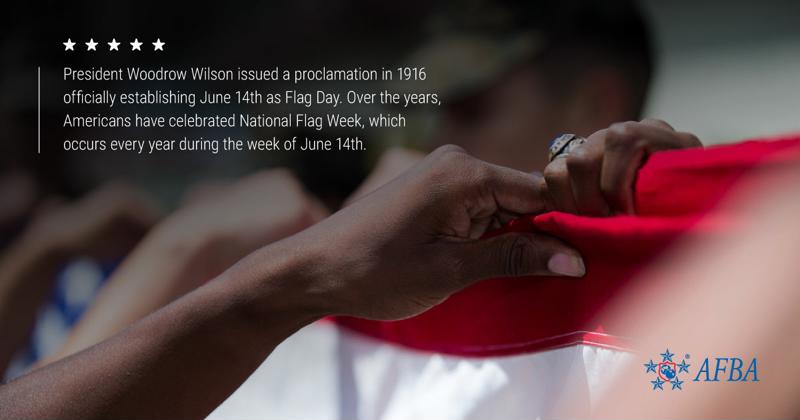
President Woodrow Wilson issued a proclamation in 1916 officially establishing June 14th as Flag Day, and thirty years later, National Flag Day was established by an Act of Congress. Though not a federal holiday, Americans continue to observe the creation of the Stars and Stripes, and over the years, this has led to the celebration of National Flag Week, which occurs every year during the week of June 14th.
In 2019, June 14th falls on a Friday, and National Flag Week runs from June 9th to 15th.
History of the U.S. flag and National Flag Week
The Flag Resolution passed by Congress in 1777 specified that "the flag of the thirteen United States be thirteen stripes, alternate red and white; that the union be thirteen stars, white in a blue field, representing a new constellation."
No arrangement of the stars was specified, so the maker of the flag was left to decide how to orient them, with some choosing to place the stars in a row and others opting for a circular layout that is today recognized as the "Betsy Ross design."
According to Military Benefits, American troops first carried the flag into war three months after the resolution at the Battle of the Brandywine. A year later, U.S. forces took over a British fort, marking the first time that the flag was hoisted over a vanquished foe.
However, the idea of devoting a day of celebration to the flag did not start to gain traction until over a century later.
It was in 1886 that Bernard J. Cigrand, a grade school teacher in Waubeka, Wisconsin, made his first public proposal for an annual observance of the birth of the flag. Cigrand's advocacy led to some of the first June 14th Flag Day celebrations.
President Harry S. Truman signed legislation in 1949 that designated June 14th as Flag Day and the week surrounding it as National Flag Week. In 2004, Congress voted unanimously to recognize Flag Day as having originated in Ozaukee County, Waubeka, Wisconsin.
Every year, National Flag Week begins with the sitting President making a proclamation declaring the week of June 14 as the official observance of the holiday and directing government officials to display the flag in government offices. The Presidential Proclamation also requests that U.S. citizens participate by flying the flag at residences and local businesses.
Celebrating National Flag Week can be as easy as hoisting Old Glory at your home or workplace, though there may also be parades or other celebratory events happening in your local community.
Fairfield, Washington claims to be home to the oldest continuing Flag Day parade, having held a parade every year since 1910, and celebrating the centennial of the parade in 2010. Appleton, Wisconsin, has held its own National Flag Day parade since 1950, and Quincy, Massachusetts, has had a similarly long-running parade since 1952.
When privately observing National Flag Week, you should be sure to follow proper flag etiquette. The Flag Code formalizes many traditions, including making sure that no part of the flag touches the ground or any other object when being lowered, as well as neatly and ceremoniously folding and storing the flag. There are also special rules for how the flag should be displayed indoors and outdoors.
With National Flag Day and the U.S. Army birthday both taking place on June 14th, there is no shortage of anniversaries for patriotic Americans to celebrate this time of year.
The oldest and most senior branch of the United States military in order of precedence, the U.S. Army actually predates the U.S. itself. Congress established the First Continental Army on June 14, 1775, more than a full year before the signing of the Declaration of Independence, to recruit professionally trained soldiers that could combat the British "Redcoats" in the Revolutionary War.
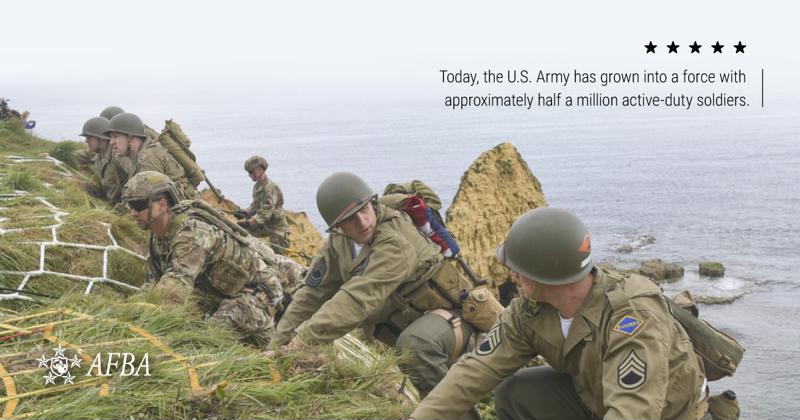
In the centuries since then, America's Army has grown into a fighting force with approximately half a million active-duty soldiers. And on Friday, June 14, 2019, the U.S. Army will observe its 244th birthday, affording military servicemembers and civilians alike an opportunity to celebrate the branch's rich history and continued role as a force for good in the world.
How to celebrate the U.S. Army's birthday in 2019
The Army's birthday is not an official state or federal holiday, meaning government offices and private places of business remain open on June 14th, while Army and Department of Defense agencies typically choose to celebrate the occasion at the base or local level with special events, ceremonies and social occasions.
The USO, AMVETS, The American Legion, VFW and other military service organizations also usually observe the holiday on a local or agency-wide level each year. If you would like to know if and how the birthday is being celebrated in your community, you can reach out to the local chapter of your preferred Veterans Service Organization.
One unique annual celebration is the Army Birthday Ball, which is held at military bases, community centers, civilian hotels and other applicable sites around the world. This black-tie formal event features military members in full-service dress, also known as "Dress Blues" or "Mess Dress," and includes a long list of traditions that are intended to pay respect to those who sacrificed life and limb to serve, and to welcome the newest members of the service and salute the future of the Army at large.
In that spirit, one of the most popular traditions at the ball is the cutting of the Army birthday cake, in which the oldest serving soldier and the youngest serving soldier use a ceremonial saber to cut the first slice. Another common tradition is the receiving line, in which Army leaders personally greet each attendee entering the ballroom, and the giving of toasts to the United States, military families and to fallen comrades, the latter toast one that is always respectfully answered in silence.
This year, the 244th U.S. Army Birthday Ball will be held at the Washington Hilton Hotel in Washington D.C. on the evening of Saturday, June 15, and to commemorate the 75th anniversary of the Normandy invasion, will feature a theme of "honoring the call to service from D-Day to Today." Similarly, on June 14, all U.S. Army veterans and active duty personnel will receive free admission to the National D-Day Memorial in Bedford, Virginia.
Several other high profile military celebrations will be taking place that weekend, as well. Different chapters of the Association of the United States Army will be holding their own Birthday Balls in various venues across the country on June 14 and 15. Additionally, Fort Knox will be hosting a birthday bash on June 14 that includes a variety of community events, all of which will be open to the general public.
Additionally, private citizens can always organize events in their own community, or find ways to celebrate with friends and family. The 244th anniversary of the U.S. Army provides a wonderful opportunity to both reflect on the centuries of sacrifice that have come before, and celebrate the bright future that lies ahead for America's fighting force.
On Tuesday, June 6, 1944, the Allied forces of World War II landed on the beaches of Normandy, with over 160,000 men participating in history's largest seaborne invasion. By the end of D-Day, none of the assault forces had secured their first-day objectives, and an estimated 10,000 Allied soldiers were killed, wounded or missing in action, including 6,603 American casualties.
Yet over the course of the following days, the Allies gradually expanded their foothold, and began the liberation of German-occupied France, and eventually Europe, from Nazi control.
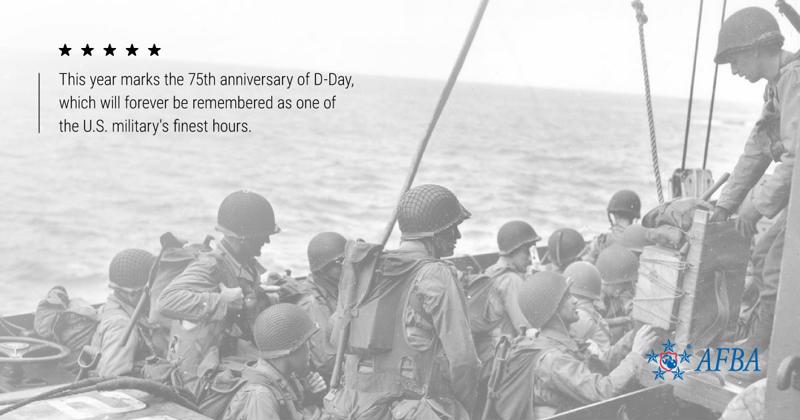
Though historians still debate what the "D" stood for, there is no disputing the legacy of D-Day, which will forever be remembered as one of the U.S. military's finest hours. And this year, as that fateful day turns 75 years old, several special ceremonies and events have been planned to commemorate the heroism displayed on the beaches of Normandy all those years ago.
D-Day observances planned for the 75th anniversary
The small community of Bedford, Virginia, lost 20 of the 32 sons it sent to the invasion of Normandy, earning the town the tragic yet honorable distinction of sustaining the highest per capita D-Day losses of any American city. In 2001, Bedford became the site of the National D-Day Memorial, which this year will observe the 75th Anniversary by hosting six days of ceremonies, displays, interviews and more, beginning June 4 and concluding on June 9.
Included in the schedule of events is an aerial tribute to veterans on the morning of June 6, followed by a commemorative observance titled "The Final Salute," which organizers expect will represent the last large gathering of D-Day veterans around the globe. The itinerary for that Thursday also includes World War II reenactments, a USO show and a free screening of "Saving Private Ryan," which memorably and thrillingly depicts the U.S. forces landing at Omaha Beach.
Other commemorative events will be held on the day of the 75th anniversary in Alexandria, Virginia; Louisville, Kentucky and Wheaton, Illinois, according to this list of D-Day observances being held throughout the world.
Each year, thousands of people visit Normandy to reflect on the acts of sacrifice that took place there more than seven decades ago. And for the 75th anniversary, one very special visitor will be making a return trip of sorts.
In 2015, a derelict airplane was discovered in a boneyard in Wisconsin, and aviation historians determined it was actually the plane that led the D-Day invasion. Donors were able to raise hundreds of thousands of dollars for the plane's restoration, and by 2018, it was once again in flying condition.
And on June 5, the historic Dakota C-47 will meet up with a dozen other European Dakotas to form a "D-Day Squadron" that will recreate the start of Normandy invasion by crossing the English Channel, according to the New York Times.
"That's why we're doing this mission," said Andy Maag, who is piloting the 75-year-old C-47. "We're bringing history to life."