
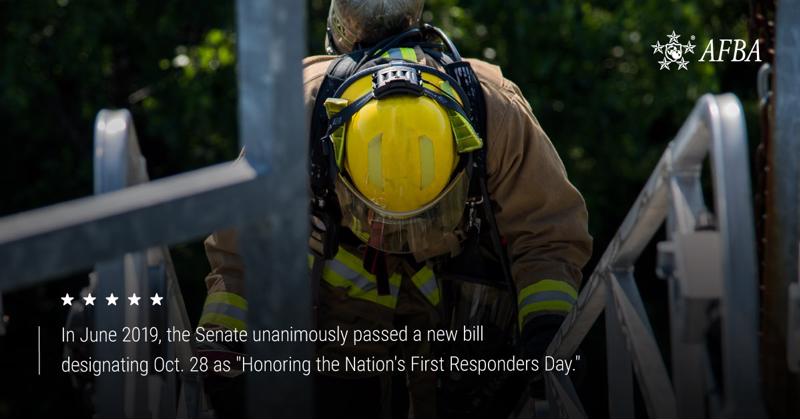
In June 2019, the Senate unanimously passed a new bill designating Oct. 28 as "Honoring the Nation's First Responders Day." On the inaugural occasion of this observance, we recognize the vast number of people who serve in these critical roles to protect communities around the nation.
How many citizens serve as first responders?
In 2003, the Department of Homeland Security defined first responders as "individuals who in the early stages of an incident are responsible for the protection and preservation of life, property, evidence, and the environment, including emergency response providers […], as well as emergency management, public health, clinical care, public works, and other skilled support personnel (such as equipment operators) that provide immediate support services during prevention, response, and recovery operations."
According to a 2015 report by the U.S. Department of Labor, there are approximately 1.2 million people employed as first responders. Many of them are veterans, including 10% of emergency medical technicians (EMTs), 19% of firefighters and 25% of police officers who continue their service in communities across the nation.
Additionally, the American Security Council Foundation estimates that another 62.6 million volunteers operate in first-responder capacities, offering emergency support and disaster recovery aid. The following statistics from the ASCF illustrate just how many people it takes to keep the nation safe from harm and provide emergency aid in times of trouble.
Emergency medical service (EMS) professionals care for patients before they arrive at the hospital, transporting and treating 16 million patients by ambulance each year. Around 890,000 EMS professionals currently serve in the U.S., including about 142,000 paramedics and 600,000 EMTs.
Law enforcement officers patrol local communities, protecting citizens in need and putting a stop to criminal threats and activities. An estimated 800,000 police officers serve throughout the U.S.
Firefighters rush to road incidents, burning buildings and citizens in danger to put out fires, administer rescue operations and provide life support services. Of the 1.3 million firefighters in the U.S., about 31% are career firefighters and 69% are volunteers.
How can we honor first responders?
First responders work long hours, face significant dangers, and risk their lives in service of others. On National First Responders Day, we remember those who have saved lives and those who have lost their own in the line of duty. We thank those who bravely fight to save the people and property impacted by hurricanes, floods, and wildfires. Additionally, we recognize those whose courage, readiness, and day-to-day service too often goes unnoticed.
Communities around the U.S. have erected monuments and memorials, distributed commemorative coins, and organized tributes to thank first responders for their sacrifice and service. On a more personal level, there are plenty of ways to show gratitude to the selfless individuals in our lives and communities.
You can express your support by mailing a thank-you note to a paramedic unit or sending a gift basket to your local fire department. Donate your time or money to a charitable drive or cause hosted by the first responders in your area. Use your online presence to dedicate a few words to our nation's first responders, or simply say "thank you" when you see a police officer at work.
As Sen. Ron Johnson of Wisconsin said in a statement, "Our first responders save countless lives every day, and many tragically pay the ultimate price in the line of duty — a sacrifice we should never forget. Designating a day to honor their service and sacrifice is the least we can do to express our gratitude."

You likely use online accounts and digital devices more times than you can count. But how many steps have you taken towards keeping your devices and data secure? If you answered "few to none," we're here to help during National Cybersecurity Awareness Month (NCSAM), which is held every October.
The theme this year is "Own IT. Secure IT. Protect IT." Beyond encouraging general awareness of digital threats, the theme urges users to take full ownership of their digital presence while taking steps to safeguard it against cyberattacks. Cybersecurity and Infrastructure Security Agency (CISA) and the National Cyber Security Alliance (NCSA) jointly lead the initiative.
In the past, we've shared a glossary of cybersecurity terms to help you differentiate between the good, the bad, and the ugly. This year, we're sharing a few simple actions you can take today to shore up your digital presence.
Swap out old passwords for new, complex passwords
One of this year's NCSAM mottos is, "If you connect, you must protect." This means you shouldn't use any device or account without first password-protecting it. It's especially important to follow this guidance when you're using accounts that contain sensitive information, such as email accounts and online banking services.
Take some time to switch out all of your old passwords for new, secure passphrases. To make them as long as you can, start with a movie title or catchy phrase rather than a single word. Then, mix up the phrase with special characters, numbers, and capital letters as well as unconventional spellings.
These days, email addresses often double as usernames. A 2015 study conducted by Dashlane revealed that the average email account was associated with 130 other accounts. For this reason, you should avoid recycling the same password over and over again. Create one password for each account. If one account becomes compromised, your others will remain secure.
Use a password manager to memorize your login credentials
Once you have a new series of unique, complex passwords, you'll have to store them somewhere. If you think a mental note or pen-and-paper password log is the safest place to keep your credentials, you're not alone. In fact, 84% of adults use only written lists or memory to keep track of passwords, according to a recent Pew Research Center study. Not surprisingly, the study also revealed that 64% of American adults have experienced at least one data breach that may have compromised sensitive personal information.
However, a 2017 survey conducted by LastPass found that respondents had an average of 191 passwords to manage — far too many to memorize. This strategy might have worked in the early days of the Internet, but it only invites cybersecurity breaches nowadays.
Instead, create your own digital keychain through a password manager. Such a system will be able to track as many accounts and passwords as you create. Even better, many can sync across multiple devices, so that if you create a new online account from your phone, you'll be automatically logged in when you visit the site from your laptop.
Some web browsers and devices offer free built-in password managers, or you can use third-party service to track your passwords. For an added layer of security, opt to use multifactor authentication (MFA) whenever possible. With MFA, you'll login using two credentials, such as a password and a unique security code that's automatically sent to you via text message.
Keep in mind that a password is the first line of defense against a cyberthreat. If you choose to use a digital keychain, make sure you password-protect all of your devices and lock them while they're not in use.

This year, Columbus Day falls on Oct. 14, 2019. However, many states and municipalities across the U.S. recognize the holiday as Indigenous Peoples' Day. The revised name indicates that many citizens wish to change who they honor and remember on this occasion.
What happened in 1492?
The Italian explorer Christopher Columbus is typically credited with discovering America during his famous 1492 voyage across the Atlantic, which was sponsored by Spanish monarchs. Yet the stories about the famous man who "sailed the ocean blue in 1492" contain some myths alongside the facts.
Those in favor of renaming the holiday point out that Columbus never actually landed in what is now the continental U.S. On Oct. 12, 1492, his crew set foot in the Bahamas, then made their way to Central America, South America and a few Caribbean islands.
Columbus was certainly not the first man to sail from the Old World to the New. The Norse explorer Leif Erickson serendipitously reached the Americas by way of modern-day Canada around the year 1000. But European colonization of the Americas didn't begin until some 500 years later, after tales about Columbus' experiences circulated throughout Europe.
Moreover, an estimated 10 million indigenous people already inhabited the continent at the time. By changing the holiday's name from Columbus Day to Indigenous Peoples' Day, citizens have the opportunity to formally acknowledge and honor the First Peoples.
"There is power in a name and in who we choose to honor," Maine Governor Janet Mills said when the state renamed the holiday in April 2019. "Today, we take another step in healing the divisions of the past, in fostering inclusiveness, in telling a fuller, deeper history, and in bringing the State and Maine's tribal communities together to build a future shaped by mutual trust and respect."
Which states observe Indigenous Peoples' Day?
U.S. citizens first observed Columbus Day on Oct. 12, 1792, on the 300th anniversary of the voyage. In 1934, it was deemed a federal holiday by President Franklin Roosevelt and became an occasion for celebrating Italian-American heritage. Businesses and government offices around the country typically close for the day, but states and cities aren't required to observe the holiday.
As a result of its controversial history and contested significance, a number of cities and states have elected to rename the holiday and shift its focus.
South Dakota began calling it Native American Day back in 1989 while Berkeley, Calif. held its first Indigenous People's Day in 1992. Alabama jointly honors Columbus Day and American Indian Heritage Day, while Nevada observes Aug. 9th as International Day of the World's Indigenous Peoples, a holiday which was instituted by the U.N. in 1994.
In Alaska, Indigenous Peoples' Day was celebrated twice before it was signed into law in 2017. "This official recognition is just one way we as a state can acknowledge and celebrate the contributions made by First Peoples throughout the history of this land," Bill Walker, Alaska's then-governor, said in a statement.
Vermont, Oregon, Minnesota, New Mexico, Maine and Louisiana have also followed suit, along with over 130 towns and cities; the numbers grow each year.
Still, at the federal level, it remains Columbus Day. In a 2018 statement issued by the White House, President Donald Trump proclaimed, "On Columbus Day, we commemorate the achievements of this skilled Italian explorer and recognize his courage, will power, and ambition — all values we cherish as Americans." The statement continued to "acknowledge the important contributions of Italian Americans to our country's culture, business, and civic life," reflecting the original intent of the holiday.
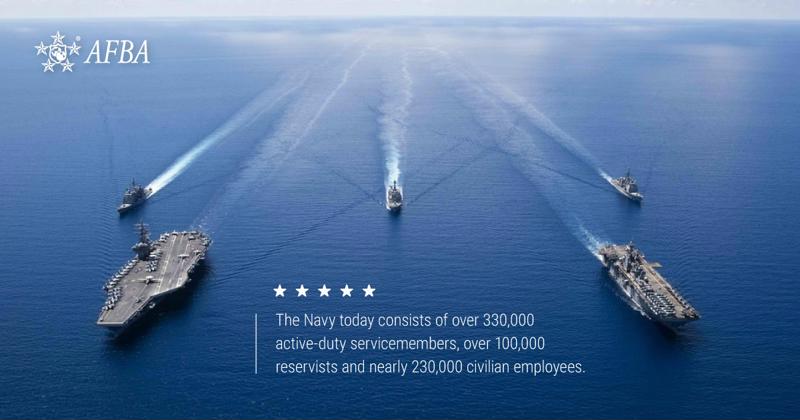
Sunday, Oct. 13, 2019, marks the 244th birthday of the U.S. Navy. Although it began with just two ships and a 160-person crew, the Navy today consists of over 330,000 active-duty service members, over 100,000 reservists and nearly 230,000 civilian employees.
The 244th Navy Birthday and Heritage Week honors well over two centuries of courage, loyalty, sacrifice and service. Additionally, this year's commemoration coincides with a major Naval milestone, the 75th anniversary of the Battle of Leyte Gulf.
The birth and growth of the Navy
The U.S. Navy was born on Oct. 13, 1775, upon the passage of a resolution by the Continental Congress. The Continental Navy, as it was then known, was designed to protect the soon-to-be-independent colonies from British advances at sea.
The second-oldest branch of the military didn't restrict its sights to the seas; naval aviation was introduced in 1910. Since then, a total of 68 aircraft carriers have been commissioned.
In response to the looming shadow of WWI, the U.S. Naval Reserve Force (USNRF) was established on Mar. 3, 1915. Initially composed of a few thousand Naval veterans, it welcomed civilians the following year. By the end of the war, the USNRF consisted of over 245,000 Reserve Sailors, including 12,000 women, which accounted for over half of the Navy. These "citizen sailors" continued to have a significant impact. During WWII, three million members of the USNRF joined over 570,000 active-duty Sailors in the line of duty.
Another enduring example of Navy service and courage is the Naval Special Warfare Unit, which includes the Navy SEALS, short for Sea, Air, and Land teams. Though the unit wasn't established until Jan. 1, 1962, its history reaches back to the various special operations teams formed during WWII.
From D-Day and the attack on Pearl Harbor to operations in Korean, Vietnam, and the Middle East, Sailors and Naval officers have played a central role in defending the nation during the most pivotal moments in history.
"No Higher Honor"
October 2019 marks a significant Naval milestone: the 75th anniversary of the Battle of Leyte Gulf, the largest naval battle of WWII.
In October 1944, during the most dramatic chapter of the Battle of Leyte Gulf, two dozen Japanese vessels made a surprise attack on Allied forces in what became known as the Battle off Samar. While Naval service members heroically defended their fleet, some ships were lost, including the USS Samuel B. Roberts (DE-413). She was later dubbed "the destroyer escort that fought like a battleship" in a Presidential Unit Citation award.
Lieutenant Commander Robert Copeland, the ship's Commanding Officer, later stated that there was "no higher honor" than having commanded such a valiant crew. The theme for the 244th Navy Birthday and Heritage Week is "No Higher Honor" in remembrance of this occasion.
Honoring 244 years of service today
Across centuries of war and peace, Navy sailors, officers, reservists, veterans and civilian members have braved the depths of the sea in submarines and soared through the skies in fighter jets. Through it all, the Navy has held a steadfast presence over land, air, and sea, protecting the seas and shaping the nation's future.
Today, the honorable, unyielding spirit of the Navy can be captured by two phrases: its unofficial motto, "Non sibi sed patriae," meaning "not self but country," and "Forged by the Sea," the branch's current recruiting slogan.
The week-long observance of the Navy's 244th birthday begins on Oct. 7 and continues with the celebratory Navy Birthday Ball on Oct. 12 in Washington, DC.
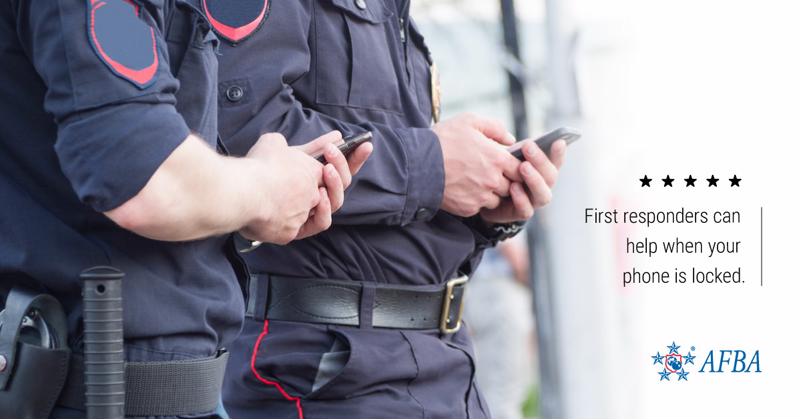
Our smartphones are on us at nearly all times, and they can become crucial devices if an accident or medical emergency strikes. However, if you're not able to call 911 yourself, a first responder can use your phone even if it's in lock mode to contact your family or physician, as well as review any necessary emergency information.
But first responders can only help in such a way if you have that information pre-programmed into your phone. Smartphone technology makes doing this easy. Taking just a little time to add or update your information may make all the difference if you react to a medication, are involved in an accident or otherwise need help and you're indisposed. Just be aware that depending on what phone you have, the process for inputting your information may be different.
iPhone
The first thing you should do with your iPhone is set up your Medical ID. Your Medical ID will display on the lock screen if first responders find your phone and don't have the passcode. You can use this function to bring attention to any allergies, prescriptions or conditions, as well as who to contact. Setting up your Medical ID is a 5-step process:
- Open the Health app, clicking the Medical ID tab.
- Tap Edit (and If asked, tap Edit Medical ID).
- Tap Show When Locked to make your Medical ID available while the phone is locked.
- Enter personal information like your birth date, height, and blood type.
- Tap Done.
One of the most helpful features iPhones sport is Emergency SOS. For iPhones 8 and later, users can press and hold on both the side button and either volume button until it brings up the Emergency SOS slider. Your phone will automatically call emergency services if you drag the slider, or after a 10-second countdown if you continue to hold the buttons. Whenever you make a call with Emergency SOS, your emergency contacts will be notified of the action.
Android
If you have a phone that runs the Android operating system, the process of adding information is generally as simple. Phone owners can enter the same type of personal, contact and medication information to be displayed on the lock screen. To do so for Google's Pixel phone, for example, you would:
- Open the phone's Settings app.
- Tap About phone and then tap Emergency information.
- Enter the info you want to share.
- For medical info, tap Edit information.
- For emergency contacts, tap Add contact.
You can also add a short message to the lock screen, which may be able to direct first responders on who to call first, or provide them with key insight about yourself.
Samsung
While Samsung phones do use Android, the steps to configuring your emergency information are a bit different. Users go through the Contacts app: Update your own contact profile first, as there's a place for entering medical information. This should be at the bottom of the profile page, just tap Save when you're done. Navigate back to the main contacts page and select Group, then find one labeled "ICE – Emergency Contacts." ICE stands for in case of emergency, so add people who should be contacted if first responders use your phone.
Everything else
In case you a phone not represented above, it might take a little tinkering with your phone's settings, or creative use of apps. While your phone may be different than the above, looking for the same words and prompts might direct you to a solution. Individual contact cards, for instance, may have a button to select them as an emergency contact. If you want to make essential medical information front and center, but don't know how to do so through the phone's settings, use a note-taking app. Screenshot whatever notes you take on blood type, medication, allergies or conditions, and then set that as your phone's background and lock screen.
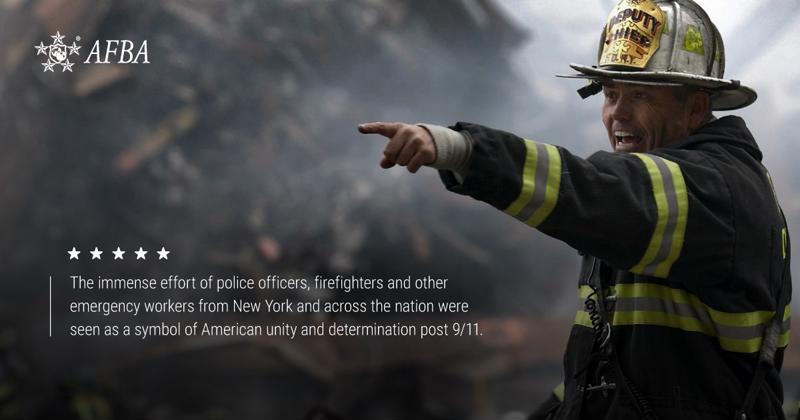
First responders worked tirelessly in the immediate aftermath of the 9/11 terror attacks, as well as for months after. The immense effort of police officers, firefighters and other emergency workers from New York and across the nation was often seen as a symbol of American unity and determination. Yet those same first responders who risked everything to help were themselves at risk of losing government support in meeting health care bills stemming from their relief work.
The September 11th Victim Compensation Fund (VCF) was set to expire in 2020, but has now been extended permanently thanks to a long, emotional campaign by first responders, families and media.
VCF reopened in 2011 to help pay for medical bills
The VCF was initially active between 2001 to 2003, processing claims of injury and death related to the 9/11 attacks. By mid-June 2004, the fund had closed, after about $38 billion in aid had been paid out, according to CNN. However, it wasn't until the next decade when action was taken to reopen the fund in light of the emergence of chronic conditions and terminal illness among first responders. Working in the rubble would have a significant impact on the health of first responders, who now have a higher risk of heart disease, the New York Post says. Cardiovascular disease and cancer would go on to claim the lives of many 9/11 emergency workers, while others would need to pay bills for their care.
In 2011, President Barack Obama signed legislation reactivating the VCF, known as the James Zadroga 9/11 Health and Compensation Act, expanding it to include health care coverage and compensation to first responders and individuals who have developed 9/11-related health problems.
Legislation avoided the fund expiring
According to ABC, since being reopened in 2011, the Congressional Budget Office estimated the fund had paid awards to around 22,400 people at a value of about $5.2 billion by 2019, while claims related to cancer had risen to 45% of all awards. In February of 2019, a warning bell was sounded: The special master in charge of managing the fund said payments would have to be reduced by half, and some by 70 percent because $5 billion of the $7.4 billion allocated for 2015-2020 had been spent, The New York Times reported.
Without further action from Washington, D.C. the fund would expire, and thousands of people would lose key government care. This triggered a reaction across the country, from first responders and their families, to civic organizations and media personalities. Jon Stewart, former host of "The Daily Show," would become a much-heard voice of the campaign to extend the fund, regularly demonstrating with first responders, as well as making an emotional speech to Congress.
Their appeal was ultimately successful, as the Senate voted 97-2 to extend the fund for the next 73 years. More than $10 billion has been set aside for awards during the first decade after reauthorization. President Donald Trump signed the bill surrounded by first responders.
"In the wake of the Sept. 11 attacks, courageous Americans raced into smoke, fire and debris in lower Manhattan, the Pentagon and a field in Shanksville, Pennsylvania. The whole world witnessed the might and resilience of our nation in the extraordinary men and women of the New York Fire Department and the New York Police Department, selfless patriots of unmatched character and devotion," Trump, who lived in Manhattan during the attacks, said. "I grew up with them so I can tell you that's absolutely true."
Now, Stewart and others are joining to help educate first responders and others about their eligibility to submit a claim.
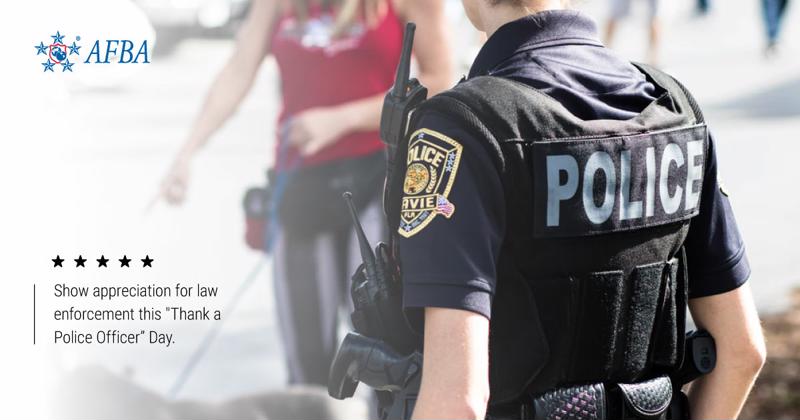
Police officers put their lives on the line every day to protect communities and keep the peace. Yet, it can be a bit of a thankless job, which is why the third Saturday of September is now recognized nationally as "Thank a Police Officer Day." Showing appreciation for law enforcement can go a long way in boosting the morale of officers. Residents, businesses and civic organizations can all participate on "Thank a Police Officer Day," as there are many creative ways people across the country are getting involved. To start, here's some more information about the date and how it is observed.
First event held in 2012
"Thank a Police Officer Day," sometimes also called "National Tell a Police Officer 'Thank You' Day," was begun in 2012 by the Whole Truth Project, an organization that describes itself as "serving and protecting those who serve and protect our communities." The Whole Truth Project itself was begun by Andrew Hale, a Chicago-based attorney who represented law enforcement in several different high-profile cases. Hale, in announcing the inaugural "Thank a Police Officer Day" in 2012, said he was inspired to create the event to honor and recognize the service of police officers.
"We want people to show their appreciation for the job that the brave men and women of law enforcement do every day," Hale said. "Having represented police officers for several years, I know the difficult job these men and women undertake every day and I think we often take our police officers for granted. We must show support and appreciation for those that serve and protect us."
Hale's other motivation in starting the "Thank a Police Officer Day" campaign was the negative headlines that had come to dominate the news and headlines and public perception of police.
"Unfortunately the bad tends to stand out and make more interesting news stories," Hale said to HuffingtonPost. "Mistakes and problems tend to be more dramatic, attention-getting, adrenalin-fueling — far more than the calm, peaceful good deeds police officers do every day."
Many creative ways to say thanks
While "Thank a Police Officer Day" is a relatively recent observation, support for the cause has been seen across the country in many different ways. Some of those examples include Sylacauga, Alabama, where local residents, businesses, houses of worship and civic organizations were encouraged to affix a blue ribbon to their doors to "Paint the Town Blue." In Fairfax County, Virginia, officers discovered small rocks painted with messages of affirmation and appreciation in blue paint.
"You don't know what someone's going through and what sort of circumstances they're dealing with or facing and what kind of day they're having," Julie Trace, the rock painter, told the local CBS affiliate. "It could just help them in the moment to put a smile on their face or if they're facing something really big in their life."
As demonstrated, there are several opportunities to get creative with expressing your thanks, but some ideas for "Thank a Police Officer Day" on Sept. 21 include:
- Paying it forward if you see a police officer in line for coffee, or donating a cup on the house if you own a business.
- Attending, hosting or organizing an event.
- Wearing blue or decorating your house with blue lights.
- Sending a thank-you card to your local police department.
- Making goodie bags and dropping them off at the nearest station.
Police officers regularly put themselves in danger to ensure the safety of the communities they serve; a small "thank you" can go a long way on "Thank a Police Office Day."
When a 35-day partial government shutdown hit the nation in the 2018-2019 winter, thousands of federal employees, contractors and others went without pay. Even the Coast Guard missed paychecks after more than a month political standstill, but kept working through the shutdown. This was notable because the Coast Guard was the only part of the nation's armed forces that went without pay during that stretch, as it is part of the Department of Homeland Security and not the Department of Defense, whose funding did not lapse.
While members of the Coast Guard did receive back pay, Congress has recently moved to remedy that oversight and prevent any future shutdowns from obstructing Coast Guard from being paid.
Bill passes House and Senate panels
The Coast Guard Reauthorization Act of 2019 is the latest edition in a regular series of legislation that makes appropriations and other updates to modernize and improve the service and how it operates. A feature of this reauthorization act is the stipulation that requires Coast Guard to be paid should any shutdowns materialize in the future, among other reforms. This was done through the inclusion of an amendment titled the "Coast Guard Pay Parity Act" that would ensure paychecks are sent despite any shutdown occurring.
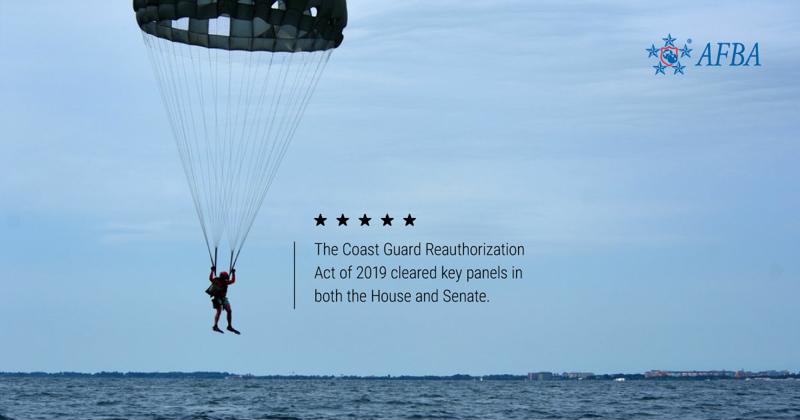
The legislation is well on its way to passing through Congress, having cleared key panels in both the House and the Senate with bipartisan support. The House Transportation and Infrastructure Committee had passed the reauthorization act near the end of June. At that time, Committee Chair Rep. Peter DeFazio (D-OR) hailed it as crucial to protecting both the men and women of the Coast Guard and recognizing their sacrifice.
"This legislation ensures our Coasties can continue carrying out their important work to secure our waterways and keep our communities safe," DeFazio said. "In addition, I am proud to have added an amendment which guarantees that members of the Coast Guard are paid on time and in full, even in the event of another senseless government shutdown."
On July 31 the Senate Committee on Commerce, Science, and Transportation approved the Coast Guard Reauthorization Act of 2019.
"I'm honored to have led the effort on this year's Coast Guard reauthorization, supporting members of the fifth branch of our military who are far too often overlooked or forgotten," said Dan Sullivan (R-AK). "With this legislation, we will ensure that Coast Guardsmen never again are risking their lives and serving without pay – as they were during the partial government shutdown earlier this year."
The full House and Senate will need to vote on and pass the act before it can be sent to the president and signed.
42,000 went without pay last time
The unique circumstances of the Coast Guard being part of the Department of Homeland Security — instead of Defense, like the other four branches of the military — led to it being affected by the shutdown. During those 35 days, 42,000 missed a paycheck, including active duty members, reservists and retirees, according to NBC news. The lapse negatively affected thousands who had families to support and payments to make, like those for mortgage or credit cards. The Coast Guard even provided its members with a financial management tip list.
The legislation is hugely important not just for members themselves, but for national security and the efficacy of the Coast Guard. According to a report from The Wall Street Journal, the Coast Guard took time to recover after the shutdown delayed crucial maintenance and supply replenishment.
The Marines are heralded in the U.S. as some of nation's most skilled and elite warriors, an identity known around the world. Part of that renowned fighting force is the Marine Corps Reserve, a group of service members ready to answer the call of duty whenever it comes. With roots dating back to World War I, the Marine Corps Reserve — also known as the Marine Forces Reserve, or MARFORRES — has a long tradition of excellence and bravery in the armed conflicts America has been a part of, as well in other operational duties.
Aug. 29, 2019, marks the 103rd birthday of the Marine Corps Reserve, an observance and celebration of the men and women who stand at the ready as part of reserve forces. Here's more information about the history and purpose of the MARFORRES.
Contributions in WWI and beyond
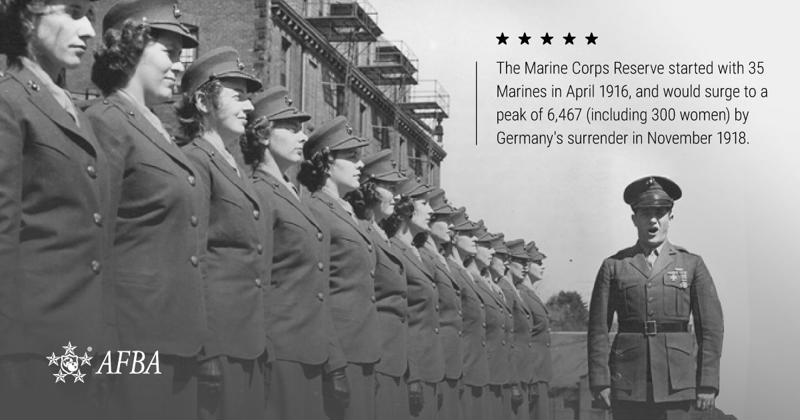
According to the Marine Corps, the need for reserves was an issue as early as the Civil War. However, it was not until Woodrow Wilson signed the Naval Appropriations Act of 1916 was such forces were created — and not a moment too soon, as American would join World War I a year later. The Marine Corps Reserve started with 35 Marines on April 1, 1916, and would surge to a peak of 6,467 (including 300 women) by Germany's surrender in November 1918.
The purpose of the MARFORRES is to augment and enhance Marine forces by providing a group of fully trained individuals who can be mobilized for war, national emergencies and contingency operations. This responsive nature to the needs of the nation were on display soon after WWI, when the thousands of Marine reservists demobilized and reentered civilian life. While MARFORRES had fallen into inactivity in the years after, it was quickly rebuilt, growing to more than 10,000 reservists by 1930. Those reserve forces would soon be called on during World War II: According to the Marine Corp, of the nearly 590,000 Marines who served in the war, 70 percent were estimated to be reservists. Whether ace fighter pilots or reporters on the frontlines, reserve forces would earn honors and distinction for their service and importance.
After the war wind-down, the Marine Corps Reserve would reach some 128,000 personnel on the eve of the Korean War, which many participated in. Fast forward to now, and the reserve forces remain among the most crucial cogs to the American armed forces after legislation that has modernized and updated the Marine Corps Reserve for today's military needs. Currently, it is split in two units: the 38,000-strong Marine Corps Select Reserve, and the Individual Ready Reserve.
Fighting modern threats
Today, the Marine Corps Reserve is active in addressing the many global threats the U.S. faces today, including serving in Iraq and Afghanistan, as well as other counter-terror combat operations. Providing peacetime aid is a large focus for the reserve forces, who assist in national and state emergencies. Also, the Marine Corps Reserve is made of diverse Americans. According to the Marine Corps, "their experience is extensive and includes occupations such as police officers, fire fighters, federal agents, mechanics, city planners, politicians, truck drivers, information technology and cyber professionals, carpenters, electricians, and business owners. The depth and diversity of experience is a force enabler that adds enormous value to the modern battlefield."
Celebrating MARFORRES
The Marine Corps Reserve birthday may not show up on every calendar, but it's important to remember and honor the sacrifice and service of those who have been part of the reserve forces. In fact, the occasion is often an event observed within the Marines, not commonly with public displays. However, you can opt to fly a Marines flag on Aug. 29 or undertake other activities.
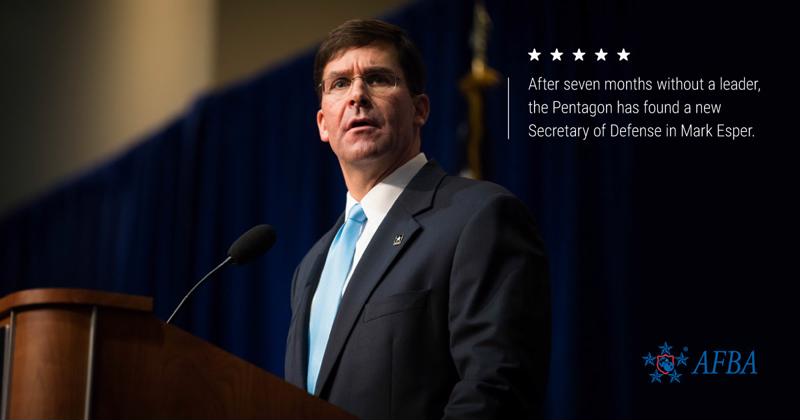
Mark Esper was recently confirmed as the new Secretary of Defense. His swearing in marked the end of seven months in which the department went without a confirmed leader, the longest such period in its history.
A veteran of the Army and the defense industry, Esper said he aims to tackle leadership vacancies within the department as America and the global community confront various modern threats.
West Point grad, Screaming Eagle
Esper was born in Uniontown, Pennsylvania, in 1964, and was a 1986 graduate of the United States Military Academy, receiving a commission in the infantry. According to his DoD biography, Esper completed Ranger and Pathfinder training, serving in the 1990-91 Gulf War with the 101st Airborne Division, also known as the "Screaming Eagles." Esper also commanded a Rifle Company in the 3-325 Airborne Combat Team in Vicenza, Italy, before retiring from the Army in 2007 after 10 years on active duty and 11 years in the National Guard and Army Reserve. He has been awarded the Department of Defense Medal for Distinguished Public Service, as well as military honors including the Legion of Merit, Bronze Star Medal, the Kuwait Liberation Medal, Kuwait Liberation Medal-Saudi Arabia, and the Combat Infantryman Badge. Esper holds both a Master of Public Administration and a doctorate in Public Policy.
In the private sector, Esper most notably worked as Vice President for Government Relations at Raytheon. He also spent time at The Heritage Foundation think tank, the Aerospace Industries Association and the U.S. Chamber of Commerce Global Intellectual Property Center. Esper also worked for several politicians, becoming an advisor to former Senators Chuck Hagel, Bill Frist and Fred Thompson. In 2017 he was confirmed as Secretary of the Army.
27th Secretary of Defense
Despite some pointed questions from the Senate about his previous lobbying for Raytheon, one of the largest defense contractors, Esper sailed through confirmation on a bipartisan vote of 90-8. That ended the seven-month, record-breaking stretch of DoD operating without a confirmed leader. The lull was created when Jim Mattis stepped down amid apparent policy differences with the Trump Administration. Patrick Shanahan, a former Boeing executive, served as acting secretary but withdrew from the position after complications in his personal life emerged.
Esper succeeded Shanahan in an acting capacity, but as secretary has pledged to maintain U.S. alliances, modernize the military and reform the Pentagon. He also has vowed to continue on the National Defense Strategy path, a strategic plan crafted by Mattis that focuses on long-term competition with China and Russia.
The margin of the vote was notable in for a Trump-appointed official, and was largely seen as reflective of Capitol Hill's desire to return normalcy to DoD with a permanent leader.
"We're in a very great position … in that we have someone that is enthusiastically supported by Republicans, by Democrats, and he is obviously the right person who has the trust of our president, he has the trust of our military, the trust of Congress and the country to keep our nation safe," Senator Jim Inhofe (R-OK), chairman of the Senate Armed Services Committee, said to the Senate in support of Esper, according to Stars and Stripes.
Senator Mitch McConnell (R-KY), Senate Majority Leader, also added praise for the pedigree Esper built with the Army in support of his confirmation as secretary, concluding that his leadership skills would be welcomed at the Pentagon.
"His record of public service is beyond impressive," McConnell said, according to Defense News. "His commitment to serving our service members is beyond obvious. And the need for a Senate-confirmed Secretary of Defense is beyond urgent."