
When servicemembers transition to civilian status, they must deliver their medical records from the Department of Defense to the Department of Veterans Affairs. Currently, no solution exists to seamlessly transfer this information – a fact that has vexed both the Pentagon and the VA. Because the two medical systems are incompatible with one another, it's possible that important information gets lost in the shuffle.
To remedy this situation, the VA is now undertaking the largest transition to electronic health records ever attempted in the U.S. Its goal is to create a system compatible with the Pentagon's.

Creating a new EHR system: A process that's taken decades
Lawmakers have pressed both organizations to create compatible EHR systems since at least 2000, according to Military.com. The VA has attempted this process many times, but each trial ended in costly failure.
The latest attempt was an integrated electronic health record (iEHR) system known as the Veterans Information Systems and Technology Architecture Evolution, or VistA Evolution. However, a 2017 audit from the nonpartisan Government Accountability Office found the VA spent about $1.1 billion between 2011 and 2016 on this project.
Despite the significant investment, former VA Secretary Dr. David Shulkin determined VistA wasn't achieving its goals and needed replacement. Before he was removed by President Donald Trump, Shulkin began looking into off-the-shelf solutions, eventually settling on health information technology provider Cerner Corp. of Kansas City, Missouri.
Though Shulkin was never able to complete a deal with Cerner, his replacement, acting VA Secretary Robert Wilkie, awarded Cerner a 10-year, $10 billion contract. Additional costs could drive these expenses up to $16 billion.
Monitoring the EHR process
Such an expensive project requires immense oversight to ensure funds are being allocated efficiently – something members of Congress know all too well.
"As the department embarks on the nation's largest overhaul, it is critical that we ensure veterans and taxpayers are protected throughout the transition," said Chairman of the House Veterans' Affairs Committee Rep. Phil Roe, R-TN, in a statement, per Military.com. "I know how much potential there is for a project like this to be a costly disruption. Congress has a duty to conduct rigorous oversight every step of the way."
To maintain this efficiency and transparency, the House created the new Subcommittee on Technology Modernization. One of five such bodies within the House Veterans' Affairs Committee, this new group is tasked solely with overseeing the new EHR implementation.
It's not the only new group doing so, however. Now that the Cerner deal is in place, the DoD, the VA and the IPO are working to establish joint modernization governance bodies. These interdepartmental groups will improve interagency communication, promote sharing of resources and create a more collaborative decision-making process, according to EHR Intelligence.
"If successful, it will be one of the lynchpins of a more responsive, agile, and efficient VA," said Subcommittee on Technology Modernization Chairman Rep. Jim Banks, R-IN, per EHR Intelligence. "If mismanaged, I fear a daunting and disappointing setback."
Given the amount of money involved, along with a history of failed attempts, it's safe to say that many different parties concerned with veterans' affairs, the DoD and government spending will watch this EHR project closely as it develops. If successful, the new technology will give servicemembers and veterans piece of mind, as they can rest assured that their health records will remain complete as they transition.

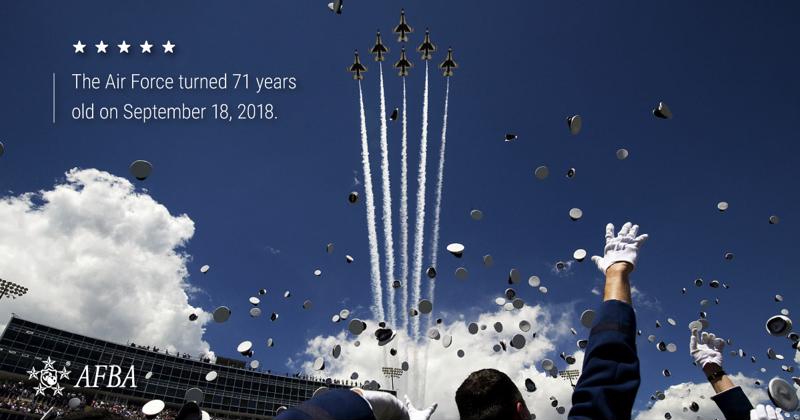
The U.S. Air Force became a distinct branch of the military on Sept. 18, 1947. Yet its roots began decades beforehand. Throughout its history of 71 years, the Air Force has been a remarkable source of innovation and inspiration.
Here, we'll take a look at the branch's history in celebration of the date it was started.
A brief history of the Air Force
While the Air Force didn't become an official military department until after World War II, aviation emerged as a military interest decades earlier. The first group to arise from this interest was the Army Signal Corps Aeronautical Division, which was created Aug. 1, 1907. This organization was developed to oversee anything related to air machines, military ballooning and other related matters.
The Signal Corps began testing the first military airplane at Fort Myers, Florida. One of its original flights ended in disaster; Lt. Thomas E. Selfridge, who was flying with Orville Wright, died during a crash on Sept. 9, 1908. Historical records consider Selfridge the first military aviation casualty, per Military.com.
However, on Aug. 2, 1909, the Army formally accepted what it called "Airplane No. 1."
Still, military aviators didn't serve in combat until around 1913. Early that year, servicemembers training in Augusta, Georgia, and Palm Beach, Florida, were ordered to take part in 2nd Division maneuvers. They were sent to Galveston, Texas on March 3 as the 1st Provisional Aero Squadron, led by Capt. Charles DeF. Chandler.
The squadron was the first military unit solely dedicated to aviation, and servicemembers began flying a few days later. It was also the Army's first air combat unit, and it's still active today.
Military aviators during wartime
The 1st Aero Squadron was the U.S. Army's air division during World War 1. By December 1915, the unit had 224 enlisted men, 44 officers and 23 planes, according to Military.com. This was only a fraction of the air power held by European countries, and the discrepancy forced the U.S. to devote more attention to aviation.
However, the U.S. may have been a bit overzealous with its response. At the time, all of the military's aviation power consisted of 24 squadrons, operating under different organizations.
When World War 1 broke out, the U.S. transferred aviation from the Signal Corps to two other agencies. Having so many different groups made it difficult to coordinate them all.
Today's Air Force
The National Security Act of 1947 restructured the way the U.S. government approached aviation and military endeavors. The act created the National Military Establishment, which was later renamed the Department of Defense. This organization consisted of the Army, the Marine Corps, the Navy and the new and improved Air Force.
It was a long time coming, as aviation in the military had been through six different iterations:
- Aug. 1, 1907 to July 18, 1914: Signal Corps Aeronautical Division.
- July 18, 1914 to May 20, 1918: Signal Corps Aviation Section.
- May 20, 1918 to May 24, 1918: Division of Military Aeronautics.
- May 24, 1918 to July 2, 1926: U.S. Army Air Service.
- July 2, 1926 to June 20, 1941: U.S. Army Air Corps.
- June 20, 1941 to Sept. 17, 1947: U.S. Army Air Forces.
- Sept. 18, 1947 to present: Air Force.
The fact that the branch has lasted this long in its current form is encouraging. Currently, the Air Force has 320,923 servicemembers on active duty, 62,688 officers and 258,235 enlisted, per the Air Force's Personnel Center. As part of the U.S. military, it's one of the strongest forces in the world.

Government contractors – especially those working with the Department of Defense – have recently come under fire for poor data security. These organizations often hold and use sensitive data in their work, and a security breach has consequences not only for the business but the U.S. government as a whole. This statement is especially true for DoD contractors, who may have access to classified weapons plans or military strategies.
Unfortunately, per a report from BitSight Technologies, a significant number of contractors aren't nearly as secure as they need to be. When scored on the tech company's security ratings scale, federal agencies scored an average of 15 points higher than contractors. In fact, more than half of the latter businesses scored a letter grade below C in terms of protective technology. Furthermore, 20 percent of technology and defense contractors work on outdated internet browsers, and more than 8 percent of healthcare contractors have disclosed a data breach since 2016.
Something clearly needs to be done, and thankfully, the government is taking the issues seriously. In December 2015, the DoD published the Defense Federal Acquisition Regulation Supplement (DFARS) minimum security standards to guide contractors that process, transmit or store Controlled Unclassified Information (CUI). Contractors had two years (until Dec. 31, 2017) to comply. Those that haven't yet must do so immediately or risk losing their working partnership with the DoD.

Complying with DFARS
DFARS was written to match security requirements set by the National Institute of Standards and Technology. Its extensive guidelines are available as part of a self-assessment handbook on the NIST website.
Requirements in the handbook include:
- Limiting access only to authorized users (rather than every employee).
- Limiting the functions that authorized users can perform.
- Controlling the flow of information so only relevant individuals have access.
- Separating duties so that multiple employees don't have access to the same information, thereby reducing the possibility of malevolent activity.
- Limiting unsuccessful logon attempts, locking the application after a certain number of failures or after a specific amount of time has passed.
- Automatically terminating user sessions after a defined condition, such as a certain period of inactivity.
Compliance options
The full DFARS handbook is much more thorough than the few examples shown here. As such, compliance can be incredibly difficult for contractors who don't know what they're doing.
Businesses do have the option of self assessing, as evidenced by the handbook, but leaving assessment to an inexperienced eye can lead to critical oversights or confusions that ultimately cost the company its contract with the DoD. It's best to dedicate DFARS compliance to an experienced security professional.
If contractors have no such employees on their staff, they can hire a third-party consultant – specifically one experienced in government compliance. Doing so can remove a lot of the headaches of evaluating and updating security, especially if the company in question has several improvements to make.
Regardless of which option they choose, contractors must make certain their processes comply as soon as possible, lest they lose the support of the government and suffer financial consequences.
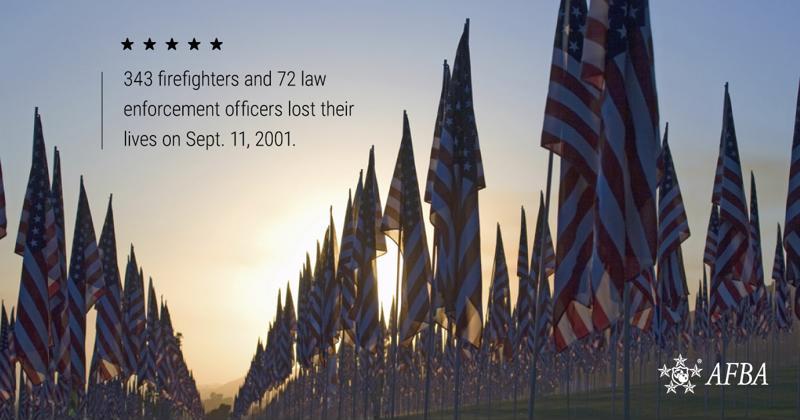
Sept. 11, 2001 was one of the most fateful days in recent history for the U.S. On that date, the terrorist group al-Qaeda launched a series of four coordinated attacks on American soil. Per statistics from CNN, the attacks ended the lives of 2,977 people in Washington, DC, New York City and an area near Shanksville, PA. Additionally, more than 6,000 others were injured during the event. 9/11 was also noted as the deadliest day for first responders, as 343 firefighters and 72 law enforcement officers lost their lives trying to help others.
The event drastically affected the nation, directly leading to the creation of the Department of Homeland Security and a $40 billion anti-terrorism package. But 9/11's effects weren't just of a macro size. Many individuals were directly affected, and communities both big and small came together to honor the dead and celebrate those who rushed to provide aid to others.
Those celebrations continue across the country to this day. Cities big and small are holding charity walks, dinners and similar events to raise money for first responders in the name of that fateful day.
Rock Island, IL, holding a walk to remember
The Rock Island military community is sponsoring a walk to remember those who lost their lives during the terrorist attacks, according to the Quad-City Times. Each participant will hold a flag representing the life of a civilian, first responder or servicemember who died that day. They will walk 2.5 miles to a Field of Honor, where they will place the flags.
"It is our sincere desire that this remembrance walk evokes a new sense of re-commitment to the task at hand," said a news release.
Pasadena, TX, raises funds for first responders
According to The Houston Chronicle, the city of Pasadena is holding its own fundraiser to benefit local first responders. The event includes singing and music performances from police and firefighters, plus a 9/11 reenactment by actors from the Pasadena Little Theater. Eight performers will portray the 26 characters in the docudrama "110 stories."
"I had been looking for something to do around 9/11 to pay tribute to first responders," said Gregory R. Brown, treasurer of the theater, to The Houston Chronicle. "Last December, I visited the (911 Memorial and Museum in New York City), and I found this script online in January. I was so moved that I brought it to the board in the hopes of presenting it as a way to give back to the first responders in the community we are a part of."
Ticket proceeds will go to the Pasadena Citizen Police Academy Alumni and the Pasadena Volunteer Fireman's Association.
The Travis Manion Foundation sponsors 9/11 Heroes Runs
Runners and walkers across the nation have organized 9/11 Heroes Runs in the name of 1st Lt. Travis Manion, a young man who was killed in action during his tour in Iraq. Manion's unit was ambushed while searching a suspected insurgent house, and Manion bravely sacrificed himself drawing enemy fire. His strength of character allowed the rest of his unit to survive. He was posthumously awarded the Silver Star and the Bronze Star with Valor, and his actions (and friendship with another servicemember) were memorialized in the book "Brothers Forever."
The first 9/11 Heroes Run was a small memorial created by the Travis Manion Foundation, but it quickly spread into a nationwide event. Runs are currently scheduled in areas such as Houston, Philadelphia, Virginia Beach, San Diego and more.
Remembering 9/11
These are just a small selection of the various memorial events taking place across the country this September. Given the severity of the 9/11 attacks and the effects they had on the nation, it's safe to say that such services will continue for years to come.
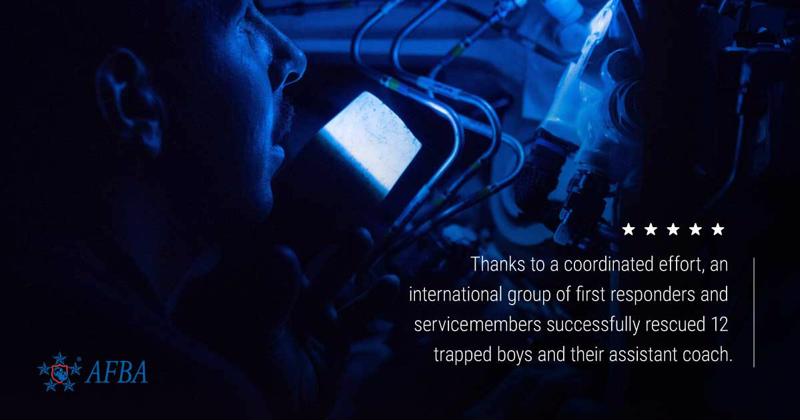
The Thai cave rescue of early July 2018 was an incredible tale of tragedy avoided. What could have been a disastrous situation became a successful recovery of 12 teenage boys and their 25-year-old assistant coach. This incredible ordeal highlights how complicated the work of first responders and expert servicemembers can be.
Finding the trapped team
On June 23, 12 members of a junior soccer team went to explore the Tham Luang Nang Non cave after practice with their assistant coach. Heavy rains partially flooded the cave shortly after, trapping the group inside. Although the boys were declared missing and the head coach discovered their abandoned belongings near the cave's entrance that same day, the rising water and strong currents made it difficult for rescuers to help. It was more than a week before initial contact was finally made.
The rescue expanded into a massive operation that received international attention and support. Thai Navy SEALs were the first on the scene, and they were quickly supported by divers from the British Cave Rescue Council, open water divers, the U.S. Air Force, a team of Specialist Response Group divers from the Australian Federal Police and divers from the Beijing Peaceland Foundation. Even sniffer dogs and drones were used to locate the boys, looking for openings above ground.
The search had to be put on hold multiple times due to continuous rain and flooding. Finally, the group was discovered on July 2, but the rescue's problems didn't cease. The boys and their coach were about 2.5 miles from the cave's entrance, and divers had to figure out how to rescue them through areas with strong currents, low visibility and narrow passages. If the boys panicked on their journey out, they could have died.
The next day, three Thai Navy SEALs joined the stranded group. A doctor, tasked with evaluating the boys and helping keep their spirits up, was among them. Yet, it was still a few days before rescuers could begin removing the team. During this time, on July 5, a Thai Navy SEAL named Saman Kunan died during a mission to provide oxygen to the stranded group. He was the only fatality of the operation.
Major challenges to rescue
Rescuers had to deal with several factors complicating their rescue mission, including:
- Consistent flooding.
- Falling oxygen levels.
- A large group of boys, many who couldn't swim, exhausted by the ordeal.
"The cave was dry when we arrived, and within an hour and half it had already filled up by 2 to 3 feet and we were being pushed out," said Derek Anderson, a 32-year-old U.S. Air Force rescue specialist, to Military.com. "That was just in the very beginning of the cave and at that point we realized this problem is going to be much more complex than we thought."
Because of the constant rains and lack of oxygen, waiting until the flooding season was over to rescue the boys wasn't an option. Instead, on July 8, 18 rescue divers (consisting of 5 Thai Navy SEALs and 13 international supporters) went into the cave, each tasked with rescuing one boy. The divers were equipped with hooded wetsuits, positive pressure face masks, bungee cords and other materials to keep the boys as bundled and close as possible so divers could keep control. The last person in the cave, the assistant coach, was rescued July 10.
Servicemembers and first responders pull off a difficult operation
The team was driven to the hospital in emergency vehicles and given anti-anxiety medication upon rescue. It was only thanks to the dedicated work of trained specialists.
"The world just needs to know that what was accomplished was a once in a lifetime rescue that I think has never been done before," said Anderson. "It's important to realize how complex and how many pieces of this puzzle had to come together."
The 911 emergency response system is one of the country's most vital communication tools, yet it's notoriously outdated. One of the primary issues is that, thanks to the prevalence of cell phones, first responders can have a difficult time locating callers.
Apple hopes to help solve that problem with its latest mobile operating system update. Per a company press release, iOS 12 will allow iPhone users to automatically send accurate, secure location data to 911 operators.
Apple updates old tech to help first responders
The iOS update relies on technology Apple first launched in 2015. HELO, which stands for Hybridized Emergency Location, estimates a mobile 911 caller's location using cell towers and on-device data sources such as GPS and WiFi access points. iOS 12 will work with RapidSOS, an emergency technology company, to share HELO location information with 911 call centers.
"911 telecommunicators do extraordinary work managing millions of emergencies with little more than a voice connection," RapidSOS CEO Michael Martin said in the press release. "We are excited to work with Apple to provide first responders a new path for accurate, device-based caller location using transformative Next Generation 911 technology."
The data, which will only be available for emergencies, will be sent using RapidSOS's data pipeline. This pipeline will send HELO data quickly and securely.

An emergency system that failed to keep up with the times
This can and has led to deadly results. In 2014, a woman named Shanell Anderson called 911 after losing control of her SUV and crashing into a pond. Anderson drowned after a dispatcher couldn't locate her, despite Anderson stating exactly where she was. The dispatcher tried everything she could, but Anderson's cell phone call was routed through the nearest tower to a neighboring county's 911 system, which didn't have the woman's location on their maps.
While that incident was caused by cell tower routing issues, even using a phone's location data doesn't always provide accurate results. As The Atlantic reported, Julius Genachowski, former chairman of the Federal Communications Commission, once toured a 911 call center in Fairfax, Virginia. Genachowski tested the system by calling 911 on his cell phone while still inside the call center. Once connected, a dispatcher asked for permission to locate Genachowski using his phone's GPS. He consented, but the location data said that he was at a Costco half a mile away from the center.
Cell phones make locating 911 callers surprisingly difficult. When people relied on landlines, dispatchers could look up the caller's billing address or search a database of every phone number in their area with a matching street address. A cell phone's billing address doesn't necessarily indicate where the call is coming from. What's more, cell towers are easily overloaded, meaning one call could be rerouted to a tower farther away. A phone's GPS service helps, but it works best when the feature has been turned on for hours, allowing satellites to better detect its location.
The FCC has attempted to modernize the emergency call system, but it's still far behind the times. This is very unfortunate as, according to Pew Research Center, 95 percent of Americans have a mobile phone. This means an increasing number of 911 calls are likely coming from cell phones rather than landlines.
Updates like Apple's will hopefully help solve the 911 caller location issue. Other communications companies may want to take note.
"This new functionality is an example of how companies and first responders can use technology to dramatically improve public safety," former FCC chairman Tom Wheeler said in the Apple press release. "Lives will be saved thanks to this effort by Apple and RapidSOS."
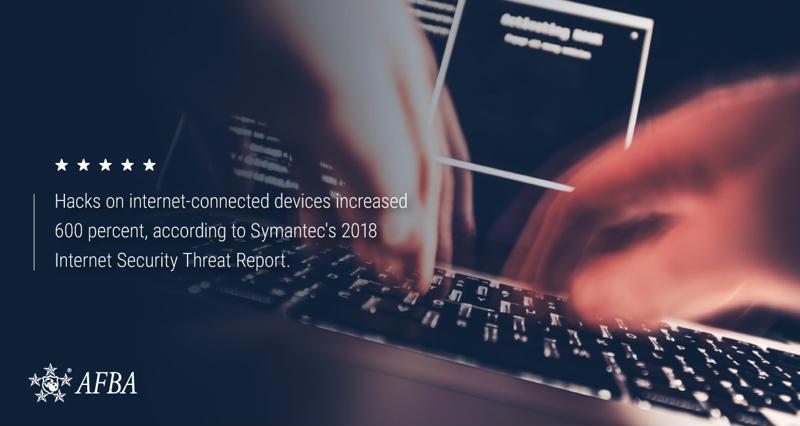
Cybersecurity attacks are getting increasingly sophisticated. According to Symantec's 2018 Internet Security Threat Report, the number and complexity of major hacks are growing. Hacks on internet-connected devices increased 600 percent, while crypotjacking (hacking a device to mine digital currency without the owner's knowledge or consent) grew a whopping 8,500 percent. Even mobile devices aren't safe, as targeted malware more than doubled.
This means that organizations of all types need to take cybersecurity seriously if they haven't done so already. The consequences can be dire, especially for government contractors.
Risks are on the rise
To understand how much damage could occur from a single hack – as well as the most likely threats – consider the recent news that hackers connected to the Chinese government stole 614 gigabytes of data from a private contractor.
As The Washington Post first reported, the target was a contractor working for the Naval Undersea Warfare Center, an organization that researches and develops underwater materials such as weapons and submarines. The contractor was not identified, but among the data stolen were plans for a supersonic anti-ship missile that would be added to U.S. submarines by 2020. Hackers also stole radio information, data from signals and sensors.
These details are bad enough, but what makes the situation most upsetting is the fact that the data stolen, when collected as a unit, could be considered classified but was stored on the contractor's unclassified network.
Unfortunately, this hack is not an isolated incident. A report from BitSight, a cybersecurity firm, found that a number of government contractors suffered data breaches between Jan. 1, 2016 and Feb. 1, 2018. While the actual percentages of contractors that disclosed one or more breaches are technically small – healthcare/wellness was the largest at 8.2 percent – even a small number of contractors could hold highly sensitive data that could be detrimental to the U.S. if it ends up in the wrong hands.
The report also noted that contractors fall far behind government agencies in terms of security. Interestingly, those in manufacturing, engineering and technology did worse than companies in business services, aerospace/defense and healthcare/wellness.
Protecting against security threats
Per The Washington Post, Defense Secretary Jim Mattis asked the Pentagon's inspector general's office to focus on cybersecurity issues affecting government contractors. Given these recent events, it's also a good idea for contractors to make sure they adhere to data security best practices.
BitSight identified several areas where contractors fail in that regard. For example, almost 20 percent of aerospace/defense and technology contractors use outdated internet browsers, which leaves them vulnerable to a number of different hacking strategies.
Here are a few simple ways contractors can start improving their security.
- Keep internet browsers and software updated: Developers constantly release new versions that protect against known security issues. Using outdated browsers and software leaves contractors unprotected against the latest threats.
- Train employees on common cybersecurity risks: Contracting staff should know never to give their credentials to an unauthorized party. They should also be trained to spot hackers pretending to be reputable organizations in order to access sensitive information, a technique known as phishing.
- Limit access to sensitive data: Only a handful of people should be able to view classified data.
- Terminate user sessions after a set period of inactivity: This way, unauthorized users are less likely to see classified information.
- Secure wireless access with encryption and authentication: This can prevent unauthorized users from spying on contractor networks.
- Encrypt data: If hackers manage to access a network, encrypting any data transmitted makes it harder for them to decipher information.
For more information, government contractors should visit the National Institute of Standards and Technology's page on cybersecurity.
The Navy is taking a comprehensive approach to recruit and retain servicemembers during a time when the U.S. economy is doing exceptionally well. Unemployment is the lowest it's been in 18 years, which should be good news for recruiting efforts. In truth, however, this means the Navy faces stiff competition from other military branches and the private sector. What's more, interest in joining the military usually drops as the economy improves. Not only are qualified individuals choosing jobs, but parents push students to go to college rather than enlist.
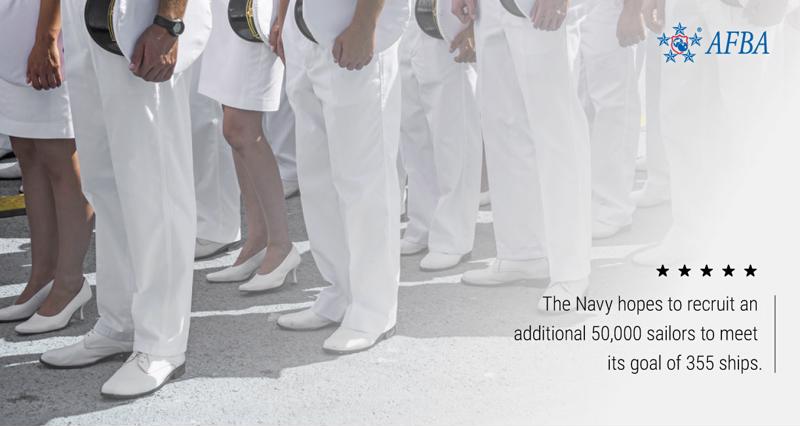
Finally, more than 70 percent of Americans of prime recruiting age can't serve due to obesity, criminal records or a lack of high school diploma or GED. Combined, these circumstances spell trouble for the Navy. The military branch is about 11,000 sailors short of what it needs to man its current fleet, and it will need about 50,000 more to meet its goal of 355 fully crewed ships.
According to an article from Military.com, Navy Secretary Richard Spencer expressed his concerns over the state of the branch's recruitment efforts during the Naval War College's annual two-day Current Strategy Forum.
"As the economy improves, we compete," said Spencer, per the article. "The game is now in our court to do the best we can to have the tools that we need to recruit, train and retain the best that our country has to offer."
Strategies to boost Navy recruitment efforts
President Donald Trump requested $686.1 billion for the military in his budget proposal for next year. The Navy should get a portion of that, and many funds will likely go toward recruiting.
The Navy also announced a new program that would allow sailors who leave to rapidly reenlist in a few years. Further, as the U.S. Naval Institute reported, the military branch increased the pace of its sea-going apprentice program: the long-running Professional Apprenticeship Career Track (PACT). Now, new sailors sign a three-year contract instead of a four-year enlistment. This gives them an idea of the various Navy jobs available and puts them on the path to a career sooner. This strategy boosts retention and encourages sailors to reenlist.
The goal of this change to PACT is to better match the wishes of new sailors with the needs of the military, according to Navy Branch Head for Enlisted Plans and Policy, Capt. Mery-Angela Katson. New sailors will take jobs at sea and work alongside other, trained servicemembers in one of three basic career paths: surface warfare, engineering or aviation.
"It's a way to give sailors the ability to look at jobs in these tracks and then give them a specific skills training pipeline to become rated sailors and continue on in that path through advancement and a career in the Navy," Katson said to USNI News.
Finally, the Navy is revising its typical recruitment strategies. According to Military.com, it's considering hiring private-sector professionals who are in the middle of their careers. Per Secretary Spencer, this strategy would help the military find and recruit top talent in a competitive market.
Additionally, per an NPR broadcast, the military branch is creating ads aimed at centennials, who are described as members of the first generation born with access to the internet. These ads are an attempt to dispel the notion that the military is the last hope for young people with nowhere else to go.
Combined, these strategies should increase the number of new sailors recruited into the Navy and improve retention numbers. Hopefully, the Navy will have no trouble meeting its manpower goals over the next few years.
On May 3, 2018, a volcanic event known as the 2018 lower Puna eruption occurred on Kilauea volcano's East Rift Zone on Hawaii's Big Island. Earthquakes caused cracks in the roads, leading to lava foundations up to 300 feet high and destroyed homes in the Leilani Estates subdivision. Nearly 2000 residents were forced to evacuate, and the Puna Geothermal Venture, which provides electricity for a significant part of the island, was forced to shut down and later damaged. This event is part of the larger, long-term Kilauea eruption that began Jan. 3, 1983.
As part of the efforts to minimize the volcano's damage and destruction, first responders from around the nation made their way to Hawaii. A CBS News affiliate from Greensboro, North Carolina, covered a story about a group of local first responders leaving for the island at the end of May. Ten of the state's fire service officials and emergency managers made their way to an emergency operations center in Hilo, Hawaii. There, they assisted an incident management team and the Hawaii County Civil Defense agency for 14 days before returning home.
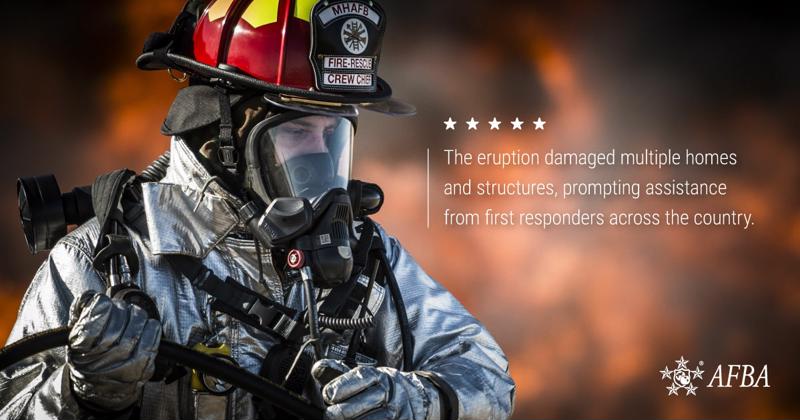
Another group of responders came from Oregon and southwest Washington, per an NBC News affiliate. They're assisting local authorities by erecting disaster relief shelters and providing food, water and mental health services. One, a former Southern California firefighter and current Red Cross volunteer, noted how the unpredictability of the volcano makes operations difficult.
"It's slow and it's unpredictable," said volunteer Jerry Hall to the news station. "Tornadoes and hurricanes…you pretty much know what to expect as it happens. This is ongoing and the lava is changing directions all the time and changing areas. So, it's a lot of uncertainty for the people who live here."
Hall's statements were echoed by Cowlitz 2 Battalion Chief Joe Tone of Washington state.
"A few days in, I realized the severity as far as danger to myself and the other guys because (the lava) is so unpredictable," Tone said to The Daily News Online.
He went on to explain how, even though the fissures are all erupting on a single line, it's difficult to predict exactly where the next one will occur. But aside from trying to predict where the next event will happen, rescue workers must also assist the people who live in existing danger areas. Tone recalled seeing 20 homes in a single neighborhood destroyed. Some were overcome by flowing lava, others fell into the opening fissures and more caught fire from flying sparks.
Unfortunately, the lava isn't the only hazard of the ongoing eruptions. Thousands of people's lives were jeopardized by the toxic gases released by the volcano. So, in addition to physically rescuing trapped civilians, setting up shelters and transporting people to safety, first responders such as Tone also needed to monitor the island's air quality and chart where the gasses might spread next. Given the volcano's unpredictability and the natural movements of wind, this couldn't have been an easy task.
Tone and other first responders also worked to remove hazardous chemicals from the nearby geothermal plant, preventing a possible explosion that had a potential blast radius of half a mile. Thanks to their efforts, such risk was eliminated.
The damage from Kilauea
According to Reuters, this volcanic eruption is the most destructive since that of Mount St. Helens in 1980, with over nine square miles of the Big Island covered in lava. Estimates on the number of destroyed homes range from 455 to 600; regardless of the actual number, it is the greatest quantity of homes destroyed by the volcano in such a short time.
Minnesota legislators recently passed a bill that greatly benefits first responders. As a local Fox News affiliate reported, first responders such as police, firefighters, paramedics and corrections officers are no longer required to prove what events caused their employment-related post-traumatic stress disorder in order to receive worker's compensation.
This bill can do much to help first responders get the care they need. Consider the story of Brian Cristofono, a firefighter who suffered from job-related nightmares and panic attacks. According to an NBC station from Minneapolis, Cristofono became irritable, started drinking and his marriage ultimately fell apart. The firefighter also saw three coworkers succumb to suicidal thoughts and thought about taking his own life.
Luckily, Cristofono was able to get help – a psychologist diagnosed him with PTSD and drafted a list of events believed to have caused the condition. Creating this list couldn't have been easy, as PTSD symptoms can manifest months or years after the trigger event occurred. Cristofono used his diagnosis to apply for worker's comp, but his claim was denied.
"There was no physical injury associated with any of those calls," Cristofono told the news station, relaying the response he received from the city. "So it could not be PTSD."
The burden of proof is now shifted thanks to this bill, and PTSD is now an assumed side effect of being a first responder. This news comes just in time for National PTSD Awareness Month.
PTSD among first responders and veterans
The Mayo Clinic defines PTSD as a mental health condition resulting from experiencing or witnessing a terrifying event. The disorder is difficult to cope with, especially if it's left untreated. Symptoms include nightmares, uncontrollable thoughts, flashbacks and severe anxiety.
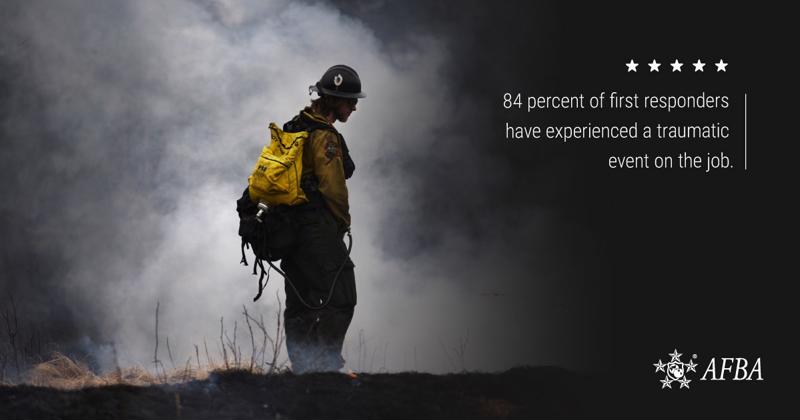
Some occupations are more prone to possible PTSD than others – particularly military and first responder roles. A 2017 survey from the University of Phoenix found 84 percent of police officers, firefighters, EMTs, paramedics and nurses have suffered symptoms related to mental health issues. Furthermore, 84 percent have experienced a traumatic event on the job, but only 34 percent were diagnosed with a mental health disorder. This isn't to say that traumatic experiences only affect a small percentage; it's more likely that people have PTSD but aren't diagnosed.
Why might this be true? Unfortunately, there remains a pervasive stigma against mental health services, especially among first responders. Seventy-four percent of survey respondents said they have therapy, counseling and similar opportunities available, but only 39 percent actively sought them out. Reasons for avoiding such services included fears that supervisors would treat them differently, that coworkers would perceive them as weak and that they'd be passed over for promotions.
Such stigmas are, in part, why Congress named June 27 PTSD Awareness Day back in 2010. What's more, the Senate designated all of June as PTSD Awareness Month just four years later in 2014.
The goal of these measures, according to the Department of Veterans Affairs, is to promote awareness of PTSD and its effective treatments. The VA provides many helpful aids to assist veterans and their families in understanding PTSD and seeking help, and first responders may benefit from these resources as well.
One booklet, titled "Understanding PTSD and PTSD Treatment," helps you define PTSD, lists possible PTSD-causing traumatic events, describes various symptoms and answers common questions about treatment. Another tool, the PTSD Treatment Decision Aid, helps you make the best choices for your life and health when addressing your condition.
If you suspect yourself or someone you love suffers from PTSD, talk to your doctor or a mental health professional. If you don't yet have a counselor, look for one who specializes in PTSD. Reach out to loved ones, and call the National Suicide Prevention Lifeline (1-800-273-8255) if you're having suicidal thoughts.