
The Oscars aired this month, and people everywhere were commenting on who won what – and who wore what. At first glance, Hollywood life and military life seem to have nothing in common. However, many actors and actresses have lesser-known pasts as servicemembers. They aren't all action heroes, either. Many are comedians, sitcom stars and voice actors. Here are just four of the many actors and actresses who served their country:

1. Drew Carey
Star of the 1990s sitcom "The Drew Carey Show", former host of the U.S. version of the sketch comedy program "Whose Line Is It Anyway?" and current host of "The Price Is Right", Drew Carey may be one of the more surprising names on this list. Interestingly, his time in the armed forces is what led him to enter the world of comedy – and gave him his signature look of a crew cut and horn-rimmed glasses. He joined the Marine Corps Reserve in 1981 and served for six years. He needed a way to make more money during his tenure, and someone suggested performing standup. According to Military.com, Carey made around $10 per joke back then (he's worth approximately $165 million now).
2. Clark Gable
Unlike most veteran actors, Clark Gable enlisted in the middle of his career. In fact, he starred in his most famous role (Rhett Butler in "Gone with the Wind") three years before entering the Air Force on August 12, 1942. His decision was spawned by grief; Gable decided to enlist after his third wife tragically died in a plane crash. He served in England during WWII and returned to the U.S. in October 1943. Approximately nine months later, he was relieved from active duty and returned to acting.
3. Bea Arthur
Not much is known about Bea Arthur's time in the military. In fact, she previously denied her service during an interview. However, tabloid website The Smoking Gun found and exposed her military records, proving Arthur served in the Marines for 30 months.
Always a trailblazer, Arthur was one of the first members of the Women's Reserve. She started basic training in March 1943 and hoped for an assignment in ground aviation but instead worked as a typist and truck driver. According to her personality appraisal sheet, Arthur acted much like the characters she would play in the future: frank and argumentative.
4. James Earl Jones
One could say James Earl Jones' military career began during his college years. The famous actor attended the University of Michigan as a pre-med major. During his time at school, he enrolled and excelled in ROTC. Jones eventually realized medicine wasn't his passion and switched his major to drama in 1955.
After graduation, while the Korean War gained momentum, Jones was recruited to the Army. He expected to see combat, but his battalion was tasked with building a cold-weather command center in Colorado.
Jones left the military for two primary reasons, according to a separate Military.com article. A superior officer suggested he take a break to decide whether he wanted to stay in the military full time, and Jones figured he could re-enlist if acting didn't pan out as a career. Needless to say, Jones had a very successful acting career and voiced some of the most famous characters in the film industry.

The world of government contracting naturally comes with a certain amount of financial instability. Thankfully, many experts predict that 2018 will be a good year for the contracting field. Plenty of people assumed the numerous government shutdowns would be disastrous for contractors, but that turned out not to be the case. In fact, something close to the opposite happened: Congress approved a spending plan that included a huge budget increase for the Department of Defense, leading analysts to speculate that much of this money will be spent on contractors.
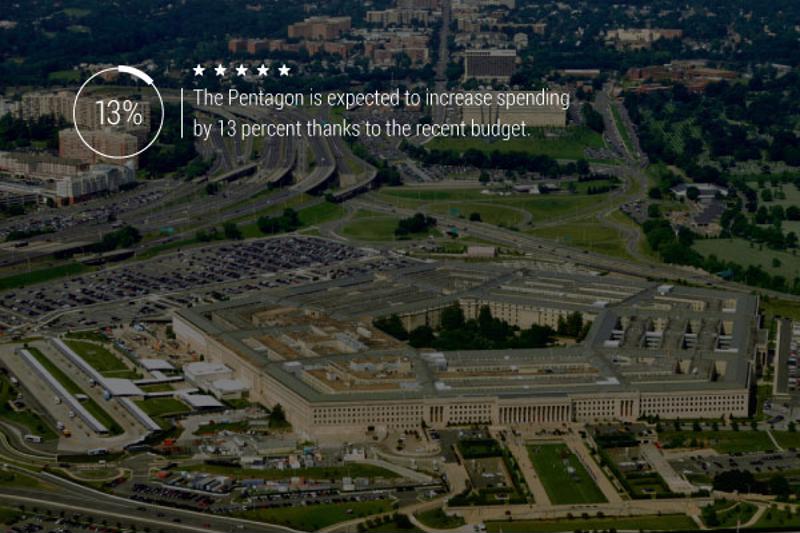
According to the Washington Post, the current budget, which lifts the 2013 sequestration, should increase Pentagon spending by 13 percent. Some analysts believe that money will be spent on the innovation or modernization of the Pentagon's (and other government offices') IT infrastructure. Such an update is long overdue and would bring the U.S. government more in line with every other industry.
Furthermore, this type of spending would take advantage of D.C.'s substantial tech base. Last year, real estate company Cushman & Wakefield identified D.C. as the third-best tech city in the nation – right behind San Jose and San Francisco/San Mateo. Clearly, there's a lot of opportunity for these businesses to profit from the anticipated spending.
As for the specific type of tech progress the government will invest in, it seems nothing is off limits. Speaking with the Washington Post, John Wood, CEO of data security company Telos, noted that the government is quickly switching to cloud-based software. Meanwhile, Deloitte Consulting Managing Director Michael Isman predicts automation, digital reality and blockchain data storage will all catch the government's interest.
What tech contractors must consider
Last year, the government purchased fewer tech services as new appointees adjusted to their positions. Now, as the administration settles into its second year, such growth will likely pick back up.
Unfortunately, this means contractors will presumably become more attractive targets for data breaches. Theft of a single contractor's data could have huge, irreversible consequences.
What's more, these companies are no stranger to breaches. A report from BitSight, a cybersecurity firm, revealed 4.3 percent of technology contractors reported at least one data breach over the past two years. Such attacks often take months – possibly even years – to detect, and many are never discovered at all. This means that there's a possibility that more tech companies have been hacked than the report suggests.
"Not only can these breaches often affect government and private sector employees, they may expose data that is fundamental to national security," wrote the authors of the BitSight report.
Because of the potential for increased spending coupled with the threat of data breaches, tech contractors must be more committed to digital security than ever before. Not only will doing so keep sensitive information private, but it could give these companies a leg up against their competitors.
One way contractors can get ahead is by using less common or accessible service providers for hosting, domain and email services. Amazon Web Services and similar cloud companies are a favorite of tech companies in all sectors, meaning data thieves expect them to hold tons of valuable information.
That said, even if contractors don't change vendors, they must take other measures to prioritize security.
Government spending in 2018
While the anticipated tech spending is still just a prediction, it stands to reason that tech contractors will benefit from the increased budget. That said, competition will grow more fierce, too, meaning businesses must bring their A-game to secure government contracts.

Black History Month is a time to reflect on the many strides and accomplishments of African Americans. The Tuskegee Airmen are arguably the most famous group of black Americans to achieve success in the military. At a time when the U.S. was tainted by legal and institutional racism, the Tuskegee Airmen rose above their setbacks and left a legacy like few others.
America's first black military pilots
The Tuskegee Airmen formed the 332nd fighter group and the 477th bombardment group of the U.S. Army Air Corps, the precursor to the U.S. Air Force. They fought in World War II at a time when many people thought African Americans weren't patriotic, courageous, intelligent or skillful enough to serve in the military. Yet the Tuskegee airmen proved them wrong, and the group wasn't just made of pilots. Mechanics, nurses, cooks and other support members were also part of the Tuskegee group, and all were important to their numerous victories.
The history of the group starts in 1938. That year, President Franklin D. Roosevelt announced an expansion of the civil pilot training program. However, due to the strict and segregated nature of the military, the NAACP and various black newspapers began pressing to make sure African Americans would be included, according to The History Channel. In response, FDR announced the AAC would also train black pilots. All training would be conducted at the Tuskegee Army Air Field, which was under construction at the time of the announcement. This field was located in the heart of the Jim Crow south, where racism was particularly rampant. Yet African American graduates came from all over the country to participate in the training course.
The first class consisted of 13 students, five of which completed it.
Actions in World War II
Tuskegee pilots made up the 99th pursuit squadron, which was deployed to North Africa in April 1942. Unfortunately, they were forced to use second-hand P-40 planes, putting them at a disadvantage in combat. The group was then transferred to Italy, where they shot down 12 German fighters in two days.
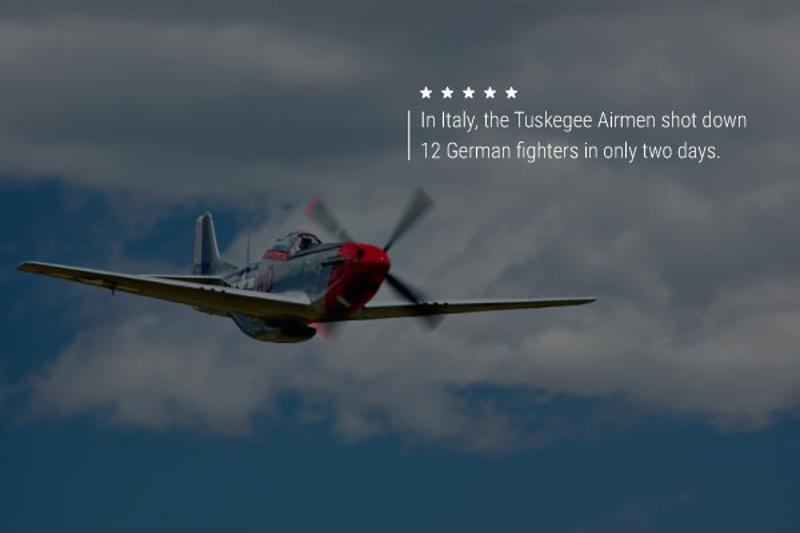
In February 1944, the 99th joined the 100th, 301st and 302nd fighter squadrons to form the new 332nd fighter group. Their mission was to escort the heavy bombers of the 15th Air Force, and they painted the tails of their P-51 Mustangs red for identification purposes. This earned the group the nickname of the Red Tails, and they became the most famous group of the Tuskegee airmen.
The end of a war, the start of a legacy
The 332nd flew its last combat mission on April 26, 1945 – just two weeks before the German surrender. Their incredible accomplishments proved that black Americans had the skills, bravery and patriotism necessary to serve in the armed forces.
Yet despite their success, the airmen returned home to face the same racism and prejudice they had experienced before leaving. That being said, their actions were important for the eventual racial integration of the military in 1948.
These days, African Americans make up 17 percent of active-duty servicemembers, according to numbers from Pew Research. Overall, 40 percent of the military consists of racial or ethnic minorities. Clearly, the Department of Defense has come a long way since the days of the Tuskegee Airmen.
Have you ever wondered why Presidents' Day is celebrated on the third Monday of February? What about its name: Is the holiday celebrating all presidents or just George Washington's birthday?
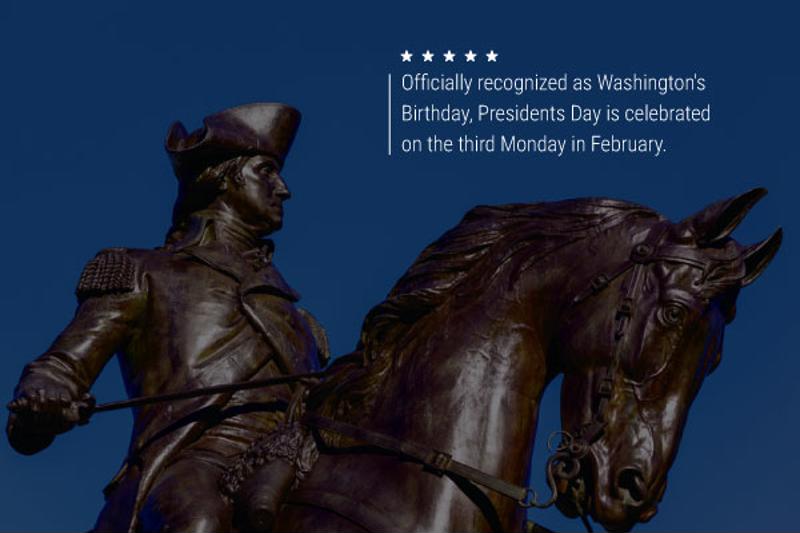
In fact, Presidents' Day is still officially referred to as "Washington's Birthday" by the federal government. This was the holiday's intended purpose; after Washington's death in 1799, people turned his birthday, February 22, into a day of remembrance. It was a fitting tribute for the man recognized as the most important figure in American history.
The holiday wasn't officially recognized by the federal government until the late 1800's. In the 1870s, Senator Steven Wallace Dorsey of Arkansas proposed the idea, and President Rutherford B. Hayes signed the holiday into law in 1879.
At this time, the holiday was still celebrated on Washington's official birthday. It wasn't until the late 1960s that the date changed.
Giving Americans more three-day weekends
In the 1960s, Congress recognized a problem plaguing U.S. businesses and workers. Because many federal holidays fell on specific dates, they days they were celebrated shifted from year to year. One holiday could fall on a Tuesday one year and a Friday the next. As such, American workers weren't consistent with their time off, and absenteeism became an issue.
To solve the problem, Congress proposed the Uniform Holiday Act. The law would shift several federal holidays from specific dates to specific Mondays, creating more three-day weekends for workers. The reasoning was that having more consistency among federal holidays between the years would reduce the number of employees missing work.
President Richard Nixon signed an executive order in 1971 making the Uniform Holiday Act permanent, officially shifting Washington's Birthday to the third Monday in February. However, this put it close to the birthday of another significant president: Abraham Lincoln. Additionally, another U.S. president had a birthday in February: William Henry Harrison. This confused the public, who were no longer sure if the holiday celebrated one president or many. In fact, some members of Congress wanted the day to act as a combination of Washington's and Lincoln's birthdays.
Although the federal name never changed, people began referring to Washington's Birthday as Presidents' Day, and most people think of it as a celebration of all of the nation's presidents.
The importance of America's first commander in chief
Although most people picture extended weekends and retail sales when discussing Presidents Day, the holiday is primarily about America's first commander in chief. The fact that President Washington has a holiday devoted to him and him alone is nothing short of significant. In fact, he is one of only two people to have a federally recognized holiday in his honor. The second is Dr. Martin Luther King, Jr.
Presidents' Day celebrates the nation's first commander-in-chief, President Washington. Thanks to his leadership during the American Revolution, the U.S. military was able to successfully defeat the British empire, allowing the nation to declare independence.
Washington's devotion to the nation and the military started long before his presidential appointment. In fact, he was first appointed as commander in chief in 1775 when he lead the Continental Army, more than a decade before he became president.
Washington left quite a legacy with the U.S. military. He brought attention to the causes that sustain the nation's servicemembers to this day: freedom and liberty.
As such, not only should we recognize President Washington during this holiday, but we should also honor the servicemembers who carry out his legacy.
As the New York Times detailed, 555 mass shootings have occurred in the U.S. since June 12, 2016. That night, a gunman opened fire in nightclub in Orlando, taking the lives of 49 people. It was America's deadliest shooting at the time, only to be eclipsed just over a year later when, on Oct. 1, 2017, another shooter attacked a music festival in Las Vegas. This catastrophe left 59 dead and at least 527 injured.
First responders are always on the front lines of such events, valiantly working amidst the chaos to save as many lives as they can. As we commend their bravery, it is important to listen to what they have to say.
Shootings take an emotional toll on first responders
The people who respond to mass shootings are some of the bravest and most resilient individuals on Earth. They're the only ones equipped to save countless lives during disastrous events, and they must think and act quickly in order to rescue as many as they can.
That said, they're also exposed to untold horrors as they carry out their duties. Even a successful rescue doesn't guarantee a life saved, as Paul Brunner, an EMS volunteer in La Vernia, Texas, explained to a local NBC news affiliate.
"Reports of the ones that we were able to treat, move, and transport, and didn't make it, are very difficult to deal with," he said, speaking of the aftermath of the Sutherland Springs shooting.
According to a separate news organization, an ABC affiliate, responders had to return later in the evening to collect the bodies of the people who didn't survive the attack. The process took more than three hours, but responders returned to the church as a group later in the week. According to their statements, being in the church again gave them a sense of closure.
Responders to the Las Vegas shooting felt similarly when it came to the stress of helping people during and after the event. In fact, the effects of such tragedies last longer than we might think. According to NBC News, 20 percent of the first responders who helped during Las Vegas (and likely other events) may not recover from the post traumatic stress disorder caused by such experiences.
PTSD symptoms include nightmares, insomnia, memory problems, paranoia and flashbacks. If these symptoms persist, it will affect the ability of first responders to complete their jobs later in their careers.
"Employees are going through a range of emotions, including anger and fear," Glen Simpson, an advanced emergency medical technician who assisted during the Oct. 1 shooting, told NBC News.
Understanding first responders in their own words
Written news reports can only describe so much; indeed, video is often better for conveying complex emotions to a widespread audience.
To help people understand the role of a first responder, director Kim A. Snyder created a three-part docuseries called "We Are All Newtown," referencing the tragic shooting that claimed the lives of 20 children and six adult educational staff, as well as that of the shooter and his mother.
As The Atlantic detailed, the series follows doctors who have responded to mass shooting events to gain their perspective on the intersection between gun violence and public health.
"They are the ones who spend sleepless nights replaying moments of trying to stop bleeds and informing loved ones in waiting rooms about the suicides, homicides, and mass shootings that make up the nearly 34,000 gun deaths each year," Snyder told The Atlantic.
Hopefully there will never be another mass shooting, but in the event of such a catastrophe, it's important to listen to first responders as we commend them for their service.
This past year, a series of Navy-related disasters prompted much deliberation over the processes and inefficiencies within the military branch. As CNN summarized at the end of November, six such incidents occurred during the span of 2017. The two most major resulted in the deaths of numerous sailors.
To recap, the USS Fitzgerald collided with a Philippine container ship in the early morning of June 17, 2017, just off the coast of Yokosuka, Japan. The damage was extensive; according to the Navy Times, the Philippine vessel was more than four times the size of the Fitzgerald. The latter ship was penetrated below the waterline, flooding two crew sleeping spaces, a radio room and a machinery space. In addition, the captain's cabin was crushed. Seven crew members died from the flooding, and the commanding officer and two sailors were injured.
A few months later, on the morning of August 21, the USS John McCain crashed into a Liberian oil tanker off the coast of Singapore. Again, machinery, communications and crew sleeping rooms were flooded. Though the ship was able to sail to the Changi Naval Base in Singapore, 10 U.S. sailors were killed during the incident.
As a result of these incidents, as well as the others that only caused damage but no loss of life, Navy Secretary Richard V. Spencer launched a Strategic Readiness Review. Completed under the supervision of retired Admiral Gary Roughed and utilizing the consulting services of over a dozen companies and organizations, the resulting report pointed to a significant decline in Navy readiness and capability since the end of the Cold War.
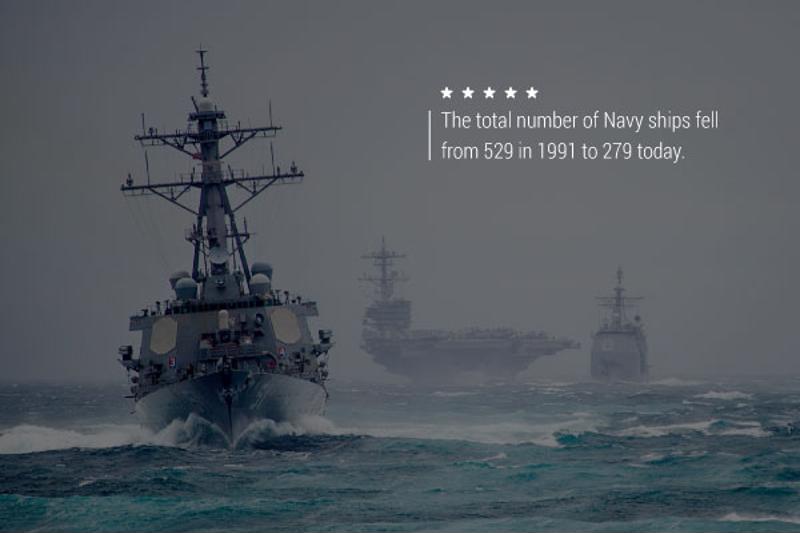
Part of this decline, the report noted, was due do diminishing quantities of ships and servicemembers. The total number of Navy ships fell from 529 in 1991 to 316 in 2001; it currently sits at 279. However, the same 100 ships have been continuously deployed throughout the decades, placing a strain on the military branch.
"Within the fleet, often the only option to meet those growing demands has been short-term trade-offs in training, manning and maintenance," Spencer said to reporters, according to Military.com.
In short, as Navy resources were depleted, servicemembers began lowering their standards and accepting errors and near-misses. This casual mindset led to the numerous crashes and collisions seen last year.
This review isn't the first to point to such problems within the Navy. According to a separate article from Military.com, a similar report from the Government Accountability Office discovered nearly 40 percent of the necessary certifications for Navy ships based in Japan were expired. Furthermore, smaller crew sizes increased the workloads of the sailors who remained, sometimes forcing them to work more than 100 hours per week.
Improving Navy protocol
Overall, the Strategic Readiness Review recommended 23 actionable ways to improve the Navy and reduce future collisions and servicemember deaths. Among the suggestions were better training and restructured career paths that would provide sailors with more practical experience. In this way, they would be better at spotting and averting potential disasters before they occur.
The theme of better training for servicemembers appeared time and again throughout the prior year as reports of the various crashes emerged in the news. As CNN noted, the crew of the Fitzgerald failed to recognize the warning signs of an impending crash until it was far too late. Similarly, as Ars Technica detailed, insufficient training and confusion over the user interface of the McCain's navigation system led to the collision with the Liberian tanker.
Hopefully, the results of the Strategic Readiness Review will compel the Navy to fix the indicated issues and improve the safety of its sailors.
Army servicemembers may soon have new uniforms inspired by those of World War II. Sergeant Major of the Army Dan Dailey began his push to bring back the iconic attire back in May, Army Times reported. He believes the pinks and greens, as the uniforms are called, are perfect for boosting morale among servicemembers and civilians.
"That was the uniform of the 'Greatest Generation,'" Dailey told Army Times. "There was a lot of prestige and honor associated with that. The American public identified with that uniform."
Dailey also noted the revised pinks and greens would give the army a daily uniform more appropriate for business rather than combat.
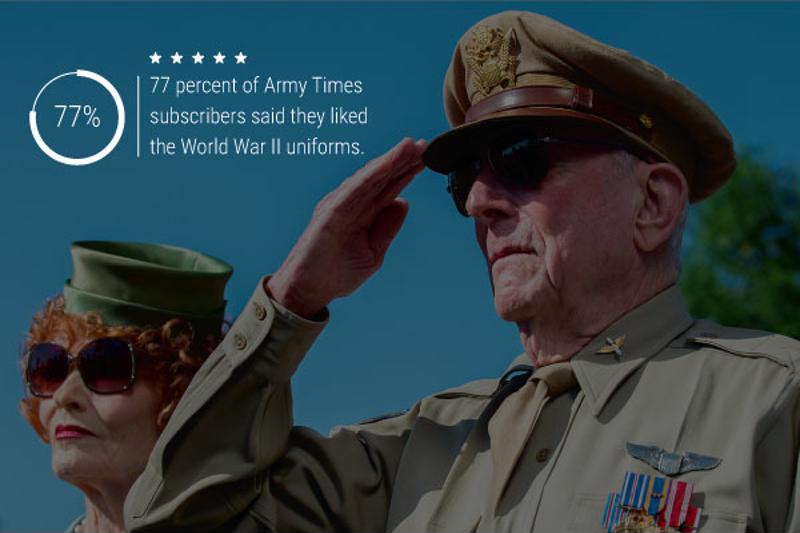
In May, Dailey first made his case during a uniform board meeting with the results of a survey sourced exclusively from Army Times subscribers. About 28,000 readers received the survey, and approximately 5,000 of them responded. Their answers showed overwhelming support for the proposed change:
- 77 percent said they liked the uniforms.
- 59 percent said they preferred the pinks and greens to current uniforms.
- 72 percent said they would like the option to wear pinks and greens.
First round of prototypes unveiled in October
Several months after what turned out to be a successful board meeting, the uniforms are now close to finalization, according to Military.com. Dailey unveiled the first round of prototypes during the Association of the United States Army's annual October meeting. This version had multiple options for the jacket, trousers and shoes. Dailey noted that the final prototypes would be more historically accurate and closely align with what General George C. Marshall wore when serving as the Army's chief of staff during World War II, noting that they will have khaki shirts, brown leather shoes and belted jackets. They will also be made from higher-quality materials and designed for functionality, fit and endurance.
Dailey added he is very aware of the cost of redesigning and implementing new uniforms. He acknowledged that such changes use taxpayer funds and indicated he is adamant about making sure the decision is the correct one before proceeding.
If the new pinks and greens are approved, the occasion will mark the second major dress uniform change in 10 years. The current Army Service Uniform debuted back in 2014, but many considered it to be too formal for everyday office wear.
That said, the amount of support the new uniforms have garnered indicates both servicemembers and the American public are on board with the changes.
Army still debating while Dailey keeps up support
The Army isn't expected to make a final decision on the new uniforms until spring 2018, according to Task and Purpose. Still, Dailey remains a public advocate, wearing them again during the annual Army-Navy football game on December 9. He also tweeted about the event, exclaiming that the uniforms brought good fortune and helped secure an Army win.
Dailey's enthusiasm reiterates his belief that the new uniforms, which will be as historically accurate as possible, would be great tools for boosting resolve. At a time when Army servicemembers are stationed across the globe, the uniforms will be a universal symbol that commands respect while also keeping the wearer looking sleek.
"This is the symbol, for me, of the American soldier," Dailey said according to Task and Purpose. "Still to this day, people can remember what a soldier looked like in the pinks and greens."
The opioid epidemic remains one of the most pervasive medical crises in the U.S. According to the American Society of Addiction Medicine, opioids are responsible for the majority of drug overdose deaths in the nation. In 2015 alone, heroin overdoses claimed 12,990 lives, while prescription pain relievers claimed 20,101. The total number of deaths from opioids is surely higher, given that these statistics don't account for fentanyl or Carfentanil, two extremely dangerous drugs that are driving the crisis.
As a result, first responders have been put on the frontline of this battle, responding to overdose calls en masse and saving countless lives with the overdose-reversal drug naloxone. Some responders are even working to expand addiction treatment services in their local communities.
Take Nashua, New Hampshire, for example. As the Huffington Post detailed, members of the city's local fire department created a program called Safe Stations to get opioid addicts the help they need before they overdose. An addict can show up at a firehouse unannounced and ask for help, and firefighters on duty will dispose of any drugs on the person, take vital signs, see to his or her immediate needs and arrange for treatment. The program is designed to create a space where addicts feel safe rather than judged to better encourage people to make use of the service.
"Immediately six or seven firefighters came to my aid," said a patient only identified as Brian during a public forum where he described his experience with Safe Stations, the Huffington Post reported. "I showed up at the safe station and they immediately took my vital signs. I even hugged all the firefighters because I didn't know what to do."
That said, while firefighters and first responders can be considered heroes of the epidemic, they also put themselves at risk of a threat many people don't consider: an accidental overdose.
The DEA warns responders of contact with opioids
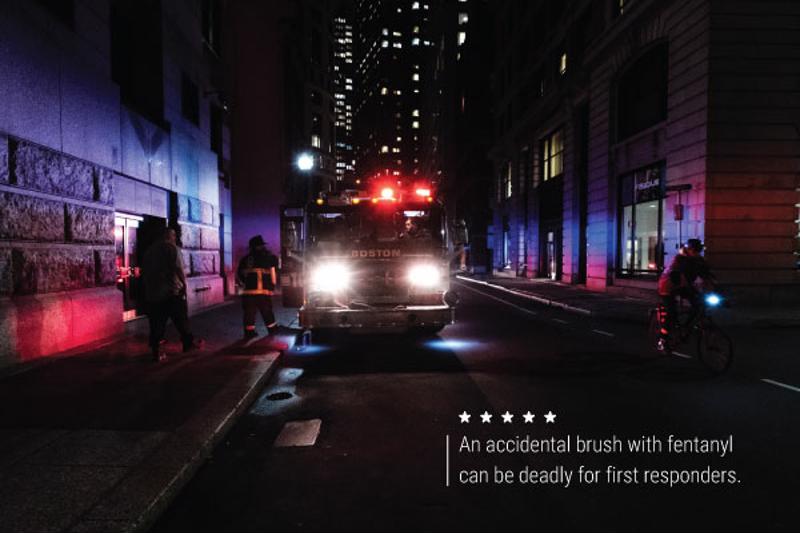
As first responders arrive to treat overdose patients, they risk coming into contact with the drugs themselves. Highly potent synthetic opioids like fentanyl and Carfentanil can be transmitted through the skin, and even a small amount can trigger a fatal overdose. In fact, 2 or 3 milligrams of fentanyl – the equivalent of five grains of table salt – can lead to respiratory depression or arrest, cardiac arrest and death. This means that a responder could die simply by brushing a bit of powder on a his or her uniform.
This is almost what happened to Officer Chris Green of East Liverpool, Ohio, CNN reported. He brushed some powder off of his uniform after a drug bust, then began feeling the effects of an overdose. Green, like many others, made a full recovery, but the threat of death is still incredibly real.
The danger is so great that the U.S. Drug Enforcement Administration issued a synthetic opioid briefing guide to the nation's first responders in June 2017, detailing best practices for safety. It advises responders to take the following precautions when encountering an area where fentanyl may be present:
- Wear personal protective equipment such as coveralls, gloves, eye protection and dust masks.
- Carry naloxone injectors on their persons.
- Contact the nearest DEA office or request the help of HAZMAT officials if they suspect a substance contains opioids.
As we thank first responders for saving the lives of countless opioid patients, we must also recognize the incredible danger they put themselves in.
The October incident in Las Vegas is the deadliest mass shooting committed by a single person in the U.S. throughout the country's history. That said, the number of casualties could have been much higher. As the Las Vegas Review-Journal reported, emergency responders credit their years of training for their efficient response, which helped them save an untold number of victims.
A thorough response that saved lives
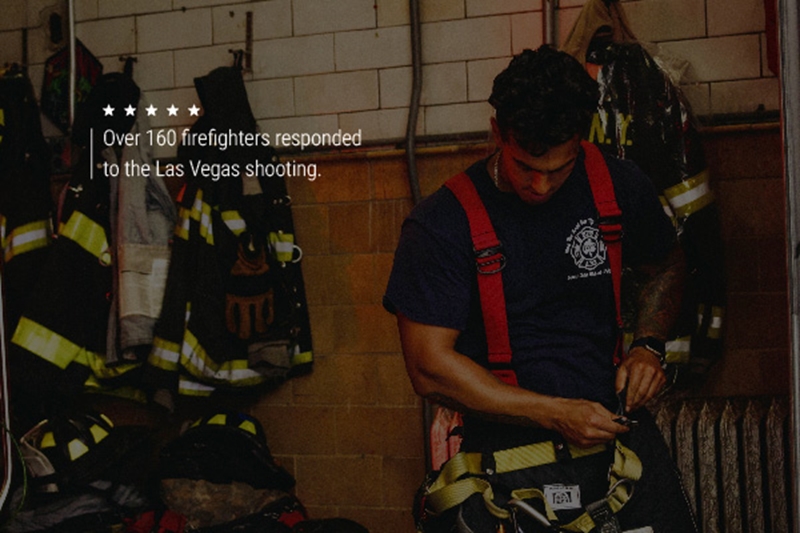
Overall, 160 firefighters responded to the attack, according to the Review-Journal. The majority were from the Clark County Fire Department, while the remainder came from the Las Vegas, North Las Vegas and Henderson Departments.
According to Clark County Fire Department Chief Greg Cassell, the first responders learned from prior events like the shootings at Columbine and Aurora. He said there would have been many more casualties had the Las Vegas attack occurred a decade ago.
"We knew what to do," Cassell told numerous reporters, according to the Review-Journal. "It was much grander than we ever envisioned. However, we were able to handle it because of our people, our training, our professionalism and our equipment and our relationships."
"Knowing their city could be a target, firefighters and police began training years ago."
Las Vegas police and firefighters, knowing their popular city could be the target of a terrorist event, began training in counterterrorism efforts after the 2009 attacks in Mumbai, India. Now, all Las Vegas first responders participate in drills run at schools, hotels, hospitals and malls.
Help from strangers blocks away
Additionally, average citizens stayed on the scene to help the injured, further preventing more deaths. Cassell noted these individuals, as well as the paramedics and other first responders, performed wonderfully under fire.
Some of the assisting citizens were in fact military veterans. According to a local Fox affiliate, Portland resident and Army veteran Austin Depiazza ran to the gunfire when he was first alerted of the attack.
Depiazza arrived in Las Vegas a few hours before the attack with a few military friends, Jose Ortiz, Edward Prince and Keith Hewitt. They were at a casino two blocks away when a woman ran in and alerted everyone to the situation. Depiazza and his friends headed to the venue, tearing down a fence in order to get inside and help the injured, all while the gunfire continued.
"Trying to help the ones that lost people there, that was the biggest thing, getting them to safety," Depiazza told the news station. "Because they wanted to stay there with their loved ones, which I understand, but we had to do everything to help."
Of course, active-duty servicemembers on the scene helped where they could as well. As the Tribunist reported, Army soldier Matthew Cobos's heroic actions were captured in one of the most iconic photographs of the attack. In the image, Cobos is physically shielding a woman on the ground, using his body to protect her from gunfire. He even reportedly held his hand in front of her eyes to prevent her from witnessing the devastation. At one point, Cobos was able to move the unidentified woman to a safe location before returning to help others who had been injured.
These stories reveal the strength and courage of first responders, veterans and ordinary citizens. They also emphasize the importance of proper training, both of which the responders and servicemembers had. With their direction, concert-goers and people standing by were able to provide assistance without causing further chaos.
This past summer, the U.S. Department of Veterans Affairs and the U.S. General Services Administration partnered to better help VA buyers find veteran-owned small businesses for government contracting purposes. On July 10, the two parties signed a memorandum of understanding allowing veteran-owned and service-disabled veteran-owned small businesses already listed in the VA's Verified Vendor database to be included in GSA's VA Advantage with an icon identifying them as VIP. This designation will make it easier for VA acquisition professionals to find and utilize such vendors, as the icon makes VIP veteran contractors more visible on VA Advantage.
"Gaining verified VA VIP status provides access to important resources for veteran-owned businesses," Acting Deputy Commissioner of GSA's Federal Acquisition Service Mary Davie explained in a statement. "The MOU provides VIP veteran contractors with valuable increased visibility to vendors through GSA's VA Advantage."
Jane Frye, the VA's Logistics and Senior Procurement Executive and Deputy Assistant Secretary for Acquisition, added that the icon program enhances the longstanding partnership between the two government agencies. It will also make it easier for VA employees to make better-informed purchasing decisions and fulfill their mission of assisting veterans.
The new changes fall under the umbrella of the Veterans First Contracting Program. Veteran-owned venders must first complete the verification process before they can participate.

Veteran's First Verification Program
The Vets First Verification Program is a cautionary measure designed to guarantee only veteran-owned businesses receive set-aside funds. The VA provided the following checklist to help veteran business owners prepare for verification:
- Veteran status: Business owners must meet the definition of "veteran" (a person who served on active duty with the Air Force, Army, Coast Guard, Marine Corps or Navy and was discharged or released under conditions that were not dishonorable) or "service-disabled veteran" (a veteran with either a disability determination from the Department of Defense or a disability rating letter issued by the VA).
- Ownership: A majority of the business (at least 51 percent) must be directly and unconditionally owned by at least one veteran or service-disabled veteran.
- Control: Veteran owners must have full control over various aspects of the business, including but not limited to strategic policy and daily management.
- Prequalification: While not required, veterans who utilize prequalification resources may have their applications processed more quickly.
To qualify, eligible government contractors must approach the Center for Verification and Evaluation and receive verification through the MyVA Verification Process, which includes three mandatory and one optional step:
- Prequalification: This optional step helps potential veteran contractors assess their eligibility and learn about available resources. It may also shorten processing time.
- Intake: Applicants create a profile in VetBiz VIP and are contacted by an Intake Analyst, who explains the process and next steps, and a Case Analyst, who manages the application.
- Pre-application review: The Case Analyst briefly inspects the veteran's application and conducts public research on the business and its owner. He or she informs the applicant of any discrepancies or areas of noncompliance and advises correction.
- Assessment: The Case Analyst thoroughly reviews all documents and, if necessary, requests clarification or advises the applicant to address areas of noncompliance.
- Decision: A federal employee reviews the case and approves or denies the applicant.
Although the process is extensive, it's necessary to ensure only qualified veterans receive verification. Combined with the icon program outlined in the MOU, VIP veteran government contractors have increased visibility and, therefore, another chance to serve their country.